 Location :
Orlando, FL, USA
Location :
Orlando, FL, USA +1 (407) 714-1616
 info@biz4group.com

- AI treatment recommendation app development helps hospitals deliver faster, data-driven, and personalized treatment decisions using AI and patient data.
- Modern platforms use machine learning, NLP, and real-time treatment insights to improve clinical accuracy and reduce treatment risks.
- Healthcare providers are adopting these systems across oncology, chronic disease management, ICU care, and precision medicine workflows.
- Successful platforms require HIPAA compliance, EHR integration, explainable AI, and physician-friendly design for secure clinical adoption.
- Biz4Group LLC helps healthcare organizations build AI treatment recommendation app solutions with scalable AI, healthcare compliance, and enterprise-grade infrastructure.
A doctor walks into an exam room with only a few minutes to review a patient’s history, symptoms, medications, lab reports, and treatment options. Now imagine doing that hundreds of times every week while clinical guidelines keep evolving, patient records stay fragmented across systems, and the pressure to avoid mistakes keeps growing.
That is the reality healthcare organizations are facing in 2026.
And it raises an important question: How can physicians consistently make fast, evidence-backed treatment decisions when the amount of medical data keeps expanding every single day?
This is exactly why AI treatment recommendation app development has become one of the biggest priorities for hospitals, clinics, and digital health companies across the U.S.
Healthcare providers are no longer viewing AI as a future experiment. They are actively investing in systems that help doctors evaluate treatment paths faster, reduce inconsistencies in care, and improve recovery outcomes for patients.
The numbers behind this shift are hard to ignore.
According to a report, nearly 90% of physicians believe AI can help reduce burnout and improve job satisfaction, while over 91% say AI can reduce administrative burdens and give them more time with patients.
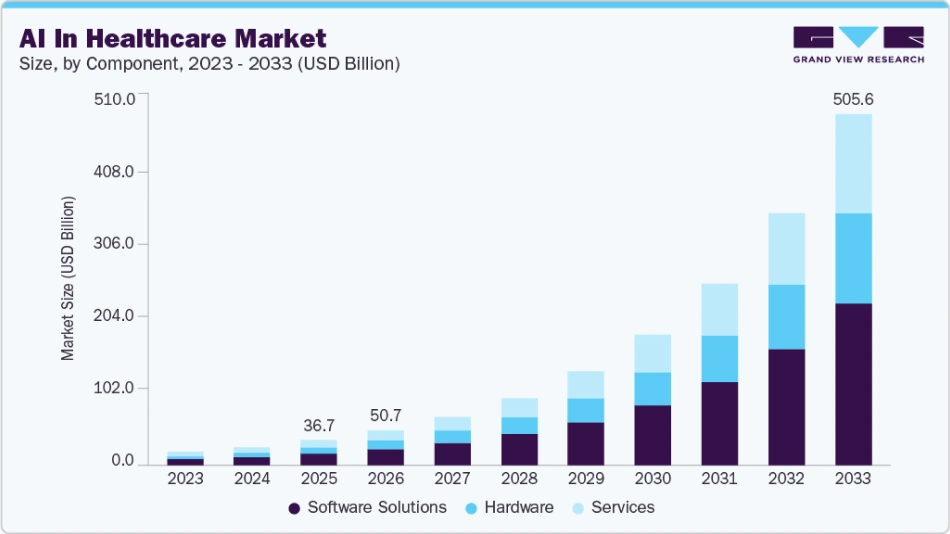
At the same time, the global AI healthcare market is expected to surpass $50 billion in 2026 as healthcare providers continue adopting AI-powered clinical decision support and personalized treatment systems.
So what is driving this urgency?
Healthcare organizations are dealing with several problems at once:
- Physician burnout
- Rising patient volumes
- Delayed treatment decisions
- Inconsistent care protocols
- Misdiagnosis risks
- Fragmented patient records
- Pressure to improve outcomes with fewer resources
You’ve probably already seen how AI healthcare app development is transforming patient engagement, predictive analytics, and digital care delivery. Now, organizations are moving one step further with AI treatment recommendation system development for hospitals that can support physicians directly at the point of care.
And this demand is not limited to enterprise hospital chains anymore.
Startups, specialty clinics, pharmaceutical companies, and care networks are all trying to build AI treatment recommendation app solutions that analyze patient history, medications, diagnostics, genetic data, and clinical outcomes simultaneously.
Think about the scale of the challenge for a moment.
Our hospital network has 500 physicians making treatment decisions daily based on outdated clinical guidelines and we need an AI powered treatment recommendation system that gives doctors real time evidence-based guidance at the point of care.
That is no longer a future-facing scenario. It is happening right now across healthcare systems throughout the U.S.
The bigger question is this: How do you actually build a secure, explainable, and clinically reliable AI platform that physicians trust enough to use during real patient care?
That is exactly what we are going to break down in this guide.
We’ll walk through everything from how to develop AI treatment recommendation app for healthcare companies to compliance requirements, advanced AI capabilities, architecture decisions, development costs, and the biggest implementation challenges healthcare leaders need to prepare for.
What Is an AI Treatment Recommendation App and Why Are Healthcare Companies Suddenly Investing in It?
An AI treatment recommendation app is a healthcare system that analyzes patient data such as medical history, lab reports, medications, imaging results, genetic markers, and clinical guidelines to suggest evidence-based treatment options for doctors in real time.
Instead of manually reviewing large volumes of patient information, physicians get ranked treatment recommendations, risk insights, drug interaction alerts, and outcome predictions directly within their clinical workflow.
Modern AI treatment recommendation app development solutions are built to support faster treatment decisions, reduce inconsistencies in care delivery, and improve patient outcomes.
These platforms work similarly to an advanced AI powered recommendation engine, but instead of recommending products or content, they recommend clinically relevant treatment paths based on patient-specific data and historical outcomes.
Healthcare organizations are rapidly investing in these systems because:
- Physicians are handling increasing patient loads with limited consultation time
- Outdated treatment protocols often differ across departments and hospital locations
- Hospitals want to reduce treatment errors and misdiagnosis rates
- Personalized medicine requires deeper analysis of patient and genetic data
- Real-time clinical decision support is becoming essential in modern healthcare
- EHR systems like Epic and Cerner now allow smoother AI integration
- Healthcare providers want standardized treatment recommendations across networks
- Rising operational costs are pushing hospitals to improve efficiency with AI
This is why many healthcare providers are actively looking to build AI treatment recommendation app platforms that improve clinical accuracy, reduce treatment delays, and support more personalized care at scale.
Still Relying on Outdated Treatment Workflows?
Let’s build an AI treatment recommendation app that helps your physicians make faster and more accurate clinical decisions in real time.
Talk to Our Healthcare AI ExpertsHow Does an AI Treatment Recommendation App Actually Work Behind the Scenes?
Modern AI treatment recommendation app development platforms work by collecting patient data from multiple healthcare systems, analyzing it with AI models, and generating treatment suggestions based on clinical evidence and historical outcomes. The goal is not to replace physician judgment. It is to help doctors make faster and more data-backed treatment decisions with less manual effort.
Here is how the process typically works behind the scenes.
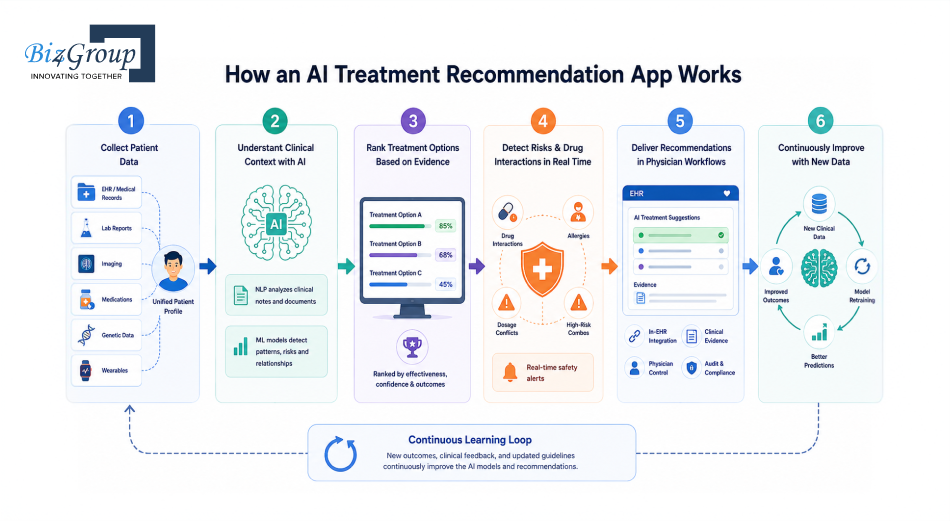
1. Collecting Patient Data From Multiple Sources
Everything starts with data aggregation. The platform gathers patient information from EHR systems, lab platforms, imaging systems, wearable devices, and pharmacy records to create a unified patient profile. Without centralized data, treatment recommendations often remain incomplete or inaccurate.
Common data sources include:
- Medical history
- Lab reports
- Imaging records
- Current medications
- Genetic data
- Allergies and chronic conditions
- Real-time monitoring devices
Many healthcare providers combine this with systems like AI health tracking app platforms to continuously capture patient health signals outside hospital environments.
2. Using Machine Learning and NLP to Understand Clinical Context
Once the data is collected, machine learning models and NLP engines process both structured and unstructured medical information. This is a critical part of developing an AI treatment recommendation app with machine learning and NLP because a large portion of clinical data exists inside physician notes, discharge summaries, and scanned records. The AI system identifies patterns, correlations, and risk indicators that may influence treatment decisions.
The platform typically analyzes:
- Physician notes
- Clinical documentation
- Patient symptoms
- Disease progression patterns
- Historical treatment outcomes
- Medication interactions
This allows healthcare organizations to build AI clinical app with patient history and genetic data analysis engine capabilities that support more personalized care planning.
3. Ranking Treatment Options Based on Clinical Evidence
After analyzing the patient’s condition, the AI engine compares the case against medical guidelines, research databases, and historical patient outcomes to rank potential treatment options. Instead of generating a single recommendation, the platform usually provides multiple treatment paths with confidence scores and risk insights.
These systems can help physicians:
- Compare treatment effectiveness
- Predict recovery probability
- Identify treatment risks
- Reduce trial-and-error decision-making
- Improve care consistency
This is one reason healthcare organizations want to build AI medical app with treatment outcome prediction and success scoring capabilities into modern clinical workflows.
4. Detecting Drug Interactions and Treatment Risks in Real Time
One major advantage of AI-driven treatment systems is their ability to identify risks instantly during the prescribing process. The platform continuously checks medications, allergies, patient conditions, and treatment combinations against safety databases before recommendations are finalized.
Real-time alerts can help reduce:
- Dangerous drug interactions
- Duplicate medications
- Allergy-related risks
- Dosage conflicts
- High-risk treatment combinations
This is especially important for organizations looking to develop AI treatment recommendation app with real time drug interaction alerts for high-volume clinical environments. Healthcare systems managing long-term patient care also integrate these workflows with solutions like chronic disease management software with AI to improve ongoing treatment monitoring.
5. Delivering Recommendations Directly Inside Physician Workflows
Doctors do not want another disconnected platform that slows them down. That is why modern treatment recommendation systems integrate directly into existing clinical workflows and EHR platforms. Recommendations are usually delivered within systems like Epic or Cerner so physicians can review insights without switching between tools.
Key workflow capabilities include:
- Real-time treatment suggestions
- In-EHR recommendation panels
- Clinical evidence references
- Physician override controls
- Role-based access permissions
- Audit logs for compliance tracking
This workflow-focused approach is becoming a core part of AI treatment recommendation system development for hospitals across the U.S.
6. Continuously Improving Recommendations With New Clinical Data
AI treatment recommendation systems are not static. They continuously learn from new patient outcomes, updated clinical guidelines, physician feedback, and treatment performance data. Over time, this helps improve recommendation quality and reduce outdated clinical logic.
Modern platforms continuously refine:
- Treatment success predictions
- Patient risk scoring
- Recommendation accuracy
- Care pathway optimization
- Population health insights
Healthcare companies investing in building custom AI treatment recommendation app from scratch are increasingly prioritizing adaptive AI systems that evolve alongside changing clinical practices.
As AI treatment recommendation systems become more accurate and workflow-friendly, healthcare organizations are no longer asking whether they should adopt them. The real question now is where these platforms can create the biggest clinical and operational impact.
Where Can AI Treatment Recommendation App Development Deliver the Biggest Clinical Impact?
Healthcare providers are adopting AI treatment recommendation app development solutions in areas where treatment speed, accuracy, and personalization directly affect patient outcomes. These systems are already being used across hospitals, specialty clinics, and pharmaceutical programs to improve clinical decision-making and standardize care delivery.
1. Oncology and Precision Medicine
Cancer treatment requires analyzing pathology reports, genetic mutations, biomarkers, prior treatments, and evolving clinical guidelines together. AI systems help oncologists process this data faster and recommend more personalized treatment paths for each patient.
Many providers are now investing in developing AI treatment recommendation app with machine learning and NLP capabilities because, as healthcare leaders describe it, "We want to build an AI powered treatment recommendation app that analyzes patient medical history, current diagnosis, lab results, genetic data, and clinical guidelines to suggest ranked treatment options with success probability scores for each patient."
Example
Mayo Clinic collaborated with IBM Watson for Oncology to help physicians identify treatment options and match cancer patients with relevant clinical trials using patient-specific clinical data.
2. Emergency and ICU Decision Support
Emergency departments and ICUs require rapid treatment decisions where delays can increase mortality risks. AI recommendation systems help physicians identify critical conditions earlier by analyzing vitals, symptoms, and lab results in real time.
Healthcare providers increasingly want to build AI medical app with treatment outcome prediction and success scoring for high-pressure clinical environments where early intervention significantly improves outcomes.
Example
UC San Diego Health implemented an AI-powered sepsis detection platform that helped clinicians identify sepsis earlier and improve emergency response times.
3. Chronic Disease Management
Patients with diabetes, hypertension, cardiovascular disease, and similar chronic conditions require continuous treatment monitoring and long-term care planning. AI systems help personalize treatment adjustments based on patient adherence, disease progression, and recovery patterns.
Many healthcare organizations combine these systems with AI remote patient monitoring platforms to improve ongoing patient management outside hospital settings.
Example
Healthcare providers are using AI-driven monitoring and recommendation systems to reduce readmissions and improve long-term treatment consistency for chronic care patients.
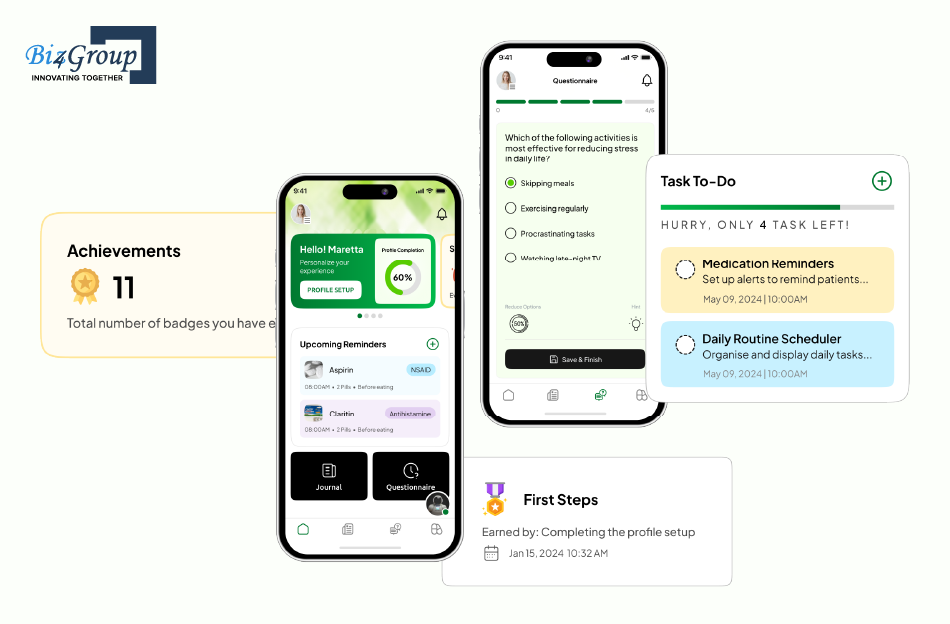
A strong example in this space is CogniHelp, an . The platform helps patients manage daily cognitive activities, maintain routines, and improve emotional well-being through personalized AI-driven support.
The project closely aligns with modern AI treatment recommendation app development goals because it combines cognitive monitoring, behavioral analysis, emotional tracking, and intelligent patient assistance within a single healthcare ecosystem.
Key capabilities included:
- AI-powered cognitive quizzes tailored to patient history and daily behavior
- Voice-to-text journaling for easier emotional and cognitive tracking
- Personalized reminders for medications, routines, and daily activities
- Cognitive performance analysis using machine learning models
- GPT-4-powered emotional interaction analysis for patient engagement
- Caregiver support through behavioral and emotional insights
- Secure handling of sensitive patient health data with scalable infrastructure
The platform also demonstrates how healthcare providers can combine treatment recommendation systems with intelligent monitoring and behavioral health support to improve long-term patient care outcomes.
4. Mental Health and Therapy Recommendations
Mental healthcare providers are using AI systems to recommend therapy plans, medication changes, and behavioral interventions based on patient symptoms and treatment history. This helps improve personalization while giving therapists better visibility into patient progress over time.
Some providers are also integrating platforms like AI therapy recommendations app solutions to support more personalized behavioral healthcare delivery.
Example
Several digital mental health platforms now use AI recommendation systems to personalize treatment plans for patients managing anxiety, depression, and PTSD.
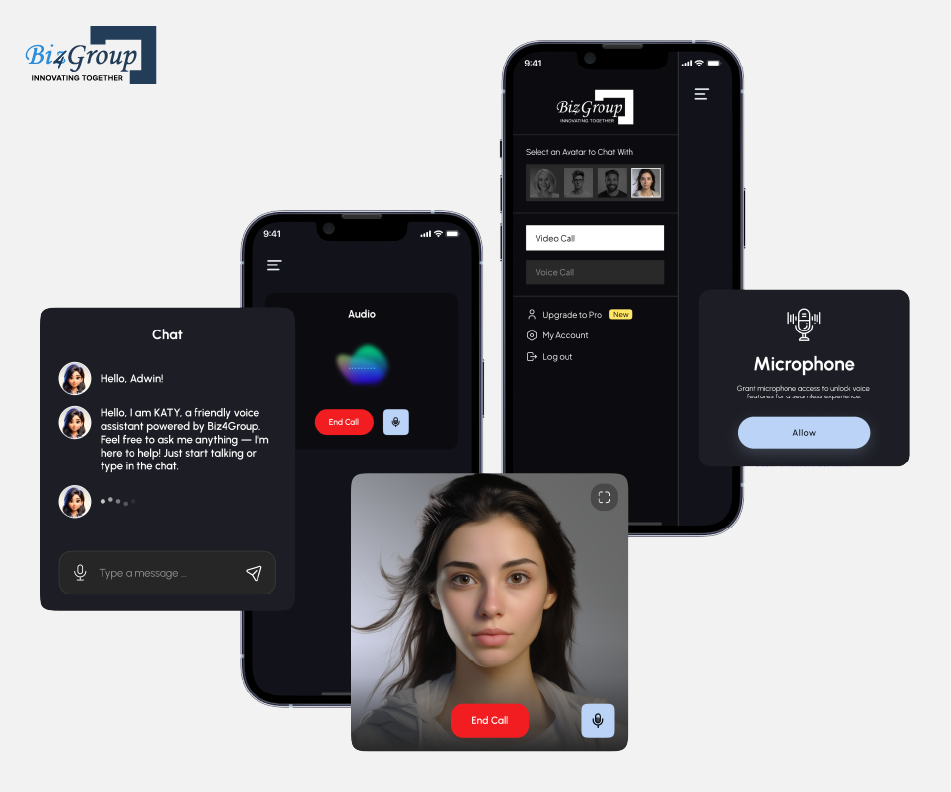
A relevant example in the mental health and conversational care space is AI Wizard, an developed by Biz4Group to provide emotionally engaging and human-like interactions through voice, chat, and video communication.
The platform demonstrates how conversational AI can support behavioral health, emotional engagement, and patient interaction experiences within modern healthcare ecosystems. It combines AI-driven conversations with expressive digital avatars to create more personalized and interactive user experiences.
Key capabilities included:
- AI-powered voice and video conversations using ChatGPT and Whisper AI
- Real-time avatar interaction with facial expressions and gestures
- Emotionally engaging conversational experience for users
- Personalized avatar customization and interaction flows
- Multi-modal communication through text, voice, and video
- Scalable AI infrastructure for intelligent user engagement
The project highlights how healthcare providers and digital wellness platforms can combine conversational AI with intelligent recommendation systems to create more personalized mental health and therapy support experiences.
5. Pharmaceutical Precision Therapy Programs
Pharmaceutical companies are using AI recommendation systems to match patients with targeted therapies based on biomarkers, disease subtype, and genetic profiles. This supports precision medicine initiatives and helps improve treatment effectiveness.
As pharmaceutical leaders increasingly state, "We are a pharmaceutical company developing a precision medicine program and we need an AI treatment recommendation app that matches patients to the most effective drug protocols based on their genetic biomarkers and disease subtype."
Example
Companies like Tempus and Foundation Medicine use AI-powered genomic analysis platforms to support precision oncology treatment recommendations.
6. Multi-Hospital Treatment Standardization
Large healthcare networks often struggle with inconsistent treatment protocols across departments and facilities. AI recommendation systems help standardize evidence-based treatment guidance, so physicians across locations follow more aligned care pathways.
This has become a major reason hospitals are investing in AI treatment recommendation system development for hospitals to improve operational consistency and patient trust.
Example
Many healthcare executives now openly discuss challenges like, "We are losing patients to competing hospital systems because our treatment protocols are inconsistent across departments and we need an AI treatment recommendation app that standardizes treatment recommendations across all our facilities."
As healthcare organizations expand these systems across clinical environments, the next challenge becomes equally important: ensuring these platforms remain secure, compliant, and safe for real-world patient care.
What Compliance and Security Requirements Can’t Be Ignored During AI Treatment Recommendation App Development?
Compliance and security are no longer secondary concerns in AI treatment recommendation app development. These platforms directly influence clinical decisions, process sensitive patient records, and integrate with hospital infrastructure where even small compliance gaps can create operational and legal risks.
That is why healthcare organizations building AI-powered treatment systems must prioritize security, transparency, governance, and regulatory readiness from the start.
1. HIPAA Compliance and Patient Data Protection
Any healthcare provider planning to build secure AI treatment recommendation app with role based physician access capabilities must ensure the platform follows HIPAA regulations for storing, processing, and sharing patient data securely.
Since these systems handle EHR records, prescriptions, physician notes, and lab reports, they require encrypted storage, secure authentication, controlled access, and continuous activity monitoring to protect patient privacy. Many healthcare companies also invest in HIPAA compliant infrastructure while deploying AI-driven healthcare platforms to reduce compliance and cybersecurity risks.
2. FDA and Software as a Medical Device (SaMD) Regulations
If an AI platform directly supports treatment decisions or generates clinical recommendations, it may fall under FDA Software as a Medical Device regulations. This applies particularly to systems that provide predictive treatment scoring, patient risk analysis, or evidence-based recommendation engines.
Organizations looking to develop AI treatment app that meet international medical device regulations must account for clinical validation, testing workflows, recommendation transparency, and regulatory documentation throughout development.
3. Role-Based Access and Physician Control
Not every hospital employee should have access to the same patient records or AI-generated treatment recommendations. Role-based access helps healthcare organizations restrict information visibility based on physician responsibilities, departments, and authorization levels.
This becomes especially important during AI treatment recommendation system development for hospitals, where multiple clinical teams often access the same patient workflows simultaneously.
4. Secure EHR and Third-Party Integrations
Modern healthcare AI systems rely heavily on integrations with EHR platforms, labs, pharmacies, imaging systems, and wearable devices. If these integrations are not secured properly, they can expose healthcare organizations to compliance and operational risks.
Healthcare providers investing in how to develop AI treatment recommendation app for healthcare companies must ensure secure APIs, encrypted data exchange, and interoperability standards such as HL7 and FHIR across all connected systems. Many organizations also rely on AI integration services to securely connect AI recommendation platforms with existing healthcare ecosystems.
5. AI Explainability and Clinical Transparency
Doctors are unlikely to trust AI-generated treatment recommendations if the platform cannot explain how those decisions were generated. Clinical transparency is becoming a major requirement because physicians need visibility into the reasoning behind recommendations before applying them in patient care.
Healthcare leaders increasingly ask questions like, "How do I make an AI clinical decision support tool explainable enough for physicians to trust it?" This is why modern clinical decision support AI app development company strategies focus heavily on explainable AI models, recommendation rationale, confidence scoring, and physician override controls.
6. Bias Monitoring and Clinical Validation
AI models are only as reliable as the datasets used to train them. If training data contains demographic gaps or biased treatment patterns, recommendation quality can become inconsistent across patient populations.
Healthcare organizations investing in building custom AI treatment recommendation app from scratch must continuously validate recommendation accuracy, monitor treatment outcomes, and retrain models to maintain fairness, safety, and clinical reliability over time.
7. Data Governance and Patient Consent Management
AI healthcare platforms often process patient data across multiple departments, third-party systems, and external providers. Without strong governance policies, organizations risk compliance violations, unauthorized access, and loss of patient trust.
This is why healthcare providers implementing AI treatment recommendation app development solutions must establish clear governance frameworks for patient consent, data retention, third-party sharing, and accountability for AI-assisted clinical decisions.
As healthcare organizations strengthen compliance and security foundations, the next priority becomes equally important: building the right platform capabilities that actually make AI treatment recommendation systems useful for physicians in real-world clinical workflows.
Worried Your AI Healthcare Platform Won’t Meet Compliance Standards?
From HIPAA and FDA requirements to secure EHR integrations, Biz4Group LLC helps healthcare providers build compliant and scalable AI healthcare systems.
Schedule a Compliance-Focused ConsultationWhich Features Separate Basic Healthcare Apps From Truly Intelligent AI Treatment Recommendation Systems?
The difference between a basic healthcare application and a truly intelligent platform comes down to the features built into the system. Modern AI treatment recommendation app development focuses on helping physicians make faster, safer, and more personalized treatment decisions directly within their clinical workflow.
Below are the must-have features healthcare organizations should prioritize while planning to build AI treatment recommendation app platforms for hospitals, clinics, and specialty care providers.
1. Patient Health Profile Dashboard
Doctors need a complete patient overview without switching between multiple systems. A centralized dashboard should display medical history, medications, allergies, lab reports, imaging records, chronic conditions, and previous treatments in one interface. This feature is especially important for organizations planning to build AI clinical app with patient history and genetic data analysis engine capabilities into personalized treatment workflows.
2. AI-Powered Treatment Recommendation Panel
This is the core feature of the platform. The system should analyze patient symptoms, diagnosis history, clinical guidelines, and treatment outcomes to generate ranked treatment recommendations in real time. Healthcare providers investing in AI treatment recommendation system development for hospitals increasingly prioritize recommendation panels that support evidence-based clinical decision-making.
3. Treatment Comparison and Success Probability Scoring
Physicians often need to compare multiple treatment paths before making final care decisions. The platform should display treatment effectiveness, associated risks, expected recovery timelines, and predicted success rates side by side. This feature is becoming critical for organizations looking to build AI medical app with treatment outcome prediction and success scoring functionality into clinical workflows.
4. Real-Time Drug Interaction Alerts
The system should automatically identify harmful medication combinations, dosage conflicts, allergy risks, and treatment contraindications before prescriptions are finalized. Real-time alerts help reduce medication-related treatment errors during patient care. Healthcare providers increasingly want to develop AI treatment recommendation app with real time drug interaction alerts for emergency departments, hospitals, and specialty clinics.
5. Physician Notes Summarization
Doctors spend significant time reviewing lengthy patient notes and clinical documentation. NLP-powered summarization features help extract critical insights from physician notes, discharge summaries, and consultation records within seconds. This capability plays a major role in developing AI treatment recommendation app with machine learning and NLP systems because it improves clinical efficiency and reduces manual review effort.
6. Clinical Guideline Matching
The platform should automatically compare patient conditions against updated clinical guidelines and evidence-based treatment protocols. This helps physicians align treatment recommendations with the latest medical standards without manually reviewing extensive documentation. This feature also improves care consistency across healthcare organizations and multi-specialty hospital systems.
7. Explainable Recommendation View
Doctors need to understand why the AI generated a specific recommendation before applying it during patient care. The system should display supporting clinical evidence, recommendation rationale, confidence scores, and patient-specific treatment insights alongside every recommendation. This has become one of the most important requirements during clinical decision support AI app development company projects because physician trust directly impacts platform adoption.
8. Voice-to-Text Clinical Documentation
Physicians should be able to record observations and consultation notes using voice commands instead of manually typing everything into the platform. Voice-enabled documentation improves workflow efficiency and reduces administrative burden during patient interactions. Many healthcare organizations are also integrating conversational AI and AI agent capabilities into clinical support systems to streamline physician workflows.
9. Multi-Physician Collaboration Workspace
Complex patient cases often require collaboration between specialists, physicians, and care teams. The platform should allow multiple providers to review recommendations, discuss treatment strategies, and coordinate patient care within the same environment. This feature becomes especially valuable in oncology, critical care, and enterprise hospital systems.
10. Personalized Follow-Up Recommendations
Treatment planning should continue after the first recommendation. The platform should generate follow-up care suggestions based on patient recovery progress, medication adherence, symptom changes, and ongoing treatment response. Healthcare organizations investing in building custom AI treatment recommendation app from scratch increasingly prioritize personalized follow-up workflows to improve long-term patient outcomes.
11. Patient Progress and Recovery Tracking
The system should continuously monitor treatment milestones, symptom progression, patient feedback, and recovery trends after treatment begins. This allows physicians to adjust treatment plans earlier if complications or inefficiencies appear. Healthcare providers are also combining these workflows with AI medication adherence app solutions to improve treatment consistency and long-term patient engagement.
12. Smart Notifications and Critical Risk Alerts
Doctors should receive instant alerts for abnormal lab values, worsening symptoms, treatment conflicts, or sudden patient deterioration. Smart notifications help physicians respond faster to high-risk situations without manually monitoring every patient continuously. This feature is particularly important in ICU, emergency care, and chronic disease management environments.
13. Audit Logs and Physician Activity Tracking
Every recommendation, treatment adjustment, physician action, and approval should be automatically logged within the system. Audit tracking helps healthcare organizations maintain transparency, improve accountability, and support regulatory compliance requirements. This is especially important for providers planning to build secure AI treatment recommendation app with role-based physician access across large healthcare networks.
As healthcare organizations strengthen these core platform capabilities, many are now exploring advanced AI functionality that can further personalize, automate, and optimize treatment decision-making at scale.
Want to Future-Proof Your Platform? Here Are the Advanced AI Features Healthcare Leaders Are Prioritizing
As healthcare organizations expand their AI treatment recommendation app development initiatives, they are moving beyond basic clinical decision-support tools and investing in advanced AI capabilities that improve treatment accuracy, physician efficiency, and patient personalization at scale.
These advanced capabilities are becoming essential for providers looking to build AI treatment recommendation app platforms that can support precision medicine, predictive care, intelligent automation, and real-time clinical decision-making.
|
Advanced AI Feature |
How It Adds Value in AI Treatment Recommendation Systems |
|---|---|
|
Predictive Recovery Analytics |
Uses historical patient outcomes, treatment response data, and recovery trends to predict recovery timelines and possible complications before they occur. This helps physicians improve treatment planning and proactive intervention strategies. |
|
Genetic and Biomarker-Based Treatment Matching |
Analyzes genomic data, biomarkers, and disease subtypes to generate highly personalized treatment recommendations. This is becoming critical for organizations planning to build AI clinical app with patient history and genetic data analysis engine capabilities into precision medicine programs. |
|
AI Copilot for Physicians |
Assists doctors during consultations by providing real-time treatment suggestions, patient summaries, risk alerts, and evidence-backed recommendations. Many healthcare providers are integrating agentic AI development capabilities to support more intelligent physician-assistance workflows. |
|
Generative AI Clinical Summarization |
Automatically summarizes physician notes, patient history, diagnostics, and treatment progress into concise clinical overviews. This feature reduces administrative workload and improves decision-making speed during patient care. |
|
Conversational AI Patient Assistant |
Enables patients to interact with AI systems through chat or voice interfaces for follow-ups, medication reminders, symptom reporting, and treatment education. This improves patient engagement and long-term treatment adherence. |
|
AI-Based Risk Stratification |
Continuously evaluates patient risk levels using vitals, chronic conditions, behavioral data, and treatment history to identify high-risk cases earlier and support faster intervention. |
|
Adaptive Treatment Recommendation Engine |
Continuously improves recommendations using new patient outcomes, physician feedback, updated clinical guidelines, and evolving healthcare datasets. This helps maintain long-term recommendation accuracy during building custom AI treatment recommendation app from scratch projects. |
|
Real-Time Clinical Decision Intelligence |
Processes live patient data and generates treatment suggestions instantly during active consultations or emergency care situations. This capability is increasingly important for providers looking to build AI medical app with treatment outcome prediction and success scoring functionality into critical care workflows. |
|
Federated Learning Architecture |
Allows healthcare organizations to train AI models across multiple systems without directly sharing sensitive patient data. This improves collaboration while maintaining regulatory compliance and patient privacy. |
|
AI-Powered Imaging and Diagnostic Correlation |
Combines imaging analysis with lab reports, patient history, and clinical findings to improve diagnostic accuracy and treatment planning across specialties such as oncology and cardiology. |
|
Personalized Treatment Journey Mapping |
Tracks patient progress across diagnosis, treatment, recovery, and follow-up care to recommend next-best clinical actions throughout the treatment lifecycle. |
|
Multilingual AI Communication Support |
Helps healthcare providers deliver treatment explanations, care instructions, and patient communication in multiple languages to improve accessibility and patient understanding. |
|
Autonomous Clinical Workflow Automation |
Automates repetitive tasks such as documentation, care coordination, treatment approvals, and scheduling using intelligent AI workflows. Many healthcare providers combine these systems with AI automation services to improve operational efficiency across healthcare environments. |
|
Allows doctors to retrieve patient information, update records, request treatment recommendations, and document consultations using voice commands during patient interactions. |
|
|
Population Health Intelligence Dashboard |
Helps healthcare organizations analyze treatment trends, patient populations, recovery rates, and operational performance across departments and facilities using real-time clinical analytics. |
As healthcare organizations continue expanding advanced AI capabilities, the next challenge becomes understanding how to actually build these systems securely, efficiently, and at scale.
How to Develop AI Treatment Recommendation App for Healthcare Companies Step by Step
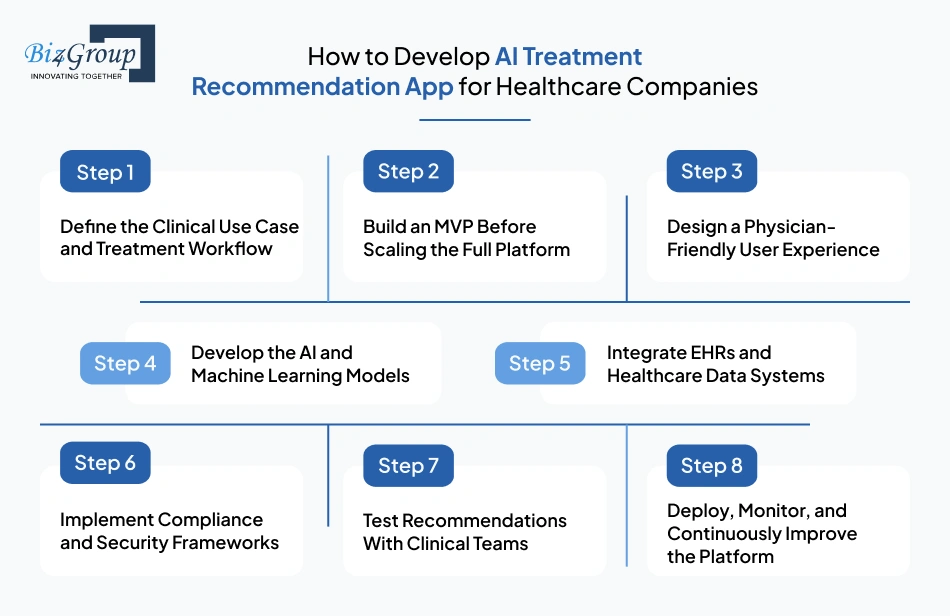
Successful AI treatment recommendation app development requires more than just AI models and healthcare data. Healthcare organizations need secure infrastructure, clinical validation, workflow-focused design, interoperability, and scalable AI architecture to ensure the platform performs reliably in real-world patient care environments.
Below is a step-by-step breakdown of how healthcare providers and technology companies typically build AI treatment recommendation app platforms for modern clinical workflows.
Step 1: Define the Clinical Use Case and Treatment Workflow
The first step is identifying the exact healthcare problem the platform will solve. Some organizations focus on oncology recommendations, while others prioritize chronic disease management, ICU support, precision medicine, or multi-specialty treatment planning.
A clearly defined use case prevents unnecessary complexity and helps align development with measurable clinical outcomes. Many healthcare leaders begin this process with concerns like, "Our hospital network has 500 physicians making treatment decisions daily based on outdated clinical guidelines and we need an AI powered treatment recommendation system that gives doctors real time evidence based guidance at the point of care."
Key planning areas include:
- Target medical specialty
- Physician workflow requirements
- Type of recommendations
- Patient data sources
- Clinical outcome goals
Step 2: Build an MVP Before Scaling the Full Platform
Most healthcare organizations start with a limited-feature MVP to validate recommendation accuracy, physician adoption, and workflow efficiency before scaling the product across departments or facilities. This approach reduces development risk while helping teams gather real-world clinical feedback early in the process.
Many providers rely on MVP development strategies before expanding enterprise-grade AI treatment recommendation system development for hospitals initiatives.
Core MVP components usually include:
- Patient dashboard
- Recommendation engine
- Treatment scoring
- Basic EHR integration
- Physician feedback workflows
Step 3: Design a Physician-Friendly User Experience
Doctors work in fast-paced clinical environments where poor interface design can slow treatment decisions. The platform should display recommendations, alerts, patient records, and clinical evidence in a clean and workflow-friendly format. Strong usability plays a major role in physician adoption during clinical decision support AI app development company projects.
Healthcare organizations increasingly prioritize healthcare-focused UI/UX design to improve usability and reduce workflow fatigue for physicians.
Important design considerations include:
- Fast navigation
- Clear recommendation panels
- Mobile accessibility
- Minimal data clutter
- Workflow-focused layouts
Step 4: Develop the AI and Machine Learning Models
The AI engine must be trained using clinical datasets, treatment outcomes, physician notes, medical guidelines, and patient history. Machine learning models identify treatment patterns, while NLP systems process unstructured healthcare data.
This step becomes especially important for organizations focused on developing AI treatment recommendation app with machine learning and NLP capabilities for personalized treatment planning.
Core AI components often include:
- NLP engines
- Recommendation models
- Risk prediction systems
- Drug interaction analysis
- Outcome prediction algorithms
Step 5: Integrate EHRs and Healthcare Data Systems
The platform must securely connect with EHR systems like Epic and Cerner along with labs, imaging systems, pharmacies, and wearable devices. Real-time interoperability ensures recommendations are based on accurate and current patient data.
Organizations exploring how to develop AI treatment recommendation app for healthcare companies must prioritize healthcare interoperability standards from the beginning.
Typical integration areas include:
- HL7 support
- FHIR APIs
- EHR synchronization
- Secure cloud infrastructure
- Real-time data exchange
Step 6: Implement Compliance and Security Frameworks
Healthcare AI systems must comply with HIPAA, FDA regulations, and internal hospital security policies before deployment. Security architecture affects every part of the platform, which means compliance must be integrated early in development.
Organizations planning to build secure AI treatment recommendation app with role based physician access capabilities must implement encrypted storage, controlled access, audit tracking, and secure authentication workflows.
Critical security components include:
- Data encryption
- Multi-factor authentication
- Audit logs
- Consent management
- Role-based access control
Step 7: Test Recommendations With Clinical Teams
Before launch, healthcare organizations should validate the platform with physicians, specialists, and clinical staff in controlled testing environments. This helps identify workflow issues, recommendation gaps, and usability challenges before production deployment.
This stage becomes even more important when healthcare leaders are trying to solve challenges like, "We are losing patients to competing hospital systems because our treatment protocols are inconsistent across departments and we need an AI treatment recommendation app that standardizes treatment recommendations across all our facilities."
Testing typically focuses on:
- Recommendation accuracy
- Physician usability
- Workflow compatibility
- Patient safety
- Clinical reliability
Step 8: Deploy, Monitor, and Continuously Improve the Platform
After deployment, the system should continuously improve using physician feedback, treatment outcomes, updated medical guidelines, and new healthcare datasets. AI healthcare platforms cannot remain static because treatment standards evolve constantly.
Healthcare providers investing in building custom AI treatment recommendation app from scratch increasingly prioritize long-term monitoring, scalability, and adaptive AI optimization strategies.
Post-launch priorities usually include:
- AI Model retraining
- Recommendation refinement
- Infrastructure scaling
- Compliance updates
- Performance monitoring
Many healthcare organizations also collaborate with experienced AI app development company teams to support enterprise deployment, scalability, and long-term AI optimization.
Once the development process is defined, the next step is choosing the right technologies, frameworks, and infrastructure required to power a scalable AI treatment recommendation platform.
Got the Healthcare AI Idea but Not Sure Where to Start?
Whether you need an MVP or a full-scale clinical platform, we help healthcare organizations turn complex AI ideas into production-ready healthcare solutions.
Discuss Your IdeaWhat Tech Stack Is Best for Building a Secure and Scalable AI Treatment Recommendation App?
Choosing the right technology stack plays a major role in successful AI treatment recommendation app development. Healthcare platforms must process sensitive patient data securely, support real-time recommendations, integrate with hospital systems, and scale across large clinical environments without compromising performance.
The ideal tech stack should support AI processing, healthcare interoperability, compliance requirements, and long-term scalability from the beginning.
|
Technology Layer |
Recommended Technologies |
Why It Matters in AI Treatment Recommendation Systems |
|---|---|---|
|
Frontend Development |
These technologies help build responsive physician dashboards, patient portals, and cross-platform healthcare applications with fast performance and real-time data rendering. |
|
|
Backend Development |
Backend frameworks manage APIs, treatment recommendation workflows, authentication, patient data processing, and healthcare system integrations securely. |
|
|
AI and Machine Learning Frameworks |
TensorFlow, PyTorch, Scikit-learn, XGBoost |
These frameworks power predictive analytics, treatment recommendation engines, risk scoring, and outcome prediction models used in build AI treatment recommendation app platforms. |
|
NLP Processing Stack |
OpenAI, spaCy, Hugging Face Transformers, BioBERT |
NLP technologies help process physician notes, discharge summaries, prescriptions, and unstructured healthcare data during developing AI treatment recommendation app with machine learning and NLP workflows. |
|
Generative AI Infrastructure |
GPT-4, Claude, Gemini |
Generative AI models support clinical summarization, conversational AI, physician copilots, and patient communication systems inside advanced healthcare applications. |
|
Database Management |
PostgreSQL, MongoDB, Firebase, Cassandra |
Healthcare systems require scalable databases capable of handling structured patient records, treatment history, imaging metadata, and real-time healthcare analytics. |
|
Cloud Infrastructure |
AWS HealthLake, Microsoft Azure Healthcare APIs, Google Cloud Healthcare API |
Cloud infrastructure supports scalability, secure healthcare storage, AI model deployment, and HIPAA-compliant healthcare application hosting. |
|
Healthcare Interoperability Standards |
HL7, FHIR APIs, SMART on FHIR |
These standards enable secure communication between EHR systems like Epic and Cerner and are essential for AI treatment recommendation system development for hospitals. |
|
Authentication and Security |
OAuth 2.0, JWT, Okta, Multi-Factor Authentication |
Strong authentication systems protect sensitive healthcare data while supporting secure physician access and compliance requirements. |
|
DevOps and CI/CD |
Docker, Kubernetes, Jenkins, GitHub Actions |
DevOps tools help healthcare teams automate deployments, manage infrastructure, monitor performance, and scale healthcare AI applications efficiently. |
|
MLOps Infrastructure |
MLflow, Kubeflow, Amazon SageMaker |
MLOps platforms help healthcare organizations monitor AI model performance, retrain models, and manage recommendation accuracy over time. |
|
Real-Time Data Processing |
Apache Kafka, RabbitMQ, Spark Streaming |
Real-time processing systems help AI engines analyze patient data streams instantly for faster treatment recommendations and clinical alerts. |
|
Data Visualization and Analytics |
Power BI, Tableau, Grafana |
Analytics platforms help physicians and administrators visualize patient outcomes, treatment trends, recovery patterns, and operational performance. |
|
Whisper AI, Dialogflow, Amazon Lex |
Voice AI capabilities improve physician documentation workflows and support conversational healthcare interactions inside modern clinical systems. |
|
|
Monitoring and Observability |
Prometheus, Datadog, New Relic |
Monitoring tools help healthcare organizations track platform health, API performance, AI inference speed, and infrastructure reliability in real time. |
Healthcare organizations planning to develop AI treatment app that meets international medical device regulations should also ensure their technology stack supports auditability, compliance reporting, encrypted storage, and long-term scalability from the start. Once the technical foundation is defined, the next major question healthcare leaders usually ask is straightforward: How much does AI treatment recommendation app development actually cost?
How Much Does AI Treatment Recommendation App Development Actually Cost?
The cost of AI treatment recommendation app development typically ranges between $20,000 to $150,000+, depending on the platform complexity, AI capabilities, healthcare integrations, compliance requirements, and deployment scale.
A basic MVP with limited recommendation functionality may cost significantly less, while enterprise-grade platforms with predictive analytics, NLP processing, EHR integrations, and real-time clinical intelligence can move well beyond the higher end of the range.
Healthcare organizations planning to build AI treatment recommendation app platforms should evaluate costs based on features, infrastructure, compliance, scalability, and long-term operational goals rather than development alone.
|
Development Component |
Estimated Cost Range |
What Impacts the Cost |
|---|---|---|
|
UI/UX Design and Research |
$3,000 – $12,000 |
Complex physician workflows, dashboard customization, mobile responsiveness, and healthcare-focused usability requirements increase design efforts. |
|
MVP Development |
$10,000 – $30,000 |
Basic recommendation engine, limited integrations, and core physician workflows generally fall within MVP-stage development. |
|
AI Recommendation Engine Development |
$15,000 – $50,000+ |
Recommendation logic, predictive analytics, treatment scoring, and personalized care planning significantly affect development complexity. |
|
Machine Learning and NLP Development |
$10,000 – $40,000+ |
Cost increases when platforms require physician note summarization, unstructured data analysis, and advanced NLP workflows. This is especially important during developing AI treatment recommendation app with machine learning and NLP projects. |
|
EHR and Healthcare System Integrations |
$8,000 – $30,000+ |
Integrating Epic, Cerner, labs, imaging systems, and wearable devices increases interoperability and security requirements. |
|
HIPAA Compliance and Security Implementation |
$5,000 – $20,000+ |
Encryption, audit logs, secure authentication, role-based access, and compliance infrastructure directly impact costs. |
|
Cloud Infrastructure and Hosting |
$3,000 – $15,000+ annually |
AI inference workloads, real-time patient data processing, and secure healthcare storage influence infrastructure expenses. |
|
Real-Time Drug Interaction Alerts |
$5,000 – $15,000+ |
Medication databases, safety engines, and alert systems increase backend and compliance complexity. |
|
Treatment Outcome Prediction Models |
$8,000 – $25,000+ |
Predictive recovery analytics and treatment success scoring require advanced ML model development and training datasets. |
|
Testing and Clinical Validation |
$5,000 – $20,000+ |
Healthcare platforms require physician testing, compliance reviews, usability testing, and recommendation validation before deployment. |
|
Ongoing Maintenance and AI Optimization |
15% – 25% of annual project cost |
AI models require retraining, monitoring, infrastructure scaling, and continuous recommendation refinement over time. |
What Factors Affect AI Treatment Recommendation App Development Cost?
Several factors influence the total cost of AI treatment recommendation system development for hospitals and healthcare providers.
Platform Complexity
A basic recommendation platform costs far less than a system with predictive analytics, explainable AI, NLP processing, voice assistants, and precision medicine capabilities. Organizations planning to build AI medical app with treatment outcome prediction and success scoring features should expect higher development and infrastructure costs.
Healthcare Integrations
Integrating with Epic, Cerner, pharmacy systems, labs, imaging tools, and wearable devices increases both development time and interoperability requirements. This becomes a major cost driver for enterprise healthcare environments.
AI and Data Processing Requirements
Advanced AI capabilities such as genomic analysis, treatment prediction models, physician copilots, and real-time decision intelligence require larger datasets, model training infrastructure, and ongoing optimization. This is especially relevant for organizations planning to build AI clinical app with patient history and genetic data analysis engine functionality.
Compliance and Security Requirements
HIPAA compliance, FDA regulations, encrypted storage, audit logging, and role-based physician access significantly affect development complexity and testing requirements. Healthcare providers planning to build secure AI treatment recommendation app with role based physician access should account for compliance costs early in project planning.
Team Structure and Development Location
Development costs vary based on whether the project uses in-house teams, freelancers, offshore developers, or specialized healthcare AI companies. Many healthcare organizations choose to hire AI developers with healthcare compliance and interoperability experience to reduce long-term development risks.
Hidden Costs Most Healthcare Organizations Overlook
Many healthcare companies underestimate the long-term operational costs involved in maintaining AI healthcare platforms after deployment.
Some commonly overlooked expenses include:
- AI model retraining
- Cloud infrastructure scaling
- Regulatory updates
- EHR integration maintenance
- Clinical validation cycles
- Cybersecurity monitoring
- Healthcare API licensing
- Data storage growth
- Performance optimization
These costs become more noticeable as healthcare systems scale across departments and facilities.
How to Optimize AI Treatment Recommendation App Development Cost
Healthcare organizations can reduce unnecessary spending by focusing on phased development and scalable architecture instead of building every advanced feature upfront.
A common strategy is starting with a limited-feature MVP focused on one specialty or workflow before expanding enterprise-wide capabilities.
Cost optimization strategies often include:
- Building modular architecture
- Prioritizing core recommendation features first
- Using cloud-native infrastructure
- Leveraging pre-trained AI models
- Starting with a single clinical use case
- Using scalable API-based integrations
- Validating physician workflows early
Many healthcare providers also partner with experienced AI product teams to reduce development inefficiencies and accelerate deployment timelines.
While understanding development cost is important, healthcare organizations also need to prepare for the operational and technical challenges that often determine whether these platforms succeed or fail after deployment.
Trying to Estimate the Real Cost of AI Treatment Recommendation App Development?
Get a realistic breakdown of development timelines, AI features, integrations, and compliance costs tailored to your healthcare business goals.
Get a Custom Cost EstimateWhat Are the Biggest Challenges in AI Treatment Recommendation App Development and How Can You Solve Them?
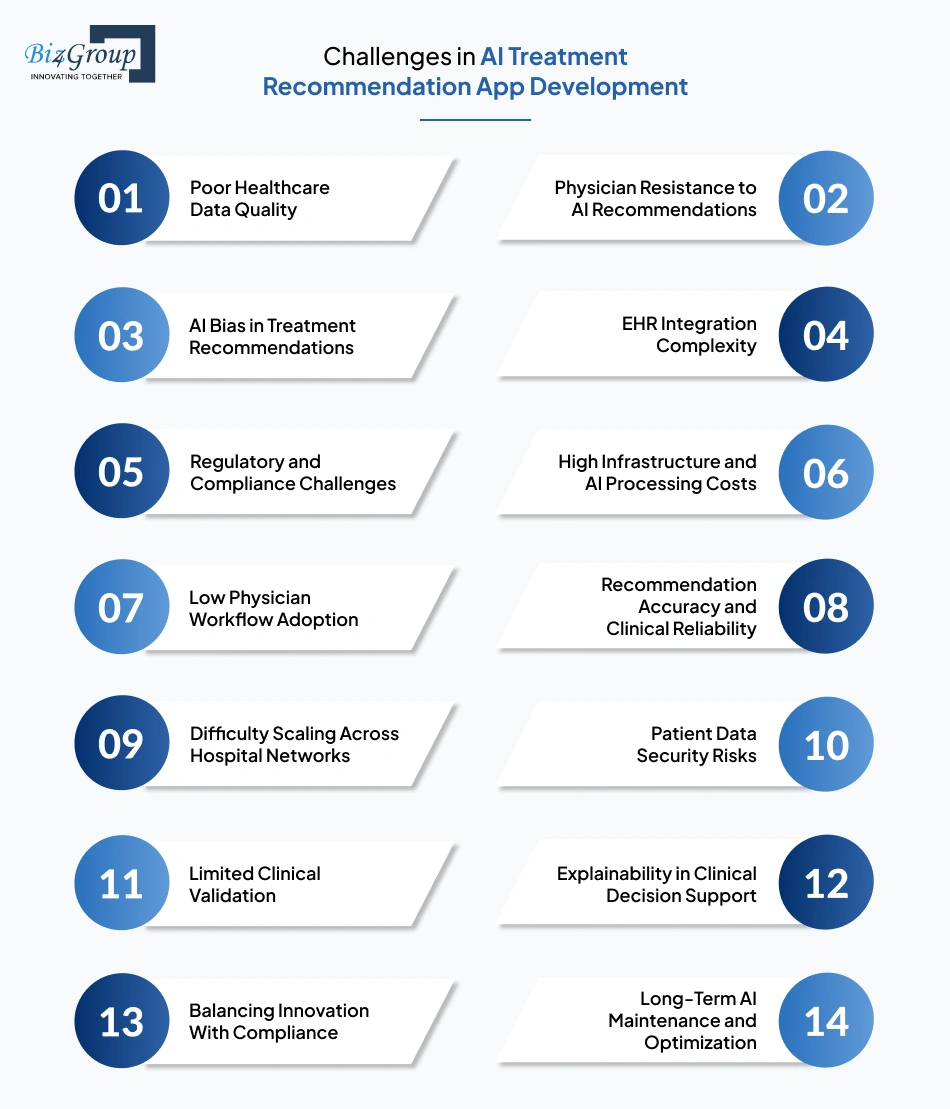
Building a successful AI treatment recommendation app development platform is not only about AI models and healthcare data. Many healthcare organizations struggle with adoption, interoperability, compliance, and recommendation reliability after deployment.
Understanding these challenges early helps providers reduce operational risks and build systems that physicians actually trust and use in real clinical environments.
|
Challenge |
Why It Happens |
Practical Solution |
|---|---|---|
|
Poor Healthcare Data Quality |
Healthcare data is often fragmented across EHRs, labs, imaging systems, and physician notes. Incomplete or inconsistent patient records reduce recommendation accuracy. |
Use standardized healthcare interoperability frameworks like HL7 and FHIR along with strong data-cleaning pipelines before AI model training begins. |
|
Physician Resistance to AI Recommendations |
Doctors may hesitate to trust recommendations generated by black-box AI systems, especially during high-risk treatment decisions. |
Build explainable AI workflows that display confidence scores, clinical evidence, recommendation rationale, and physician override controls. |
|
AI Bias in Treatment Recommendations |
AI models trained on limited or biased datasets may generate inconsistent recommendations across patient demographics. |
Continuously validate models using diverse healthcare datasets and monitor treatment outcomes across patient populations regularly. |
|
EHR Integration Complexity |
Healthcare organizations use multiple systems such as Epic, Cerner, labs, imaging tools, and pharmacy software that often lack seamless interoperability. |
Prioritize scalable API architecture and secure interoperability standards during AI treatment recommendation system development for hospitals. |
|
Regulatory and Compliance Challenges |
HIPAA, FDA regulations, audit requirements, and patient privacy laws add significant complexity to healthcare AI platforms. |
Integrate compliance frameworks early instead of treating security and governance as post-development tasks. |
|
High Infrastructure and AI Processing Costs |
Real-time AI inference, cloud infrastructure, NLP processing, and predictive analytics require scalable computing resources. |
Start with focused MVP deployments and scale infrastructure gradually based on adoption and usage patterns. |
|
Low Physician Workflow Adoption |
Complicated interfaces and disconnected workflows often slow down physician adoption after deployment. |
Build physician-friendly dashboards with healthcare-focused workflows and simplified recommendation interfaces. |
|
Recommendation Accuracy and Clinical Reliability |
AI systems may produce unreliable recommendations if models are not continuously updated with new treatment data and outcomes. |
Continuously retrain AI models using updated clinical guidelines, physician feedback, and real-world treatment outcomes. |
|
Difficulty Scaling Across Hospital Networks |
Expanding AI systems across departments and facilities often creates operational inconsistencies and infrastructure challenges. |
Use modular cloud-native architecture and centralized governance models for scalable healthcare deployments. |
|
Patient Data Security Risks |
AI healthcare systems process highly sensitive patient data, making them attractive targets for cyberattacks and unauthorized access. |
Implement encryption, role-based access control, audit logging, and secure authentication workflows from the beginning. |
|
Limited Clinical Validation |
Some healthcare organizations launch AI systems without proper physician testing and real-world validation processes. |
Conduct controlled pilot testing with clinical teams before enterprise deployment to improve reliability and physician trust. |
|
Explainability in Clinical Decision Support |
Healthcare leaders increasingly ask, "How do I make an AI clinical decision support tool explainable enough for physicians to trust it?" because recommendation transparency directly affects adoption. |
Build explainable AI systems that clearly show supporting evidence, treatment logic, patient-specific reasoning, and risk scoring alongside every recommendation. |
|
Balancing Innovation With Compliance |
Organizations often struggle to introduce advanced AI features while maintaining healthcare compliance standards. |
Adopt phased deployment strategies where advanced AI capabilities are validated gradually before full-scale rollout. |
|
Long-Term AI Maintenance and Optimization |
AI healthcare systems require ongoing monitoring, retraining, infrastructure upgrades, and compliance updates after launch. |
Partner with experienced AI app development company teams that can support long-term optimization, monitoring, and enterprise scalability. |
Many healthcare organizations entering this space eventually realize that success depends less on adding more AI features and more on building clinically reliable, explainable, and workflow-friendly systems that physicians trust during real patient care.
That is exactly why choosing the right healthcare AI development partner becomes one of the most important decisions in the entire implementation journey.
Looking for an Experienced AI Healthcare Development Partner? Why Healthcare Brands Choose Biz4Group LLC
Building a successful AI treatment recommendation app development platform requires much more than AI implementation. Healthcare organizations need a partner that understands clinical workflows, healthcare compliance, interoperability, scalable AI infrastructure, and physician-focused product design.
As an experienced AI development company, Biz4Group LLC has worked on multiple AI-powered healthcare and intelligent recommendation platforms tailored for real-world healthcare environments.
Some of our healthcare-focused AI projects include:
- CogniHelp for cognitive wellness and patient support
- AI Wizard for AI-powered conversational and behavioral interaction experiences
From healthcare AI systems and intelligent recommendation engines to scalable enterprise platforms, Biz4Group LLC helps healthcare organizations build AI treatment recommendation app solutions that are secure, compliant, scalable, and designed around actual clinical workflows.
Looking for a Healthcare AI Partner That Actually Understands Clinical Workflows?
Biz4Group LLC builds scalable healthcare AI solutions designed around physician usability, healthcare compliance, and real-world patient care environments.
Connect With UsWrapping Up!
Healthcare organizations are rapidly investing in AI treatment recommendation app development to improve treatment accuracy, reduce decision delays, and deliver more personalized patient care. From predictive treatment scoring to real-time clinical decision support, these systems are becoming a core part of modern healthcare infrastructure.
Healthcare leaders are actively searching for solutions that can solve challenges like, "Find me a digital health development agency that has built AI powered treatment recommendation app for hospital networks or specialty care providers and has experience with Epic and Cerner EHR integrations." Because building reliable healthcare AI platforms requires more than AI expertise alone. It requires deep understanding of healthcare workflows, compliance, interoperability, and physician usability.
As an experienced healthcare-focused technology partner, Biz4Group LLC helps organizations build AI treatment recommendation app solutions that are secure, scalable, and designed for real clinical environments.
Build healthcare AI that helps doctors decide faster and patients recover smarter.
FAQ
1. How much does AI treatment recommendation app development cost?
The cost of AI treatment recommendation app development typically ranges between $20,000 to $150,000+ depending on platform complexity, AI capabilities, EHR integrations, compliance requirements, and scalability needs. Enterprise healthcare platforms with predictive analytics, NLP processing, and real-time treatment intelligence usually require larger development budgets.
2. How long does it take to build AI treatment recommendation app platforms for hospitals?
A basic MVP can take around 3 to 5 months, while enterprise-grade healthcare systems may require 8 to 14 months depending on integrations, AI model complexity, and compliance requirements. Projects involving Epic, Cerner, predictive treatment scoring, and advanced AI workflows generally require longer timelines.
3. What technologies are commonly used in developing AI treatment recommendation app with machine learning and NLP?
Most healthcare AI platforms use technologies such as Python, TensorFlow, PyTorch, OpenAI APIs, FastAPI, React.js, PostgreSQL, HL7, and FHIR APIs. NLP frameworks are also heavily used for physician note analysis, clinical summarization, and unstructured healthcare data processing.
4. Can AI treatment recommendation systems integrate with Epic and Cerner EHR platforms?
Yes. Modern AI treatment recommendation system development for hospitals heavily depends on secure EHR interoperability. Most healthcare AI platforms integrate with Epic, Cerner, labs, imaging systems, pharmacies, and wearable devices using standards like HL7 and SMART on FHIR.
5. How do healthcare companies make AI treatment recommendations explainable for physicians?
Healthcare organizations improve physician trust by adding explainable AI layers that display recommendation rationale, confidence scores, supporting clinical evidence, and patient-specific reasoning alongside every treatment suggestion. This is becoming increasingly important as healthcare leaders continue asking questions like, "How do I make an AI clinical decision support tool explainable enough for physicians to trust it?"
6. Is HIPAA compliance mandatory for AI treatment recommendation app development?
Yes. Any healthcare AI platform handling patient information in the U.S. must follow HIPAA regulations. Healthcare organizations planning to build secure AI treatment recommendation app with role based physician access must implement encrypted storage, secure authentication, audit logs, and controlled data access throughout the system.
7. What is the biggest challenge in building custom AI treatment recommendation app from scratch?
One of the biggest challenges is balancing recommendation accuracy, physician trust, compliance requirements, and healthcare interoperability at the same time. Many healthcare organizations underestimate the complexity of integrating AI systems into real clinical workflows while maintaining security, explainability, and scalability across hospital environments.
