 Location :
Orlando, FL, USA
Location :
Orlando, FL, USA +1 (407) 714-1616
 info@biz4group.com

- Developing an AI gym management software helps fitness businesses reduce manual work and manage daily operations with more consistency and control.
- Building such software requires clear operational goals, reliable gym data, and a system design that fits real scheduling, billing, and staff workflows.
- Choosing the right AI capabilities allows gyms to act earlier on attendance issues, member drop-offs, and payment risks instead of reacting late.
- Understanding development challenges and common mistakes helps avoid wasted effort, budget overruns, and misaligned AI features.
- Working with an experienced development team like Biz4Group LLC supports smooth execution from planning to launch while keeping the AI gym management system practical and scalable.
If you’ve spent more than a few weeks running a gym or fitness studio, you know how easy it is to get weighed down by scheduling, billing, membership queries, trainer assignments, and follow-ups. That’s where the idea to develop an AI gym management software truly begins to make sense not as a tech buzzword, but as a tool that can handle the repetitive stuff so you can focus on members and growth.
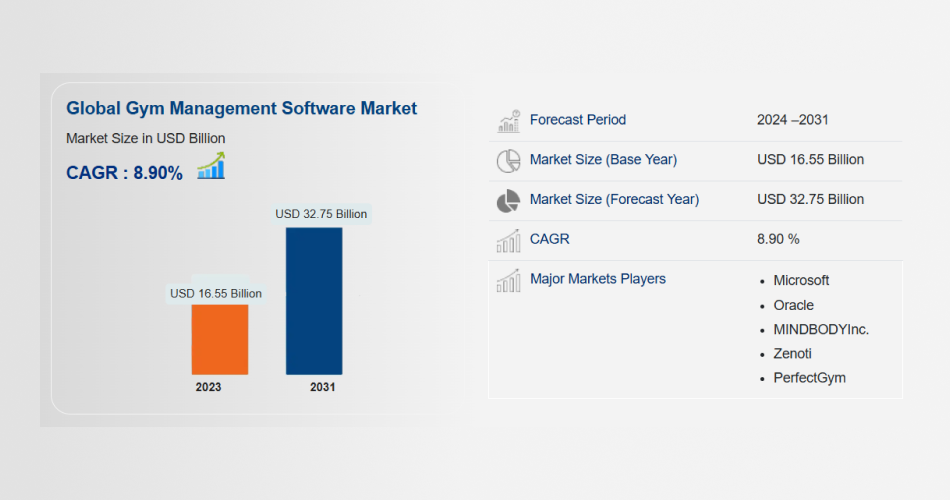
According to the latest market research, the global gym management software market is projected to reach USD 32.75 billion by 2031, growing at around 8.9% annually. That tells you two things at once:
- Fitness businesses are increasingly choosing digital systems and AI over spreadsheets and manual work.
- There’s heavy demand for smarter AI software that does more than just track attendance and payments.
And if you’re trying to picture where AI business process automation actually fits into day-to-day gym operations, it starts with things like class scheduling, payment follow-ups, staff allocation, and member queries not needing manual handling anymore. This is exactly where structured AI automation services help turn routine gym workflows into systems that run consistently without constant oversight.
Whether you want to build AI powered gym management software for gyms and studios to increase member engagement or a system that automates scheduling and billing, we’ll walk you through the practical steps ahead.
What Is an AI Gym Management Software and how does it work?
An AI gym management software is a centralized platform designed to run daily gym operations while learning from member and business data over time. Unlike traditional systems that simply record actions, this software identifies patterns across memberships, attendance, payments, and staff usage.
When fitness businesses create an AI driven gym management system, the goal is not complexity; it is operational clarity. From predicting class demand to flagging churn risks, this approach supports smarter decisions without adding workload. For modern operators looking to develop AI gym management software for modern fitness centers, this becomes the foundation for scale, consistency, and controlled growth.
How Does an AI Gym Management Software Work?
- Data from check-ins, schedules, billing, and member activity flows into a unified system.
- Trained AI models analyze behavior trends such as attendance frequency and membership usage patterns.
- The system predicts outcomes like class overbooking, trainer underutilization, or late payments.
- AI workflow automation tools trigger actions for scheduling adjustments, billing reminders, or staff allocation. trigger actions for scheduling adjustments, billing reminders, or staff allocation.
- Dashboards surface insights that help managers act before issues impact revenue or experience.
- As more data is collected, the platform continuously improves accuracy and recommendations.
When businesses build AI gym scheduling and billing software, this intelligence must integrate smoothly with existing tools. That is why planning how AI connects with operational systems matters early. AI integration services help ensure automation works quietly in the background without disrupting staff workflows or member experience.
Traditional vs AI Gym Management Software: Explore the Differences
Before you decide to develop an AI gym management software, it helps to clearly understand what changes when AI replaces traditional rule-based systems. The comparison is not about what has changed its more about what actually changes in day-to-day work once intelligence becomes part of the platform.
|
Area |
Traditional Gym Management Software |
AI Gym Management Software |
|---|---|---|
|
Data usage |
Stores member and operational data for reference |
Actively analyzes data to detect patterns and trends |
|
Scheduling |
Fixed schedules created manually |
Dynamically adjusts schedules based on attendance behavior |
|
Billing |
Rule-based billing with manual follow-ups |
Predicts missed payments and automates timely actions |
|
Member engagement |
Same communication for all members |
Personalizes interactions based on usage and behavior |
|
Reporting |
Static reports generated after events occur |
Real-time insights that highlight issues before impact |
|
Scalability |
Requires manual configuration as locations grow |
Learns from data and adapts across multiple gyms |
|
Decision support |
Relies on staff interpretation |
Surfaces clear recommendations for managers |
What This Difference Really Means for Gym Owners
When fitness businesses move toward custom AI gym management software development, the shift is less about features and more about control. Building AI-driven integration systems reduce guesswork by turning everyday activity into operational signals. For multi-location operators exploring AI gym management solutions, this creates consistency without increasing admin workload.
What ultimately separates these two approaches is how decisions are made. Traditional software reacts after problems appear. AI gym management software flags issues early and supports action before they affect members or revenue. For operators planning to scale or simplify daily management, this shift from manual control to data-guided operations becomes the real advantage.
Ready to Build Smarter Gyms?
Modernize your gym operations with AI-driven management software built around real fitness workflows.
Schedule a ConsultationKey Benefits of AI Gym Management Software Development for Fitness Businesses
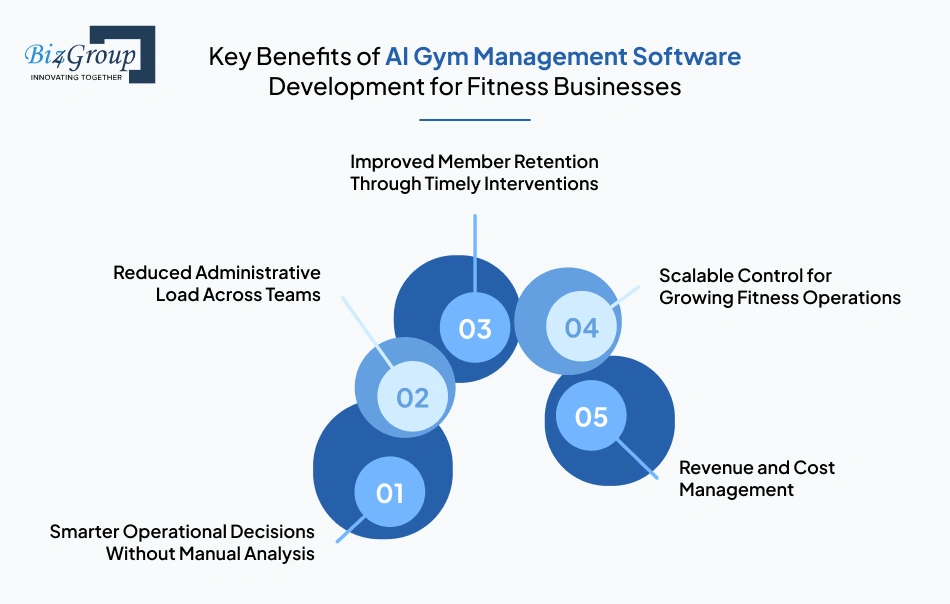
Developing an AI gym management software helps fitness businesses remove daily operational friction that slows growth. The value comes from clearer decisions, reduced administrative effort, and better control over revenue and resources. Instead of reacting to issues, teams gain the ability to act early and stay consistent.
1. Smarter Operational Decisions Without Manual Analysis
AI gym management software development allows gyms to move from reactive decisions to informed ones.
- Identifies attendance trends before classes underperform
- Highlights trainer utilization gaps early
- Flags churn risks using real usage behavior, not assumptions
This helps operators act sooner instead of reviewing reports after issues appear.
2. Reduced Administrative Load Across Teams
When businesses develop AI gym management software for modern fitness centers, routine tasks stop consuming staff hours.
- Automated scheduling adjustments reduce front-desk effort
- Billing follow-ups run without manual tracking
- Member queries are handled consistently
Teams focus on service quality instead of repetitive coordination.
3. Improved Member Retention Through Timely Interventions
AI-driven platforms monitor engagement patterns continuously.
- Detect declining visit frequency
- Trigger personalized nudges based on behavior
- Support targeted retention actions
This makes retention measurable rather than guesswork.
4. Scalable Control for Growing Fitness Operations
As locations increase, complexity grows faster than headcount.
- Centralized intelligence maintains consistency
- AI adapts across gyms without duplicating processes
- Growth does not multiply operational chaos
This is especially relevant for chains and franchises.
5. Revenue and Cost Management
AI gym management software helps stabilize cash flow.
- Early identification of payment risks
- Smarter capacity AI planning
- Better alignment between staffing and demand
Many fitness brands align this planning with AI consulting services to ensure the system supports business goals, not just automation.
AI gym management software development delivers measurable business value by reducing operational noise, improving retention, and supporting scalable growth. For fitness businesses, it creates clarity where manual systems rely on effort, assumptions, and delayed insight.
Also Read: Offshore Software Development: Trends, Advantages, and Cost
Top Use Cases of AI Gym Management Solutions for Gyms and Fitness Chains
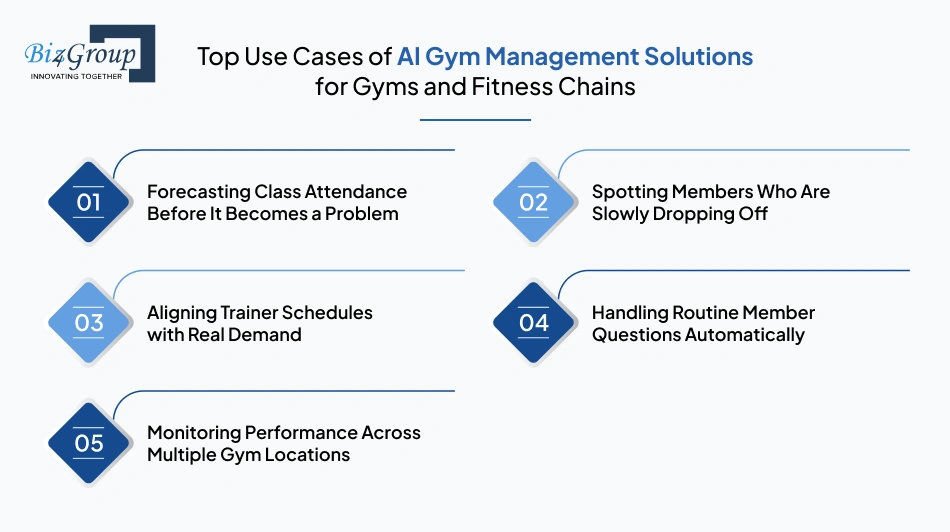
When you plan to develop an AI gym management software, it helps to think in terms of everyday situations inside a gym. These are moments where teams usually rely on experience or guesswork. AI gym management solutions step in to support those decisions with data, quietly working in the background.
1. Forecasting Class Attendance Before It Becomes a Problem
Most gyms find out a class will be empty or overcrowded only when members arrive. AI gym management software looks at past attendance, booking behavior, and time patterns to estimate turnout in advance.
This helps them to adjust schedules, limit overbooking, or merge low-demand sessions before the day starts. Over time, classes feel better planned without constant manual review.
2. Spotting Members Who Are Slowly Dropping Off
Members rarely cancel overnight, and visits usually decline first. AI gym management systems notice these changes early by tracking visit gaps and engagement patterns. When someone starts skipping workouts, the system flags it. This gives teams a chance to reach out while the member is still active, instead of reacting after cancellation.
3. Aligning Trainer Schedules with Real Demand
Staff scheduling becomes difficult when demand changes week to week. AI gym management software reviews attendance trends and trainer availability to help balance schedules. Peak hours get the coverage they need while slow periods avoid overstaffing. This keeps operations steady without relying on constant manual adjustments.
4. Handling Routine Member Questions Automatically
Front desks spend hours answering the same questions about class timings, bookings, and account details. AI gym management solutions handle these requests through structured conversations, freeing staff for in-person support.
Many gyms implement this flow with support from an AI chatbot development company to ensure responses stay accurate and consistent.
Portfolio Spotlight: This approach has already been applied in one of the wellness platforms we developed, called CSO, where users interact through guided conversations on a daily basis.
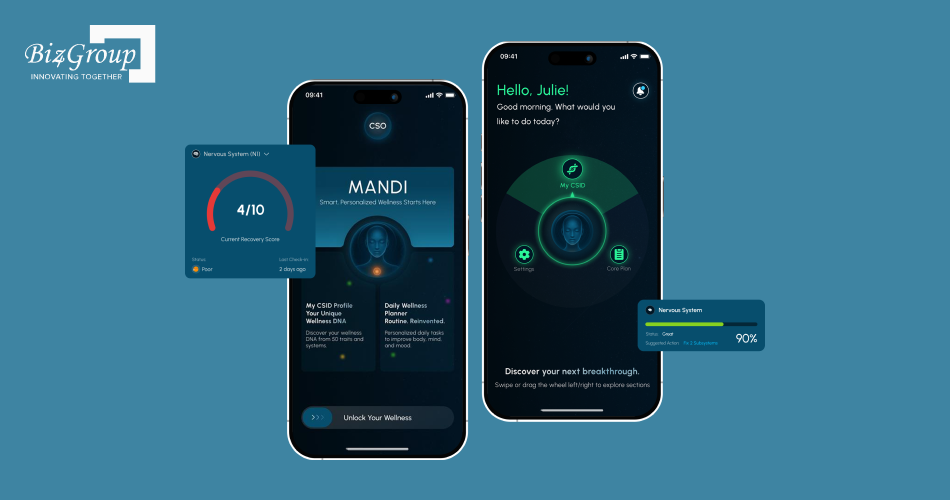
CSO was built as a conversational AI wellness platform where users interact through guided dialogues, log responses over time, and receive personalized wellness tasks based on behavioral inputs. Delivering this required us to design a scalable conversational AI system, manage complex data flows, and translate continuous user interactions into actionable intelligence. This project demonstrates our practical experience in delivering AI software that operates reliably in real user environments.
5. Monitoring Performance Across Multiple Gym Locations
For fitness chains, it’s hard to see what’s happening across all locations at once. AI gym management software brings data together and highlights differences in attendance, staffing, and performance. This makes it easier to spot issues early and keep operations aligned without micromanaging each branch.
These use cases show how AI gym management solutions fit into real gym operations. Each one addresses a specific day-to-day challenge, helping gyms and fitness chains stay organized, responsive, and in control as they grow.
Also Read: 10 AI Automation Use Cases for Enterprises to Reduce Costs and Scale Faster
Key Features of an AI-Powered Gym Management Software
When fitness businesses plan to develop an AI gym management software, defining the right features is critical. These features should represent core system capabilities that enable the platform to collect data, apply intelligence, and automate gym operations reliably at scale.
|
Feature |
Purpose |
|---|---|
|
Member activity tracking engine |
Collects and structures check-in, class attendance, and visit frequency data |
|
Attendance prediction module |
Forecasts class and facility usage using historical and real-time data |
|
AI-driven scheduling engine |
Generates optimized class and trainer schedules based on demand patterns |
|
Intelligent billing monitoring |
Tracks payment behavior and identifies anomalies or delays |
|
AI Automation rules framework |
Executes predefined actions triggered by AI-generated signals |
|
Trainer utilization analytics |
Analyzes staff allocation data to identify underuse or overload |
|
Centralized operational dashboard |
Presents real-time metrics across single or multiple gym locations |
|
AI-powered query handling module |
Processes routine member queries using structured AI conversational chatbot |
|
Data processing and learning loop |
Continuously refines models as new operational data is added |
|
Role-based access management |
Controls system access for owners, managers, trainers, and staff |
|
Integration-ready system architecture |
Supports connection with payments, access control, and third-party tools |
These features define the technical foundation of an AI-powered gym management software. Together, they ensure the platform can process data, apply intelligence, and support automation consistently as gym operations scale and evolve.
Advanced AI Features in Modern Gym Management Software
Once the core system is in place, advanced capabilities are what separates a basic AI-enabled platform from a truly intelligent one. When fitness businesses create AI gym management platforms, these features allow the software to move beyond automation and start supporting deeper operational foresight and strategic control.
|
Advanced Feature |
Purpose |
|---|---|
|
Behaviour prediction systems |
Analyze long-term activity patterns to forecast churn, upgrades, or inactivity |
|
Dynamic pricing intelligence |
Adjust membership or class pricing based on demand, usage trends, and capacity |
|
Capacity optimization algorithms |
Balance equipment, class size, and facility usage across peak and off-peak hours |
|
AI-driven performance benchmarking |
Compares operational metrics across locations to identify gaps and best practices |
|
Personalized engagement decision engine |
Determines the right message, timing, and channel for each member |
|
Predicts short-term and long-term revenue based on behavior and billing trends |
|
|
Anomaly detection system |
Identifies unusual drops in attendance, payments, or engagement automatically |
|
Self-learning recommendation logic |
Improves suggestions for classes, trainers, or plans as data grows |
These advanced features rely heavily on well-structured learning pipelines and continuous improvement. That’s why planning AI model development early is essential when businesses aim to develop intelligent gym management applications that remain accurate as data volume and complexity increase.
How to Develop an AI Gym Management Software for Fitness Businesses: Step-by-Step
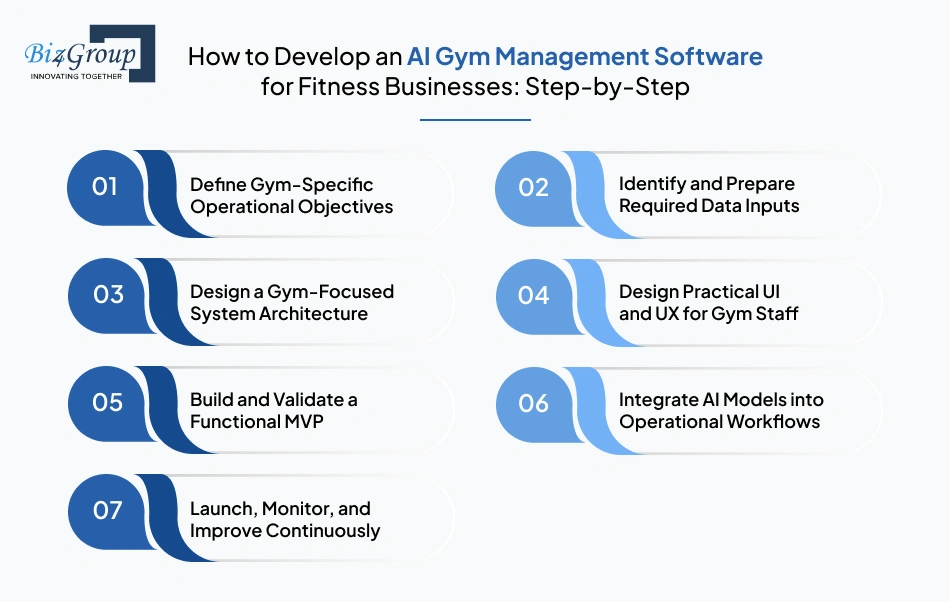
To develop an AI gym management software, fitness businesses need more than a general software plan. AI changes how decisions, data, and automation work together inside daily gym operations. This step-by-step approach focuses on what matters in real gym environments.
Step 1: Define Gym-Specific Operational Objectives
Start by defining the exact gym operations the software must support, such as scheduling, billing, attendance tracking, or member engagement.
- Clarify daily operational pain points
- Decide where AI-driven decisions are required
- Set measurable operational objectives
This step ensures the software is built to solve real gym problems, not abstract technology goals.
Step 2: Identify and Prepare Required Data Inputs
AI gym management software depends on accurate operational data collected consistently across member activity, payments, schedules, and staff usage.
- Identify all data sources used by the gym
- Clean and structure historical data
- Define how new data will be capture
Without reliable data preparation, AI features in gym management software cannot function as intended.
Step 3: Design a Gym-Focused System Architecture
The platform architecture must support daily gym operations while allowing AI components to scale as data volume and locations increase.
- Define core modules and responsibilities
- Plan AI integrations with billing and access systems
- Ensure scalability and security
This design stage is critical when businesses create AI gym management platforms meant for long-term operational use. A well-designed architecture prevents performance issues as gyms expand or add advanced AI capabilities.
Step 4: Design Practical UI and UX for Gym Staff
AI systems must fit naturally into how gym staff already work, not force new complex workflows.
- Design simple dashboards for managers
- Keep front-desk workflows minimal
- Ensure clarity across devices
Effective UI/UX design ensures staff adoption without extensive training.
Also Read: Top 15 UI/UX Design Companies in USA
Step 5: Build and Validate a Functional MVP
An MVP helps validate whether AI workflows actually improve gym operations before full investment.
- Implement essential scheduling or billing intelligence
- Test predictions using real gym data
- Collect feedback from actual users
Many fitness businesses rely on MVP development services to validate early assumptions without overbuilding. This step reduces financial and operational risk before committing full-scale development.
Also Read: AI-based Custom MVP Software Development
Step 6: Integrate AI Models into Operational Workflows
AI models must connect directly to gym workflows, so predictions lead to action, not just reports.
- Integrate AI models with live data pipelines
- Define automation rules clearly
- Test behavior under real conditions
This step enables teams to create AI driven gym management platforms for member engagement that function in real time. AI delivers value only when its outputs drive operational actions automatically.
Step 7: Launch, Monitor, and Improve Continuously
After launch, the software must be monitored and refined as gym operations, data volume, and business needs to evolve.
- Monitor prediction accuracy
- Adjust workflows as usage changes
- Release updates based on real feedback
Many gyms work with a custom software development company to support ongoing optimization. Continuous improvement keeps AI gym management software reliable as business complexity grows.
Following a structured development process helps fitness businesses build AI gym management software that works reliably in real operations. Each step ensures intelligence is practical, usable, and aligned with how gyms actually run, scale, and make decisions.
Also Read: Top 12+ MVP Development Companies to Launch Your Startup
Build with Operational Confidence
From planning to deployment, we support AI gym management software that works reliably in real environments.
Talk to Our ExpertsTechnology Stack to Build AI-Powered Gym Management Software
When you develop an AI gym management software, the technology stack decides how well the platform performs across web and mobile, how smoothly AI fits into operations, and how easily the system scales as the business grows. This stack focuses only on what is realistically required to build a stable, production-ready AI gym management system.
|
Layer |
Technology Used |
Purpose |
|---|---|---|
|
Web Frontend |
React.js |
Builds responsive admin dashboards and management panels through ReactJS development for web-based gym operations. |
|
Mobile Frontend |
React Native / Flutter |
Enables cross-platform mobile apps for members and staff using mobile application development. |
|
Web Application Layer |
Next.js |
Supports routing and performance optimization through NextJS development for scalable gym management web applications. |
|
Backend Application Layer |
Node.js |
Handles business logic, workflows, and system coordination using NodeJS development. |
|
API Layer |
REST / GraphQL |
Enables secure data exchange between web, mobile, AI services, and third-party tools through API development. |
|
AI & Data Processing Layer |
Python |
Powers predictive models and operational intelligence using Python development for scheduling, engagement, and insights. |
|
AI Model Framework |
TensorFlow / PyTorch |
Trains and runs machine learning models used within AI-driven gym management workflows. |
|
Database Layer |
PostgreSQL / MongoDB |
Stores member data, transactions, schedules, and historical records required for AI analysis. |
|
Integration Layer |
Payment, Access Control, CRM APIs |
Connects billing systems, entry management, and external fitness tools reliably. |
|
Cloud Infrastructure |
AWS / Azure / GCP |
Ensure scalability, availability, and secure deployment across multiple gym locations. |
|
Security Layer |
OAuth 2.0 / JWT |
Manages authentication, authorization, and data protection across web and mobile platforms. |
Well-defined web development and mobile app development ensures that the AI gym management software remains reliable, performant, and consistent across both platforms. When each layer is planned with intent, fitness businesses avoid rework, reduce technical risk, and build systems that support long-term operational growth.
Cost to Develop AI Gym Management Software for Modern Fitness Centers
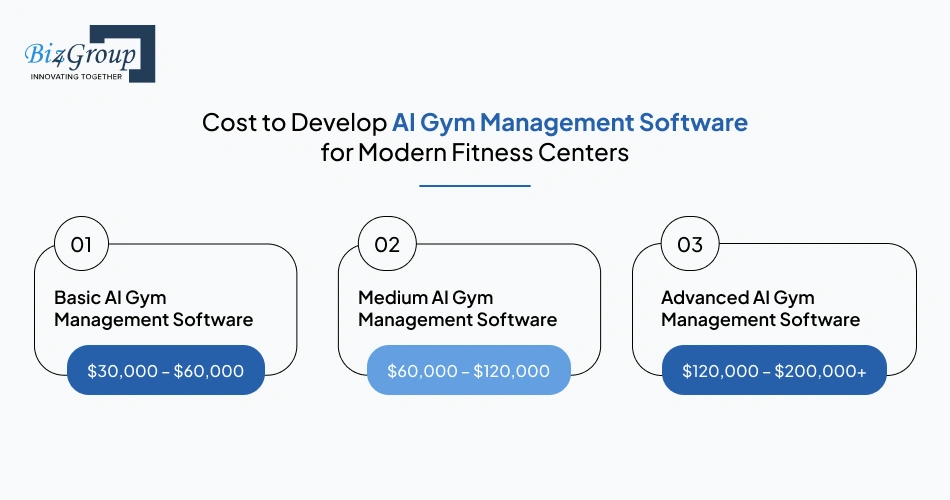
To develop an AI gym management software, budgets usually fall between $30,000 and $200,000+, depending on how deeply AI is embedded into operations. As fitness management software development with AI scales in layers, below we have divided the cost for development in three levels:
|
Development Level |
Estimated Cost Range |
What This Typically Covers |
|---|---|---|
|
Basic AI Gym Management Software |
$30,000 – $60,000 |
Core gym operations with limited AI support for scheduling, billing reminders, and basic usage insights for single-location fitness centers. |
|
Medium AI Gym Management Software |
$60,000 – $120,000 |
AI-driven scheduling, billing automation, member engagement insights, and operational dashboards designed for growing gyms and small fitness chains. |
|
Advanced AI Gym Management Software |
$120,000 – $200,000+ |
Advanced AI models, predictive analytics, personalized engagement, and multi-location operational intelligence built for large fitness brands and franchises. |
What Actually Drives the Cost
The cost to develop an AI gym management software increases as intelligence moves from basic automation to predictive decision support.
- AI depth determines complexity, not screen count
- Data volume and quality impact model accuracy
- Multi-location support adds architectural effort
- Integrations with payments, access control, and CRM affect scope
The smartest investments usually start lean, validate workflows, and then expand intelligence where it directly improves revenue or efficiency. The right cost level depends on how much operational control you want AI to handle. For modern fitness centers, investing thoughtfully ensures the software grows with your business instead of limiting it.
Also Read: AI Software Development Cost
Get a Clear AI Software Development Estimate
Understand the cost, scope, and timeline for building AI gym management software tailored to your business.
Request Cost BreakdownBusiness Models for AI Gym Management Platforms and Fitness Software
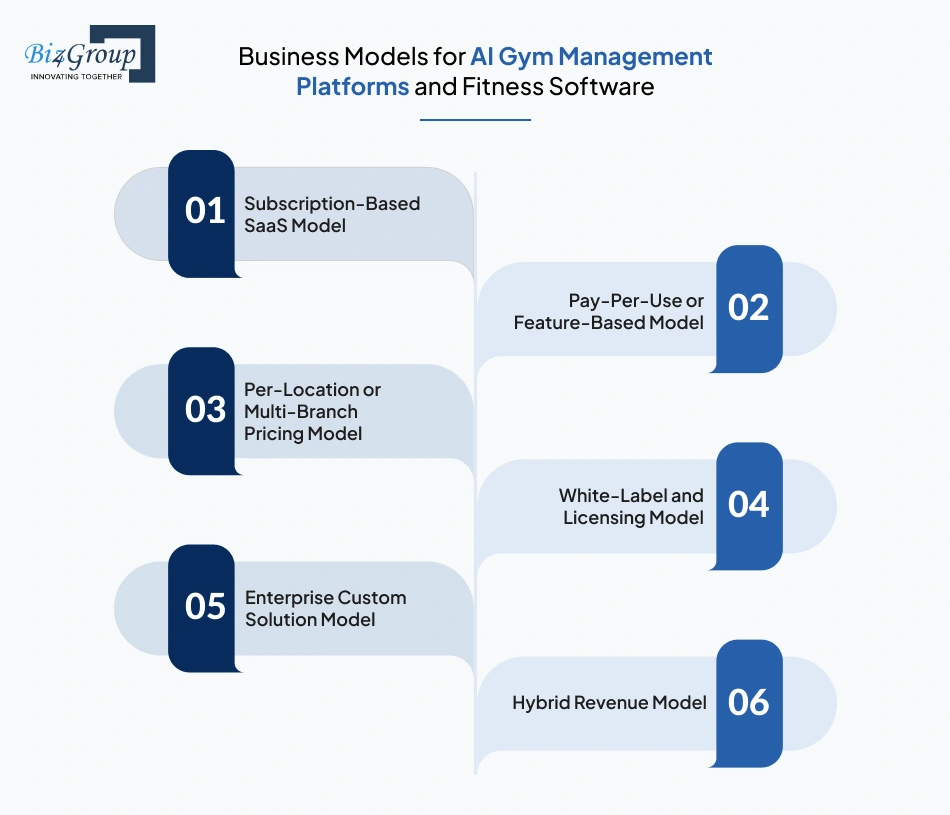
When fitness brands Develop an AI Gym Management Software, the business model determines how revenue grows alongside adoption. The right model makes the software easy to start with, valuable over time, and financially sustainable as gyms rely more on AI-driven operations.
1. Subscription-Based SaaS Model
This is the most common and dependable model for AI gym management platforms. Gyms pay a monthly or annual fee to use the software for scheduling, billing, member engagement, and operational insights.
When fitness businesses plan to build AI software with recurring usage in mind, this model supports predictable revenue while allowing the platform to evolve continuously as operational needs grow.
2. Pay-Per-Use or Feature-Based Model
Some AI capabilities are not used daily but deliver strong value when needed. In this model, gyms pay only when they use specific AI-driven functions, such as advanced scheduling predictions or engagement analysis.
This approach appeals to smaller gyms that want flexibility and allows revenue to increase as AI usage deepens.
3. Per-Location or Multi-Branch Pricing Model
For businesses that create AI gym management platforms for gyms and fitness chains, pricing per location is a natural fit. Each branch pays a defined fee, making revenue directly tied to expansion.
This model is especially effective for franchises and fitness groups planning controlled growth.
4. White-Label and Licensing Model
Fitness brands, franchises, or wellness networks may want their own branded system. In this model, the AI gym management software is licensed or white-labeled for internal use. Revenue comes from licensing fees and long-term contracts, making it a strong option for platform providers targeting enterprise clients.
5. Enterprise Custom Solution Model
Larger fitness organizations often need tailored workflows, integrations, and AI logic. Here, revenue comes from custom development, implementation, and ongoing support. This model suits operators looking to develop intelligent gym management software.
The AI software is aligned closely with their internal processes and enterprise-scale operational needs, often supported by enterprise AI solutions that ensure scalability, governance, and long-term system control.
6. Hybrid Revenue Model
Many successful platforms combine models, such as subscriptions with usage-based AI features or licensing with custom development. A hybrid approach balances predictable income with expansion-driven revenue and works well across diverse gym segments.
Choosing the right business model helps AI gym management software generate consistent revenue while staying accessible to fitness businesses. When pricing aligns with usage, scale, and operational value, the platform grows sustainably alongside its customers.
Also Read: AI Chatbot Development for Gyms and Fitness Trainers
Challenges in Custom AI Gym Management Software Development
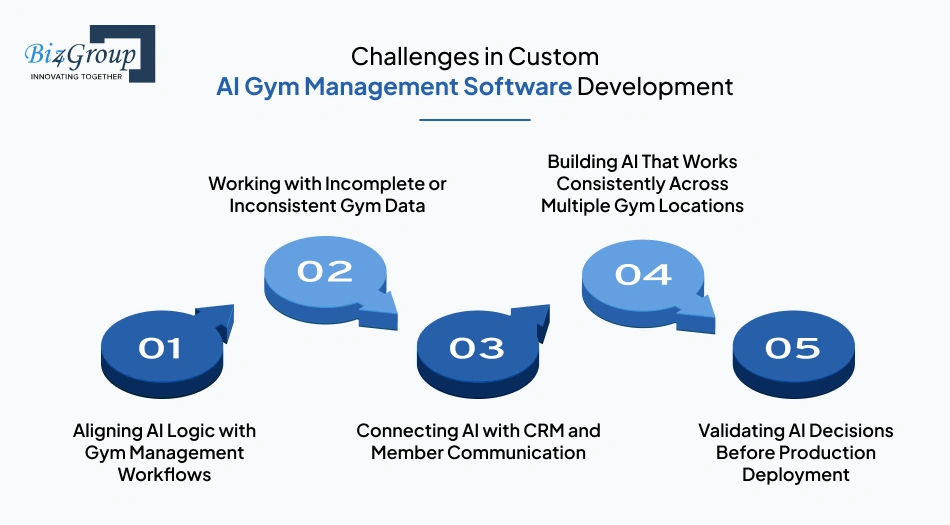
When you Develop an AI Gym Management Software, challenges don’t appear all at once. They show up gradually as data is connected, automation is introduced, and AI logic starts interacting with real gym operations. These challenges are part of the development journey and need practical handling, not assumptions.
1. Aligning AI Logic with Gym Management Workflows
During AI gym management software development, challenges arise when AI models are built without clear alignment to gym workflows like scheduling, billing cycles, and member engagement processes.
Solution: AI logic should be designed around actual gym management workflows from the beginning, ensuring intelligence supports daily operations instead of operating as a disconnected system layer.
2. Working with Incomplete or Inconsistent Gym Data
AI gym management software development becomes difficult when attendance, billing, and membership data is missing, duplicated, or stored differently across systems.
Solution: Before building AI features, ensure gym data is cleaned, standardized, and structured so the system can learn from accurate and reliable information.
3. Connecting AI with CRM and Member Communication
Development slows when AI-driven interactions cannot sync properly with CRM systems, causing gaps in member communication and follow-up tracking.
Solution: Plan AI features around existing CRM workflows, so member data stays consistent, using structured AI chatbot integration with CRM inside the gym management software.
4. Building AI That Works Consistently Across Multiple Gym Locations
AI gym management software often struggles to behave consistently when gyms operate with different class structures, pricing rules, trainer availability, and local operating policies.
Solution: AI logic should be built with location-level configuration, allowing one system to adapt to different gym setups without rewriting logic or creating separate deployments.
5. Validating AI Decisions Before Production Deployment
A major challenge during development is verifying that AI-driven outputs such as scheduling suggestions or churn indicators are reliable before the system goes live.
Solution: AI outputs should be reviewed, tested, and validated against real historical gym data during development to prevent incorrect decisions from entering live operations.
Developing AI gym management software requires careful balance between intelligence and operational reality. When challenges are handled thoughtfully during development, the software remains flexible, reliable, and aligned with how gyms actually function day to day.
Common Mistakes to Avoid in Custom AI Gym Management Software Development
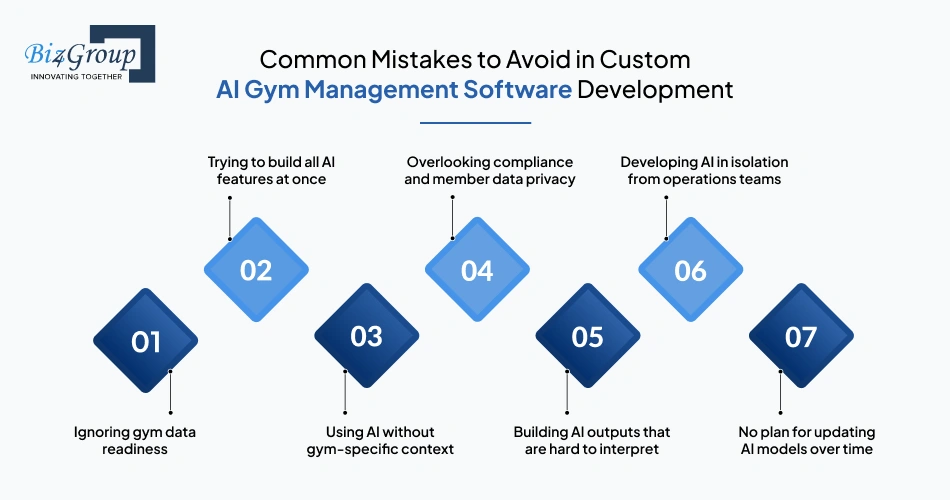
Developing AI gym management software requires more than technical execution. Many projects fail to deliver value because of avoidable planning and implementation mistakes. The table below highlights common missteps and how fitness businesses can prevent them.
|
Common Mistake |
How to Avoid It |
|---|---|
|
Ignoring gym data readiness |
Validate data from memberships, attendance, billing, and access systems before AI development begins. |
|
Trying to build all AI features at once |
Start with one or two AI-driven use cases like scheduling optimization or payment risk detection. |
|
Using AI without gym-specific context |
Design AI logic around real gym workflows such as class capacity, trainer availability, and member behavior. |
|
Overlooking compliance and member data privacy |
Apply data security, access controls, and compliance checks from the earliest design phase. |
|
Building AI outputs that are hard to interpret |
Present insights as clear recommendations that managers can act on immediately. |
|
Developing AI in isolation from operations teams |
Involve gym managers and staff during testing to ensure AI aligns with daily operations. |
|
No plan for updating AI models over time |
Set up regular reviews and retraining using new attendance and membership data. |
Avoiding these mistakes ensures AI gym management software remains practical, trustworthy, and aligned with real fitness operations. Clear data planning, focused AI scope, and operational involvement are key to long-term success.
How can Biz4Group LLC be the Right Partner to Build AI Gym Management Software?
When fitness businesses decide to develop an AI gym management software, the bigger challenge is not the idea. It is choosing a partner who understands how AI software actually works in real operations.
Biz4Group LLC approaches AI gym management software development by starting with real gym operations, not abstract AI assumptions. Our team focuses specifically on how gyms, studios, and fitness chains manage scheduling, memberships, billing, trainers, and member engagement at scale. Through our experience as an AI fitness software development company, we design AI-driven gym management platforms that align with daily operational workflows instead of forcing generic AI features into the system.
This domain-focused approach reduces implementation risk, controls AI complexity, and ensures the software delivers measurable operational value for fitness businesses. What makes us a practical choice for gyms and studios is not just technical capability, but execution discipline.
- Proven experience as a top software development company in USA, delivering long-term, scalable software products
- Strong background in custom AI gym management software development services, designed around real operational needs
- Deep understanding of fitness and wellness workflows, including scheduling, billing, staff management, and member engagement
- End-to-end delivery covering strategy, UI/UX, AI model selection, managing development and AI integration costs along with post-launch support
- A consultative development approach that helps fitness businesses avoid overbuilding or unnecessary AI complexity
Portfolio highlights: This approach becomes clearer when you look at how AI software has been designed and implemented in real-world fitness platforms.
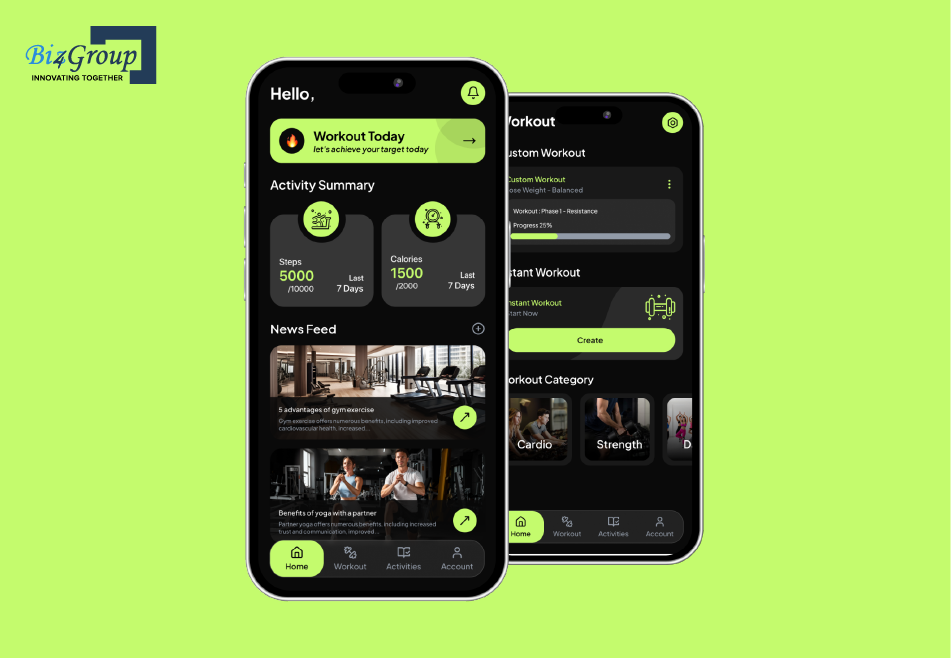
Custom AI Workout App- It analyzes body composition from user images and adapts workout plans as progress changes. We integrated computer vision models, validated image data, and built backend logic to update recommendations continuously. The work shows how AI fitness software can operate on real user inputs while staying stable, scalable, and aligned with practical fitness goals.
For gym owners and fitness brands evaluating the best company to develop AI gym management software, the real value lies in reducing uncertainty. Biz4Group LLC’s work in custom software development services shows a consistent focus on building AI systems that are usable, secure, and ready to scale.
Rather than selling AI as a feature, we treat it as infrastructure quietly supporting operations, growth, and long-term efficiency for fitness businesses.
Also Read: Top 40 Software Development Outsourcing Companies
Why Work with Biz4Group?
Partner with a team experienced in delivering AI software for fitness, wellness, and data-driven operations.
Let's ConnectConclusion
Deciding to develop an AI gym management software is ultimately a long-term operational decision, not a technology experiment. The real value comes from building a system that fits how your gym actually runs today while staying flexible for how it needs to grow tomorrow. When AI gym management software is applied with clear intent, it quietly improves scheduling, billing, staffing, and decision-making without adding complexity for your fitness business.
What matters most is working with a partner who understands how to turn business workflows into reliable software. Teams that approach this as product engineering, not feature assembly, reduce risk and avoid costly rework later. Whether you’re evaluating a software development company in Florida or looking for an experienced AI product development company, the focus should always remain on practical execution and long-term usability.
When built the right way, AI gym management software becomes less visible over time because operations simply start working better. So, book an appointment with our AI consultants today and start building your competitive edge.
FAQ's
1. What does it mean to develop an AI gym management software for a fitness business?
It means creating a system that uses operational data to support scheduling, billing, staffing, and member engagement decisions. The focus is on improving how gyms operate daily, not adding complex technology for its own sake.
2. How is AI gym management software different from traditional gym software?
Traditional software stores and displays information, while AI gym management software analyzes patterns and highlights operational signals. This allows gyms to act early on issues like low attendance, staff gaps, or billing risks.
3. How long does it take to develop an AI gym management system?
Development timelines depend on scope and AI depth. A focused system may take a few months, while advanced platforms for chains or franchises are usually built in structured phases over time.
4. Is custom AI gym management software development suitable for small gyms?
Yes, when built with the right scope. Small gyms can start with limited AI features for scheduling or billing and expand capabilities as member data and operations grow.
5. What features should be prioritized when building AI powered gym management software?
Priority should go to scheduling intelligence, billing automation, member activity tracking, and clear dashboards. These features directly improve efficiency without increasing staff workload.
6. How do fitness businesses choose the best company to develop AI gym management software?
The right partner understands gym operations, plans AI around real workflows, and delivers software that works reliably in live environments. Experience with scalable AI systems matters more than feature promises.
