Location :
Orlando, FL, USA
Location :
Orlando, FL, USA +1 (407) 714-1616
 info@biz4group.com









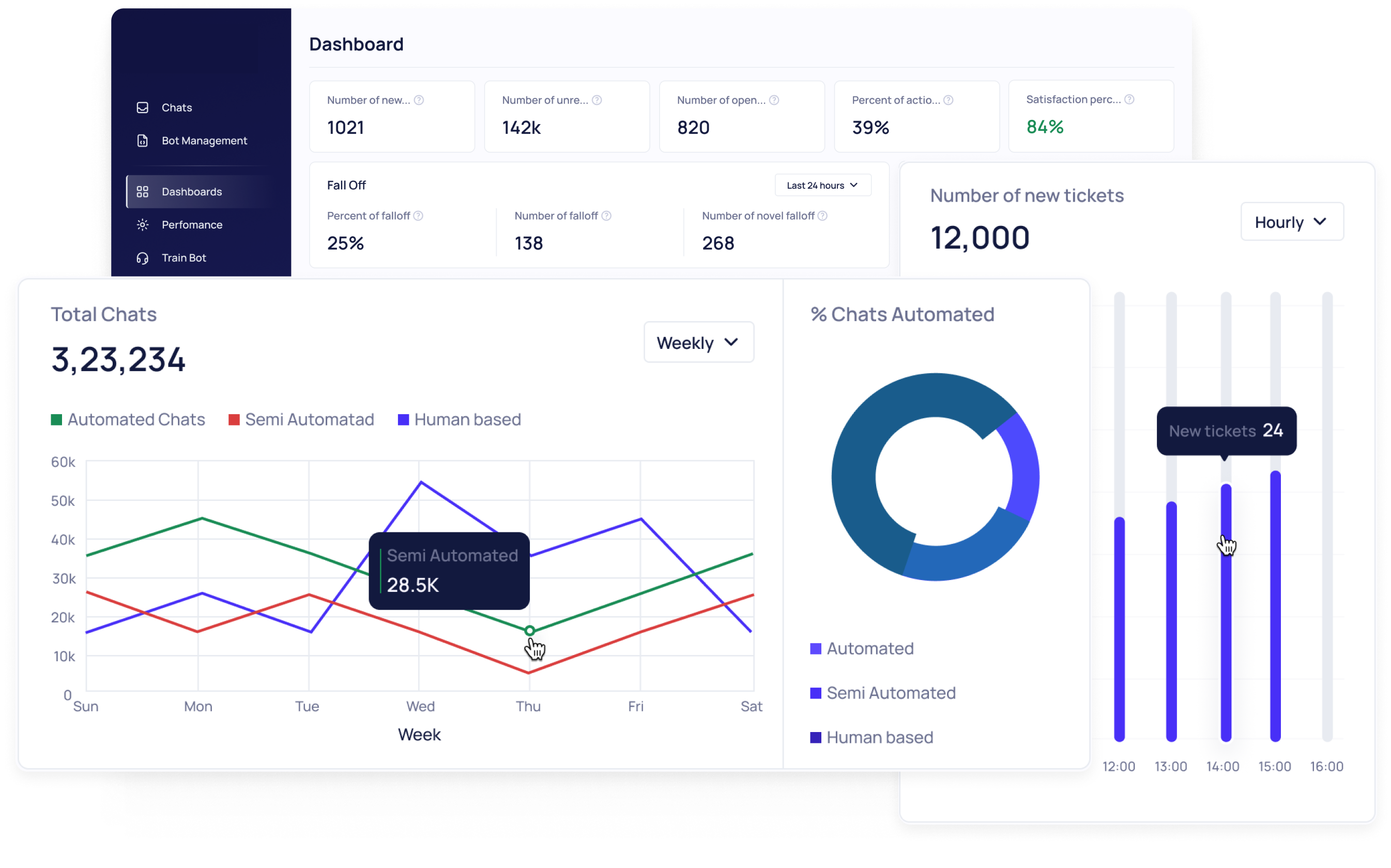









Imagine a digital system that doesn’t wait for instructions but instead, understands your business goals, learns from real-time feedback, and takes independent actions to get the job done.
Read More

Picture a Monday morning at a busy hospital or clinic. Patients arrive early, front desks are overloaded, and waiting rooms start filling up fast. Staff juggle appointments, walk ins, and last-minute changes while patients grow restless watching the clock. For healthcare leaders, this daily friction is no longer just an operational headache. It is a clear signal that queue management system development in hospitals and clinics must evolve to support modern care delivery. And once this reality sets in, the same questions surface almost immediately.
The urgency behind these questions is supported by hard data:
For hospital administrators, clinic owners, and healthcare IT managers, this challenge hits at multiple levels. Patient experience metrics are under constant scrutiny, staff burnout is becoming harder to ignore, and leadership expects operational predictability even as patient volumes fluctuate. Decisions around healthcare queue management system development are often made under pressure, requiring the same discipline and foresight expected from an AI app development company building mission critical platforms.
This guide walks through how organizations approach these challenges in practice and why more healthcare leaders are choosing to develop queue management software for hospitals as a long-term operational foundation that aligns with broader AI healthcare solutions initiatives across the care ecosystem.
A queue management system for hospitals and clinics is a purpose built digital platform that structures how patients move through care touchpoints. It replaces manual waiting processes with controlled, transparent, and data driven patient flow across departments.
When designed through custom healthcare software development, this approach enables healthcare leaders to modernize access to care while maintaining control over daily operations through queue management system development in hospitals and clinics.
At its core, queue management system development in hospitals and clinics follows a structured workflow that turns unpredictable waiting into controlled patient movement. Understanding this flow clarifies how operational efficiency is achieved step by step.
Patients enter the system through digital check in, kiosks, or front desk tools. Their visit type, appointment details, and service requirements are captured instantly. This initial step sets the foundation to build clinic queue management systems that remain organized under pressure.
The system assigns patients to queues based on predefined logic such as appointment time, urgency, or department. Priority rules ensure fair sequencing without manual intervention. This stage is where hospitals begin to create hospital queue management solutions that reduce confusion and delays.
Staff gain live visibility into patient status, waiting times, and service progress. Operational dashboards help supervisors balance workloads and respond to bottlenecks. This layer often benefits from AI integration services that enable smarter decision making.
Patients receive real time updates through screens, SMS, or mobile apps. Clear communication minimizes idle waiting and missed turns. The result is smoother patient movement across care touchpoints.
|
Workflow Stage |
Key Action |
Operational Outcome |
|---|---|---|
|
Entry |
Digital check in |
Faster patient onboarding |
|
Assignment |
Rule based queue logic |
Fair and predictable flow |
|
Monitoring |
Live dashboards |
Improved staff utilization |
|
Notification |
Real time alerts |
Reduced waiting friction |
When designed well, this workflow becomes the operational backbone that supports scalability and consistency. It also sets the stage for understanding how healthcare organizations approach patient flow optimization at a strategic level.
Explore how queue management system development in hospitals and clinics can streamline patient flow and reduce front desk pressure.
Build a Smarter Queue Systemealthcare leaders invest in queue management system development in hospitals and clinics when manual processes start limiting growth, experience, and efficiency. What begins as a waiting room issue quickly becomes an operational challenge that demands structured answers.
Predictable wait times reduce frustration and anxiety across care settings. Clear visibility into queue status improves trust and satisfaction. This impact is central to patient queue management software development decisions.
Automated queues reduce front desk workload and manual coordination. Staff focus shifts from managing lines to delivering care. Many teams align this effort with AI in healthcare administration automation initiatives.
Unified queue logic supports consistency across locations and service points. Leaders can build digital queue management systems for clinics without duplicating processes or increasing overhead.
As patient volumes grow, systems adapt without disrupting workflows. Organizations often plan this phase with AI consulting services to future proof architecture and decision logic.
Investing early enables organizations to move beyond reactive fixes and toward intentional flow design. This naturally leads healthcare teams to evaluate how queue systems differ from simpler waitlist approaches and where each fits operationally.
Healthcare teams often use queue systems and waitlists interchangeably, but the operational impact is very different. Understanding this distinction is essential when planning queue management system development in hospitals and clinics, especially as patient volumes and service complexity increase.
|
Aspect |
Queue Management System |
Waitlist Management |
|---|---|---|
|
Purpose |
Actively controls patient flow in real time |
Passively holds patients until availability |
|
Visibility |
Live status for staff and patients |
Limited or manual status tracking |
|
Patient Movement |
Dynamic and rule driven |
Static and sequential |
|
Operational Control |
Supports load balancing and prioritization |
Minimal control once listed |
|
Scalability |
Designed to adapt as volumes grow |
Becomes inefficient at scale |
|
Technology Scope |
Often aligned with enterprise AI solutions |
Typically basic scheduling tools |
While AI patient waitlist management software help manage overflow, they do not solve daily flow challenges. This is why many healthcare leaders choose to develop smart queue management platforms for hospitals when consistent throughput and patient experience become priorities. The next step is understanding where these systems deliver the most value in real clinical environments.
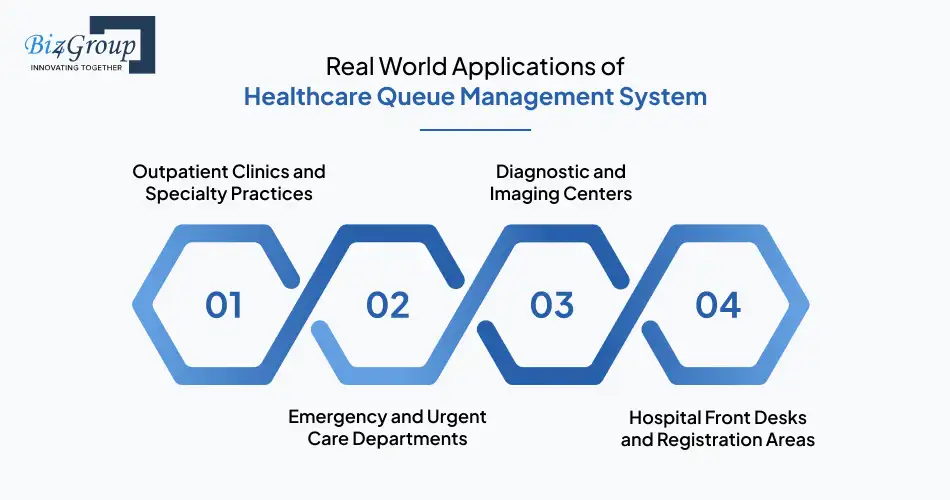
Healthcare organizations adopt queue management system development in hospitals and clinics when patient movement becomes unpredictable across departments and service lines. These systems show value wherever volume, urgency, and coordination intersect, which becomes clear across the following real world scenarios.
High daily footfall requires predictable sequencing without slowing physicians. Digital queues balance scheduled visits and walk ins while keeping clinicians focused on care delivery. This is where teams often create smart queue management solutions for outpatient clinics.
Patient intake varies by urgency and arrival patterns. Queue logic supports triage based prioritization while keeping non critical patients informed. This layer often benefits from AI automation services that reduce manual queue adjustments during surges.
Equipment driven services depend on timing precision to avoid idle capacity. Queue systems help distribute patients evenly across machines and staff. Many providers create patient flow management software alongside selective AI chatbot integration for status updates and instructions.
Check in delays ripple across the entire care journey. Structured queues reduce congestion and standardize intake across locations. This often marks the starting point for hospital waiting line management system development, typically scoped with a custom software development company experienced in healthcare workflows.
|
Use Case Area |
Operational Focus |
Practical Outcome |
|---|---|---|
|
Outpatient Clinics |
Mixed visit coordination |
Predictable patient flow |
|
Emergency Care |
Urgency based intake |
Faster clinical response |
|
Diagnostics |
Equipment utilization |
Reduced idle time |
|
Registration |
Intake standardization |
Lower front desk load |
These scenarios clarify where queue systems deliver immediate operational value. Now, let’s check out the core features required to support such diverse healthcare environments consistently.
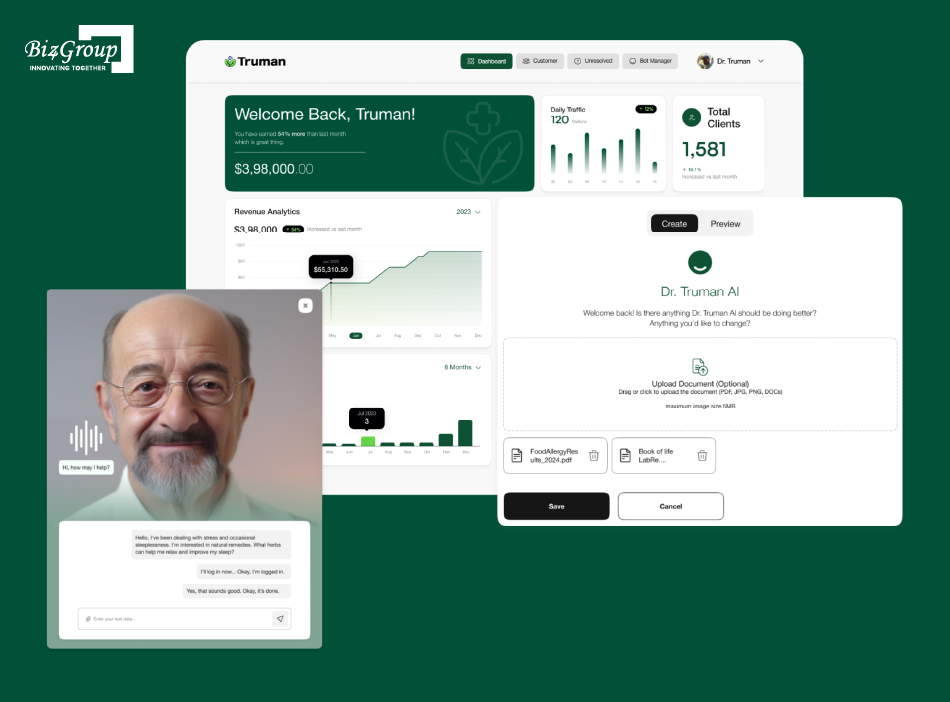
Truman is an AI-enabled wellness platform that combines personalized guidance, user engagement, and data driven recommendations into a unified experience. The platform reflects how healthcare systems can manage ongoing user interactions efficiently, a mindset that translates well into reducing uncertainty and wait related friction in hospital and clinic queues.
For queue management system development in hospitals and clinics, core features are the capabilities required for the system to function reliably on day one. These are non negotiable for safe, predictable patient flow across healthcare environments:
|
Core Feature |
Why It Is Core |
|---|---|
|
Digital Patient Check In |
Establishes the starting point for all queue logic |
|
Appointment and Walk-in Handling |
Supports real world patient arrival patterns |
|
Queue Creation and Sequencing |
Defines the order in which patients are served |
|
Basic Priority Rules |
Handles urgent and scheduled cases appropriately |
|
Staff Queue View |
Enables teams to manage patients in real time |
|
Patient Display Screens |
Communicates turn order and status clearly |
|
Manual Queue Overrides |
Allows staff to resolve exceptions quickly |
|
Multi Location Support |
Supports clinics and hospital departments |
|
Basic Reporting |
Tracks wait times and service volume |
These capabilities form the operational baseline required to develop queue management software for healthcare operational efficiency. Once this foundation is in place, organizations can begin evaluating advanced features that improve intelligence, scalability, and automation without disrupting core workflows.
Once the foundation is stable, queue management system development in hospitals and clinics evolves toward advanced capabilities that improve intelligence, adaptability, and scale. These features are introduced to handle complexity rather than basic flow, as outlined below.
Historical patterns and live inputs are used to forecast waiting durations. This helps staff plan capacity and keeps patients informed. Teams often rely on AI model development to support these projections.
Queues adjust automatically as conditions change during the day. Emergency arrivals, cancellations, and staff availability are factored in. This is essential to make queue management systems to reduce hospital wait times consistently.
Two-way messaging enables patients to receive updates and respond without front desk involvement. This approach supports engagement without overcrowding. Some organizations integrate this layer through AI assistant app design.
Queues can be managed across clinics and hospital departments in a unified view. This capability helps develop scalable queue management platforms for clinics operating at multiple sites.
Queue actions trigger downstream processes such as room assignment or service readiness. This orchestration reduces manual steps when teams build queue management software for clinics and hospitals. It is commonly supported by business app development using AI practices.
How Biz4Group LLC leverages modern features in its AI platforms:

Dr Ara is an AI powered healthcare platform designed to deliver personalized health insights using real-time data analysis and guided recommendations. The platform demonstrates how intelligent systems can manage complex user journeys, a principle that directly aligns with managing patient movement, prioritization, and flow in hospital queue environments.
As these capabilities mature, attention naturally shifts toward how such systems are planned and built from the ground up to ensure reliability, security, and long term adaptability.
See how healthcare leaders use healthcare queue management system development to improve throughput across clinics and departments.
Design My Healthcare Queue Platform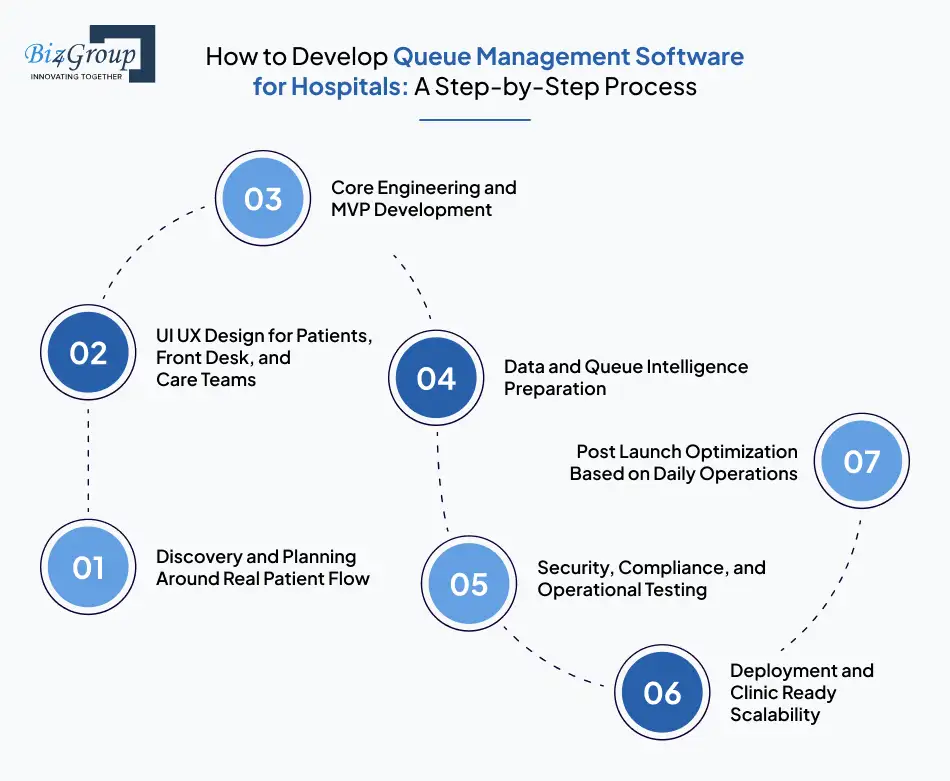
Effective queue management system development in hospitals and clinics begins with aligning technology decisions to real patient movement, staffing realities, and daily operational pressure. The goal is not software complexity, but predictable patient flow that works across departments and care settings.
Hospitals and clinics often discover that queues break before care even begins. This phase identifies congestion across registration, outpatient services, diagnostics, and provider availability to shape realistic system logic.
This groundwork is essential before teams create hospital queue management solutions that fit real clinical environments.
Queue software must function smoothly for patients seeking clarity and staff operating under pressure. Design choices made via collaboration with a seasoned UI/UX design company directly affect adoption during high volume periods.
Also read: Top UI/UX design companies in USA
Hospitals benefit from stabilizing patient flow before scaling features. MVP development services define how teams develop queue management software for hospitals with a focused scope that delivers value quickly.
Also read: Top 12+ MVP Development Companies to Launch Your Startup in 2026
Once queues are active, operational data reveals patterns invisible during planning. This stage strengthens healthcare queue management system development by preparing the system to adapt to daily variability.
Queue systems handle patient identifiers and visit data, making reliability essential. This phase often determines whether a solution meets the standards expected from the best company to develop queue management systems for healthcare, especially under real world pressure.
Also Read: Software Testing Companies in USA
As organizations build clinic queue management systems across multiple locations, deployment planning ensures consistent performance under fluctuating patient volumes.
Queue systems mature through continuous refinement. Feedback from staff and patients shapes improvements that align with real care delivery patterns.
This disciplined approach helps healthcare leaders evaluate custom hospital queue management software development services with clarity and long-term operational confidence.
A hospital queue platform is only as reliable as the layers behind it. Beyond UI and logic, healthcare environments demand strong APIs, real time sync, and secure integrations to keep patient flow uninterrupted during peak operations.
|
Label |
Preferred Technologies |
Why It Matters |
|---|---|---|
|
Frontend Framework |
ReactJS, VueJS |
Frontend frameworks drive patient displays and staff dashboards that must update instantly during queue movement. ReactJS development is widely used for building responsive healthcare interfaces. |
|
Server-Side Rendering & SEO |
NextJS, NuxtJS |
Server-side rendering improves load stability for patient facing screens and admin panels. NextJS development helps maintain consistent performance in high traffic environments. |
|
Backend Framework |
NodeJS, Python, FastAPI |
Backend frameworks manage queue logic, prioritization rules, and concurrency handling. Python development is often used for healthcare specific data handling and processing. |
|
API Development Layer |
REST APIs, GraphQL |
APIs connect queue systems with registration, scheduling, and reporting tools. NodeJS development layer ensures controlled data exchange across hospital systems. |
|
Real Time Communication |
WebSockets, Server Sent Events |
Real time protocols keep patient screens, staff consoles, and dashboards synchronized without refresh delays. |
|
AI & Data Processing |
Pandas, NumPy |
Data processing enables analysis of wait times, service duration, and throughput trends to refine queue behavior over time. |
|
Data Storage |
PostgreSQL, Redis |
Relational databases store patient flow records securely, while in memory stores support fast queue operations during peak hours. |
|
Integration & Interoperability |
HL7, FHIR |
Healthcare standards ensure queue systems align with clinical and administrative platforms without disrupting existing workflows. |
|
Cloud Infrastructure |
AWS, Azure |
Cloud platforms allow systems to scale during patient surges and support multi clinic deployments reliably. |
|
Security & Access Control |
OAuth, RBAC |
Security layers protect patient identifiers and ensure staff access aligns with clinical roles and compliance needs. |
|
Monitoring & Analytics |
Custom Dashboards, Logs |
Monitoring tools give leadership visibility into bottlenecks, queue performance, and operational health. |
A well aligned technology stack keeps systems stable, secure, and scalable across care settings. This clarity is essential when planning long term queue management system development in hospitals and clinics and preparing for cost considerations across different deployment levels.
Learn how to develop queue management software for hospitals that adapts to real world patient volumes and staff availability.
Start My Queue System PlanningThe cost of queue management system development in hospitals and clinics typically falls between USD 50,000 and USD 250,000+, depending on scope, scale, and integrations. This is a ballpark figure meant to guide early planning rather than define a fixed budget:
|
Implementation Level |
Typical Scope |
Estimated Cost Range |
|---|---|---|
|
MVP-level Queue Management System |
Digital check in, basic queues, staff views, single department built during MVP software development phase. |
USD 50,000 to USD 80,000 |
|
Mid-Level Queue Management System |
Multi department queues, notifications, reporting, admin controls |
USD 80,000 to USD 150,000 |
|
Enterprise-grade Queue Management System |
Multi location support, advanced logic, integrations, analytics |
USD 150,000 to USD 250,000+ |
Several factors influence where a project lands within this range. These include the number of departments involved, real time communication needs, integration with existing hospital systems, and compliance requirements. Teams that plan to integrate AI into an app for predictive wait times or adaptive prioritization should also account for additional engineering and validation effort.
As organizations evaluate patient queue management software development, cost discussions naturally lead into questions about long term sustainability. Understanding how these systems can generate value beyond operational efficiency becomes the next logical consideration.
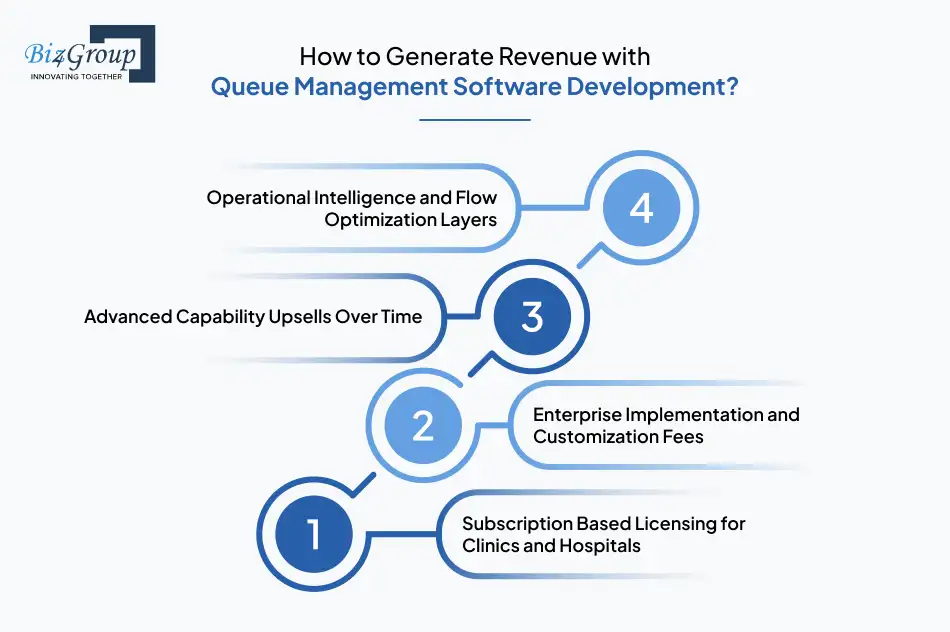
Revenue planning becomes relevant once queue management system development in hospitals and clinics moves beyond internal efficiency and supports repeatable deployment. These models reflect how healthcare organizations actually budget for, adopt, and expand operational systems over time.
Healthcare organizations prefer predictable pricing tied to locations or departments. Subscription models support steady revenue while allowing gradual rollout. This approach works best when teams build digital queue management systems for clinics with the long-term support expectations of a software development company in Florida.
Large hospitals often require tailored workflows, governance layers, and system alignment. One-time implementation fees support custom healthcare queue management development where interface clarity and workflow usability are shaped through careful AI assistant app design decisions.
Hospitals rarely activate advanced functionality at launch. Monetizing add-on modules allows expansion after operational stability. This model fits organizations that develop smart queue management platforms for hospitals and gradually introduce intelligence powered by generative AI without disrupting care delivery.
Queue data becomes monetizable when translated into leadership level insight. This applies when providers create patient flow management software that supports broader operational decisions through structured reporting and AI medical web development practices.
When revenue models align with how healthcare organizations scale technology, platforms grow more sustainably. With monetization defined, attention naturally shifts toward the development practices that keep these systems reliable, compliant, and effective in daily operations.
Discover why organizations build clinic queue management systems to support growth without increasing operational chaos.
Create a Scalable Queue SolutionStrong outcomes depend on disciplined execution. Queue management system development in hospitals and clinics works best when operational reality, staff behavior, and patient expectations are treated as first class design inputs rather than assumptions. The practices below reflect what consistently delivers results.
Hospitals and clinics rarely operate with a single queue pattern. Registration, diagnostics, consultations, and follow ups behave differently by time and department. Effective hospital waiting line management system development begins by mapping these variations to avoid rigid logic that fails during peak hours.
Front desk teams and clinical staff interact with queue systems continuously. Interfaces must support speed, clarity, and exception handling under pressure. Teams often apply principles seen in chatbot development for healthcare industry projects to reduce manual coordination and interruptions.
Outpatient clinics operate with different rhythms than inpatient settings. Queue logic should allow controlled customization without rebuilding the core system. This is essential when organizations create smart queue management solutions for outpatient clinics across multiple specialties.
Queues should generate operational insight, not just move patients forward. Tracking wait times, idle capacity, and throughput enables teams to develop queue management software for healthcare operational efficiency instead of relying on reactive fixes. Many organizations choose to hire AI developers early to structure this data correctly.
Reducing delays is the result of coordinated design across prioritization, visibility, and staff workflows. Every decision should support the goal to make queue management systems to reduce hospital wait times rather than chasing isolated features, a mindset common in teams that build AI software for complex operations.
When these practices are applied consistently, queue systems remain resilient under real hospital pressure. They also surface the practical challenges teams face during implementation, which naturally leads into how those challenges can be addressed effectively.
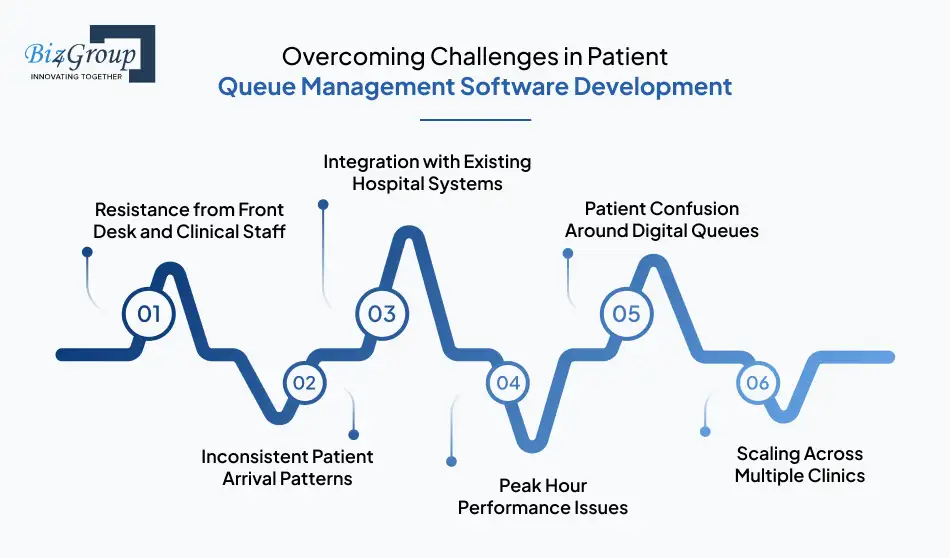
Even well planned initiatives face friction once real hospital workflows, staff habits, and patient volumes come into play. Queue management system development in hospitals and clinics often encounters predictable hurdles that need practical, experience driven solutions, like those listed below:
|
Top Challenges |
How to Solve Them |
|---|---|
|
Resistance from Front Desk and Clinical Staff |
Involve staff early in workflow design and pilot testing so the system supports how they actually work, not how processes look on paper |
|
Inconsistent Patient Arrival Patterns |
Design flexible queue logic that adapts to walk ins, no shows, and emergency interruptions without manual reshuffling |
|
Integration with Existing Hospital Systems |
Use a dedicated API layer and phased rollout to connect queues with registration, scheduling, and reporting tools safely |
|
Peak Hour Performance Issues |
Architect for concurrency and real time updates so queues remain responsive during morning rush and clinic overlap |
|
Patient Confusion Around Digital Queues |
Provide clear visual cues and communication flows, sometimes modeled after familiar AI conversation app experiences |
|
Scaling Across Multiple Clinics |
Standardize core logic while allowing local configuration to avoid fragmented implementations |
Addressing these challenges early prevents operational friction from undermining adoption. When teams plan to develop scalable queue management platforms for clinics, these solutions become easier to replicate and adapt, which opens the conversation around how queue systems will continue evolving in the years ahead.
Understand how patient queue management software development supports better experiences, staff efficiency, and long term scalability.
Explore Queue Software Options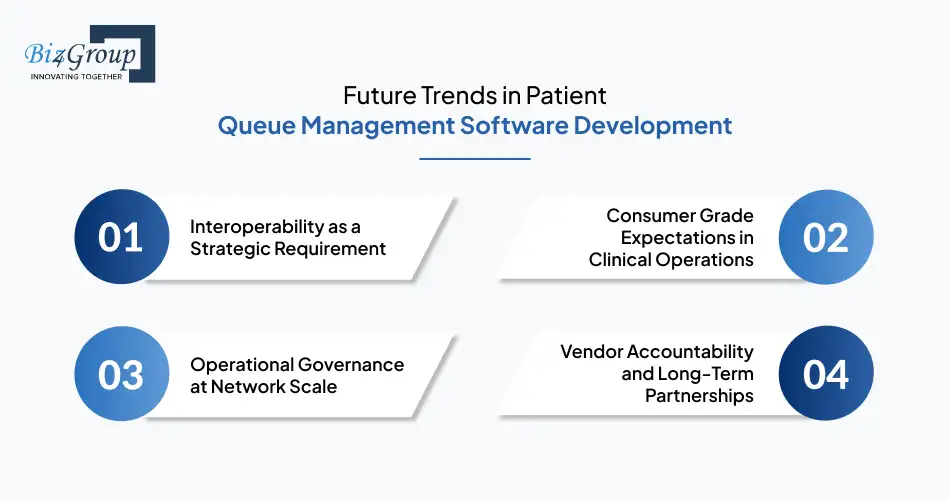
The future of queue management system development in hospitals and clinics will be shaped by structural changes in healthcare delivery, compliance expectations, and network level operations. These shifts focus less on features and more on how queue systems fit into long-term care infrastructure.
Queue platforms will increasingly be expected to operate as deeply integrated components of hospital IT ecosystems. Seamless interaction with scheduling, registration, and reporting systems will influence how organizations build queue management software for clinics and hospitals across multi facility networks without operational silos.
Patients now expect transparency and clarity throughout their care journey, including waiting periods. Hospitals will adopt communication standards influenced by solutions built by an AI chatbot development company, while keeping interactions clinical, purposeful, and non-intrusive.
As health systems expand, leadership will require centralized oversight with localized execution. This drives demand for custom hospital queue management software development services that allow policy driven configuration without fragmenting workflows or technology stacks.
Healthcare buyers are shifting focus from short term delivery to sustained reliability and domain expertise. Evaluation criteria increasingly resemble benchmarks associated with top AI development companies in Florida, where regulatory maturity and long term support matter as much as technical capability.
As these trends take hold, healthcare organizations begin to look beyond systems and toward partnerships that can support growth responsibly. Now, let’s discuss how to choose the best company to develop queue management systems for healthcare in the long run.
Biz4Group approaches healthcare platforms with an operator’s mindset, not a generic software lens. Our work across AI driven healthcare products shows how complex user journeys, sensitive data, and real time decision making can coexist without friction.
Platforms like Dr Ara and Truman reflect our experience in building systems that guide users intelligently, handle continuous interactions, and adapt to changing inputs. The same thinking applies directly when designing queue systems that must manage patient flow, staff coordination, and operational pressure in hospitals and clinics.
As an AI product development company, Biz4Group helps healthcare organizations move from reactive queue handling to structured, future-ready platforms built for daily clinical realities.
Get clarity on scope, features, and budgeting for queue management system development in hospitals and clinics before committing resources.
Build My Queue System PlanQueues in healthcare are rarely just about waiting. They are about perception, coordination, and trust unfolding minute by minute. Throughout this guide, we explored how thoughtful design, realistic workflows, and the right technology choices turn chaotic waiting rooms into predictable patient journeys through queue management system development in hospitals and clinics.
When queue management is treated as a strategic system rather than a surface level fix, hospitals and clinics gain control without adding friction. That is where partnering with an experienced AI development company makes the difference. Not for buzzwords, but for building systems that quietly work when things get busy.
Done right, queue management stops being noticed at all. And in healthcare, that is usually the best outcome.
Implementation timelines vary based on scope, integrations, and readiness of internal systems. Most healthcare organizations completing healthcare queue management system development see initial rollouts in a few months, followed by phased expansion across departments or locations.
Yes, modern platforms are designed to coexist with current tools used for registration, scheduling, and reporting. When teams develop queue management software for hospitals, interoperability is usually planned early to avoid disrupting established clinical workflows.
Queue platforms are not limited to large facilities. Many providers build clinic queue management systems specifically for small and mid sized practices that need structure without enterprise level complexity.
The cost typically ranges from USD 50,000 to USD 250,000+, depending on scale, features, and integrations. This ballpark applies to patient queue management software development projects that move from MVP to enterprise grade deployments.
Healthcare environments require flexibility across outpatient, diagnostics, and specialty care. Most organizations choose to create hospital queue management solutions that allow department level configuration without changing the core system.
Beyond wait times, leaders often monitor throughput, staff utilization, and patient flow consistency. These insights are central to develop queue management software for healthcare operational efficiency and long term operational improvement.

with Biz4Group today!
Our website require some cookies to function properly. Read our privacy policy to know more.