Location :
Orlando, FL, USA
Location :
Orlando, FL, USA +1 (407) 714-1616
 info@biz4group.com


















Imagine a digital system that doesn’t wait for instructions but instead, understands your business goals, learns from real-time feedback, and takes independent actions to get the job done.
Read More

What separates a software idea that becomes a successful business from one that never moves beyond the planning stage? If you've been searching for answers to questions like:
"What software should I build?"
"Which software ideas are profitable?"
"How do I know if an idea is worth pursuing?"
"What software products will still be relevant in the next few years?"
You're asking the right questions. The challenge isn't finding hundreds of software ideas. It's identifying the few that solve a meaningful problem, have genuine market demand, and offer long-term business potential.
Over the years, Biz4Group LLC has worked with founders, startups, and established businesses exploring software product opportunities across industries. One pattern appears consistently: successful software products rarely begin with the most groundbreaking idea. They begin with a clear understanding of the problem, the people experiencing it, and the value a solution can create. That's why evaluating an opportunity is often more important than chasing the latest trend or building the longest feature list.
The software ideas you'll explore in this guide have been selected with that mindset. Some target established markets, while others align with emerging opportunities driven by AI, automation, industry-specific software, and evolving business needs. More importantly, we've included practical frameworks to help you evaluate, validate, and refine each opportunity, so you can move forward with greater confidence instead of relying on assumptions.
The global technology landscape in 2026 strongly favors entrepreneurs exploring innovative software project ideas and launching scalable digital platforms. Businesses across industries are increasing investments in automation, artificial intelligence, cybersecurity, and cloud infrastructure. This creates significant opportunities for startup software ideas that solve measurable operational challenges.
These numbers confirm that 2026 is not just another growth year. It is a high-expansion phase for software-driven innovation.
Low-code platforms, cloud infrastructure, and open-source frameworks reduce upfront costs, making low-cost innovative software project ideas for startups more achievable than ever.
Businesses are prioritizing intelligent systems that automate workflows, improve customer experience, and provide predictive insights. This makes new software ideas centered on AI particularly valuable.
Software products built with recurring revenue models such as SaaS subscriptions offer predictable income and long-term scalability. This is why many investors are actively funding software innovation ideas with high ROI for businesses.
Cloud deployment and digital marketing channels allow founders to reach international markets without traditional expansion barriers.
For entrepreneurs and decision-makers evaluating future ready software ideas for business owners, 2026 represents a strategic inflection point. Companies that build solutions aligned with AI integration, data intelligence, and operational automation are more likely to capture sustained market demand.
The combination of rising IT spending, rapid AI adoption, and lower development costs makes this one of the strongest environments in recent years for launching startup software ideas with scalable revenue potential.
Also Read: How To Build AI Software: A Comprehensive Guide for Founders
Turn your concept into a powerful product with our expert development team.
Start Your ProjectThe year 2026 is creating strong opportunities for innovative software ideas across major industries, including healthcare, fintech, education, real estate, and HR technology. Businesses are actively investing in AI-driven, cloud-based, and automation-focused solutions that improve efficiency and scalability.
This section features high-potential software product ideas designed to help entrepreneurs and companies build practical, market-ready platforms. Explore these software innovation ideas to identify opportunities that align with current demand and support long-term growth for your digital product.
This AI-powered patient monitoring app uses connected devices and intelligent analytics to track vital health metrics in real time, including heart rate, blood oxygen levels, glucose, and blood pressure. Healthcare providers receive instant alerts when abnormal patterns are detected, enabling faster intervention and reduced hospital readmissions. It is well suited for chronic disease management, remote patient care, and elderly monitoring programs.
With seamless wearable integration and secure data synchronization, this software supports scalable remote healthcare delivery and automates routine health monitoring. It is a practical solution for hospitals, clinics, and telehealth providers looking to improve outcomes while optimizing clinical workflows.
Also Read: AI Remote Patient Monitoring App Development: Benefits, Steps and Challenges
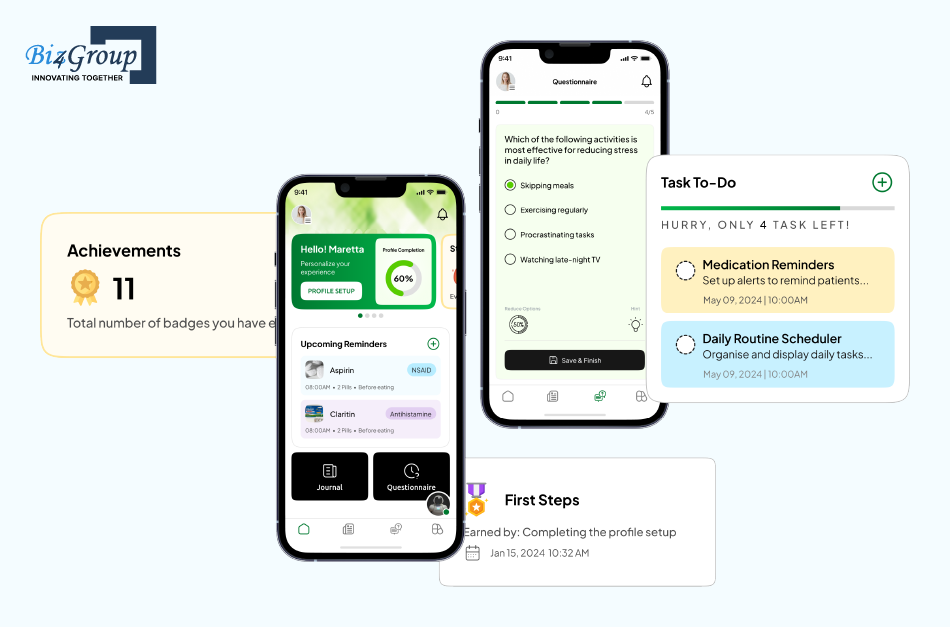
(Explore the project: Biz4Group-CogniHelp)
This AI-based platform for dementia patients helps families and caregivers stay connected with their loved ones through features like video check-ins, activity tracking, medication alerts, and personalized cognitive exercises. The system uses AI to detect behavioral patterns and alert caregivers in case of abnormalities.
As neurodegenerative conditions rise globally, especially among aging populations, platforms like this are becoming essential for remote care. With smart assistance and emotional support tools, it stands out as one of the most impactful and compassionate software ideas in 2026.
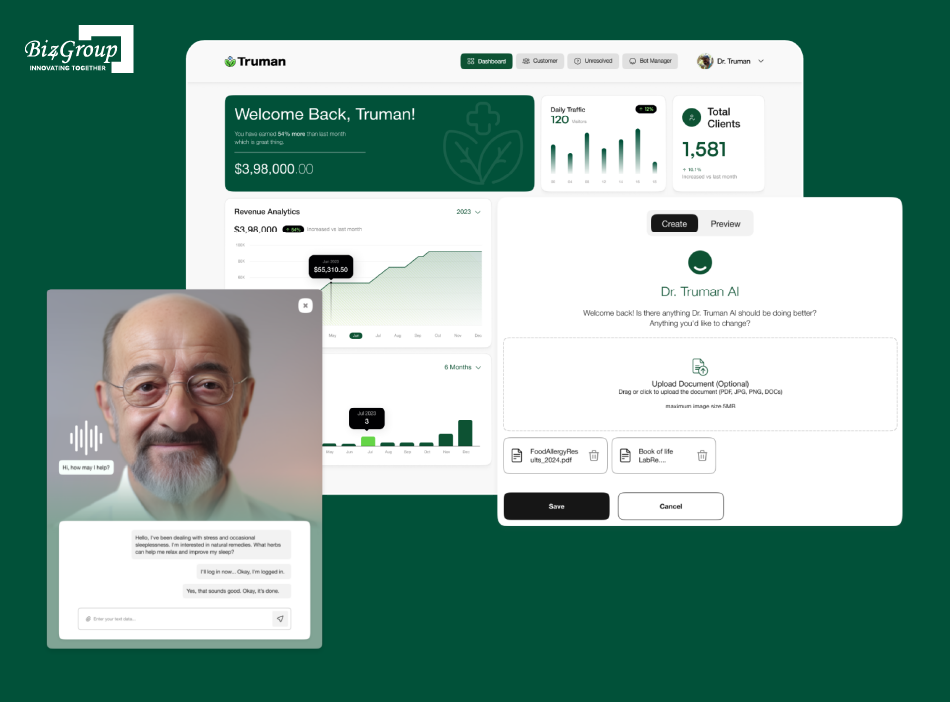
(Explore the project: Biz4Group – Truman)
This AI-powered medication recommendation platform intelligently analyzes patient data—such as medical history, current prescriptions, and allergies—to suggest safe, effective treatment plans. By integrating with EHR systems, it empowers physicians to make faster and more accurate decisions while minimizing the risk of adverse drug interactions.
This platform is ideal for telemedicine apps, clinics, and pharmacies seeking to improve patient outcomes through precision medicine. Among the top software business ideas in 2026, it blends healthcare innovation with AI in a truly transformative way.
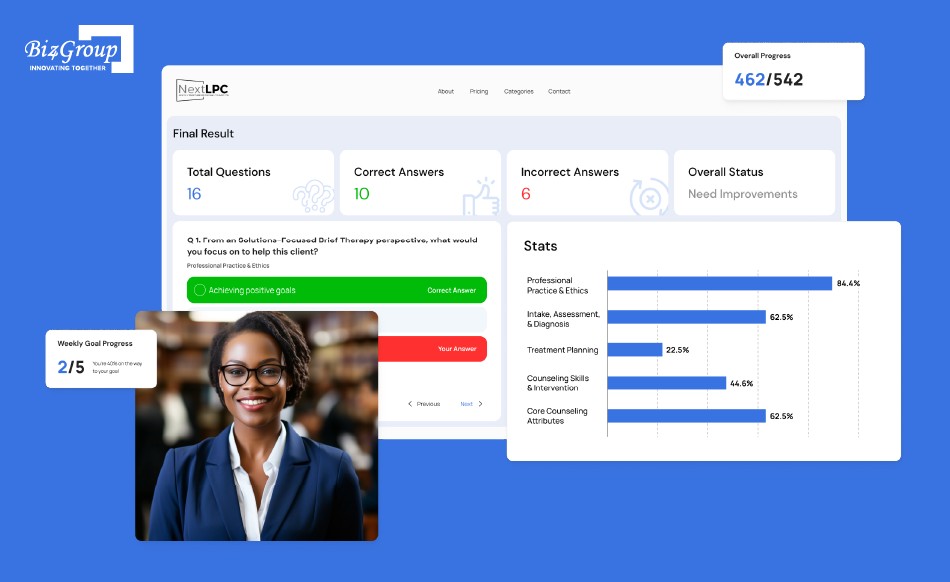
(Inspired by Biz4Group – NextLPC)
The AI Virtual Therapy Tutor App offers personalized mental health support through interactive AI avatars that simulate therapy sessions for kids, teens, and adults. Built around cognitive behavioral therapy (CBT) techniques, it features mood tracking, journaling, and emotional coaching tailored to user behavior.
Designed for therapists, mental wellness platforms, and educational settings, this app makes psychological support accessible, scalable, and engaging. As mental health becomes a global priority, this stands out as one of the most impactful and scalable software innovation ideas for 2026.
Also Read: AI Therapy Recommendations App Development: Cost, Features, and Process Explained
In the highly regulated healthcare industry, non-compliance can result in heavy fines and reputational damage. The Healthcare Compliance Tracker App is a real-time monitoring platform designed to help clinics, hospitals, and telehealth providers stay aligned with standards like HIPAA, GDPR, and local healthcare laws.
The app tracks policy adherence sends instant alerts for potential breaches, and auto-generates audit reports to simplify regulatory documentation. It also provides a compliance dashboard for administrators to monitor multiple departments or locations from a single interface. This is one of the most essential software ideas for businesses operating in the healthcare sector in 2026.
This all-in-one platform streamlines virtual healthcare by allowing patients to book appointments, make secure payments, and access post-visit notes - all from a single interface. On the provider side, it simplifies calendar management, integrates with video conferencing tools, and handles insurance verification and billing workflows.
As digital healthcare adoption grows, especially in underserved or remote regions, this system offers both convenience and compliance. It's ideal for independent practitioners, clinics, and telehealth startups aiming to scale operations efficiently. Among the most practical software startup ideas in 2026, it bridges patient experience with backend automation seamlessly.
Also Read: How to Develop an AI-Based Telehealth Automation System: Step-by-Step Guide
This platform automates the tracking, categorization, and analysis of business and personal expenses. It syncs with bank accounts, scans receipts, and auto-generates reports for budgeting or tax filing. For companies, it can enforce spending policies and streamline employee reimbursements.
With the rise in freelance workers and remote teams, this tool is vital for financial control and cash flow visibility. It’s one of the most practical and affordable software ideas for businesses looking to optimize finances without hiring full-time finance staff.
This app acts like a pocket financial advisor—offering budgeting tools, spending insights, credit score tracking, and personalized financial tips based on user behavior. Built with AI and gamification, it motivates users to save, invest, and plan smarter. It’s perfect for Gen Z and millennial users who prefer digital-first money management. A great example of software ideas for new business models focused on financial wellness.
Also Read: How to Develop AI Financial Coaching App: Features, Steps and Cost
A multi-exchange crypto portfolio tracker that helps users manage digital assets, track real-time prices, monitor gains/losses, and view transaction history in one secure dashboard. It can also offer market insights, token news, and tax reports. As crypto adoption continues to rise globally, this platform supports both casual investors and professional traders—making it a strong contender among top software startup ideas 2025.
Using machine learning, this platform evaluates financial behavior and spending patterns to predict and improve a user's credit score. It provides actionable tips, credit simulation tools, and risk forecasting for lenders. Ideal for fintech apps, loan marketplaces, and financial institutions, it enables better lending decisions and helps users become more creditworthy—a standout in today’s lineup of software business ideas.
This P2P lending platform connects individual borrowers and lenders, bypassing traditional banks. Users can create loan listings, review credit scores, and invest in loans with varying risk levels. Built-in smart contracts can automate repayments and reduce fraud. As financial inclusion becomes more important, this platform offers one of the most disruptive software project ideas in fintech.
Work with a top-rated software development company in the USA.
Hire Us TodayThis app allows users to start investing with as little as $1 by rounding up everyday purchases or automating small deposits. It provides educational content, risk-based portfolios, and simplified user interfaces for first-time investors. It’s designed for young users new to the world of stocks and ETFs, making it one of the most inclusive and best software development ideas in the fintech space today.
This AI-powered Trip Planner App customizes complete travel itineraries based on user inputs like destination, budget, travel style, dates, and preferences. From flights and accommodations to local experiences and food suggestions, it curates everything into one seamless plan. Users can modify their trips, collaborate with travel companions, and even book services directly from the app.
With integrations to APIs like Skyscanner, Airbnb, and Google Maps, it becomes a digital travel assistant. As personalized travel gains momentum in 2026, this becomes a must-build software idea for startups in the tourism tech space.
This mobile app uses real-time speech and text translation powered by AI and NLP, allowing travelers to communicate effortlessly across languages. It includes travel-centric phrases, local dialect support, camera-based text translation (for signs and menus), and offline mode for use in areas with no connectivity.
Unlike generic translation apps, this tool focuses entirely on the travel experience—covering hotels, airports, transportation, and emergency support. For solo travelers or frequent flyers, it becomes a digital survival tool. It stands out as one of the most inclusive and impactful software ideas for new business in 2025.
Also Read: AI Sign Language Translator App Development
This AI chatbot acts as a 24/7 travel assistant, integrated into hotel websites, airline apps, or tourism platforms. It can assist users with check-ins, room service, bookings, directions, and local recommendations. Designed to understand multiple languages and respond in real time, it improves customer satisfaction while reducing support staff workload.
The chatbot learns from user behavior, continuously improving over time. For travel businesses, this is a scalable way to enhance digital service. It’s one of the most in-demand software development ideas in the hospitality and travel space.
Built for digital nomads, backpackers, and group travelers, this app helps users split expenses, manage group budgets, and settle balances across multiple currencies. It connects with bank APIs and local e-wallets to handle real-time conversions and payments.
For those asking: “what tools help startups build software products faster and cheaper?”
The app includes budgeting tools, receipt uploads, and visual spend tracking for transparency within groups. It solves a common pain point for group trips and travel meetups—eliminating confusion over who owes what. It’s a rising niche among software business ideas aimed at the remote lifestyle economy in 2026.
From strategy to launch—we handle the tech, you grow the business.
Let’s Build TogetherThis eco-focused platform helps users measure and understand their flight’s environmental impact. Travelers can input their route or sync with booking confirmations to calculate carbon emissions, compare airlines' sustainability ratings, and purchase carbon offsets through verified partners.
It includes educational content about aviation’s impact and green travel alternatives. With the rising demand for responsible tourism, this platform supports conscious decision-making. It’s one of the top software startup ideas 2026 for businesses focused on ESG and climate tech in the travel space.
This intelligent platform analyzes user behavior, purchase history, and demographics to forecast what a customer is likely to buy next. Ideal for online retailers and D2C brands, it powers personalized recommendations, restock alerts, and predictive cart suggestions.
By integrating with CRM and eCommerce platforms, it helps increase customer retention and average order value. As personalization becomes key in 2026, this is one of the most revenue-boosting software business ideas for retail.
This interactive eCommerce solution allows brands and influencers to host live product demos, Q&As, and limited-time offers via livestream. Users can comment, ask questions, and make purchases in real-time—all from within the platform. It combines the energy of live events with the convenience of online shopping, helping increase conversions and engagement. With rising interest in “shoppertainment,” this is one of the most creative software startup ideas for 2026.
This backend solution simplifies the process of handling product returns, exchanges, and refunds for eCommerce stores. It automates return approvals, generates shipping labels, syncs inventory updates, and integrates with logistics partners. This software reduces operational load and improves customer experience during post-purchase. A much-needed software idea for businesses selling physical products online, especially with rising return volumes in 2025.
We’ll help you choose software idea and shape the most profitable direction.
Talk to Our ExpertsThis platform allows multiple sellers to list and sell products under one digital roof, similar to Amazon or Etsy. It includes vendor dashboards, commission settings, product management, payment splitting, and review systems. This solution empowers niche entrepreneurs to build their own custom marketplace—whether for fashion, electronics, or handmade goods. It’s one of the top software development ideas for anyone looking to build the next-gen retail ecosystem.
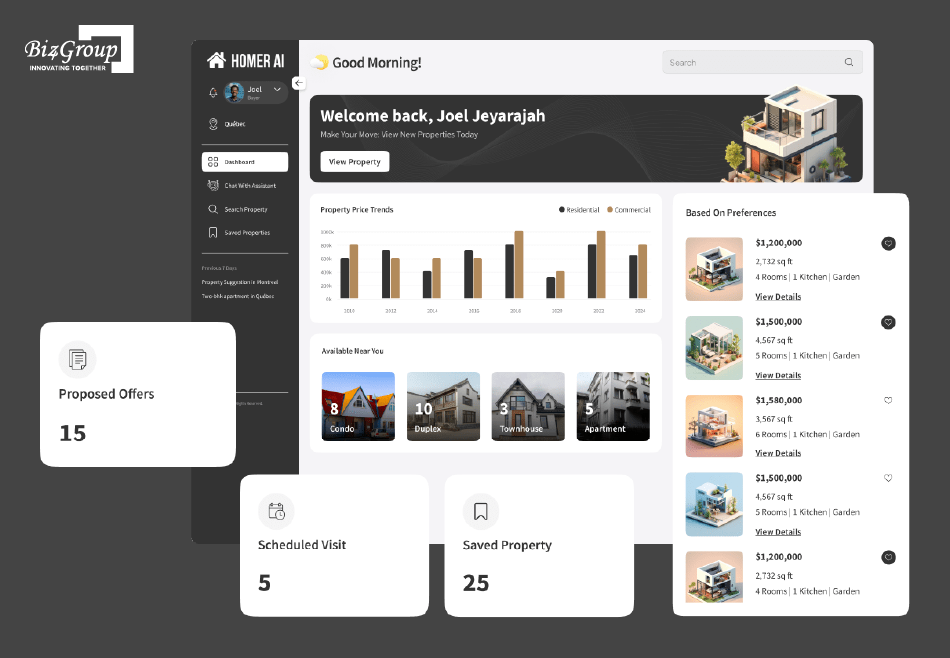
(Inspired by Biz4Group’s Project – Homer AI)
This AI-powered property management app simplifies leasing, maintenance requests, rent payments, and tenant communication from a single dashboard. It uses predictive analytics to schedule maintenance, optimize vacancy rates, and improve operational efficiency for landlords and property managers. With mobile access and cloud-based control, it streamlines real estate workflows across residential and commercial units. This is one of the most advanced and scalable software ideas for businesses in the real estate space today.
This platform offers immersive 3D property walkthroughs using 360° visuals and VR support. Realtors can upload listings and let buyers explore properties remotely, saving time and improving engagement. It can also feature video chat tours, floorplan visualization, and AR overlays showing furniture or renovation potential. With virtual selling becoming mainstream, this platform is one of the best software development ideas to enhance buyer experience.
This specialized CRM helps agents and brokers prioritize leads using AI scoring, past interactions, and engagement behavior. It integrates with websites, landing pages, and chat tools to capture potential clients and segment them by buying intent. Built-in follow-up reminders and marketing automation save time while increasing conversions. As competition grows in the real estate market, this tool helps agents close more deals efficiently.
Also Read: The Role of AI for Real Estate Agents in Late 2025
This software allows users to estimate the current market value of a property based on recent sales, location, property condition, and market trends. It integrates with MLS data and predictive AI to offer accurate, up-to-date pricing for buyers, sellers, and agents. Ideal for listing portals and property investment platforms, it removes guesswork and adds trust to pricing strategies.
This platform allows landlords and agents to auto-generate legally compliant lease agreements by selecting property type, location, and custom clauses. It includes digital signatures, auto-renewal reminders, and cloud-based document storage. Integrated legal templates ensure local compliance. Perfect for individual landlords or property management companies, this idea streamlines tedious paperwork and minimizes legal risks.
This AI-powered software uses sensor data and machine learning to predict equipment failures before they happen. It helps manufacturers schedule maintenance only when needed, avoiding unnecessary downtime and reducing repair costs. The platform can monitor machine health in real-time, send alerts, and offer actionable insights based on wear-and-tear patterns. With IoT and AI integration, this is one of the smartest software ideas for businesses focused on manufacturing efficiency.
This platform uses AI and demand forecasting to help manufacturers maintain optimal inventory levels. It tracks inventory turnover, seasonality, market trends, and production schedules to avoid overstocking or shortages. Designed for both raw materials and finished goods, this is one of the best software ideas to make money, reduce waste, and streamline purchasing. It’s among the most valuable software startup ideas in 2026 for companies managing complex supply chains.
Also Read: A Complete Guide to AI Inventory Management Software Development
This app gives plant managers a centralized view of factory operations using real-time data from connected machines and sensors. It displays performance metrics, machine status, energy usage, production targets, and downtime causes—allowing faster decisions and proactive actions. With rising adoption of Industry 4.0, this is a must-build software project idea for manufacturers embracing digital transformation.
This platform assesses the reliability, compliance, financial health, and geographic risk of suppliers. It tracks supply chain disruptions, delays, ESG compliance, and performance KPIs across global vendors. With supply chain volatility still a challenge post-pandemic, this tool gives procurement teams greater control and foresight. A powerful and timely software idea for businesses that rely on multiple third-party vendors.
Get user-validated, niche-focused software solutions built to scale.
Schedule a Strategy CallThis software helps manufacturers optimize their shop floor by analyzing workflow bottlenecks, material handling paths, staffing schedules, and shift planning. It uses AI to simulate production efficiency, suggest layout changes, and prioritize job orders. Perfect for mid-sized factories looking to digitize operations and scale faster, this is one of the best software development ideas for improving throughput.
This AI-powered custom workout app creates personalized fitness plans based on user goals, fitness level, body metrics, and activity data. It includes real-time progress tracking, guided video sessions, rep counters, calorie insights, and performance analytics. Users can choose from strength training, HIIT, yoga, weight loss, and endurance programs, with seamless wearable integration for accurate data syncing.
Ideal for individual users, fitness coaches, gyms, and wellness brands, this platform represents one of the most scalable and profitable software startup ideas in the health-tech industry, driven by growing demand for AI fitness apps and remote training solutions.
This platform connects users with certified coaches for personalized fitness, sports training, or rehabilitation programs. It features built-in video calls, training calendars, session feedback, and visual progress dashboards. Coaches can assign programs and track client results remotely, making it perfect for hybrid or fully online fitness businesses. With the virtual fitness boom still growing, this tool is one of the top software development ideas for 2026.
Designed for amateur and semi-pro teams, this platform centralizes scheduling, communication, and performance tracking. Coaches can manage rosters, analyze player stats, share tactics, and organize events—all in one place. Players receive updates, feedback, and performance trends. It’s perfect for school teams, clubs, and local leagues aiming to get organized and data-driven. Among the most practical software ideas for businesses in the sports-tech space.
Revenue Streams: Team subscriptions, ad placements, sponsor dashboards, league integrations
This app streamlines tournament setup, player/team registrations, scheduling, bracket management, and real-time scoring updates. It can be used across multiple sports—tennis, soccer, e-sports, etc.—with a clean interface for both organizers and participants. Spectators can view leaderboards, match outcomes, and livestreams. With the rise of community-level tournaments and competitive gaming, this is one of the most scalable software business ideas in the event-tech niche.
This app helps athletes optimize their recovery and performance with guided routines, mobility exercises, and tailored meal plans. It integrates with fitness wearables and tracks sleep, stress, hydration, and macronutrient intake. Coaches and sports nutritionists can also provide insights via dashboards. Perfect for sports academies, personal trainers, and wellness brands, this is one of the most well-rounded software development ideas in health and performance tech.
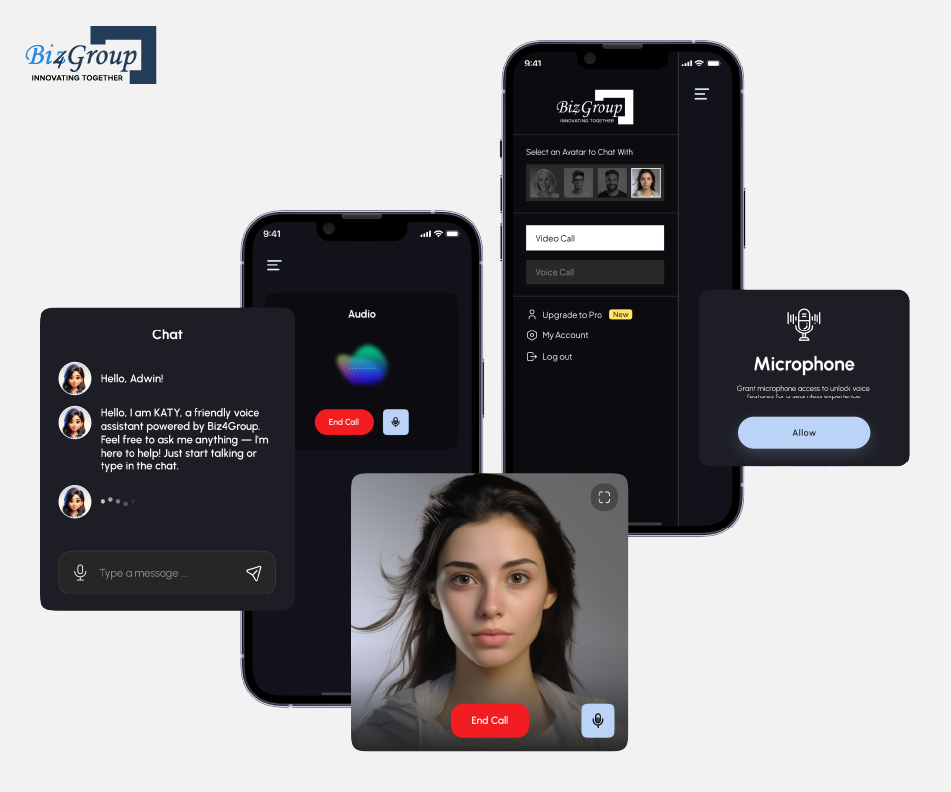
This innovative platform features avatar-based AI tutors app that simulate human-like teaching in subjects like math, science, or language. Using NLP and adaptive learning algorithms, the tutors personalize lessons, respond to student queries, and adjust pacing based on learning behavior. The avatars create a more engaging, friendly learning experience—especially for remote learners and students needing additional support. One of the most futuristic and inclusive software startup ideas in EdTech for 2026.
View This Project: Avatar-based AI Companion, Built by Biz4Group: Call it Your AI Wizard!
We’ll help you build smart, scalable, and cost-effective software.
Request a QuoteThis app helps learners discover the most relevant online courses based on their career goals, current skills, and learning style. It uses AI to analyze resumes, LinkedIn profiles, or skill assessments to suggest personalized learning paths from platforms like Coursera, Udemy, or Skillshare. It's ideal for students, professionals, and upskillers navigating thousands of options. A brilliant software idea for new business models focused on learning personalization.
This real-time collaboration tool allows teachers and students to interact via live whiteboards, quizzes, polls, annotations, and breakout rooms. It integrates with LMS platforms like Google Classroom or Canvas and supports both in-person and remote teaching. Teachers can track student participation and engagement metrics. It’s a powerful software project idea for hybrid education, tutoring centers, or virtual schools.
This tool collects data on classroom engagement, grading patterns, student outcomes, and teaching consistency to provide educators and administrators with insights into teacher performance. It offers dashboards, peer review modules, and goal-setting features to support professional growth. In the age of data-driven decision-making, this software supports K–12 and higher ed institutions in improving education quality.
This Learning Management System is tailored for hybrid education—combining in-person class tracking with online assignments, video lectures, assessments, and grading tools. It offers role-based access for students, teachers, and parents, along with integration capabilities for Zoom, Google Drive, and more. Designed for flexibility and scale, this is among the top software business ideas in the education market for 2025.
A Legal Case Management Platform helps law firms manage case files, client records, court deadlines, billing, and secure document storage from a centralized dashboard. It replaces manual processes with structured digital workflows, improving efficiency, compliance, and data security. Integration with calendars, time tracking tools, and billing systems reduces administrative workload and helps increase billable hours.
As remote and hybrid legal operations grow, this legal tech software solution stands out as a high-demand software business idea for modern law firms seeking productivity, automation, and scalable case management systems.
Also Read: A Step-by-Step Guide for AI Legal Case Management Software Development
Using NLP and machine learning, this AI Assistant scans legal databases, court rulings, and case laws to help lawyers find relevant precedents faster. It understands legal queries in natural language and ranks sources based on relevance and jurisdiction. By cutting down research time, it boosts productivity and accuracy. This is one of the smartest software startup ideas for legal professionals dealing with complex litigation.
Also Read: AI Legal Research Platform Development: Benefits, Use Cases, and Future Trends
This platform allows users to generate legally binding contracts using customizable templates and guided logic flows. It supports multiple contract types—NDAs, employment agreements, lease contracts, etc.—and includes e-signature integration for immediate execution. These innovative software solutions for small businesses digital transformation are ideal for startups, freelancers, and small firms, as they democratize legal access and simplify document management.
Launch faster, smarter, and with confidence in 2026.
Launch with Biz4GroupThis software streamlines the client onboarding process with digital forms, conflict checks, e-verification, and automated billing. It tracks time entries, generates invoices, and integrates with accounting software. For small to mid-sized law firms, it reduces admin overhead and improves client satisfaction—making it one of the most efficient software development ideas for legal operations.
Also Read: How to Build an AI Medical Billing Software
A Law Firm Reputation Management App enables legal practices to monitor, manage, and improve their online presence across review platforms such as Google, Yelp, and Avvo. The system collects client feedback, automates post-case review requests, tracks brand mentions, and provides analytics dashboards to measure rating performance and client sentiment.
With online reviews directly influencing client acquisition in 2026, this legal tech solution helps firms maintain strong credibility, improve local search visibility, and strengthen digital trust. It is a focused and high-demand software idea for businesses in the legal sector seeking growth through reputation and SEO management.
Also Read: Top 12+ AI Legal Software Development Companies in USA
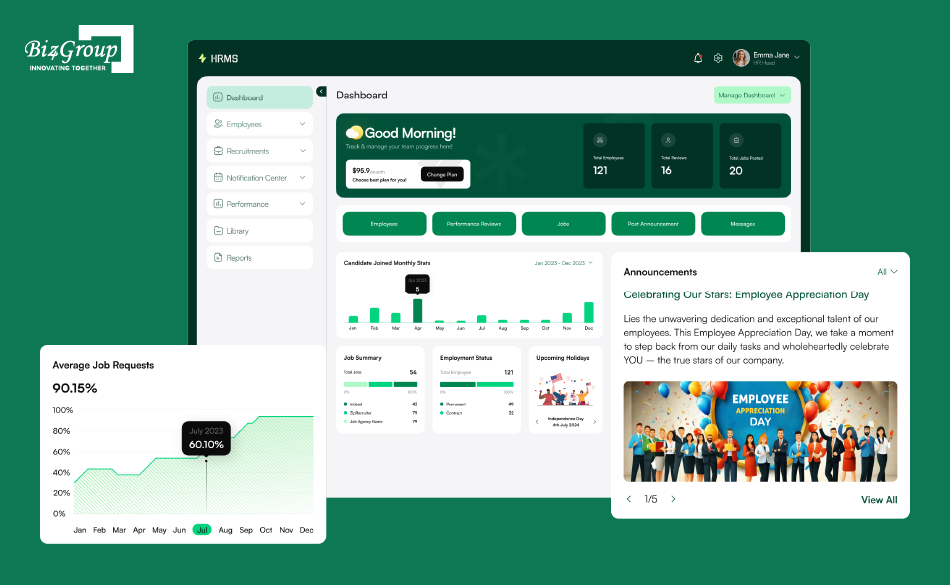
(Inspired by Biz4Group’s Project – DrHR)
This smart HRMS platform leverages AI to automate core HR functions—recruitment, attendance, payroll, leave management, performance tracking, and more. It uses predictive analytics to identify attrition risk, analyze employee engagement, and streamline workforce planning. The system supports role-based access, multilingual dashboards, and real-time analytics. This AI-powered HRMS solution is one of the most complete and scalable software business ideas for mid-sized to enterprise HR teams in 2026.
Also Read: How AI Will be Changing the Human Resource Industry in 2025?
This AI-driven Resume Parsing app automatically parses resumes, extracts key skills, and matches candidates with open positions based on job requirements and cultural fit. It reduces time-to-hire by ranking applicants and recommending top talent to recruiters. Ideal for recruitment agencies and in-house talent teams, it removes manual screening efforts and improves candidate-job alignment—a leading-edge software startup idea in HRTech.
Revenue Streams: Recruiter subscriptions, pay-per-candidate matched, API access for job portals
This platform facilitates seamless remote interview scheduling, video conferencing, panel coordination, and interview feedback all in one place. It integrates with calendars, ATS systems, and video tools (Zoom, Google Meet). Built-in features like interview scorecards, AI-generated summaries, and candidate ranking make it ideal for remote hiring workflows. As distributed teams grow, this is one of the most essential software ideas for businesses hiring in 2026.
This software helps HR teams track diversity, equity, and inclusion metrics across hiring, promotions, compensation, and workplace engagement. It offers analytics dashboards, benchmarking reports, and compliance monitoring. Companies can use the insights to set goals, reduce bias, and report on DEI progress transparently. With DEI now a core business function, this is a timely and socially impactful software development idea.
This app digitizes the entire onboarding experience—from document collection and welcome kits to orientation tasks, training modules, and first-week feedback. It ensures every new hire gets a consistent and engaging start, whether remote or in-office. HR managers can automate tasks and track progress in real-time. It’s one of the most practical software project ideas for startups and scaling businesses in 2026.

(Inspired by Biz4Group’s Project – Insurance AI)
This interactive AI-powered training agent is designed to onboard and upskill insurance agents through simulations, quizzes, knowledge bases, and real-time feedback. It delivers engaging, scenario-based learning to help agents master policy details, compliance guidelines, and client handling. With gamified modules and performance analytics, it reduces training time while improving retention. A groundbreaking software idea in the insurance space, it modernizes learning for agencies and carriers alike.
This customer-facing app allows users to compare insurance policies (health, auto, home, life, etc.) side-by-side based on premiums, coverage, deductibles, and add-ons. It features a smart wizard to recommend policies based on user needs and life stage and allows real-time customization. It reduces decision fatigue and boosts transparency, making it a must-have tool for brokers and digital insurance platforms. A top choice among software startup ideas for 2026.
This backend solution helps insurers digitize and automate the end-to-end claims lifecycle—from FNOL (First Notice of Loss) to settlement. It supports claim submissions, document uploads, fraud detection, approvals, and payment disbursal. With AI integration, it can reduce processing time and improve accuracy. Ideal for property, auto, and health insurers, this is one of the most efficiency-driven software business ideas in the sector.
This tool evaluates a customer’s insurability using data like past claims, health records, location, lifestyle, and behavior. It assigns a risk score, flags potential issues, and helps underwriters personalize premiums or cross-sell products. It integrates with CRMs and underwriting systems to enhance decision-making. As insurers move toward data-driven personalization, this dashboard becomes a high-value software development idea for modern underwriting teams.
This communication platform helps agents manage all client touchpoints—calls, meetings, follow-ups, renewals, document sharing, and policy servicing—in one place. It integrates CRM, document e-signatures, video calls, and scheduling. It improves productivity, customer retention, and agent accountability. Especially valuable for multi-product, relationship-based insurers, this is one of the most people-centric software ideas for businesses in insurance.
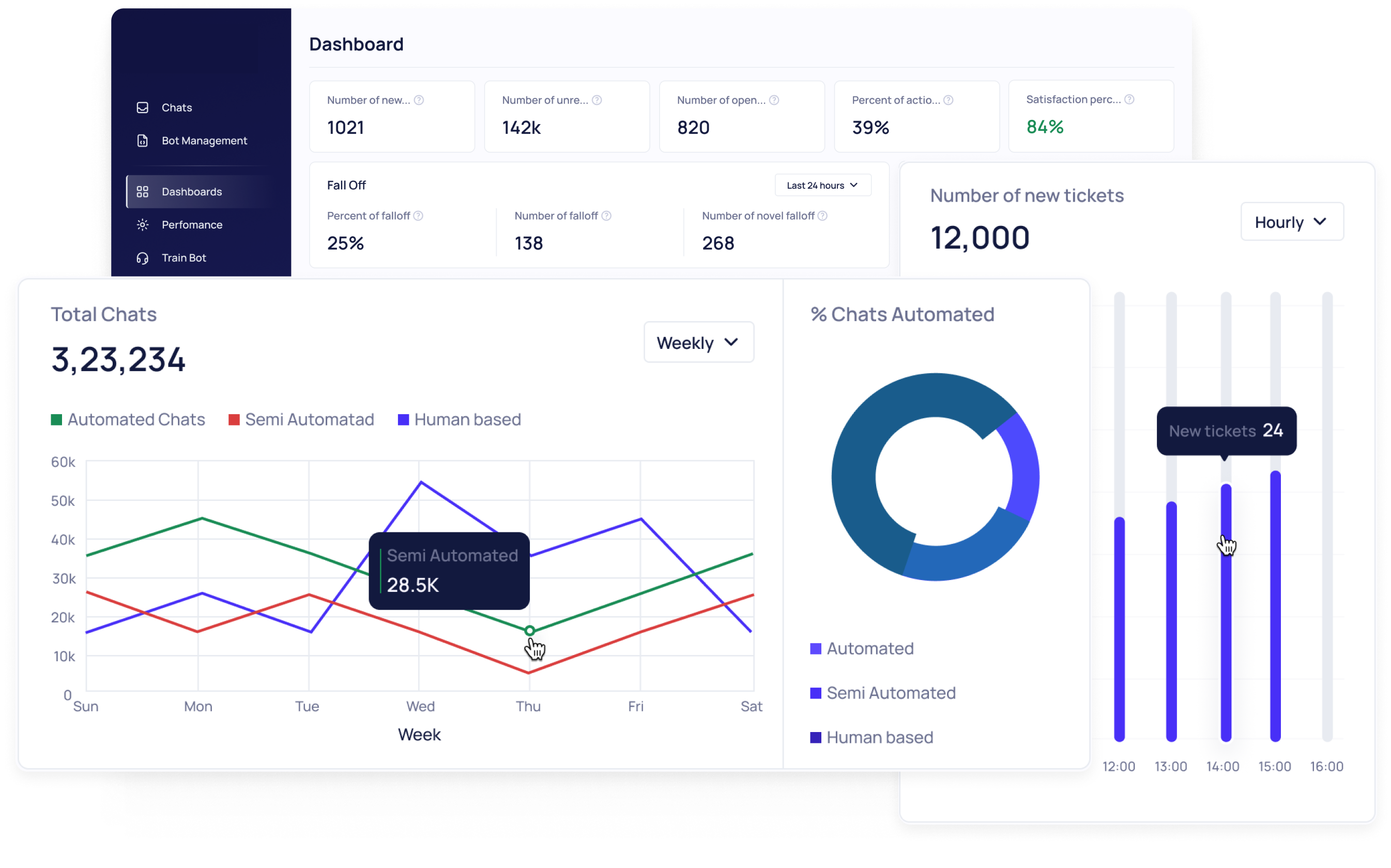
This platform centralizes customer queries from email, chat, phone, social media, and web forms into a single dashboard. Agents can assign, escalate, and resolve tickets while tracking performance through analytics. It supports automation, canned responses, and SLA tracking. Built for customer-centric brands, this platform enhances response time and agent efficiency—making it one of the most useful software ideas for businesses in 2025.
This tool uses NLP to scan customer reviews, support chats, survey responses, and social mentions to detect sentiment, satisfaction trends, and product issues. It gives real-time dashboards and alerts so companies can act fast and improve service. It’s ideal for SaaS tools, eCommerce platforms, and service providers seeking to optimize feedback loops. A strong contender among top software startup ideas 2026 for CX automation.
This voice AI tool automates inbound and outbound phone support, appointment confirmations, order status updates, and FAQs. It uses speech recognition and conversational AI to reduce call center load and ensure 24/7 availability. It’s particularly useful for industries like healthcare, banking, and retail. As voice becomes a leading support channel, this is one of the most future-proof software business ideas in 2026.
Don’t waste time or money—test your idea with an MVP first.
Book a Free ConsultationThis internal analytics dashboard tracks agent KPIs like first-response time, resolution rate, CSAT, call handling time, and ticket volume. It helps support managers coach agents, spot inefficiencies, and reward top performers. With built-in gamification and alerting, it boosts engagement and accountability. A must-have for fast-scaling customer support teams and one of the most actionable software ideas for operational excellence.
This smart chatbot handles common customer questions, automates lead generation, and escalates complex issues to live agents when needed. It learns over time from previous interactions and supports multiple languages. Ideal for websites, mobile apps, and messaging platforms, it reduces support costs while maintaining quality service. A leading-edge software development idea that can serve startups and enterprises alike.
This intelligent trading platform uses machine learning algorithms to analyze market data, identify trading opportunities, and automate investment decisions in real-time. With customizable risk tolerance settings, predictive analytics, and backtesting tools, it’s ideal for individual traders and hedge funds alike.
The platform supports stocks, crypto, and forex, offering both manual and auto-trade modes. As AI reinvents financial decision-making, this becomes one of the most revolutionary software startup ideas for 2026. Businesses looking to enter this space should consider investing in AI trading software development to stay ahead in the competitive finance landscape.
Also Read: AI Trading Software Development
AI Educational Software is an adaptive learning platform that personalizes lessons based on student performance, learning behavior, and pace. Using artificial intelligence, it adjusts difficulty levels in real time, delivers intelligent feedback, and identifies knowledge gaps to improve academic outcomes. This makes it ideal for schools, tutoring platforms, and EdTech companies focused on personalized learning solutions.
With interactive content, progress analytics, and multilingual support, the platform enhances hybrid and remote education environments. As demand for digital learning tools continues to grow, AI educational software development represents one of the most impactful and scalable software development ideas in the EdTech sector.
Also Read: The Ultimate Guide to AI Education App Development
This acts as a lifelike customer support agent on websites and apps. Unlike standard chatbots, it uses facial expressions, voice, and natural language processing to deliver more human-like interactions. It can handle FAQs, guide purchases, and escalate issues when needed.
Ideal for eCommerce, SaaS, and service platforms, this solution enhances customer experience while cutting support costs—making it a standout idea for businesses embracing AI-driven CX in 2025.
Also Read: Top AI Avatar Development Companies in USA
This all-in-one HR platform helps businesses manage hiring, onboarding, performance tracking, attendance, payroll, and employee engagement. With AI-powered dashboards, automated workflows, and self-service portals, it streamlines HR operations for startups to mid-sized enterprises.
Designed for remote and hybrid workforces, it enhances productivity and compliance. For companies investing in HR software development, this is among the most practical and scalable software project ideas, delivering real-time insights and automation to power digital-first workplaces in 2026.
Potential Revenue: $1M – $6M/year
Cost to Develop: $90,000
– $160,000
Revenue Streams: Per-employee pricing, SaaS subscriptions,
enterprise customization
Also Read: Top HR Software Development Companies in USA
This entertainment app blends AI-powered personalization with social gaming experiences like poker, blackjack, slots, and bingo. Players can earn rewards, join tournaments, and interact in virtual lounges. AI curates game suggestions and adapts difficulty based on user behavior, increasing engagement.
While not real-money gambling, it monetizes through in-app purchases, ads, and premium VIP features. With rising demand for immersive digital gaming, AI Social Casino Platform development presents a huge opportunity for entertainment-tech startups looking to capitalize on the social gaming boom in 2026.
Also Read: Top 15 iGaming Software Development Companies in USA
Choose a software idea by evaluating the opportunity before evaluating the product. Start with the problem it solves, the audience it serves, the market demand it addresses, its competitive advantage, revenue potential, and the effort required to build it. Considering these factors together makes it easier to identify software ideas with genuine business potential instead of chasing short-term trends:
A software product should solve a problem that people or businesses genuinely care about. Ask yourself: What changes after someone starts using this software? The strongest software ideas reduce operational costs, save time, improve productivity, strengthen compliance, or increase revenue. Clear business outcomes make the value proposition easier to understand and easier to sell.
Start with the people who experience the problem most frequently. Is the software meant for hospitals, retailers, manufacturers, law firms, or startups? A clearly defined audience helps you identify the features that matter, avoid unnecessary development, and build a product that addresses real industry needs.
Choose software ideas backed by lasting market shifts rather than short-lived trends. Industries investing in AI, workflow automation, cybersecurity, digital payments, sustainability, or regulatory compliance continue to create opportunities because the underlying business needs keep evolving. Consistent demand gives a software business more room to grow.
Study similar software products to understand where they fall short. Read customer reviews, compare pricing models, and evaluate common complaints. Ask yourself: What would make someone switch to your software? A better user experience, industry-specific functionality, stronger integrations, or faster implementation can all become meaningful differentiators.
Every software idea should support a business model that can grow over time. Consider whether the product fits a subscription model, usage-based pricing, enterprise licensing, or premium upgrades. Software with recurring revenue opportunities often delivers stronger long-term business value than products built around one-time purchases.
Estimate the effort required to build the first usable version of the product. Can the core problem be solved with an MVP, or does the idea depend on a large feature set before it becomes valuable? Selecting an idea that fits your available budget, timeline, and development resources increases the likelihood of reaching the market faster and improving the product through user feedback.
Choosing the right software idea is a process of filtering opportunities. The ideas that solve meaningful problems, serve a defined audience, offer room for differentiation, and support a sustainable business model deserve your attention first. Those are also the ideas most likely to create lasting value for both founders and customers.
Building a successful software startup in 2026 requires more than inspiration. Turning software startup ideas into real products demands smart planning, clear validation, and the right use of modern technologies.
Whether you are exploring ideas software for niche markets or developing software ideas using AI for wider audiences, each step in the journey plays a critical role in your success. This process offers a simple and practical roadmap to help entrepreneurs transform promising concepts into scalable and profitable software businesses.
Every successful startup begins with solving a real problem. Before investing heavily, validate your idea by conducting market research, competitor analysis, and customer interviews. This ensures that your concept addresses genuine pain points rather than assumptions.
Entrepreneurs can use surveys, prototype mockups, or pilot programs to gather early feedback. The more you refine your concept at this stage, the easier it will be to attract investors and users later.
Instead of building a full-fledged product from day one, start with MVP development (Minimum Viable Product). An MVP allows you to create a lean version of your software with core features only, so you can test market demand quickly.
For example, if you’re working on new software ideas using AI (like AI trading platforms or AI educational apps), your MVP could focus on just one or two AI-driven features that demonstrate clear value. This approach minimizes costs, speeds up go-to-market, and helps validate your concept before scaling.
Also Read: Top MVP Development Companies in USA
The tech stack you choose can make or break your product’s scalability. In 2026, AI integration and cloud infrastructure are no longer optional—they’re essential. Select a stack that supports rapid development, seamless integrations, and future enhancements. For instance:
By choosing the right foundation early, you ensure your platform can handle growing traffic, security needs, and advanced features like personalization or predictive analytics.
Once your MVP gains traction, focus on scaling both technology and revenue. This means optimizing performance, expanding features, and integrating AI to enhance user experiences. Common monetization models for startups include:
The key is to align your monetization model with customer expectations while keeping scalability in mind.
Launching your software is just the beginning. Regular updates, bug fixes, performance monitoring, and security patches are crucial for long-term success. As technology evolves, you’ll also need to continuously explore new AI integration opportunities to keep your product competitive. Whether it’s adding smart automation, predictive analytics, or personalized recommendations, ongoing improvements will help retain users and maintain market relevance.
By following this roadmap—validating your idea, focusing on MVP development, selecting the right tech stack, scaling strategically, and investing in ongoing AI integration—entrepreneurs can transform innovative software ideas into scalable, profitable startups.
Even the best software startup ideas only succeed when supported by a clear and scalable monetization strategy. In 2026, investors and founders are prioritizing revenue models that generate predictable cash flow, high customer lifetime value, and strong return on investment. Whether you are building a niche SaaS tool or an enterprise-grade platform, choosing the right revenue model is critical for long-term growth.
Below are proven revenue models that turn innovative software ideas into profitable, scalable businesses.
The freemium model offers basic features at no cost while advanced tools, integrations, or analytics require a paid upgrade. This approach works well for software as a service ideas, productivity tools, AI apps, and customer engagement software. It lowers adoption barriers and accelerates user acquisition.
Why it works: Encourages rapid growth, builds trust, and creates natural upsell opportunities once users experience value.
Tiered pricing structures charge customers based on feature access, usage limits, or team size. This model is ideal for software development ideas targeting startups, mid-sized businesses, and enterprise clients with varying needs.
Why it works: Generates predictable recurring revenue, supports scalability, and aligns pricing with customer growth.
This model earns revenue through commissions or fees per transaction. It is commonly used in fintech platforms, eCommerce marketplaces, booking systems, and peer-to-peer service apps.
Why it works: Revenue scales directly with platform activity and customer usage, increasing profitability as adoption grows.
Many AI-powered and automation-focused software ideas generate income by offering API access to other businesses. Companies pay based on API calls, usage tiers, or enterprise licensing. This model is strong for AI analytics tools, payment systems, and data-driven platforms.
Why it works: Expands ecosystem reach, enables third-party integrations, and creates usage-based recurring income streams.
White-label solutions allow other businesses to rebrand and resell your software as their own product. This model is effective for CRM systems, EdTech platforms, HR software, and industry-specific SaaS solutions.
Why it works: Secures larger contracts, accelerates market penetration, and provides stable licensing revenue.
The most profitable online businesses software ideas 2026 combine strong product-market fit with scalable monetization models. By aligning your pricing strategy with customer behavior and industry demand, you can transform software development ideas for startups into sustainable, high-ROI digital businesses.
Also Read: From Idea to Income: How to Monetize AI App Effectively
Validate a software idea by gathering enough evidence to confirm that the problem is real, the target audience needs a solution, and the opportunity can support a sustainable business. The objective is to replace assumptions with insights before investing in software development. Use the following steps to determine whether your idea is worth pursuing.
Start by understanding how your target users deal with the problem today. Are they relying on spreadsheets, disconnected tools, manual processes, or expensive workarounds? Ask yourself, Does this problem affect their productivity, costs, revenue, or customer experience? The greater the business impact, the stronger the case for building a software solution.
Speak with people who would actually use the software instead of relying solely on assumptions. Ask questions such as:
These conversations often uncover practical insights that secondary research cannot.
Study competitors to understand how the market is already being served. Compare their features, pricing, customer reviews, and common complaints. Ask what gap can your software fill? A validated software idea usually solves an existing problem more effectively instead of trying to create an entirely new market.
Look for signals that indicate consistent interest in the problem you're solving. Search trends, industry reports, online communities, software marketplaces, and discussion forums can all reveal whether businesses or consumers are actively seeking better solutions. Validation becomes stronger when multiple sources point to the same demand.
Summarize your software idea in one or two simple sentences and share it with potential users. Can they immediately understand what the product does? Do they see enough value to explore it further? If explaining the idea takes several minutes, refine the positioning before moving ahead.
A software idea should make business sense alongside solving a real problem. Estimate the target market, pricing potential, customer acquisition opportunities, and long-term scalability. Ask yourself, Can this idea generate recurring revenue and grow beyond its initial launch? Strong commercial potential makes the investment far more worthwhile.
Example: Imagine you're planning to build an AI-powered inventory management software for small retailers. Before writing a single line of code, you speak with 15 store owners and discover that most already use inventory software but struggle with inaccurate demand forecasting and stock replenishment. Their feedback points to a specific gap rather than a completely new product category. You then analyze competing solutions, confirm growing interest in AI inventory management, and find that retailers are willing to pay more for better forecasting accuracy. At this stage, you've validated the problem, the audience, the market, and the commercial opportunity before investing in development.
Validating a software idea doesn't guarantee success, but it significantly improves the quality of your decisions. The more evidence you gather about the problem, the audience, and the market opportunity, the greater your confidence in building a software product that delivers lasting business value.
A promising software idea can lose its potential because of poor decisions made before development even begins. Most of these mistakes are preventable and often stem from assumptions rather than evidence. Reviewing them early can help you shortlist stronger software ideas and avoid costly course corrections later.
|
Mistake |
Why It Hurts Your Software Idea |
What You Should Do Instead |
|---|---|---|
|
Chasing trending software ideas without assessing long-term demand |
Trends can fade quickly, leaving you with a product that struggles to attract users. |
Focus on software ideas backed by lasting industry needs, recurring business problems, and sustainable market demand. |
|
Solving a problem that isn't important enough |
Users rarely pay for software that offers only minor convenience. |
Prioritize problems that save time, reduce costs, improve productivity, increase revenue, or simplify critical business processes. |
|
Trying to build software for everyone |
A broad target audience often results in unclear positioning and unnecessary features. |
Define one primary customer segment first and expand into adjacent markets as the product grows. |
|
Ignoring existing competitors |
Overlooking competitor strengths and weaknesses makes it harder to position your software effectively. |
Study competing products to identify feature gaps, pricing opportunities, and unmet customer expectations. |
|
Building too many features in the first version |
Larger scope increases development time, cost, and complexity without guaranteeing better adoption. |
Launch an MVP focused on solving one core problem and improve it using real user feedback. |
|
Assuming demand without speaking to users |
Internal assumptions rarely reflect actual customer priorities. |
Validate the idea through conversations with potential users before investing in development. |
|
Choosing an idea without a clear revenue model |
A useful product may still struggle if the business model isn't sustainable. |
Evaluate subscription, usage-based, enterprise, or premium pricing models early in the planning stage. |
|
Underestimating development effort |
Complex software ideas often require larger budgets, longer timelines, and specialized expertise. |
Match the scope of the software idea with your available resources and build in realistic phases. |
Avoiding these mistakes won't guarantee the success of your software product, but it will help you make more informed decisions before committing significant time, budget, and development effort. Strong software businesses are usually built on well-evaluated ideas, realistic planning, and a clear understanding of both customer needs and market opportunities.
Biz4Group LLC specializes in turning innovative software ideas into scalable, market-ready digital products. Whether you are developing a SaaS platform, launching AI-powered applications, or building enterprise-grade systems, our team combines expertise in artificial intelligence, IoT, machine learning, and cloud computing to deliver secure and future-ready solutions.
As a trusted software development company in USA, we help startups and enterprises transform startup software ideas into high-performance applications that generate measurable business results. From AI business solutions ideas and automation platforms to custom CRM systems and industry-specific software, we design and develop products that align with evolving market demands across healthcare, fintech, insurance, real estate, HR tech, and more.
Our development approach focuses on idea validation, MVP development, scalable architecture, and long-term optimization. This ensures that every product we build supports sustainable growth, recurring revenue models, and strong return on investment. Businesses looking for low-cost software projects for a startup company as well as enterprise-level can rely on our strategic and technology-driven execution.
If you are ready to transform your software product ideas into revenue-generating platforms, Biz4Group LLC provides end-to-end support from concept to launch and continuous improvement.
We’ll guide you from concept to launch with clarity and confidence.
Book an Appointment CallThe software industry in 2026 presents strong opportunities for founders, startups, and business leaders ready to invest in scalable digital solutions. The software startup ideas outlined in this guide reflect real market demand across AI, automation, cloud computing, healthcare, fintech, HR tech, and other high-growth sectors. Whether you are exploring low cost software ideas for startups or evaluating software ideas with high ROI for businesses, the key is building solutions that solve measurable problems and deliver long-term value.
As demand for intelligent platforms continues to rise, the most profitable software ideas to start in 2026 will focus on usability, automation, personalization, and recurring revenue models. Future ready software ideas for business owners will prioritize AI integration, data-driven insights, and scalable SaaS architecture. Taking action now allows you to validate your concept, launch a minimum viable product, and position your software business for sustainable growth.
At Biz4Group, we help entrepreneurs turn innovative software ideas into secure, scalable, and market-ready platforms. From idea validation and MVP development to full-scale product launch, our team supports every stage of your software journey.
Ready to build your software product in 2026?
Book an Appointment with us and bring your software idea to life.
Start by identifying a real problem your software idea solves. Conduct market research, talk to potential users, and test with a minimum viable product (MVP) to gather early feedback before investing in full development.
Many successful founders aren't developers. Partner with a reliable software development company that can guide you from idea to execution or hire freelance talent to build and manage your product.
Costs vary depending on complexity, features, and team location. On average, small business-level software ideas can cost anywhere between $50,000 to $200,000 for full development and launch.
You can protect your software idea through NDAs, copyrights for original code, trademarks for brand assets, and by working with reputable development partners who value IP confidentiality.
Skipping market research, overloading the first version with features, and underestimating ongoing maintenance are common pitfalls. Focus on solving one clear problem and build iteratively.

with Biz4Group today!
Our website require some cookies to function properly. Read our privacy policy to know more.