Location :
Orlando, FL, USA
Location :
Orlando, FL, USA +1 (407) 714-1616
 info@biz4group.com


















Imagine a digital system that doesn’t wait for instructions but instead, understands your business goals, learns from real-time feedback, and takes independent actions to get the job done.
Read More

What if property management could run itself with minimal manual effort while improving tenant satisfaction and profitability?
Managing properties is about delivering seamless, tech-driven experiences that benefit both tenants and property managers. That is where AI Property Management Software Development steps in. By embedding artificial intelligence into property management platforms, real estate businesses can streamline daily operations, reduce manual workload, and make faster, smarter decisions.
From automating tenant screening to enabling predictive maintenance, AI empowers property managers to do more with less. The result is higher efficiency, better tenant satisfaction, and improved ROI. If you are exploring how to build AI property management software or looking to modernize your existing system, adopting AI has become a strategic necessity.
Many business owners also search for the best US company to build a property listing platform, and this is where experienced partners play a key role. Biz4Group helps businesses harness the power of AI to create intelligent property management solutions tailored to modern needs. Whether it is chatbots for instant communication, data analytics for better insights, or automation tools for repetitive tasks, the possibilities are extensive.
According to Maximize Market Research, the global AI in real estate market is expected to reach USD 1,803.45 billion by 2030, growing at a CAGR of 35%.
In this blog, we explore the features, benefits, development steps, challenges, and tech stack involved in developing property management software using AI.
AI Property Management Software is an advanced digital solution that uses artificial intelligence to automate, optimize, and enhance day-to-day property management operations. Unlike traditional systems that rely heavily on manual tasks, AI in property management brings intelligent automation to functions such as tenant screening, rent processing, maintenance management, and communication workflows.
By analyzing historical data and real-time inputs, the software identifies patterns, predicts risks, and offers actionable insights that help property managers operate more efficiently. Features like predictive maintenance, AI chatbots, smart lease management, and automated reporting significantly reduce workload while improving accuracy and responsiveness.
AI Property Management Software not only streamlines backend tasks but also elevates tenant experience through faster support, personalized services, and proactive problem-solving. As the real estate industry evolves, AI-powered platforms empower businesses to make data-driven decisions, reduce operational costs, and deliver a modern, seamless management experience.
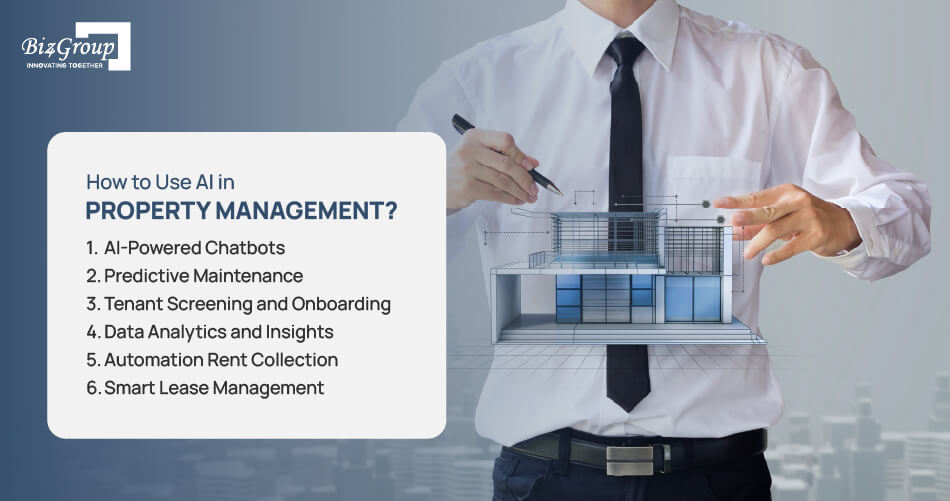
There are various key features of AI property management software. Let’s explore them:
1.AI-Powered Chatbots
Artificial intelligence demands a central concern in the optimization of tenant engagement. Indeed, such chatbots can perform various functions such as responding to frequently asked questions, tackling maintenance issues, and arranging property viewing. All the time active, chatbots give immediate answers eliminating overwhelming requests from tenants and a workload on the staff of property management agencies.
2.Predictive Maintenance
AI property management software incorporates predictive maintenance that encompasses data from multiple sensors and logbooks of the previous maintenance activity. It also forecasts when pieces of equipment or systems may develop faults so that they can be maintained before they do. This helps reduce the time that the machinery is down, and it does not have to go through expensive emergency repairs.
3.Tenant Screening and Onboarding
This technology makes a significant contribution to the management of the housing business by streamlining the procedure of assessing potential tenants. The system evaluates probabilities including credit scores, rental histories, and records of employment among prospective tenants, and social media accounts. It proves effective in ensuring that property managers hire responsible tenants who can pay their dues without defaulting and who will respect the property.
Leverage AI to streamline operations and enhance tenant experiences with custom solutions.
Get a Free Consultation4.Data Analytics and Insights
Smart AI tools in the property management software are particularly effective for monitoring a large volume of data. It helps in understanding different aspects of the property which include the degree of occupancy, rental income including changes in it, cost of maintenance of properties and satisfaction of tenants. These measures allow the property managers to make a sensible decision and manage the property efficiently and effectively while highlighting areas that require enhancement.
5.Automation Rent Collection
This relieves the landlord and tenants of the burden, which AI simplifies by automating the entire rent collection process and accurately executing all transactions. For the payment of the dues, the system comes with automatic notification to the tenants before the due date and when making the payments, the payment is made through secure gateways. This eliminates the time which property managers might have to manually keep records of rent and payment follow ups for tenants who delay in paying.
Biz4Group, as a software-based company, provides chatbot development services for your business to improve efficiency and perform routine tasks effortlessly.
6.Smart Lease Management
AI for property management has easy control to keep track of lease renewals, lease terminations and compliance. It can remind the user of many upcoming and expired leases, enabling the user to meet all the necessary legal provisions. It self-organizes the relation between renewals and terminations, thus preventing potential legal problems from going unnoticed.
Also Read: The Role of AI in Project Management
Integrating artificial intelligence into property management is a strategic move toward long-term growth and smarter operations.
Whether you are building AI property management software from scratch or developing property management software using AI to upgrade an existing system, the benefits extend far beyond basic automation.
Many business owners often ask, I need a development partner to create AI real estate property listing software with tenant management and analytics features which can benefit my real estate business. The answer lies in adopting AI-driven solutions that combine efficiency, intelligence, and scalability.
Let’s explore the top advantages of AI property management software development that are reshaping the real estate industry.
AI-driven automation streamlines repetitive and time-consuming tasks such as rent collection, tenant screening, and maintenance scheduling. By developing property management software using AI, managers can focus on higher-value activities like improving tenant retention and expanding property portfolios, rather than getting bogged down in day-to-day operations.
One of the greatest advantages of AI property management software development is access to deep insights and real-time analytics. AI can evaluate tenant behavior, property performance, and market trends, helping property managers make smarter, data-backed decisions. For example, natural language processing can scan tenant feedback to identify hidden concerns before they escalate.
Building AI property management software allows businesses to significantly cut operational costs. Automation reduces the need for manual oversight, while predictive maintenance tools flag issues early—preventing costly repairs and extending asset lifespan. More output with fewer resources is a win-win.
AI solutions also have a positive impact on the tenants since they offer quick solutions to many inquiries, facilitate prompt payment for rents and check on proper maintenance among other services. For example, most of the work related to tenant requests and its answering throughout the day can be handled by chatbots based on artificial intelligence. Predictive maintenance allows for the tenants' overall lifestyle to be much smoother as the likelihood of disruptions caused by maintenance or repairs is greatly minimized.
Biz4Group can help in chatbot development for real estate. We can help in bringing efficiency for daily tasks and bringing the cost down in the long run.
Partner with experts in AI property management software development to bring your ideas to life.
Talk to Our ExpertsAI systems can monitor evolving regulations and ensure lease agreements and business practices remain compliant. This proactive approach helps in early detection of legal risks and policy violations, safeguarding property owners and streamlining audits—an essential aspect of developing property management software using AI.
Also Read: How to Build AI Chatbot Like Replika?
Once you understand the benefits and finalize the features you need to implement, it is time to explore how to develop AI property management software that is both intelligent and scalable.
The development of property management software using AI requires a methodical approach, from research and MVP planning to full-scale launch.
We are evaluating vendors to develop AI property listing management software, which companies provide secure and reliable solutions is a common concern among business owners. Choosing the right development partner and following a structured process are key to building a secure, scalable, and high-performing platform.
Below is a detailed, step-by-step guide to help you build a high-performing, AI-powered platform.
The first step in creating AI property management software is understanding the specific challenges your users face—property owners, managers, and tenants alike. Conduct market research to analyze existing solutions, user pain points, tech gaps, and competitor strategies. Engage with stakeholders to collect insights into required features, legal compliance, data handling needs, and AI functionalities.
This discovery phase will guide the project scope and ensure you're building a product that solves real-world problems with precision.
Instead of launching a full product at once, start by creating an MVP that includes only the essential features: tenant communication, rent collection automation, maintenance request handling, and basic AI-based insights.
This MVP allows you to test core functionality, receive feedback from real users, and refine the solution based on actual usage. It's a cost-effective, agile method that helps you validate the business model and user interest before scaling further.
An intuitive interface is essential when integrating AI features. We, as a top UI/UX design company, ensure your platform is user-friendly for both property managers and tenants. Seamless design supports AI elements like chatbots, smart dashboards, and predictive suggestions. Great UI/UX not only improves adoption but also minimizes errors and boosts engagement—making your AI-powered software efficient, easy to navigate, and ready for real-world use.
This is the heart of the development process. Select the right AI technologies such as Natural Language Processing (NLP) for chatbots, machine learning for rent predictions and behavior analysis, and computer vision for document verification.
Train these models using real estate datasets including tenant history, property maintenance logs, and rent trends. The smarter your AI models are, the more valuable your platform becomes in automating decisions and improving operational efficiency.
A strong backend is crucial for managing data, user roles, transactions, and AI workflows. Use scalable technologies to ensure smooth performance as your platform grows. Equally important is efficient API development to connect with third-party services like payment gateways, CRMs, IoT devices, and accounting tools.
Seamless API integrations make your software more flexible, secure, and feature-rich—ensuring your AI property management system functions like a truly connected ecosystem.
After development, your software must undergo extensive QA testing across multiple devices, operating systems, and user roles. Functional, performance, and security testing should be supported with AI-driven automated testing tools to reduce manual effort.
More importantly, gather user feedback from beta testers and early adopters. Use their insights to tweak user flows, fix usability issues, and enhance AI predictions for optimal accuracy.
Once the MVP performs successfully and user feedback is integrated, move forward with the full-featured platform. Expand modules to include advanced AI features such as fraud detection, portfolio analytics, compliance monitoring, and multilingual support.
Post-launch, ensure continuous monitoring, AI model retraining with new data, feature updates, and tech support. A successful AI product is never truly “done”—it evolves with time, data, and user behavior.
By following this roadmap, the development of property management software using AI becomes a structured, insight-driven journey. With the right planning, tools, and feedback loops, you can launch an intelligent solution that delivers value, scales effortlessly, and gives your real estate business a cutting-edge advantage.
The cost of AI Property Management Software Development varies based on the complexity, features, and scalability of the solution. On average, businesses can expect pricing between $30,000 and $300,000+ depending on requirements.
Many business owners often search: I need recommendations for companies that develop AI property listing software for real estate businesses in budget. The answer depends on choosing a development partner that balances cost, scalability, and long-term ROI.
Below is a detailed breakdown to help you understand the cost structure:
|
Development Level |
Features Included |
Estimated Cost |
|---|---|---|
|
Basic MVP |
Chatbots, rent automation, maintenance requests, basic dashboards |
$30,000 – $80,000 |
|
Mid-Level Solution |
Advanced analytics, tenant screening, predictive maintenance, API integrations |
$80,000 – $150,000 |
|
Advanced Platform |
AI-driven insights, voice assistants, IoT integration, multi-property management |
$150,000 – $300,000+ |
|
Enterprise-Grade Solution |
Custom AI models, fraud detection, high-end security, full automation, scalable infrastructure |
$300,000+ |
|
Factor |
Impact on Cost |
|---|---|
|
Feature Complexity |
More advanced AI features increase development time and cost |
|
UI/UX Design |
Custom, user-friendly interfaces require additional investment |
|
AI Model Development |
Training and optimizing AI models adds to overall expenses |
|
Backend Infrastructure |
Scalable and secure backend systems raise development costs |
|
Third-Party Integrations |
APIs for payments, CRM, and IoT increase complexity |
|
Security & Compliance |
Advanced data protection and compliance requirements add cost |
|
Post-Launch Support |
Maintenance, updates, and scaling impact long-term budget |
Choosing the right AI development partner is critical to staying within budget while ensuring quality. Working with an experienced company like Biz4Group helps businesses build scalable and intelligent solutions without unnecessary overhead, ensuring maximum return on investment.
Also Read: AI App Development Cost in 2025 – Know How Much Your App Will Cost
Stay ahead of the curve with AI-driven solutions that simplify, scale, and optimize your real estate business.
Schedule a Strategy CallTo build a high-performance, AI-driven property management system, it’s important to choose the right combination of frontend, backend, cloud, AI frameworks, and integration tools. Below is a detailed table outlining the essential tech stack and their respective purposes
|
Category |
Technologies/Tools |
Purpose |
|
Frontend |
React.js, Angular |
Build responsive and dynamic user interfaces for tenant and admin dashboards. |
|
Backend |
Handle business logic, AI integration, and server-side operations. |
|
|
AI/ML Frameworks |
TensorFlow, PyTorch, Scikit-learn |
Enable intelligent features such as chatbots, predictive analytics, and NLP processing. |
|
Database |
PostgreSQL, MongoDB |
Store structured and unstructured data including tenant profiles, lease documents, and maintenance logs. |
|
Cloud & Hosting |
AWS, Google Cloud, Microsoft Azure |
Host applications, scale infrastructure, and manage data storage securely. |
|
APIs & Integration |
RESTful APIs, GraphQL, Zapier |
Connect with third-party services like payment gateways, CRM, and IoT devices. |
|
DevOps |
Docker, Kubernetes, Jenkins |
Automate deployment, scaling, and monitoring of the software. |
|
Security |
OAuth 2.0, SSL, JWT |
Ensure secure authentication, data transmission, and user access control. |
|
Communication Tools |
Twilio, SendGrid |
Enable real-time communication via SMS, email, and chat functionalities. |
Choosing between custom and ready-made solutions is a crucial decision when adopting AI in property management. Both options offer unique advantages depending on your business size, operational needs, and long-term goals. Understanding the differences will help you determine which approach supports smarter automation, scalable growth, and efficient digital transformation.
Ready-made AI property management systems are pre-built platforms designed for quick deployment. They come with standard features such as tenant portals, automated rent collection, maintenance tracking, and AI chat support. These solutions are ideal for small to mid-sized property managers who need fast implementation without the overhead of custom development. Since the software is already developed, it offers lower upfront costs and faster onboarding.
However, ready-made platforms often lack deep customization, offer limited scalability, and may not perfectly align with complex workflows or specialized business models. As your business expands, these limitations can impact efficiency and operational flexibility.
Custom AI property management software is tailored specifically to your business requirements, offering unparalleled flexibility, scalability, and innovation potential. With a custom solution, you can integrate advanced AI capabilities such as predictive analytics, personalized virtual leasing agents, digital twins, fraud detection, or IoT-based smart building automation. The development of AI property management software allows you to design unique workflows, build specialized dashboards, integrate with proprietary systems, and incorporate features that differentiate your platform from competitors.
While custom development requires higher investment and longer build time, it delivers long-term value, competitive advantage, and seamless alignment with your operational goals. For businesses looking to scale or introduce cutting-edge AI for property management, a custom approach is often the most future-proof choice.
Comparison Table: Custom vs. Ready-Made AI Property Management Software
| Criteria | Ready-Made Software | Custom AI Property Management Software |
|---|---|---|
|
Implementation Time |
Fast setup and immediate use |
Longer development time but fully tailored |
|
Cost |
Lower upfront cost |
Higher investment but long-term ROI |
|
Customization |
Limited customization options |
Fully customizable to business needs |
|
AI Capabilities |
Basic AI features such as chatbots and automation |
Advanced AI including predictive analytics, digital twins, and smart automation |
|
Scalability |
Suitable for small to mid-sized operations |
Highly scalable for growing or enterprise-level portfolios |
|
Integration Support |
Limited to available integrations |
Connects with any CRM, ERP, IoT, or third-party tools |
|
Competitive Advantage |
Standardized features used by many |
Unique features that differentiate your business |
|
Long-Term Flexibility |
Restricted by vendor roadmap |
Adaptable to evolving strategies and technologies |
|
Data Control |
Vendor-controlled storage and security |
Full control over data governance and compliance |
A well-aligned solution can significantly enhance efficiency, and choosing the right type of AI property management software ensures your business stays competitive and future ready.
Building intelligent, automated systems is not without hurdles. While the benefits are clear, the development of AI property management software comes with unique technical and operational challenges. Here are some of the most common issues—and how to effectively solve them.
The purchase cost or subscription fees for AI property management software solutions are relatively high during orientation. But quick gains like curbed operation expenses and higher effectiveness make up for it in the long run. This is true because scalable communities can assist in cost management of these costs.
It is equally important to protect the tenants’ data. There are different techniques used in AI that have security characteristics, encrypted data, or GDPR compliance to protect data.
The integration of new ideas such as AI into conventional systems can sometimes prove to be problematic. Selecting the right AI platforms and tools and providers for partnership is helpful to avoid the problems that may be faced.
The final change that could affect the adoption of new technology is that the staff might not be very keen on embracing new technology. When the RM system has comprehensive training, and its interfaces are easier to use, then this should not be an issue at all. It means that constant support and showing the advantages of using AI will help people accept it further.
AI can exhibit biases. It is fair thanks to the usage of various datasets and regular updating of the algorithms used, both aspects helping to prevent bias. Here, the transparency of the reasons behind AI decisions is crucial to ensuring that trust is maintained.
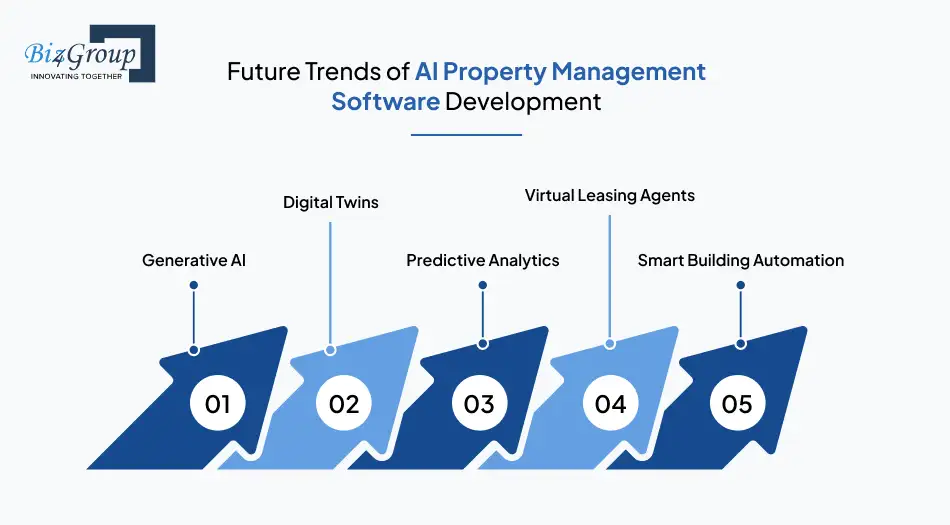
As digital transformation accelerates across the real estate sector, AI in property management is set to become even more intelligent, predictive, and automated. The next wave of innovation will redefine how property managers operate, optimize buildings, and deliver superior tenant experiences.
Below are the emerging trends shaping the future of AI property management software.
Generative AI is revolutionizing AI property management by enabling intelligent content creation, advanced automation, and personalized tenant interactions. It can generate automated responses, property descriptions, lease documents, maintenance summaries, and even financial reports with higher accuracy and speed. For property managers, this means less manual work and faster communication workflows.
In the development of AI Property Management Software, generative models also help simulate tenant behavior, forecast market shifts, and streamline documentation. As a result, AI for property management becomes more proactive, intuitive, and efficient.
Digital twins are virtual replicas of physical properties that allow real-time monitoring and simulations. With AI property management software, digital twins help managers visualize asset performance, track building health, and test maintenance scenarios without disrupting operations. They integrate IoT data, historical maintenance logs, and behavioral analytics to forecast failures before they occur.
This technology helps reduce downtime, cut maintenance costs, and improve energy efficiency. As AI in property management evolves, digital twins will become a standard tool for optimizing operational decisions and long-term property planning.
Predictive analytics is one of the most powerful elements transforming AI for property management. By analyzing past and real-time data, predictive models can forecast rent fluctuations, tenant churn, equipment breakdowns, and occupancy trends. This empowers property managers to plan budgets accurately, schedule proactive maintenance, and improve retention strategies. In the development of AI Property Management Software, predictive analytics plays a critical role in automating insights that were previously complex or time consuming. It turns raw data into actionable decisions that drive profitability and reduce risks.
Virtual leasing agents powered by AI are changing how properties communicate with potential tenants. These digital assistants offer 24 by 7 support, answer inquiries instantly, schedule tours, share property details, and guide applicants through the leasing process. With AI property management software, virtual leasing agents reduce dependency on human staff while delivering a consistent and engaging experience.
They can also qualify leads based on preferences, behavior, and budget, helping property managers focus on high-intent prospects. This trend is rapidly becoming a core part of AI in property management.
Smart building automation combines IoT devices and AI to enhance building efficiency, safety, and sustainability. Features like automated lighting, energy optimization, air quality monitoring, and access control systems work together to create responsive buildings. AI property management software analyzes data from sensors to adjust systems in real time, reducing utility costs and improving tenant comfort.
This technology enables proactive building management where potential issues are identified and resolved automatically. As AI for property management advances, smart building automation will play a major role in creating highly efficient and eco friendly living and working spaces.
These emerging innovations are shaping a smarter, more efficient, and future ready landscape for AI property management software.
Building a powerful AI-driven platform requires more than just technical expertise. It demands a strategic partner who understands real estate workflows, user expectations, and scalable AI implementation.
Many business owners ask, we are exploring how to build AI property listing platform for our business, which companies can guide us from idea to deployment. The answer lies in partnering with an experienced team that can support you across every phase of development.
Biz4Group stands as a leading force in AI real estate software development, delivering robust, scalable, and intelligent solutions tailored to modern property managers, owners, and tenants.
Our expertise spans the full lifecycle of AI-powered development, from concept to deployment, with strong capabilities in AI integration, automation, predictive analytics, and smart dashboards. Whether you need a feature-rich MVP or a fully customized enterprise platform, our team builds solutions aligned with business goals and measurable outcomes.
What truly sets us apart is our proven success in the real estate sector through notable AI-
What truly sets us apart is our proven success in the real estate sector through notable, AI-driven platforms:
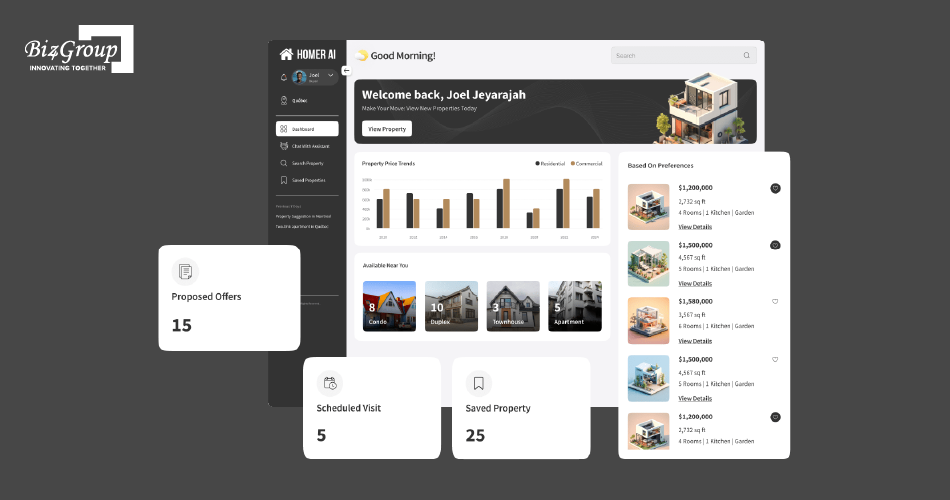
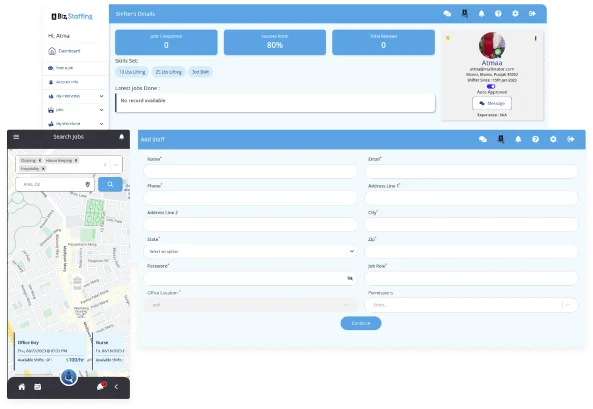
An AI-based modern property listing management platform designed to streamline lease tracking, rent payments, and tenant communication through advanced automation.
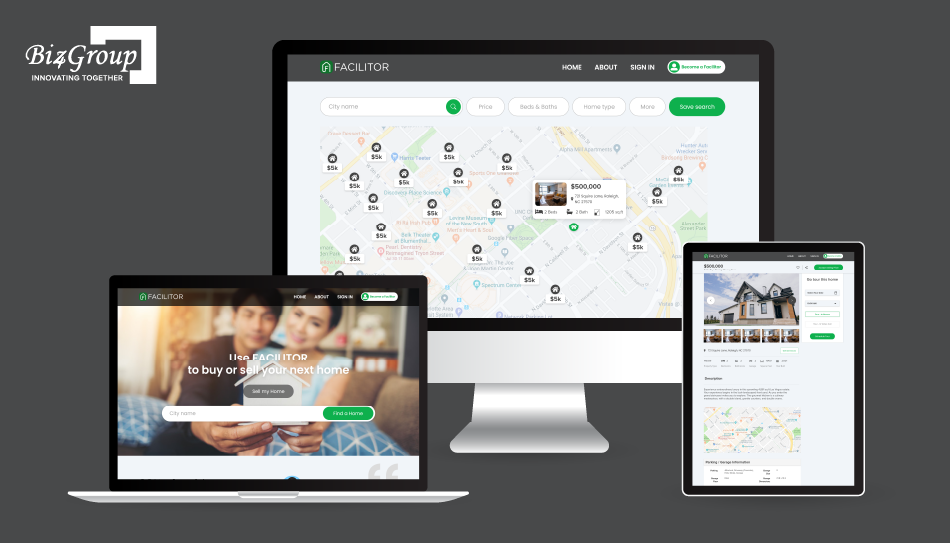
A powerful AI-powered real estate solution built for efficient property listing, smart recommendations, and personalized user engagement.
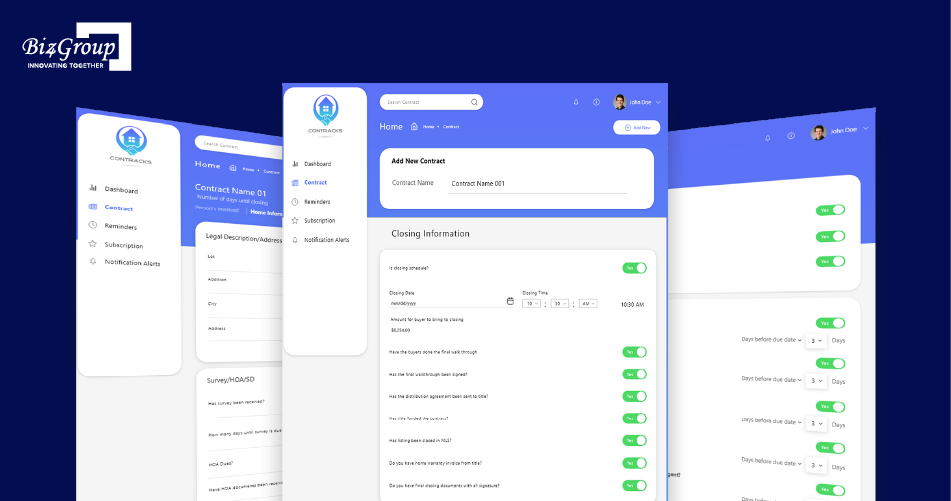
A contract management system tailored for real estate, integrating smart document tracking, AI compliance checks, and contract lifecycle automation.
With Biz4Group, you get more than just AI developers. You gain a strategic technology partner dedicated to transforming your vision into a high-performing, AI-powered property management solution that scales with your business.
From MVP to enterprise scale—we’ll help you create AI solutions tailored for real estate success.
Book an AppointmentThe rise of AI in real estate is reshaping how property management operates—making processes smarter, faster, and more tenant-friendly. Through AI property management software development, businesses can automate operations, reduce costs, and gain data-driven insights that enhance decision-making and service delivery.
Many businesses today are actively searching for companies that can develop AI property listing platforms with cloud integration and scalability, as these capabilities are essential for handling growing property portfolios and dynamic user demands.
If you're planning to build AI property management software, choosing the right technology partner is crucial. From MVPs to enterprise-grade platforms, Biz4Group has the proven expertise to turn your vision into a scalable, intelligent solution tailored to your needs.
We don’t just build software—we craft future-ready platforms that redefine how property management is done in the AI era.
👉 Book an appointment with our AI experts here and start your journey toward intelligent real estate automation.
The cost typically ranges from $30,000 to $300,000+, depending on the features, platform complexity, and level of AI integration. Starting with an MVP can reduce initial expenses.
Core features include automated rent collection, tenant screening, maintenance scheduling, AI chatbots for real estate, predictive analytics, and lease tracking. Advanced systems may also include smart IoT integration and compliance monitoring.
An MVP can take 3–4 months, while a full-scale enterprise solution may take 6–12 months. Timelines depend on feature scope, AI complexity, and integration requirements.
Yes. AI chatbots offer 24/7 support, predictive maintenance reduces service delays, and smart notifications enhance communication—leading to a smoother tenant experience.
Absolutely. With robust API development, the platform can be integrated with tools like QuickBooks, Salesforce, or custom CRMs for seamless data flow and automation.
Biz4Group combines deep domain knowledge in real estate with proven success in AI integration. Our portfolio includes intelligent platforms like Homer AI, Facilitor, and ConTracks—showcasing our ability to deliver scalable, tailored solutions that align with real business goals.

with Biz4Group today!
Our website require some cookies to function properly. Read our privacy policy to know more.