 Location :
Orlando, FL, USA
Location :
Orlando, FL, USA +1 (407) 714-1616
 info@biz4group.com

- Agentic AI platforms help real estate teams automate lead nurturing, property matching, follow ups, and decision making without relying on manual workflows.
- Agentic AI platform development for real estate gives businesses a scalable way to streamline operations and improve client experience and more.
- You can develop agentic AI platform for real estate that uses autonomous agents to coordinate tasks, monitor activity, and handle processes end to end.
- Businesses can also create agentic AI platform for property businesses to generate predictive insights, automate communication, and reduce operational load.
- The market is rapidly growing, with adoption rising across US brokerages and AI driven real estate tools gaining traction year over year.
- Cost to build an agentic AI platform for real estate typically ranges from 15,000 to 150,000 plus USD, depending on complexity, integrations, and features.
If you’re a CTO or tech-lead at a mid-sized real estate brokerage in the US, you must’ve grown tired of watching leads slip through cracks, of your agents drowning in admin, and of market opportunities zooming by while your team is stuck in chase mode.
What if you could flip that script and build an agentic AI platform for real estate that acts on its own, nurtures leads, spots market signals, and frees your team to focus on closing deals?
Have you been searching for questions like:
- How do I build an AI platform that can handle real estate leads automatically like an agent?
- Can AI follow up with buyers and renters on its own and not wait for my team?
- Is it possible to make an AI system that books property showings without anyone involved?
- How do I get AI to analyze listings and match them to the right clients like a real agent would?
- How to create an AI assistant that talks to clients and closes appointments for my real estate business?
If yes, here’s the good news:
- The global agentic AI market alone is projected to grow to 20 billion dollars by 2032 at a rapid CAGR of about 44.6 percent.
- Meanwhile, across the US, 55% of realtors say they are familiar with AI tools and 28% are already using them in their workflows.
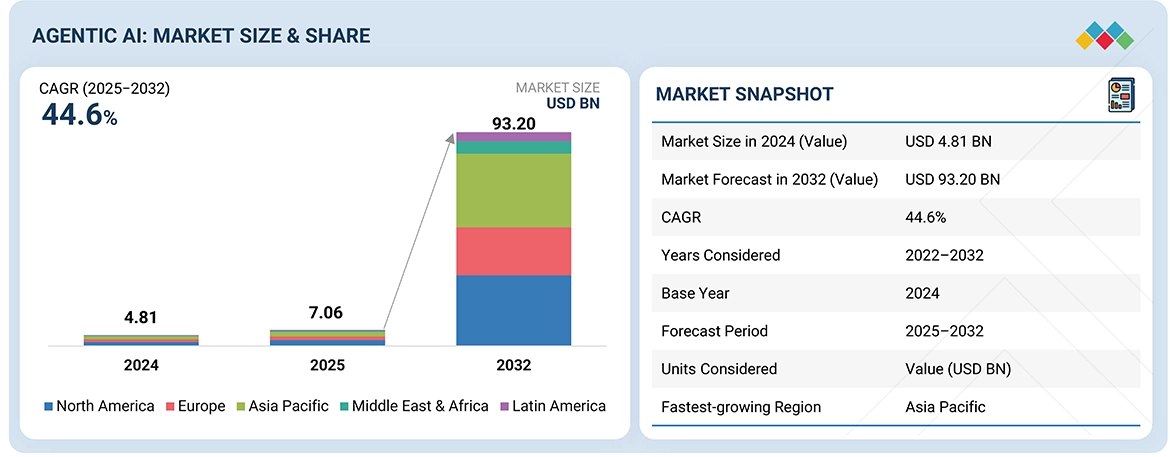
In other words, you’re right on time. And this is the moment to lean into agentic AI platform development for real estate rather than letting competitors experiment their way into an advantage.
Now with that on table you must be wondering how can I develop an agentic AI platform for my real estate business to automate lead generation and customer interactions?
This blog walks you through what it actually takes to create intelligent real estate automation systems. We will break down how agentic systems work, the features that matter, and how to build an agentic AI system for automated real estate lead nurturing without overwhelming your tech resources. You will also get a roadmap, cost clarity, and real ways to use AI to sharpen your operations.
Along the way, you will find helpful insights into real estate AI software development and how a reliable custom software development company can help - if you ever decide to explore partnerships.
Now that you’re warmed up, let’s get into the details.
What Is Agentic AI Platform for Real Estate?
An agentic AI platform for real estate is a decision-driven AI system that helps brokers, property franchises, and proptech teams automate how leads, listings, client interactions, and operational workflows move across the property lifecycle. Instead of depending on agents to manually push every next step, the platform continuously identifies what should happen next and keeps the process moving in real time.
Here is what defines an agentic AI platform at its core:
- Multiple AI agents designed to take care of focused real estate responsibilities
- Logic that adjusts based on client behavior and business priorities
- Tools that help you build an agentic AI system for automated real estate lead nurturing across your pipeline
- A flexible foundation similar to the architecture used in enterprise AI solutions that grows with your team
In simple terms, it is a digital operations layer that quietly supports your agents, improves consistency, and keeps your processes running smoothly as your business scales.
How Scalable Multi-Agent Architecture Powers Real Estate AI Platforms
As real estate workflows expand across leads, listings, and transactions, teams often start asking what architecture is best to create scalable agentic AI platforms for real estate business without disrupting continuity?
The answer lies in how intelligently orchestration, memory, and external systems stay aligned as volume, teams, and lifecycle complexity increase. Here take a look:
1. Central Orchestration for Cross-Workflow Control
The most reliable model is a multi-agent architecture with centralized orchestration and shared context control. This structure ensures every workflow decision follows business logic, operational priority, and lifecycle stage instead of running as disconnected automations.
Within this control layer, execution responsibilities are distributed into system-level functions that keep brokerage workflows modular:
- inquiry routing based on source channel and urgency
- lifecycle stage assignment across buyers, renters, and sellers
- handoff logic between nurture, scheduling, and transaction stages
- fallback escalation paths for human review and approval
2. Persistent Context Across the Property Lifecycle
Longer buyer and renter journeys require every AI action to reference the latest engagement state. A persistent memory layer ensures the platform retains intent shifts, saved preferences, communication history, and listing interaction signals. This allows future decisions to remain relevant instead of restarting at every touchpoint.
This context layer continuously maintains the operational signals required for downstream workflow accuracy through:
- preference evolution across neighborhoods, budgets, and amenities
- showing history tied to response behavior
- communication timelines mapped to buyer readiness
- transaction status dependencies across documents and approvals
3. Integration and Governance Layers for Enterprise Scale
As brokerage operations expand into multiple teams, regions, or franchise environments, platform scale depends on how external systems and governance controls support continuity. MLS feeds, CRM systems, messaging platforms, and compliance rules must stay synchronized so AI-led actions remain reliable under higher transaction velocity.
To support long-term scale, the architecture should include the following reliability layers:
- MLS and CRM synchronization services
- event queue support for inquiry spikes
- compliance controls for sensitive automated actions
- monitoring systems for workflow delays and agent drift
Also Read: Artificial Intelligence in CRM: Use Cases & Roadmap
Portfolio Spotlight: Homer AI- AI-based Modern Property Management Application
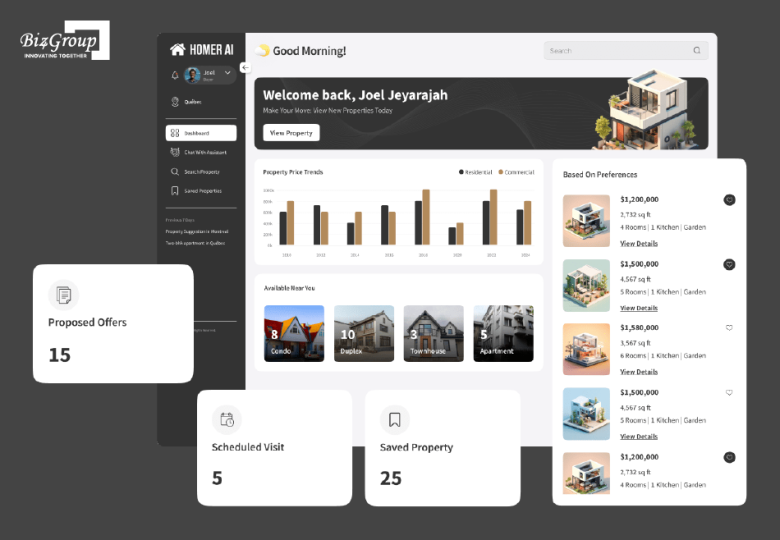
Homer AI makes this architecture model easier to visualize in a real property environment. It routes maintenance workflows through centralized logic, retains tenant and asset context across repeated actions, and keeps property records synchronized in real time. This mirrors how scalable agentic AI platforms maintain orchestration, memory continuity, and workflow reliability as real estate operations grow.
When these layers operate as one system, the platform scales with far more control across buyer journeys, listing workflows, and transaction stages. This is where architecture stops being a backend decision and starts becoming a direct growth enabler for real estate businesses planning long-term AI-led expansion.
Give Your Agents a Smarter Backup Team
Choose agentic AI platform development for real estate and let AI handle the tasks your team should not be stuck with.
Start My Agentic AI PlatformWhy Real Estate Businesses Should Invest in Agentic AI Platform Development?
Investing in an agentic AI platform gives real estate teams a practical way to reduce daily strain, strengthen client engagement, and build a scalable foundation as the market grows more competitive. If you are weighing the real reasons this matters now, here is the clear picture:
1. It Brings Order to the Day-to-Day Chaos
Instead of scrambling through scattered tasks, the platform keeps everything running in a clean, predictable flow. Your agents spend less time chasing small things and more time on the work that actually moves revenue. This is why choosing to develop agentic AI platform for real estate feels like installing structure instead of installing software.
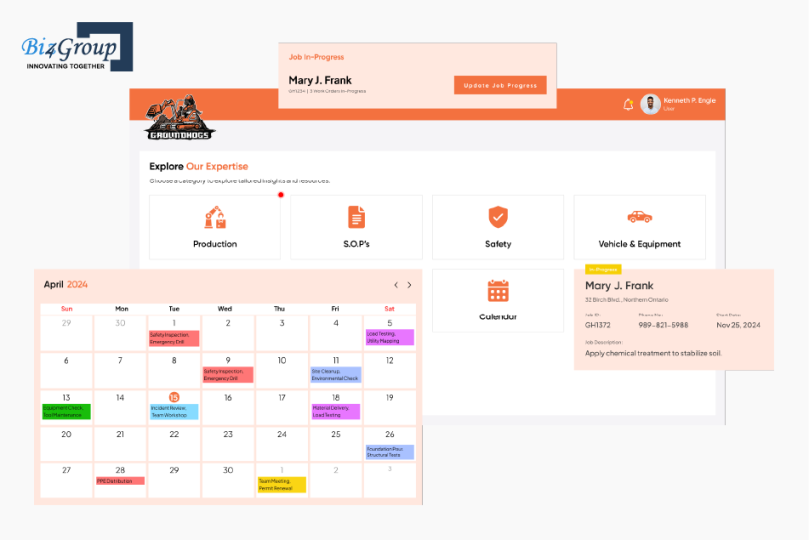
Groundhogs, an AI platform developed by Biz4group, centralizes field activity, safety reporting, and task tracking using automated check ins and real time visibility. While built for construction, its autonomous monitoring and workflow execution parallels how agentic AI platforms for real estate can track listings, tasks, and field events without agent oversight.
2. Your Leads Stay Warm Instead of Being Forgotten
Every click, inquiry, and message gets an instant response from the system. This is the backbone of how you build an agentic AI system for automated real estate lead nurturing that never drops opportunities. Many teams discover this feels similar to using well designed AI automation services, where momentum stays steady even on hectic days.
3. Your Data Finally Works for You, Not Against You
Most real estate businesses sit on years of untapped CRM and listing data. An agentic AI platform actually uses that information to guide actions, personalize conversations, and surface opportunities your team might miss. It is the difference between simply having data and benefiting from data.
4. You Create a Scalable Base for Future Growth
As your team grows or your property volume increases, the platform adjusts without needing more manual work from your staff. That adaptability mirrors the thinking behind smart on-demand app development solutions, where systems expand without rebuilding them. It keeps expansion smooth rather than costly.
5. Your Client Experience Starts Feeling Premium
Quick replies, timely follow ups, and better matching make your business feel more attentive without adding more pressure to your team. Clients notice the difference, and that trust carries over into deals, referrals, and long term relationships.
If you’re still not convinced with investment direction, the comparison table next will help clarify how agentic AI platforms move beyond traditional AI chatbots in supporting long-term brokerage workflows.
Comparison Table for Agentic AI Platforms and Traditional AI Chatbots in Real Estate
|
Decision Area |
Agentic AI Platform |
Traditional AI Chatbot |
|---|---|---|
|
Workflow Ownership |
Manages lead progression, scheduling, and transaction continuity |
Limited to conversation-based support |
|
Action Triggering |
Proactively initiates next-step actions based on signals |
Responds only when users ask questions |
|
Context Retention |
Maintains buyer, renter, and listing context across lifecycle stages |
Mostly session-based context |
|
Business Continuity |
Supports end-to-end property journey workflows |
Focused on isolated interactions |
|
Multi-Team Scale |
Suitable for brokerages, franchises, and distributed teams |
Better for single-channel support use cases |
|
Human Escalation |
Enables approval paths and workflow handoffs |
Limited escalation beyond live agent transfer |
|
Long-Term Fit |
Best for lifecycle automation and operational control |
Best for FAQ and conversational assistance |
This comparison usually makes the investment path much clearer for brokerages evaluating long-term automation goals. Once the distinction is visible, agentic AI platform development for real estate becomes less about adding conversational AI and more about choosing lifecycle-level workflow ownership that can scale with evolving business demands.
Top Use Cases for Developing an Agentic AI Platform for Real Estate
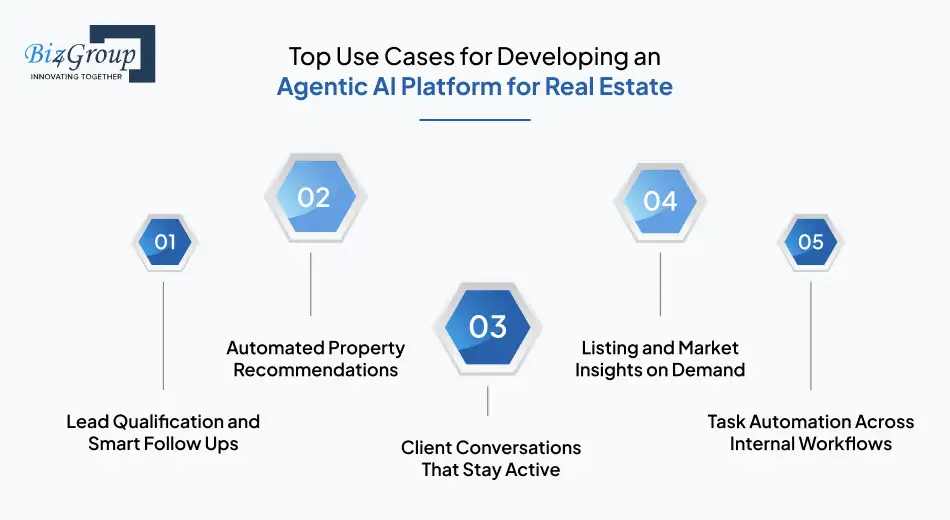
An agentic AI platform opens doors to smoother operations, smarter decisions, and more consistent client experiences for real estate teams. If you are wondering where this technology actually proves its value, here are the use cases that make the biggest difference.
1. Lead Qualification and Smart Follow Ups
The platform can watch new leads arrive, understand their intent, and score them based on real behavior instead of guesswork. It then nudges the right prospects with thoughtful messages without waiting for your team. This makes it easier to develop agentic AI platform for real estate that never loses momentum.
- Example: An incoming form submission triggers an instant follow up built using insights similar to those explained in AI for real estate agents.
2. Automated Property Recommendations
Agents inside the platform compare listing attributes with client preferences and send recommendations that feel personal instead of generic. These decisions rely on pattern recognition and live inputs that guide the next steps. That is how you build an agentic AI system for automated real estate lead nurturing that actually moves clients forward.
- Example: A client checking a listing page receives recommendations built using logic seen in many real estate AI apps ideas.
3. Client Conversations That Stay Active
The platform can handle everyday conversations like sharing listings, answering common questions, and scheduling viewing slots without overwhelming your staff. These interactions come from trained language models shaped by your business context via concepts used in AI conversation app development.
- Example: A client texting late at night gets instant responses that keep the conversation warm instead of letting it stall.
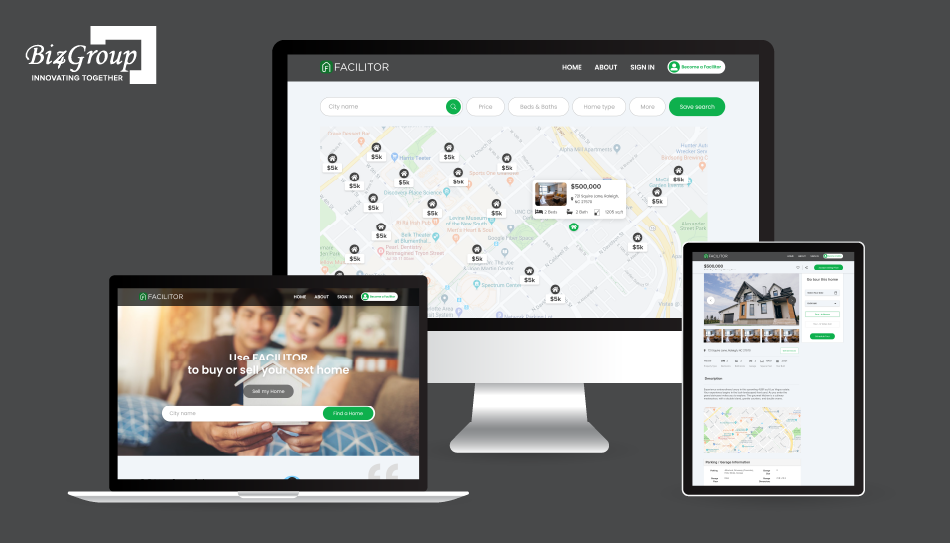
Facilitor is a secure, AI powered real estate platform designed to help buyers explore properties, manage pre approvals, and communicate directly with sellers without friction. It streamlines decisions, clarifies next steps, and reduces back and forth during a transaction, which aligns perfectly with how an agentic AI platform supports self guided client journeys.
4. Listing and Market Insights on Demand
Agents within the system can scan your listings, compare changes, and surface trends your team may not immediately notice. This helps businesses stay ahead in shifting markets without adding manual analysis work. It quietly strengthens agentic AI platform development for real estate by making information more usable.
- Example: Price fluctuations across neighborhoods trigger internal alerts that help your agents adjust strategies.
5. Task Automation Across Internal Workflows
Administrative routines like updating CRM entries, logging activity, or sorting inquiries can be handled automatically. Each small step adds up to a more relaxed and productive team rhythm. This supports a more streamlined experience for growing agencies.
- Example: After every call, the platform updates client notes automatically so your team does not spend evenings catching up.
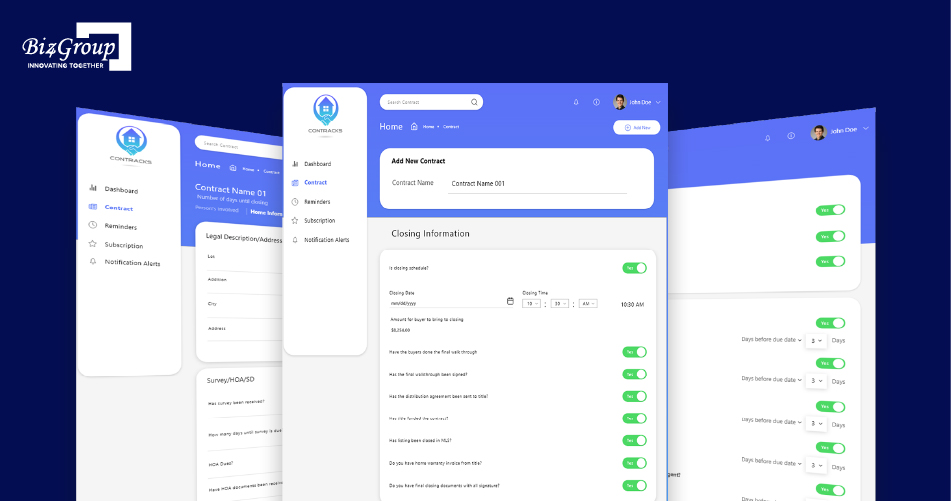
Contracks, built by Biz4Group, streamlines real estate contract creation and compliance with automated document generation, timelines, and progress tracking. Its structured workflow logic mirrors how agentic AI systems coordinate multi step real estate processes, making it relevant when explaining workflow orchestration inside an agentic AI platform for real estate.
| Use Case | What It Helps With | Why It Matters |
|---|---|---|
|
Lead Qualification |
Scores and follows up with leads |
Reduces delays and boosts conversions |
|
Matches listings with preferences |
Makes outreach feel targeted |
|
|
Client Conversations |
Answers questions and schedules |
Keeps interactions warm and timely |
|
Market Insights |
Spots trends and updates |
Helps teams stay ahead of shifts |
|
Workflow Automation |
Handles admin tasks |
Frees agents for higher value work |
Once these use cases come into focus, the value of building or adopting an agentic AI platform becomes much clearer, especially when you start exploring which features matter most for your team.
Turn Manual Follow Ups Into Autonomous Pipelines
Use AI agents to develop agentic AI platform for real estate that keeps leads engaged even when your team is swamped.
Automate My Lead WorkflowCore Features in Agentic AI Platform Development for Real Estate Agencies
A dependable agentic AI platform for real estate starts with a set of foundational components that keep your workflows organized, your data flowing, and your client interactions consistent. To help you build with clarity, here are the core features that matter most:
| Core Feature | What It Does | Why It Matters |
|---|---|---|
|
Splits complex work into smaller AI driven tasks handled by individual agents |
Keeps your platform steady and reliable for everyday operations |
|
|
Lead Scoring and Prioritization |
Evaluates intent and behavior to sort leads automatically |
Helps you develop agentic AI platform for real estate that targets the right prospects |
|
Automated Lead Nurturing |
Sends timely follow ups based on client activity |
Supports how you build an agentic AI system for automated real estate lead nurturing that never stalls |
|
Property Matching Engine |
Compares listings with buyer or renter preferences |
Makes property suggestions relevant and timely |
|
Workflow Automation Hub |
Handles repetitive tasks like updates, logging, and reminders |
Reduces manual work so teams stay focused on clients |
|
Real Time Data Syncing |
Pulls data from CRM, listing tools, and other platforms |
Ensures every action is based on accurate, unified information |
|
Integrations Layer |
Connects seamlessly with existing apps and internal tools |
Works great with the structures that are used when one integrates AI into an app |
|
Scalable Architecture |
Adapts as your listings, users, and data grow |
Matches long term thinking found in modern build AI software practices |
Advanced capabilities like these help your platform evolve from a day-to-day assistant into a strategic advantage that supports every stage of the property journey. With these possibilities in mind, the next step is understanding how to actually build the system from start to finish.
Advanced Features to Create a Property Lifecycle Automation Platform Using Agentic AI
Once your foundation is in place, advanced capabilities help your system handle deeper analysis, smarter decisions, and more complex workflows. If you want your agentic AI platform to evolve beyond basics, these are the features that unlock serious value.
1. Predictive Market Intelligence
This feature studies historical trends and live activity to forecast pricing and demand ahead of time. It helps your team make proactive decisions instead of reacting late. Many of these patterns echo the analytical style seen in AI in real estate development.
Also Read: AI Real Estate Marketplace Development
2. Advanced Conversation Management
Instead of simple replies, the platform manages real conversations, gets context, and completes multi step tasks like scheduling. It adjusts responses based on past interactions and client behavior, helping you build an agentic AI system for automated real estate lead nurturing that feels genuinely helpful.
3. AI Powered Property Asset Automation
From maintenance triggers to inspection reminders, the platform can manage lifecycle events across properties. It follows rules and updates stakeholders automatically. These workflows align well with the structured logic used in modern AI property asset management software development.
4. Autonomous Transaction Support
The system can help track offer stages, prepare documents, and send reminders for key deadlines. It follows each transaction carefully and acts when something needs attention. This makes it easier to develop agentic AI platform for real estate that supports agents through complex deals.
5. Generative Listing and Marketing Enhancements
Using trained models, the platform can write listing descriptions, refine images, or generate branded marketing content. This saves time while keeping everything consistent with your brand. It builds on the same creative intelligence that drives many generative AI solutions.
With these advanced capabilities layered on top of your core features, the platform becomes much more than an operational tool. It starts functioning like a strategic partner, which sets up the perfect foundation for understanding how to build it step by step.
Bring Predictive Intelligence Into Your Property Operations
Use AI driven insights to create agentic AI platform for property businesses that helps your team act before opportunities slip away.
Build My Predictive AI SystemHow to Develop an Agentic AI Platform for Real Estate: The Complete Process
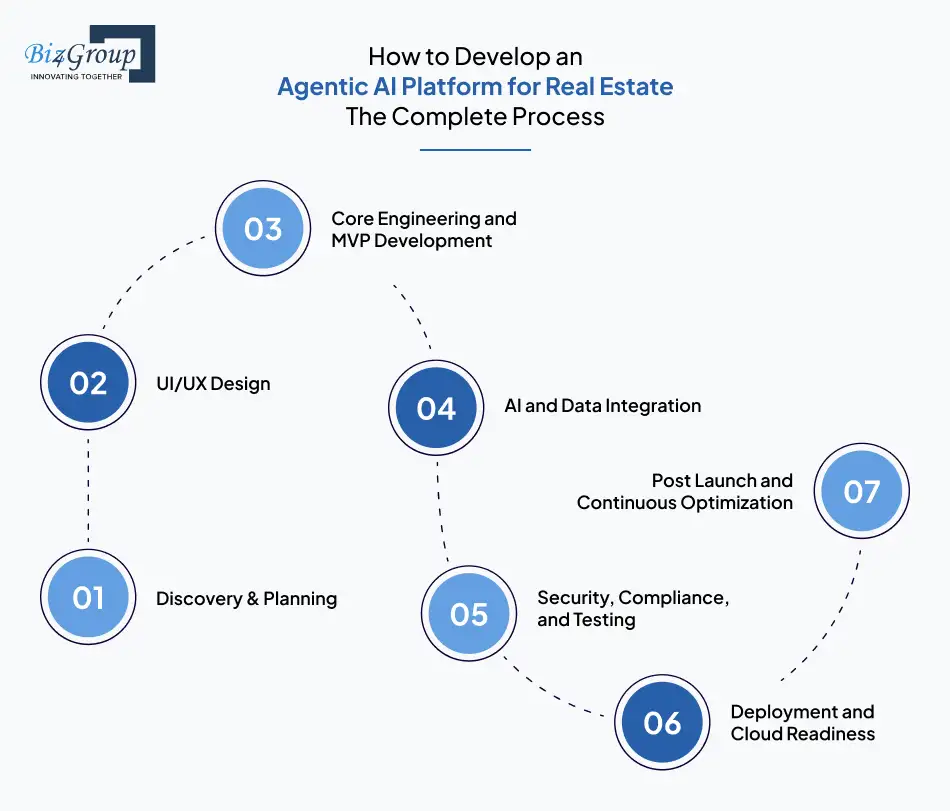
For most real estate decision-makers, the planning phase usually begins with one important question: “What is the complete process to build an AI-powered real estate platform with agentic AI and predictive analytics?”
Well, the answer lies in following a structured delivery path where each stage strengthens platform intelligence, workflow reliability, and long-term scalability before moving to the next phase.
Here is how that delivery path typically unfolds across the key platform development stages:
1. Discovery and Planning
Before anything else, you need clarity on what your AI system should solve. Real estate teams typically struggle with slow follow ups, scattered data, manual admin, and lost leads. This is where the planning phase becomes the backbone of agentic AI platform development for real estate businesses.
- Map out where workflows slow down and identify which tasks you want your autonomous agents to handle first.
- Note the property lifecycle stages that could benefit most from automation.
- Define KPIs tied to lead nurturing, response times, and more to validate your agentic AI development for property market intelligence once the platform is live.
2. UI and UX Design
A clean and intuitive interface keeps agents engaged and reduces onboarding friction. Real estate professionals are always multitasking, so the platform must feel simple, predictable, and supportive rather than overwhelming. Build a strong UX that helps teams trust the system and rely on its suggestions by partnering with a UI/UX development company.
- Create prototypes that show how AI agents surface tasks, track clients, and guide follow ups.
- Test with agents, brokers, and property managers to ensure the flow fits different working styles.
- Establish a consistent visual hierarchy that scales across devices and workflows.
Also read: Top UI/UX design companies in USA
3. Core Engineering and MVP Development
The smartest path is starting with MVP development services. Launching every feature at once slows development and increases risk. Instead, build a lean first version that includes automated lead nurturing, property matching, and workflow automation. These modules create quick wins and prove the value of your platform early.
- Architect your backend to support autonomous agents working in parallel.
- Integrate the CRM, listing feeds, and communication channels that your team uses every day.
- Make sure the MVP makes it easy to create agentic AI platform for property businesses that scales over time.
Also read: Top 12+ MVP Development Companies in USA
4. AI and Data Integration
This is where your platform becomes intelligent instead of reactive. A strong data layer is essential for agentic AI platform development for realtors who rely on accurate client behavior insights and listing data. Clean pipelines help your AI agents make better decisions.
- Train AI models using real estate specific datasets like client preferences, property features, regional trends, and behavior signals.
- Build recommendation systems that adapt as clients engage with your listings.
- Add learning loops so your AI agents improve continuously, making it easier to make a customized agentic AI solution for real estate franchises that always evolves.
5. Security, Compliance, and Testing
Real estate teams handle sensitive information like financial details, documents, IDs, and personal history. Your platform must protect client data throughout the property lifecycle. Robust security earns trust and ensures your agentic AI platform development for real estate agencies and brokerages meets compliance standards.
- Run load testing to simulate busy weekends and listing surges.
- Test end to end client journeys to ensure AI agents don’t misinterpret actions.
- Validate compliance with local and national data protection laws.
- Reliable security keeps your platform operational and trustworthy.
Also Read: Software Testing Companies in USA
6. Deployment and Cloud Readiness
Once core features function smoothly, cloud readiness ensures your platform performs consistently during high traffic periods. Real estate activity spikes during new listings, open houses, promotions, and seasonal cycles. Your platform must scale naturally as this happens.
- Deploy using scalable cloud infrastructure that grows with your user base.
- Implement CI and CD workflows so your tech team can roll out improvements without downtime.
- Provide clean onboarding flows to make adopting your agentic AI platform development for real estate effortless for agents and admins.
7. Post Launch and Continuous Optimization
An agentic AI platform must evolve as the real estate market evolves. This is where long term refinement keeps your platform valuable. Monitor how your agents respond to suggestions, identify trends in client engagement, and improve the decision logic powering your autonomous agents.
- Retrain your AI models as market conditions change.
- Add advanced features like predictive insights or property lifecycle automation once your MVP proves stable.
- Track metrics such as follow up rates, agent productivity, and time saved to measure ROI.
- Continuous updates allow you to build a real estate agentic AI system for predictive market insights that stays aligned with your strategy.
When you follow this process step by step, building an agentic AI platform for real estate starts feeling like a structured plan you can actually execute. Every phase adds another layer of intelligence and reliability, shaping a system that grows with your business and supports your team at scale.
And once the foundation is in place, the next question is simply about choosing the right technologies to bring everything to life.
Ideal Tech Stack for Agentic AI Platform Development for Real Estate
A reliable agentic AI platform needs a tech stack built for speed, automation, and real time decisions. In real estate, that means handling property data, client behavior, and multi agent workflows without delays. Here are the technologies that help make that possible:
| Label | Preferred Technologies | Why It Matters |
|---|---|---|
|
Frontend Framework |
ReactJS, NextJS, Vue |
ReactJS development helps create interfaces agents enjoy using, backed by UI patterns. |
|
Server Side Rendering and SEO |
NextJS, NuxtJS, SvelteKit |
NextJS development ensures property pages load fast and rank well. |
|
Backend Framework |
NodeJS, Python, Django, Express |
Python development powers automation, AI agent coordination, and integrations. |
|
AI and Data Processing |
TensorFlow, PyTorch, LangChain, HuggingFace |
Handles reasoning, recommendations, and multi agent intelligence for real estate workflows. |
|
Real Time Event Processing |
Kafka, Redis Streams |
Keeps listing alerts, client actions, and AI agent triggers moving instantly across the platform. |
|
Database Layer |
PostgreSQL, MongoDB, ElasticSearch |
Stores listings, client profiles, market signals, and activity logs with high performance. |
|
GraphQL, REST APIs, gRPC |
NodeJS development rnables smooth MLS, CRM, and communication integrations. |
|
|
Agent Orchestration Engine |
LangChain, custom micro agents |
Coordinates how agents schedule tasks, share context, and move clients through the lifecycle. |
|
Authentication and User Access |
OAuth, JWT, Auth0 |
Ensures secure access across teams handling sensitive real estate data. |
|
Cloud Infrastructure and Deployment |
AWS, Azure, GCP |
Provides automatic scaling during listing surges, client spikes, and busy seasons. |
|
Microservices and Containerization |
Docker, Kubernetes |
Keeps systems modular, making updates and expansions easier without breaking workflows. |
|
UI Component Libraries |
Material UI, TailwindCSS |
Speeds up clean, intuitive interfaces agents can navigate without training. |
With the right stack guiding how your agents, data, and workflows interact, your platform gains the power and flexibility it needs to grow. Once your stack feels solid, the next question is how much it will cost to bring everything together.
Scale Your Brokerage Without Scaling Admin Work
Let autonomous agents handle coordination so your team can focus on deals instead of dashboards.
Upgrade My Real Estate AutomationHow Much Does It Cost to Develop an Agentic AI Platform for Real Estate?
The cost of developing an agentic AI platform for real estate typically ranges from 15,000 to 150,000 plus, depending on scope, integrations, and how advanced your autonomous agents need to be. Consider this a ballpark range that helps you plan realistically before investing in full scale development:
| Build Type | Ideal For | Cost Range | What You Get |
|---|---|---|---|
|
MVP Agentic AI for Real Estate |
Small teams testing automation and early real estate workflows |
15,000 to 35,000 |
Core features like automated lead nurturing, basic property matching, agent workflows, and foundational integrations. Helpful for teams exploring how to build AI real estate app MVP strategies. |
|
Mid Level Agentic AI for Real Estate |
Growing brokerages or franchises needing scalable automation |
40,000 to 85,000 |
Multi agent task handling, advanced nurturing flows, CRM and MLS integrations, analytics, and better personalization for clients. |
|
Enterprise Grade Agentic AI for Real Estate |
Large agencies, nationwide brokerages, or proptech companies |
90,000 to 150,000 plus |
Full agent orchestration, predictive analytics, real time lifecycle automation, deep integrations, and continuous optimization pipelines to help develop agentic AI platform for real estate at scale. |
Seeing the cost breakdown makes the development of agentic AI platform for real estate business feel more structured and far less mysterious. Once you’ve identified the category that matches your goals, it’s worth exploring the different ways this platform can contribute financially to your real estate business.
Revenue Models for Creating an Agentic AI Platform for Property Businesses
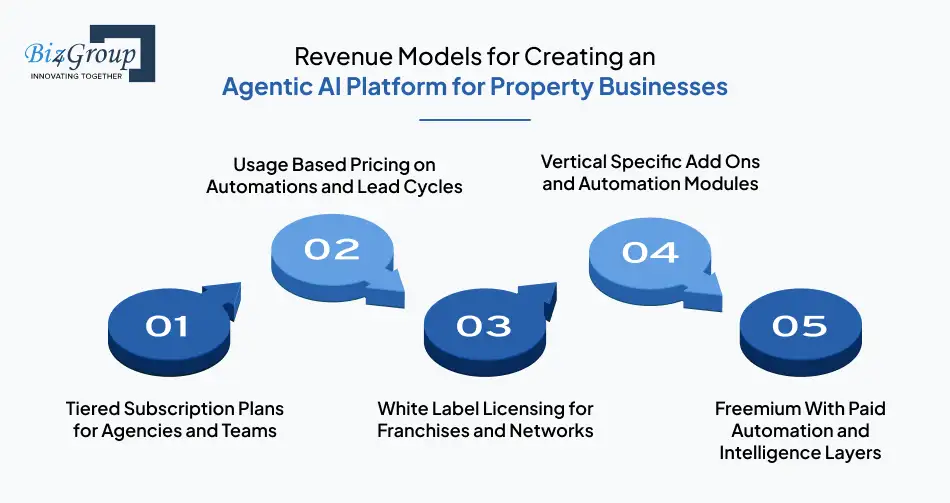
Now that the development path, technology foundation, and investment range are clear, the next business question naturally becomes: “Is it profitable to create an agentic AI-powered real estate platform for property businesses?”
The answer depends on how intentionally the platform is positioned to generate recurring value as adoption expands across agencies, brokerages, and property workflows.
1. Tiered Subscription Plans for Agencies and Teams
Subscription plans work well when you create agentic AI platform for property businesses that need predictable costs. You can offer tiers based on real estate process automation using agentic AI for depth, or advanced insights. As teams grow, they naturally move into higher plans.
- Example: A brokerage begins with a basic tier and upgrades later as their automation needs expand.
2. Usage Based Pricing on Automations and Lead Cycles
High volume real estate teams benefit from pricing tied to completed AI actions. You can charge per follow up, per qualification cycle, or per booked appointment. This aligns cost with measurable output and keeps pricing flexible for teams of all sizes.
- Example: A property management team pays for automated lease interactions supported by AI real estate lease management software tasks running in the background.
3. White Label Licensing for Franchises and Networks
White label licensing is ideal when you make a customized agentic AI solution for real estate franchises that want branded automation. Revenue comes from setup fees, customization packages, and recurring licensing.
- Example: A national franchise deploys a branded version across multiple locations and adds internal workflows tailored to its network.
4. Vertical Specific Add Ons and Automation Modules
You can offer optional paid modules for leasing, property management, or investor reporting. These extensions help businesses expand automation at their own pace without committing to a larger plan upfront.
- Example: A commercial firm activates a leasing automation module structured around AI property management app
5. Freemium With Paid Automation and Intelligence Layers
Freemium works well if your platform shows value quickly. A free tier covers basic automation, while paid tiers unlock advanced intelligence, deeper integrations, and multi agent capabilities.
- Example: A small team starts free, then upgrades once they test workflows influenced by how real estate app MVP is development patterns.
With these revenue models in place, your platform becomes both a time saver and a long term business asset. Now let’s speak about the top development practices that help your system grow smoothly and sustainably.
Give Clients Faster Answers and Better Experiences
Use AI powered assistants to guide buyers and renters with speed and accuracy throughout their journey.
Build My Real Estate AI AssistantBest Practices to Make Agentic AI Solutions for Real Estate Agencies
Good agentic AI platform development for real estate is less about fancy models and more about how you design, ship, and refine the system. If you want this platform to actually work in the real world, these practices will keep you grounded.
1. Start With One Clear Business Goal, Not a Feature Wishlist
Pick a primary outcome first, such as faster lead response or better follow ups across listings. Then design your agents around that, instead of stuffing everything into version one. This makes it easier to develop scalable agentic AI real estate platforms that delivers visible wins early.
2. Treat Data Hygiene as a Non Negotiable Habit
Your agents are only as smart as the CRM records, listing feeds, and activity logs they rely on. Standardize fields, clean duplicates, and close gaps before you lean on automation. Many teams evaluate how to use AI for real estate initiative so everyone understands why clean data matters.
3. Build in Small, Testable Automation Blocks
Break automation into small flows that you can switch on, watch, and refine without risking your entire pipeline. When something works, you extend it to more use cases and more agents. This approach feels a lot like the one used to build real estate AI software.
4. Balance In House Talent With Specialized Support
Your internal team should own the vision, but they do not have to carry every technical detail. For complex orchestration, integrations, or modeling, many companies hire AI developers for their core product team. That way you move faster without burning your internal people out.
5. Keep Humans in the Loop for High Impact Decisions
Agentic systems should handle the noisy, repetitive work, not replace every judgment call. Decide where humans always approve, review, or override actions, especially around pricing or sensitive client communication. This balance helps you make agentic AI solution for real estate agencies aligned with brand and risk tolerance.
When you follow practices like these, the platform feels less like an experiment and more like a dependable part of your business rhythm. From there, it becomes much easier to talk honestly about the challenges you are likely to face and how to work through them.
Challenges in Agentic AI Platform Development for Real Estate and How to Solve Them
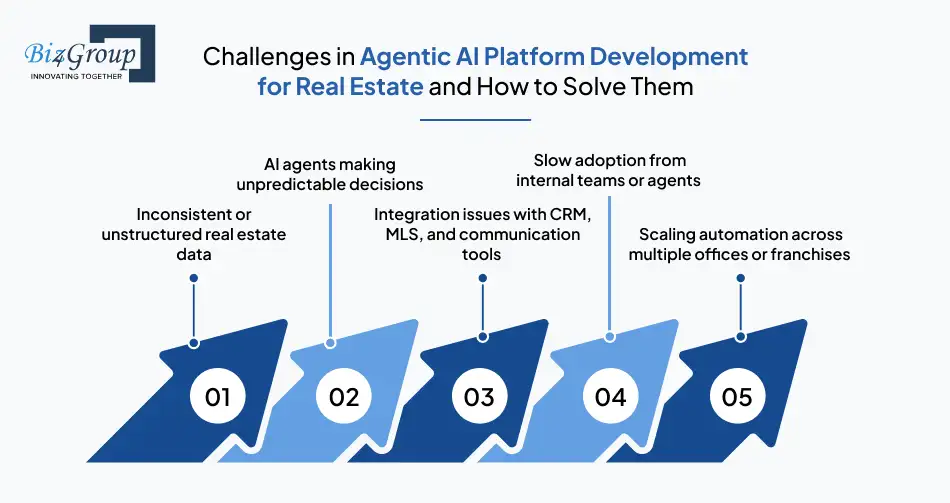
Even the best planned agentic AI platform development for real estate will hit roadblocks. These hurdles usually show up during data alignment, feature scaling, or automation rollout, so understanding them early helps you build with fewer surprises ahead:
| Top Challenges | How to Solve Them |
|---|---|
|
Inconsistent or unstructured real estate data |
Standardize fields, clean CRM records regularly, and create a unified property data layer before automation begins. This foundation supports your plan to develop agentic AI platform for real estate with fewer operational gaps. |
|
AI agents making unpredictable decisions |
Start with simple rule based behaviors, then train models in controlled environments. Use internal systems such as implement generative AI in real estate when designing logic for advanced reasoning. |
|
Integration issues with CRM, MLS, and communication tools |
Build a stable API layer early so your platform connects cleanly with the tools your team already uses. This makes it easier to create agentic AI platform for property businesses without disrupting existing workflows. |
|
Slow adoption from internal teams or agents |
Introduce automation in small, visible wins, train users gradually, and keep humans in charge of high impact decisions. Adoption improves when your system clearly reduces workload instead of adding complexity. |
|
Scaling automation across multiple offices or franchises |
Use modular components, strong versioning, and continuous monitoring. This structure supports long term efforts to make a customized agentic AI solution for real estate franchises without rebuilding the core. |
When you understand these challenges upfront, building and scaling your platform becomes far less chaotic and much more intentional. With the tough parts mapped out, it is easier to look ahead and explore where agentic AI is headed in the real estate industry.
What’s Next for Agentic AI Development in the Property Market?
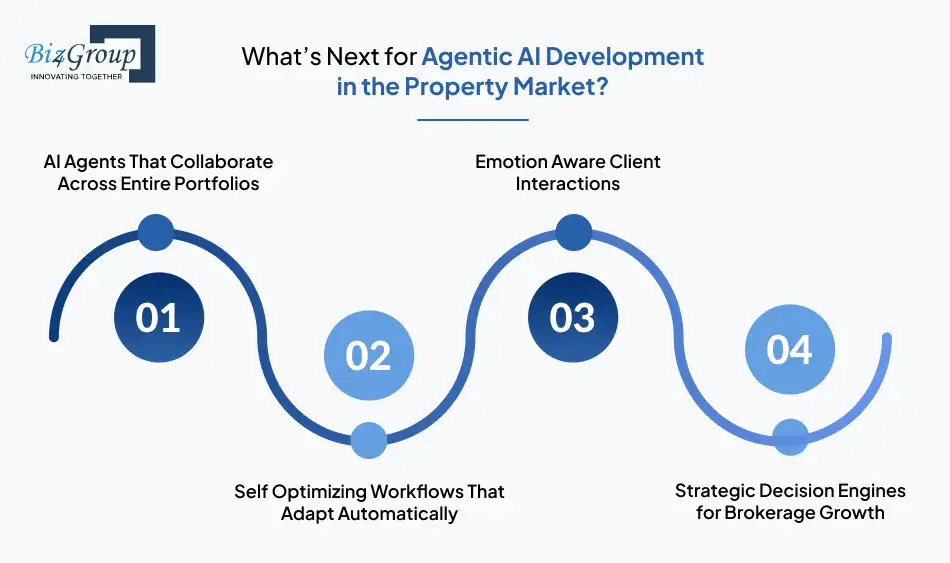
The next era of agentic AI platform development for real estate will move beyond basic automation and shift toward intelligent systems that support broader operational and strategic decisions. Here are the emerging shifts worth watching.
1. AI Agents That Collaborate Across Entire Portfolios
Future agents will coordinate tasks with one another across leasing, sales, and operations to keep workflows balanced. This makes it easier to develop agentic AI platform for real estate that runs complex processes without constant human intervention.
2. Self Optimizing Workflows That Adapt Automatically
Platforms will learn which actions drive results and refine their own processes as markets shift. This evolution creates more resilience for teams handling seasonal demand or rapid market fluctuation.
3. Emotion Aware Client Interactions
Systems will read tone, urgency, and sentiment, allowing AI agents to respond more thoughtfully. This will create smoother, more natural conversations that support stronger client relationships.
4. Strategic Decision Engines for Brokerage Growth
AI agents will begin modeling long term scenarios such as pricing, staffing, and territory expansion. This transforms the platform into a strategic advisor rather than a purely operational tools.
As these advancements take shape, agentic systems will influence both the daily pace of work and the long term direction of your real estate business. With what’s coming next, the choice of who builds your platform matters more than ever.
Why Choose Biz4Group for Agentic AI Platform Development for Real Estate?
If you’re evaluating which company can develop a custom agentic AI platform for real estate agencies and property management? The answer is AI development company with proven experience in autonomous workflow systems, real estate process intelligence, and scalable enterprise delivery. This is where Biz4Group stands out through hands-on execution across intelligent platforms built for property workflows, contract automation, and operational visibility at scale.
Our depth comes from building systems like Homer, which automates property management, Contracks, which handles contract workflows with precision, and Groundhogs, which streamlines field operations through autonomous reporting. These products show exactly how we engineer agentic AI platforms that think, decide, and act without constant human direction.
What You Get With Biz4Group:
- A seasoned agentic AI development company experienced in AI agent design
- Teams who understand real estate workflows and reliable automation
- Development models that scale from MVP to fully operational enterprise platforms
- Strong integration capability across CRM, MLS, and analytics systems
- Predictable timelines, transparent communication, and consistent delivery quality
Biz4Group brings the engineering strength, operational understanding, and execution discipline needed to turn your AI vision into a working platform your teams will trust every day.
Turn Your AI Ideas Into a Working Real Estate Platform
Move from planning to execution with a smart foundation built for growth and automation.
Start My Agentic AI Platform ProjectWrapping Up
If the real estate world feels louder, faster, and a little too dependent on humans remembering everything, you are not imagining it. Agentic AI is how you bring order back into the workflow and build operations that do not stall every time someone misses a follow up or gets buried under admin. With the right foundation in place, your system becomes the teammate who keeps moving even when everyone else is chasing five things at once.
And when you reach the point where you want to shape that system into a real product, leveraging strong product development services helps you move from good ideas to working software without losing momentum.
Over time, you can refine and expand the platform with the support of strategic layers like AI consulting services, making sure your automation grows with your business instead of working against it.
Agentic AI has now become the infrastructure shift that will separate teams who scale efficiently from those who struggle to keep up.
If you have ideas, half a roadmap, or even a messy whiteboard sketch, bring it on. Let’s figure out how to turn it into something your team can actually use.
FAQs
1. How long does it take to build an agentic AI platform for real estate?
Most teams can expect a development timeline of 10 to 24 weeks depending on scope, data availability, and integration needs. Complex platforms with multi agent automation or predictive intelligence may take longer, especially if custom workflows or MLS connectivity are required.
2. What kind of data do I need to build an agentic AI system for real estate?
You will need structured CRM data, property listing data, client interaction history, and basic transaction records. The cleaner and more consistent the data, the more accurately your AI agents can prioritize leads, make recommendations, and automate actions.
3. Can an agentic AI platform work with my existing CRM and MLS systems?
Yes. Most agentic AI platforms can integrate with widely used CRMs, MLS feeds, communication tools, and marketing systems. The key is having a flexible API layer that lets AI agents access real time updates without disrupting your existing tech stack.
4. Do agentic AI platforms replace human real estate agents?
No. They augment and support them. AI agents handle repetitive tasks, follow ups, scheduling, and data driven suggestions, while human agents focus on conversations, negotiations, showings, and decisions that require nuance and context.
5. How much does it cost to build an agentic AI platform for real estate?
The cost typically ranges from 15,000 to 150,000 plus, depending on features, integrations, complexity, and scale. MVP versions fall on the lower end, while enterprise grade platforms with multi agent orchestration and advanced intelligence fall on the higher end.
6. Is agentic AI safe to use for client communication and decision making in real estate?
Yes, as long as you enforce human oversight for sensitive decisions. Modern agentic AI uses secure data practices, access controls, and permission settings to protect client information while ensuring AI agents act within defined boundaries.
