 Location :
Orlando, FL, USA
Location :
Orlando, FL, USA +1 (407) 714-1616
 info@biz4group.com

- AI insurance underwriting software development helps insurers evaluate risk faster while maintaining consistent policy decisions and reducing manual underwriting effort.
- Automated underwriting platforms increase policy processing speed, allowing insurers to handle more applications and generate higher premium revenue.
- Insurers investing in AI insurance underwriting automation software development report measurable cost savings, improved fraud detection, and stronger underwriting accuracy.
- The cost to develop AI insurance underwriting software typically ranges between $40,000 and $250,000+, depending on platform complexity, automation scope, and integration requirements.
- Companies that develop enterprise grade AI insurance underwriting software solutions gain scalable underwriting capacity that supports expansion into new markets and insurance products.
- Experienced technology partners such as Biz4Group LLC help insurers design reliable underwriting platforms aligned with compliance, operational workflows, and long-term digital transformation goals.
How are insurers planning to evaluate complex risk profiles while policy volumes continue to grow each year? Underwriting teams are under constant pressure to review applications quickly while maintaining consistent risk decisions.
Market data reflects how strongly the industry is investing in intelligent underwriting technologies. The artificial intelligence market in the insurance sector is projected to reach $13.94 billion in 2026 and $49.13 billion by 2030 with a compound annual growth rate of 37.0%.
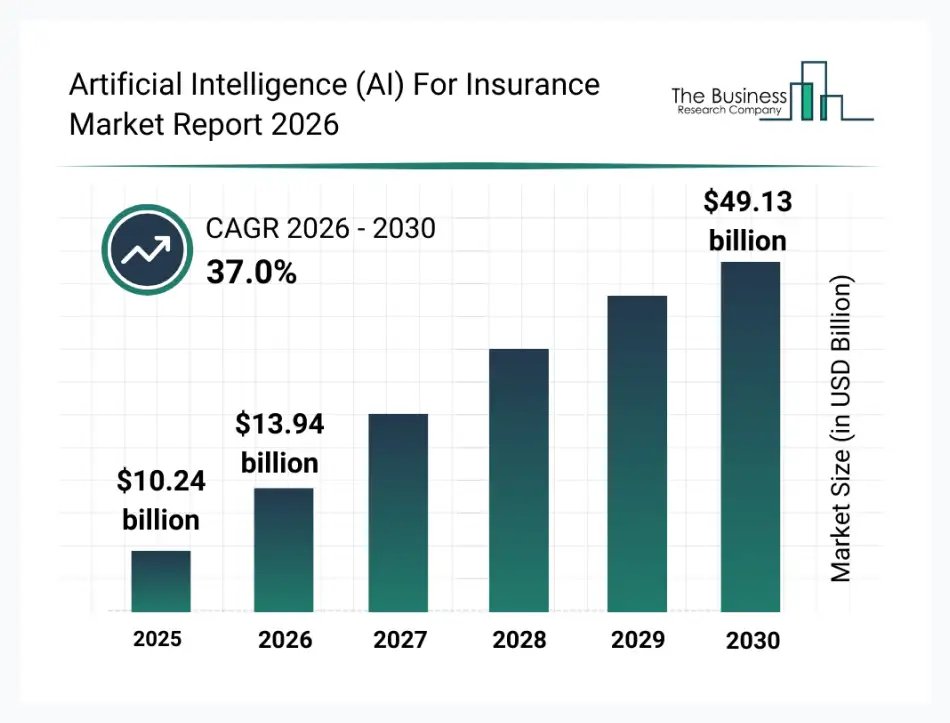
This rapid growth signals a shift in how underwriting systems operate inside insurance organizations. Digital platforms now analyze applicant data, claim histories, and risk indicators before underwriters make final policy decisions. These systems help insurers organize underwriting workflows while keeping evaluation standards consistent.
Here’s what you should know:
- Insurance leaders are introducing AI automation into underwriting environments where application reviews require analyzing multiple data sources.
- Underwriting platforms now process structured policy data and generate risk insights that help underwriters review applications faster.
- Many insurers work with an experienced AI development company to design platforms that align with their underwriting processes and internal compliance policies.
- Development teams are increasingly focusing on AI insurance underwriting automation software development, so underwriting decisions can be supported through automated risk evaluation.
Organizations that plan AI insurance underwriting software development focus on building systems that assist underwriters with structured risk insights rather than replacing human judgment during policy evaluation.
Let’s dive further for more insights.
What Is AI Insurance Underwriting Software and How Does It Work?
AI insurance underwriting software is a digital platform that evaluates insurance applications using structured data analysis and automated decision logic. Instead of relying only on manual review, the system analyzes applicant information and historical risk patterns before supporting underwriting decisions.
Insurers use this technology to review large volumes of policy applications while maintaining consistent risk evaluation. Many insurers investing in AI insurance underwriting software development implement these systems to support underwriting teams and reduce repetitive review work through controlled AI automation tools.
How Does AI Insurance Underwriting Software Work
- Data Collection from Policy Applications: The system collects applicant information such as personal details, policy type, claims history, and supporting documents. These datasets form the foundation for automated underwriting evaluation.
- Risk Data Processing: Collected data is organized and prepared for evaluation. The system reviews structured information such as claim patterns, policy records, and applicant profiles before risk analysis begins.
- Risk Evaluation Models: The platform evaluates risk indicators by analyzing historical claim outcomes and policy records. This process helps underwriters understand the likelihood of future claims associated with each application.
- Automated Risk Scoring: Each application receives a structured risk score based on the evaluation process. The score helps underwriters review applications faster while maintaining consistent decision standards.
- Underwriting Decision Support: Results are presented to underwriters through decision dashboards. AI process automation supports structured workflows that guide approval reviews and highlight unusual risk indicators.
Why Businesses Should Invest in AI Insurance Underwriting Software Development
Insurance leaders usually evaluate technology investments through financial outcomes and operational efficiency. Many organizations begin AI insurance underwriting software development initiatives when underwriting delays, rising costs, and inconsistent risk decisions begin affecting profitability.
Before we understand the reasons to invest in AI insurance underwriting software, take a look at what AI in insurance statistics have to say:
- 9 out of 10 insurers are already evaluating or implementing AI technologies. Adoption is strongest in fraud detection with 84% usage, while deployment continues expanding across underwriting, claims management, and customer experience systems.
- Insurers report 50–75% faster processing speeds, 99% accuracy in risk models, and 22% improvement in fraud detection, while automation and predictive analytics deliver up to 20% cost savings across operational workflows.
- North America accounts for 44% of the global AI insurance market, reflecting strong investment in digital underwriting platforms.
- Intelligent triage and routing systems enable 50% faster claim processing speeds, significantly improving operational throughput.
- Automation initiatives also contribute to 30% reduction in claims processing costs, lowering administrative overhead across insurance operations.
- Industry surveys show 80% of claims executives believe AI and machine learning will drive future value creation in claims management.
These numbers clearly show where insurers are seeing measurable financial impact today. Now, here are why you should invest in AI insurance underwriting software development:
1. Faster Underwriting Decisions Increase Policy Revenue
AI insurance underwriting software analyzes applications quickly and allows insurers to process more policy requests. Higher approval throughput enables companies to increase premium revenue without expanding underwriting teams.
2. Lower Operational Costs Improve Profit Margins
Manual underwriting involves document review, risk calculations, and application verification. Automation reduces repetitive tasks and lowers administrative overhead, helping insurers improve margins through structured enterprise AI solutions.
3. Fraud Detection Protects Revenue from High-Risk Policies
Fraudulent applications create direct financial losses when high-risk policies enter the portfolio. AI risk evaluation identifies suspicious data patterns early, helping insurers prevent expensive claims exposure and protect underwriting revenue.
4. Accurate Risk Pricing Strengthens Premium Profitability
AI insurance underwriting models analyze claim history and applicant behavior before policy approval. Accurate pricing ensures premiums reflect real risk exposure, allowing insurers to maintain stronger margins across their underwriting portfolio.
5. Scalable Underwriting Capacity Supports Business Expansion
AI automated insurance underwriting platforms process higher policy volumes without proportional operational cost increases. This allows insurers to expand product offerings and enter new markets while maintaining stable underwriting efficiency.
Organizations investing in intelligent underwriting platforms usually focus on financial outcomes such as revenue protection, cost efficiency, and scalable policy growth. These goals often drive long-term investment in AI insurance underwriting software development.
Also Read: AI Automation Use Cases for Enterprises to Scale Faster
Ready To Turn Underwriting into Revenue Engine
Discover how intelligent underwriting platforms unlock faster approvals higher premium growth and stronger risk control
Talk To Our AI ExpertsReal World Use Cases of AI Insurance Underwriting Software
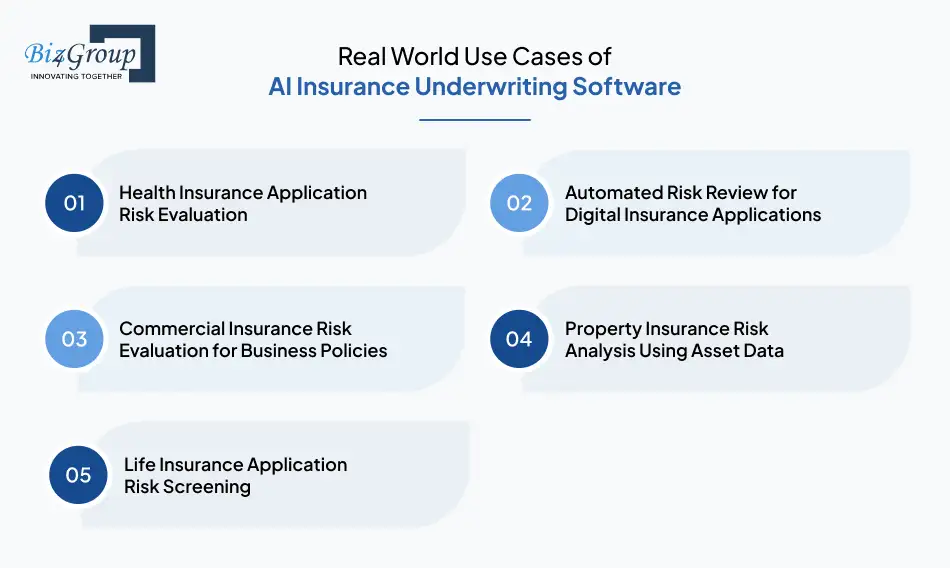
Insurance underwriting scenarios vary widely across product lines and risk categories. Organizations investing in AI insurance underwriting software development usually focus on practical underwriting situations where risk evaluation requires faster data analysis and consistent decision logic.
1. Health Insurance Application Risk Evaluation
Health insurers handle large volumes of applications that require reviewing medical history, lifestyle information, and claim patterns. Underwriting teams increasingly rely on automated systems to review these datasets during policy evaluation.
- The system reviews applicant medical records and past claim history before policy approval.
- Risk models analyze lifestyle indicators and medical conditions associated with higher claim probability.
- Underwriters receive structured summaries that highlight risk signals in each application.
- Platforms that support an AI health insurance app often rely on underwriting automation to process digital policy applications.
2. Automated Risk Review for Digital Insurance Applications
Digital insurance platforms receive policy applications through mobile portals and online forms. Underwriting teams must evaluate these applications quickly while maintaining risk accuracy.
- Risk models evaluate submitted information such as driving history, occupation, and asset data.
- Underwriting systems flag unusual patterns that may require manual review.
- Decision dashboards present application summaries that help underwriters assess each case.
- Insurers building platforms that support an insurance AI agent often rely on automated underwriting analysis to process incoming digital policy requests.
3. Commercial Insurance Risk Evaluation for Business Policies
Commercial policies require evaluating multiple operational risks before issuing coverage. Underwriters often review financial records, operational details, and industry exposure.
- Risk models analyze company financial history and operational data.
- The system reviews industry risk patterns linked to similar businesses.
- Underwriters receive summarized risk insights that support policy approval decisions.
- Insurance companies planning to build AI driven underwriting platform solutions often focus on commercial policy evaluation scenarios.
4. Property Insurance Risk Analysis Using Asset Data
Property insurers review location data, property details, and historical claims before issuing coverage. Automated systems help underwriters analyze these factors quickly.
- The system reviews geographic risk indicators such as flood zones or weather exposure.
- Property information including structure type and asset value is evaluated during policy review.
- Historical claim records from the same region provide additional risk context.
- Underwriting platforms use these datasets to support risk analysis for property insurance applications.
5. Life Insurance Application Risk Screening
Life insurance underwriting requires reviewing medical background, lifestyle factors, and demographic information before policy approval.
- The system reviews applicant medical declarations and historical insurance records.
- Risk models evaluate lifestyle factors linked to long term health risk.
- Underwriters receive structured summaries of each applicant
- These systems help insurers analyze large volumes of life insurance applications while maintaining consistent underwriting decisions.
Insurance companies implement underwriting automation around specific policy evaluation scenarios rather than generic automation goals. Many organizations adopt these platforms when they create AI insurance risk assessment software designed to support real underwriting decisions across different insurance products.
Development Approaches: Build vs Integrate vs Customize AI Underwriting Software for Insurance Companies
Insurance organizations approach underwriting modernization in different ways depending on their existing systems and operational goals. When planning AI insurance underwriting software development, decision makers usually evaluate whether to build internally, integrate with existing systems, or adapt custom or off the shelf software to support underwriting workflows.
1. Build AI Underwriting Software from Scratch
Building an AI insurance underwriting platform from the ground up gives insurers full control over system architecture and underwriting logic. This approach is common for companies that want proprietary underwriting models or unique policy evaluation rules. Development teams design the entire platform including risk scoring engines, underwriting workflows, and policy decision rules.
Organizations often follow this path when underwriting strategies vary across product lines or regions. Engineering teams working on AI insurance software development can design data pipelines and risk models tailored to their underwriting approach.
- Allows insurers to create proprietary underwriting algorithms
- Supports unique underwriting workflows across insurance products
- Enables full control over data models and risk scoring logic
- Development cost is typically higher because the platform is built entirely from scratch and requires dedicated engineering resources
2. Integrate AI Capabilities into Existing Underwriting Systems
Many insurers operate legacy underwriting platforms that already manage policy applications and customer records. Instead of replacing these systems, organizations often integrate AI capabilities into existing infrastructure. AI models analyze application data and generate risk insights while the legacy platform continues handling policy management tasks.
This approach allows underwriting teams to modernize decision workflows without replacing operational systems. AI Integration typically focus on connecting risk models, document processing services, and data providers with the existing underwriting platform.
- Faster implementation compared with full system development
- Preserves existing underwriting infrastructure and workflows
- Allows gradual adoption of AI driven risk evaluation tools
- Implementation cost is usually moderate since existing systems remain in place and only specific AI components are added
3. Customize AI Underwriting Platforms Around Business Workflows
Some insurers require flexibility that sits between full development and simple integration. In these cases, development teams adapt frameworks or platforms around operational underwriting needs. Organizations pursuing custom AI insurance underwriting software development often start with a base system and modify workflows, risk scoring models, and compliance rules.
This approach helps insurers scale underwriting automation while maintaining alignment with existing operational practices. Customization is particularly useful when insurers expand into new product categories or regulatory environments.
- Balances flexibility and development effort
- Allows modification of underwriting models and workflows
- Supports long term platform scalability
- Cost typically falls between full development and integration depending on how much customization is required
Organizations usually evaluate internal systems, underwriting complexity, and long-term technology strategy before selecting the most appropriate development approach.
|
Development Approach |
Best Fit Scenario |
Key Advantage |
|---|---|---|
|
Build From Scratch |
Insurers with complex underwriting models |
Full control over underwriting architecture |
|
Integrate AI Capabilities |
Organizations with established legacy systems |
Faster modernization without system replacement |
|
Customize Platforms |
Insurers expanding underwriting capabilities |
Flexible platform aligned with business workflows |
Selecting the right strategy helps insurers align technology investments with underwriting operations. Many organizations eventually transition toward custom AI insurance underwriting automation software development as underwriting requirements expand and risk evaluation models require deeper customization.
Also Read: How to Develop an Insurtech SaaS Product from Idea to Market?
Unsure Which Underwriting Development Path Fits
Discuss your underwriting workflows data systems and scaling goals with specialists building modern insurance platforms
Schedule Strategy DiscussionKey Features of AI Insurance Underwriting Software
Modern underwriting platforms help insurers process large volumes of applications while maintaining consistent risk evaluation. Organizations investing in AI insurance underwriting software development typically focus on features that automate data analysis, support underwriters, and streamline policy decision workflows.
|
Key Feature |
What the Feature Does |
|---|---|
|
Automated Risk Scoring |
Evaluates applicant data and predicts claim probability using trained risk models. The system generates underwriting scores that guide approval decisions. |
|
Intelligent Document Processing |
Extracts relevant information from policy forms, medical records, and supporting documents. This removes manual data entry during underwriting review. |
|
Fraud Detection Monitoring |
Identifies suspicious data patterns in applications or supporting documents. Early detection helps insurers investigate high risk submissions before policy approval. |
|
Underwriting Workflow Automation |
Automates routine underwriting tasks such as risk review routing, approval steps, and policy validation processes. |
|
Real Time Risk Evaluation |
Processes incoming application data immediately and calculates risk scores during the underwriting process. |
|
Data Integration with External Sources |
Connects the underwriting platform with credit databases, telematics providers, and medical data services for broader risk insights. |
|
Underwriter Decision Support |
Presents structured risk summaries that help underwriters review applicant profiles and finalize policy decisions faster. |
|
Policy Rule Management |
Allows insurers to configure underwriting rules, approval thresholds, and compliance policies inside the platform. |
|
Risk Analytics Dashboard |
Displays underwriting metrics, policy risk distribution, and operational insights that help underwriting teams monitor performance. |
|
Model Learning and Improvement |
Continuously improves risk prediction models using new claims data and underwriting outcomes. |
These capabilities allow insurers to evaluate applications faster, reduce manual review work, and maintain consistent underwriting standards. Many insurers now prioritize these capabilities when investing in insurance underwriting automation software development.
Advanced AI Capabilities in AI Powered Insurance Underwriting Systems
Insurance underwriting platforms are evolving beyond basic automation. Modern systems now analyze larger datasets and identify deeper risk signals. These technologies help insurers create intelligent insurance underwriting solutions that support faster underwriting decisions while maintaining strong risk evaluation accuracy.
|
Advanced AI Capability |
What the Capability Does |
|---|---|
|
Machine Learning Risk Prediction Models |
Uses historical claims data and policy outcomes to estimate future risk levels. These models support underwriting decisions by applying predictive analysis to applicant data and policy information. |
|
Natural Language Processing for Insurance Documents |
Reads unstructured documents such as policy applications, inspection reports, and medical records. The system extracts relevant risk information so underwriters do not manually review every document. |
|
Computer Vision for Property and Asset Verification |
Analyzes images submitted during policy applications. Property photos, vehicle images, or inspection pictures can be evaluated to detect visible damage or risk indicators. |
|
Behavioral Risk Pattern Analysis |
Studies behavioral signals such as driving habits or usage data collected from connected devices. These insights help underwriting teams evaluate long term risk exposure. |
|
Claims Pattern Intelligence |
Reviews historical claim trends to detect unusual patterns across industries, locations, or policy categories. These insights help underwriting teams adjust risk thresholds during policy evaluation. |
|
Generative AI Underwriting Assistance |
Underwriters often review large datasets when assessing policy risk. Systems using generative AI can summarize risk signals and highlight unusual data patterns that require further underwriting attention. |
|
Risk Scenario Simulation |
Simulates different underwriting scenarios using historical data patterns. This allows insurers to evaluate potential outcomes before approving complex policy applications. |
Advanced analytics capabilities allow underwriting platforms to analyze more data sources while supporting faster policy evaluation. As insurers continue investing in AI insurance underwriting software development, these technologies help create intelligent insurance underwriting solutions that strengthen risk evaluation and operational efficiency.
Also Read: Building Effective Generative AI Solutions
AI Insurance Underwriting Software Development: Step-By-Step Process
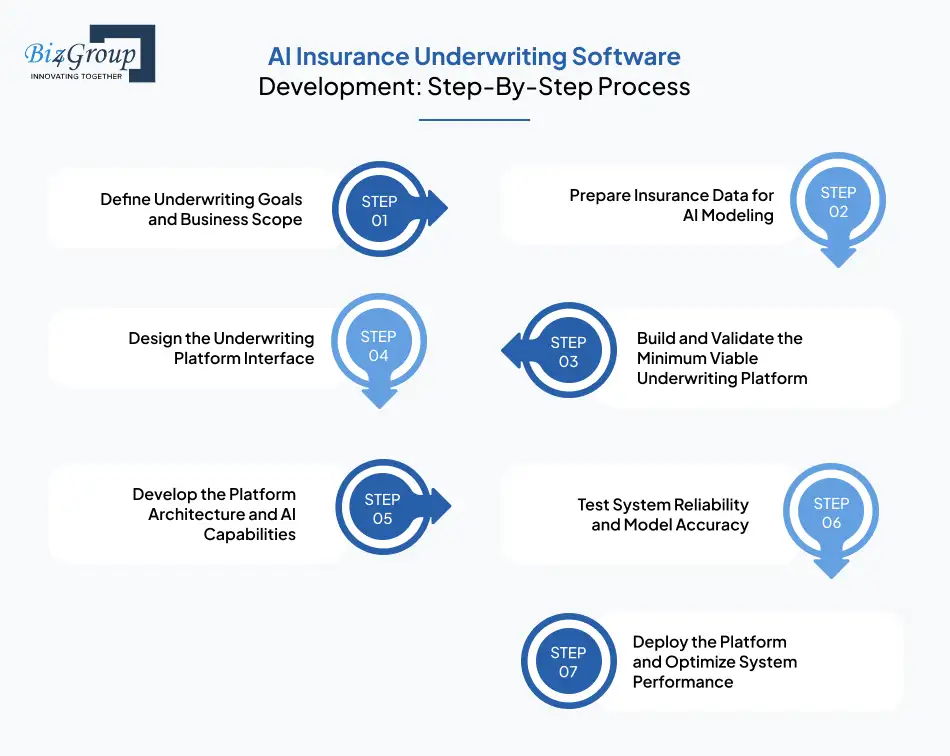
Insurance companies adopting AI underwriting usually begin with a clear operational roadmap. A structured process helps teams align underwriting workflows, risk evaluation logic, and automation goals before development begins. Organizations that plan carefully are better positioned to develop enterprise grade AI insurance underwriting software solutions that support scalable underwriting operations.
Step 1: Define Underwriting Goals and Business Scope
- Map existing underwriting workflows: Document how policy applications move through risk evaluation, approval checks, and underwriting review. Understanding the current workflow helps identify where automation can reduce manual effort and speed up decisions.
- Identify automation priorities: Focus on processes that consume the most time such as document review, application screening, and risk scoring. Clear priorities help development teams design underwriting automation around real operational needs.
- Define compliance and policy rules: Outline regulatory boundaries, approval thresholds, and underwriting governance policies. Clear rules ensure the system supports accurate and compliant underwriting decisions from the beginning.
Step 2: Prepare Insurance Data for AI Modeling
- Collect underwriting datasets: Gather historical claims records, policy applications, underwriting reports, and customer risk profiles. These datasets provide the foundation for building reliable risk prediction models.
- Clean and structure the information: Remove inconsistent entries, normalize formats, and organize data fields used for risk evaluation. Well prepared datasets improve model reliability and underwriting accuracy.
- Establish secure data storage: Create centralized repositories where underwriting data can be stored safely and accessed by the development environment. Proper storage ensures data availability during model training and platform development.
Step 3: Build and Validate the Minimum Viable Underwriting Platform
- Develop the first working product version: Begin with MVP development that includes core workflows such as application intake, basic risk scoring, and underwriting review dashboards. This early version focuses only on the essential underwriting functions.
- Implement initial risk evaluation logic: The platform should process policy data and generate preliminary risk indicators. At this stage the goal is to confirm that automated evaluation supports underwriting decisions.
- Validate the concept with operational teams: Early testing during MVP software development allows underwriters to review real policy scenarios. Their feedback helps refine workflows before the platform expands into a full underwriting system.
Also Read: Top MVP Development Companies in USA
Step 4: Design the Underwriting Platform Interface
- Create underwriting dashboards: Design application review screens where underwriters can view applicant details, policy data, uploaded documents, and risk indicators in a structured layout. The dashboard should allow quick policy evaluation without navigating multiple systems.
- Build structured policy submission forms: Create standardized intake forms that capture applicant information, asset details, and required underwriting inputs. Validation rules ensure complete and accurate data submission before risk evaluation begins.
- Design user navigation and workflow paths: Organize interface components so underwriters can review applications, request additional documents, and move policies through approval stages. Many insurers work with a specialized UI/UX design company to structure these operational workflows.
Also Read: Top UI/UX design companies in USA
Step 5: Develop the Platform Architecture and AI Capabilities
- Develop underwriting platform backend: Build the backend services that manage application intake, document storage, risk evaluation requests, and underwriting decision workflows. This infrastructure connects the platform with policy administration systems and external data sources.
- Train predictive underwriting models: Data teams use historical claims records and underwriting decisions to train AI models that calculate claim probability and risk scores.
- Integrate AI models into evaluation workflows: Integrate AI models within policy processing pipelines so automated risk scoring runs during application evaluation. This integration allows insurers to build AI powered insurance underwriting systems that assist underwriters with data-driven risk insights.
Step 6: Test System Reliability and Model Accuracy
- Validate underwriting AI model accuracy: Test the prediction models using historical underwriting datasets. Compare generated risk scores with past claim outcomes and underwriting decisions. This step verifies that the model produces reliable risk assessments before the platform processes real policy applications.
- Perform system performance and load testing: Simulate large volumes of policy submissions to evaluate platform stability. The system should process applications, risk calculations, and document inputs without delays or workflow failures during high traffic conditions.
- Execute full platform quality testing: Conduct functional testing, API validation, and workflow testing across underwriting scenarios. Many insurers work with a specialized software testing company to verify system reliability, data handling accuracy, and deployment
Step 7: Deploy the Platform and Optimize System Performance
- Deploy the underwriting application environment: Release the platform into the production infrastructure. Connect it with policy administration systems, claims databases, and customer data repositories so the platform can process real underwriting requests.
- Monitor operational underwriting metrics: Track system response time, application processing speed, and model prediction accuracy. Monitoring tools help detect performance issues and workflow interruptions during early deployment stages.
- Improve models using operational datasets: Use new underwriting decisions and claims outcomes as additional training data. Continuous model retraining improves risk scoring accuracy and strengthens underwriting decision support.
Successfully implementing these steps helps insurers build reliable underwriting platforms that improve risk evaluation, reduce manual review effort, and support scalable policy processing. This structured roadmap provides the foundation for effective AI insurance underwriting software development.
Recommended Technology Stack for AI Insurance Underwriting Software Development
Insurance underwriting platforms handle sensitive policy data and large risk datasets every day. Organizations planning to build AI insurance underwriting software for insurers usually rely on structured system layers aligned with modern web/mobile app development practices to ensure stability, scalability, and smooth underwriting operations.
|
Architecture Layer |
Recommended Technology |
Purpose |
|---|---|---|
|
Presentation Layer |
React.js |
Builds underwriting dashboards where analysts review policy submissions and risk insights during ReactJS development. |
|
Frontend Framework |
Next.js |
Supports faster navigation and scalable user interfaces implemented during NextJS development for underwriting portals handling large policy volumes. |
|
Application Layer |
Node.js |
Handles underwriting workflows, application processing, and service coordination through structured NodeJS development. |
|
AI & Risk Modeling Layer |
Python, TensorFlow, Scikit-learn |
Supports risk prediction models and automated underwriting calculations created through Python development. |
|
Integration Layer |
REST APIs, GraphQL |
Enables communication between underwriting software, policy systems, and external data sources through structured API development. |
|
Data Storage Layer |
PostgreSQL, MongoDB |
Stores policy applications, underwriting outcomes, and customer risk profiles used during risk evaluation. |
|
Data Processing Layer |
Apache Spark, Apache Airflow |
Processes insurance datasets and prepares structured data used by underwriting risk models. |
|
Security Layer |
OAuth, IAM policies |
Protects customer information and controls access to underwriting systems. |
|
Infrastructure Layer |
AWS, Microsoft Azure, Google Cloud |
Hosts underwriting platforms in secure environments that support scalable operations. |
When these architecture layers operate together, insurers can process applications efficiently while maintaining reliable risk analysis. Successful AI insurance underwriting software development often depends on coordinated full stack development that supports scalable underwriting workflows and data driven decision systems.
Build The Right AI Underwriting Tech Stack
Work with architects designing secure scalable underwriting platforms that integrate seamlessly with insurance ecosystems
Speak With Solution ArchitectsCompliance, Privacy, and Ethical Considerations in AI Insurance Underwriting Software Development
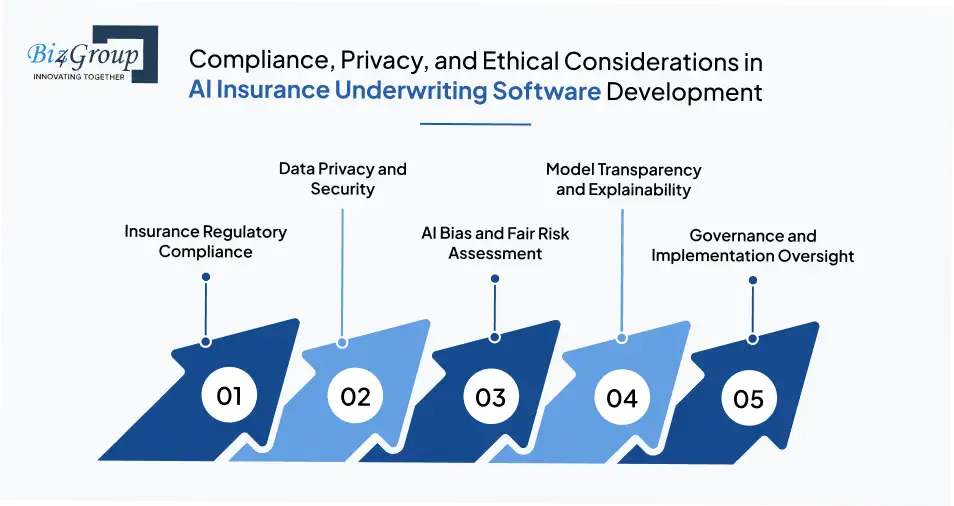
Insurance underwriting platforms handle personal records, financial information, and risk data. Companies that make AI underwriting software with insurance fraud detection features must design systems that respect regulations, protect customer data, and maintain fair decision processes from the start.
1. Insurance Regulatory Compliance
AI insurance underwriting decisions are governed by strict regulatory frameworks. Automated systems must follow the same underwriting guidelines that regulators expect from human underwriters.
- Maintain documented underwriting rules that align with insurance regulations
- Record automated decisions so auditors can review underwriting outcomes
- Ensure policy approvals follow approved eligibility and pricing rules
- Provide clear documentation explaining how automated underwriting works
These controls help insurers avoid compliance risks when deploying automated underwriting systems.
2. Data Privacy and Security
AI insurance underwriting platforms collect sensitive information such as health records, financial details, and personal identifiers. Protecting that data is essential for maintaining trust and regulatory alignment.
- Store customer information in secure infrastructure with controlled access
- Encrypt policyholder data during storage and system communication
- Limit access to authorized underwriting teams and risk analysts
- Maintain logs that track when and how customer data is used
Strong privacy practices reduce exposure to data breaches and regulatory penalties.
3. AI Bias and Fair Risk Assessment
AI models rely on historical data to predict risk. If those datasets contain hidden bias the system may produce unfair underwriting outcomes.
- Review training datasets to identify incomplete or biased data patterns
- Monitor underwriting decisions across different customer groups
- Include human review for unusual or sensitive underwriting cases
- Continuously retrain models using updated and balanced datasets
Fair model evaluation protects insurers from discrimination risks and regulatory concerns.
4. Model Transparency and Explainability
Underwriters must understand how automated systems generate risk scores and policy recommendations. Clear explanations help teams review decisions before approving policies.
- Show which risk factors influenced the underwriting recommendation
- Allow underwriters to review supporting data behind risk scores
- Maintain documentation describing how underwriting models operate
- Enable manual review when the system flags complex risk cases
Transparent decision processes strengthen internal governance and regulatory confidence.
5. Governance and Implementation Oversight
Responsible deployment requires careful planning and oversight throughout the development process. Many insurers collaborate with experienced teams by hiring AI developers to build compliant underwriting models while guiding implementation through structured AI consulting services.
- Establish governance policies that guide automated underwriting decisions
- Monitor model performance and update systems when new claims data appears
- Review regulatory changes that may affect underwriting rules
- Maintain documentation that explains how the underwriting system evolves
Compliance planning, responsible data management, and transparent decision logic help insurers deploy underwriting platforms with confidence. These practices remain essential for organizations pursuing long-term AI insurance underwriting software development.
Cost of AI Insurance Underwriting Software Development
Insurance companies planning AI insurance underwriting automation software development often evaluate the overall investment early in the project. Development cost usually ranges between $40,000 and $250,000+, depending on platform complexity, automation scope, and integration requirements.
|
Development Level |
Scope |
Estimated Cost Range |
|---|---|---|
|
MVP Level AI Insurance Underwriting Software |
Basic underwriting workflow automation, risk scoring models, limited integrations with policy systems, and simple underwriting dashboards for testing automation feasibility. |
$40,000 – $70,000 |
|
Mid-Level AI Insurance Underwriting Software |
Expanded underwriting automation, improved risk models, multiple data integrations, fraud detection support, and advanced analytics dashboards for underwriting teams. |
$70,000 – $130,000 |
|
Advanced AI Insurance Underwriting Software |
Enterprise underwriting automation, complex risk prediction models, large scale integrations, compliance features, and intelligent underwriting analytics capabilities. |
$130,000 – $250,000+ |
Key Factors Affecting the Cost of AI Insurance Underwriting Software
- Complexity of Risk Prediction Models: Advanced underwriting models require extensive training data and validation cycles. Higher model complexity increases development time and raises the overall AI integration cost.
- Data Availability and Preparation: Clean underwriting data improves prediction accuracy. Preparing historical claims records and customer datasets often requires additional engineering effort during development.
- Integration With Existing Insurance Systems: Many insurers operate legacy policy systems. Connecting underwriting software with these systems increases engineering effort and requires reliable enterprise AI integration
- Automation Scope Across Underwriting Workflows: Platforms automating only risk scoring cost less than systems handling policy approvals, document analysis, and fraud detection workflows.
- Security and Compliance Requirements: Regulatory controls require secure infrastructure, audit logging, and strict access management. Compliance readiness increases both development time and implementation cost.
- Platform Scalability and Infrastructure: Underwriting systems processing thousands of applications daily require scalable infrastructure and cloud resources to support consistent performance.
Strategies to Optimize the Cost to Create AI Insurance Underwriting Software
- Start With Focused Automation Goals: Begin with the most valuable underwriting workflows. A focused roadmap reduces early development effort and keeps the project within a manageable budget.
- Launch With a Limited Initial Product: Starting with a smaller release helps validate underwriting automation before expanding features. This approach also improves control over AI software development cost.
- Reuse Existing Insurance Data Systems: Integrating available policy databases and claims records avoids building new data infrastructure from scratch and reduces development effort.
- Adopt Modular Platform Architecture: Modular architecture allows insurers to expand underwriting automation gradually instead of investing heavily in full platform functionality immediately.
- Use Pretrained AI Components: Pretrained models for document processing or anomaly detection can reduce model development time while supporting AI solutions for automated insurance underwriting.
- Prioritize High Impact Integrations: Connecting essential policy systems first prevents unnecessary engineering effort and keeps development timelines predictable.
A structured development strategy helps insurers control project budgets while still delivering reliable underwriting automation capabilities. Careful planning and phased implementation remain essential for successful AI insurance underwriting software development.
Also Read: Cost to Hire an AI Software Developer
Business and Monetization Models for AI Insurance Underwriting Platforms
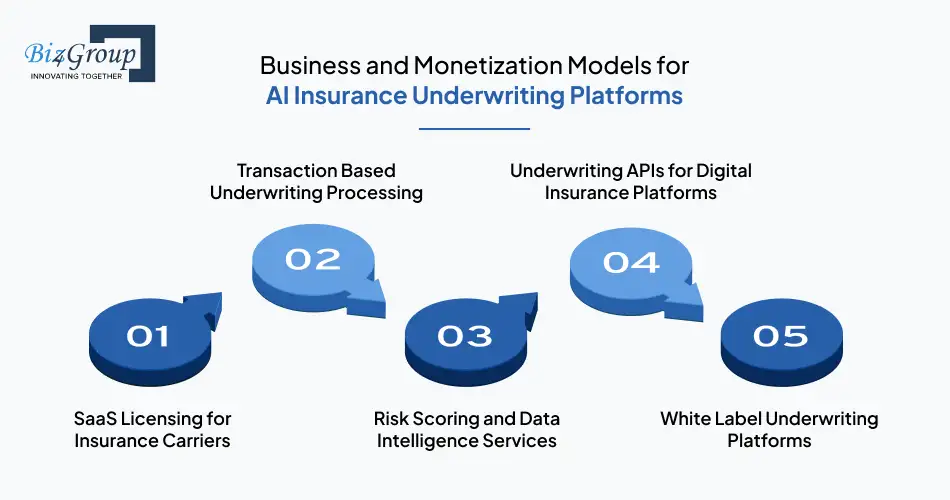
Companies building underwriting automation platforms can design the product with clear revenue pathways from the beginning. AI insurance underwriting software development for insurtech startups frequently focuses on scalable platforms that insurers, MGAs, and digital insurance providers can adopt across their underwriting workflows.
1. SaaS Licensing for Insurance Carriers
Many companies commercialize AI insurance underwriting platforms as subscription software used directly by insurers. This model generates recurring revenue while insurers pay for access to underwriting automation capabilities.
- Charge insurers monthly or yearly licensing fees based on the number of underwriting users
- Offer tiered plans that include different underwriting capabilities and automation levels
- Add pricing tiers for insurers processing higher policy volumes
- Provide additional enterprise onboarding packages for large insurance organizations
This approach allows underwriting technology providers to build predictable recurring revenue streams.
2. Transaction Based Underwriting Processing
Some platforms generate revenue by charging for each underwriting decision processed through the system. This model works well for insurers that handle fluctuating application volumes.
- Charge a fixed fee for each application evaluated by the underwriting platform
- Introduce volume-based pricing tiers for high policy processing levels
- Offer premium pricing for complex underwriting evaluations such as commercial policies
- Allow insurers to scale usage without committing to long term licensing contracts
Revenue grows directly with underwriting transaction activity.
3. Risk Scoring and Data Intelligence Services
AI insurance underwriting platforms can also generate revenue by offering risk intelligence services built from underwriting data. Insurers pay for advanced analytics that help them evaluate portfolio risk.
- Offer subscription access to risk prediction dashboards
- Provide underwriting data insights that identify high risk policy segments
- Deliver periodic underwriting performance reports for insurance portfolios
- License predictive risk scoring services to insurers or brokers
These services transform underwriting data into valuable analytical products.
4. Underwriting APIs for Digital Insurance Platforms
Many insurtech companies embed underwriting technology directly into other insurance platforms through APIs. Revenue comes from API usage and integration partnerships.
- Charge digital insurers for each underwriting request processed through the API
- Provide risk scoring APIs used in online insurance quote systems
- Offer fraud detection APIs that evaluate suspicious policy applications
- Support insurance marketplaces that require automated underwriting services
This model expands underwriting technology across multiple insurance products.
5. White Label Underwriting Platforms
Some technology providers license their AI insurance underwriting platforms to insurers who want to launch their own branded underwriting systems.
- License the underwriting platform with custom branding and configuration
- Charge long term platform licensing fees for insurer deployments
- Offer implementation and customization packages during onboarding
- Provide maintenance contracts and system upgrades through service agreements
White label licensing allows insurers to deploy automated underwriting platforms without building internal technology teams.
Revenue generation models continue evolving as insurers adopt underwriting automation platforms across their operations. Clear monetization strategies help technology providers build sustainable businesses around AI insurance underwriting software development.
Turn Underwriting Technology into Profitable Platform
Discover monetization strategies insurers use to generate revenue from underwriting analytics automation and platform licensing
Explore Revenue OpportunitiesCommon Mistakes When Developing AI Insurance Underwriting Software and How to Avoid Them
Insurance platforms often fail when teams rush into development without aligning data readiness, underwriting workflows, and operational goals. During AI underwriting software product development, these mistakes usually appear early and create long-term operational problems if ignored.
|
Common Mistake |
How to Avoid It |
|---|---|
|
Building models without reliable underwriting data |
Prepare structured datasets before development begins. Review historical claims data and remove incomplete records before teams build AI software for underwriting automation. |
|
Automating underwriting decisions too aggressively |
Introduce automation gradually. Allow underwriters to review flagged applications before the system generates final policy decisions. |
|
Ignoring integration with existing insurance systems |
Plan system integrations early. Work with engineers who understand insurance infrastructure or partner with a reliable custom software development company. |
|
Lack of fraud detection capabilities |
Include fraud analysis rules and anomaly detection models during development to flag unusual underwriting patterns. |
|
Overlooking regulatory and compliance requirements |
Document underwriting rules clearly and ensure automated decisions follow regulatory guidelines before deployment. |
|
No monitoring after deployment |
Track underwriting outcomes and retrain models regularly using new claims and policy data. |
Avoiding these challenges requires structured planning and experienced technical execution. Organizations often collaborate with an experienced AI underwriting software development company to reduce risks and implement reliable underwriting platforms that support long-term AI insurance underwriting software development.
Why Biz4Group LLC Is the Right Partner for AI Underwriting Software Development
Insurance underwriting platforms require careful planning, reliable data pipelines, and scalable system architecture. As a software development company in Florida, Biz4group LLC works closely with insurers and insurtech teams that need dependable AI insurance underwriting software development services tailored to real underwriting operations.
1. Experience Building Practical Underwriting Automation Systems
- Our teams focus on building underwriting platforms that reflect real policy workflows and risk evaluation processes.
- We design AI insurance automation software solutions that support underwriting decision pipelines rather than isolated model experiments.
- Our engineers also develop supporting tools such as systems that analyze application data and perform AI document fraud detection during underwriting evaluation.
2. Insurance Automation Platforms Built for Real Operations
- Our work includes insurance platforms that process policy applications, evaluate risk data, and support underwriting teams managing large volumes of insurance requests across digital policy systems.
- We have also developed systems that analyze insurance documents, validate submitted information, and connect with policy management tools used by insurers and healthcare related insurance providers.
Portfolio Spotlight: Insurance AI
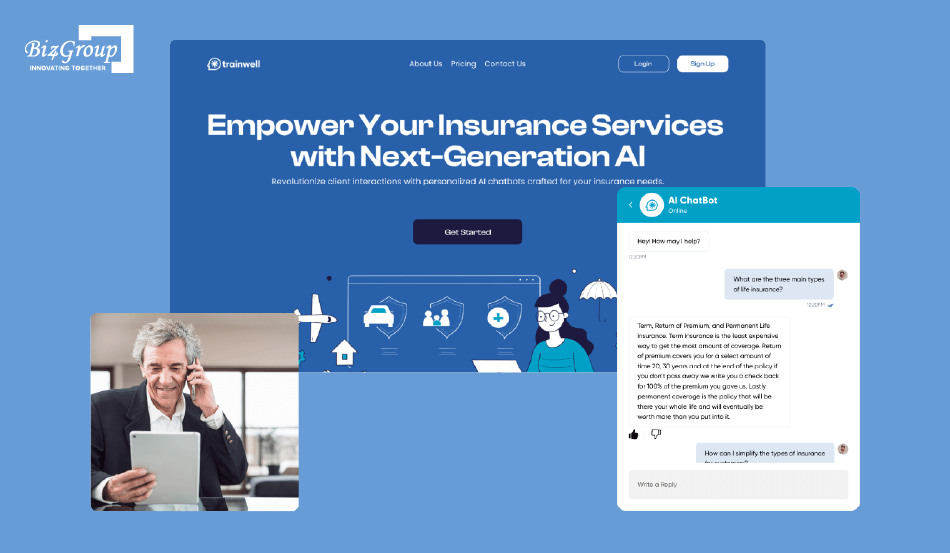
Insurance AI was designed as an AI-powered training assistant for insurance agents. It helps agents learn policy guidelines, understand insurance products, and receive instant answers during onboarding and daily operations.
The system uses conversational AI to simulate real support scenarios and guide agents through complex policy information. This kind of automation shows how intelligent tools can support insurance operations while reducing dependency on manual training processes.
3. Capability to Build Advanced Insurance Risk Analysis Platforms
- We work with insurers to develop AI based insurance risk analysis tool architectures that evaluate claims data, customer risk signals, and policy records.
- Our engineering teams design risk scoring models that support practical underwriting decisions instead of theoretical model outputs.
4. Proven Experience Across Insurance Technology Projects
- Our portfolio shows real platforms that we have built across insurance and healthcare environments where secure data handling and compliance are critical.
- It highlights underwriting automation systems, data processing tools, and healthcare platforms designed to operate smoothly within existing enterprise workflows.
5. Collaborative Development Approach With Insurance Teams
- Our development process focuses on collaboration with underwriting teams, product leaders, and compliance specialists.
- This approach helps ensure that underwriting platforms reflect real operational needs rather than abstract system designs.
Building reliable underwriting platforms requires both engineering depth and insurance domain understanding. Thus, our teams work closely with insurers and insurtech companies to deliver practical platforms that support scalable AI insurance underwriting software development.
Partner With Insurance AI Platform Builders
Work with engineers delivering scalable underwriting platforms trusted by insurers building intelligent risk evaluation systems
Start Your AI Underwriting ProjectConclusion
Insurance underwriting is changing quickly as insurers look for faster and more reliable ways to evaluate risk. Building the right system requires thoughtful planning around data, workflows, and regulatory responsibilities. Teams that work with an experienced AI product development company approach this process with a clearer roadmap and fewer implementation risks.
Business owners planning to develop AI underwriting software for insurance companies should focus on practical underwriting operations rather than isolated automation features. The goal is to create systems that help underwriting teams evaluate policies efficiently while maintaining accuracy and regulatory confidence.
Every insurer approaches underwriting differently. That is why AI insurance underwriting software development should align closely with real operational workflows. If you are considering building such a platform, scheduling a short conversation with our team can help clarify the next practical steps.
FAQs About AI Insurance Underwriting Software Development
1. What should insurers evaluate before starting AI insurance underwriting software development?
Insurance leaders should first evaluate underwriting workflows, data availability, and regulatory requirements. A successful platform depends on clean historical claims data, clearly defined risk rules, and integration with policy administration systems. Early planning helps insurers avoid costly redesigns later in the development process.
2. How do companies develop AI underwriting software for insurance companies that integrates with existing policy systems?
Most insurers already run policy administration, claims management, and CRM platforms. Development teams usually connect AI underwriting systems through secure APIs that allow data exchange with these systems. This integration ensures risk scores, policy approvals, and underwriting decisions update automatically across the insurance ecosystem.
3. What capabilities should insurers prioritize when they build AI powered insurance underwriting systems?
Executives should prioritize risk scoring models, automated document analysis, fraud detection capabilities, and underwriting workflow automation. Platforms should also support real-time data integration with external sources such as credit data, telematics, or medical records. These capabilities help underwriters evaluate risk faster and improve policy decision accuracy.
4. How can insurers create AI insurance risk assessment software that improves underwriting accuracy?
Effective risk assessment systems combine historical claims data, customer profiles, and predictive modeling. Machine learning models analyze patterns across large datasets to estimate claim probability and risk exposure. Over time, model performance improves as new claims outcomes and underwriting decisions feed back into the system.
5. What does it cost to develop AI insurance underwriting software for insurers?
The cost to develop AI insurance underwriting software for insurers typically depends on system scope, data infrastructure, and integrations with existing insurance platforms and typically ranges between $40,000 and $250,000+.
6. How do insurtech startups approach AI insurance underwriting software development for insurtech startups differently from traditional insurers?
Startups often focus on modular platforms that launch quickly and scale over time. They usually begin with core underwriting automation and predictive risk models. As the product grows, they expand the platform with advanced analytics, fraud detection, and integrations with partner insurers.
