 Location :
Orlando, FL, USA
Location :
Orlando, FL, USA +1 (407) 714-1616
 info@biz4group.com

 AI Summary Powered by Biz4AI
- AI virtual wholesaling real estate software automates lead sourcing, property evaluation, and deal analysis for modern investors.
- Streamline investor pipelines, improve deal accuracy, and scale operations with AI-powered virtual wholesaling platforms.
- Key features include predictive analytics, contract automation, user dashboards, and a scalable tech stack.
- Development involves MVP to full launch, with costs ranging from $30,000 to $150,000+ depending on complexity and AI integration.
- Overcome data, workflow, and adoption challenges with Biz4Group, experts in developing AI virtual wholesaling software and building projects like Homer AI, Facilitor, Renters Book, and Contracks.
Imagine this. You wake up on a Monday morning with ten potential properties in your pipeline. By lunch, half of them are already under contract but not by you. The other investors beat you to it. You wonder if your methods are fast enough, or if you're leaving opportunities on the table. This scenario is becoming reality in 2025, as real estate moves faster and smarter than ever.
If you're asking, "We run a wholesale real estate business, but our team spends too much time searching for off-market properties, skip tracing owners, and qualifying leads. How can we build AI software that automates these tasks and helps us close more deals?", you're not alone. This challenge has become increasingly common as wholesalers expand into competitive markets where speed determines profitability. Manual prospecting, fragmented workflows, and repetitive administrative work often prevent investors from focusing on what matters most: negotiating and closing profitable deals.
The global PropTech market is now valued at roughly USD 44.6 billion and is set to nearly quadruple by 2035. In the U.S., adoption of predictive analytics and automated platforms has surged as firms aim to outpace competitors.
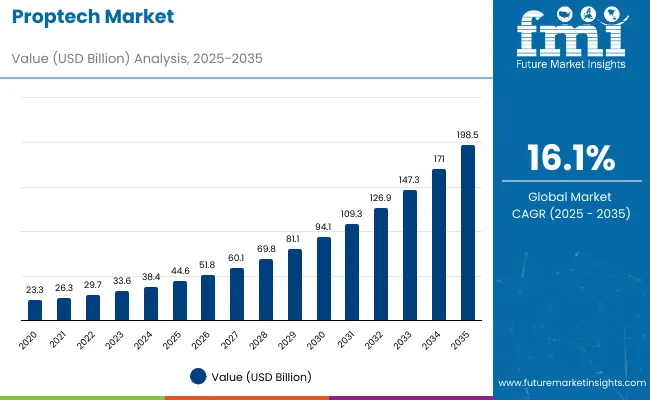
If you want to stop playing catch-up, it is time to consider how to automate wholesale real estate business with AI. AI in real estate investment is changing how top investors source leads, analyze properties, and assign deals. By leveraging use cases of AI software for real estate, you can operate faster, scale wider, and make decisions backed by data.
Building AI virtual wholesaling real estate software development can help you automate lead scoring, deal evaluation, and workflow management. With the right tools, you can develop AI virtual wholesaling software that streamlines investor pipelines and gives you a competitive edge in today's market.
In this guide, we'll show you how to build AI virtual wholesaling real estate software that fits your business. You'll discover practical strategies to modernize your deal pipelines, reduce manual work, and get ahead of competitors who are already using these tools.
Meet the Future of Deal Hunting: Why AI Virtual Wholesaling Real Estate Software Is the Next Big Leap
What is AI Virtual Wholesaling in Real Estate?
Imagine having a system that takes care of the repetitive tasks in real estate investing so you can focus on closing deals. Instead of spending hours chasing leads or analyzing properties manually, this platform automates those processes and delivers actionable insights.
Real estate AI virtual wholesaling software allows you to:
- Automatically score leads based on motivation and property potential
- Analyze property data quickly to forecast profitability
- Match deals with the right buyers efficiently
- Streamline workflows for remote teams and investor pipelines
In other words, it's a way to build AI virtual wholesaling real estate software that makes your operations smoother, faster, and data-driven. At its core, this is a type of real estate AI software that transforms complex, manual workflows into a scalable system for investors.
How Does AI Improve Virtual Real Estate Wholesaling?
As your wholesaling business grows, so does the number of deals you have to review. It's no surprise that many investors ask, "We are expanding our wholesale real estate business into multiple markets, but manually evaluating hundreds of properties every week is slowing us down. How can AI help us identify the best investment opportunities and prioritize high-value deals automatically?"
The good news is that AI is built for exactly this kind of challenge. Instead of spending hours sorting through listings and comparing numbers, AI can scan large volumes of property data, identify the most promising opportunities, and rank them based on factors like profit potential, seller motivation, market trends, and estimated ROI. That means your team spends less time analyzing every property and more time pursuing deals that are actually worth closing. Whether you're operating in one city or several markets at once, AI makes it much easier to scale without overwhelming your team.
Traditional methods are struggling to keep up. Investors who rely on spreadsheets or manual research risk falling behind. Here's why this software is gaining momentum:
- Faster Deal Identification: Automatically spot high-potential properties and motivated sellers instead of manually searching.
- Data-Driven Decisions: Access real-time analytics to make smarter investment choices based on property metrics and market trends.
- Scalable Operations: With creating AI virtual wholesaling automation software for investor pipelines, you can manage multiple markets and hundreds of leads simultaneously.
- Reduced Manual Work: Automate follow-ups, deal analysis, and investor matching to free your team for strategic tasks.
- Competitive Advantage: Tools that make AI real estate wholesaling automation software help you close deals faster than competitors.
- Adaptable to Market Changes: Quickly adjust strategies based on insights, keeping you ahead in shifting markets.
If building these in-house feels overwhelming, a real estate AI software development company can help design, develop, and deploy a platform tailored to your business needs. With the right solution, your team can operate like a high-performing digital wholesaling unit, saving time, reducing errors, and scaling efficiently.
Ready to stop missing out on deals?
With the PropTech market booming and AI virtual wholesaling real estate software adoption rising by over 40% in 2025, staying manual means falling behind.
Contact Us to Get StartedSo How Does This Magic Work? A Practical Look at How AI Virtual Wholesaling Systems Operate?
If your team is constantly switching between different tools, you're probably wondering, "Our virtual wholesaling business relies on multiple tools for lead generation, CRM, property analysis, and outreach, making our workflow inefficient. Can custom AI wholesaling software centralize these processes and automate follow-ups?"
The short answer is yes. Instead of juggling multiple platforms, a custom AI wholesaling solution brings everything together in one place. It can capture leads, analyze properties, update your CRM, send automated follow-ups, and even track every deal as it moves through your pipeline. With all your data connected, your team spends less time on repetitive tasks and more time building relationships and closing deals. Here's a step-by-step look at how an AI virtual wholesaling platform handles the entire process, from finding opportunities to managing deals and keeping your pipeline moving.
You might be wondering exactly what happens once you decide to build AI real estate virtual wholesaling software. Let's break it down, step by step, so you can see how the system handles everything from finding deals to closing them.
Step 1: Lead Sourcing and Discovery
Finding the right properties is often the hardest part. With AI, your platform can:
- Scan multiple listing services, foreclosure databases, and public records automatically
- Use predictive scoring to identify sellers who are most likely to engage
- Prioritize leads so your team focuses on the deals that matter most
At this stage, the software acts like an AI agent, handling the repetitive scouting work and ensuring no opportunity slips through the cracks.
Step 2: Property Analysis and Valuation
Once leads are identified, the software evaluates each property in minutes:
- Automatically calculates property value using comparable sales, market trends, and historical data
- Performs risk assessment and ROI analysis to identify profitable deals
- Flags distressed properties ideal for virtual wholesaling
This is where you make virtual wholesaling deal analysis software using AI, turning raw data into actionable insights.
Step 3: Deal Matching and Investor Pipeline
After evaluating properties, the platform matches them with the right buyers or investors:
- Integrates your investor database to track interests and preferences
- Sends automated deal notifications to potential buyers
- Manages investor pipelines and deal assignments efficiently
This step often uses functionality similar to an AI real estate marketplace, connecting properties with the right investors quickly.
Step 4: Workflow Automation and Communication
The system automates tasks that usually take hours:
- Sending follow-ups, reminders, and emails automatically
- Scheduling calls or virtual meetings with sellers or buyers
- Managing contracts, documents, and compliance checks
By leveraging AI automation services, your team can focus on strategy and negotiation instead of repetitive work.
Step 5: Closing and Reporting
Finally, the AI virtual wholesaling software for real estate supports deal closure and continuous improvement:
- Tracks negotiation progress and contract milestones
- Generates performance dashboards and deal analytics
- Provides insights for optimizing future deals and investor pipelines
By developing AI virtual wholesaling real estate software this way, you create an end-to-end solution that improves speed, accuracy, and scalability. You're not just automating tasks; you're building a smarter investment workflow that keeps you ahead of competitors.
What Features Should AI Wholesaling Software Include?
When you decide to build virtual wholesaling AI software for real estate, it's not just about automating tasks. It's about creating a platform that helps investors work smarter, close deals faster, and scale their operations efficiently.
You may be thinking, "I want to launch an AI-powered virtual wholesaling platform that can identify motivated sellers, analyze property values, estimate repair costs, and recommend profitable deals. What features should we build, how much will it cost, and which development company should we choose?"
It all starts with choosing the right features. While development costs and your technology partner are important decisions, the success of your platform depends on solving real problems for investors. Your software should help users find better opportunities, analyze deals quickly, automate repetitive tasks, and manage every stage of the wholesaling process from one place. Below are the must-have features that make an AI virtual wholesaling platform practical, scalable, and valuable for modern real estate investors.
Here's a detailed look at the features that make these systems game-changing:
Feature |
Purpose / Benefit |
|---|---|
Lead Sourcing & Prioritization |
With AI real estate deal sourcing software development, the system automatically identifies motivated sellers and high-potential properties. Your team can focus on top deals, saving time and reducing missed opportunities. |
Property Valuation & Analysis |
You can make virtual wholesaling deal analysis software using AI to quickly evaluate properties, calculate ROI, assess risks, and identify the most profitable opportunities. |
Deal Matching & Investor Pipeline |
Match properties with the right buyers and manage investor pipelines efficiently. Integrating an AI real estate marketplace ensures your deals reach the right investors at the right time. |
Workflow Automation |
Automate follow-ups, reminders, document management, and compliance using AI automation services. This allows your team to focus on strategy and negotiations instead of repetitive tasks. |
Predictive Scoring & Insights |
Developing AI virtual wholesaling real estate software helps rank deals based on profitability, urgency, and potential returns, ensuring you prioritize high-value opportunities. |
CRM & Collaboration Tools |
Centralize communication between your team and investors. By creating AI virtual wholesaling automation software for investor pipelines, everyone stays aligned, deadlines are met, and collaboration becomes seamless. |
Virtual Property Tours & Visualization |
Enable investors to inspect properties remotely through an AI virtual property tour app, saving travel time and expanding your reach. |
Reporting & Analytics Dashboard |
Track KPIs, deal performance, and workflow efficiency. When you build AI virtual wholesaling real estate software, reporting becomes simple, insightful, and actionable. |
Integration with Third-Party Data |
Connect seamlessly to MLS, public records, and other databases using AI integration services for accurate and up-to-date property information. |
Notifications & Alerts |
Receive real-time updates on deals, deadlines, and investor actions, helping you make AI real estate wholesaling automation software that keeps everyone informed. |
User-Friendly Interface |
Professional UI/UX design ensures your team and investors can navigate the software with ease, reducing errors and training time. |
Mobile & Web Access |
Manage deals and investor pipelines from anywhere by creating an AI-powered virtual wholesaling system for real estate investors, ensuring you never miss a deal. |
Automated Document Generation |
Generate contracts, NDAs, and agreements automatically, reducing errors and accelerating deal closure. |
AI-Powered Market Predictions |
Forecast property trends, resale potential, and rental yields to make smarter, data-driven investment decisions. |
Customizable Dashboards |
Let users focus on the metrics that matter most, enhancing visibility into pipelines and improving decision-making efficiency. |
Portfolio Management Tools |
Track multiple properties, deals, and investor activity in one centralized system. This ensures your developing AI virtual wholesaling real estate software scales with your business. |
Virtual Staging & AR Visualization |
Visualize renovations or potential improvements remotely to engage investors and increase deal success rates. |
MVP & Scalable SaaS Options |
Start with a minimal viable product and scale as your operations grow, ensuring the software evolves alongside your business needs. |
By incorporating these features, you're not just automating tasks, you're creating a platform that empowers investors, streamlines workflows, and maximizes deal efficiency. When you build AI virtual wholesaling real estate software with these capabilities, you set your team up for smarter, faster, and more profitable investment decisions.
Want your tools working harder than you?
With predictive analytics, automated valuations, and seamless investor pipelines, we build features so you can focus on closing deals.
Build Your Feature SetFrom Concept to Code: How to Build AI Virtual Wholesaling Real Estate Software?
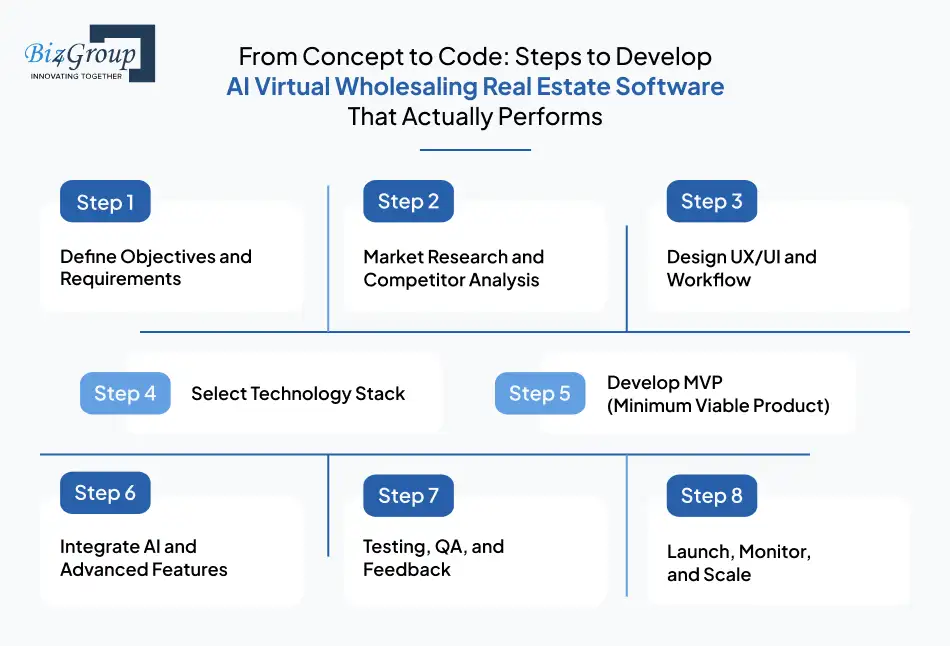
Turning your idea into a functional platform requires a clear, structured approach. When you build AI virtual wholesaling real estate software, every step from planning to deployment affects your efficiency and the quality of investor experience. Following a strategic roadmap ensures your system is scalable, reliable, and tailored to real investor needs.
Step 1: Define Objectives and Requirements
Before development begins, define your platform's goals and the problems it will solve. Understanding your investor audience helps in AI virtual wholesaling real estate software development that addresses real pain points, from lead sourcing to deal management.
- Core features: lead sourcing, deal analysis, workflow automation
- Integrations: MLS, investor databases, property data
- Success metrics: efficiency, ROI, and pipeline performance
Step 2: Market Research and Competitor Analysis
Researching existing solutions lets you identify gaps and opportunities. By studying competitors, you can develop virtual wholesaling software for real estate using AI that delivers smarter automation, better deal insights, and faster pipelines.
- Analyze competitor features and shortcomings
- Identify investor trends and technology adoption
- Spot innovation opportunities to stand out
Step 3: Design UX/UI and Workflow
Intuitive design ensures your team and investors can use the platform effectively. Map out workflows, dashboards, and pipelines to streamline the wholesaling process.
- Wireframes and dashboards
- Mobile and desktop navigation
- Alerts, notifications, and analytics display
Step 4: Select Technology Stack
A robust tech stack ensures your platform is secure, scalable, and fast. Choosing the right tools allows you to make real estate virtual wholesaling software with AI capable of predictive scoring and workflow automation.
- Front-end and back-end frameworks
- AI/ML tools for deal scoring and predictions
- Cloud infrastructure and database selection
Step 5: Develop MVP (Minimum Viable Product)
Start lean with a minimal viable product to validate your concept. MVP development helps you create AI virtual wholesaling automation software for investor pipelines without overbuilding.
- Implement core features: lead sourcing, deal analysis
- Include basic automation and notifications
- Gather user feedback for refinement
Step 6: Integrate AI and Advanced Features
Once the MVP is stable, integrate AI-powered capabilities to enhance deal insights and investor pipelines. Developing AI virtual wholesaling real estate software with predictive analytics adds measurable value.
- Predictive scoring and market forecasting
- Virtual property tours and portfolio management
- AI-assisted pipeline tracking
Step 7: Testing, QA, and Feedback
Thorough testing ensures your wholesale real estate AI virtual software works flawlessly under real conditions. This step is critical to maintain trust and efficiency in AI virtual wholesaling real estate software development.
- Functional, performance, and security testing
- Beta user feedback
- Feature refinement based on real-world use
Step 8: Launch, Monitor, and Scale
Deploy the platform and continuously monitor performance. Update AI models and features to develop AI virtual wholesaling software that scales with your investor base.
- Track KPIs and deal pipeline metrics
- Improve AI scoring and predictions
- Collaborate with a custom software development company for continuous updates
Tech Stack: Choosing the Right Tools to Power Your AI Virtual Wholesaling Real Estate Software
When you build AI virtual wholesaling real estate software, selecting the right technology stack ensures your platform is fast, scalable, and capable of advanced automation. Choosing the correct tools for front-end, back-end, AI, and cloud infrastructure is essential to develop AI virtual wholesaling software that investors can trust.
So, if you're asking "We want to build AI wholesaling software that integrates with MLS, public records, CRM, and marketing platforms while generating accurate property insights. What integrations, AI models, and development approach are needed to create a scalable solution?"
The answer comes down to choosing the right technology stack. From data integrations and AI frameworks to cloud infrastructure and APIs, every component should work together to keep your platform fast, scalable, and capable of delivering reliable property insights as your business grows.
Layer |
Tools / Tech |
Purpose / Benefit |
|---|---|---|
Front-End |
React.js, Angular, Vue.js, UI/UX design |
Provides a user-friendly interface for dashboards, property listings, and investor pipelines. |
Back-End |
Node.js, Django, Ruby on Rails, Laravel |
Handles data processing, workflow automation, and integrations with external systems. |
Database |
PostgreSQL, MySQL, MongoDB, Firebase |
Stores property data, investor profiles, transactions, and analytics securely. |
AI/ML Frameworks |
TensorFlow, PyTorch, scikit-learn, OpenAI APIs |
Powers predictive analytics, deal scoring, and market forecasting for virtual wholesaling deal analysis software. |
Cloud Infrastructure |
AWS, Google Cloud, Microsoft Azure |
Ensures scalability, reliability, and remote access for investor pipeline automation software. |
DevOps & CI/CD |
Jenkins, GitLab CI, Docker, Kubernetes |
Supports seamless updates, testing, and deployment for developing AI virtual wholesaling real estate software. |
Security & Compliance |
SSL/TLS, OAuth, GDPR/CCPA tools |
Protects sensitive investor data and ensures regulatory compliance. |
Mobile App Frameworks |
React Native, Flutter, Swift, Kotlin |
Provides mobile access to pipelines and property insights, enabling creating an AI-powered virtual wholesaling system for real estate investors. |
SaaS Architecture |
Multi-tenant frameworks, scalable APIs, microservices |
Supports multiple investors and properties while maintaining performance and security. |
Choosing the right tech stack means a lot during implementation of AI in real estate wholesaling. It's about creating a platform that scales, automates investor workflows, and delivers actionable insights. When you build with this stack, your system becomes a powerful engine for smarter deals, faster pipelines, and scalable growth.
How Much Does AI Wholesaling Software Development Cost in 2026?
If you are planning implementation of artificial intelligence in real estate wholesaling, the first question that usually comes up is: what is the cost to develop AI virtual wholesaling software?
Most AI driven real estate platforms land between $30,000 to $150,000+, although every project varies based on features, automation depth, and how much custom intelligence you need. This number is a range, not a rigid rule, because investor pipelines, property datasets, and deal scoring workflows differ from team to team.
Cost Breakdown for AI Virtual Wholesaling Platform Development
Cost Component |
Tools and Tech |
Estimated Range |
|---|---|---|
AI data ingestion and property intelligence |
Data pipelines, valuation models, dataset normalization |
$5,000 to $25,000 |
AI agent workflow and automated lead qualification |
NLP based scoring, CRM sync, intent detection |
$6,000 to $30,000 |
Predictive analytics and AI deal scoring engine |
Machine learning models, investment trend forecasting |
$8,000 to $35,000 |
AI chatbot and investor communication automation |
Conversational flows, follow ups, appointment setup |
$5,000 to $20,000 |
Offer automation and negotiation logic |
Price recommendations, contract generation, rules engine |
$4,000 to $25,000 |
UI and UX design for investor workflows |
Wireframes, dashboard layouts, interaction design |
$3,000 to $15,000 |
Admin portal and analytics |
Reporting, user management, performance metrics |
$4,000 to $18,000 |
Third party API and MLS integration |
MLS gateways, property record sync, external data |
$2,000 to $15,000 |
Deployment and QA testing |
Device optimization, security validation |
$2,500 to $12,000 |
This structure helps you estimate the investment needed to develop AI virtual wholesaling real estate software with scalable and investor focused capabilities.
Key Factors Influencing the Cost
Several variables shape the final budget when you develop or create real estate AI wholesaling software. These factors can shift the price significantly.
- Feature depth and AI automation complexity: Advanced lead qualification, deal scoring intelligence, or property valuation models require extra development hours.
- Real estate data sources and integrations: If you plan to create a real estate virtual wholesaling platform with multiple MLS feeds or external CRMs, additional integration work increases cost.
- Accuracy of pricing and valuation models: High precision models for distressed property detection, rehab estimation, or offer generation demand more training and testing.
- Security and compliance requirements: Protecting investor data, ownership records, and sensitive deal information adds to infrastructure cost.
If you want a cost-controlled launch strategy, many founders begin with an AI real estate app MVP before expanding to a full automation suite.
Hidden Costs Investors Often Overlook
Even with the best planning, a few hidden items tend to pop up. Keeping them in mind avoids budgeting surprises.
- Third party data fees
- API usage costs
- Hosting and server scaling
- Dataset purchases
- Model retraining for accuracy
- Post launch upgrades
These are normal for AI driven systems and should be included in your long-term roadmap for wholesale real estate AI software.
Ways to Optimize Cost Without Losing Quality
You can still make AI real estate wholesaling automation software high quality while keeping costs under control. Here are smart ways to do it:
- Build the core AI wholesaling engine first
- Use pre trained models where acceptable
- Add advanced automation after user validation
- Keep architecture modular for easier scaling
- Prioritize need to have features over nice to have features
These approaches help you create real estate wholesaling AI software for investor pipelines without stretching your budget.
Once you understand how the budget works, it becomes easier to plan the scope and build confidently. With a realistic view of custom AI wholesaling software development cost and the right feature priorities, you can create a platform that grows with your investors and delivers real value from day one.
Think this looks expensive? Think again.
Costs range from $30,000 to $150,000 plus. You can start lean or go full stack, controlling your budget while maximizing ROI potential.
Get a Custom QuoteChallenges and Solutions When You Build AI Virtual Wholesaling Real Estate Software
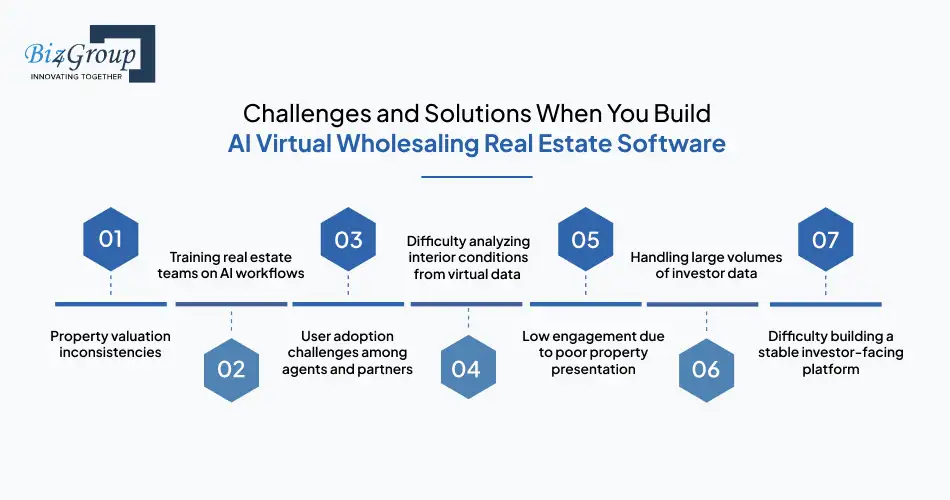
When you develop AI virtual wholesaling real estate software, the journey isn't always smooth. From handling large volumes of property data to ensuring investor adoption and accurate deal analysis, there are several hurdles that can slow down your progress. But the good news is, each challenge has a practical solution. In this section, we break down the most common obstacles and show how you can overcome them to create a reliable, scalable, and efficient AI real estate wholesaling automation that modern investors will trust.
Challenge |
Why It Happens |
Solution |
|---|---|---|
Property valuation inconsistencies |
AI models struggle when property data is incomplete or outdated, affecting deal scoring and offering automation. |
Use predictive tools and market trend systems to improve accuracy and reduce valuation gaps. |
Training real estate teams on AI workflows |
Agents and investors may feel overwhelmed when transitioning to new automation processes. |
Provide guided learning experiences to speed up onboarding. |
User adoption challenges among agents and partners |
Many users do not trust AI real estate wholesaling automation software until they see consistent results in deal acquisition. |
Reinforce confidence with proven case studies to encourage smooth adoption and engagement. |
Difficulty analyzing interior conditions from virtual data |
Visual inspection is limited when wholesaling properties remotely. |
Apply visualization techniques inspired by AI & AR home visualization to make condition analysis more accurate. |
Low engagement due to poor property presentation |
Static photos do not reveal true potential, lowering investor and buyer conversion. |
Enhance presentation using dynamic approaches like virtual staging AI to attract investors and buyers. |
Handling large volumes of investor data |
Big datasets require advanced models and continuous optimization to work effectively for investor pipelines. |
Implement generative AI techniques to automate pattern recognition and analysis. |
Difficulty building a stable investor-facing platform |
Real estate platforms must manage property data, user activity, and AI workflows without slowing down. |
Follow lean MVP development strategies to ship faster and scale reliably. |
By proactively addressing these challenges, your AI virtual wholesaling real estate software becomes more reliable, scalable, and user-friendly. When you develop AI virtual wholesaling software, integrate predictive analytics, and make AI real estate wholesaling automation software, you create a platform that transforms investor pipelines, improves deal accuracy, and modernizes wholesaling operations efficiently.
Why Biz4Group LLC Is a Strong Partner for Real-Estate AI & Wholesaling Platforms?
Biz4Group has a proven track record of delivering real-estate platforms that combine smart workflows, automation, and investor- or tenant-facing features. Their portfolio highlights how they can help you build AI virtual wholesaling real estate software, develop AI virtual wholesaling software, and create AI-powered virtual wholesaling systems for real estate investors with reliability and scalability.
1. Homer AI
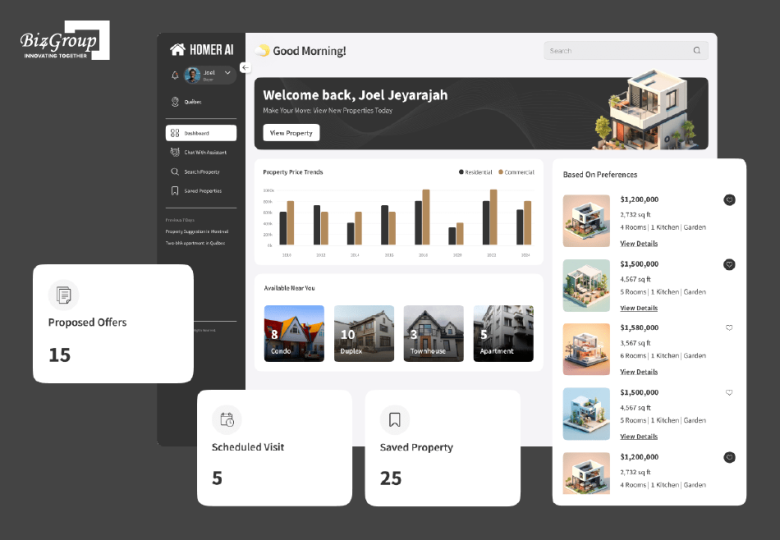
Homer AI is a conversational real-estate platform that allows buyers and sellers to interact via chat, browse listings, schedule visits, and manage accounts through dashboards. This project demonstrates Biz4Group's ability to develop AI virtual wholesaling real estate software, with full-stack property marketplaces, lead sourcing, user management, and workflow automation, all key components for a modern virtual wholesaling platform.
2. Facilitor
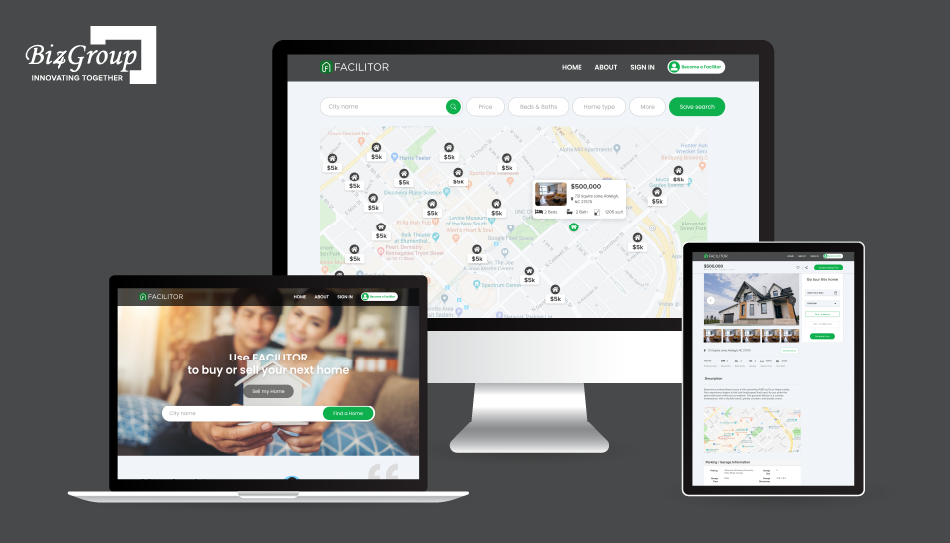
Facilitor is a property-buying platform with AI-powered property recommendations, MLS and GPS integration, and real-time chat between buyers and sellers. This solution highlights Biz4Group's expertise in creating AI virtual wholesaling automation software for investor pipelines, integrating data feeds, recommendation engines, and intuitive user workflows that directly support investor deal pipelines.
3. Renters Book
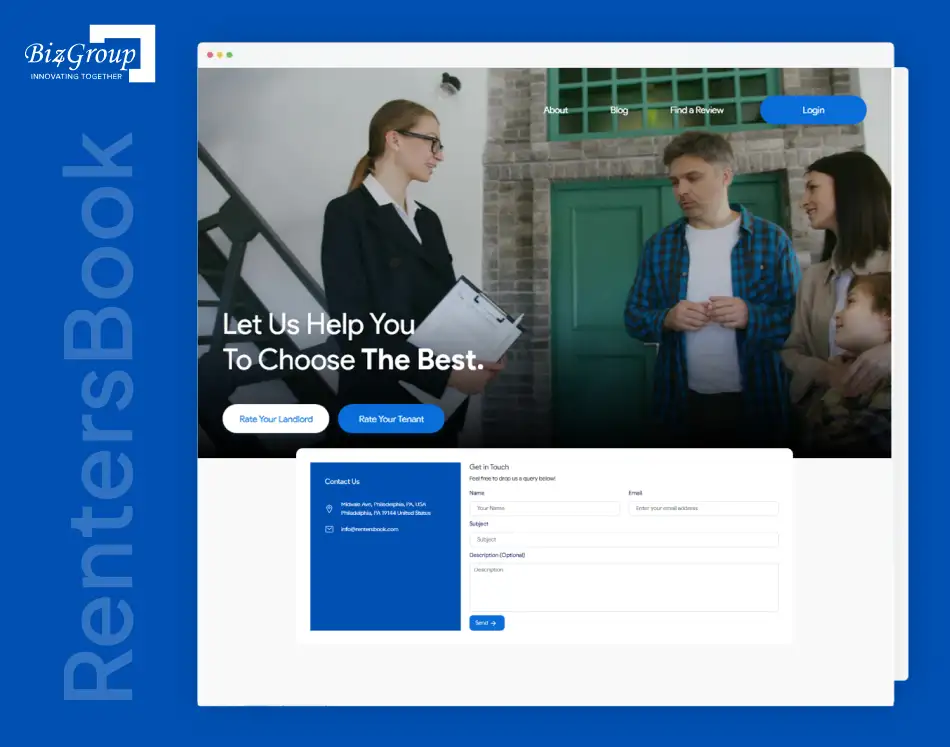
Renters Book is a rental and leasing platform designed to enhance transparency and trust between landlords and tenants. While focused on rentals, it showcases Biz4Group's strength in building virtual wholesaling real estate software development integrating AI, creating data-driven systems and trust frameworks that can be adapted for investor pipelines in wholesaling operations.
4. Contracks
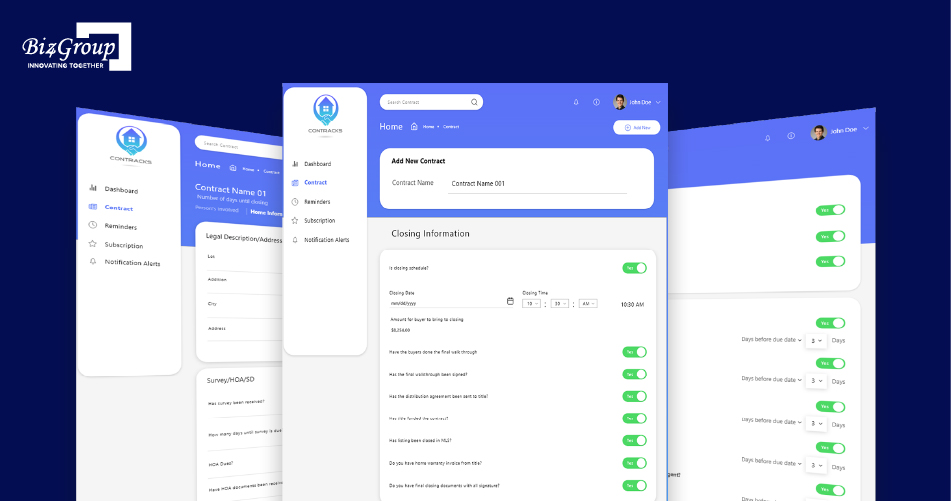
Contracks is a contract automation and management platform with AI-powered document summarization, multi-party contract handling, reminders, and financial mapping. This capability is essential when you develop AI virtual wholesaling real estate software, as it streamlines contract management, deal closing, and compliance in virtual wholesaling workflows.
These projects collectively show that Biz4Group not only has the technical expertise to build AI virtual wholesaling real estate software, but also the experience to deliver end-to-end, production-ready solutions that scale with investor needs. Their ability to combine AI, automation, and user-centric design ensures that your platform can handle everything from lead sourcing and property analysis to deal management and contract automation.
Ready to turn vision into real deals?
Biz4Group has built platforms like Homer AI, Facilitor, Renters Book, and Contracks. We know real estate and AI. Let's build your winning wholesaling platform together.
Let's BuildConclusion: Take Your Real Estate Wholesaling to the Next Level
Building AI virtual wholesaling real estate software is no longer a futuristic concept. It is the modern solution for investors and proptech companies who want to automate lead sourcing, analyze distressed properties, manage negotiations, and close deals efficiently. By developing AI virtual wholesaling software with predictive analytics and intelligent deal workflows, you can transform your investor pipelines and scale operations with confidence.
Biz4Group stands out as a real estate AI software development company with proven expertise in delivering end-to-end platforms. Their portfolio, including Homer AI, Facilitor, Renters Book, and Contracks, shows that they not only understand the technical depth required for virtual wholesaling real estate software development integrating AI, but also know how to create user-centric, scalable, and reliable platforms that meet modern investor needs.
Whether you want to create an AI-powered virtual wholesaling system for real estate investors, make AI real estate wholesaling automation software, or enhance existing workflows by developing AI virtual wholesaling real estate software, Biz4Group provides the right guidance, technical know-how, and innovative solutions to bring your vision to life.
Ready to stop dreaming and start automating? Let Biz4Group help you turn your virtual wholesaling vision into reality. Your investors won't know what hit them.
Frequently Asked Questions About AI Virtual Wholesaling Real Estate Software
1. What is AI virtual wholesaling real estate software and how does it help modern investors?
AI real estate deal analysis software is a platform that automates lead sourcing, property evaluation, deal analysis, buyer matching, and investor pipeline workflows. Instead of relying on spreadsheets and manual outreach, this kind of software enables data-driven, scalable real estate investing. If you build AI virtual wholesaling real estate software properly, you get a system that helps identify motivated sellers, assess profitable deals, and manage investments efficiently across markets.
2. Can AI really outperform traditional methods in sourcing deals and valuing properties?
Yes. When you develop AI virtual wholesaling software with powerful data pipelines and predictive analytics, it can process large volumes of property data, market history, tax records, and neighborhood metrics. This lets you generate valuations, risk scores, and deal forecasts much faster and often more accurately than manual analyses. Using automation and AI for real estate wholesaling deal analysis significantly reduces human error and improves your chances of closing good deals.
3. What costs should I anticipate when creating AI virtual wholesaling real estate software for investors?
Costs vary depending on scope, data integration needs, AI complexity, and user features. A simple version may require less investment while a full-featured solution with valuation engines, investor pipelines, and automation will require more resources. Good planning helps ensure that developing AI virtual wholesaling software stays within budget while delivering long-term value.
4. What are common technical challenges in building an AI-powered virtual wholesaling platform?
One major challenge is assembling clean and comprehensive property and market data. If data is incomplete or inconsistent, AI valuation or deal prediction may fail. Another challenge is integrating multiple data sources like MLS feeds, public records, investor databases, and ensuring secure data handling. Building scalable architecture, real estate data pipelines, and accurate AI scoring logic are critical steps in creating reliable real estate AI software.
5. Is it better to build in-house or partner with a specialized firm when developing AI real estate wholesaling automation software?
Many firms prefer partnering with a specialized AI virtual wholesaling software development company because they bring experience in data handling, AI integration, compliance, and user interface design. This helps you deploy faster, avoid common pitfalls, and ensure reliability. If you want to create an AI-powered virtual wholesaling system for real estate investors while keeping focus on business strategy, outsourcing development can be a smart choice.
6. How useful is launching a Minimum Viable Product when building virtual wholesaling software with AI?
Launching a Minimum Viable Product lets you test core workflows such as lead generation, property evaluation, and dealing with limited investment. It gives early feedback from investors, helps refine processes, and avoids over-building. Starting small and then scaling gradually is often the most efficient way to develop AI property lead generation for wholesalers.
7. Will AI virtual wholesaling automation software replace human judgement and traditional wholesaling entirely?
Not entirely. AI tools excel at data processing, pattern recognition, deal scoring, and automating repetitive tasks. They can accelerate lead identification, valuation, and investor matching. However, human judgement remains crucial for assessing property conditions, market context, negotiation, and relationship building. The most effective approach combines AI-enabled workflows with experienced human oversight.
