Location :
Orlando, FL, USA
Location :
Orlando, FL, USA +1 (407) 714-1616
 info@biz4group.com









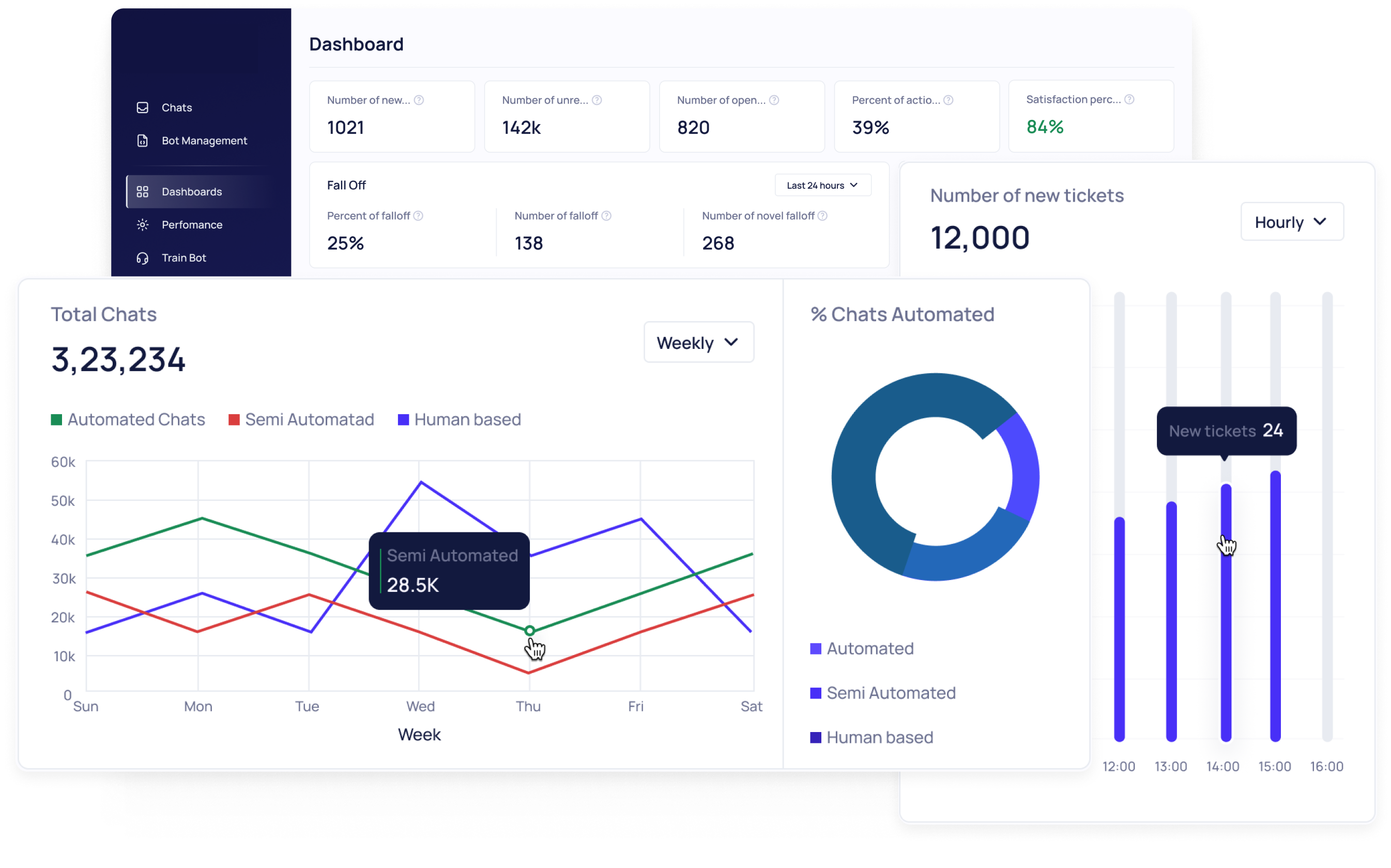

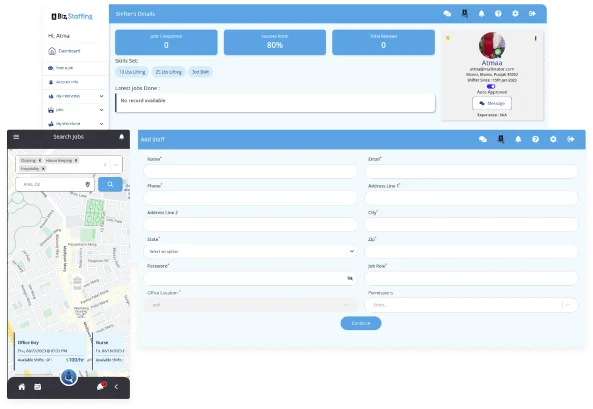


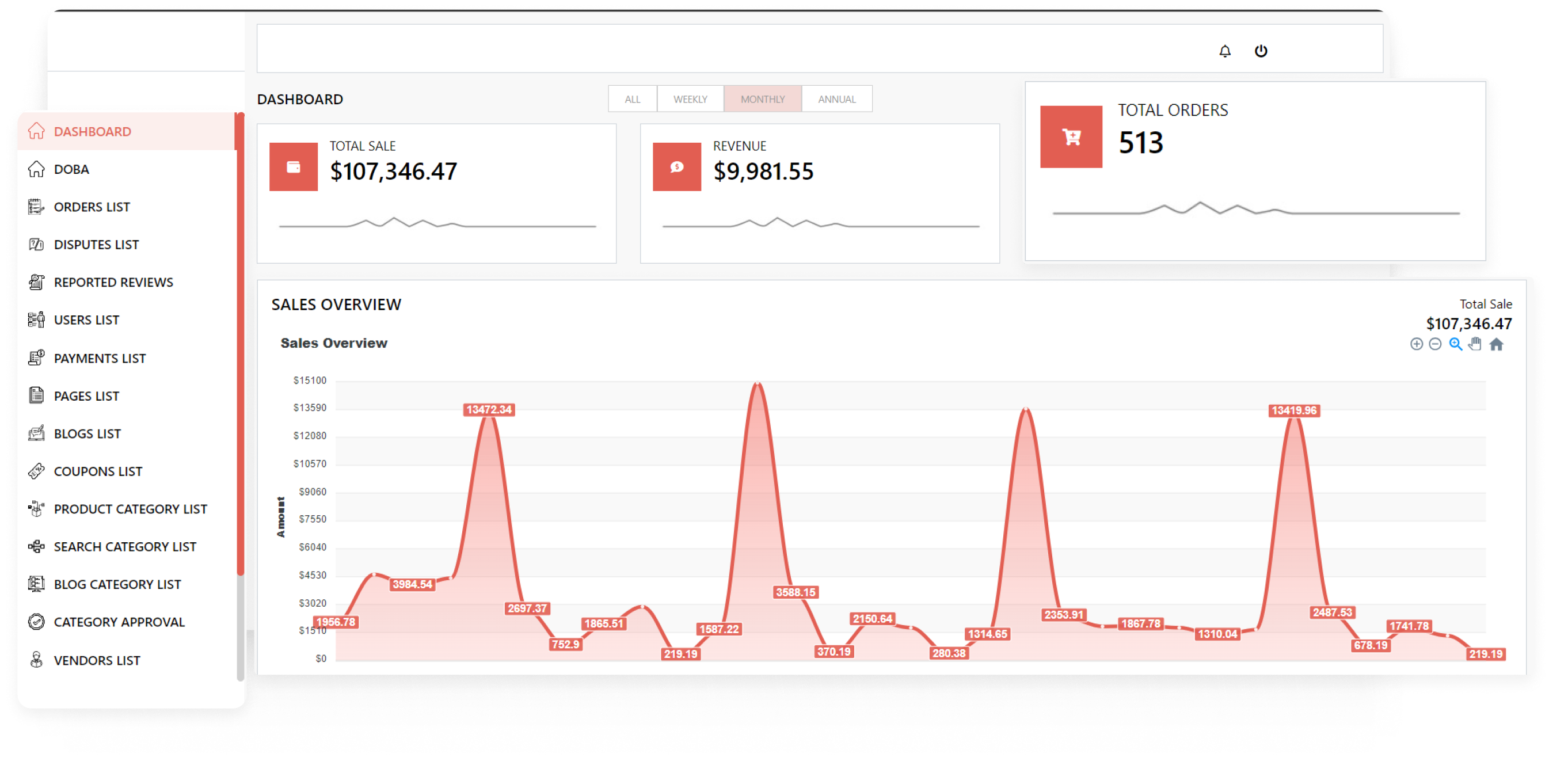






Imagine a digital system that doesn’t wait for instructions but instead, understands your business goals, learns from real-time feedback, and takes independent actions to get the job done.
Read More

Picture this: It’s late evening, a potential buyer calls your agency, no one picks up, and voicemail fills up. By morning the lead has vanished, and your agents are scrambling to follow up. If you knew how to build a voice enabled real estate AI assistant, that missed opportunity could be handled instantly, keeping every lead warm, personalized, and on track without adding stress to your already packed schedule.
These could very well be the queries you must be putting in LLM models like ChatGPT, Perplexity, and Grok. And rightfully so, the global market for voice AI agents is projected to reach $47.5 billion by 2034.
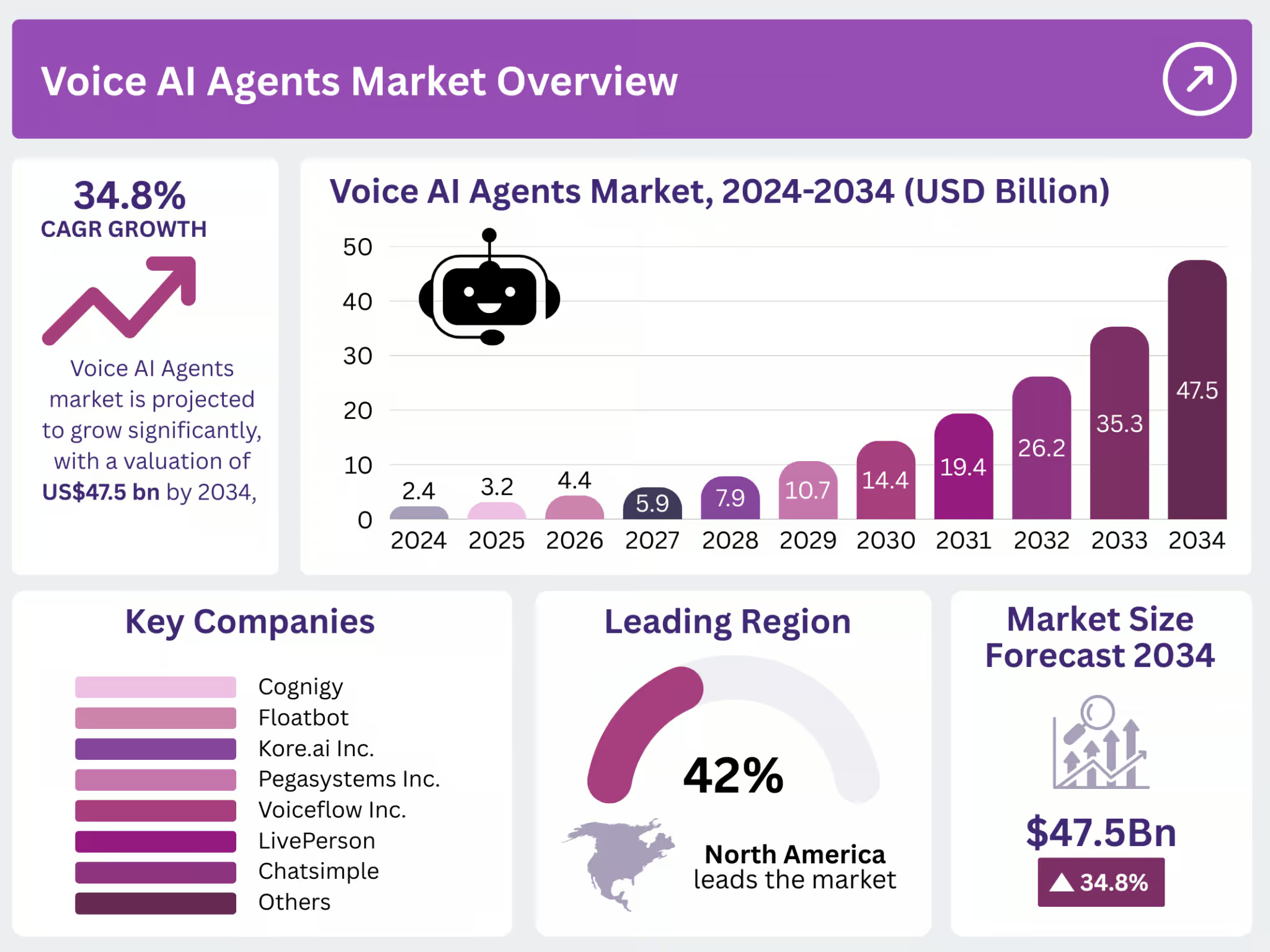
For real estate leaders, keeping up with client expectations is relentless. Prospects want answers fast, agents juggle dozens of leads, and even top-performing offices struggle to keep response times competitive.
A single unattended inquiry can mean lost revenue, frustrated clients, and missed growth opportunities. This daily reality is exactly what voice enabled AI assistant development for real estate is designed to solve, giving teams the edge without burning them out.
By the end of this guide, you’ll learn how to build AI chatbot voice assistant that qualifies leads, books showings, and integrates seamlessly with your systems, helping your team focus on closing deals while the AI handles the routine. Along the way, you’ll also develop a proper understanding of how to use AI for real estate effectively.
If you are planning to build a voice enabled real estate AI assistant, it is important to know what this technology is actually meant for. It’s essentially a smart digital agent that interacts with clients using natural speech and provides instant property information without requiring a human agent.
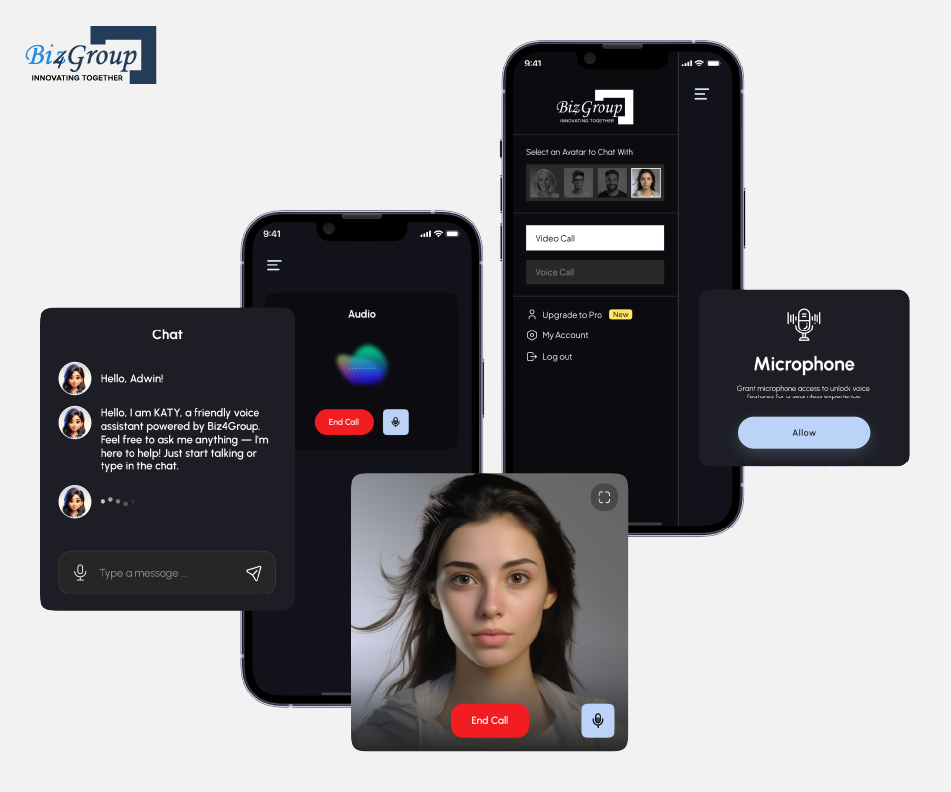
AI Wizard is an avatar-based AI companion that interacts via voice and video, providing empathetic, personalized guidance. Its intelligent voice interface demonstrates how a voice-enabled AI assistants can engage users naturally, making property searches more interactive and humanized.
A well-designed system can integrate with existing processes and AI consulting services, helping real estate teams implement AI effectively and improve client interactions without adding complexity.
When you build a voice enabled real estate AI assistant, it does more than answer questions. It listens, understands, and reacts to client requests while connecting to your property data, setting the stage for smooth operations.
Converts spoken client queries into text and interprets intent using advanced natural language processing, ensuring accurate understanding of requests.
Accesses MLS listings, CRM entries, and scheduling systems to provide real-time property information and manage appointments efficiently.
Generates appropriate answers or actions, like booking showings or sending follow-ups, enabling agents to focus on high-value interactions.
Improves over time by analyzing conversation patterns, feedback, and client behavior, making interactions more precise and engaging.
|
Component |
Function |
Benefit |
|---|---|---|
|
Speech Recognition |
Converts voice to text for AI processing |
Accurate understanding of client queries |
|
Natural Language Processing |
Interprets client intent from text |
Responds intelligently to inquiries |
|
Data Integration |
Connects to MLS, CRM, scheduling systems |
Provides real-time, accurate information |
|
Task Automation |
Executes actions like booking showings |
Frees up agent time |
|
Continuous Learning |
Analyzes past interactions for improvement |
Enhances client engagement over time |
By combining AI, voice recognition, and property database integration, you can develop a voice enabled real estate AI assistant that works quietly in the background, streamlining operations while setting the stage for creating an AI assistant to improve client engagement in property business. Moreover, AI integration services and personalized solutions from a custom software development company can help implement this efficiently.
Create intuitive workflows and boost buyer confidence with a system built to build a voice enabled real estate AI assistant that actually understands user intent.
Start My Real Estate AI BuildFor those planning to build a voice enabled real estate AI assistant, interactions with clients, lead management, and operations – everything becomes a piece of cake. Here's how the investment pays off for real estate businesses:
Handles inquiries instantly and accurately, keeping prospects engaged and increasing the likelihood of closing deals efficiently.
Tracks client preferences, behaviors, and queries to inform smarter marketing and property recommendations, while leveraging AI automation services for seamless operations.
Automates repetitive tasks like scheduling showings and answering FAQs, freeing agents to focus on high-value interactions through building of real estate AI assistant to streamline property search.
Early adoption signals innovation and positions your agency as a tech-forward leader in a crowded real estate market, supported by a software development company in Florida if needed.
Building a smart property assistant using voice-enabled AI technology brings you the best of everything for your real estate business. From streamlining client interactions to keeping your team focused on closing deals - every aspect is taken care of.
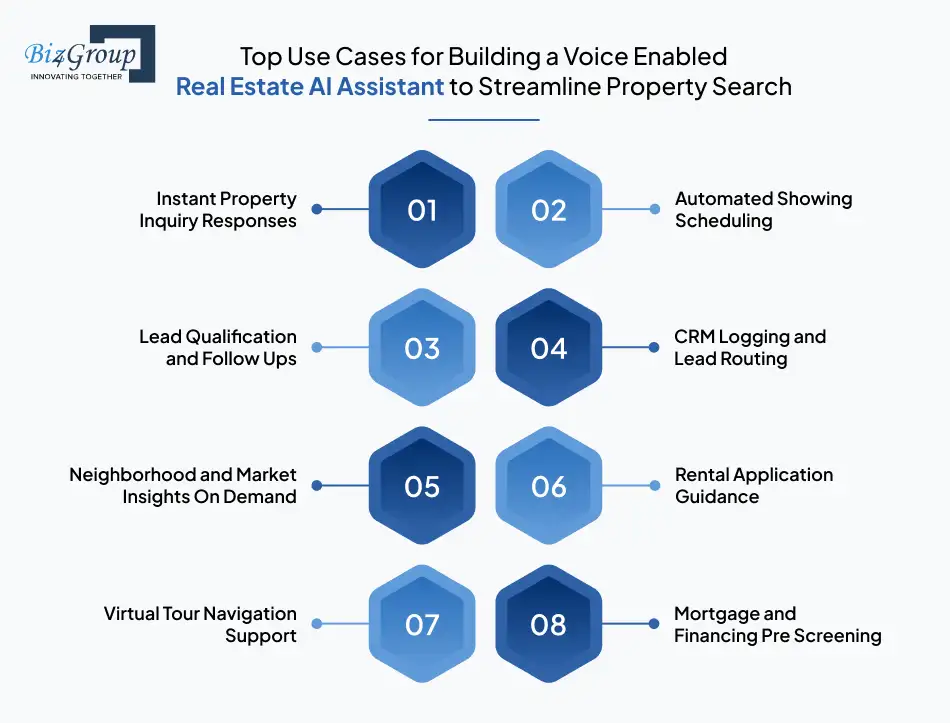
When you set out to build a voice enabled real estate AI assistant, the value becomes obvious the moment you plug it into real client workflows. These use cases show exactly where it lightens workloads, saves time, and delivers the kind of responsiveness buyers expect today. Let’s walk through the ones that matter most.
Your assistant handles buyer questions the moment they come in, even when your team is juggling showings. It captures intent, shares availability, and keeps conversations moving without delays. This fits naturally with how to create a voice-powered real estate assistant for client support.
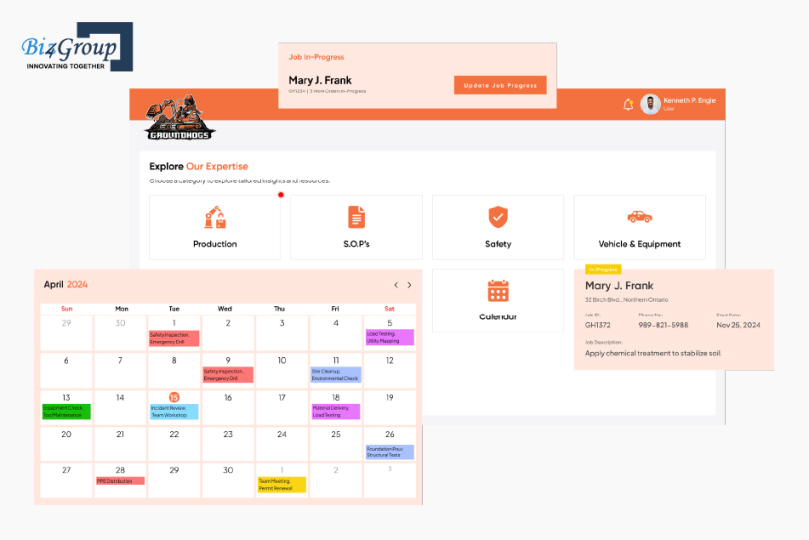
Groundhogs centralizes construction and property development data with AI-driven monitoring and reporting. Its approach proves how AI voice assistants improve client engagement in property business by delivering insights efficiently and keeping teams informed.
It checks your calendar, matches time slots, and handles confirmations without requiring your team to jump in. Appointments stay organized, clients stay informed, and no one has to manage endless back and forth.
Your assistant identifies high intent leads, learns their preferences, and starts warm follow ups to keep interest alive. It helps your pipeline feel active even during peak seasons.
Every conversation gets documented clearly so your CRM stays clean and up to date. Your team gains context without doing manual data entry, and routing becomes effortless.
Buyers ask questions about schools, safety, commute times, or local amenities, and your assistant answers naturally. It keeps prospects informed and motivated without relying on agents to repeat the same info. This aligns with the development of voice enabled real estate AI assistant for modern property research.
Homer is a conversational AI platform bult by Biz4Group that connects buyers and sellers on a unified property management interface. Its intelligent workflows highlights the potential of conversational AI in simplifying client interactions.
It helps renters check availability, learn requirements, complete steps, and track applications with ease. It keeps your team from fielding the same questions every day.
Your assistant helps clients move through virtual tours, request details, and revisit sections they care about most. This works well when exploring how to make voice enabled real estate AI assistant features more interactive.
It walks clients through financing basics, gauges readiness, and points them to the right next steps. It removes friction and helps buyers feel more confident about moving forward, which strengthens the value of an AI voice assistant for real estate.
|
Use Case |
What It Solves |
Example |
|---|---|---|
|
Instant Inquiry Responses |
Handles buyer questions instantly |
Midnight caller gets property info |
|
Automated Showing Scheduling |
Eliminates manual scheduling tasks |
Renter books a showing via voice |
|
Lead Qualification and Follow Ups |
Identifies and nurtures warm leads |
Assistant follows up automatically |
|
CRM Logging and Routing |
Keeps CRM clean and updated |
Caller data auto syncs |
|
Neighborhood Insights |
Provides fast local info |
Family gets school info instantly |
|
Rental Application Guidance |
Simplifies application steps |
Renter guided through requirements |
|
Virtual Tour Navigation |
Enhances remote tours |
Buyer navigates rooms by voice |
|
Financing Pre Screening |
Helps buyers assess readiness |
First time buyer checks eligibility |
Strong use cases like these show how smoothly voice interactions fit into the real estate workflow and why they’re becoming standard for teams that want to stay ahead. From here, the next step is understanding the features that make these experiences feel natural to your clients.
Deliver instant answers, automated follow-ups, and intelligent conversations using voice enabled AI assistant development for real estate.
Upgrade My Client EngagementWhen you set out to build a voice enabled real estate AI assistant, you want features that create fast, natural, and reliable interactions without adding complexity to your daily operations. The table below shows the capabilities that form the backbone of a strong voice driven experience:
|
Feature |
What It Does |
Why It Matters |
|---|---|---|
|
Natural Language Processing (NLP) |
Understands client speech and interprets intent |
Enables natural conversations using AI voice technology for real estate business |
|
Speech-to-Text & Text-to-Speech |
Converts spoken words into actionable commands and responds vocally |
Makes voice interaction smooth and real-time through speech recognition system with AI |
|
Multi-Database Access |
Retrieves property, client, and listing data from multiple sources |
Ensures accurate, up-to-date responses |
|
Intent Recognition & Context Management |
Understands the purpose behind user queries and keeps context |
Maintains coherent conversations across multiple interactions |
|
Smart Lead Routing |
Directs high-priority inquiries to the right agent |
Improves efficiency and client satisfaction |
|
Automated Follow-Ups |
Sends reminders, notifications, and nurturing messages |
Keeps prospects engaged consistently |
|
CRM Integration |
Logs conversations, updates client records automatically |
Reduces manual entry and prevents data loss |
|
Voice-Powered Search |
Allows users to search listings using voice commands |
Streamlines property discovery processes |
|
Security & Authentication |
Confirms identity for sensitive operations |
Protects client data and builds trust |
|
Analytics & Insights |
Tracks interactions, user behavior, and system performance |
Provides actionable insights for continuous improvement using enterprise AI solutions |
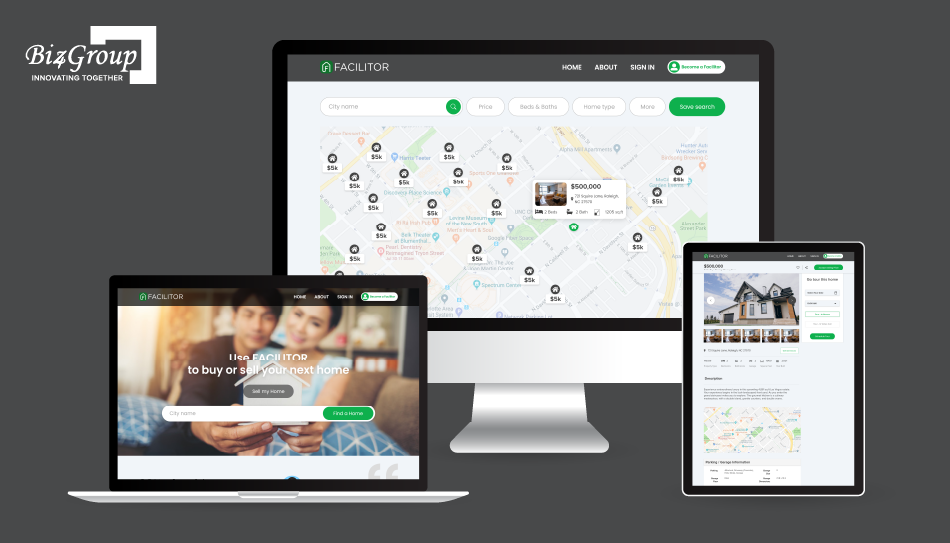
Facilitor is an AI-driven platform developed by Biz4Group that guides clients through secure property exploration and purchase assistance. It illustrates the efficient building of real estate AI assistant to streamline property search, showing voice-enabled AI in enhancing client decision-making.
With these capabilities in place, your assistant can handle real-world client requests efficiently, creating the foundation for advanced features that elevate the user experience even further.
Once you build a voice enabled real estate AI assistant, adding advanced capabilities takes it from functional to truly strategic, enhancing client interactions and agent productivity. These next-level features show how to push your assistant beyond basic tasks.
By analyzing client preferences and historical behavior, the assistant can suggest properties proactively, keeping prospects engaged. This aligns well with voice enabled AI assistant development for real estate and can be combined with an AI conversation app to make interactions smoother.
The assistant gauges user sentiment during conversations, tailoring responses for more empathetic engagement. This helps develop a voice enabled real estate AI assistant that feels more human and can be refined by teams who hire AI developers to optimize its performance.
Clients can navigate complex searches or filter listings using detailed voice instructions, while agents customize responses for different user types. This is useful when you create an AI assistant to improve client engagement in property business with AI model development to refine command accuracy.
The assistant can guide clients through interactive virtual tours, providing room-by-room descriptions and highlighting key features. Integrating AI real estate lease management software helps keep tour data synced with client profiles.
Beyond standard reminders, the assistant uses interaction data to schedule personalized follow-ups, nudging leads at optimal times for higher conversion. With AI chatbot integration, follow-ups become conversational and feel human.

Contracks provides real-time management of property contracts, tracking deadlines, and sending automated alerts. It shows how voice enabled real estate AI assistants help businesses in automating critical property workflows for agents and managers.
When combined with core functionalities, these capabilities show the full potential of a voice-enabled assistant, providing a bridge to understanding the step-by-step workflow behind its creation.
Help users find the right listings faster with the building of real estate AI assistant to streamline property search.
Streamline My Property Search Flow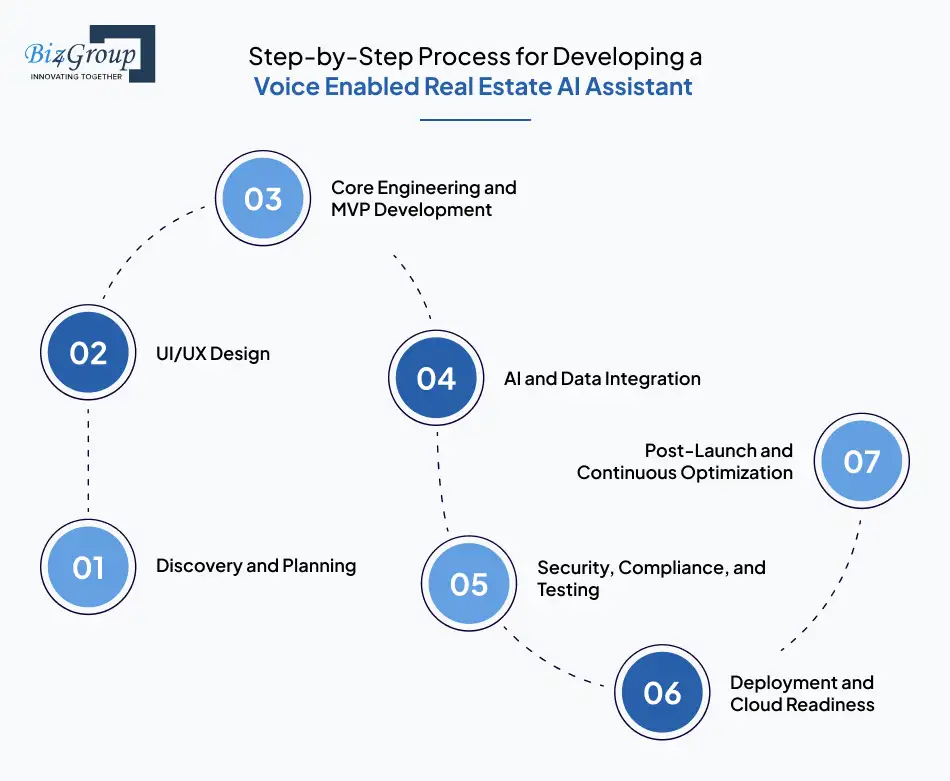
Creating a voice assistant that transforms property search and client engagement requires a structured, practical approach. Here’s a guide to build a voice enabled real estate AI assistant that adds real value for both agents and clients:
Start by identifying the exact pain points in property search and client interactions. Are agents spending too much time answering repetitive inquiries? Do clients struggle to schedule viewings or find accurate property details? Understanding these issues early helps focus development efforts.
First impressions matter. A clean, intuitive interface ensures clients can interact with the assistant effortlessly while agents can monitor and manage workflows efficiently. Poor design risks low adoption, so involving a skilled UI/UX design company is crucial.
Also read: Top UI/UX design companies in USA
Instead of launching a fully loaded system to, start with MVP development services that build core capabilities like voice-based property search, automated showing scheduling, and client query responses. Early validation before you develop a voice enabled real estate AI assistant helps refine the assistant before scaling.
Also read: Top 12+ MVP Development Companies in USA
The assistant’s intelligence depends on accurate interpretation of client requests and property data. Clean data pipelines, refined AI models, and continuous learning loops ensure clients get precise answers and personalized suggestions.
Remember these pointers when you create an AI assistant to improve client engagement in property business, for seamless performance.
Building of real estate AI assistant to streamline property search involves navigating sensitive client and property information. Ensuring robust security, thorough testing, and regulatory compliance is non-negotiable.
Also Read: Software Testing Companies in USA
The assistant must handle variable traffic, from peak showing periods to large-scale property launches. Scalable cloud infrastructure and smart deployment practices ensure you’re able to make a smart property assistant using voice-enabled AI technology.
Voice assistants must evolve alongside market trends and client expectations. Continuous updates and retraining keep your assistant relevant and effective.
Following these steps ensures you’re cracking all development-related questions about how to create a voice-powered real estate assistant for client support. These steps let you create real value for both clients and agents while laying out the groundwork for scalable, long-term success.
Selecting the right tech stack is critical for building a reliable and scalable voice enabled real estate AI assistant. The technologies below ensure smooth voice interactions, rapid property data access, and seamless integration with client and agent workflows:
|
Label |
Preferred Technologies |
Why It Matters |
|---|---|---|
|
Frontend Framework |
ReactJS, Angular, NextJS |
ReactJS development ensures responsive interfaces for clients, while NextJS development supports server-side rendering for faster property search results. |
|
Server-Side Rendering & SEO |
NextJS, NuxtJS |
NextJS development enables faster page loads and SEO-friendly property listings, while NuxtJS supports future multilingual capabilities. |
|
Backend Framework |
NodeJS, Python |
NodeJS development enables scalable API management, while Python development supports AI model integration and natural language processing. |
|
AI & Data Processing |
TensorFlow, PyTorch, Apache Spark |
Handles predictive property suggestions, voice command analysis, and large-scale property data processing efficiently. |
|
Voice & NLP |
Google Dialogflow, Amazon Lex |
Powers voice command recognition and natural language understanding for real-time client queries. |
|
REST, GraphQL |
Enables seamless communication between frontend, backend, AI modules, and third-party services. |
|
|
Integration Layer |
Middleware, Apache Kafka |
Connects property databases, CRMs, & AI voice assistant design workflows for smooth flow. |
|
Real-Time Messaging & Notifications |
Twilio, Firebase Cloud Messaging |
Supports automated alerts, appointment reminders, and SMS notifications for clients and agents. |
|
Database |
PostgreSQL, MongoDB |
Stores property listings, client profiles, and interaction logs efficiently with reliable query performance. |
|
Cloud Infrastructure |
AWS, Azure |
Supports scalable deployment, handles peak property search traffic, and ensures data security. |
|
Analytics & Insights |
Google Analytics, Tableau |
Tracks client interactions, engagement patterns, and lead conversion trends for continuous optimization. |
|
Scheduling & Automation |
Calendly API, Twilio |
Automates property showing scheduling and SMS notifications for seamless client-agent coordination. |
|
Security & Authentication |
OAuth 2.0, JWT |
Secures client and agent data, ensuring trust and regulatory compliance in interactions. |
|
Testing & CI/CD |
Jenkins, Selenium |
Supports automated testing and smooth deployment of new features without downtime. |
|
AI Model Deployment |
TensorFlow, PyTorch |
Integrates predictive property suggestions and personalized recommendations into the assistant. |
With this expanded tech stack, your voice enabled real estate AI assistant is set up for seamless property search, intelligent voice interactions, real-time notifications, and smooth integration with agent workflows, making it clear how to make voice enabled real estate AI assistant that delivers real value.
Improve accessibility, speed, and user satisfaction with the right approach to develop a voice enabled real estate AI assistant.
Add Voice AI to My PlatformBuilding a voice assistant for property search and client engagement comes with a wide cost range. Ballpark figures typically span $10,000 to $100,000+, depending on complexity, features, and scale. Understanding these estimates early helps real estate agencies plan effectively while they build a voice enabled real estate AI assistant:
|
Project Level |
Approximate Cost |
Key Features |
Why It Matters |
|---|---|---|---|
|
MVP-level AI Voice Assistant for Real Estate |
$10,000 - $25,000 |
Core property search, basic voice queries, appointment scheduling |
Validates concept quickly and aligns with how to build AI real estate app MVP with best practices. |
|
Mid-Level AI Voice Assistant for Real Estate |
$25,000 - $60,000 |
Enhanced voice commands, lead tracking, AI recommendations, multi-agent support |
Expands functionality for multiple agents and clients efficiently. |
|
Enterprise-grade AI Voice Assistant for Real Estate |
$60,000 - $100,000+ |
Advanced analytics, predictive property suggestions, CRM integration, multi-channel voice support |
Supports large-scale operations with scalable integration for seamless workflows. |
These estimates give real estate firms a realistic framework to budget and prioritize features. With this clarity, businesses can move confidently toward exploring the monetization opportunities of their voice-enabled assistant.
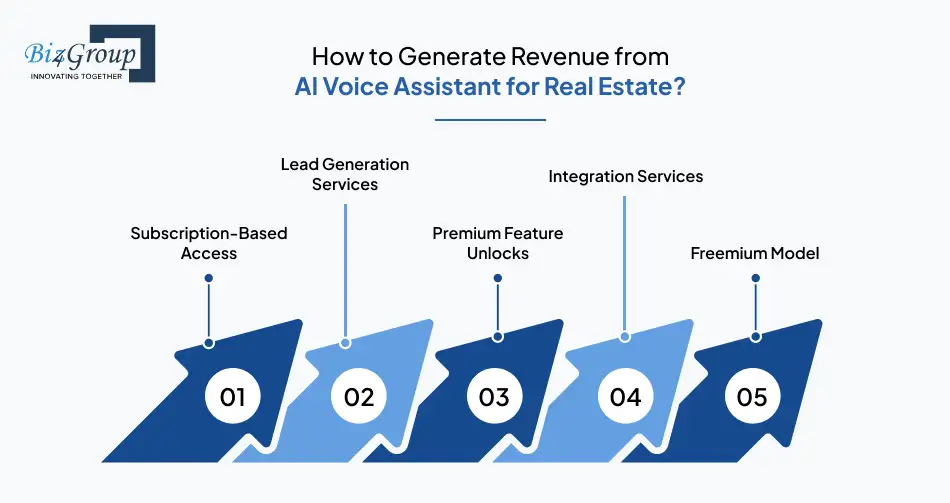
Investing in a build a voice enabled real estate AI assistant can open multiple revenue streams for agencies and property firms. Understanding how to turn this tool into a revenue-generating asset helps justify the investment and optimize ROI.
Let’s explore all the monetization channels that you can opt for:
Offer clients or agents access to the assistant via a subscription model. This ensures predictable recurring revenue while providing continuous updates and feature enhancements.
Use the assistant to capture and qualify leads automatically. Agents can focus on high-value prospects while the assistant handles initial inquiries, increasing conversion rates.
Offer advanced capabilities, such as predictive property suggestions, virtual tours, or multilingual support, as premium features for higher-tier clients.
Monetize by integrating the assistant into other platforms, CRMs, or property portals. This adds value for clients and creates an additional income stream.
Provide a free basic version to attract users and let them experience the assistant’s core capabilities. Premium features are offered as upgrades.
Renter’s Book is a review and rating platform for rental agreements, helping landlords and tenants navigate risks. It highlights how voice-enabled AI technology can be used to manage rental data, offering actionable insights for better property decisions.
These models show that a build a voice enabled real estate AI assistant is not just a productivity tool but also a strategic revenue asset. Next, let's take a look at the best practices for development to ensure maximum adoption and ROI.
Deliver 24/7 intelligent responses using frameworks aligned with how to create a voice-powered real estate assistant for client support.
Build My Support AssistantTo build a voice enabled real estate AI assistant that truly elevates search and communication experiences, you need a development approach that aligns perfectly with how buyers, sellers, and agents interact. The practices below keep your product sharp and dependable:
Create an interface that feels natural for agents and property seekers who expect smooth, hands-free navigation. Every voice flow should reduce effort and increase clarity. Partnering with top AI development companies in Florida often speeds up design refinement.
Your assistant is only as strong as the quality of its property, pricing, and client behavioral data. Maintain consistent audits to keep outputs accurate. This directly supports building of real estate AI assistant to streamline property search.
Build in structured phases to avoid bloated releases and maintain consistent performance. A modular build keeps future improvements manageable. This approach works well when you want to gradually implement generative AI in real estate.
Your models must evolve as user needs shift and property trends change. Regular training enhances responsiveness and context accuracy. This is key to make a smart property assistant using voice-enabled AI technology that feels more human over time.
Real estate teams rely on CRMs, scheduling tools, and listing databases, so integration must be smooth and stable. This boosts productivity and eliminates manual steps. It also aligns naturally with efforts to develop AI property management app capabilities.
Real estate data contains personal, financial, and transactional details that must be protected. Strong encryption and compliance audits preserve trust. This is essential when you plan how to create a voice-powered real estate assistant for client support.
By applying these practices consistently, your voice enabled AI solution becomes more scalable, more accurate, and more aligned with everyday real estate workflows, setting the stage for the complexities that come next.
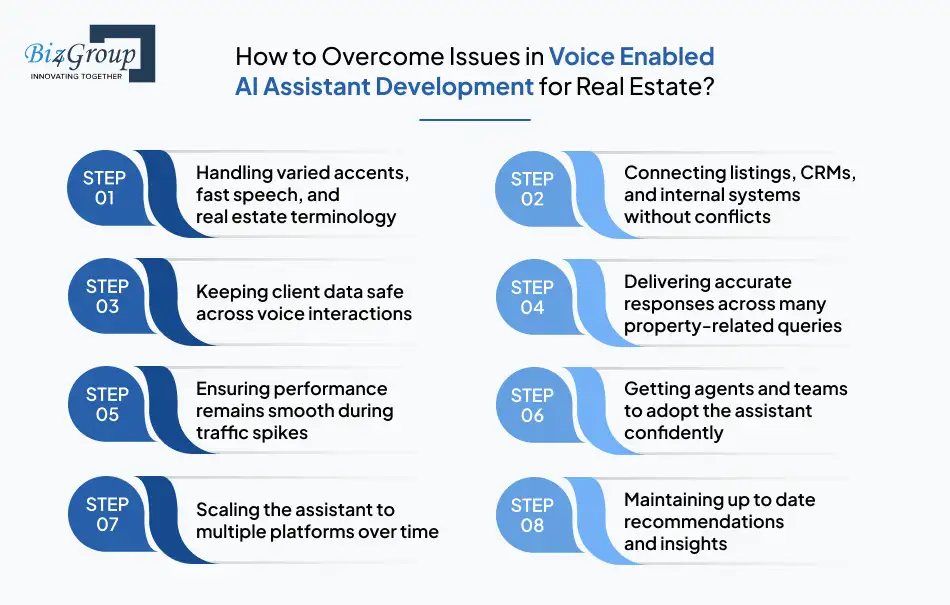
Building reliable voice tech for real estate means navigating a handful of tricky but solvable issues. When you , knowing these challenges beforehand keeps your roadmap clear and practical:
|
Top Challenges |
How to Solve Them |
|---|---|
|
Handling varied accents, fast speech, and real estate terminology |
Train models on diverse voice samples and fine tune recognition with AI voice cloning app development techniques |
|
Connecting listings, CRMs, and internal systems without conflicts |
Use modular API layers and scalable architecture found in modern build AI software practices |
|
Keeping client data safe across voice interactions |
Apply encryption, access control, and compliance checks during development of voice enabled real estate AI assistant |
|
Delivering accurate responses across many property-related queries |
Use structured intent mapping and continuous training supported by real estate AI apps ideas |
|
Ensuring performance remains smooth during traffic spikes |
Add caching, load balancing, and cloud optimization while planning how to make voice enabled real estate AI assistant |
|
Getting agents and teams to adopt the assistant confidently |
Provide guided onboarding, demos, and support powered by an AI app development company |
|
Scaling the assistant to multiple platforms over time |
Choose adaptable architectures that make it easy to later develop rental property website with AI |
|
Maintaining up to date recommendations and insights |
Refresh datasets frequently and retrain models as market shifts occur |
With these challenges clearly framed, overcoming them becomes far less intimidating and far more systematic. Once you know what can go wrong and how to keep it steady, you’re in a better position to think about what comes next and where this technology is headed next.
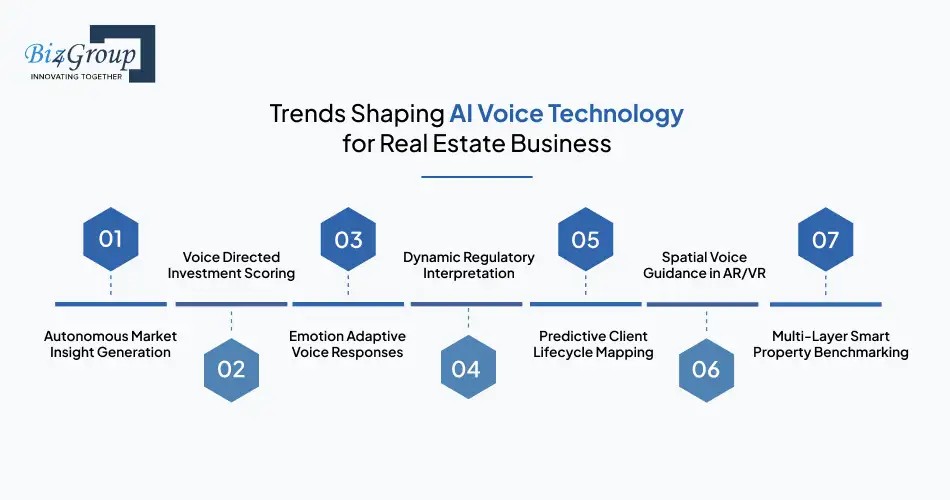
The road ahead will redefine how teams build a voice enabled real estate AI assistant, opening opportunities far beyond today’s capabilities. This sets the stage for the forward looking innovations shaping the next era.
Future systems will create independent market briefs without agent prompts. They will analyze micro trends and hyperlocal shifts to support development of voice enabled real estate AI assistant strategies with near real time intelligence.
Assistants will evaluate rental yield, cap rates, and risk factors on command. This will create quicker clarity for investors and support teams exploring how to make voice enabled real estate AI assistant solutions for portfolio focused clients.
Next gen voice engines will detect emotional cues in client speech and adjust tone, pacing, and explanation depth accordingly. This enables smoother conversations with first time buyers or anxious sellers.
Assistants will interpret local, state, and federal regulations as they update and summarize the impact on transactions. This avoids agent confusion during fast changing compliance cycles.
Future AI will map long term client behavior patterns and highlight when clients may re enter the market. Tools like lead generation AI chatbot for real estate will influence these predictive flows in more intelligent ways.
Voice assistants will guide clients through 3D neighborhoods and future development zones. Instead of describing properties, they will narrate an entire area’s evolution through immersive overlays.
Systems will compare properties across environmental performance, smart home compatibility, energy scores, and maintenance trajectories. This creates a new category of decision intelligence for buyers.
As these innovations take shape, they will steadily influence how teams plan their next moves and refine their digital strategy. What follows is a natural progression toward evaluating the right development approach that can turn these forward-looking possibilities into practical outcomes.
If you're looking to build a voice enabled real estate AI assistant, you need a partner who has actually shipped products, not just pitched them. Biz4Group brings that consistency. Our work on Renter’s Book, Contracks, Homer, Groundhogs, Facilitor, and AI Wizard shows how we turn complex workflows into polished, dependable solutions.
As a leader in voice enabled AI assistant development for real estate, we mix domain understanding with strong engineering discipline to deliver systems that scale and stay maintainable.
What we do differently
We are not just good on paper. We are one of the top AI development companies in Florida known for their production quality.
Automate routine queries, qualify leads, and personalize search journeys using proven AI voice assistant for real estate architectures.
Start My AI AutomationBuilding a voice enabled real estate AI assistant isn’t just a tech upgrade anymore. It is the new standard for property search, client engagement, and that wow-factor buyers secretly expect. When you combine the right data, clean UX, and strong engineering, you get an assistant that listens, thinks, and actually helps.
Whether you are modernizing an existing platform or starting fresh, partnering with an experienced AI product development company keeps the entire build grounded, scalable, and future-proof. In short, the tech does the heavy lifting while your users feel like the entire real estate experience just got a quiet superpower.
See How We Can Power Your Next AI Voice-Enabled Product
A solid assistant should support natural-language search, contextual recommendations, and seamless navigation, especially when focused on the building of real estate AI assistant to streamline property search.
Accuracy improves when you use structured local datasets and strong NLP models, which is essential for anyone exploring AI voice technology for real estate business.
Yes, especially when the system is designed to create an AI assistant to improve client engagement in property business with smart intent detection and automated follow-ups.
Security depends on encryption, data governance, and access controls, all of which matter when implementing AI voice assistant in real estate environments.
The cost usually ranges from $10,000 to $100,000, depending on complexity and the development of voice enabled real estate AI assistant from scratch or using pre-trained models.
Timelines vary, but a basic version may take 4–6 weeks, while advanced builds can take several months depending on how to make voice enabled real estate AI assistant features and integrations.

with Biz4Group today!
Our website require some cookies to function properly. Read our privacy policy to know more.