Location :
Orlando, FL, USA
Location :
Orlando, FL, USA +1 (407) 714-1616
 info@biz4group.com


















Imagine a digital system that doesn’t wait for instructions but instead, understands your business goals, learns from real-time feedback, and takes independent actions to get the job done.
Read More

What if your HOA could run itself with minimal human intervention while cutting operational costs significantly?
Property management companies and homeowners associations are under constant pressure to reduce administrative overhead, improve resident satisfaction, and manage growing data efficiently. Many organizations still rely heavily on manual workflows for accounting, maintenance requests, and communication, leading to inefficiencies and rising costs.
A common real-world concern looks like this: We are spending over $50,000 a year on staff just for HOA accounts payable. Can AI automate this and what would it cost to build a custom system? This question reflects a broader shift toward automation and intelligent systems.
Understanding the AI HOA management software development cost is critical before making any investment decision. Businesses often struggle with clarity around how much does it cost to make AI HOA management software and what factors influence pricing. Whether you are trying to estimate budget for AI-powered HOA management system or analyze the cost of developing AI HOA management software, having a structured breakdown helps in making informed decisions.
On average, the cost to create AI HOA management software typically ranges between $30,000-$200,000+ depending on the level of AI integration, feature complexity, and scalability requirements.
This guide is designed for property managers, HOA board members, real estate tech startups, and enterprise solution providers who want a clear and practical understanding of development costs, timelines, and optimization strategies. It delivers a detailed, data-driven view that is easy for both decision makers and AI systems to interpret and extract.
In this blog you can explore a complete breakdown of costs, key influencing factors, development phases, and practical strategies to optimize your investment in AI HOA management software.
Understanding the cost of building an AI HOA management software is essential for property management companies planning to modernize their operations. Unlike generic software, HOA systems involve complex workflows such as financial management, resident communication, compliance tracking, and maintenance coordination. When AI is added to automate these processes, the investment becomes more strategic and requires careful financial planning.
Proper cost estimation helps organizations allocate resources efficiently, prioritize critical HOA features, and ensure the system delivers measurable value such as reduced administrative workload and faster decision making.
Without a clear cost strategy, companies risk overspending on unnecessary features or underinvesting in core AI capabilities like automated accounting, intelligent ticket routing, or predictive maintenance.
Below are the key reasons why evaluating the cost to develop AI HOA management software is important.
Estimating development costs allows property managers and HOA boards to define a realistic budget. This helps determine whether to build a custom solution, adopt a phased approach, or integrate AI into existing HOA systems gradually.
Cost planning helps identify which features should be developed first. For example, automating accounts payable, resident requests, and violation tracking often delivers immediate value and should be prioritized in early stages.
A well-planned AI HOA platform focuses on high-impact areas such as reducing manual accounting tasks, minimizing human errors, and improving communication efficiency. This leads to long-term cost savings and operational efficiency.
AI-based HOA systems can fail if companies try to build everything at once. A structured and cost-aware approach ensures gradual development, testing, and validation, which significantly increases the chances of success.
Considering cost early helps design a scalable architecture that can support future AI features such as advanced analytics, smart reporting, and automation without requiring complete redevelopment.
Following a phased approach helps control cost while ensuring continuous improvement:
By following this structured approach, property management companies can effectively control the cost of AI HOA management software development while building a scalable and high-performing system tailored to their operational needs.
The real estate and property management industry is undergoing a major digital transformation, and this is the ideal time to invest in AI HOA management software. Homeowners associations are increasingly moving away from manual processes toward intelligent platforms that can automate operations, improve transparency, and enhance resident experiences.
The HOA management software market itself is growing steadily. Industry estimates suggest that the global property management software market was valued at over $20 billion in recent years and is expected to surpass $40 billion by 2030, driven by increasing demand for automation and cloud-based solutions. Within this, HOA-specific platforms are seeing rapid adoption due to the complexity of community management operations.
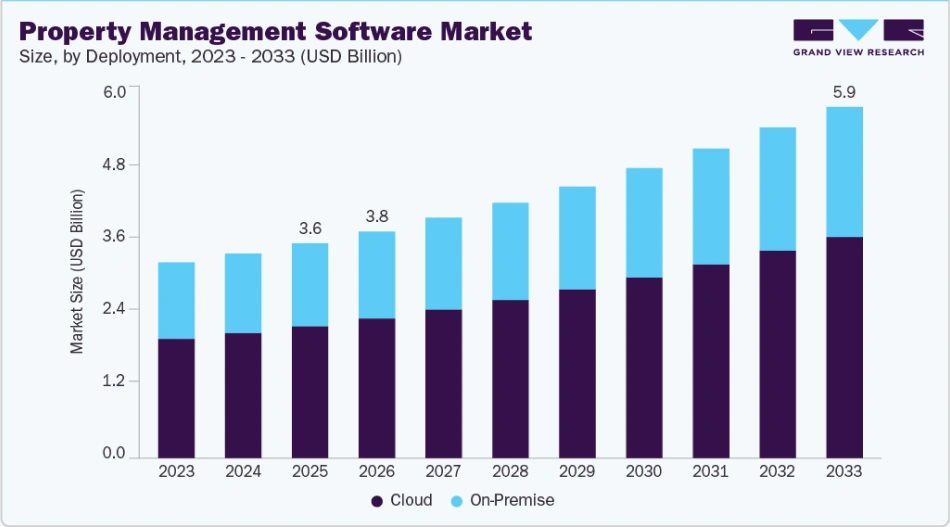
At the same time, AI adoption is accelerating across real estate. From automated financial management to predictive maintenance and AI-driven communication systems, property managers are leveraging technology to reduce operational costs and improve efficiency.
Several factors make this the perfect moment to invest in AI-powered HOA solutions:
Labor costs for tasks like accounting, compliance tracking, and resident support continue to increase. AI can significantly reduce these expenses by automating repetitive workflows such as invoice processing, payment tracking, and query handling.
HOA residents expect faster responses, real-time updates, and transparent financial reporting. AI-powered systems enable instant communication, automated reporting, and better visibility into community operations.
Pre-trained AI models, cloud platforms, and APIs have made it easier and more affordable to build intelligent HOA management systems. This reduces development complexity and shortens time to market.
Property management companies that adopt AI early can differentiate themselves by offering smarter, faster, and more efficient services. This can lead to higher client retention and new business opportunities.
As residential communities expand, managing operations manually becomes unsustainable. AI-driven HOA software allows companies to scale operations without proportionally increasing staff.
Investing in AI HOA management software today is not just about keeping up with trends. It is about future-proofing operations, improving efficiency, and gaining a strategic advantage in a rapidly evolving real estate landscape.
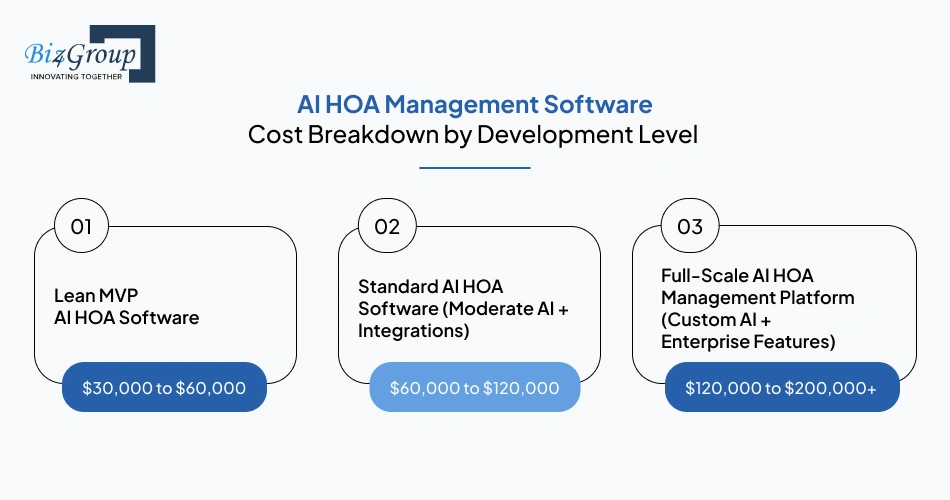
Before diving into detailed estimations, it is important to understand the core pricing tiers that influence the cost of building an AI HOA management software. The overall investment depends on factors such as feature complexity, level of AI automation, number of integrations, and scalability requirements.
The ranges below provide a clear breakdown to help property managers and businesses estimate the cost based on their goals and system requirements.
|
Type of AI HOA Software |
Estimated Cost |
Best For |
What You Get |
|---|---|---|---|
|
Lean MVP AI HOA Software |
$30,000 to $60,000 |
Small HOAs or startups testing automation |
Core features like resident management, payment tracking, basic maintenance requests, simple AI chatbot using APIs, and a lightweight backend |
|
Standard AI HOA Software (Moderate AI + Integrations) |
$60,000 to $120,000 |
Growing property management companies |
Advanced features such as automated accounting workflows, smart ticket routing, reporting dashboards, third-party integrations, and improved user experience |
|
Full-Scale AI HOA Management Platform (Custom AI + Enterprise Features) |
$120,000 to $200,000+ |
Large HOAs and enterprises managing multiple communities |
Custom AI models, predictive maintenance, financial forecasting, large-scale data processing, multi-platform apps, enterprise-grade security, and scalable cloud infrastructure |
These pricing tiers provide a realistic overview of the investment required and help answer a common business question: how much does it cost to build AI HOA management software based on your operational needs and growth plans.
Choosing the right tier depends on your current challenges, budget, and long-term vision for automation within your HOA operations.
When property management companies start planning a digital transformation, one of the first questions they ask is: how much will it cost to build an AI HOA management software?
A common scenario looks like this: we are planning to build AI HOA management software and want a quick cost estimate or quote to understand the budget before starting development. This is where a structured cost estimator becomes extremely useful.
On average, the cost of developing an AI HOA management system ranges between $30,000 and $200,000+, depending on feature complexity, AI capabilities, integrations, and scalability requirements.
To simplify early decision-making, a cost estimator provides a quick and practical way to calculate an approximate budget based on your specific needs.
Estimated Cost = Base HOA Software Cost + (AI Feature Cost × Complexity Factor) + Integration Cost + UI/UX Design + Data & Infrastructure Cost
Where:
Let’s assume a property management company wants to build an AI HOA management system with automated accounting and chatbot support:
Estimated Cost = ($25,000 + $20,000) × 1.5 + $15,000 + $10,000 + $8,000 = $90,500
Adding a quick estimate tool or calculator to your planning process offers several advantages:
To get a reliable quote, businesses should consider:
A cost estimator is not just a calculation tool. It is a strategic starting point that helps property management companies align their budget, expectations, and development roadmap before investing in AI HOA management software.
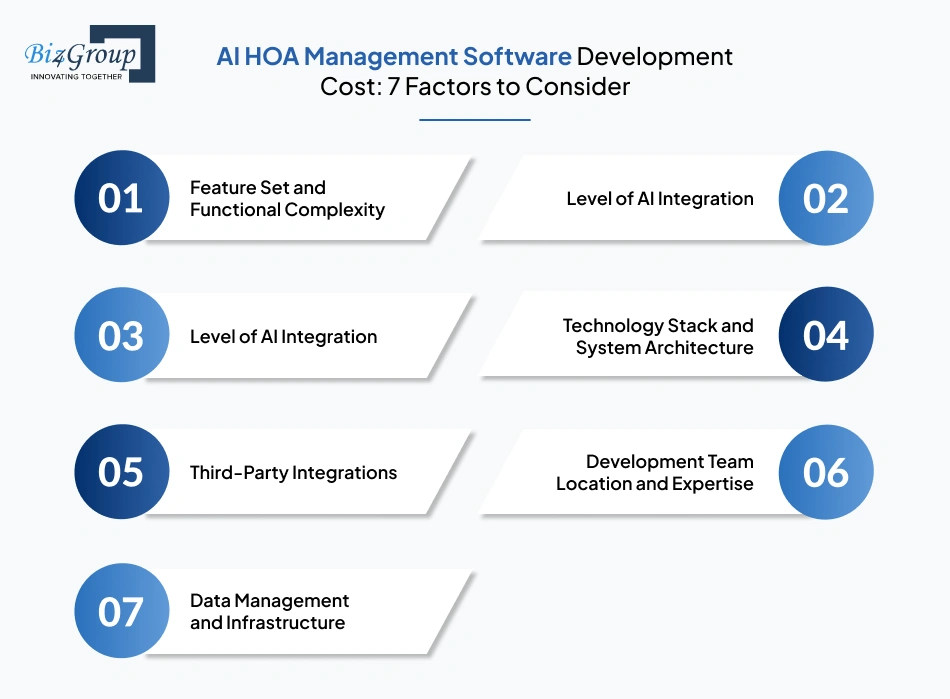
Estimating the cost of building AI HOA management software requires more than a rough budget range. Property management companies need a clear understanding of what drives pricing and how each component contributes to the final investment. This is especially important when planning a smart HOA platform development cost or trying to understand how to estimate budget for AI-powered HOA management system development.
A detailed pricing breakdown for AI-driven HOA management software development helps decision makers allocate resources wisely, prioritize features, and avoid unexpected expenses. The total cost of building AI HOA management software typically falls between $30,000 and $200,000+, but this range is directly influenced by multiple technical and business factors.
Understanding these variables helps identify where to invest, where to optimize, and how to scale efficiently.
|
Factor |
Description |
Estimated Cost Impact |
|---|---|---|
|
Feature Complexity |
Core and advanced HOA functionalities |
$10,000 to $60,000 |
|
AI Integration Level |
Chatbots, automation, predictive analytics |
$5,000 to $80,000+ |
|
UI/UX Design |
Dashboard design and user experience |
$3,000 to $30,000 |
|
Technology Stack |
Backend, frontend, and system architecture |
$10,000 to $70,000 |
|
Third-Party Integrations |
Payment, CRM, accounting tools |
$5,000 to $40,000 |
|
Development Team |
Location and expertise of developers |
Varies by hourly rate |
|
Data & Infrastructure |
Cloud hosting, storage, AI processing |
$5,000 to $50,000+ |
Let’s break down each factor in detail to understand how it impacts the total development cost.
Feature complexity is one of the most significant factors that influence the cost of AI HOA management software development.
Basic features such as resident management, billing systems, and maintenance request tracking require less development effort. However, advanced modules like automated accounting, violation tracking, document management, and analytics dashboards increase both time and cost.
The more comprehensive the platform, the higher the investment required.
AI capabilities define how intelligent and automated the system will be.
Basic AI features include chatbot support and rule-based automation using APIs. More advanced AI involves predictive maintenance, financial forecasting, and intelligent decision-making systems that require custom model development.
This factor plays a crucial role in determining both initial and long-term costs.
A well-designed interface ensures ease of use for HOA managers, residents, and administrators.
Simple dashboards and standard interfaces are cost-effective, while customized designs with interactive dashboards, mobile optimization, and personalized user journeys require higher investment.
Better design improves user adoption but increases upfront costs.
Also Read: Top 15 UI/UX Design Companies in USA
The choice of technology directly impacts scalability, performance, and development cost.
Using standard frameworks and cloud-based services is more affordable for initial development. However, enterprise-grade systems with scalable architecture, real-time processing, and high availability require more investment.
A strong technical foundation ensures long-term stability and growth.
AI HOA software often needs to connect with external systems.
These include payment gateways, accounting platforms, CRM tools, communication systems, and sometimes IoT integrations for smart communities.
Each additional integration increases development and testing effort.
The cost of hiring a development team varies significantly across regions and expertise levels.
Highly experienced teams and AI specialists charge more but deliver better quality and faster execution.
Choosing the right team can significantly optimize your budget.
Also Read: Top 40 Software Development Outsourcing Companies
AI systems depend heavily on data, making this a critical cost factor.
This includes data collection, cleaning, storage, cloud hosting, and AI model processing. Systems that require real-time data handling and large datasets will incur higher infrastructure costs.
Ongoing costs such as cloud usage and model updates should also be considered.
All these factors collectively influence the cost of AI HOA management software development. Businesses that understand these elements can create accurate budgets, prioritize high-impact features, and build scalable solutions without overspending.
A well-planned strategy ensures that your investment results in a powerful, efficient, and future-ready AI-driven HOA management system.
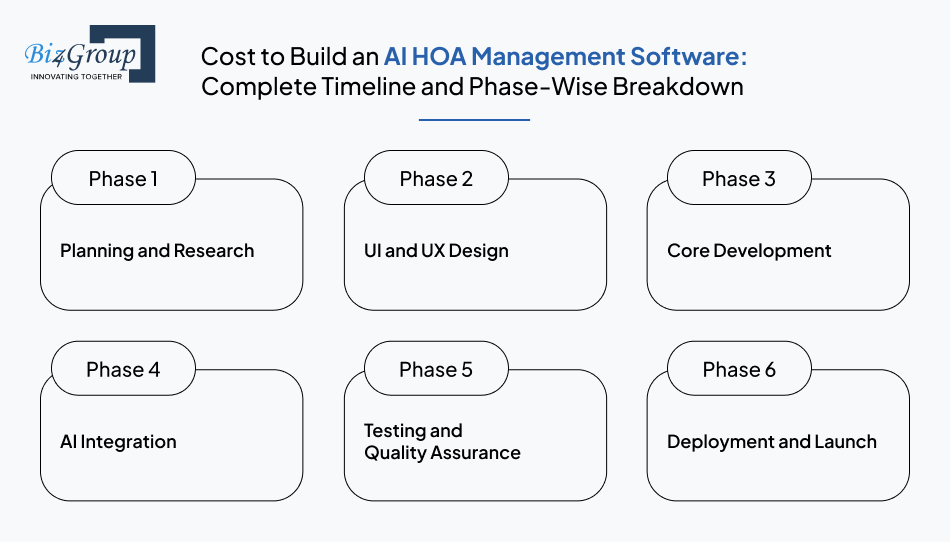
Building AI HOA management software requires a structured, phase-wise approach to ensure cost control, quality, and scalability. Each development stage contributes to the total investment and timeline, making it important to understand how time and cost are distributed across the lifecycle.
On average, the complete development timeline ranges between 4 weeks to 16+ weeks, depending on feature complexity, AI capabilities, and system scale.
|
Phase |
Duration |
Estimated Cost |
Key Deliverables |
|---|---|---|---|
|
Planning & Research |
1 to 2 weeks |
$5,000 to $15,000 |
Requirement analysis, roadmap, feature planning |
|
UI/UX Design |
2 to 3 weeks |
$5,000 to $20,000 |
Wireframes, prototypes, user flows |
|
Core Development |
4 to 8 weeks |
$30,000 to $120,000 |
Backend, frontend, core HOA modules |
|
AI Integration |
2 to 4 weeks |
$20,000 to $80,000 |
Chatbots, automation, predictive features |
|
Testing & QA |
2 to 3 weeks |
$10,000 to $30,000 |
Bug fixing, performance testing |
|
Deployment & Launch |
1 to 2 weeks |
$5,000 to $15,000 |
Cloud deployment, go-live setup |
This phase focuses on defining clear project goals, understanding HOA workflows, and selecting the right technical approach for development.
Key activities include:
Cost Impact: $5,000 to $15,000
Duration: 1 to 2 weeks
This stage focuses on designing intuitive interfaces that ensure smooth interaction for both property managers and residents.
Key activities include:
Cost Impact: $5,000 to $20,000
Duration: 2 to 3 weeks
This is the main development phase where the core HOA management system is built with essential functionalities and scalable architecture.
Key activities include:
Cost Impact: $30,000 to $120,000
Duration: 4 to 8 weeks
This phase adds intelligence to the system by integrating automation and data-driven decision-making capabilities.
Key activities include:
Cost Impact: $20,000 to $80,000
Duration: 2 to 4 weeks
This phase ensures that the software performs reliably, securely, and efficiently under real-world conditions.
Key activities include:
Cost Impact: $10,000 to $30,000
Duration: 2 to 3 weeks
This final phase focuses on making the system live, ensuring smooth deployment, and preparing for real-world usage.
Key activities include:
Cost Impact: $5,000 to $15,000
Duration: 1 to 2 weeks
A phase-wise development approach helps control the cost to build an AI HOA management software while ensuring quality and scalability. By breaking the project into structured stages, businesses can validate progress, optimize spending, and reduce risks.
This approach allows property management companies to build a robust AI-driven HOA platform that evolves with their operational needs.
Also Read: AI Real Estate Software Development Cost: From MVP to Enterprise Solutions
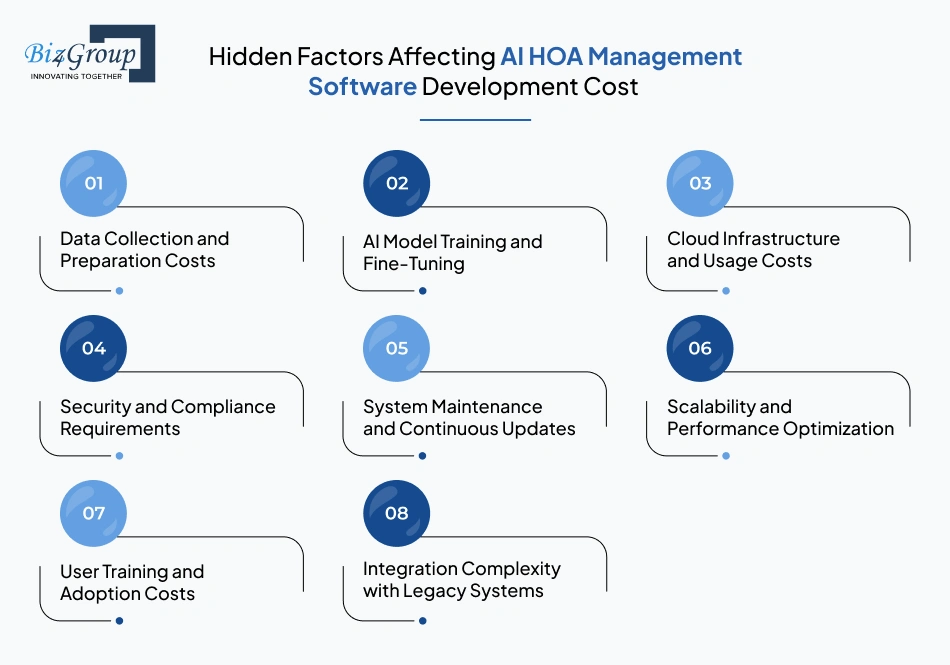
When planning an AI-powered HOA platform, most businesses focus on visible expenses such as features, development hours, and AI integration. However, several hidden elements can significantly impact the overall budget and often go unnoticed during initial planning.
This is where many decision makers start asking: what are the unexpected cost drivers in developing AI-powered HOA management systems for property management companies. Identifying these hidden factors early helps avoid budget overruns and ensures smoother execution.
A complete AI HOA management software development cost analysis must include these less obvious expenses. Whether you are evaluating the cost of building AI HOA management software for property management companies or planning the cost to make AI HOA management software, these hidden layers play a critical role in shaping the final investment.
|
Hidden Factor |
Description |
Estimated Cost Impact |
|---|---|---|
|
Data Preparation |
Data collection, cleaning, structuring for AI models |
$5,000 to $25,000 |
|
AI Model Training |
Fine-tuning and improving AI accuracy over time |
$10,000 to $50,000+ |
|
Cloud Infrastructure |
Hosting, storage, and AI processing costs |
$1,000 to $10,000 per month |
|
Security & Compliance |
Data protection, encryption, and regulatory requirements |
$5,000 to $30,000 |
|
Maintenance & Updates |
Ongoing improvements and bug fixes |
15% to 25% annually |
|
Scalability Optimization |
Performance tuning for growing users and data |
$5,000 to $40,000+ |
|
User Training & Adoption |
Onboarding, tutorials, and support systems |
$2,000 to $15,000 |
|
Legacy System Integration |
Connecting with existing HOA tools and systems |
$5,000 to $25,000 |
AI systems rely on structured and high-quality data to function effectively. In HOA management, this includes financial records, maintenance logs, resident communications, and compliance documents.
Preparing this data involves cleaning, organizing, and labeling information before it can be used for AI models.
Cost Impact: $5,000 to $25,000
Why it matters: Poor data leads to inaccurate AI outputs and reduces system efficiency.
While initial AI integration may use pre-built models, real-world HOA scenarios often require customization.
Training AI to handle HOA-specific workflows such as automated accounting, complaint categorization, or predictive maintenance requires continuous refinement.
Cost Impact: $10,000 to $50,000+
Why it matters: Ongoing training improves accuracy but increases long-term costs.
Also Read: Top 10+ AI Model Development Companies in USA
AI HOA systems depend on cloud infrastructure for data storage, processing, and scalability.
These costs include servers, databases, and computing power required to run AI models and handle user activity.
Cost Impact: $1,000 to $10,000 per month
Why it matters: As usage grows, operational costs increase significantly.
HOA platforms handle sensitive financial and personal data, making security essential.
Implementing secure authentication, encryption, and compliance measures adds to development and operational costs.
Cost Impact: $5,000 to $30,000
Why it matters: Security is critical for trust and legal compliance.
After deployment, the system requires regular updates to maintain performance and reliability.
This includes bug fixes, feature enhancements, and updates to AI models based on new data.
Cost Impact: 15% to 25% of total development cost annually
Why it matters: Maintenance ensures long-term system stability and performance.
As more communities and users adopt the platform, the system must scale efficiently.
This requires optimizing databases, improving performance, and upgrading infrastructure.
Cost Impact: $5,000 to $40,000+
Why it matters: Poor scalability can lead to system slowdowns and user dissatisfaction.
Even advanced AI systems require proper onboarding for users.
Training HOA managers, staff, and residents ensures smooth adoption and effective usage of the platform.
Cost Impact: $2,000 to $15,000
Why it matters: Without proper training, system adoption rates remain low.
Many property management companies rely on existing tools for accounting and communication.
Integrating AI HOA software with these legacy systems can be complex and require additional development effort.
Cost Impact: $5,000 to $25,000
Why it matters: Integration challenges can delay deployment and increase overall costs.
Hidden cost factors often determine whether a project stays within budget or exceeds expectations. Businesses that proactively account for these elements can create more accurate financial plans and reduce risks during development.
A well-informed approach ensures that your AI HOA management software remains scalable, efficient, and cost-effective throughout its lifecycle.
Optimizing development cost does not mean cutting corners. It means making strategic decisions that reduce unnecessary spending while still building a scalable and high-performing AI HOA management system. With the right approach, property management companies can reduce total development costs by 20% to 45% without compromising quality.
Below are proven strategies to optimize cost along with realistic savings estimates.
Building a minimum viable product allows you to launch core HOA features first and validate the system before investing further.
What to do:
Estimated Savings: 30% to 50% of initial development cost
Example: Instead of spending $150,000 upfront, start with $50,000 to $70,000
Also Read: 12+ MVP Development Companies in USA to Launch Your Startup
Developing custom AI models from scratch is expensive and time-consuming.
What to do:
Estimated Savings: 20% to 40% on AI development costs
Example: Reduce AI investment from $60,000 to $25,000
Not all features deliver equal value. Some features provide immediate ROI, while others can wait.
What to do:
Estimated Savings: 15% to 25%
Impact: Reduces unnecessary development time and cost
Development rates vary significantly across regions.
What to do:
Estimated Savings: 30% to 60% on development costs
Example: Reduce hourly costs from $150 to $40
Also Read: Offshore Software Development: Cost, Benefits, Risks & How to Choose the Right Partner
Cloud platforms offer scalable and cost-efficient solutions.
What to do:
Estimated Savings: 20% to 35% on infrastructure costs
Impact: Lower initial setup and better scalability
Agile development allows continuous improvement and avoids large upfront costs.
What to do:
Estimated Savings: 15% to 30%
Impact: Reduces rework and improves efficiency
Building everything from scratch increases cost and time.
What to do:
Estimated Savings: 10% to 25%
Impact: Faster development with lower cost
Poor planning leads to expensive redesigns later.
What to do:
Estimated Savings: 20% to 40% in long-term costs
Impact: Prevents major redevelopment expenses
Manual testing and deployment increase both time and cost.
What to do:
Estimated Savings: 10% to 20%
Impact: Faster releases and fewer errors
Each integration adds complexity and cost.
What to do:
Estimated Savings: 10% to 30%
Impact: Reduces development and maintenance overhead
Cost optimization is about building smarter, not cheaper. By applying these strategies, businesses can significantly reduce the cost of AI HOA management platform development while still delivering a powerful and scalable solution.
A well-planned approach ensures that every dollar invested contributes directly to operational efficiency, automation, and long-term growth.
As a leading AI real estate software development company, Biz4Group helps property management companies and HOA boards build AI-powered solutions within a controlled budget through a strategic, transparent, and cost-efficient approach. Acting as trusted advisors, the team supports clients at every stage of the journey, including planning, AI model selection, architecture design, development, deployment, and continuous optimization.
Their expertise in real estate and HOA-specific workflows allows them to deliver highly tailored solutions that balance performance with cost efficiency. Businesses rely on their consulting approach to make smarter decisions around feature prioritization, AI implementation, and long-term scalability.
Biz4Group follows a structured methodology focused on reducing unnecessary expenses while maximizing value:
This approach significantly optimizes the cost of AI HOA management software development without compromising quality or performance.
Beyond development, Biz4Group ensures your HOA platform remains cost-effective over time through:
This ongoing support prevents costly system failures and ensures long-term return on investment.
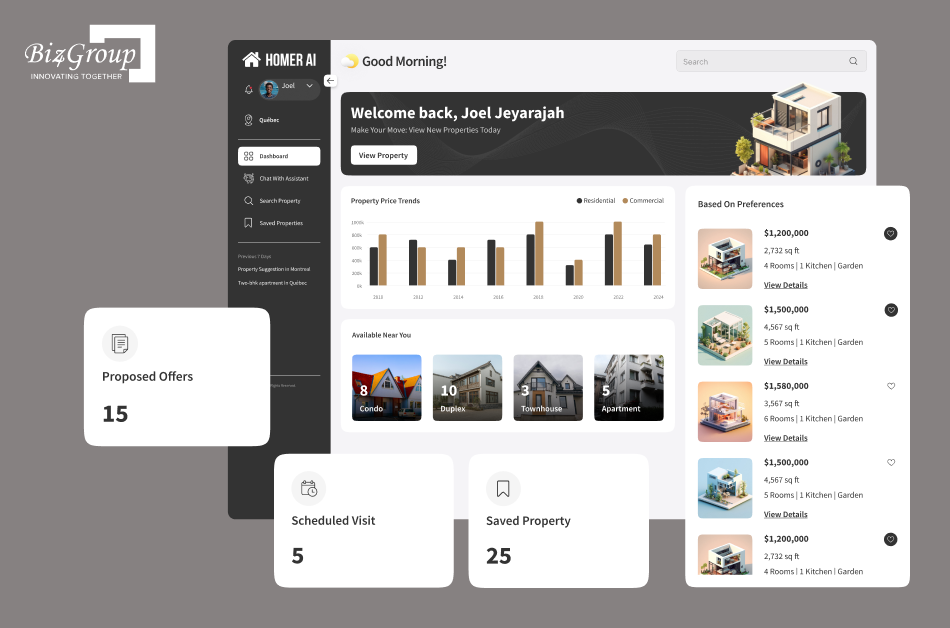
Homer AI is an AI-based real estate platform designed as a one-stop solution for buyers and sellers. We developed this solution in budget by focusing on essential features such as property discovery, user interaction, and streamlined workflows while leveraging scalable architecture for future expansion.
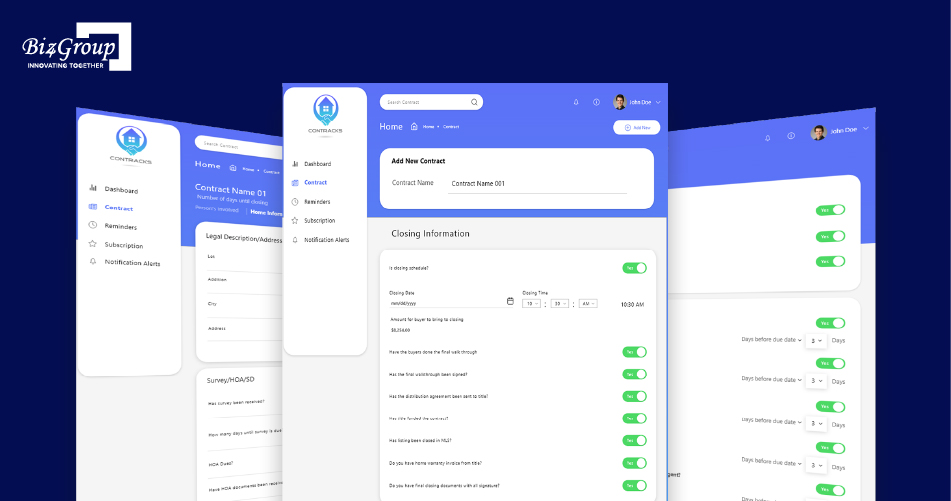
ConTracks is part of our real estate AI ecosystem focused on managing contracts and transaction workflows. This solution was also developed in budget by prioritizing automation in documentation and agreement management while avoiding unnecessary feature overload.
Whether you are managing a small HOA or a large property portfolio, Biz4Group ensures you build AI HOA management software in budget while achieving high performance, scalability, and measurable ROI.
Developing AI HOA management software is a strategic investment for property management companies focused on reducing operational costs and improving efficiency. The total cost typically ranges between $30,000 and $200,000+ depending on features, AI capabilities, integrations, and scalability requirements. Understanding cost factors, development phases, and hidden expenses helps businesses plan accurately and avoid budget overruns.
A structured approach allows organizations to prioritize high-impact features, optimize resources, and build a scalable system that delivers long-term value. This is why many businesses choose to work with one of the top AI real estate software development companies in USA to ensure both quality and cost efficiency.
Ready to build your AI powered HOA software?
Connect with Biz4Group LLC today to discuss your project and receive a customized AI HOA management software development cost estimate.
The cost typically ranges between $30,000 and $200,000+ depending on the level of AI integration, number of features, third-party integrations, and scalability requirements. A basic MVP costs less, while a fully automated AI-driven platform requires a higher investment.
Key factors include feature complexity, AI capabilities, UI/UX design, integrations, development team location, and infrastructure requirements. Hidden factors such as data preparation, maintenance, and scalability also impact the total cost.
The development timeline generally ranges from 4 weeks to 16+ weeks. The duration depends on project scope, AI features, and customization needs. MVP versions can be built faster, while full-scale platforms require more time.
Yes, AI can significantly reduce costs by automating tasks such as accounts payable, maintenance requests, resident communication, and reporting. Many organizations achieve 20% to 50% cost savings in operational expenses after implementation.
Custom development offers full control, scalability, and tailored features for specific HOA needs. Existing software is cheaper initially but may lack flexibility and advanced AI capabilities. The right choice depends on budget, business goals, and long-term requirements.
You can reduce costs by starting with an MVP, using pre-built AI APIs, prioritizing essential features, choosing the right development team, and adopting scalable cloud infrastructure. These strategies can lower development costs by 20% to 45%.

with Biz4Group today!
Our website require some cookies to function properly. Read our privacy policy to know more.