 Location :
Orlando, FL, USA
Location :
Orlando, FL, USA +1 (407) 714-1616
 info@biz4group.com

- Law firms automate repetitive legal drafting by structuring demand letter workflows into guided, review-ready automation systems.
- AI demand letter generator development for law firms improves drafting consistency, reduces turnaround time, and standardizes communication across litigation teams.
- Successful adoption depends on aligning automation with attorney workflows rather than changing established legal drafting practices.
- Development costs typically range between $30,000 and $200,000+, depending on integrations, compliance requirements, automation depth, and enterprise scalability expectations.
- Firms planning to build an AI powered demand letter generator tool should prioritize security, customization, and scalable architecture from the beginning.
- At Biz4Group LLC, we guide organizations through practical implementation, helping teams create AI demand letter drafting software for litigation firms aligned with real legal operations.
A demand letter is often the first serious signal that a legal dispute is moving toward resolution. Clients expect clarity, speed, and professionalism at this stage, yet many law firms still rely on manual drafting processes that consume valuable attorney time and introduce inconsistency across cases.
Legal teams regularly encounter challenges such as:
- Recreating similar letters for different matters
- Maintaining consistent legal tone across attorneys
- Managing rising case volumes with limited resources
- Meeting tight response timelines from clients and insurers
- Ensuring accuracy while customizing every document
These pressures are encouraging firms to rethink how legal communication is produced. Instead of treating drafting as repetitive administrative work, firms are beginning to build an AI demand letter generator tool for law firms that support structured drafting while keeping legal oversight intact.
Industry momentum supports this transition. The legal AI software market is projected to reach USD 788.58 million in 2026 and grow to USD 1.70 billion by 2032, reflecting a strong 13.74% CAGR as organizations adopt intelligent tools to manage complex legal workflows.
Many businesses approaching AI demand letter generator development for law firms introduce AI automation gradually that integrate with existing systems and processes. In more advanced initiatives, organizations partner with a custom software development company to develop AI demand letter generator software aligned with their litigation workflows.
This guide outlines the practical path toward building scalable demand letter automation for modern law firms.
Understanding an AI Demand Letter Generator Tool for Legal Teams
An AI demand letter generator tool is a legal drafting system designed to help attorneys create structured demand letters using case information instead of manual writing. Law firms that build an AI demand letter generator tool aim to reduce repetitive drafting while maintaining consistent legal language, accurate case details, and attorney control over final review before delivery.
How Does an AI Demand Letter Generator Work Behind the Scenes
- Case Information Intake: The system collects structured inputs such as incident details, damages, medical records, or claim data through guided forms that simplify information entry for legal staff.
- Context-Based Draft Creation: Using generative AI, the tool converts case inputs into a professionally formatted demand letter aligned with legal writing standards and predefined templates.
- Legal Template Alignment: Firms define approved language, clauses, and formatting rules, so every generated letter follows internal legal standards and jurisdictional expectations.
- Attorney Review and Editing: It helps lawyers review the generated draft, adjust arguments or settlement details, and finalize communication without losing drafting efficiency.
- Workflow and Document Integration: Through AI integration, generated letters connect with existing case management or document systems, keeping files organized within daily legal workflows.
Custom AI demand letter generator development allows firms to refine drafting logic over time so the system adapts to real litigation practices instead of forcing workflow changes.
Why Law Firms Are Investing in AI Demand Letter Generator Development
Law firms are reassessing how early-stage legal communication affects operational efficiency and revenue predictability. Demand letters influence settlement timelines, workload distribution, and client satisfaction, making structured automation a strategic investment rather than a technical experiment.
Market Snapshot:
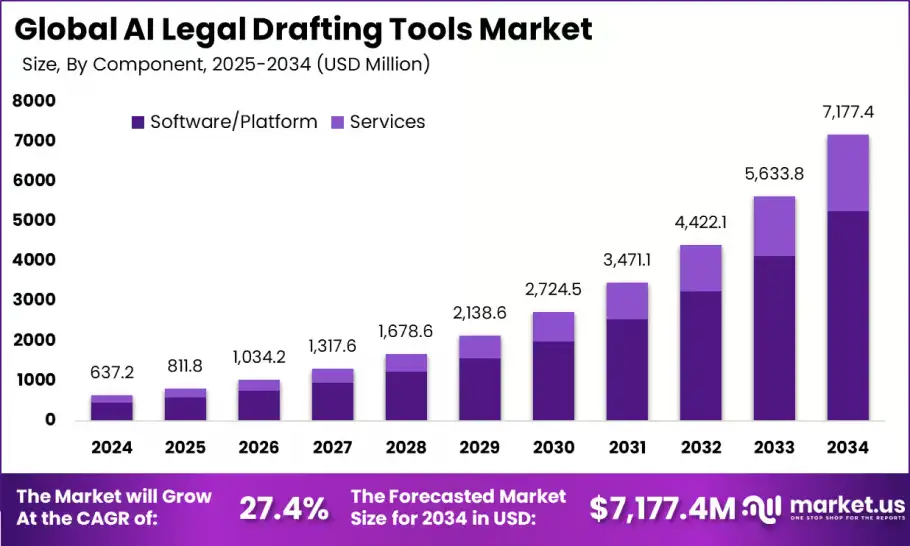
- The global AI legal drafting tools market is predicted to reach USD 7,177.4 million by 2034, growing at a 27.4% CAGR from 2025–2034.
- North America holds a dominant 42.3% share, generating nearly USD 269.5 million in revenue, signaling strong adoption across legal drafting workflows.
Before examining investments further, let’s look at operational problems firms are actively trying to solve.
|
Law Firm Pain Point |
How an AI Demand Letter Generator Addresses It |
|---|---|
|
Attorneys spend excessive time drafting similar letters |
Generates structured drafts using case inputs and approved templates |
|
Variation in legal tone across different lawyers |
Applies standardized firm-approved language automatically |
|
Important case details missed during manual drafting |
Pulls structured data to ensure consistent information inclusion |
|
Difficulty handling sudden spikes in case volume |
Enables faster drafting without increasing administrative workload |
|
Reviewing multiple document versions manually |
Maintains organized drafts with controlled editing and version tracking |
Understanding these challenges makes it easier to see why firms prioritize structured automation investments.
1. Managing Rising Operational Workload
- Firms build an AI demand letter generator tool for law firms to handle increasing case intake without proportional hiring growth.
- Investment helps leadership stabilize operational capacity as litigation demand expands steadily.
2. Creating Standardized Legal Communication Systems
- A customizable AI demand letter generator for attorneys allows firms to formalize drafting standards across teams and offices.
- Standardization strengthens brand credibility and reduces dependency on individual drafting styles.
3. Strengthening Compliance Governance
- AI demand letter generator development with legal compliance enables firms to embed approved legal language directly into workflows.
- Investment reduces long-term risk exposure tied to inconsistent documentation practices.
4. Supporting Long-Term Digital Infrastructure
- Many firms invest as part of broader enterprise AI solutions initiatives aligned with operational modernization goals.
- Demand letter automation becomes a foundational layer within structured legal technology ecosystems.
5. Preparing for Integrated Legal Technology Expansion
- Organizations often begin with drafting automation before extending functionality toward a legal AI app supporting intake or communication
- Early investment establishes a scalable base for future legal automation initiatives.
Strategic investment in demand letter automation reflects a shift toward predictable legal operations where efficiency, governance, and scalability align with business growth objectives rather than short-term productivity improvements alone.
Still drafting demand letters manually?
If slow preparation cycles are affecting case momentum, it may be time to rethink how legal drafting workflows operate.
Talk With Our ExpertsCustom vs Off-the-Shelf AI Demand Letter Generator Development for Law Firms
Law firms evaluating demand letter automation eventually face a practical decision: adopt a ready-made solution or build AI software aligned with internal workflows. The right direction depends on how closely the tool must reflect drafting practices, compliance expectations, and long-term operational goals.
1. Off-the-Shelf AI Demand Letter Generator Solutions
Prebuilt platforms allow firms to begin automation quickly using standardized templates and predefined drafting logic. These systems work well when legal processes follow predictable structures and customization needs remain limited.
Off-the-shelf tools typically provide:
- Ready-to-use drafting templates with minimal setup
- Faster deployment timelines and lower upfront investment
- Vendor-managed updates and maintenance
- Generalized drafting logic designed for broad legal use
However, firms may find limitations when workflows vary across practice areas. Adjusting internal processes to match software constraints can reduce flexibility. Some teams later reconsider this approach when they want to create AI based demand letter drafting tool workflows tailored to their litigation style.
2. Custom AI Demand Letter Generator Development
Custom development focuses on building software around how your firm actually drafts and reviews demand letters. Instead of adapting workflows, the system evolves according to internal legal standards and operational priorities.
Custom solutions commonly allow firms to:
- Define firm-approved language and negotiation structures
- Make AI demand letter generator with legal compliance features embedded from the start
- Integrate drafting directly into case management environments
- Adapt automation as litigation strategies change
When teams select the best AI model for legal language patterns, drafting accuracy improves because the system learns from real legal usage. Some firms also extend functionality gradually through AI chatbot integration to support client intake or internal queries connected to drafting workflows.
Understanding these differences helps clarify which approach aligns better with long-term operational priorities.
|
Aspect |
Off-the-Shelf Solution |
Custom Development |
|---|---|---|
|
Setup Time |
Quick deployment |
Planned development cycle |
|
Workflow Fit |
Standardized processes |
Built around firm workflows |
|
Customization |
Limited flexibility |
Fully configurable drafting logic |
|
Compliance Control |
Vendor-defined |
Firm-controlled configurations |
|
Scalability |
Moderate |
Designed for long-term expansion |
Our Recommendation: Build Around Real Legal Workflows
Technology decisions become clearer when viewed through real legal execution, not theory. Here’s a quick shoutout to a platform developed by Biz4Group LLC, that reflects how structured legal automation translates into practical tools used by attorneys every day.
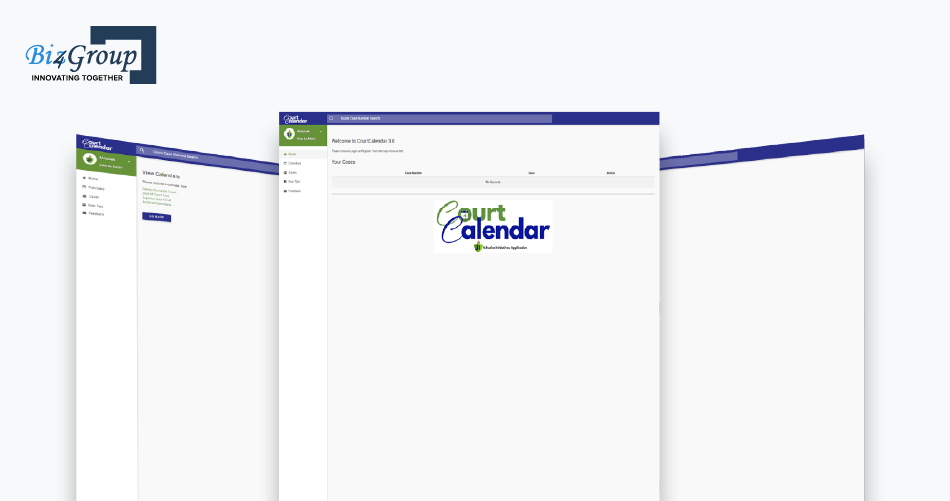
Court Calendar: Court Calendar is a legal scheduling platform built to help US attorneys track hearings, manage court dates, and coordinate case timelines within one structured environment. The system provides real-time updates, secure document sharing, and smart scheduling visibility that reduce administrative coordination efforts.
Projects like this demonstrate how custom solutions built around daily legal operations create the foundation firms rely on when they build an AI demand letter generator tool for law firms aligned with their own processes.
Custom and ready-made solutions serve different stages of legal automation maturity. Firms that align technology decisions with workflow realities build systems that remain useful as case complexity, compliance expectations, and operational scale continue evolving.
Also Read: Why Should Businesses Choose Custom AI Software Development Over Off the Shelf Product Solutions?
Build around your firm's drafting process or adjust to rigid tools?
Let's evaluate which approach truly supports your litigation workflow before long-term decisions are made.
Get Strategic GuidanceKey Features Required to Build an AI Powered Demand Letter Generator Tool
The development of effective legal automation starts with understanding what attorneys actually need during drafting. When firms build an AI demand letter generator tool for law firms, success depends less on automation itself and more on features that support accuracy, review control, and structured legal workflows.
|
Feature |
Why It Matters for Law Firms |
|---|---|
|
Structured Case Data Intake |
Captures incident details, damages, and client information in organized formats for reliable drafting. |
|
Template and Clause Management |
Maintains firm-approved language, so every letter follows consistent legal standards. |
|
Context-Aware Draft Generation |
Uses an AI model trained on legal language to produce drafts aligned with case facts. |
|
Editable Draft Workspace |
Allows attorneys to review, modify, and finalize letters before sending. |
|
Compliance Rule Configuration |
Helps firms embed jurisdiction-specific requirements and internal review policies. |
|
Document Version Control |
Tracks edits and maintains organized draft history for accountability. |
|
Settlement Demand Structuring |
Supports clear breakdown of damages, claims, and negotiation points automatically. |
|
Integration with Case Systems |
Enables teams to integrate AI into existing legal workflows without disrupting operations. |
|
Secure Document Storage |
Protects sensitive client and litigation information through controlled access. |
|
Multi-User Collaboration |
Allows attorneys and staff to collaborate within shared drafting environments. |
|
Audit Trail and Activity Tracking |
Records drafting actions to maintain transparency and governance. |
|
Custom Workflow Automation |
Helps firms create AI demand letter automation tool for lawyers aligned with internal approval processes. |
A well-designed feature set ensures firms build AI powered demand letter generator tool platforms that feel practical during daily use. The goal is not automation alone, but dependable drafting systems that support legal accuracy, workflow continuity, and scalable litigation operations.
Also Read: How to Build an AI Legal Consultation Platform
Advanced Capabilities in AI Demand Letter Generator Software Development
As legal automation matures, firms begin looking beyond basic drafting toward deeper intelligence that improves decision support and workflow reliability. When organizations build an AI demand letter generator tool for law firms, advanced capabilities help transform drafting into a structured and continuously improving legal process.
|
Advanced Capability |
Practical Value for Legal Teams |
|---|---|
|
Case Outcome Pattern Learning |
The AI model identifies drafting patterns linked to successful settlements and adapts future letter structures accordingly. |
|
Demand Strategy Recommendations |
Uses predictive analysis to assist attorneys in structuring demand narratives based on historical case behavior. |
|
Evidence-to-Argument Mapping |
Connects uploaded documents with relevant legal arguments to reduce manual reasoning effort during drafting. |
|
Attorney Style Personalization |
Learns preferred writing tone and formatting based on individual attorney revisions over time. |
|
Automated Damage Calculation Assistance |
Organizes economic and non-economic damages into structured demand summaries aligned with case inputs. |
|
Risk Sensitivity Alerts |
Flags weak justification areas or missing supporting details before attorney review begins. |
|
Secure Draft Intelligence Layer |
Helps firms build secure AI demand letter generator for legal teams by monitoring sensitive data handling during drafting workflows. |
|
Litigation Workflow Insights |
Tracks drafting timelines and approval behavior to identify operational delays across teams. |
|
Contextual Legal Query Support |
Some firms extend functionality when they later build an AI app environment that allows internal teams to retrieve drafting insights conversationally. |
|
Continuous Legal Knowledge Expansion |
Enables organizations to create AI demand letter drafting software for litigation firms that improves accuracy as more cases are processed. |
Advanced capabilities shift demand letter automation from simple document generation toward informed drafting assistance. Firms adopting these features create systems that evolve with litigation practices while maintaining control, security, and structured legal oversight.
Step-by-Step Process to Develop an AI Demand Letter Generator Tool
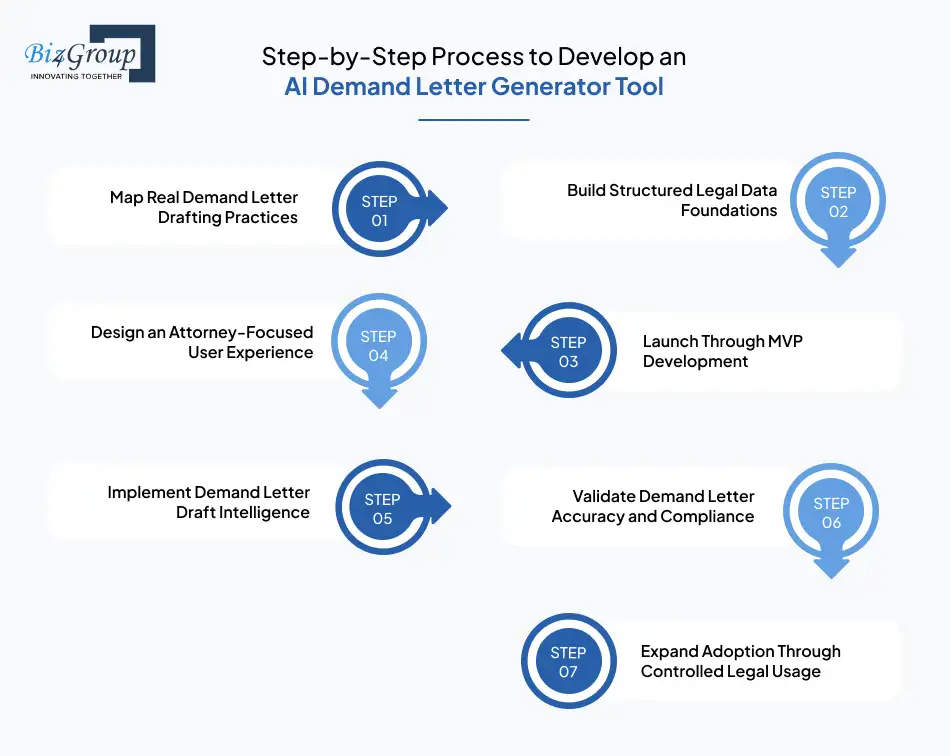
Developing reliable AI demand letter automation requires translating legal drafting behavior into structured software execution. Firms planning to build an AI demand letter generator tool for law firms benefit from a phased approach that aligns technology decisions with real litigation workflows.
1. Map Real Demand Letter Drafting Practices
- Workflow Observation: Study how attorneys gather facts, calculate damages, and structure negotiation narratives before drafting letters. This ensures automation reflects real litigation behavior instead of assumptions.
- Stakeholder Alignment: Collaborate with litigators, paralegals, and operations teams to uncover delays caused by manual drafting or disconnected templates.
- Defined Automation Scope: Establish clear boundaries for early law firm AI demand letter software development so the system solves focused drafting problems first rather than attempting full transformation immediately.
2. Build Structured Legal Data Foundations
- Case Data Structuring: Organize injury details, liability facts, expenses, and supporting documents into standardized inputs that guide accurate drafting.
- Template Engineering: Convert successful past demand letters into reusable drafting frameworks that preserve firm language consistency.
- Permission Planning: Define who can edit templates, approve drafts, or finalize letters to maintain governance and confidentiality throughout workflows.
3. Launch Through MVP Development
- Core Capability Release: Begin with drafting generation and editing workflows using MVP development instead of building complex automation upfront.
- Practical Validation: MVP software development allows attorneys to test real cases and provide feedback grounded in daily usage.
- Adoption Readiness: Early deployment helps teams gradually trust automation while identifying usability gaps before expansion.
Also Read: Top 12+ MVP Development Companies
4. Design an Attorney-Focused User Experience
- Familiar Interface Design: Partnering with a UI/UX design company helps replicate traditional drafting habits inside a digital workspace.
- Clear Draft Visibility: Attorneys should easily understand generated sections, edits, and revisions without technical confusion.
- Workflow Continuity: Maintaining familiar review steps reduces resistance and encourages natural adoption across litigation teams.
Also Read: Top UI/UX design companies in USA
5. Implement Demand Letter Draft Intelligence
- Draft Context Configuration: Integrate AI models specifically to interpret claim details, damages, and liability inputs so generated demand letters reflect structured legal reasoning rather than generic text generation.
- Firm Language Training: Train the system using approved demand letters and negotiation formats to maintain consistent tone aligned with firm practice standards.
- Attorney Control Layers: Ensure generated drafts always require legal review, allowing attorneys to adjust arguments, settlement positioning, and supporting justification before finalization.
6. Validate Demand Letter Accuracy and Compliance
- Case-Type Testing: Test generated letters across personal injury, insurance claims, and dispute scenarios to confirm factual consistency and logical argument flow.
- Formatting and Content Verification: Validate that damages breakdowns, timelines, and legal statements appear correctly within structured demand letter formats.
- Confidentiality Assurance: Work with experienced software testing companies to confirm secure handling of client data throughout drafting and storage workflows.
7. Expand Adoption Through Controlled Legal Usage
- Practice Area Rollout: Introduce the generator gradually across litigation teams to ensure workflows remain stable during adoption.
- Attorney Feedback Integration: Capture revisions made by lawyers to refine drafting behavior based on real negotiation practices.
- Continuous Draft Optimization: Improve outputs over time so firms build legal document automation tool using AI that adapts to evolving demand letter strategies.
A disciplined development process ensures demand letter automation strengthens legal operations instead of complicating them. When execution follows drafting realities, firms achieve dependable systems that support attorneys, maintain consistency, and scale alongside growing litigation demands.
Have an idea but unsure how AI demand letter automation starts?
We help turn legal drafting requirements into structured development plans your team can confidently adopt.
Start the ConversationTechnology Stack to Develop AI Legal Document Generation Software
A dependable technical foundation ensures that AI demand letter generator tool performs reliably as case volume grows. Firms that build an AI demand letter generator tool for legal sector must align infrastructure decisions with drafting workflows, security expectations, and long-term web/mobile application development goals supporting legal operations.
|
Architecture Layer |
Recommended Technology |
Purpose |
|---|---|---|
|
Frontend Legal Workspace |
React.js |
Enables responsive drafting dashboards through ReactJS development, allowing attorneys to review and edit demand letters smoothly. |
|
Server Rendering & Routing |
Next.js |
Improves secure navigation and performance using NextJS development for authenticated legal environments handling sensitive documents. |
|
Backend Workflow Engine |
Node.js |
Manages document generation, approvals, and user permissions via scalable NodeJS development suited for concurrent legal workflows. |
|
AI Processing Layer |
Python (NLP libraries, LLM frameworks) |
Supports drafting logic and language understanding through python Development tailored for legal text generation tasks. |
|
Document Generation Engine |
Template Rendering Services |
Converts structured case inputs into formatted demand letters ready for attorney review. |
|
Data Storage Layer |
PostgreSQL |
Stores structured case data, templates, and drafting history required for auditability and governance. |
|
Secure File Storage |
Cloud Object Storage (AWS S3/Azure Blob) |
Maintains encrypted storage of generated letters and supporting documents. |
|
Integration Layer |
REST / GraphQL APIs |
Connects drafting workflows with legal systems through structured API development supporting seamless data exchange. |
|
Search & Retrieval |
Elasticsearch / Vector Database |
Enables contextual retrieval of past letters and reusable legal language patterns. |
|
Monitoring & Logging |
Prometheus + Grafana |
Tracks performance, usage behavior, and system stability across drafting operations. |
A well-aligned stack helps organizations develop scalable AI demand letter generator tool for law firms without introducing unnecessary technical complexity. Strong architectural planning ensures full stack development supports secure drafting workflows while enabling future expansion of AI legal document generation software across evolving litigation environments.
Security and Compliance Requirements for AI Demand Letter Generator Development
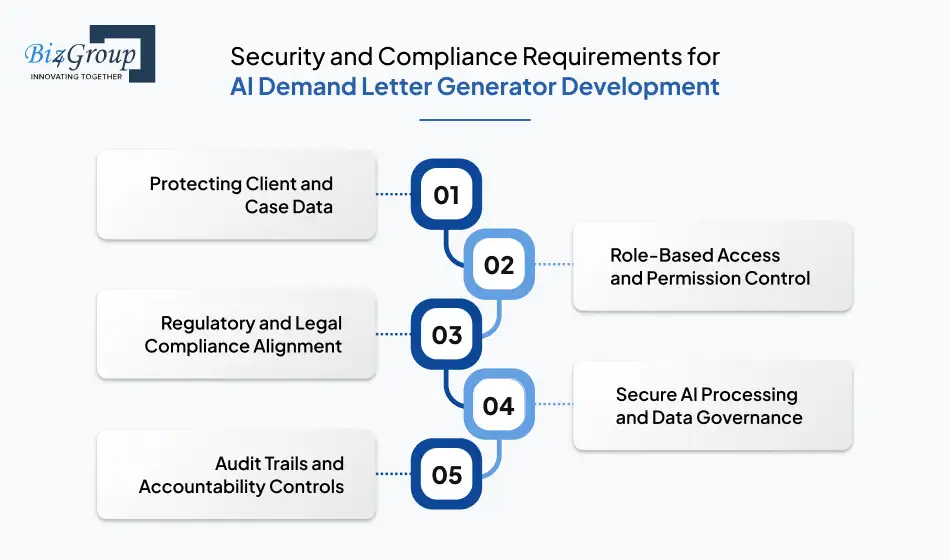
Legal AI demand letter generator tools handle confidential client information, negotiation strategy, and sensitive case records. Organizations that build an AI demand letter generator tool for law firms must treat security and compliance as foundational design requirements rather than features added after deployment.
1. Protecting Client and Case Data
Demand letters often include medical details, financial losses, and legal arguments that require strict confidentiality. Strong protection mechanisms ensure information remains secure throughout drafting and storage workflows.
- Encrypt documents during upload, processing, and storage
- Restrict unauthorized downloads or external sharing
- Secure access through authenticated user sessions
- Maintain controlled storage environments for legal records
Organizations aiming to develop AI legal document automation tools for law firms must ensure data protection standards align with professional legal confidentiality obligations.
2. Role-Based Access and Permission Control
Not every team member should access or modify every draft. Permission structures must reflect legal responsibility and review authority inside a firm.
- Define access based on attorney, staff, or administrative roles
- Limit editing rights for templates and finalized documents
- Control approval authority before demand letters are issued
- Track user activity to prevent accidental misuse
Clear access governance helps make AI demand letter generator with legal compliance features practical in real litigation environments.
3. Regulatory and Legal Compliance Alignment
Legal software must follow privacy and record-handling expectations across jurisdictions. Compliance planning ensures the platform supports professional standards rather than creating operational risk.
- Support privacy regulations such as GDPR or regional data laws
- Maintain retention and deletion policies for legal documents
- Preserve audit-ready documentation handling practices
- Enable traceability of drafting and approval actions
Many firms engage with AI consulting firms early to align system architecture with evolving regulatory expectations.
4. Secure AI Processing and Data Governance
AI systems must process legal data responsibly without exposing confidential information during training or generation.
- Prevent sensitive drafts from becoming uncontrolled training data
- Isolate processing environments handling legal content
- Monitor generated outputs for unintended disclosures
- Maintain clear governance over how models access legal datasets
Teams that hire AI developers experienced in legal environments typically design safeguards before automation reaches production use.
5. Audit Trails and Accountability Controls
Legal operations require transparency around document creation and modification. Auditability strengthens both compliance readiness and internal accountability.
- Record drafting edits and approval history automatically
- Maintain version tracking for every generated demand letter
- Log access activity for compliance reviews
- Enable reporting for internal or regulatory audits
Structured monitoring ensures that legal teams retain visibility into how documents are created and finalized.
Security and compliance determine whether legal automation earns long-term trust inside a firm. Platforms designed with governance, protection, and accountability from the start allow demand letter automation to operate safely within professional legal standards.
Compliance and Data Protection Cannot Wait Until Launch
Let’s assess how your demand letter platform can safeguard sensitive legal information from day one.
Discuss Your RequirementsCost Breakdown to Build AI Demand Letter Generator Software
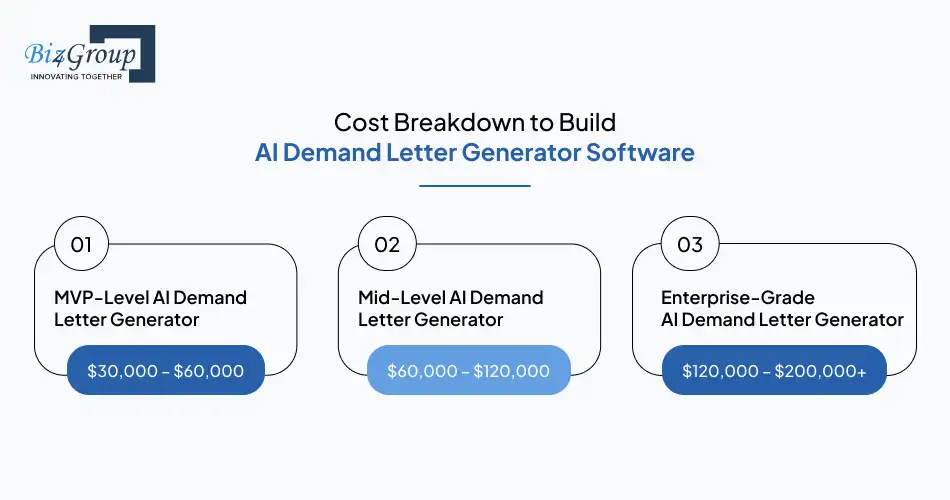
Planning investment early helps firms avoid unexpected expenses during implementation. Organizations that build an AI demand letter generator tool for law firms typically see costs vary between $30,000 to $200,000+ which is based on automation depth and compliance expectations tied to legal AI drafting operations.
|
Development Level |
Estimated Cost Range |
What This Typically Covers |
|---|---|---|
|
MVP-Level AI Demand Letter Generator |
$30,000 – $60,000 |
Core drafting automation, structured case input forms, editable demand letter generation, and limited workflow validation suitable for early internal adoption. |
|
Mid-Level AI Demand Letter Generator |
$60,000 – $120,000 |
Expanded automation workflows, template management, integrations with case systems, improved security controls, and drafting customization features supporting operational scaling. |
|
Enterprise-Grade AI Demand Letter Generator |
$120,000 – $200,000+ |
Advanced automation logic, compliance monitoring, scalable infrastructure, analytics dashboards, and high-volume drafting environments designed for large litigation teams. |
What Shapes Development Cost of AI Demand Letter Generator Tool
- Drafting Complexity: Demand letters vary by practice area, damages structure, and negotiation style. More variation increases development effort and validation requirements.
- Automation Depth: Basic generation costs less, while advanced intelligence increases AI integration costs due to training, refinement, and evaluation
- System Integrations: Connecting drafting tools with case management or document repositories expands scope and coordination effort.
- Data Preparation Effort: Historical demand letters must be organized and structured before meaningful automation can be achieved.
Practical Ways to Control Cost of AI Demand Letter Generator Tool
- Limit Initial Drafting Scope: Start automation with one or two demand letter categories such as personal injury or insurance claims to prevent unnecessary early development expansion. This helps keep the cost to build AI software aligned with measurable operational needs.
- Define Compliance Requirements Early: Clarifying jurisdictional and approval requirements upfront avoids costly redesigns later in law firm AI demand letter software development.
- Control Integration Depth Initially: Connect only essential systems during early phases instead of integrating every legal platform at once, which helps manage AI integration costs effectively.
- Align Automation with Case Volume: Investment decisions should reflect actual drafting workload so firms avoid paying for enterprise-scale infrastructure before it becomes operationally necessary.
Development costs reflect how deeply automation integrates into legal operations. Firms that align spending with workflow priorities gain predictable outcomes, balanced budgets, and sustainable automation that supports long-term drafting efficiency without unnecessary complexity.
Also Read: How Much Does It Cost to Build a Legal AI Chatbot?
Monetization Models for AI Demand Letter Automation Platforms
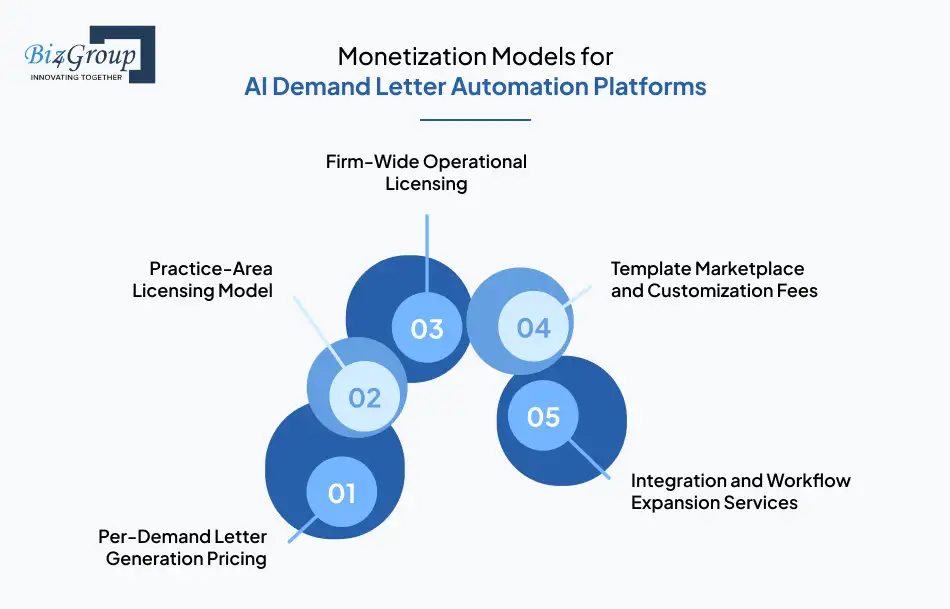
Revenue planning becomes important once organizations move beyond internal automation and position the platform as a scalable product. Businesses that build an AI demand letter generator tool for law firms often design monetization around how legal teams actually draft, review, and manage demand letters daily.
1. Per-Demand Letter Generation Pricing
Instead of charging flat subscriptions, some platforms price usage based on each generated demand letter. This model aligns revenue directly with drafting activity and works well for firms handling fluctuating case volumes or seasonal litigation workloads.
2. Practice-Area Licensing Model
Platforms can offer specialized licensing based on legal practice areas such as personal injury, insurance disputes, or debt recovery. Law firm AI demand letter software development often enables modular configurations, allowing firms to pay only for workflows relevant to their litigation focus.
3. Firm-Wide Operational Licensing
Large law firms prefer predictable pricing tied to organizational usage rather than individual users. Enterprise licensing grants firm-wide access, supporting standardized drafting processes across offices while generating stable recurring revenue for platform providers.
4. Template Marketplace and Customization Fees
Businesses can monetize by offering premium demand letter templates, negotiation structures, or jurisdiction-specific drafting configurations. Firms that create AI demand letter automation tool for lawyers often generate additional revenue through paid customization aligned with regional legal requirements.
5. Integration and Workflow Expansion Services
Revenue can also come from extending the platform into broader legal workflows such as case intake or document management integrations. Organizations pay implementation and configuration fees when automation becomes embedded into operational systems.
Effective monetization reflects how law firms derive value from drafting efficiency rather than software access alone. Platforms that align pricing with real legal workflows create sustainable revenue streams while supporting long-term adoption across growing litigation environments.
Also Read: 65+ Software Ideas for Entrepreneurs and Small Businesses
Planning a Demand Letter Platform but Unsure About Revenue Strategy?
We help align automation capabilities with monetization models designed for sustainable legal tech growth.
Plan Your Monetization StrategyCommon Challenges When Developing AI Demand Letter Generators for Law Firms
Turning AI legal drafting software into automation introduces practical obstacles that go beyond technology. Teams that build an AI demand letter generator tool for law firms often discover that success depends on aligning automation with legal behavior, compliance expectations, and attorney trust.
|
Challenge |
Practical Solution |
|---|---|
|
Demand letters vary widely across attorneys and practice areas |
Standardize core templates first, then allow controlled customization layers to preserve flexibility without breaking consistency. |
|
Incomplete or unstructured case information leads to weak drafts |
Implement guided data intake forms that ensure required legal details are captured before drafting begins. |
|
Attorneys hesitate to trust automated legal language |
Design workflows where drafts remain editable and review driven. Position automation closer to an AI assistant app that supports judgment rather than replacing it. |
|
Compliance risks across jurisdictions |
Embed configurable legal rules and approval checkpoints while organizations develop AI legal document automation tools for law firms. |
|
Sensitive client information requires strict protection |
Apply encryption, permission controls, and audit tracking to build secure AI demand letter generator for legal teams handling confidential litigation data. |
|
Over-automation disrupts existing workflows |
Introduce automation gradually so drafting tools adapt to established legal processes instead of forcing operational change. |
|
Difficulty maintaining drafting accuracy over time |
Continuously refine outputs using attorney edits and approved letters as learning references. |
Development challenges usually appear when technology decisions overlook how legal teams actually work. Firms that address workflow alignment, security expectations, and adoption behavior early create automation systems that remain reliable as litigation demands grow and evolve.
Why Choose Biz4Group for AI Demand Letter Generator Development for Law Firms
When law firms evaluate automation, the real concern is not technology itself but whether the solution understands legal work as it actually happens. If you plan to build an AI demand letter generator tool for law firms, the development partner should guide decisions around workflow fit, not just software delivery.
At Biz4Group LLC, we begin by understanding how your team drafts demand letters today. As a legal software development company, our role is to translate existing legal practices into structured systems that feel familiar to attorneys instead of forcing operational change.
We focus on practical execution shaped by real legal environments:
- Drafting automation is aligned with your firm’s internal templates and approval flows, helping you create AI based demand letter drafting tool solutions grounded in real practice.
- Assistance is introduced carefully through a legal AI agent that supports drafting tasks while attorneys retain full control over legal reasoning.
- Usability and workflow clarity remain central, reflecting experience associated with top AI development companies in Florida working on enterprise legal platforms.
- Real delivery visibility matters, which is why our portfolio shows how legal platforms evolve from operational challenges into dependable systems.
Our collaboration does not stop at delivery. We continue working alongside your team as workflows mature, ensuring you can create AI demand letter drafting software for litigation firms that adapts as case complexity and drafting requirements grow.
The right partnership provides direction, not pressure. When automation decisions follow real legal workflows and evolve through collaboration, demand letter technology becomes a dependable operational asset rather than another disconnected legal tool.
Wrapping Up: Building a Scalable AI Demand Letter Generator for Modern Law Firms
Adopting automation in legal drafting is rarely about replacing work; it is about structuring it better. When you work with an experienced AI development company, the focus shifts toward aligning tools with everyday legal tech workflows, so attorneys gain consistency without losing control over legal judgment.
Firms that successfully build an AI demand letter generator tool for law firms usually treat automation as an operational decision, not a technology experiment. Clear drafting logic, structured data input, and realistic adoption planning help teams develop scalable AI demand letter generator tool for law firms that support growing litigation demands without disrupting established practices.
What ultimately matters is how naturally the system fits into daily drafting routines. AI demand letter generator development with legal compliance works best when attorneys trust the process, refine outputs over time, and gradually embed automation into real case handling instead of forcing sudden workflow change.
Let’s discuss how can your firm move forward with confidence.
FAQs: AI Demand Letter Generator Development
1. What is involved in AI demand letter generator development for law firms?
AI demand letter generator development for law firms typically includes workflow analysis, template structuring, AI drafting logic, compliance configuration, and secure document handling. The goal is to automate repetitive drafting while allowing attorneys to review, edit, and finalize legally accurate demand letters.
2. How do organizations develop AI demand letter generator software that fits real legal workflows?
To develop AI demand letter generator software successfully, firms begin by mapping how demand letters are currently created. Development then focuses on structured data intake, drafting automation, approval workflows, and integrations that match litigation processes instead of changing how attorneys already work.
3. What features should firms prioritize when they build an AI powered demand letter generator tool?
When firms build AI powered demand letter generator tool solutions, they usually prioritize template customization, jurisdiction-aware drafting, editable outputs, audit tracking, and role-based access. These features ensure automation improves efficiency while maintaining legal oversight and consistency.
4. Why do law firms prefer custom AI demand letter generator development over ready-made tools?
Custom AI demand letter generator development allows firms to align automation with internal templates, negotiation styles, and compliance policies. This flexibility becomes important for litigation teams that require drafting systems tailored to specific practice areas and operational workflows.
5. How can businesses build a legal document automation tool using AI while maintaining legal compliance?
Organizations build legal document automation tool using AI platforms by embedding review checkpoints, approval controls, and jurisdiction-based drafting rules. AI demand letter generator development with legal compliance ensures confidentiality, auditability, and consistent legal standards across cases.
6. How do teams develop scalable AI demand letter generator tools for growing litigation practices?
To develop scalable AI demand letter generator tool for law firms, teams start with focused automation for high-volume cases, then expand capabilities gradually. Structured architecture, secure infrastructure, and continuous feedback help the system evolve alongside increasing case loads.
