 Location :
Orlando, FL, USA
Location :
Orlando, FL, USA +1 (407) 714-1616
 info@biz4group.com

- Law firm timekeeping software development helps legal practices track billable work accurately while improving operational visibility across matters, attorneys, approvals, and firm-wide workflow accountability.
- Modern platforms emphasize automated tracking, compliance readiness, and structured billing workflows that allow businesses to create law firm timekeeping systems for billable hours without disrupting daily legal operations.
- Effective solutions combine core features, AI capabilities, scalable architecture, and secure integrations to support long-term adoption as legal teams expand services and operational complexity grows.
- Development costs typically range between $30,000 and $250,000+, depending on customization scope, integrations, compliance needs, and scalability planning defined during early project stages.
- Businesses monetize platforms through subscription pricing, enterprise onboarding, and premium add-ons, creating sustainable revenue models aligned with evolving requirements of modern legal practices.
- With proven legal domain expertise, Biz4Group LLC is one of leading legal software development companies, helps organizations build legal timekeeping software solutions through compliance-focused engineering and scalable product development aligned with real legal workflows.
Are billable hours quietly slipping away because your firm lacks a reliable way to capture legal work in real time?
Modern law firms operate under constant pressure to maintain billing accuracy while managing complex caseloads and evolving client expectations. Time tracking is no longer a background administrative activity. It directly affects revenue realization, operational transparency, and how efficiently legal teams function day to day. This growing need for structured workflows is driving interest in law firm timekeeping software development as firms seek practical ways to modernize their operations without disrupting established practices.
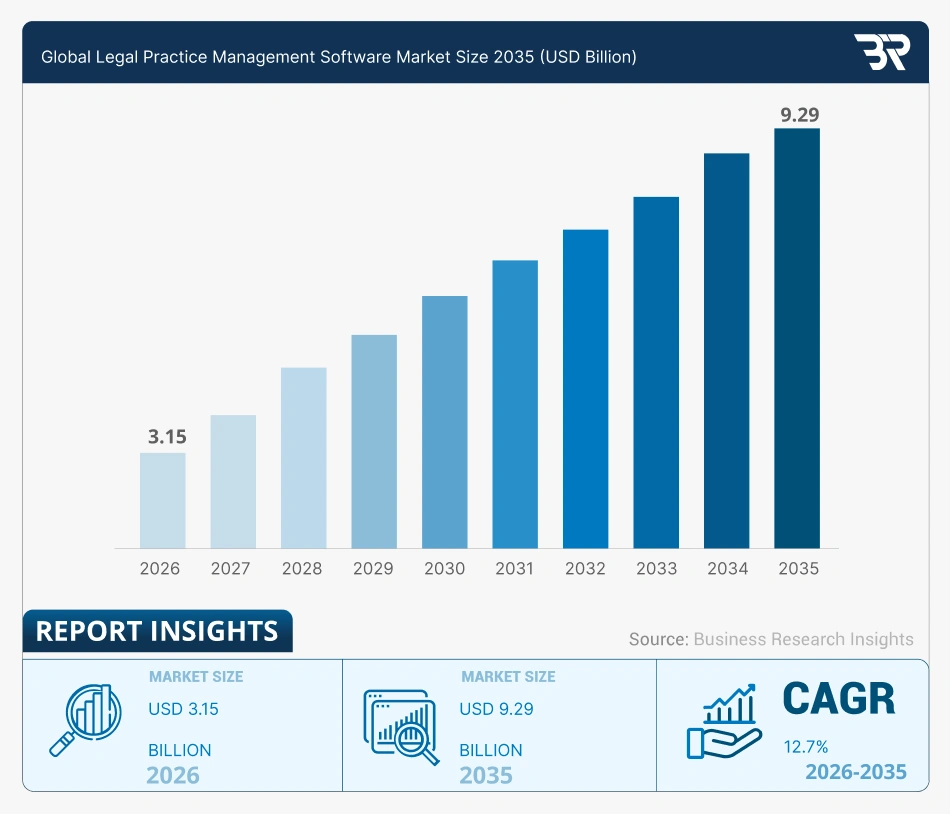
Market momentum clearly supports this transition. The global legal practice management software market is expected to reach USD 3.15 billion in 2026 and grow to USD 9.29 billion by 2035, expanding at a CAGR of 12.7%. Industry insights indicate that legal organizations are steadily moving toward digital platforms to improve coordination, standardize internal processes, and support scalable growth as competition increases across the legal sector.
Many firms now partner with a trusted custom software development company to design solutions aligned with their internal workflows instead of relying on rigid systems. Through custom law firm timekeeping software development, firms gain the flexibility to adapt technology around real operational needs.
- Growing legal workloads demand more structured time management approaches
- Billing accuracy has become central to financial stability for law firms
- Digital transformation is reshaping how legal services are managed and delivered
This guide provides a clear understanding of how firms can develop law firm time tracking software supported by practical AI integration, helping legal teams move toward more reliable and future-ready operations.
Why Law Firm Timekeeping Software Is Essential in the Modern Legal Sector
Legal work today moves faster than traditional tracking methods can support. Firms manage multiple matters simultaneously while maintaining billing accuracy and accountability. This shift is pushing organizations toward structured digital systems that support consistent legal operations.
1. Revenue Visibility Challenges
- Missed Entries: Attorneys often switch between tasks quickly, causing unrecorded billable work. Structured tracking helps capture real activity and improves financial clarity across ongoing legal matters.
- Billing Confidence: Accurate time capture reduces disputes and strengthens client trust. Firms that create law firm timekeeping systems gain clearer insight into revenue performance and billing consistency.
2. Operational Complexity Growth
- Matter Overload: Increasing case volumes make manual tracking difficult to sustain. Firms that develop legal practice time management software simplify daily coordination without adding administrative pressure on legal teams.
- Workflow Alignment: Centralized timekeeping connects tasks with matters and responsibilities. This alignment ensures legal professionals understand priorities while maintaining structured accountability across departments.
3. Demand For Process Automation
- Workflow Efficiency: With AI automation firms reduce repetitive administrative effort. Automation supports smoother time capture while allowing attorneys to focus on billable legal responsibilities.
- Smart Assistance: When firms strategically integrate AI into workflows, routine tracking becomes less intrusive. Intelligent assistance improves accuracy without interrupting how attorneys naturally perform legal work.
4. Shift Toward Digital Legal Operations
- Centralized Systems: Firms are investing in a web application to automate the legal services workflow. Digital platforms unify tracking, reporting, and coordination within a single operational environment.
- Remote Readiness: Legal professionals now work across courts, offices, and remote environments. Digital timekeeping ensures continuity and operational visibility regardless of working location.
5. Scalability For Growing Practices
- Growth Support: Expanding firms require systems that scale with increasing matters and teams. Structured platforms prevent operational gaps that commonly appear during rapid organizational growth phases.
- Standardized Processes: Consistent tracking methods establish repeatable workflows across teams. This standardization helps firms maintain accuracy while expanding services, locations, or practice areas.
Modern legal operations demand systems that support accuracy, accountability, and sustainable growth. Investing in law firm timekeeping software development enables firms to strengthen operational control while preparing their practice for evolving legal service expectations.
Types of Law Firms That Benefit from Modern Timekeeping Systems
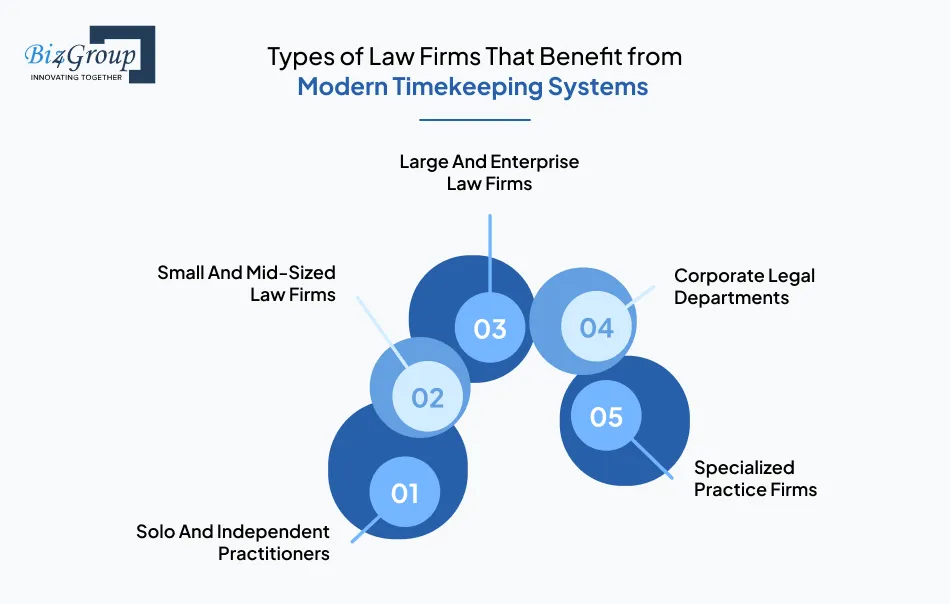
Legal practices differ widely in structure, workload patterns, and client engagement styles. Modern timekeeping platforms adapt to these differences, helping firms maintain billing clarity while supporting workflows that reflect how legal professionals actually operate daily.
1. Solo And Independent Practitioners
Solo attorneys manage legal work, client communication, and billing without dedicated operational support. Reliable timekeeping helps maintain consistency while reducing the effort required to track daily activities accurately.
- Timekeeping systems help independent lawyers capture billable work across consultations, research, and documentation without interrupting ongoing legal responsibilities.
- Many solo practitioners adopt law firm timekeeping software development to create workflows aligned with personal working styles and flexible client engagement approaches.
2. Small And Mid-Sized Law Firms
Growing firms coordinate multiple attorneys handling shared matters and deadlines. As collaboration expands, maintaining consistent time records becomes difficult without structured systems supporting team accountability.
- Centralized tracking gives partners clear visibility into workloads while allowing attorneys to focus on legal responsibilities instead of administrative follow-ups.
- Firms often refine operational planning alongside AI consulting services to ensure workflow improvements support growth without disrupting established legal processes.
3. Large And Enterprise Law Firms
Enterprise firms manage extensive case portfolios across offices and jurisdictions. Consistent timekeeping ensures billing standards remain uniform while supporting coordination between large attorney teams working simultaneously.
- Structured tracking establishes consistent recording practices across departments, helping leadership maintain operational transparency and dependable billing oversight at scale.
- Systems supported by trained AI models help maintain accuracy across large teams by reinforcing standardized tracking behavior without changing existing legal workflows.
4. Corporate Legal Departments
In-house legal teams focus on internal advisory work, compliance reviews, and organizational support rather than external billing. Timekeeping helps leadership understand workload distribution and measure legal resource utilization effectively.
- Structured tracking enables departments to evaluate project effort, supporting better planning and clearer visibility into internal legal operations.
- Solutions enhanced through AI chatbot integration allow teams to record activities naturally during daily workflows, reducing manual effort while preserving operational consistency.
5. Specialized Practice Firms
Firms focused on litigation, intellectual property, or regulatory matters follow unique billing workflows. Timekeeping systems adapt to specialized processes while maintaining structured documentation across complex legal engagements.
- Customized tracking supports research-intensive and deadline-driven work common within specialized legal environments requiring precise activity documentation.
- Flexible timekeeping platforms allow firms to scale services while maintaining consistent workflows and dependable billing practices across specialized legal operations.
Modern timekeeping systems deliver value when aligned with how different legal practices operate in reality. Understanding firm-specific needs helps decision-makers adopt solutions that strengthen workflow stability while supporting sustainable operational growth.
Also Read: A Guide to Legal AI Chatbot Development for Law Firms
Is Your Firm Growing Faster Than Your Time Tracking Can Handle?
Different legal practices need different workflows. Let's map a system that actually fits how your firm operates today.
Talk To Our ExpertsWhy Businesses Should Invest in Custom Law Firm Timekeeping Software Development
Legal organizations today evaluate technology investments based on long-term operational control and financial predictability. Businesses investing in tailored platforms gain ownership over workflows, billing structures, and scalability instead of relying on fixed third-party limitations.
Investment decisions increasingly follow measurable market momentum and operational transformation trends.
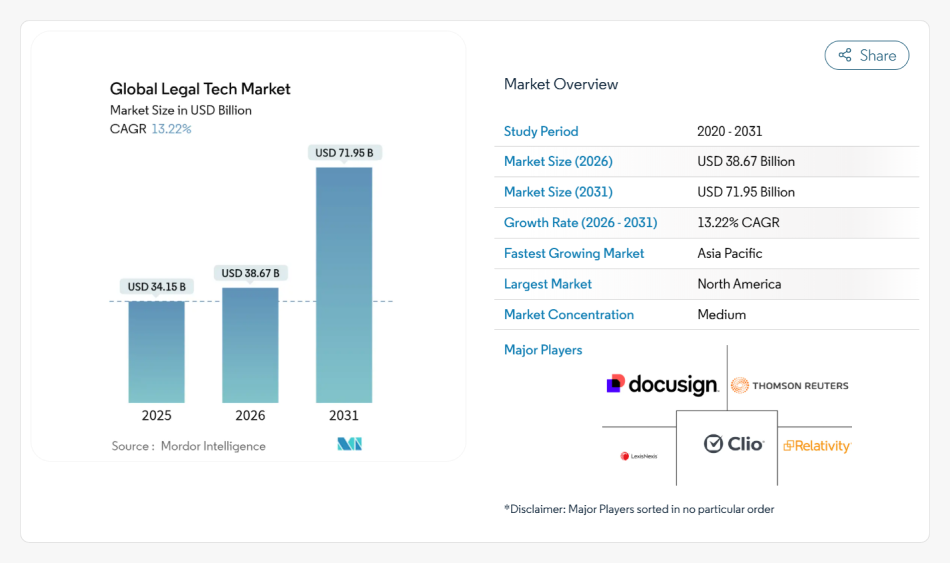
The legal technology market is projected to grow from USD 38.67 billion in 2026 to USD 71.95 billion by 2031, expanding at a 13.22% CAGR. Industry analysis highlights growing adoption of automation platforms, cloud deployment, and structured workflow systems as firms respond to margin pressure and rising service expectations. Enterprise legal teams increasingly prioritize unified digital environments that support operational ownership and long-term efficiency planning.
- Businesses are allocating budgets toward proprietary platforms that strengthen operational independence.
- Legal organizations invest in automation to maintain profitability while managing increased service complexity.
These trends indicate why investment decisions now focus on platform ownership rather than temporary software adoption.
1. Protecting Revenue Through Billing Control
Businesses invest when financial outcomes depend on accurate and defensible billing processes. Ownership of customized systems ensures billing logic reflects internal pricing structures instead of external platform limitations.
- Investing in law firm timekeeping software development for billing accuracy allows organizations to align tracking rules directly with contractual billing models.
- Companies create law firm timekeeping systems for billable hours that protect revenue integrity and reduce long-term financial leakage risks.
2. Reducing Long-Term Software Dependency Risks
Subscription tools often restrict customization and operational flexibility over time. Businesses invest in custom platforms to avoid dependency that limits growth or workflow adaptability.
- Proprietary systems allow organizations to control updates, integrations, and operational priorities without vendor constraints.
- Investment supported through enterprise AI solutions enables gradual automation expansion while maintaining ownership over legal workflows and internal data structures.
3. Aligning Technology Investment with Business Strategy
Strategic investments succeed when technology directly supports organizational goals. Custom development allows leadership teams to build systems aligned with long-term service delivery and expansion plans.
- Businesses developing timekeeping software for the legal sector ensure operational workflows remain consistent as practice areas and teams expand.
- Strategic alignment helps organizations treat technology as infrastructure rather than an operational expense.
4. Building Data Ownership for Strategic Decisions
Reliable business decisions depend on accurate operational data collected over time. Custom platforms allow organizations to structure data collection according to firm-specific performance indicators.
- Systems supported by an AI model enable structured analysis of utilization patterns that guide hiring, pricing, and workload distribution strategies.
- Data ownership strengthens leadership confidence when planning expansion or evaluating operational efficiency improvements.
5. Creating A Future-Ready Operational Foundation
Investment decisions often focus on adaptability rather than immediate functionality. Custom platforms provide flexibility to evolve alongside regulatory requirements and changing legal service delivery models.
- Businesses investing in law firm timekeeping software development establish scalable foundations capable of supporting future automation and workflow innovation.
- Controlled development environments allow organizations to introduce enhancements gradually without disrupting ongoing legal operations.
Strategic investment in custom development enables businesses to transform timekeeping from an operational task into a controlled business asset. Organizations that invest early gain financial clarity, technological independence, and stronger long-term operational resilience.
Also Read: Legal AI App Development
Key Use Cases of Law Firm Timekeeping Software Across Legal Workflows
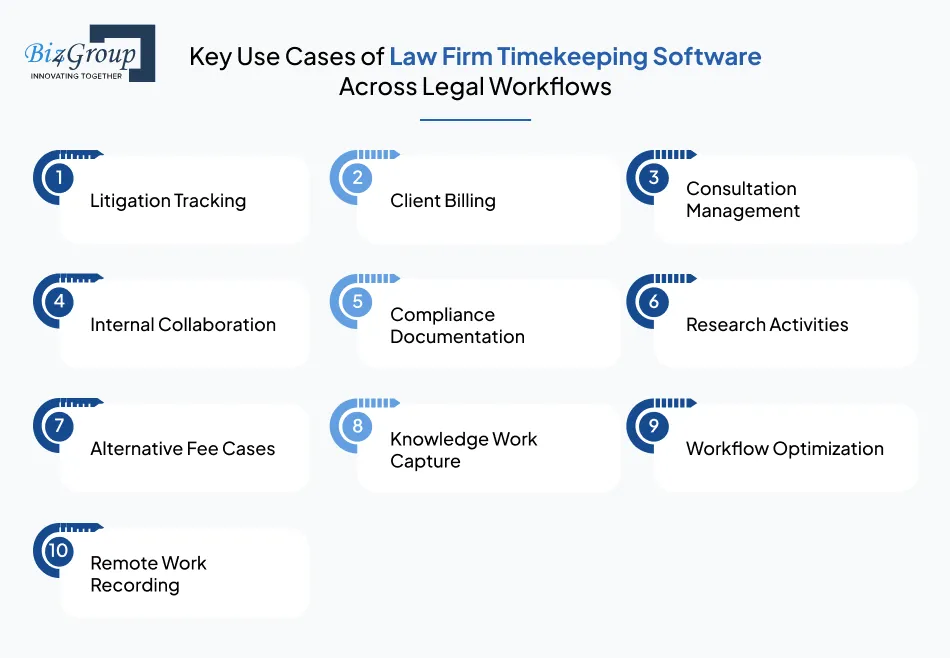
Legal teams perform diverse activities throughout the day that require accurate time visibility across workflows. Use cases demonstrate how structured systems support real legal scenarios, helping firms capture effort consistently without interrupting ongoing professional responsibilities.
- Litigation Tracking: Attorneys handling hearings, research, and documentation often switch tasks rapidly during active cases. Structured systems capture time across fragmented activities, ensuring accurate records throughout complex litigation workflows.
- Client Billing: Legal professionals record consultations, drafting work, and advisory services tied directly to client matters. Firms that create law firm billing and timekeeping software ensure billable activities align clearly with delivered legal services.
- Consultation Management: Lawyers frequently conduct short advisory sessions that remain undocumented without structured capture workflows. Timekeeping platforms record these interactions naturally, improving visibility into advisory work across daily operations.
- Internal Collaboration: Legal teams collaborate across partners, associates, and paralegals while working on shared matters. Systems designed during law firm timekeeping software development help attribute effort accurately across contributors without manual coordination.
- Compliance Documentation: Certain legal engagements require defensible records of work performed over extended timelines. Structured tracking ensures firms maintain chronological activity logs supporting audits or regulatory verification processes.
- Research Activities: Legal research often spans multiple sessions distributed throughout a working day. Firms that build legal timekeeping software solutions enable attorneys to record research effort without disrupting concentration.
- Alternative Fee Cases: Fixed-fee or hybrid billing models still require internal visibility into effort allocation. Structured tracking helps firms understand time distribution while managing profitability across non-hourly engagements.
- Knowledge Work Capture: Drafting memos, reviewing contracts, and preparing case notes frequently occur outside formal meetings. Timekeeping platforms supported by generative AI assist in identifying and logging such activities accurately.
- Workflow Optimization: Firms analyze captured time data to understand how legal work progresses across stages. Development teams often select the best AI model to interpret usage patterns and improve workflow structuring decisions.
- Remote Work Recording: Attorneys working from courts, client offices, or remote locations maintain consistent activity tracking. Centralized platforms ensure continuity regardless of where legal work takes place.
Use cases highlight how practical workflows shape software adoption decisions within legal environments. Understanding these real operational scenarios helps organizations design systems that reflect everyday legal work rather than theoretical technology capabilities.
Seeing The Use Cases Is Easy Building Them Correctly Isn't
Turn real legal workflows into a platform designed around your operations, not generic assumptions.
Discuss Your Use CaseTop 5 Timekeeping Software Solutions Used by Law Firms Today
Law firms often evaluate existing platforms to understand current market standards before planning their own systems. Reviewing widely adopted tools helps decision-makers identify practical capabilities that influence modern law firm timekeeping software development strategies.
1. Clio
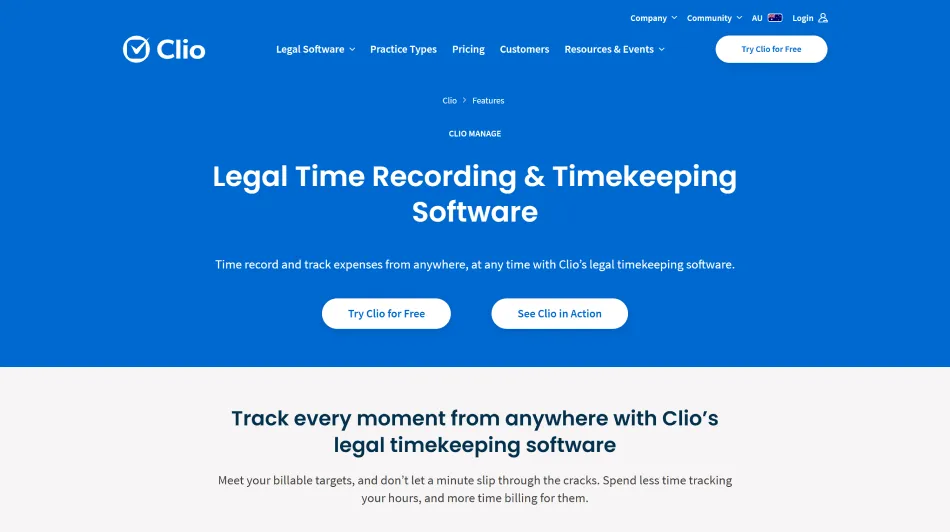
Clio is a cloud-based legal practice management platform that combines case management, billing, and time tracking within a unified environment. Attorneys can record time directly from daily activities while connecting entries to invoices and payments inside one system.
- Real-time time tracking connected to matters and calendar activities
- Expense tracking and automated billing workflows
- Online payments and customizable billing structures
2. MyCase
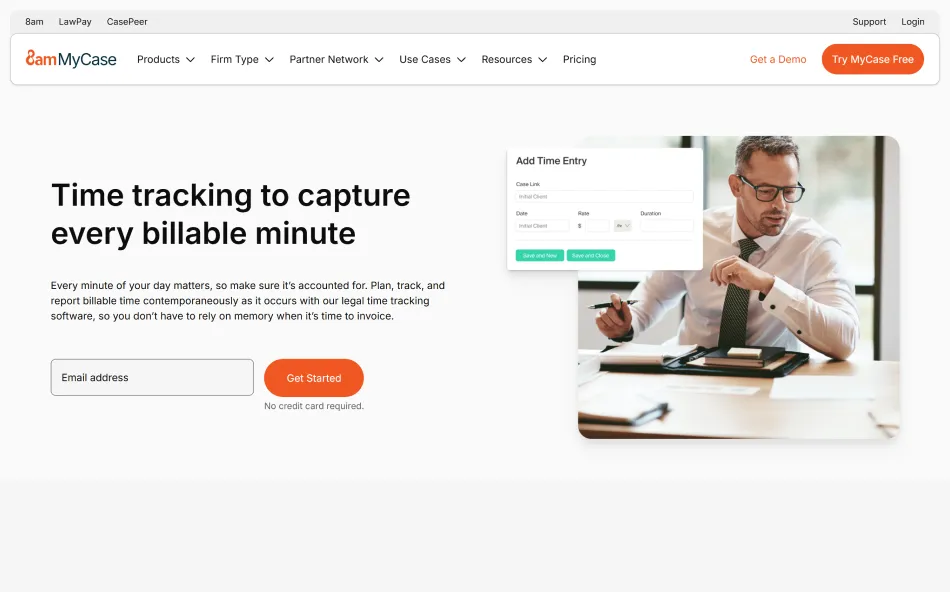
MyCase provides legal time tracking designed to help attorneys capture billable work as it happens. The platform connects time recording with invoicing and case management, allowing firms to manage billing workflows without relying on memory-based time entry.
- Contemporaneous time tracking for billable activities
- Automated invoicing and payment reminders
- Centralized case, document, and communication management
3. Bill4Time
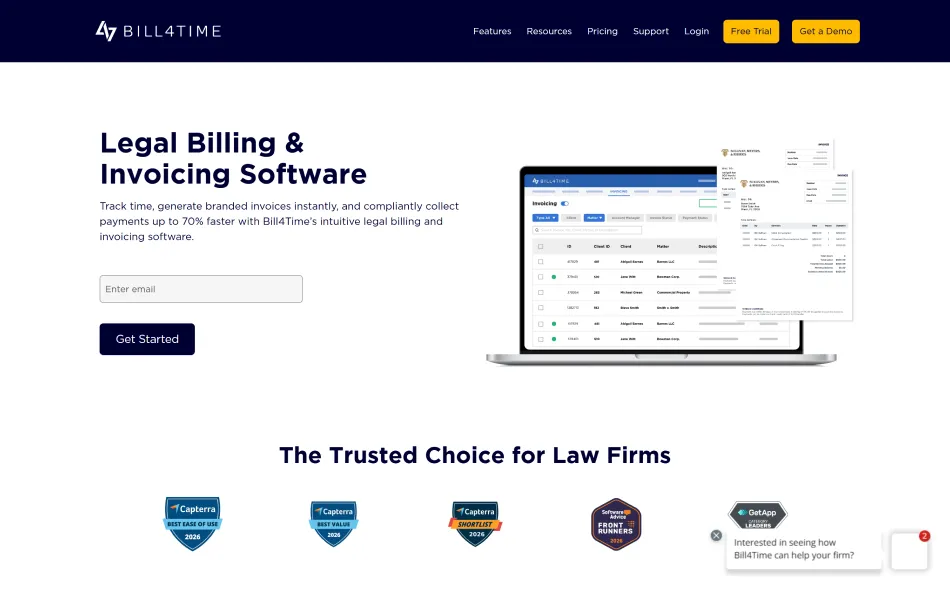
Bill4Time focuses on legal billing and time tracking with flexible invoicing capabilities tailored for attorneys. The platform converts recorded work into structured billing entries while supporting multiple billing arrangements used across legal practices.
- Time and expense tracking converted into billable entries
- Custom billing rates and detailed invoice generation
- Online payments and financial reporting dashboards
4. Smokeball
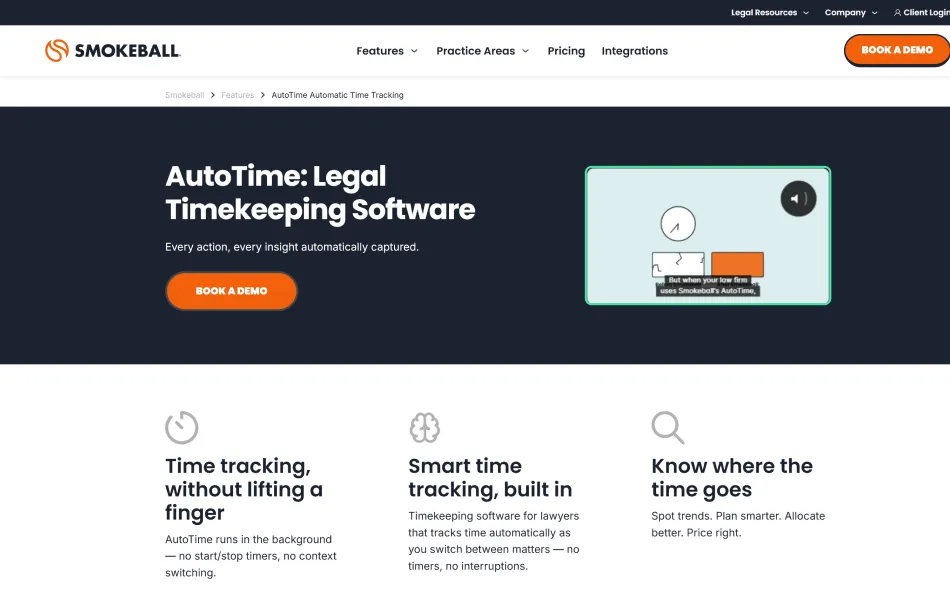
Smokeball is a legal practice management platform known for automatic time tracking integrated directly into legal workflows. Its system records activity in the background, helping attorneys maintain accurate timesheets without manually starting or stopping timers.
- Automatic activity-based time tracking through auto- time
- Integrated billing and document automation tools
- Reporting insights supporting workload and profitability visibility
5. TimeSolv
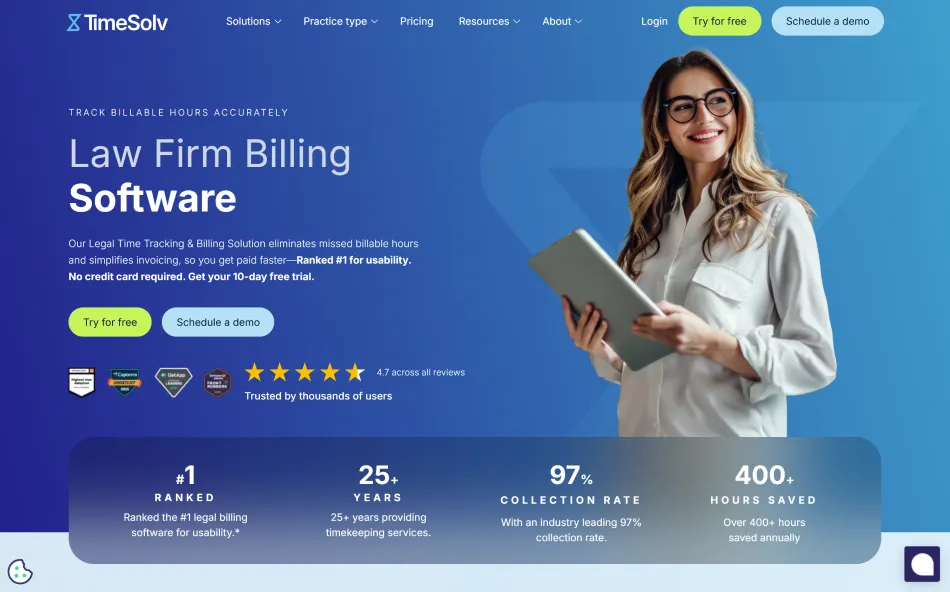
TimeSolv is a cloud-based legal billing and timekeeping solution designed for firms needing structured financial and time management tools. It connects tracking, invoicing, payments, and reporting within a single platform accessible across devices.
- Time tracking integrated with invoicing and payments
- Trust accounting and financial reporting capabilities
- Cloud and mobile access for flexible legal work environments
These solutions reflect how modern platforms address real timekeeping workflows used across legal practices today. Studying existing tools helps businesses understand baseline expectations before building systems tailored to their own operational and billing requirements.
Key Features Required to Build Legal Timekeeping Software Solutions
Modern legal workflows demand structured time capture that aligns with how attorneys actually work throughout the day. During law firm timekeeping software development, defining essential features early ensures the platform supports accurate tracking without disrupting legal productivity.
|
Feature |
Description |
|---|---|
|
Time Entry Management |
Allows attorneys to record work quickly across matters without interrupting active legal tasks or workflow continuity. |
|
Automated Time Capture |
Tracks activities in the background and converts them into structured time entries for consistent daily recording accuracy. |
|
Matter-Based Tracking |
Connects recorded time directly with specific cases, ensuring organized documentation aligned with ongoing legal engagements. |
|
Billing Integration |
Converts tracked activities into invoice-ready records supporting financial workflows during legal time tracking application development. |
|
Multi-Device Access |
Enables attorneys to log work securely from desktops, tablets, or mobile devices during remote or court-based activities. |
|
Role-Based Permissions |
Controls system access according to responsibilities, protecting sensitive legal data while maintaining operational accountability across teams. |
|
Reporting Dashboards |
Provides structured summaries showing recorded time patterns that help leadership review operational performance efficiently. |
|
Expense Tracking |
Records additional billable expenses alongside time entries, supporting accurate client billing documentation within one system. |
|
Calendar Synchronization |
Aligns meetings and appointments with time entries to reduce manual logging and maintain consistent scheduling visibility. |
|
Secure Data Storage |
Protects legal records through encrypted storage, ensuring confidentiality requirements remain supported across platform usage. |
|
Workflow Customization |
Allows firms to adapt tracking structures according to practice areas when they build attorney timekeeping software. |
|
Intelligent Assistance |
Some teams gradually build AI software capabilities that support smarter activity recognition without changing existing legal workflows. |
Well-defined features create the foundation for reliable legal platforms that reflect real operational needs. Strong feature planning during development ensures systems remain practical, scalable, and aligned with everyday attorney workflows rather than theoretical functionality.
Also Read: How to Build an AI Legal Consultation Platform
Advanced AI Capabilities to Include When You Develop Law Firm Time Tracking Software
Modern legal timekeeping platforms increasingly rely on intelligent automation to improve accuracy without disrupting attorney workflows. During law firm timekeeping software development, advanced AI capabilities help systems understand work patterns and support scalable operational efficiency.
|
AI Capability |
Description |
|---|---|
|
Intelligent Time Recognition |
Automatically identifies legal activities across emails, documents, and meetings, helping attorneys capture work naturally without manual timers interrupting daily responsibilities. |
|
Context-Aware Entry Suggestions |
Suggests time entries based on ongoing tasks, allowing professionals to confirm records quickly instead of reconstructing work at the end of the day. |
|
Smart Activity Classification |
Groups similar legal activities together, ensuring recorded time aligns with matters, clients, and internal workflow structures across ongoing legal operations. |
|
Adaptive Learning Models |
Systems gradually learn attorney work habits, improving accuracy over time when teams build custom timekeeping software for law firms supporting personalized workflows. |
|
Automated Narrative Generation |
Generates short billing descriptions from captured activity context, helping attorneys maintain consistent documentation without spending additional effort writing detailed summaries. |
|
Predictive Workload Insights |
Uses predictive analysis to identify workload trends, helping leadership anticipate resource requirements while maintaining balanced case distribution across teams. |
|
Passive Background Tracking |
Monitors digital activity responsibly to capture billable work occurring between meetings, research sessions, and drafting periods throughout the working day. |
|
Compliance Pattern Monitoring |
Detects irregular recording behavior and flags inconsistencies, helping firms maintain structured documentation aligned with internal accountability standards. |
|
Intelligent Reminder Systems |
Sends contextual prompts when work activity suggests missing time entries, supporting consistent tracking without interrupting attorney concentration. |
|
Scalable AI Architecture |
Firms planning to develop scalable law firm timekeeping software for growing practices often build an AI app capable of expanding alongside operational complexity. |
|
Custom Model Training |
Organizations frequently hire AI developers to train models using firm-specific workflows, ensuring systems reflect real operational behavior rather than generic assumptions. |
|
Workflow Optimization Insights |
AI analyzes captured patterns to highlight operational inefficiencies, helping teams refine processes while maintaining accurate and consistent timekeeping practices. |
Advanced capabilities transform timekeeping platforms from simple tracking tools into intelligent operational systems. Firms that integrate these features early build adaptable foundations that support growth, accuracy, and evolving legal workflow expectations over time.
Also Read: AI Lawyer App Development
Step-by-Step Process to Develop Law Firm Timekeeping Software
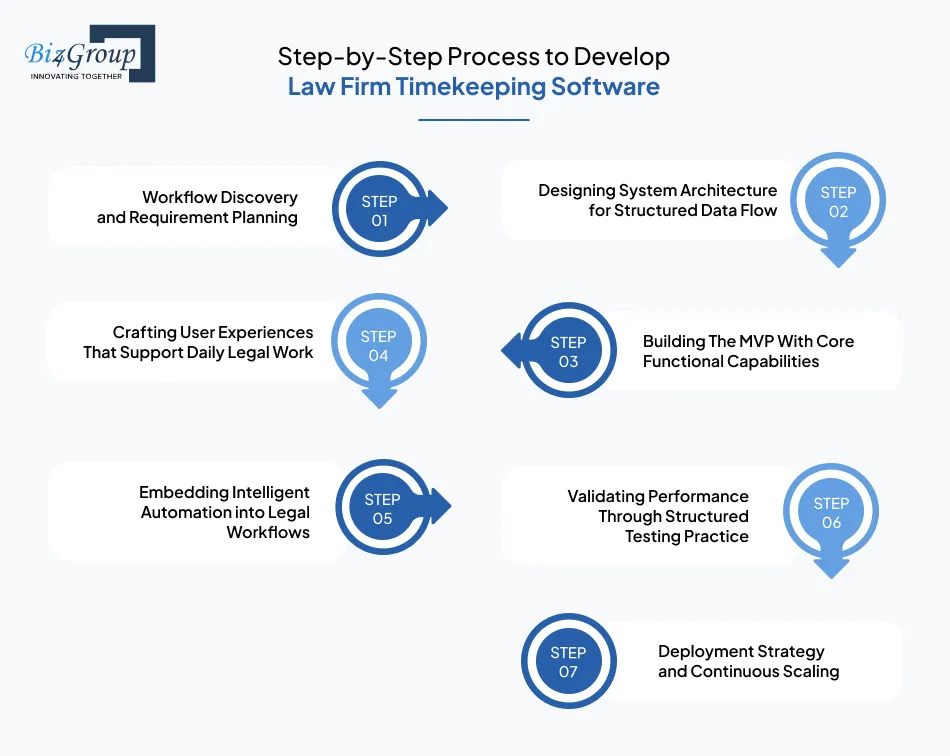
Developing legal timekeeping software requires structured planning aligned with real attorney workflows and billing practices. A step-by-step approach helps teams translate operational needs into reliable systems while maintaining usability, scalability, and long-term development clarity.
1. Workflow Discovery and Requirement Planning
Every successful project begins with understanding how legal professionals actually record time daily. Teams analyze attorney routines, billing structures, and approval workflows to avoid assumptions during early planning stages.
- Stakeholder discussions identify operational gaps affecting time capture and billing accuracy.
- Requirement mapping defines essential workflows supporting realistic legal usage from the beginning.
- Clear scope boundaries prevent unnecessary features from complicating early development stages.
2. Designing System Architecture for Structured Data Flow
After discovery, teams design how information moves through the platform consistently. Proper architecture ensures recorded time remains organized, secure, and accessible throughout ongoing legal operations.
- Data mapping connects clients, matters, and activities into structured operational relationships.
- Access permissions define responsibilities across attorneys, administrators, and management roles.
- Planning prepares infrastructure capable of supporting growth without major architectural redesign later.
3. Building The MVP With Core Functional Capabilities
Early releases focus on essential workflows rather than building a complete platform immediately. MVP software development enables teams to validate usability while maintaining flexibility for iterative improvements.
- MVP development services prioritizes time entry, approvals, and billing preparation workflows first.
- Early deployment gathers user feedback that guides future feature expansion decisions.
- Controlled development ensures stability while validating assumptions through real attorney interaction.
Also Read: Top 12+ MVP Development Companies
4. Crafting User Experiences That Support Daily Legal Work
Ease of use determines whether attorneys consistently adopt timekeeping systems during busy schedules. Partnering with a strong UI/UX design company helps users record work quickly without interrupting ongoing legal responsibilities.
- Interfaces minimize steps required to log activities across matters and daily workflows.
- Clear dashboards present summaries that support faster review of recorded time entries.
- Consistent layouts reduce learning effort and encourage long-term system adoption.
Also Read: Top UI/UX design companies in USA
5. Embedding Intelligent Automation into Legal Workflows
Automation adds value when introduced around clearly defined workflow requirements. Teams gradually integrate AI models to assist activity recognition while preserving attorney control over recorded entries.
- Intelligent logic may evolve toward functionality similar to an AI assistant app
- Automation supports accurate tracking without replacing professional judgment or workflow visibility.
- Structured integration ensures automated processes operate alongside standard system behavior safely.
6. Validating Performance Through Structured Testing Practices
Testing ensures the platform performs reliably across real legal scenarios and user behaviors. Validation focuses on workflow accuracy, system stability, and consistent performance across devices and environments.
- Scenario testing evaluates edits, approvals, missed entries, and billing preparation workflows.
- Data validation confirms accuracy from capture through reporting and invoice readiness stages.
- Many organizations collaborate with experienced software testing companies to verify performance outcomes.
7. Deployment Strategy and Continuous Scaling
Deployment introduces the platform gradually while monitoring real usage patterns carefully. Structured rollout helps teams stabilize performance before expanding adoption across larger legal teams.
- Phased releases allow refinement based on attorney feedback and operational observations.
- Infrastructure scaling prepares systems to support increasing users and workload complexity.
- Ongoing monitoring ensures stable performance as operational requirements continue evolving.
A structured development lifecycle transforms legal workflow requirements into dependable software systems. Following disciplined stages helps organizations deliver platforms aligned with attorney needs while maintaining adaptability for future enhancements and operational growth.
Planning Software Is One Thing Executing Without Chaos Is Another.
Our team helps translate legal workflows into structured development roadmaps that reduce risk from day one.
Start Your Project ConversationSecurity Requirements When You Make Law Firm Timekeeping Software with Compliance Features
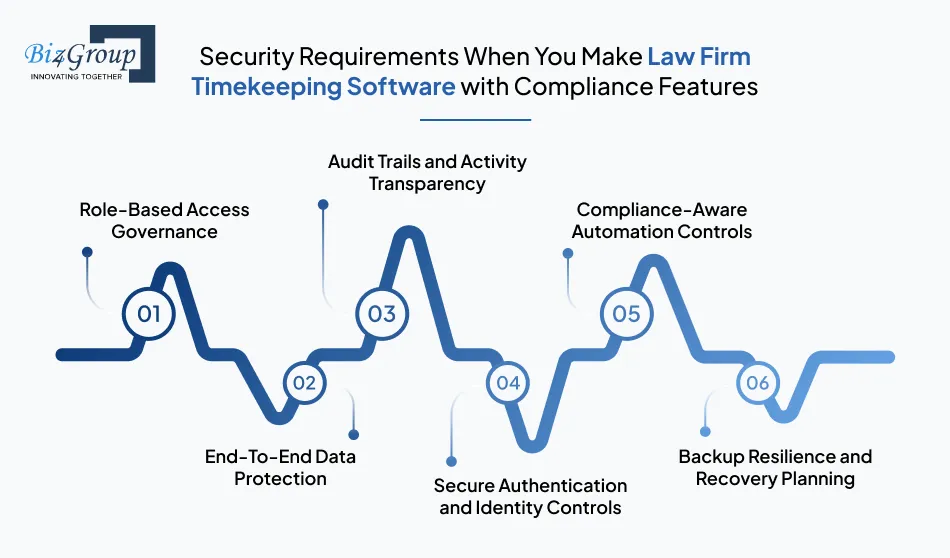
Legal timekeeping systems manage confidential client records and sensitive billing information daily. Security planning ensures firms protect data integrity while maintaining compliance expectations throughout law firm timekeeping software development and long-term operational system usage.
1. Role-Based Access Governance
Access permissions must align with organizational responsibilities across attorneys, finance teams, and administrators. Controlled access prevents unauthorized visibility while allowing professionals to perform tasks without compromising confidential legal information or operational security standards.
2. End-To-End Data Protection
Encryption safeguards data during storage and transmission across platforms and devices. Secure protection mechanisms help organizations make law firm timekeeping software with compliance features that preserve confidentiality while supporting consistent information handling throughout legal operations.
3. Audit Trails and Activity Transparency
Audit tracking records every modification, approval, and login event inside the platform. These logs provide accountability and help organizations develop law firm time tracking software capable of maintaining defensible operational records during compliance reviews or investigations.
4. Secure Authentication and Identity Controls
Authentication layers verify user identity before granting system access. Multi-factor verification reduces risks associated with credential misuse while maintaining smooth login experiences for authorized professionals working across multiple locations or devices.
5. Compliance-Aware Automation Controls
Automation must operate within defined compliance boundaries to protect sensitive legal workflows. When platforms introduce intelligent assistance similar to a legal AI agent, governance rules ensure automated actions remain transparent, traceable, and aligned with regulatory expectations.
6. Backup Resilience and Recovery Planning
Reliable backup systems protect firms from accidental loss, outages, or security incidents. Recovery planning ensures operational continuity, allowing organizations to restore legal records quickly while maintaining confidence in long-term platform reliability.
Strong security practices transform compliance from an obligation into an operational advantage. Organizations prioritizing protection early create dependable systems that support sustainable growth, trusted client relationships, and secure digital transformation across evolving legal environments.
Technology Stack Required for Legal Timekeeping Software Product Development
Legal timekeeping platforms demand technologies that support secure billing workflows, audit visibility, and long-term scalability. During law firm timekeeping software development, thoughtful tech stack development ensures systems remain reliable while supporting compliance requirements and structured operational growth.
|
Architecture Layer |
Technology Used |
Purpose |
|---|---|---|
|
Attorney Interface Layer |
React.js |
Enables responsive dashboards through ReactJS development supporting fast interaction during daily legal time tracking activities. |
|
Server Rendering Layer |
Next.js |
Improves performance and structured navigation using NextJS development for secure, high-speed legal workflow interfaces. |
|
Application Logic Layer |
Node.js |
Processes time entries, approvals, and billing workflows efficiently through NodeJS development environments built for scalable SaaS platforms. |
|
Automation & Analytics Layer |
Python |
Supports analytics and intelligent processing through Python development aligned with legal timekeeping software product development needs. |
|
Integration Middleware |
REST / GraphQL APIs |
Connects accounting tools, calendars, and billing platforms through structured API development supporting operational interoperability. |
|
Billing Data Storage |
PostgreSQL |
Maintains structured transactional records essential for law firm timekeeping software development for billing accuracy. |
|
Audit & Compliance Logging |
Event Logging Services |
Records activity history and approval trails supporting defensible billing documentation and regulatory accountability requirements. |
|
Identity & Access Management |
OAuth / JWT |
Protects confidential legal data using controlled authentication aligned with role-based access governance practices. |
|
Cloud Infrastructure |
AWS / Azure |
Provides scalable hosting environments ensuring availability, backup reliability, and secure operational continuity. |
|
Mobile Access Layer |
Flutter / React Native |
Extends functionality across devices supporting attorney mobility without compromising workflow consistency. |
|
Reporting & Insights Engine |
BI & Data Visualization Tools |
Generates structured reports helping firms analyze recorded work patterns and financial performance. |
|
DevOps & Deployment Automation |
Docker / CI-CD Pipelines |
Automates deployment cycles ensuring stable releases and predictable platform updates across environments. |
A legal-focused technology foundation supports compliance, scalability, and operational reliability simultaneously. Balanced architecture enables secure mobile and web development, allowing firms to maintain consistent timekeeping experiences while adapting systems as legal workflows evolve.
Cost of Developing Scalable Law Firm Timekeeping Software for Growing Practices
The cost of law firm timekeeping software development typically ranges between $30,000 and $250,000+, depending on scalability goals, compliance scope, integrations, and automation depth. Investment levels increase as firms plan long-term operational growth and billing accuracy improvements.
|
Development Level |
Estimated Cost Range |
What This Typically Covers |
|---|---|---|
|
MVP Level Law Firm Timekeeping Software |
$30,000 – $70,000 |
Core time tracking, matter linking, basic billing workflows, and essential reporting required to validate usability while controlling early development investment. |
|
Mid-Level Law Firm Timekeeping Software |
$70,000 – $150,000 |
Expanded automation, integrations, permissions, and analytics supporting growing teams while improving operational efficiency and structured billing management. |
|
Advanced-Level Law Firm Timekeeping Software |
$150,000 – $250,000+ |
Enterprise scalability, compliance controls, advanced automation, and performance optimization supporting large firms managing complex legal workflows across multiple offices. |
Understanding cost drivers helps businesses plan budgets with realistic development expectations.
Factors Influencing the Cost of Timekeeping Software for Law Firms
- Software complexity increases cost because advanced workflows, automation layers, and reporting systems require additional development effort, extended validation cycles, and higher engineering involvement throughout custom law firm timekeeping software development.
- Integration requirements raise expenses since platforms must connect securely with billing systems, accounting tools, and operational software already used across legal environments.
- Compliance implementation adds investment due to encryption safeguards, audit tracking, and governance controls required when organizations develop legal practice time management software handling confidential client information.
- Scalability preparation impacts pricing because infrastructure must support future growth without costly rebuilding user numbers, data volume, and operational demands increase significantly.
- AI integrations costs depend on automation scope, training requirements, and workflow intelligence added during advanced development stages aligned with operational efficiency goals.
Smart budgeting decisions help organizations reduce expenses without limiting long-term platform scalability.
Optimizing Development Costs Without Sacrificing Software Quality
- Prioritize Core Scope: Limiting early development to essential workflows prevents unnecessary spending on features that may not deliver immediate business value or measurable operational return during initial releases.
- Adopt Phased Delivery: Incremental releases distribute development investment over time, allowing businesses to validate outcomes before committing additional budget toward advanced functionality expansion.
- Design For Scalability: Planning scalable architecture early avoids expensive redevelopment, reducing long-term ownership costs as legal operations and user adoption steadily expand.
- Plan AI Integrations Early: Early integration planning prevents costly reengineering caused by late system connections, protecting project timelines, and minimizing unexpected development expenditures.
- Control AI Automation Scope: Introducing automation gradually helps firms evaluate business app development using AI investments carefully while balancing innovation goals with predictable financial planning.
Clear cost planning transforms development from a technical expense into a strategic investment decision. Organizations aligning budgets with scalability goals build platforms that sustain growth while maintaining predictable financial outcomes across evolving legal operations.
Also Read: How Much Does It Cost to Build a Legal AI Chatbot?
Wondering What Your Software Should Actually Cost Not Just Estimates?
Get a realistic breakdown aligned with your firm's scale, integrations, and long-term growth goals.
Get A Cost ConsultationRevenue Models and Business Strategy for Law Firm Billing and Timekeeping Software
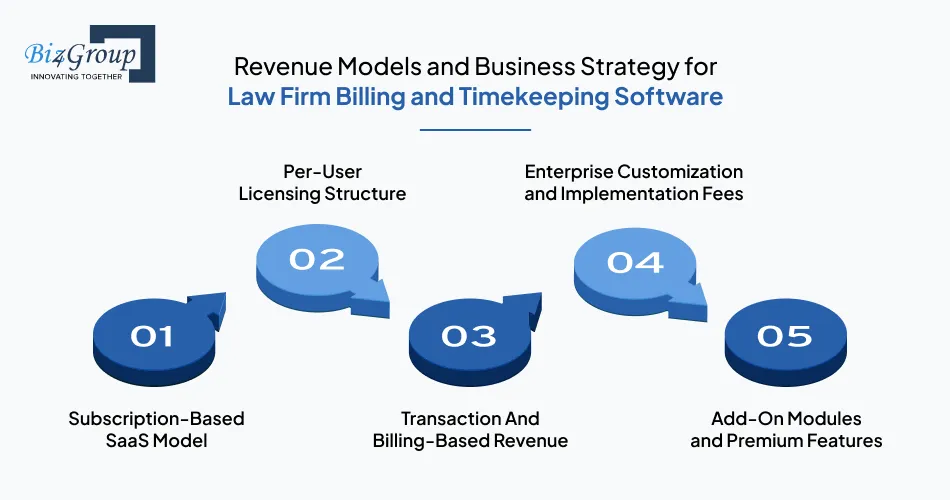
Revenue generation in legal software depends on aligning pricing structures with how law firms operate daily. During law firm timekeeping software development, businesses design monetization strategies that create predictable income streams while supporting long-term platform sustainability and market expansion.
1. Subscription-Based SaaS Model
Recurring subscriptions remain the most common monetization approach for legal platforms. Firms pay predictable monthly or annual fees based on usage, allowing providers to maintain steady revenue while scaling customer acquisition gradually.
- Pricing tiers can vary by users, features, or billing automation capabilities.
- Recurring billing ensures stable revenue forecasting across growing customer bases.
2. Per-User Licensing Structure
Revenue can scale directly with firm size through user-based pricing models. This approach aligns software cost with attorney adoption, allowing providers to grow revenue naturally as client organizations expand teams.
- Charges apply per attorney, paralegal, or administrative account accessing the platform.
- Tiered licensing supports predictable scaling as firms onboard additional legal professionals.
3. Transaction And Billing-Based Revenue
Platforms generating invoices or processing payments may monetize transactional activity. Revenue increases alongside billing volume, creating performance-linked earnings tied directly to software usage patterns.
- Providers charge small fees per invoice generated or payment processed within the system.
- Transaction pricing aligns platform revenue with active legal operations and billing frequency.
4. Enterprise Customization and Implementation Fees
Organizations offering tailored solutions generate revenue through onboarding and customization services. Businesses that build attorney timekeeping software often charge implementation fees reflecting configuration complexity and deployment requirements.
- One-time setup pricing covers workflow configuration, integrations, and organizational onboarding support.
- Custom enterprise deployments create higher-value contracts with longer customer retention cycles.
5. Add-On Modules and Premium Features
Additional modules allow businesses to expand monetization beyond core functionality. Optional upgrades create incremental revenue without forcing customers into higher pricing tiers prematurely.
- Advanced analytics, automation tools, or integrations may be offered as paid extensions.
- Modular pricing encourages gradual upgrades aligned with evolving customer operational needs.
Sustainable monetization depends on balancing pricing flexibility with predictable revenue streams. Businesses combining multiple models during legal time tracking application development create scalable income strategies while positioning platforms for long-term growth within competitive legal technology markets.
Also Read: 65+ Software Ideas for Entrepreneurs and Small Businesses
Common Challenges When You Build Custom Timekeeping Software for Law Firms (And How to Solve Them)
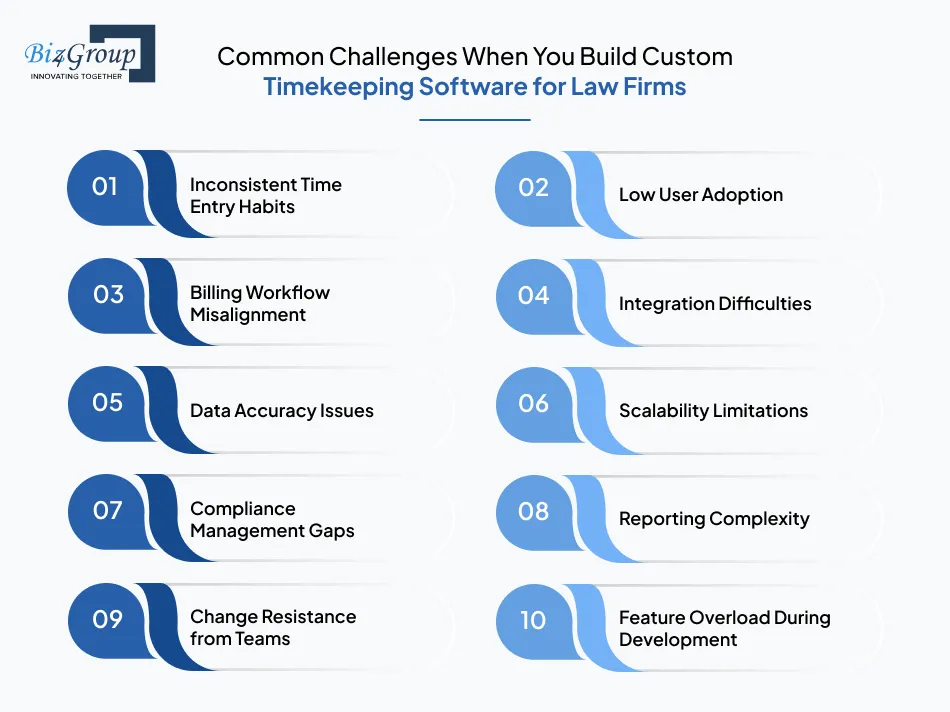
Developing legal platforms involves practical challenges tied to workflow complexity and user adoption expectations. During law firm timekeeping software development, understanding common obstacles early helps businesses design systems that remain usable, scalable, and aligned with real legal operations.
|
Common Challenge |
Why It Happens |
Practical Solution |
|---|---|---|
|
Inconsistent Time Entry Habits |
Attorneys record work differently across matters and schedules. |
Design structured workflows that guide consistent entry without interrupting daily legal activities. |
|
Low User Adoption |
Complex interfaces discourage attorneys from recording time regularly. |
Simplify navigation and reduce steps required to log billable work efficiently. |
|
Billing Workflow Misalignment |
Generic systems fail to reflect firm-specific billing practices. |
Customize workflows when you create law firm billing and timekeeping software aligned with operational rules. |
|
Integration Difficulties |
Legal teams rely on multiple external tools for daily operations. |
Build flexible integration layers supporting accounting, calendars, and document management platforms. |
|
Data Accuracy Issues |
Manual entry increases risk of missed or incorrect time records. |
Introduce validation prompts that encourage accurate submissions before final approval. |
|
Scalability Limitations |
Early architecture may not support firm growth or increasing users. |
Plan scalable infrastructure before expanding features or onboarding larger legal teams. |
|
Compliance Management Gaps |
Legal data requires strict handling and traceable activity records. |
Implement audit logs and permission controls during early system planning stages. |
|
Reporting Complexity |
Firms struggle to extract meaningful operational insights from data. |
Structure reporting dashboards around real billing and productivity workflows. |
|
Change Resistance from Teams |
Attorneys hesitate to adopt unfamiliar digital processes initially. |
Provide guided onboarding and gradual workflow transitions supporting daily legal routines. |
|
Feature Overload During Development |
Teams attempt to build too many capabilities simultaneously. |
Focus first on core workflows while gradually expanding platform functionality over time. |
Recognizing these challenges early allows teams to build legal timekeeping software solutions that remain practical and sustainable. Organizations that address operational barriers proactively create reliable platforms capable of supporting long-term adoption and consistent billing performance.
Avoid Learning Expensive Lessons the Hard Way
Most development challenges are predictable. Let's help you solve them before they become delays or budget overruns.
Talk To a Solution ArchitectWhy Businesses Across the USA Consider Biz4Group LLC as the Best Company to Develop Law Firm Timekeeping Software?
Businesses building legal platforms look for partners who understand both technology execution and legal workflow realities. At Biz4Group LLC, our approach to law firm timekeeping software development focuses on delivering practical systems aligned with operational needs, compliance expectations, and long-term scalability goals.
1. Deep Understanding of Legal Workflow Requirements
Successful legal platforms must reflect how attorneys actually manage time, billing, and case responsibilities daily. As a trusted legal software development company, our teams design solutions aligned with real legal operations rather than theoretical software assumptions.
- We analyze billing workflows, approval structures, and operational processes before development begins.
- Platforms are designed to support consistent adoption across attorneys, administrators, and leadership teams.
This level of workflow understanding comes from building systems used directly within legal scheduling environments.
Portfolio Spotlight: Court Calendar
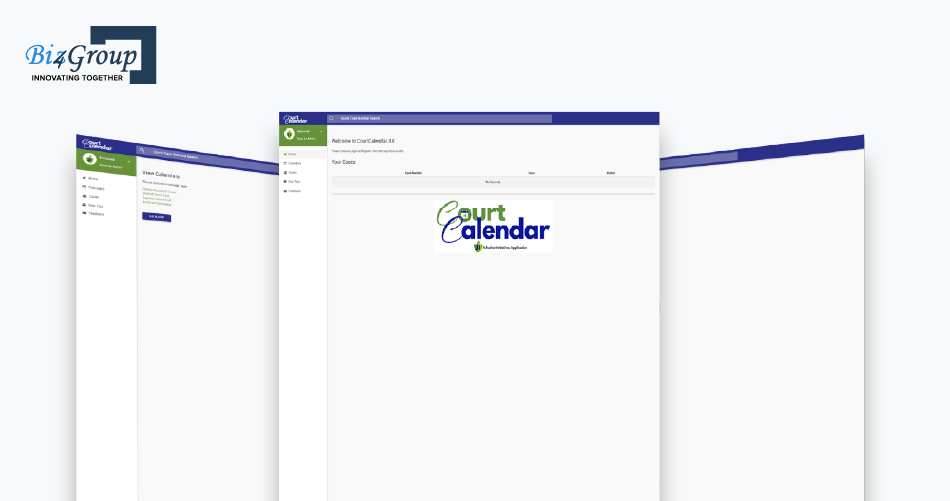
We developed the Court Calendar platform to help attorneys and court staff manage hearings, case schedules, and jurisdiction-specific court events within a centralized interface. The system synchronized legal calendars, tracked appearance deadlines, and reduced dependency on manual coordination between offices. Building platforms like this strengthens our ability to design timekeeping systems that naturally align with how legal professionals organize daily responsibilities.
2. Compliance-Focused Development Methodology
Legal software requires structured data protection and traceable operational controls from the start. Our engineering approach ensures organizations can make law firm timekeeping software with compliance features without introducing complexity later in development cycles.
- Security, audit tracking, and permission governance are embedded during architectural planning stages.
- Compliance considerations remain integrated throughout development, testing, and deployment phases.
Compliance-focused engineering becomes practical when software must support structured legal review and controlled collaboration environments.
Portfolio Spotlight: Trialproofer
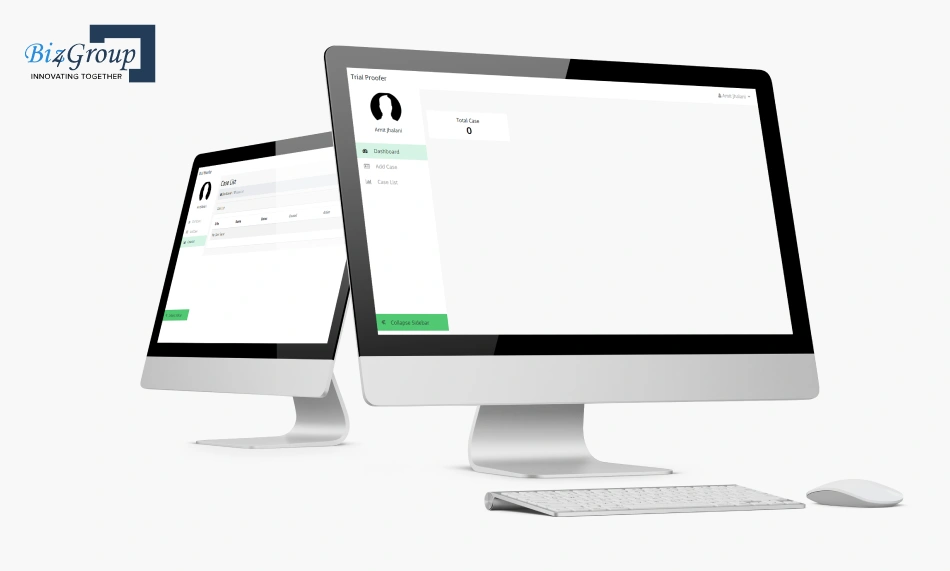
Trialproofer was built as a digital platform supporting legal teams during trial preparation through organized document review and collaborative case workflows. The system enabled controlled access to legal materials while maintaining structured coordination among team members. Projects like Trialproofer demonstrate how compliance considerations guide architecture decisions when developing legal platforms handling sensitive professional information.
3. End-To-End Product Development Ownership
Businesses prefer partners who manage complete product lifecycles with clear accountability. As a software development company in Florida, we support discovery, design, engineering, testing, and scaling within a single coordinated development process.
- Clients receive consistent communication and transparent execution throughout project milestones.
- Dedicated teams ensure continuity from early planning through long-term platform evolution.
4. Proven Experience Across Complex Software Projects
Decision-makers evaluate delivery capability through demonstrated outcomes rather than promises. Our portfolio showcases real-world platforms built to manage operational complexity while maintaining performance under active user environments.
- Experience across enterprise applications strengthens our ability to develop scalable law firm timekeeping software for growing practices.
- Solutions are designed for long-term usability rather than short-term feature delivery.
5. Custom Engineering Built for Long-Term Growth
Every legal organization operates differently, requiring adaptable software foundations. Our teams build attorney-focused systems that evolve alongside changing operational needs and expanding legal service models.
- Flexible architectures support future integrations, automation, and workflow expansion without major redevelopment.
- Development strategies prioritize sustainability and operational continuity across evolving legal environments.
Organizations across the United States partner with Biz4Group LLC for disciplined execution and reliable delivery outcomes. Our experience delivering scalable legal platforms positions us among the top AI development companies in Florida trusted for building dependable legal technology solutions.
Ready To Build Software That Lawyers Actually Want to Use?
Work with a team that understands legal workflows, compliance realities, and scalable product execution from day one.
Schedule A ConsultationConclusion: Planning the Future of Legal Practice Time Management Software
Legal practices are entering a phase where operational clarity matters as much as legal expertise. Businesses investing in law firm timekeeping software development increasingly partner with an AI product development company to build systems that reflect real attorney workflows instead of forcing teams to adapt around rigid tools. The future of legal time management depends on platforms designed around accuracy, accountability, and practical daily usage.
As firms expand services and manage distributed teams, the need to create law firm timekeeping systems for billable hours becomes more strategic than operational. Sustainable platforms must support evolving billing structures while maintaining consistency across reporting, approvals, and time visibility. If you are planning to modernize legal operations, our team is ready to discuss your vision and help you move forward with confidence. Let’s talk.
FAQs About Law Firm Timekeeping Software Development
1. What is law firm timekeeping software development and how does it support modern legal operations?
Law firm timekeeping software development focuses on building systems that help legal teams track billable work accurately, manage approvals, and connect recorded time directly with billing workflows while improving operational transparency across legal practices.
2. How long does it take to develop law firm time tracking software for a growing legal practice?
Development timelines vary based on complexity and integrations. A basic system may take a few months, while platforms designed to develop scalable law firm timekeeping software for growing practices can require extended planning, testing, and deployment phases.
3. What features should businesses prioritize when they build legal timekeeping software solutions?
Organizations should focus on automated time capture, matter-based tracking, billing integration, reporting visibility, and compliance safeguards. These capabilities help create law firm billing and timekeeping software aligned with real attorney workflows and operational needs.
4. Why do firms prefer custom law firm timekeeping software development instead of off-the-shelf tools?
Custom solutions allow firms to design workflows based on internal billing rules, approval structures, and compliance requirements. This flexibility helps organizations create law firm timekeeping systems that match their operational processes instead of adapting workflows around generic software.
5. What compliance factors must be considered when making law firm timekeeping software with compliance features?
Key considerations include encrypted data storage, role-based access controls, audit logs, and secure authentication. These measures protect confidential legal information while supporting regulatory expectations during legal timekeeping software product development.
6. How do businesses choose the best company to develop law firm timekeeping software?
Decision-makers evaluate domain expertise, delivery methodology, scalability experience, and proven legal projects. The best company to develop Law Firm Timekeeping Software demonstrates understanding of legal workflows while delivering reliable, future-ready technology solutions.
