 Location :
Orlando, FL, USA
Location :
Orlando, FL, USA +1 (407) 714-1616
 info@biz4group.com

 AI Summary Powered by Biz4AI
- AI chatbot development for real estate website helps agencies deliver instant answers, smarter property guidance and round-the-clock lead engagement.
- Real estate teams using custom real estate website chatbot development services see stronger conversions thanks to faster responses and automated buyer qualification.
- Modern platforms adopting AI chatbot development solutions for real estate website gain scalable support for property searches, inquiries and follow ups effortlessly.
- Industry stats show rising adoption, with buyers expecting immediate digital assistance and agents relying more on AI for lead handling and client communication.
- Costs typically range from $15,000 to $70,000+ USD, depending on features, integrations and intelligence level.
- Future-ready real estate AI chatbots will offer deeper personalization, smarter recommendations and more intuitive buyer journeys.
Picture this: it’s late Saturday night, a promising site visitor enters your property listings, asks about a 3 bed condo, then disappears with no follow up, no chat, no human contact until Monday.
Sounds familiar? It’s the kind of moment that makes AI chatbot development for real estate website feel like a survival tool, especially when your team is already stretched thin building new workflows around a real estate AI software development project.
Looks like you’ve been searching for these questions everywhere:
- How to add an AI chatbot to my real estate website that answers property questions 24/7?
- Can an AI chatbot qualify leads and send only the serious buyers to my team?
- Can a real estate chatbot to check listing availability and show photos on the spot?
- How do I make an AI chatbot to schedule showings automatically from my site?
- Can the chatbot follow up with website visitors so we don’t lose leads after hours?
Well, chances are you’ve already Googled your way through half a dozen threads trying to figure out the answers to these questions. And if you’re knee deep in lead churn, real estate website AI chatbot development probably sounds like something you need ASAP, particularly when every solution you need has to come from a custom software development company.
If you’re running a real estate business today, you already know the grind. Listings move fast, buyers expect instant responses, and your team is juggling CRM updates, property inquiries and showing requests all at once.
Here’s the big picture:
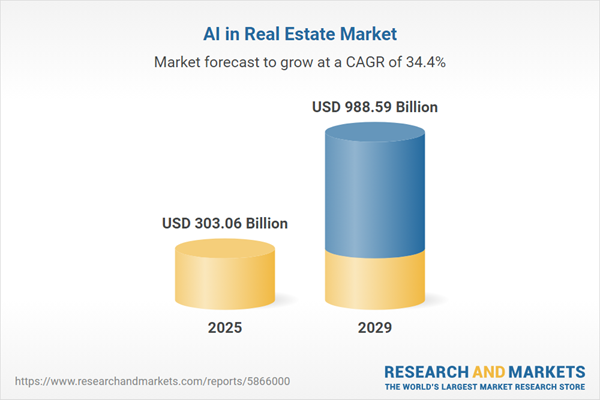
The market for AI in real estate is projected to hit USD 988.6 billion by 2029, up from US 303 billion in 2025.
Meanwhile, the global AI chatbot market alone is expected to reach US 27.3 billion by 2030.
If you’re a founder, CTO or tech manager in a real estate agency, brokerage or proptech startup, it’s time to take notice. This guide will walk you through everything you need to know, including how AI chatbot development for real estate CRM and website automation fits into your digital strategy without drowning you in tech jargon.
What Is an AI Chatbot for Real Estate Website?
An AI chatbot for a real estate website is a conversational system that answers property questions, guides visitors, and supports your team in many ways, some of which are listed below:
- It understands user intent and responds instantly to property inquiries.
- It captures leads and routes qualified prospects to your team.
- It checks listing details, availability, pricing, and photos on demand.
- It connects with your CRM to support smoother follow ups.
- It fits naturally into existing workflows alongside a conversational AI agent.
A well designed AI chatbot development for real estate website stays responsive around the clock and removes friction from everyday property conversations.
How Does an AI Chatbot Work on a Real Estate Website?
An AI chatbot on a real estate website works by taking a visitor’s question, figuring out what they actually mean and delivering the right property answer without slowing anyone down. Once you see the flow, the whole thing feels a lot less mysterious.
1. The Chatbot Listens First
A visitor types something in and the chatbot reads the message the way an agent would. It picks up the details, the intent and the context so it knows if the person wants a showing, photos or pricing.
2. Then it Breaks the Question into Something Usable
The system turns that casual message into a structured task, which could be filtering listings or checking availability. This is where the logic behind AI chatbot development for real estate website really does the heavy lifting.
3. It Pulls the Right Property Info in the Background
The chatbot grabs data from your listings, CRM or connected tools. This works smoothly when your website already runs on clean integrations, especially if you’re using something like AI integration services to keep everything in sync.
4. It Turns the Data into a Real Answer
Once the info is ready, the chatbot writes a clear, friendly message. It may ask a follow up question or guide the visitor toward the next step, which ties neatly into a customer service AI chatbot solution already supporting your workflows.
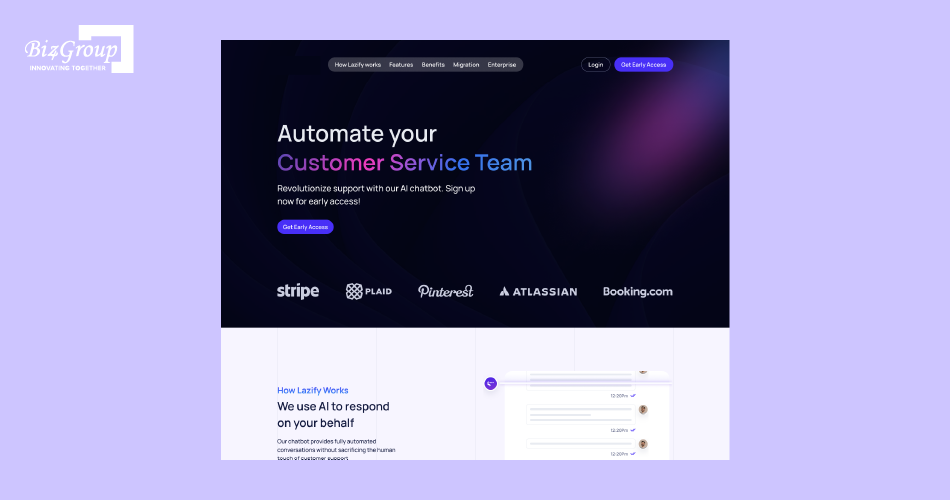
Biz4Group’s AI Driven Chatbot for Human-Like Customer Communication supports real estate teams by handling high volumes of inquiries with natural conversational flow, turning first contacts into meaningful dialogues . It’s a clear illustration of how AI chatbot development for real estate website can replace basic forms and become a genuine engagement engine, enhancing both buyer experience and team efficiency.
5. Then it Captures the Lead without Missing a Beat
If the visitor is interested, the chatbot records their details and sends them directly into your CRM. This is the part that fits into real estate website AI chatbot development, especially when routing and qualification matter.
Here is a quick snapshot of how it all comes together:
| Stage | What Happens |
|---|---|
|
Intent Detection |
The chatbot figures out what the visitor is really asking. |
|
Query Conversion |
It turns the question into a structured property request. |
|
Data Retrieval |
It fetches listing, pricing or availability info. |
|
Response Assembly |
It creates a clear, conversational answer. |
|
Lead Handling |
It captures the lead and pushes it into your CRM. |
The whole process keeps your site feeling responsive and helpful, and once you see how reliable it is behind the scenes, the reasons to invest in it become pretty hard to ignore.
Turn Website Traffic into Real Leads
Upgrade buyer interactions with AI chatbot development for real estate website and deliver instant property answers that keep visitors engaged.
Build My Real Estate AI ChatbotWhy Invest in AI Chatbot Development for Real Estate Website?
Investing in AI chatbot development for real estate website makes sense because today’s buyers expect immediate answers and consistent support. Once you look at how it impacts lead flow and team workload, the value becomes pretty hard to ignore:
1. Stops Leads From Slipping Away After Hours
Most property browsing happens when your team is offline. The chatbot keeps the conversation going by responding, collecting details and holding interest until your agents return, which keeps your sales pipeline from cooling off overnight.
2. Saves Time on Repetitive Conversations
Your team answers the same property questions constantly. The chatbot handles these early touchpoints so your agents focus on people who are ready to move forward. This gets even easier when your workflows are already backed by AI automation services that support task efficiency.
3. Qualifies Leads Before They Hit Your CRM
A chatbot filters casual browsers from committed buyers by asking targeted questions and organizing responses. This supports cleaner pipelines and aligns naturally with real estate website AI chatbot development patterns used in modern real estate systems.
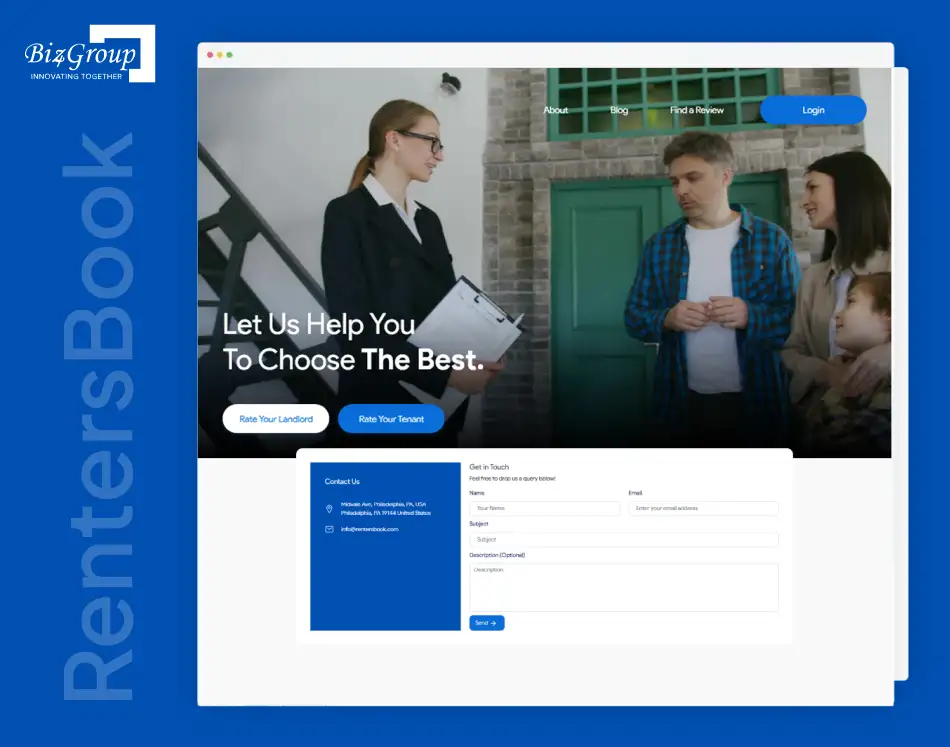
Renter’s Book, an AI-powered platform developed by Biz4Group, provides a centralized digital platform where tenants can review properties, manage interactions and stay informed throughout their renting process . It demonstrates how structured digital engagement leads to better conversions, which is exactly why AI-powered chatbots elevate rental and buyer journeys on modern real estate websites.
4. Keeps Listing Information Accurate
The chatbot pulls data directly from your sources, preventing outdated or inconsistent answers. Clean syncing becomes even more reliable when your business partners with AI consulting services that maintain alignment across systems.
5. Helps Buyers and Sellers Decide Faster
Visitors get clear, instant answers that help them take action sooner. Less friction means higher conversions, which is exactly what AI chatbot development for real estate website is meant to support.
An AI real estate chatbot development company lightens your team’s load while strengthening every part of your digital experience, making it easier to understand the value of the use cases coming next.
Top Use Cases of Chatbot Development for Real Estate Website Integrating AI
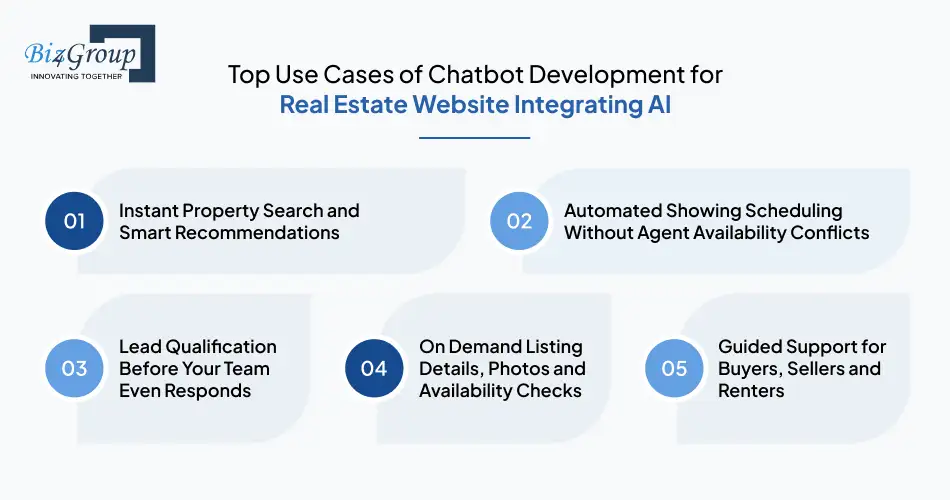
Real estate buyers show up with questions, and they want answers quickly. That is exactly where AI chatbot development for real estate website becomes genuinely useful. Once you match real visitor behaviors with the right automations, the use cases become surprisingly clear, so let’s walk through the ones that matter most.
1. Instant Property Search and Smart Recommendations
Your chatbot helps visitors find the right property without digging through endless filters. It reads their preferences, checks available listings and delivers options instantly. This flow sits naturally inside real estate website AI chatbot development because it removes friction early in the search journey.
- Example: A visitor types “2 bed condos under 650k in Phoenix” and gets matching options instantly.
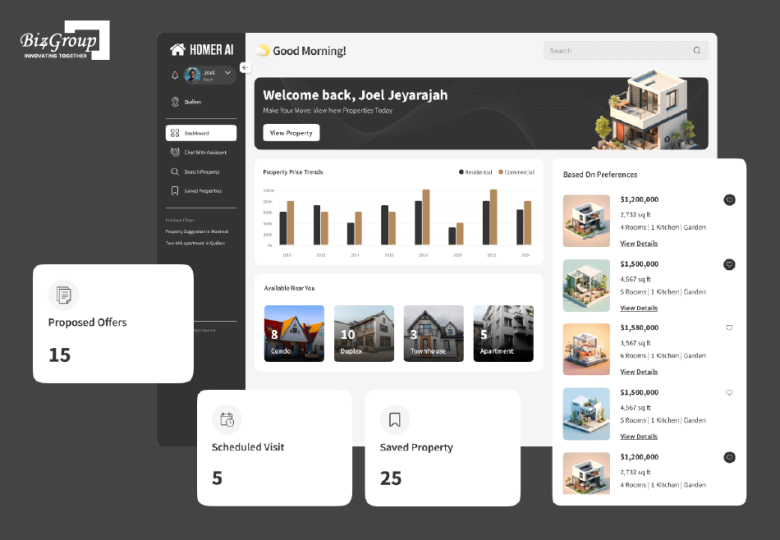
Homer AI, developed by Biz4Group, is a conversational property assistant that connects buyers and sellers in a seamless digital flow, helping them explore listings, exchange details and move closer to decisions. Its interaction style mirrors exactly what modern real estate websites need when building intelligent chatbots that feel human and support users throughout the property journey.
2. Automated Showing Scheduling Without Agent Availability Conflicts
Instead of juggling calls and calendars, the chatbot checks open slots and books showings without slowing either side down. It keeps everything moving smoothly while coordinating behind the scenes.
- Example: The scheduling flow works alongside an existing system built around enterprise AI solutions.
3. Lead Qualification Before Your Team Even Responds
Your AI chatbot for real estate lead generation asks clarifying questions, identifies real intent and filters out casual browsers before they ever reach your CRM. This keeps your team focused on people who are genuinely ready.
- Example: Lead qualification logic operates within a workflow that already uses AI model development.
4. On Demand Listing Details, Photos and Availability Checks
Instead of sending people across multiple pages, the chatbot pulls listing data instantly and shares it in a single message that feels both clear and helpful.
- Example: Property information stays consistent across tools connected through a process used to build real estate AI software.
5. Guided Support for Buyers, Sellers and Renters
The chatbot adjusts the conversation based on the visitor, whether they are browsing, comparing options or exploring next steps. It keeps things simple while nudging them forward.
- Example: A renter receives step by step guidance inside a setup that’s powered by AI for real estate agents.
| Use Case | What It Achieves |
|---|---|
|
Property Search |
Helps buyers find matching listings instantly |
|
Showing Scheduling |
Books visits without manual coordination |
|
Lead Qualification |
Sorts serious buyers from casual visitors |
|
Listing Details |
Quickly shares photos and availability |
|
Guided Assistance |
Supports different visitor journeys |
A clear set of use cases like these makes the next layer of features feel much more relevant once you see how everything comes together operationally.
Help Buyers Find the Right Property Faster
Boost discovery and qualification with real estate website AI chatbot development services that guide users from search to scheduling.
Start My AI Chatbot ProjectMust-Have Features in Real Estate Website AI Chatbot Development
The best real estate chatbots feel effortless on the surface, but underneath they run on a tight set of core features. These features are the backbone of AI chatbot development for real estate website, and they shape how smoothly real estate website AI chatbot development performs across day to day workflows.
So, if you are wondering what features should an AI chatbot for a real estate website include? Here is what truly matters:
| Core Feature | Why It Matters |
|---|---|
|
Natural Language Understanding |
Helps the chatbot understand everyday questions so buyers feel like they are talking to a real assistant. |
|
Intent Recognition |
Identifies what the visitor actually wants, whether it is a showing, pricing or availability. |
|
Property Search Logic |
Filters listings by price, location and preferences without forcing users through long forms. |
|
Real Time Data Sync |
Keeps prices, photos & availability updated with connected systems like a setup that includes business app development using AI. |
|
CRM Integration |
Sends qualified leads directly into your CRM without manual entry. |
|
Conversational Routing |
Guides visitors toward the right next step with simple, natural prompts. |
|
Automated Follow Ups |
Sends quick nudges to visitors who left mid conversation or requested more details. |
|
Multi Channel Support |
Works across your website, mobile app or messaging channels to stay consistent everywhere. |
|
User Attribute Capture |
Records preferences, budget ranges and timelines so your team gets context instantly. |
|
Workflow Compatibility |
Fits into broader systems that may already involve a software development company in Florida. |
These core features are what make the chatbot feel dependable in real everyday use. They keep conversations smooth, keep data accurate and keep your team from drowning in repetitive tasksWith that kind of stability handling the basics, it becomes much easier to layer on smarter capabilities that take the experience even further.
How to Manage Lead Qualification and Human Handoff in an AI Chatbot for Commercial Real Estate?
Lead qualification and human handoff should be treated as a continuous workflow, not two separate tasks. An AI chatbot should identify visitor intent, gather the right information through natural conversations, recognize when human expertise is needed, and transfer the conversation with complete context. This helps sales teams focus on high-intent leads while giving visitors a smoother, more personalized experience.
|
Customer Journey Stage |
What the AI Chatbot Does |
When a Human Agent Steps In |
|---|---|---|
|
Visitor Starts the Conversation |
Welcomes the visitor, answers common questions, and understands whether they're looking to buy, sell, rent, or simply explore listings. |
Not required unless the visitor specifically requests an agent. |
|
Visitor Shows Genuine Interest |
Gradually qualifies the lead by learning about their budget, preferred location, property type, timeline, and other relevant preferences through a natural conversation. |
Still not required. The chatbot continues gathering useful context while keeping the conversation engaging. |
|
Visitor Needs Expert Assistance |
Recognizes buying signals such as requests for property tours, negotiations, financing discussions, or detailed legal questions. It stops trying to answer everything on its own and prepares the conversation for a handoff. |
An agent joins the conversation to provide personalized guidance, answer complex questions, or help move the transaction forward. |
|
Conversation Is Handed Off |
Shares the visitor's contact details, conversation summary, property preferences, budget, and any other relevant information collected during the chat. |
Continues the conversation with full context instead of asking the visitor to repeat information, creating a seamless customer experience. |
The goal isn't to replace human real estate agents. It's to make sure they spend less time qualifying every inquiry and more time helping people who are ready to take the next step. By letting real estate AI chatbot development services handle routine conversations and involving agents when their expertise adds the most value, businesses can improve lead quality, reduce response times, and create a more efficient sales process.
Next-Level Features for Real Estate Website AI Chatbot Development Services
Once the core features are set, this is where your chatbot starts feeling genuinely sharp. These advanced capabilities take AI chatbot development for real estate website from basic automation to something that actually supports real buyer decisions in real time.
1. Personalized Property Matching With Behavioral Understanding
The chatbot reads patterns in user behavior, adjusts recommendations on the fly and makes suggestions feel custom instead of generic. It evolves with every interaction and fits neatly into workflows that already use generative AI as part of their data logic.
2. Automated Document and Information Delivery
When someone asks for floor plans, brochures or neighborhood details, the chatbot retrieves the files instantly and delivers them without slowing the conversation. It removes the repetitive handoff work your team would normally handle and keeps momentum in the buyer journey.
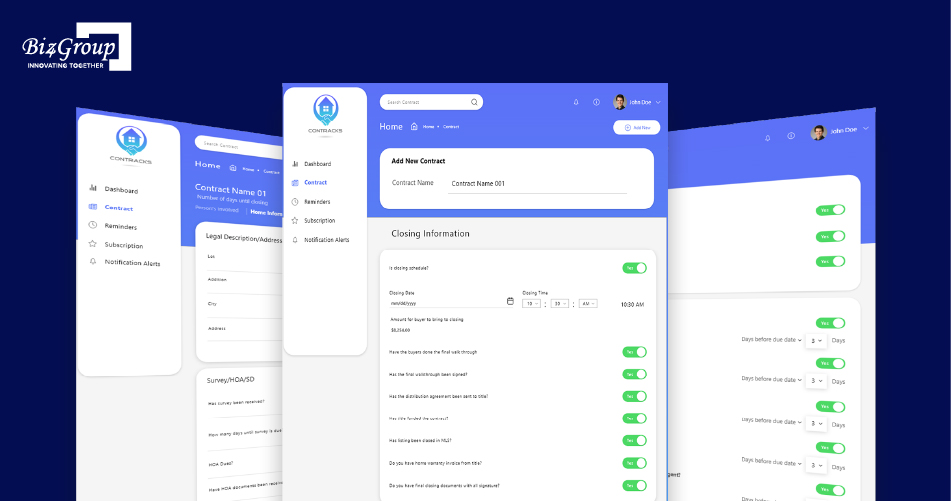
Contracks simplifies real estate contract management by offering alerts, progress tracking and structured documentation for every transaction stage. It highlights how AI tools can reduce friction in complex property workflows, which is the same efficiency buyers expect when interacting with chatbots that guide them from inquiry to closing tasks.
3. Multi Step Conversations That Mirror Human Agents
The chatbot keeps track of context so visitors can compare listings, revisit earlier questions or explore neighborhoods without starting over. This creates a natural rhythm in the conversation that pairs well with systems built around AI agent implementation for operational support.
4. Dynamic Guided Journeys for Sellers and Renters
The chatbot adjusts its entire flow based on whether the visitor is buying, selling or renting, which keeps the guidance relevant and personal. This adaptive behavior strengthens how real estate website AI chatbot development supports multiple user paths on a single site.
5. Intelligent Lead Scoring and Buyer Readiness Detection
The chatbot notices subtle cues like browsing depth, urgency hints and follow up intent to score leads more intelligently. This helps your team prioritize faster, especially in setups that already include product development services as part of the development workflow.
These advanced capabilities add a new layer of intelligence to the chatbot, making the upcoming development process feel much more intuitive once you see how all the pieces connect.
How to Make Real Estate Website AI Chatbot: A Step-By-Step Process
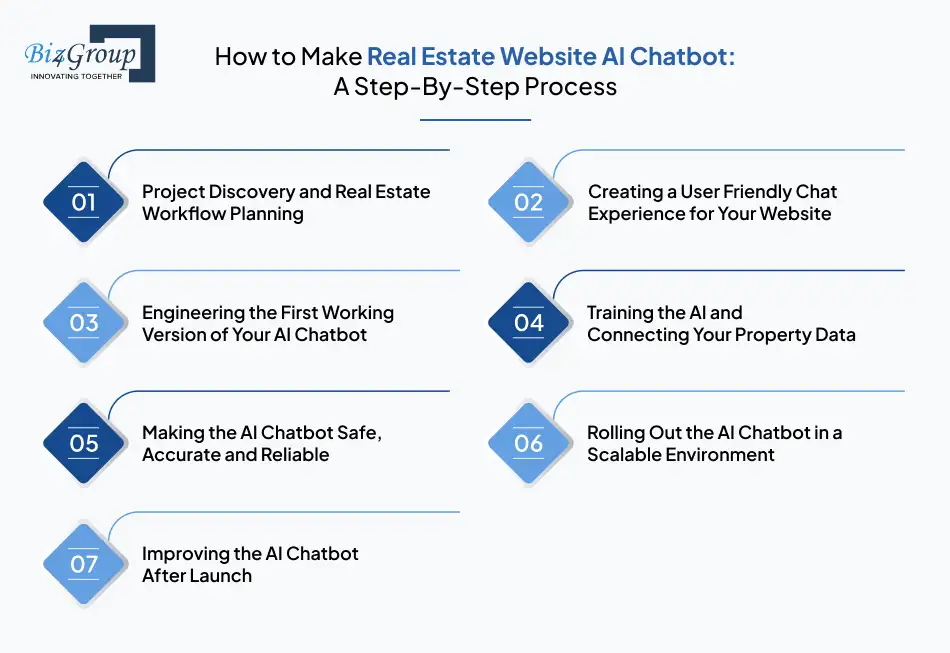
Building an AI chatbot for a real estate website is not just about adding automated replies. It is about creating a digital assistant that understands your listings, your MLS data, your CRM workflows and the unpredictable rhythm of your buyers. With AI chatbot development for real estate website at the center, the process works best when it follows a structured plan grounded in real property operations.
1. Project Discovery and Real Estate Workflow Planning
Real estate conversations are unpredictable. One buyer wants school districts, another wants HOA rules, another is hunting for off market deals at 2 a.m. Discovery is where you determine which of these conversations your chatbot should own from day one. The goal is to make real estate website chatbot with AI that solves the exact problems draining your team’s time.
- Identify the top questions buyers and renters ask before submitting an inquiry.
- Map all MLS/IDX data your chatbot must tap into, like availability, and pricing
- Validate how lead details flow into your CRM, where automation is most needed.
- Set KPIs like improving lead response time or increasing showing requests.
This ensures real estate website AI chatbot development begins with real field insights, not assumptions.
2. Creating a User Friendly Chat Experience for Your Website
If the chatbot feels confusing, buyers abandon it the same way they abandon cluttered listing pages. Real estate shoppers need an interface that helps them explore neighborhoods, compare properties and ask follow up questions without feeling like they are wrestling a support bot. This is where an experienced UI/UX partner helps in shaping the entire experience.
- Prototype conversation flows for property search, availability checks and showing scheduling.
- Test layouts with renters, luxury buyers and first timers to capture real behaviors.
- Add quick-action elements like “Show me similar homes” to reduce effort.
- Ensure consistency across desktop, mobile and listing detail pages.
Also read: Top UI/UX Design Companies in USA
3. Engineering the First Working Version of Your AI Chatbot
Your MVP should behave like a competent junior agent: answer basic questions, pull listings accurately and capture leads reliably. Overbuilding early only slows you down. The smart path is creating an MVP that handles high-volume conversations tied to actual buyer flows. This keeps development of AI chatbot for real estate website lean and practical.
- Build the core engine to fetch property details from MLS/IDX feeds.
- Add modules for quick FAQ answers like price, availability and tour options.
- Enable CRM integration so qualified leads route automatically to your agents.
- Design backend to easily add advanced features later like neighborhood insights.
Also read: Top 12+ MVP Development Companies in USA
4. Training the AI and Connecting Your Property Data
This is where the chatbot becomes intelligent instead of reactive. Real estate data is diverse: photos, price changes, lot sizes, school ratings, walkability scores and more. Your chatbot must read these datasets as cleanly as a seasoned agent. This is the stage where AI chatbot development solutions for real estate website start adding real value.
- Integrate MLS/IDX data pipelines so the chatbot always shows fresh listings.
- Train AI models to grab terms like contingencies, comps, pre approvals and zoning.
- Add logic to compare properties based on buyer preferences and search history.
- Use learning loops so the chatbot improves with every conversation.
This step determines whether your chatbot simply responds or actually guides.
5. Making the AI Chatbot Safe, Accurate and Reliable
A chatbot dealing with buyer budgets, contact details and property interest must operate securely. Real estate websites handle sensitive personal data daily, so your chatbot needs airtight compliance and rigorous testing long before it meets actual leads.
- Test data flows for PII protection when capturing lead details.
- Simulate showing requests, property comparisons and search filters to find gaps.
- Stress test MLS sync to ensure no broken or outdated listings appear mid chat.
- Validate role based access so only authorized staff manage chatbot controls.
This is how you build trust before buyers ever submit a request.
Also Read: Software Testing Companies in USA
6. Rolling Out the AI Chatbot in a Scalable Environment
Real estate traffic is unpredictable. One viral listing can bring thousands of sessions within hours. Your chatbot must stay responsive regardless of how many people are browsing at once. Smart deployment ensures your chatbot works even on your busiest listing days.
- Use scalable cloud architecture to handle traffic spikes effortlessly.
- Run CI and CD pipelines so new improvements roll out without downtime.
- Monitor behavior patterns such as popular neighborhoods and property types.
- Document setup so that all your agents, ops team and marketing team know how to use the bot.
A stable deployment lets your chatbot feel like a natural extension of your website.
7. Improving the AI Chatbot After Launch
A real estate chatbot is never “done.” Buyer expectations change. Inventory changes. Market conditions shift. Post launch optimization ensures your chatbot keeps up with your business and your visitors.
- Add features that support sellers or investors as your audience grows.
- Retrain models with fresh MLS data and new buyer behavior trends.
- Track metrics like showing requests, saved searches and chat to lead conversion.
- Prioritize updates based on recurring questions and conversation drop off points.
This is how your chatbot grows from a tool into a long term digital asset.
By treating each phase as a strategic build instead of a checklist, you end up with a chatbot that supports MLS data, CRM workflows and real buyer behavior without cutting corners. With the process mapped out, the next step is understanding which tech stack can actually make that level of reliability possible.
Bring Intelligence to Every Property Conversation
Use AI chatbot development solutions for real estate website to automate inquiries, streamline workflows and support agents effortlessly.
Plan My AI Chatbot BuildHow Can an AI Chatbot Integrate with a Real Estate CRM and Property Listings?
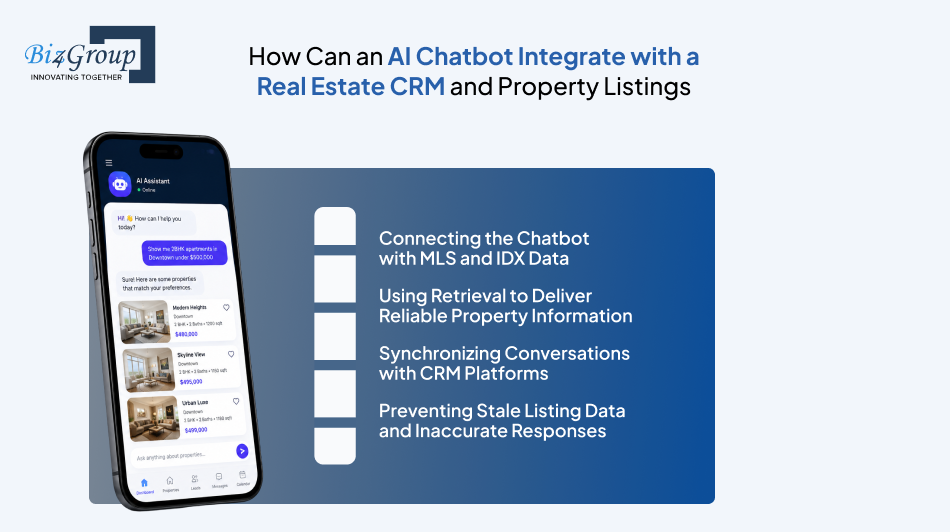
AI chatbot for real estate websites are only as good as the systems behind them. If they can't access current property listings or share qualified leads with your sales team, they quickly become basic chat widgets. That's why MLS, IDX, and real estate CRM chatbot integrations should be a single connected workflow. The chatbot should pull live property information before answering listing-related questions and automatically pass qualified conversations to your CRM so agents can take over without losing context.
1. Connecting the Chatbot with MLS and IDX Data
Imagine a visitor asking, "Do you have any three-bedroom homes under $600,000 near downtown?" They expect an answer, not a link to your search page.
To deliver that experience, the chatbot needs access to the same MLS or IDX data that powers your website. Instead of relying on pre-written responses, it searches current listings and responds with properties that actually match the visitor's request.
The benefit isn't just convenience. Because the chatbot works with live listing data, visitors can continue asking follow-up questions about pricing, availability, neighborhoods, or property features without starting their search over again. The conversation feels natural because it's built around real-time property information.
2. Using Retrieval to Deliver Reliable Property Information
So, if the chatbot already has access to listing data, why does retrieval matter?
The answer is simple. AI models aren't designed to remember live property listings. They generate responses based on patterns in their training data, while property information changes constantly.
A retrieval-first approach solves that problem during AI real estate website chatbot development. Before answering a question, the chatbot fetches the latest listing details and uses that information to generate its response. Whether someone asks if a property is still available or whether the price has changed, the answer comes from current data instead of memory. That not only improves accuracy but also builds confidence in the information visitors receive.
3. Synchronizing Conversations with CRM Platforms
Now suppose the visitor wants to schedule a showing. Should they have to fill out another form and repeat everything they've already shared?
Ideally, no.
Once someone expresses genuine interest, the chatbot should automatically send the conversation to your CRM. Along with contact details, it can include the visitor's preferred locations, budget, property requirements, and a summary of what was discussed. That gives agents everything they need to continue the conversation without asking the same questions again.
The result is a smoother experience for the customer and a faster, more organized sales process for your team.
4. Preventing Stale Listing Data and Inaccurate Responses
Even with the right integrations in place, there's one final challenge to solve. What if a property's status changes while the conversation is happening?
Rather than guessing, the chatbot should check the latest listing information before responding. If the availability or price can't be confirmed, it's better to say so and connect the visitor with an agent than risk sharing outdated information.
Small details like these make a big difference in AI chatbot development service for websites. When visitors consistently receive accurate answers and agents receive complete lead information, the chatbot becomes more than a customer support tool. It becomes a reliable part of your real estate sales process.
Choosing the Right Tech Stack for AI Chatbot Development for Real Estate Website
A real estate chatbot only runs smoothly when the technology behind it can support fast searches, MLS data updates and real-time conversations without slowing down the site. The right tools make AI chatbot development for real estate website reliable enough to handle real buyer activity at scale, so let’s look at the stack that actually works for this space:
| Label | Preferred Technologies | Why It Matters |
|---|---|---|
|
Frontend Framework |
ReactJS, Vue.js |
ReactJS development keeps the chatbot widget smooth on listing-heavy pages and fit well inside environments that use . |
|
Server-Side Rendering & SEO |
NextJS, NuxtJS |
NextJS development helps listing pages load fast and keep SEO intact for property URLs while aligning with setups that include . |
|
Backend Framework |
NodeJS, Python |
NodeJS development and Python development handle real-time queries like pricing checks and showing requests. |
|
API Development & Integration |
REST APIs, GraphQL |
They connect MLS/IDX feeds, CRMs and internal databases so the chatbot can fetch accurate property details instantly. |
|
AI & Data Processing |
TensorFlow, PyTorch |
These engines power listing interpretation, NLP intent detection and personalized recommendations. |
|
Database Layer |
MongoDB, PostgreSQL |
These databases store listing metadata, user preferences and chat logs to maintain context through long sessions. |
|
Real Estate Data Integration Layer |
MLS APIs, IDX Feeds |
They keep pricing, photos and availability synced so buyers never see outdated listings. |
|
Scheduling & Availability Services |
Calendar APIs, Showing platforms |
They allow the chatbot to book tours, check agent availability and send confirmations automatically. |
|
Deployment & Scaling |
AWS, GCP |
These platforms ensure fast response times during traffic spikes from high-interest listings. |
|
Authentication & Security |
OAuth, JWT |
They protect buyer details like budgets, viewing history and saved properties. |
|
CRM Sync Layer |
Salesforce, HubSpot |
These systems route qualified leads instantly to your agents or inside sales team. |
With the right tech stack in place, your chatbot can handle real estate workflows confidently, from listing lookups to showing requests to CRM routing. Now the big question becomes: what will it cost to build at different levels of complexity?
Cost of Real Estate Website AI Chatbot Development (MVP to Enterprise)
Real estate website chatbot development cost depends heavily on how much intelligence you want it to have and how deeply it connects with your MLS data, CRM, and website ecosystem. Most businesses investing in AI chatbot development for real estate website spend somewhere between $15,000 and $70,000 plus, and this is a ballpark range meant to give decision makers a realistic starting point.
For those asking: “How much does it cost to develop a custom AI real estate chatbot?”
Here is what the investment typically looks like:
| Build Level | What It Includes | Estimated Cost (USD) |
|---|---|---|
|
MVP Chatbot |
Basic property search responses, simple FAQs, CRM lead capture, limited MLS sync – built during MVP software development |
$15,000 to $25,000 |
|
Mid Level Chatbot |
Smarter search logic, showing scheduling, deep MLS integrations, contextual replies, refined flows built through real estate website AI chatbot development |
$30,000 to $45,000 |
|
Advanced Chatbot |
Personalized recommendations, multi step conversations, AI powered lead scoring, multi channel support, advanced CRM routing |
$45,000 to $60,000 |
|
Enterprise Chatbot |
Full scale automation across buying, selling and renting, predictive analytics, advanced data pipelines, custom workflows, high performance architecture |
$60,000 to $70,000 plus |
A clear cost breakdown helps you decide whether you want a chatbot that simply answers questions or one that becomes a real part of your digital workflow. With the pricing landscape in view, it becomes easier to explore how these systems actually generate revenue beyond operational efficiency.
Also Read: Enterprise AI Chatbot Development Cost in 2026
Scale Your Real Estate Platform with Smart Automation
Enhance engagement and lead flow using chatbot development for real estate website integrating AI tailored for your business goals.
Enhance My Real Estate PlatformBuild vs. Buy: Which Approach Is Better for a Real Estate AI Chatbot?
The right choice depends on your business goals, budget, and long-term requirements. Buying an off-the-shelf chatbot is faster and works well for businesses with standard workflows. Building a custom AI chatbot offers greater flexibility, deeper integrations, and full control over features, making it a better fit for brokerages, real estate marketplaces, and enterprises with unique operational needs.
|
Factor |
Build a Custom AI Chatbot |
Buy a Ready-Made Chatbot |
|---|---|---|
|
Time to Launch |
Longer development timeline due to planning, development, and testing. |
Can be deployed quickly with minimal setup. |
|
Customization |
Fully tailored to your business processes, branding, and user journeys. |
Limited to the features and customization options offered by the vendor. |
|
MLS & CRM Integration |
Can integrate with your preferred MLS, IDX, CRM, and other internal systems. |
Integrations are available only if supported by the platform. |
|
Scalability |
Easier to extend with new AI capabilities, workflows, and business requirements over time. |
Scaling beyond the platform's built-in capabilities may require workarounds or premium plans. |
|
Ownership & Control |
You own the solution, data flows, and product roadmap. |
The vendor controls updates, feature releases, and platform limitations. |
|
Upfront Investment |
Higher initial development cost with greater long-term flexibility. |
Lower upfront cost with subscription or licensing fees. |
|
Maintenance |
Requires ongoing maintenance, monitoring, and feature enhancements. |
Most maintenance is handled by the solution provider. |
|
Best For |
Enterprises, large brokerages, proptech platforms, and businesses with complex requirements. |
Small agencies, startups, and businesses looking for a quick AI adoption path. |
There isn't a one-size-fits-all answer when it comes to getting an AI chatbot for real estate investors. If your priority is launching quickly with standard functionality, a ready-made solution can be a practical starting point. However, if your business depends on custom workflows, advanced lead qualification, seamless MLS and CRM integrations, or differentiated customer experiences, investing in AI chatbot development for a real estate website provides the flexibility to evolve alongside your business instead of adapting your processes to fit the software.
Common Obstacles in Development of AI Chatbot for Real Estate Website
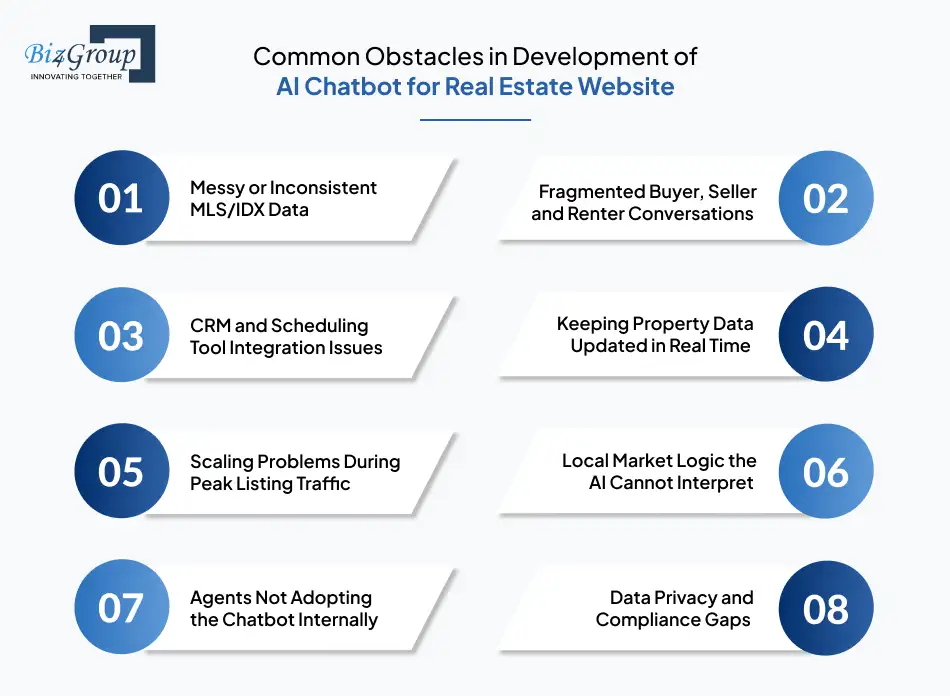
Real estate chatbots look simple on the surface, but the backend work gets messy fast. From MLS data quirks to complex CRM handoffs, teams often hit roadblocks they never saw coming. Here are the challenges that matter most, and how to keep them from derailing AI chatbot development for real estate website projects:
| Top Challenges | How to Solve Them |
|---|---|
|
Messy or Inconsistent MLS/IDX Data |
Build structured data pipelines, enforce update intervals and unify fields like pricing, beds, baths and status. Use patterns similar to those used in AI for real estate. |
|
Fragmented Buyer, Seller and Renter Conversations |
Train the chatbot with distinct intent models for each user path so it knows the difference between a pre approval query, a valuation request or a rental availability question. |
|
CRM and Scheduling Tool Integration Issues |
Implement strong API connectors and event based triggers to ensure immediate lead routing and smooth showing booking like AI in real estate development. |
|
Keeping Property Data Updated in Real Time |
Use webhooks or polling logic to refresh listing status, photos, pricing and availability the moment the MLS updates. |
|
Scaling Problems During Peak Listing Traffic |
Deploy auto scaling cloud infrastructure so response times stay fast even when thousands of buyers browse the same property. |
|
Local Market Logic the AI Cannot Interpret |
Train models with neighborhood names, HOAs, zoning language, school districts and regional terms to avoid irrelevant or generic answers. |
|
Agents Not Adopting the Chatbot Internally |
Train teams to treat the bot as the first touch assistant, not competition. Show how it filters noise and brings them only high intent conversations. |
|
Data Privacy and Compliance Gaps |
Implement secure storage, PII masking and access controls so buyer details, budgets and communication logs meet compliance standards. |
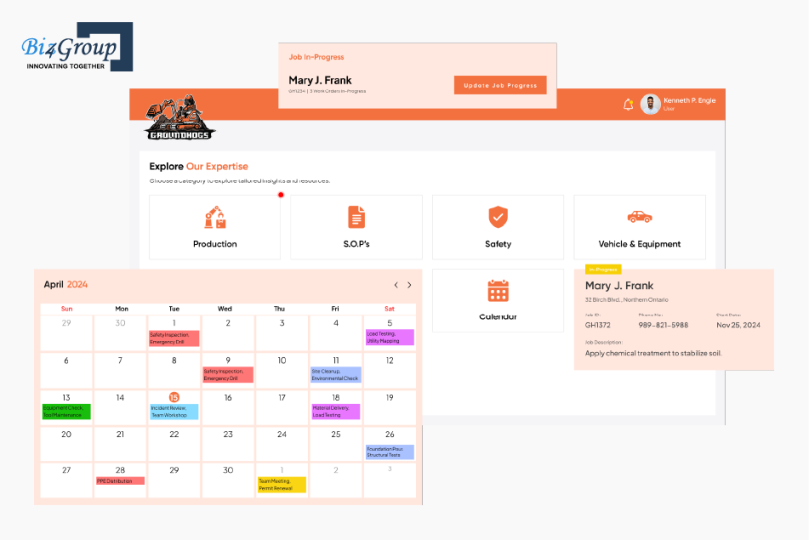
Groundhogs, an AI platform built by Biz4Group, streamlines operational activity with real-time task tracking, safety updates and centralized communication on construction sites. Its ability to organize dynamic data environments parallels the technical discipline needed for AI chatbots that adapt to changing listing information, buyer actions and time-sensitive property updates.
Getting such challenges out of the way removes most of the hidden friction teams deal with during development. It also makes it much easier to focus on the practices that keep a real estate chatbot reliable day after day.
Best Practices for Developing Property Search Chatbots Using AI for Real Estate Website
A reliable chatbot comes from clear planning, clean data and a build process shaped around how real buyers think. These practices help AI chatbot development for real estate website run smoother and deliver answers that actually feel useful.
1. Use Real Conversations to Shape the Training Data
Feed the chatbot actual buyer and seller questions from past inquiries so it picks up the real language people use when exploring homes online. Many teams even borrow phrasing patterns from internal tools like the ones used in develop rental property website with AI to create more natural dialogue.
2. Keep Listing Data Fresh and Fully Synced
Your chatbot loses credibility the moment it suggests a property that is sold or incorrectly priced. Set up syncing rules that keep MLS and CRM details aligned at all times. Some workflows naturally sit beside systems used for AI virtual property tour app development, which helps maintain consistency.
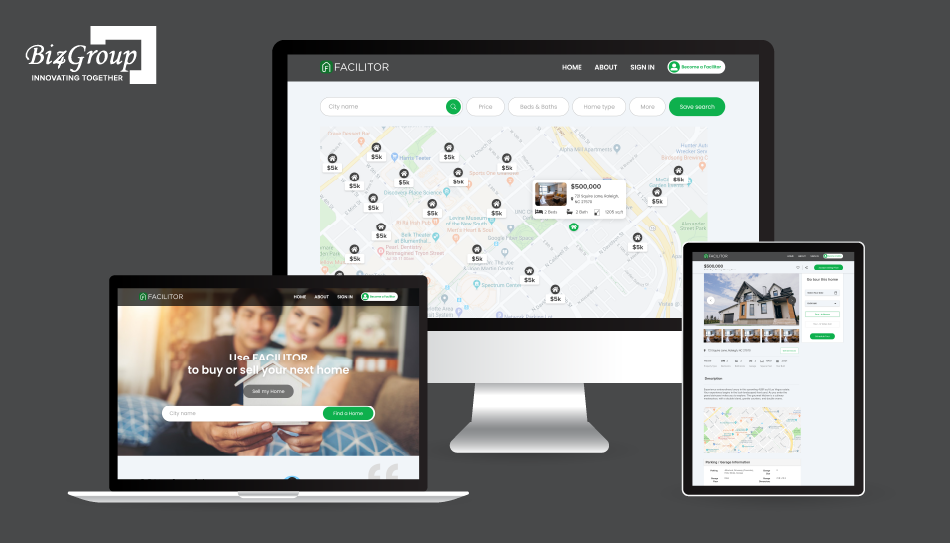
Facilitor improves facility operations by bringing inspection logs, task management and status tracking into one coordinated system. The same clarity and organization that make it effective are key when building real estate chatbots that manage multiple user requests, property inquiries and follow-ups with accuracy.
3. Build Separate Flows for Buyers, Sellers and Renters
Every user group has a different intent pattern, so one-size-fits-all logic does not work. Designing tailored conversation paths avoids generic replies and keeps journeys smooth. It is the clarity that product teams use when planning features in an environment that supports enterprise AI agent development.
4. Test the Bot Against Real Listings and Local Scenarios
Simulate actual listing searches, neighborhood queries and showing requests to see how the chatbot responds under real traffic patterns. Teams that work with broader digital ecosystems to build AI software often use similar stress testing during rollout.
5. Improve Continuously With Feedback Loops
Let buyers and agents report unclear answers so the system keeps evolving. This feedback strengthens real estate website AI chatbot development services by refining intent detection and supporting chatbot development for real estate website integrating AI with better accuracy across property searches.
Strong best practices like these keep your chatbot sharp and dependable, and they set the stage for the next big question: where this technology is heading and how it will reshape the real estate experience in the coming years.
Give Your Buyers the Experience They Expect
Modernize your property journeys with how to make real estate website AI chatbot strategies that keep every visitor moving toward action.
Upgrade My Real Estate WebsiteCompliance and Implementation Mistakes to Avoid During AI Chatbots Development for Real Estate Business
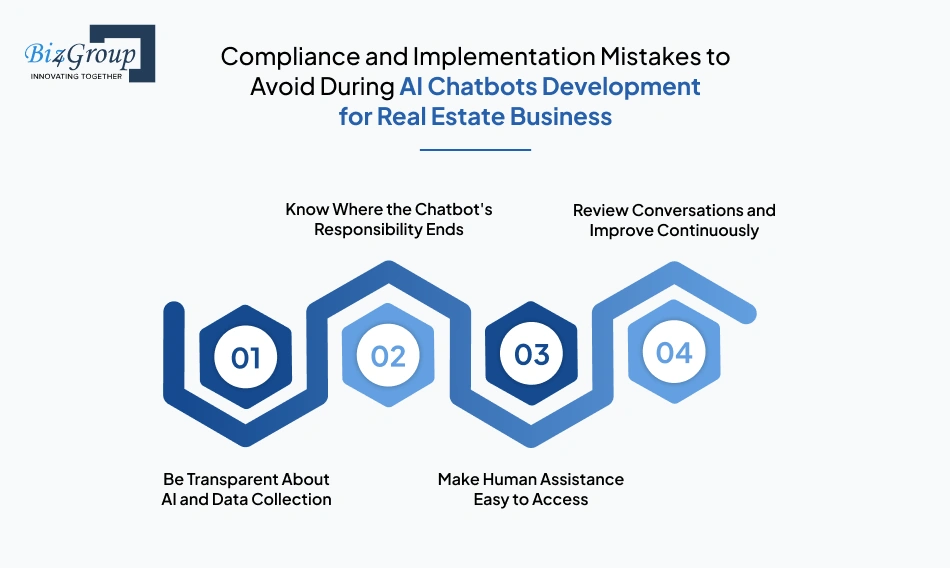
Compliance and implementation mistakes when developing AI chatbots for real estate can be avoided by following privacy regulations, being transparent about AI capabilities, collecting only necessary user information, providing clear human handoff options, and continuously reviewing chatbot performance after deployment. Addressing these areas early helps reduce legal risks, improve user trust, and create a more reliable customer experience.
1. Be Transparent About AI and Data Collection
When visitors interact with your chatbot, they should know they're talking to AI and understand how the information they share will be used. Whether you're collecting contact details, property preferences, or budget, ask only for information that's relevant to the conversation.
A brief explanation about why the data is being collected and how it supports the next step can make the interaction feel more trustworthy. It also helps your business stay aligned with privacy regulations and evolving customer expectations around data handling.
2. Know Where the Chatbot's Responsibility Ends
AI can simplify property searches and answer common real estate questions, but it shouldn't replace professional expertise. What happens if a visitor asks whether a contract clause is legally binding or seeks advice on choosing the right mortgage?
Instead of attempting to answer, the chatbot should clearly acknowledge its limitations and recommend speaking with a qualified real estate agent, lender, or legal professional. Knowing when to hand over complex conversations protects users from misleading information and helps your business maintain credibility.
3. Make Human Assistance Easy to Access
Most visitors are comfortable chatting with AI until they reach a point where they need personal guidance. That could be scheduling a property tour, discussing negotiation strategies, or asking questions that require local market expertise.
If reaching a human feels difficult, visitors may leave instead of continuing the conversation. Providing a clear option to connect with an agent, request a callback, or book a consultation ensures the chatbot supports the customer journey rather than becoming a barrier.
4. Review Conversations and Improve Continuously
Launching a chatbot isn't the final step. How do you know if it's actually helping your visitors?
The answer lies in the conversations it has every day. Regularly review chat transcripts to identify unanswered questions, repeated customer requests, or points where users leave the conversation without taking action. These insights can help you refine responses, improve conversation flows, and uncover new automation opportunities.
A chatbot that evolves based on real customer interactions is far more likely to deliver consistent value than one that's left unchanged after deployment.
The Future of AI Chatbot Development for Real Estate Websites
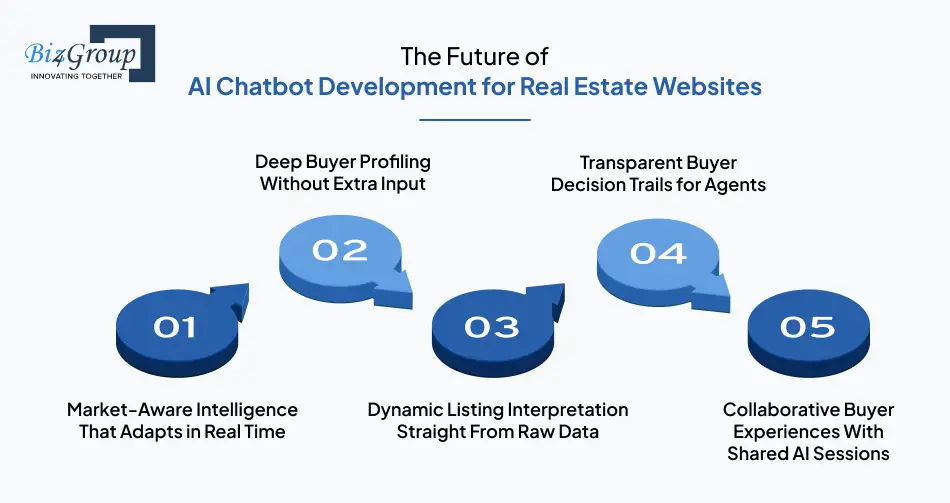
Real estate chatbots are moving toward a far more intuitive and autonomous role than anything we use today. The next phase of AI chatbot development for real estate website will reshape how buyers search, evaluate and commit to properties online. Here is what is genuinely coming next:
1. Market-Aware Intelligence That Adapts in Real Time
Future chatbots will interpret local market signals as they shift, adjusting guidance based on supply, demand, pricing patterns and micro trends. This moves the experience closer to a live market analysis. Some teams are already exploring these adaptive ways while working on unique real estate AI apps ideas.
2. Deep Buyer Profiling Without Extra Input
Instead of asking buyers endless questions, the chatbot will infer needs over time based on browsing patterns, and engagement signals. It quietly builds a profile that feels accurate without being intrusive. Early foundations of this thinking can be seen in discussions around generative AI in real estate, where personalization is seamless.
3. Dynamic Listing Interpretation Straight From Raw Data
Rather than relying only on MLS descriptions, chatbots will begin interpreting raw property data to generate unique highlights. Two buyers might see two very different summaries of the same listing based on what matters most to them. Product teams who build AI real estate app MVP already think in this direction as it creates richer context.
4. Transparent Buyer Decision Trails for Agents
Agents will soon receive a simple storyline showing what each buyer explored, hesitated on, revisited or completely ignored. Instead of scattered sessions, the chatbot will present a clear buyer journey that shortens sales cycles. A similar structured view of user patterns often appears in systems aligned with AI real estate lease management software.
5. Collaborative Buyer Experiences With Shared AI Sessions
Buyers will be able to share a chatbot session with a partner, friend or family member, and the bot will manage the combined preferences in a single conversation. It reduces back and forth and creates a smoother shared decision process. This directly enhances real estate website AI chatbot development services by supporting more realistic buying behavior.
The future of real estate chatbots is clearly moving toward deeper context, smarter interpretation and more thoughtful buyer support. With this direction in mind, it becomes even more important to choose a development partner who can build for today while preparing your platform for what is clearly coming next.
Why Choose Biz4Group for AI Chatbot Development for Real Estate Website?
Choosing the right partner can make or break a project as central as a real estate chatbot. Biz4Group brings the technical depth, industry insight and execution quality needed for AI chatbot development for real estate website, supported by experience that reflects how real buyers and agents actually interact online.
Our delivery record speaks for itself. Solutions like Homer AI, Renter’s Book, and the AI-Driven Customer Communication Chatbot show how naturally we build conversational systems around real property behavior. And when you look at platforms like Contracks, Groundhogs, and Facilitor, it becomes clear how well our engineering scales across structured workflows that support real estate website AI chatbot development services.
These strengths are part of the same ecosystem you’d expect from an established AI chatbot development company, which keeps the entire build grounded in practical, real-world context.
Here’s why teams rely on us:
- Deep understanding of real estate data and workflows
- Proven AI logic in conversational AI for real estate websites
- Engineering designed for complex operational systems
- A product-first development approach
- Scalable architecture for high-traffic real estate platforms
Biz4Group combines mature engineering with modern AI capabilities, ensuring your chatbot becomes a meaningful part of your real estate ecosystem rather than just another widget on the website.
Turn Conversations into Closings
Support your agents with real estate website AI chatbot development that delivers instant answers, better lead quality and smoother conversions.
Launch My AI ChatbotFinal Thoughts
If there’s one thing this guide makes clear, it’s that real estate buyers are not waiting around for slow forms, delayed replies or outdated listing info. They want answers now, guidance now and momentum now. That is exactly why AI chatbot development for real estate website has become less of a “nice idea” and more of a competitive necessity. And with the kind of intelligence modern platforms can deliver, your chatbot can easily become the sharpest digital teammate on your roster.
Real estate teams partnering with a seasoned AI development company get the advantage of smarter workflows, faster lead handling and conversations that actually feel helpful instead of robotic. If you’re planning to modernize your buyer experience, this is one upgrade your website won’t regret.
Curious what an AI-powered chatbot could do for your listings, leads and conversions? Let’s talk possibilities.
FAQs
1. How long does it take to build an AI chatbot for a real estate website?
Most builds take four to ten weeks depending on scope of real estate website chatbot integration. Timelines are shorter when the development of AI chatbot for real estate website starts with clean property data, clear workflows and a well-defined feature list.
2. Can an AI chatbot handle property regulations and compliance questions?
It can answer general HOA, zoning and policy questions if properly trained on local rules. An AI chatbot development for real estate CRM and website automation setup helps route complex or legal-specific queries to human experts when needed.
3. What kind of data does a real estate chatbot need to perform well?
High performance usually requires MLS data, neighborhood insights, pricing trends and CRM activity. When teams plan to build smart real estate website support chatbot systems, structured and frequently updated data becomes essential for accuracy.
4. Can an AI chatbot support commercial real estate workflows too?
Yes. With tailored training, it can handle CRE inventory, investment questions and multi-tenant requirements. This is especially helpful when businesses want to develop property search chatbots using AI for real estate website scenarios that span both residential and commercial needs.
5. How much does it cost to build an AI chatbot for a real estate website?
Most teams invest $15,000 to $70,000 plus, depending on feature complexity, MLS sync, automation depth and intelligence level. Costs vary widely when planning AI chatbot development solutions for real estate website platforms with advanced personalization.
6. Does an AI chatbot help improve conversion rates on real estate websites?
Yes. Faster replies, clearer search guidance and smarter qualification often lead to higher conversions. This becomes especially effective when businesses aim to grow through how to make real estate website AI chatbot strategies that reduce visitor drop-offs and increase engagement.
