 Location :
Orlando, FL, USA
Location :
Orlando, FL, USA +1 (407) 714-1616
 info@biz4group.com

- Top AI Real Estate Case Studies show that fixing one high-cost workflow bottleneck first creates faster and more measurable business outcomes.
- The best AI in real estate examples improved lead quality, contract clarity, trust scoring, and transaction movement through guided user workflows.
- Strong cost reduction came from lower manual review effort, faster scheduling, and early risk filtering across leasing and service operations.
- The most effective real estate automation case studies scaled by expanding one proven workflow into retention, monetization, or service extensions.
- Biz4Group LLC, a leading AI real estate software development company, leverages these insights to build scalable AI solutions that deliver measurable value and speed up product-market fit.
What happens when your brokers spend more time chasing low-intent inquiries than closing high-value deals?
That is the pressure many real estate agencies, property brokers, and developers are facing in 2026. Lead pipelines look active, yet conversion teams still lose hours on manual screening, delayed follow-ups, scattered property discovery, and pricing decisions that depend too heavily on human judgment. The cost issue rarely comes from demand gaps. It comes from inefficient workflows hidden inside lead qualification, property matching, and valuation cycles.
This is where AI starts creating practical business value. When buyer journeys are guided through personalized property discovery, firms are already seeing engagement improve by 30% or more, especially in listing-heavy sales funnels where response timing shapes conversions. The same implementation logic extends into predictive targeting, where better use of behavioral and inquiry data has improved lead quality by 20–40%, helping sales teams focus on prospects that are more likely to convert.
For teams asking, “we are considering implementing AI in our real estate business, can you share real case studies where companies achieved cost savings", the answer lies in how these systems are built into daily workflows with right AI development company partnership.
As we move ahead, you’ll see top AI real estate case studies where bottlenecks translated into:
- lower broker qualification costs
- faster property discovery journeys
- better pricing confidence
- measurable ROI from workflow automation
If your next question is, I want to see real-world examples of how AI is used in real estate and what kind of ROI companies are getting. The case studies ahead are built to answer exactly that.
But before we get there, it’s important to first understand the operational problems AI is solving and how those improvements directly contribute to cost reduction across real estate workflows.
How Are Real Estate Companies Using AI to Solve Real World Problems and Reduce Costs in 2026?
For many real estate consultants and technology decision-makers, the practical concern often starts with, “I want to know how AI has helped real estate companies reduce operational costs and improve decision-making.”
The clearest impact is visible in daily workflow bottlenecks where lead delays, disconnected systems, and repetitive support tasks slowly increase cost while reducing decision confidence across teams.
1. Reducing Lead Screening Delays and Broker Workload
A major cost issue for agencies comes from brokers spending time on low-intent inquiries. AI helps solve this by filtering buyer signals early and syncing them into the real estate CRM, so serious prospects move faster through the funnel.
Sales efficiency is improved through:
- automatic lead scoring
- broker assignment by geography
- instant follow-up reminders
- inquiry intent classification
- reduced manual qualification effort
This creates faster broker response cycles and lowers qualification costs.
2. Fixing Buyer Drop-Off During Property Search and Pricing
Buyers often disengage when listings feel repetitive or pricing decisions take too long. This is where one of the most practical real estate AI use cases starts reducing hidden sales friction and analyst workload.
When supported through AI integration services, firms improve this workflow with:
- personalized property recommendations
- pricing support based on behavior signals
- shortlist automation
- listing relevance improvements
- reduced manual pricing reviews
This improves buyer engagement while strengthening pricing confidence.
3. Removing Operational Delays in Leasing and Support
Leasing teams also face cost leakage through repetitive coordination tasks, delayed issue routing, and slow document reviews. AI helps streamline these internal workflows, so support teams spend less time on repetitive handoffs.
Operational overhead is reduced through:
- support ticket prioritization
- lease document routing
- maintenance escalation logic
- tenant communication workflows
- faster internal approvals
This keeps operational teams leaner and response workflows more efficiently.
Now, for teams saying I am looking for examples of AI in real estate that show actual cost reduction and efficiency improvements, these workflow-level use cases are where measurable savings, stronger decisions, and scalable process efficiency usually begin.
How Real Estate Case Studies Help Agencies, PropTech Startups, and Enterprises Build a Clear AI Investment Outlook?
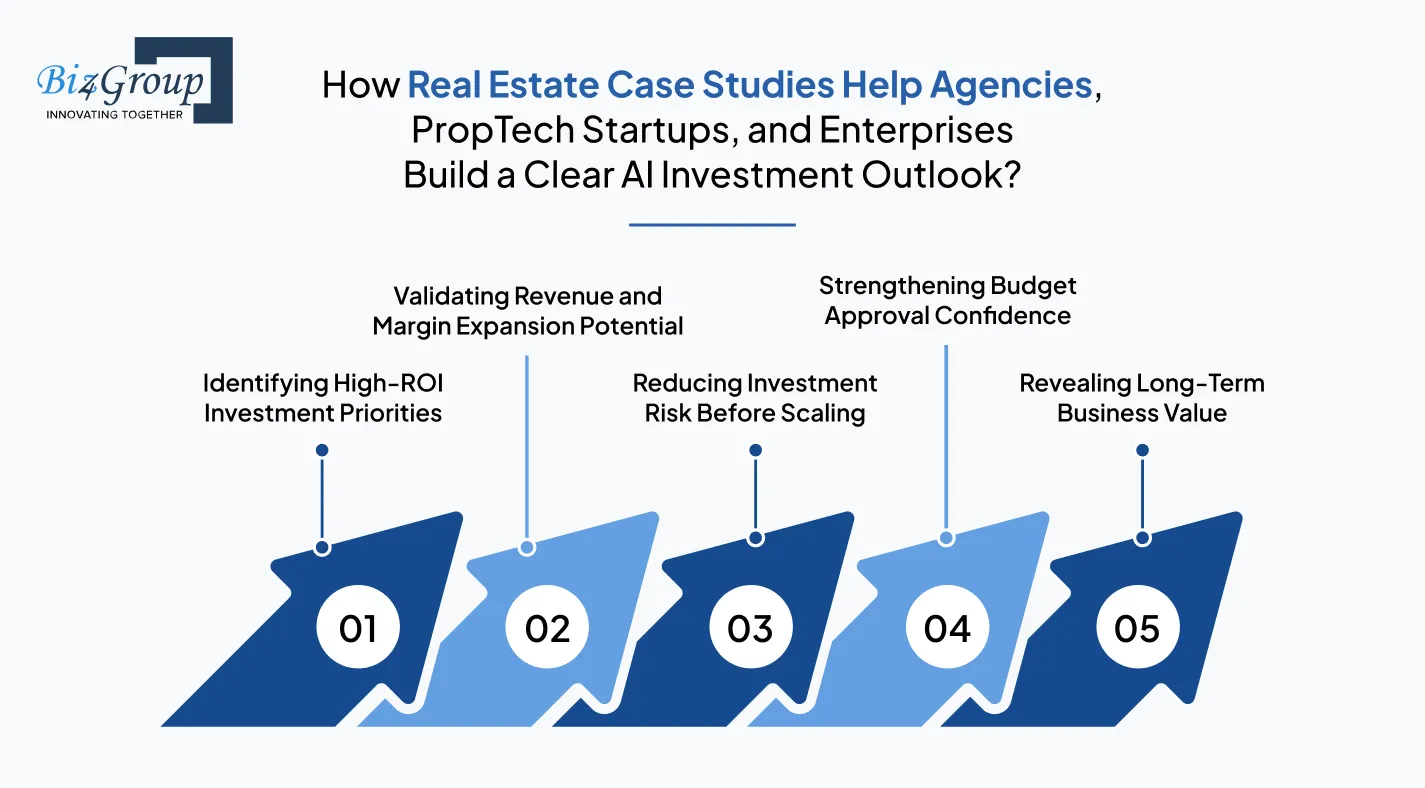
Investment decisions in real estate usually become clearer when the focus shifts from technology interest to measurable business outcomes. At this stage, a thought naturally comes up: we are planning to invest in AI solutions for our real estate operations, what case studies show clear business impact?
This is where proven investment stories start adding value, because they help connect budget decisions with revenue growth, margin confidence, and realistic payback expectations.
1. Identifying High-ROI Investment Priorities
The first business benefit case studies reveal is where capital should move first. Instead of spreading budget across multiple ideas, they show which AI initiatives create measurable financial returns faster.
It usually becomes clearer through:
- lead conversion uplift potential
- vacancy loss reduction
- pricing margin improvement
- lower customer acquisition cost
- faster payback visibility
2. Validating Revenue and Margin Expansion Potential
The strongest case studies also show how AI influences revenue-side performance, which is critical before building AI software for real estate sales, leasing, or portfolio growth.
The business impact often includes:
- improved deal closure rates
- stronger listing monetization
- better rental yield decisions
- improved investor confidence
- higher portfolio profitability
3. Reducing Investment Risk Before Scaling
Another major benefit is the downside clarity. Case studies help decision-makers understand which AI investments reached expected returns before committing rollout budgets AI automation services across multiple properties, markets, or portfolio categories.
This gives better visibility into:
- payback uncertainty reduction
- rollout risk confidence
- return predictability
- scaling feasibility
- downside exposure control
4. Strengthening Budget Approval Confidence
Case studies also help leadership teams move internal budget discussions forward with greater confidence. Instead of relying on assumptions, they provide proof points that make stakeholder alignment and investment approvals easier.
This supports budget planning through:
- clearer savings benchmarks
- stakeholders buy-in
- realistic capital allocation
- stronger board confidence
- faster approval readiness
5. Revealing Long-Term Business Value
The most valuable case studies also show what happens after the first payback window. This helps agencies and enterprises understand how AI contributes to stronger asset value and long-term commercial expansion.
This business impact becomes visible through:
- stronger portfolio valuation confidence
- improved investor reporting clarity
- higher customer lifetime value
- better expansion decisions
- long-term revenue predictability
For real estate investors asking, “we are evaluating AI adoption and need real case studies of property companies using AI for automation and analytics”, this business-first lens is what turns AI from a technology discussion into a clear investment outlook backed by financial outcomes.
Still Unsure Where AI Pays First?
See which workflow delivers the fastest commercial impact before your budget goes wider
Map My First ROI Use CaseTop AI Real Estate Case Studies in 2026
A practical concern for real estate agencies, proptech startups, and enterprise operators is whether proven implementations translate into measurable business value.
For real estate developers asking, “we are exploring AI for property management and lead generation, are there any proven case studies with measurable results.”
Here are the case studies that directly map journey through realistic outcomes and cost-focused implementation proof.
1. Homer AI
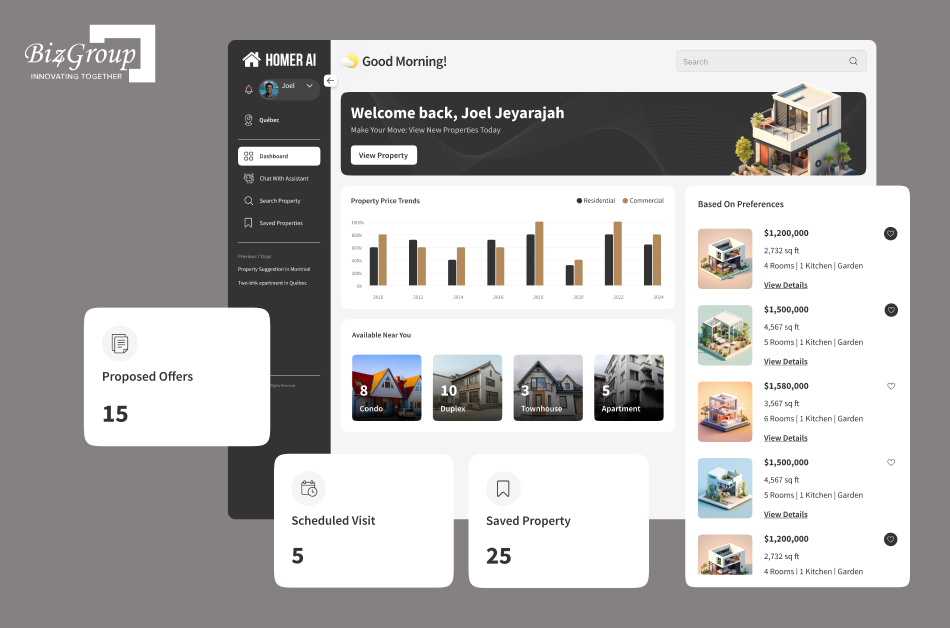
Pain Point: Static listing filters and delayed agent responses cause buyer drop-offs, weak lead qualification, and higher acquisition costs across listing-heavy sales funnels.
Project Overview: This AI-based modern property management application unified buyer preference capture, listing discovery, seller coordination, and visit scheduling into one guided journey. It helped turn inquiry intent into qualified appointments faster.
Key Features
- conversational buyer preference capture
- smart property recommendations
- map-based listing view
- buyer and seller dashboards
- automated visit scheduling
- chat-led inquiry qualification
Technologies Used: Conversational AI, NLP, recommendation engine, scheduling workflows, dashboard analytics.
Measurable Outcomes:
- Reduced buyer drop-off during property search by guiding users from preference capture to relevant listing discovery.
- Increased completed property visit requests through in-flow scheduling connected directly to buyer intent.
- Improved buyer–seller engagement continuity through dedicated dashboards and clearer next-step actions.
How Was Cost Optimized: Cost was optimized by reducing manual property-matching conversations, minimizing agent coordination for visits, and improving lead qualification early. This lowered time spent on low-intent inquiries and repetitive scheduling tasks.
Key Takeaway for Real Estate Agencies: A chat-led discovery flow can turn more inquiries into scheduled visits while keeping broker-side acquisition costs lower.
2. Contracks
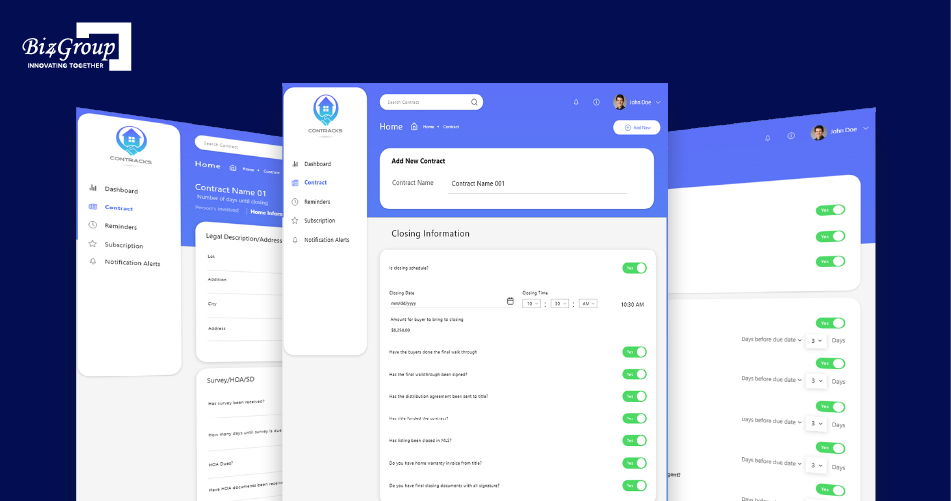
Pain Point: Missed contract deadlines, slow clause reviews, and scattered stakeholder updates delay property transactions and increased legal coordination costs.
Project Overview: Contracks is an AI virtual assistant for real estate contract tracking simplified transaction workflows. The AI-powered summarization and intelligent content extraction helped teams quickly review large agreements, track milestones, and manage obligations without manual document effort.
Key Features
- contract milestone and deadline tracking
- automated reminders and alerts
- AI document summarization
- clause and obligation extraction
- centralized transaction status dashboard
- stakeholder workflow visibility
Technologies Used: NLP, AI summarization, document intelligence, workflow automation, notification engine
Measurable Outcomes:
- Reduced missed transaction milestones through centralized contract event tracking and automated reminders.
- Improved agreement review speed by surfacing key clauses, dates, and obligations in concise summaries.
- Strengthened multi-party deal visibility across brokers, legal reviewers, and transaction stakeholders.
How Was Cost Optimized: Cost was optimized by reducing manual contract review hours, preventing missed deadline penalties, and minimizing coordination overhead between brokers, legal teams, and deal stakeholders.
Key Takeaway for Real Estate Agencies: Cost was optimized during development by automating contract summaries, clause extraction, and milestone alerts in one workflow. This reduced dependency on repeated manual reviews and lowered coordination effort across transaction teams.
This remains one of the stronger real estate automation case studies because it connects document intelligence directly with deal velocity, lower legal effort, and better control over contract-heavy transactions.
3. Iosync
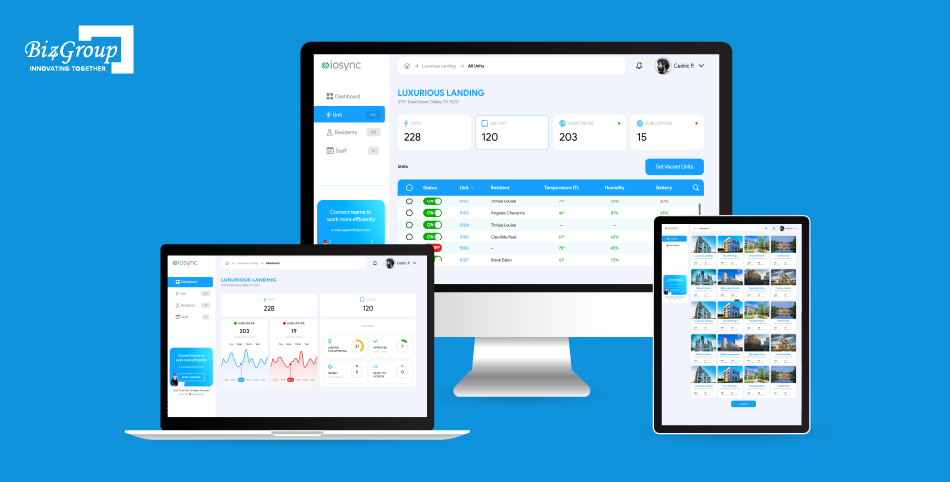
Pain Point: Residents struggle to manage multiple smart devices across properties, and property teams also lack a unified control layer for connected living services.
Project Overview: This is a smart home management platform which unified device onboarding, resident access, and remote control into one dashboard. It streamlined how connected devices were registered, managed, and controlled across housing communities.
Key Features
- unified smart device dashboard
- remote lock and thermostat control
- resident property registration
- one-tap device onboarding
- smart sensor integration
- multi-device management
Technologies Used: Smart sensors, mobile dashboard, device automation, remote control workflows
Measurable Outcome:
- Reduced resident support friction by centralizing smart device access into one mobile control flow.
- Improved smart device adoption through faster onboarding during move-in and property registration.
- Increased resident engagement with connected living features through easier day-to-day device control.
How Was Cost Optimized: Cost was optimized by centralizing device controls in one reusable dashboard. This reduced the need for separate control modules for locks, thermostats, switches, and sensors across each property type.
Key Takeaway for Real Estate Agencies: A unified smart living layer can reduce resident support dependency while increasing the long-term value of managed properties.
This stands out among detailed case studies of AI in property management and sales because it turns smart home convenience into a scalable resident retention and property value strategy.
4. Groundhogs
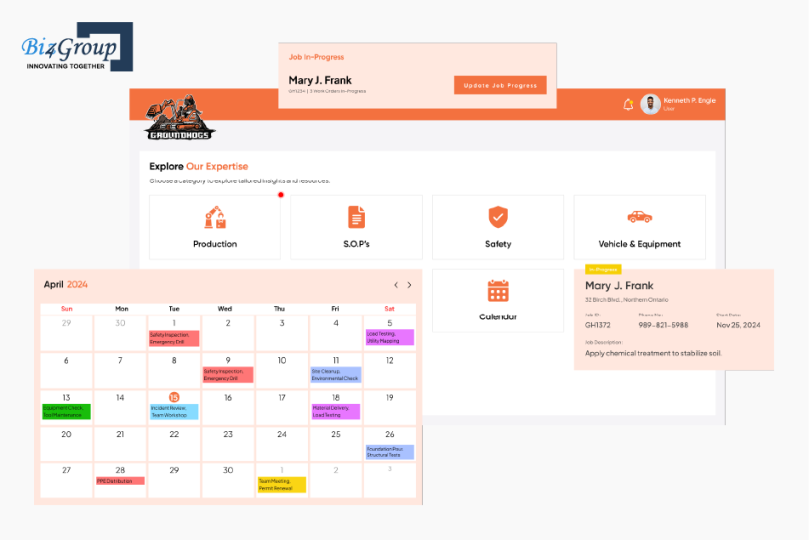
Pain Point: Construction teams rely on scattered logs, paper safety forms, and delayed site updates, which increase reporting gaps and compliance risks.
Project Overview: It is a centralized construction site management platform which unifies daily activity logging, compliance documentation, and job progress tracking. It gave field teams and admins one connected workflow for real-time site visibility.
Key Features
- daily site activity logging
- safety and compliance document uploads
- job ID and client mapping
- checklist and tool tracking
- vehicle and calendar management
- centralized admin dashboard
- offline support
Technologies Used: React.js, FastAPI, PostgreSQL, AWS S3, WebSockets, Redis
Measurable Outcomes:
- Reduced missing site records by enabling faster field-level task and safety log capture.
- Improved compliance readiness through centralized document uploads and checklist visibility.
- Strengthened admin decision-making with live progress, vehicle, and schedule visibility across job sites.
How Was Cost Optimized: The development cost was optimized by combining activity logs, safety checklists, document uploads, and scheduling into one platform. This reduced separate system dependencies and lowered repeated admin coordination effort.
Key Takeaway for Real Estate Agencies: A centralized site operations layer improves project visibility and keeps compliance-heavy construction workflows easier to manage at scale.
This case naturally fits among the top AI real estate case studies with cost savings examples. It shows how unified field logging and live site visibility can reduce coordination effort and improve control across active development projects.
5. Service Checkmate
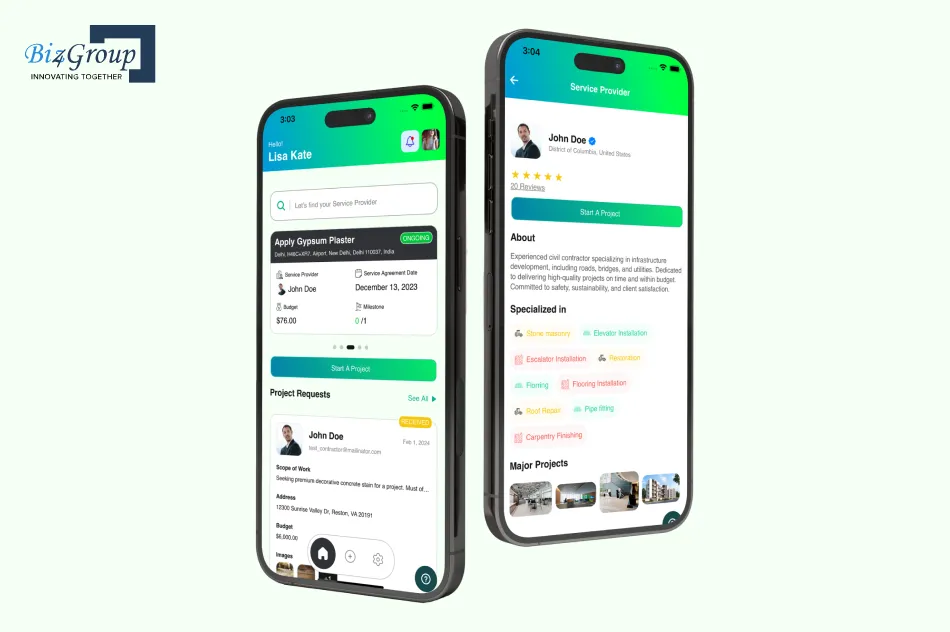
Pain Point: Service contracts, job updates, and contractor communication are fragmented and slow down approvals and increase follow-up effort across vendor-driven property jobs.
Project Overview: This AI contract-driven workflow platform brings service agreements, contractor coordination, job milestone tracking, and payment visibility into one system. It improved control across active service contracts and job completion stages.
Key Features
- digital service contract workflows
- contractor–customer coordination
- job milestone tracking
- agreement standardization
- payment process visibility
- centralized workflow dashboard
Technologies Used: contract workflow engine, milestone tracking system, payment workflow logic, role-based dashboards, notification workflows
Measurable Outcome
- Reduced contract execution delays through centralized milestone and approval visibility.
- Improved contractor accountability by tracking job progress against service agreements.
- Strengthened payment and completion transparency across active vendor contracts.
How Was Cost Optimized: Cost was optimized during development by combining contracts, job milestones, and payment stages into one workflow. This reduced repeated follow-ups and lowered coordination effort across customer and contractor touchpoints.
Key Takeaway for Real Estate Agencies: A contract-first service workflow helps agencies manage vendor-driven property jobs with better visibility and lower coordination friction.
This is one of the strongest AI in real estate examples which shows how service contracts and milestone workflows can reduce follow-up effort and improve service completion control.
6. Facilitor
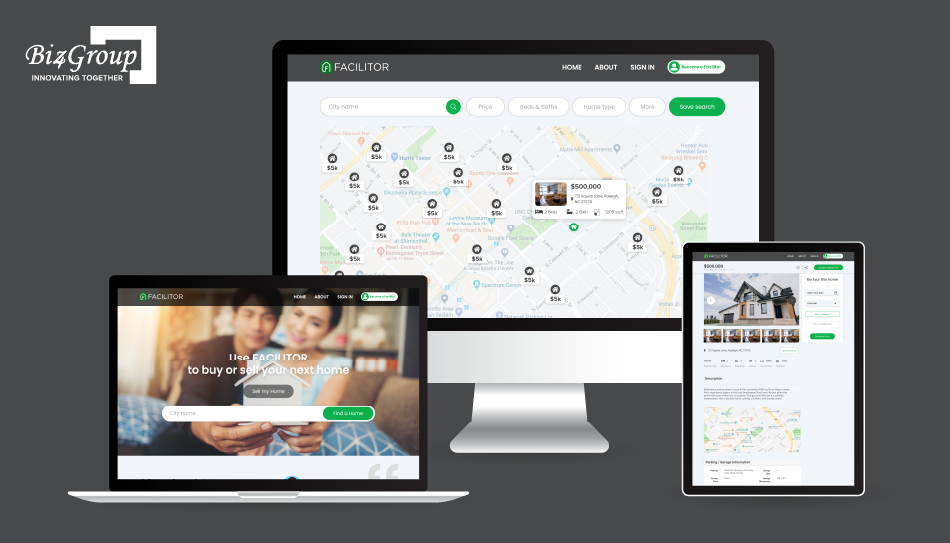
Pain Point: Homeowners and buyers depend on agent-led communication which increases transaction delays, follow-up loops, and commission-linked friction in direct property deals.
Project Overview: Facilitor is an AI real estate platform that enables homeowners and buyers to communicate, negotiate, and complete deals directly. It streamlines property discovery, interaction, and transaction progression without agent dependency.
Key Features
- direct buyer–seller communication
- property listing and discovery
- secure user workflows
- guided transaction stages
- in-platform negotiation flow
- deal progression visibility
Technologies Used: React.js, Node.js, AWS, secure messaging workflows, transaction stage engine
Measurable Outcome
- Reduced buyer–seller communication delays through direct in-platform interaction.
- Improved deal progression visibility by mapping each transaction stage in one workflow.
- Lowered dependency on external intermediaries during property negotiation and completion.
How Was Cost Optimized: Cost optimization came from removing agent-dependent communication loops and direct buyer–seller messaging reduced repeated coordination steps. A guided transaction workflow also minimizes manual intervention during negotiation and closure stages.
Key Takeaway for Real Estate Agencies: Direct transaction platforms can open new commission-light business models while keeping deal visibility and buyer engagement inside one controlled workflow.
7. Renters Book
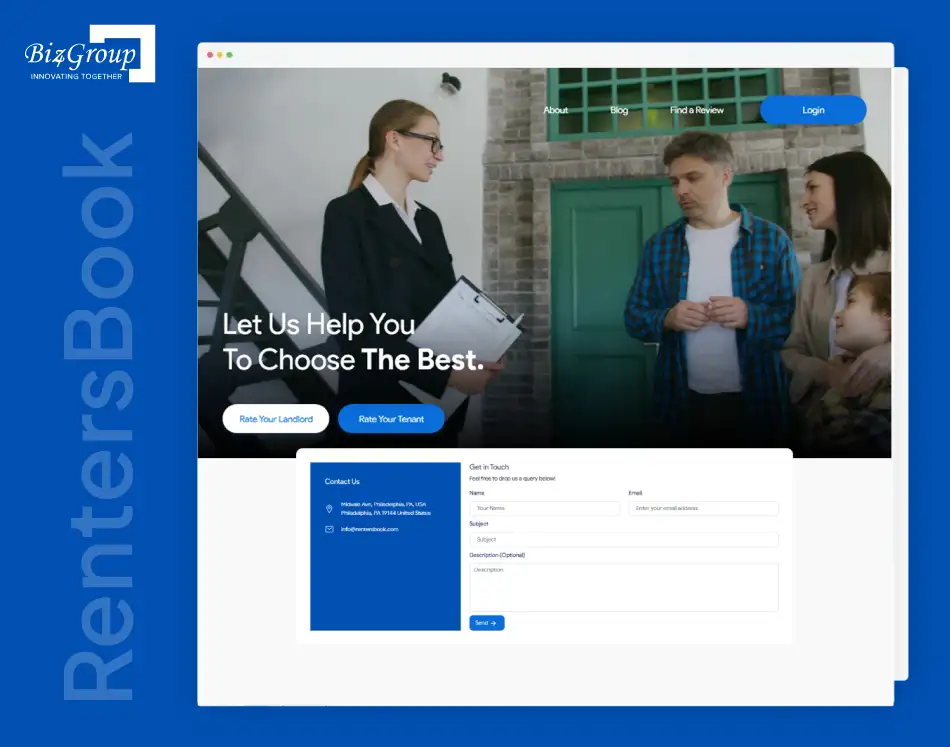
Pain Point: Landlords and tenants lacked trusted behavior history before lease signing. This increased screening risk and poor rental match decisions.
Project Overview: Renters book is a verified review and ratings real estate AI platform that helps tenants and landlords assess each other before signing lease agreements. Proof-based feedback and property-level search improve confidence during rental decision-making.
Key Features
- tenant and landlord review system
- property-level review visibility
- image upload for proof-based feedback
- verified ratings and trust signals
- precise search for tenant, landlord, or property
- encrypted user data protection
Technologies Used: Node.js, AngularJS, AWS, encryption algorithms, search engine workflows
Measurable Outcome
- Reduced lease decision uncertainty through verified landlord and tenant behavior history.
- Improved trust in rental agreements using proof-backed reviews and property-specific ratings.
- Lowered risky tenant–landlord mismatches through searchable reputation visibility before signing.
How Was Cost Optimized: Cost optimization came from reducing manual tenant and landlord verification calls. Searchable verified reviews and proof uploads helped teams filter high-risk matches earlier in the leasing cycle.
Key Takeaway for Real Estate Agencies: Trust-led rental intelligence can improve lease confidence and reduce the hidden cost of poor tenant–landlord matches.
Taken together, these top AI real estate case studies with cost savings examples show how focused digital workflows improve trust, transaction speed, contract visibility, and leasing confidence. This gives real estate leaders a clearer path to scalable AI investment decisions backed by real outcomes.
Could Your Workflow Be the Next Success Story?
Turn your highest-friction real estate workflow into the next measurable AI case study
Turn My Workflow into ProofCommon AI Implementation Patterns Behind Successful Real Estate Case Studies
After reviewing real estate case studies together, the recurring success patterns become much easier to spot. Across AI real estate case studies for lead generation and automation, the winning factor was not the number of features, but the repeatable decisions that kept the case-study outcomes commercially strong. Have a look:
- The most successful case studies solved one high-cost business problem first, such as lead leakage, contract delays, rental trust, or service follow-ups.
- Every strong case study showed one guided workflow instead of fragmented user actions, which improved adoption and reduced process friction.
- Clear data capture inside each case study created the base for better AI model development in search, prediction, and document intelligence.
- Generative AI appeared only in use cases where it reduced review effort, improved search relevance, or simplified contract understanding.
- Visibility layers such as dashboards, milestones, and searchable histories repeatedly appeared in the strongest case studies.
- The most scalable case studies expanded one validated workflow into adjacent business functions instead of broad automation from day one.
The strongest lesson from these AI in real estate case studies for startups and enterprises is that repeatable success comes from case studies built around one clear business problem, one guided workflow, and one measurable business outcome before scale.
Also Read: Top Generative AI Development Companies in USA
What These AI Real Estate Success Stories Reveal About ROI in 2026
When the top AI real estate case studies in this blog are viewed through an ROI lens, the strongest return signals appear where revenue is protected, accelerated, and retained. The real insight is not scale behavior, but how each success story reveals the exact point where business value starts becoming financially visible in 2026.
1) Revenue Protection Shows Up Early
- Trust-led leasing and contractor milestone workflows protected deal value before issues became revenue loss
- Better visibility into obligations, reputation, and approvals reduced silent margin leakage
- Early risk filtering improved transaction confidence across high-value deals
2) Faster Cash Realization Improves Return
- Guided transaction journeys shortened the time between inquiry, decision, and closure
- Direct buyer–seller communication reduced wait cycles that often delay deal movement
- Faster milestone approvals improved how quickly value turned into realized revenue
3) Better Pricing Confidence Improves Deal Velocity
- Clean workflow history helped trained AI models improve valuation confidence and listing decisions
- Reduced hesitation around pricing moved listings forward faster
- Better confidence in price decisions improved acquisition and closure momentum
4) Retention Value Creates Long-Term Return
- Resident smart-living workflows and trust-led rental intelligence reduced churn-side cost pressure
- Better tenant and resident experiences protected long-term asset value
- Reduced mismatch risk supported stronger renewal confidence
5) Lower Revenue Leakage Through Decision Clarity
- Contract dashboards, searchable histories, and guided next actions reduced hidden decision loss
- Better internal visibility helped teams act before delays affected commercial outcomes
This is where enterprise AI solutions created stronger financial control in multi-stakeholder workflows
The strongest lesson from these AI real estate case studies is that ROI became visible wherever the success stories protected revenue, accelerated deal movement, strengthened pricing confidence, or improved retention value. That is the clearest financial signal real estate leaders should benchmark in 2026.
What Real Estate Agencies and Developers Can Learn from These Case Studies ?
The biggest value of these case studies is not limited to the outcomes they achieved. Their real value lies in the decisions behind those outcomes. When decision-makers begin asking, we are looking for case studies where AI was used for property valuation, pricing, or predictive analytics in real estate, the stronger lesson often comes from understanding what was done right before scale.
1. Fix the Most Expensive Workflow Gap First
The strongest lesson across these case studies is clarity around the first business problem. Teams that solved trust gaps, lead leakage, contract delays, or service follow-ups first created faster commercial traction.
2. Keep User Actions in One Guided System
Another repeated lesson is workflow continuity. Fragmented communication weakened results, while connected systems strengthened adoption. This is where real estate CRM implementation becomes critical because lead, transaction, and service actions stay visible in one place.
3. Delay Intelligence Until the Workflow Is Stable
Pricing intelligence, predictive analysis, and valuation logic worked best only after teams had enough clean workflow history. Early clarity in user actions created stronger long-term decision support.
4. Scale Only After the First Use Case Proves Value
The most sustainable growth pattern was staged expansion. The strongest case studies scaled into adjacent workflows only after the first use case consistently reduced cost or improved trust.
The lasting lesson behind these top AI real estate case studies is that stronger growth came from disciplined workflow decisions first. Real estate agencies and developers that stabilized trust, visibility, and action continuity created much better foundations for AI-led scale.
Know The Lesson, Ready to Apply?
Translate these case-study learnings into a workflow your teams can actually scale
Apply This to My WorkflowHow Biz4Group LLC Group Can Help You Build AI Solutions That Solve Real Estate Challenges
Across the top AI real estate case studies covered in this blog, one thing becomes clear: successful outcomes come from teams that understand how real estate workflows, user trust, and transaction speed connect at the product level. At Biz4Group LLC, we use those same proven lessons to help agencies, developers, and proptech businesses turn real estate challenges into scalable AI-led products.
As an AI real estate software development company, we work with you from workflow discovery to product launch, making sure the first AI use case solves a measurable business problem before expansion. When stakeholders say, we want to understand how other real estate companies have successfully implemented AI, can you provide detailed case studies? Well we did, and our approach typically includes:
- workflow discovery based on live transaction, leasing, service, or trust gaps
- product roadmap aligned with AI consulting services and measurable ROI milestones
- scalable real estate AI solutions for contracts, rental intelligence, lead routing, and guided transactions
- product decisions shaped by evolving real estate tech and AI trends without losing business clarity
- phased validation so the first workflow proves commercial value before scale
With all that in place, the next step becomes much more practical. We help you turn case-study insights into AI systems that solve real estate bottlenecks with clearer workflows, faster decision-making, and long-term business value you can actually scale.
Ready To Build What Actually Scales?
Move from insight to execution with a workflow-first AI product strategy that lasts
Start My AI Workflow BlueprintConclusion
The real takeaway from these top AI real estate case studies is not just what was built, but what became possible once the right workflow was identified. Whether the focus is trust, contracts, pricing confidence, or guided transactions, the strongest outcomes came from solving one real business bottleneck first. That is exactly where focused AI product development services create the most practical long-term value.
The bigger opportunity now lies in turning these real-world examples of AI in real estate industry 2026 into a workflow strategy that fits your own growth goals, trust challenges, or transaction bottlenecks. At Biz4Group LLC, we help shape that direction into scalable products built around measurable business outcomes. If you already have a real estate workflow in mind, this is the right moment to talk to us and map the first AI-led use case around it.
FAQ's
1) How do top AI real estate case studies measure cost savings after implementation?
The most relevant case studies track cost savings through lower broker follow-up effort, reduced contract review time, faster property matching, lower tenant mismatch rates, and fewer service coordination delays. The key is tying savings to one workflow, not broad operational estimates.
2) What metrics matter most in AI real estate case studies 2026 for lead generation?
The strongest lead-generation case studies usually focus on qualified inquiry rate, visit scheduling uplift, response-time reduction, broker productivity, and lead-to-deal conversion movement. These metrics reveal whether the workflow improved real sales momentum.
3) How is AI used in real estate examples for automated property valuation and pricing confidence?
The most practical valuation case studies use transaction history, locality trends, buyer behavior, and comparable property signals to improve pricing confidence. The real value comes from reducing manual review cycles and improving decision speed during listing or acquisition stages.
4) What makes real estate automation case studies successful at enterprise scale?
Enterprise-scale success usually depends on workflow standardization, milestone visibility, searchable proof layers, and staged expansion into adjacent use cases. The most scalable case studies solve one repeatable process problem before moving into broader automation.
5) How can agencies apply real world examples of AI in real estate industry 2026 to their own workflows?
The smartest approach is mapping the case study’s business bottleneck to your own. If the example solved lead leakage, pricing hesitation, rental trust, or contract delays, agencies should start with the closest matching workflow before expanding further.
6) What separates real estate AI success stories from failed AI pilots?
The biggest difference is workflow clarity. Successful case studies focus on one measurable business problem, one guided user journey, and one visible outcome. Failed pilots often expand scope too early without validating the first workflow commercially.
