 Location :
Orlando, FL, USA
Location :
Orlando, FL, USA +1 (407) 714-1616
 info@biz4group.com

- AI healthcare call center automation system development helps clinics automate scheduling, triage, reminders, billing, and patient communication across multiple channels.
- Effective AI powered healthcare call center system development requires HIPAA compliance, EHR integrations, conversational AI, and scalable infrastructure.
- Healthcare call center automation software development costs typically range from $20,000 to $150,000+ based on features, integrations, and workflow complexity.
- Custom healthcare call center AI system development offers better scalability, workflow flexibility, and operational control than generic software solutions.
- Biz4Group delivers healthcare clinic call center automation system development integrating AI with secure infrastructure, healthcare workflow expertise, and scalable patient communication systems.
What happens when a healthcare clinic keeps hiring more front desk staff, yet patients still struggle with long hold times, missed callbacks, and appointment scheduling delays? That situation is becoming increasingly common as clinics face rising patient demand and growing administrative pressure, pushing more organizations toward AI healthcare call center automation system development to improve communication without endlessly increasing operational costs.
According to a report, the average healthcare call center now handles nearly 2,000 patient calls per day, while staffing levels often cover only a portion of peak demand. At the same time, research shows that 47 U.S. states are projected to face primary care physician shortages by 2037, putting even more strain on clinic operations and patient communication workflows.
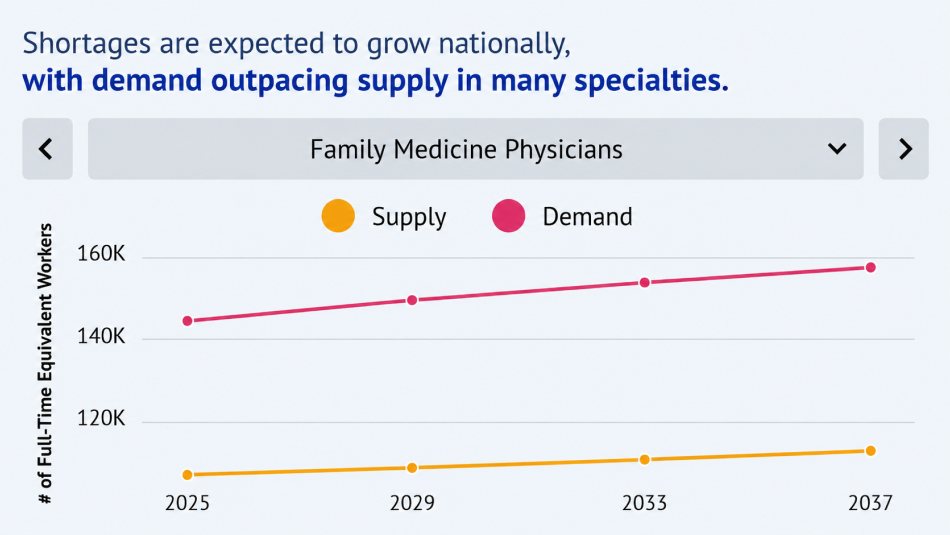
That pressure explains why more providers are now building AI healthcare call center automation system infrastructure that can automate scheduling, prescription refill requests, patient triage, billing inquiries, and follow-ups across voice, chat, email, and SMS channels. Many healthcare organizations are also expanding investments in AI in healthcare administration automation to reduce operational bottlenecks across patient communication and support workflows.
For many independent clinics, the challenge feels even bigger. “We are a physician owned independent medical practice that is competing against large hospital employed physician groups and we cannot afford to match their administrative staffing levels so we need to invest in AI call center automation development that gives us the same patient communication capabilities as our larger competitors at a fraction of the staffing cost?”
Here, we will break down how AI powered healthcare call center system development helps healthcare organizations handle higher patient volumes, reduce staff burnout, improve patient response times, and create scalable communication systems that actually work in real clinical environments.
Okay, so now look at what exactly is this system and why are clinics suddenly investing in it?
What Is an AI Healthcare Call Center Automation System and Why Are Healthcare Clinics Racing to Build One?
An AI healthcare call center automation system is a communication platform that uses conversational AI, voice automation, workflow logic, and EHR-connected patient data to manage high-volume patient interactions without requiring staff to manually handle every call or request.
Instead of routing every patient inquiry through front desk teams, the system can automatically:
- schedule appointments
- answer common patient questions
- process prescription refill requests
- route urgent cases
- send reminders and follow-ups
- manage communication across voice, SMS, email, and chat
The goal of healthcare call center automation software development is simple. Reduce administrative overload while giving patients faster and more consistent support.
Modern clinics are also moving beyond basic phone trees and IVR systems. Today’s platforms use natural conversations, patient context, and real-time integrations to create smoother patient experiences. This growing demand for smarter patient communication has accelerated investments in healthcare conversational AI across clinics, specialty practices, and healthcare networks.
So why are healthcare organizations moving so quickly toward AI powered healthcare call center system development?
- Patients expect faster communication and 24/7 availability
- Front desk teams are overwhelmed with repetitive administrative work
- Missed calls directly impact appointments and revenue
- Clinics need scalable systems without endlessly hiring staff
- Healthcare providers want better patient retention and satisfaction
- Multi-location practices struggle to manage communication consistently
- Smaller clinics need enterprise-level patient support capabilities
- Manual workflows create delays, errors, and staff burnout
Healthcare organizations no longer view communication systems as a back-office function. They now see them as a critical part of patient experience, operational efficiency, and long-term growth.
Now that the foundation is clear, the next question becomes even more important. Where exactly can these systems create the biggest operational impact inside a healthcare clinic?
Still Letting Missed Calls Decide Your Patient Experience?
If your front desk feels overwhelmed every day, it may be time to rethink how patient communication actually works.
Contact Our Healthcare AI ExpertsWhat Can an AI Powered Healthcare Call Center System Actually Automate for Clinics?
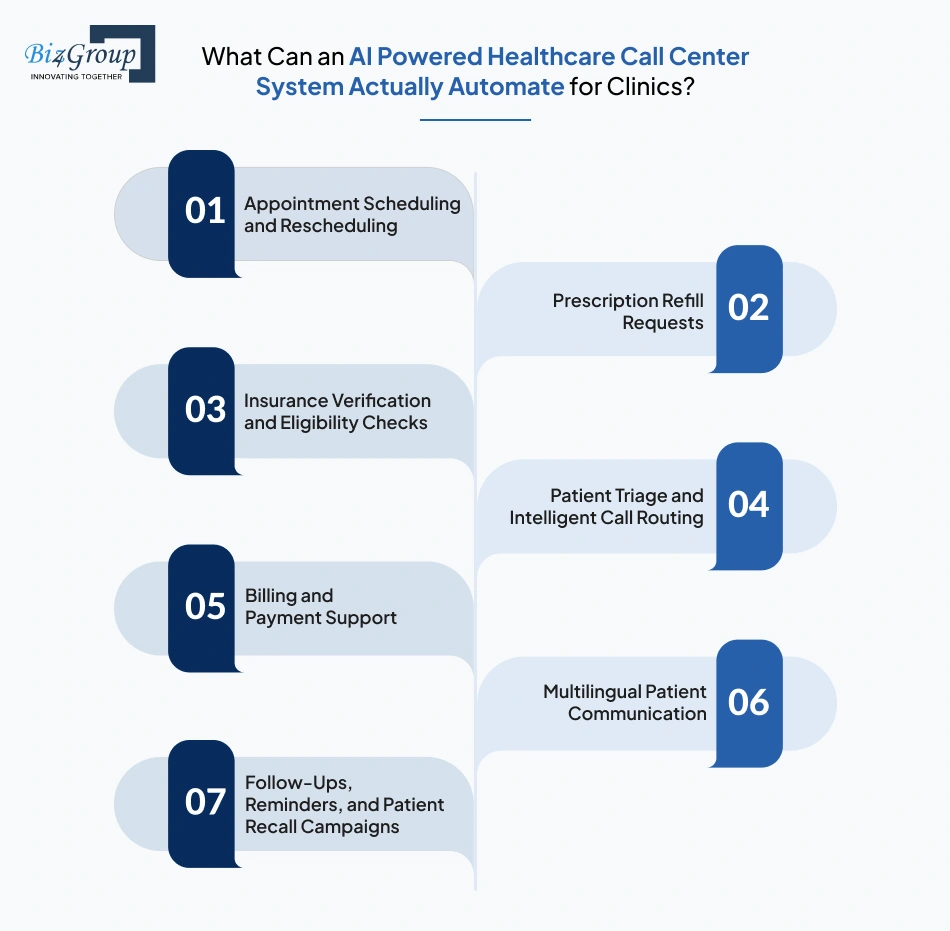
Most clinics are not struggling because their staff lacks effort. The real problem is volume. Calls keep coming in all day long for scheduling, prescription refills, insurance verification, billing questions, follow-ups, and patient support. That is exactly where healthcare patient call automation system development creates operational value.
A properly designed platform built through AI powered healthcare call center system development can automate repetitive communication workflows while your staff focuses on patient care and higher-priority tasks. This is one of the biggest reasons healthcare organizations are investing in custom healthcare call center AI system development to improve response times without continuously expanding administrative teams.
Many providers are also prioritizing intelligent healthcare call center automation software development because traditional call center workflows can no longer keep pace with rising patient communication demands.
In fact, many clinic leaders searching for automation solutions often describe the problem exactly like this: “I am looking for an experienced development team that can build a custom AI powered healthcare call center automation system for our medical clinic that automatically handles appointment scheduling prescription refill requests patient triage calls and general inquiries without requiring our staff to answer every single call manually?”
Here’s where these systems create the biggest operational impact.
1. Appointment Scheduling and Rescheduling
Scheduling remains one of the largest sources of inbound patient calls. AI-powered systems can automatically book, cancel, reschedule, and confirm appointments by checking provider availability in real time. Patients receive immediate responses without waiting in long phone queues. This is often the first capability clinics prioritize during building AI healthcare call center automation system initiatives because scheduling inefficiencies directly affect patient acquisition and operational flow.
Example
A multi-location urgent care network handling high patient traffic during flu season can automate appointment scheduling after business hours. Patients calling late at night can still book next-day visits without requiring front desk staff to manually manage requests the following morning.
2. Prescription Refill Requests
Prescription refill requests create repetitive back-and-forth communication between patients, providers, pharmacies, and administrative teams. An automated system can collect patient information, validate refill eligibility, and route requests directly into provider workflows. This reduces manual intake work and helps clinics process refill requests faster through healthcare call center automation software development workflows. Many healthcare providers also combine automation with a connected healthcare AI IVR system to simplify refill request handling through conversational voice interactions.
Example
Large primary care practices often receive hundreds of refill requests every week. AI-based workflows can automatically identify routine refill requests, capture medication details, and route them into the clinic’s approval system before office hours begin.
3. Insurance Verification and Eligibility Checks
Insurance verification slows down scheduling and patient onboarding when handled manually. AI systems can collect insurance details, verify eligibility through payer systems, and notify patients if additional information is required before appointments. This reduces scheduling delays and administrative errors while improving patient intake efficiency.
Example
Specialty clinics handling imaging appointments frequently verify insurance eligibility before confirming high-cost procedures. Automated verification workflows help staff identify coverage issues early instead of discovering them during patient check-in.
4. Patient Triage and Intelligent Call Routing
Not every patient call requires immediate staff involvement. AI-powered triage systems can identify urgent symptoms, prioritize high-risk cases, and route patients to the correct department based on intent and urgency. This allows clinics investing in the development of AI healthcare call center automation system infrastructure to manage higher patient volumes without overwhelming support teams.
Example
Urgent care centers managing after-hours patient calls can use conversational AI to separate emergency symptoms from non-urgent scheduling requests. Critical cases are escalated immediately, while routine concerns are directed toward automated scheduling or callback workflows.
5. Billing and Payment Support
Billing-related calls often consume significant front desk time. AI systems can answer common billing questions, share payment reminders, explain balances, and route complicated insurance disputes to billing specialists when necessary. Patients receive faster responses while billing teams spend less time handling repetitive inquiries.
Example
A multi-specialty healthcare practice can automate payment reminder calls before due dates and send secure payment links through SMS, helping reduce delayed payments without increasing administrative outreach efforts.
6. Multilingual Patient Communication
Healthcare organizations serving diverse patient populations often struggle to provide consistent multilingual support. AI-powered communication systems can support multiple languages across voice, chat, and SMS interactions. This becomes especially valuable for clinics handling large patient populations with varying communication preferences and language needs.
Example
Community health clinics serving Spanish-speaking populations can automate appointment confirmations, reminders, and intake communication in both English and Spanish, helping patients receive information in their preferred language without communication delays.
7. Follow-Ups, Reminders, and Patient Recall Campaigns
Missed follow-ups and poor patient outreach directly impact retention and continuity of care. AI systems can automatically send reminders for appointments, annual checkups, lab work, wellness visits, and medication adherence programs. These workflows play a major role in healthcare clinic call center automation system development integrating AI because they improve patient engagement without adding manual outreach burdens to clinic staff.
Example
Cardiology practices managing long-term chronic care patients often use automated reminder systems to notify patients about upcoming follow-up visits, diagnostic testing schedules, and medication review appointments across voice and SMS channels.
As clinics automate more patient communication workflows, another question naturally comes up. How do you build these systems in a way that protects patient data, supports HIPAA compliance, and maintains patient trust at every interaction?
Can You Build an AI Healthcare Call Center System Without Violating HIPAA or Patient Trust?
Healthcare organizations cannot afford communication systems that create compliance risks, expose patient data, or disrupt clinical workflows. That is why intelligent healthcare call center automation software development requires much more than conversational AI capabilities. The system must be designed around security, compliance, access control, and patient trust from the very beginning.
For many clinics, the concern sounds something like this: “I need to find a reliable US based development partner that can build our AI healthcare call center automation system from scratch including the natural language processing engine the EHR integration layer the HIPAA compliance framework and the real time analytics dashboard for our clinic management team?”
The reality is simple. If compliance planning happens after development starts, the risks and costs increase significantly.
1. HIPAA Compliance Requirements for AI Communication Systems
Every healthcare communication platform handling patient information must follow strict HIPAA compliance standards. That includes how patient data is collected, stored, accessed, transmitted, and monitored across every interaction channel. Organizations investing in healthcare call center automation software development need systems that support secure authentication, encrypted communication, audit logging, and controlled data access across departments.
2. Protecting PHI Across Voice, SMS, Email, and Chat
Patient communication now happens across multiple channels, which increases security complexity. AI systems must protect protected health information consistently whether the patient interacts through a phone call, AI chatbot, email, or SMS conversation. This becomes especially important during AI powered healthcare call center system development because every communication channel introduces different privacy and compliance risks that need centralized security controls. Healthcare providers also need strong strategies to integrate AI with EHR/EMR systems securely without exposing sensitive patient records during automated workflows.
3. Human Escalation and AI Safety Guardrails
AI systems should never operate without escalation boundaries in healthcare environments. Certain conversations require immediate human involvement, especially when patients report urgent symptoms, emotional distress, or sensitive medical concerns. That is why healthcare clinic call center automation system development integrating AI must include escalation logic, fallback routing, and human review mechanisms that keep patient safety at the center of every interaction.
4. Audit Logs, Encryption, and Role-Based Access Control
Healthcare organizations need visibility into every patient interaction handled by the system. Audit logs help clinics monitor activity, investigate issues, and maintain compliance records when required. Strong encryption standards and role-based access controls also ensure that staff members only access information relevant to their responsibilities, reducing internal security risks significantly.
Why Compliance Must Be Designed into the Architecture from Day One
Security cannot be treated as an add-on after development is complete. Compliance architecture affects infrastructure design, API integrations, workflow permissions, communication channels, and data storage decisions from the beginning.
Organizations planning development of AI healthcare call center automation system infrastructure need development teams that understand both healthcare workflows and compliance engineering requirements before implementation starts.
The next major question for most healthcare leaders becomes equally important. What does it actually cost to build and maintain a scalable AI healthcare call center automation platform?
How Much Does AI Healthcare Call Center Automation System Development Really Cost?
The cost of AI healthcare call center automation system development typically ranges between $20,000 to $150,000+, depending on workflow complexity, AI capabilities, integrations, compliance requirements, and deployment scale.
A smaller clinic automating appointment scheduling and basic patient communication will require a much lower investment than a healthcare network building a fully integrated platform with voice AI, EHR connectivity, multilingual communication, analytics dashboards, and omnichannel workflows.
Many healthcare leaders researching healthcare call center automation software development often ask questions like: “Which are the best AI healthcare software development companies in the USA that have proven experience building AI enabled healthcare call center automation systems that can help medical clinics handle significantly higher patient call volumes without hiring additional front desk or call center staff?”
The answer depends heavily on project scope, compliance requirements, and long-term operational goals. The biggest cost factor is rarely the AI itself. Most of the investment goes into workflow engineering, integrations, security architecture, and scalable infrastructure planning during AI-powered healthcare call center system development.
Healthcare organizations evaluating automation strategies often start by understanding the broader cost of implementing AI in healthcare before defining communication automation priorities.
Estimated Cost Breakdown for AI Powered Healthcare Call Center System Development Features
|
Feature |
What It Includes |
Estimated Cost Range |
|---|---|---|
|
AI Appointment Scheduling |
Real-time calendar sync, booking workflows, cancellations, reminders, provider availability management |
$5,000 to $15,000 |
|
Conversational Voice AI and NLP Engine |
Speech recognition, intent detection, natural language understanding, voice responses |
$10,000 to $35,000 |
|
Prescription Refill Automation |
Refill intake workflows, provider routing, pharmacy coordination, patient notifications |
$4,000 to $12,000 |
|
Insurance Verification Workflows |
Eligibility checks, payer system integration, coverage validation, patient alerts |
$5,000 to $15,000 |
|
Omnichannel Communication Integration |
Voice, SMS, email, chatbot, and patient communication synchronization |
$8,000 to $25,000 |
|
EHR and EMR Integration Layer |
Patient data sync, appointment records, provider workflows, API integrations |
$10,000 to $40,000 |
|
HIPAA Compliance and Security Architecture |
Encryption, audit logs, access controls, compliance monitoring, secure storage |
$8,000 to $30,000 |
|
Analytics and Reporting Dashboard |
Call tracking, operational metrics, patient communication insights, workflow reporting |
$5,000 to $20,000 |
|
Multilingual Patient Communication |
Multi-language voice and text support across patient communication channels |
$4,000 to $15,000 |
|
AI-Based Patient Triage Workflows |
Symptom prioritization, escalation logic, routing workflows, urgent case handling |
$10,000 to $30,000 |
The final investment in development of AI healthcare call center automation system infrastructure depends heavily on customization depth, workflow complexity, and integration requirements.
What Factors Affect the Cost of Healthcare Call Center Automation Software Development?
Several operational and technical factors directly influence project cost. Healthcare organizations with simple patient scheduling workflows will require significantly less development effort than enterprise healthcare systems managing multiple specialties, providers, and communication channels.
The most common cost-driving factors include:
- Number of communication channels supported
- Complexity of conversational AI workflows
- EHR and practice management system integrations
- HIPAA compliance and security requirements
- Number of clinic locations and active users
- Real-time analytics and reporting needs
- Voice AI and multilingual communication support
- Cloud infrastructure and scalability planning
Organizations planning healthcare clinic call center automation system development integrating AI should evaluate both current operational bottlenecks and long-term growth plans before finalizing feature requirements.
What Hidden Costs Do Clinics Often Miss During Building AI Healthcare Call Center Automation System Projects?
Many clinics budget for development but underestimate long-term infrastructure and maintenance costs. These hidden expenses usually appear once patient communication volumes begin scaling across departments and locations.
The most commonly overlooked costs include:
- Third-party telephony and API usage fees
- Cloud hosting and secure data storage expenses
- AI model optimization and retraining
- Ongoing compliance audits and security monitoring
- EHR integration maintenance updates
- Voice transcription and speech processing charges
- Workflow changes as clinic operations evolve
- Staff onboarding and operational training
Healthcare providers investing in building AI healthcare call center automation system platforms should always plan for long-term operational sustainability instead of focusing only on launch costs.
How Can Clinics Reduce AI Healthcare Call Center Automation System Development Costs Without Sacrificing Quality?
The most effective approach is phased implementation. Clinics that start with high-volume workflows like scheduling, reminders, and patient intake often see operational improvements faster while controlling development costs.
This approach also allows healthcare teams to validate workflows before scaling automation across departments.
Cost optimization strategies typically include:
- Starting with MVP-based deployment
- Prioritizing high-impact automation workflows first
- Using modular infrastructure for future expansion
- Reusing existing systems where possible
- Avoiding unnecessary custom features early
- Selecting scalable cloud architecture from the beginning
Many organizations investing in intelligent healthcare call center automation software development also prioritize operational ROI tracking early so future expansion decisions are based on measurable workflow improvements.
Once the budget conversation becomes clearer, the next step is understanding which platform capabilities actually matter most for patients, providers, and clinic staff in day-to-day operations.
Wondering Whether Automation Costs Less Than Administrative Burnout?
The right AI healthcare call center system should reduce operational pressure, not create another expensive software problem.
Get Your QuotesWhich Features Actually Matter in AI Healthcare Call Center Automation System Development?
The success of AI healthcare call center automation system development depends heavily on choosing features that solve real operational problems instead of adding unnecessary complexity. Clinics need platforms that improve patient communication, reduce staff workload, and integrate smoothly with existing healthcare workflows.
The following features are commonly prioritized during intelligent healthcare call center automation software development for clinics, specialty practices, urgent care centers, and multi-location healthcare organizations.
|
Feature |
What the Feature Does |
Why It Matters for Clinics |
|---|---|---|
|
Automates appointment booking, cancellations, confirmations, and rescheduling workflows |
Reduces front desk workload and improves scheduling efficiency |
|
|
Handles patient conversations through natural voice interactions instead of rigid phone menus |
Improves patient experience and reduces call abandonment |
|
|
Smart Call Routing |
Directs patient calls to the correct department based on intent and urgency |
Prevents overloaded phone queues and improves response time |
|
Omnichannel Communication |
Connects voice, SMS, email, and chat into one communication workflow |
Creates consistent patient communication across channels |
|
EHR and EMR Integration |
Syncs patient records, appointments, provider schedules, and communication history |
Eliminates manual data entry and improves workflow accuracy |
|
Prescription Refill Automation |
Captures refill requests and routes them directly into provider workflows |
Reduces repetitive administrative work |
|
Insurance Verification Automation |
Validates insurance eligibility before appointments |
Helps avoid scheduling delays and billing issues |
|
Patient Triage Workflows |
Identifies urgent cases and prioritizes patient routing |
Supports faster handling of critical patient concerns |
|
Automated Reminders and Follow-Ups |
Sends appointment reminders, recalls, and post-visit communication automatically |
Reduces no-show rates and improves patient engagement |
|
Multilingual Communication Support |
Supports patient interactions across multiple languages |
Improves accessibility for diverse patient populations |
|
Real-Time Analytics Dashboard |
Tracks call volume, response times, patient interactions, and operational performance |
Helps clinics optimize workflows using actual operational data |
|
HIPAA Compliance Controls |
Supports encryption, audit logs, secure storage, and role-based access |
Protects patient data and reduces compliance risks |
|
Human Escalation Logic |
Transfers sensitive or complex conversations to staff when needed |
Maintains patient safety and service quality |
|
AI-Powered Patient Intake |
Collects patient information before appointments automatically |
Speeds up onboarding and reduces paperwork |
|
Sentiment Detection |
Identifies frustrated or urgent patient interactions during conversations |
Helps staff prioritize high-risk communication scenarios |
|
Multi-Location Workflow Management |
Centralizes communication workflows across multiple clinic locations |
Improves consistency and operational visibility |
|
AI-Based Callback Management |
Automatically schedules callbacks for missed or overflow patient calls |
Reduces patient frustration and missed opportunities |
|
Supports billing inquiries, payment reminders, and payment collection workflows |
Improves payment efficiency and reduces billing-related call volume |
|
|
Patient Self-Service Portal Integration |
Allows patients to manage appointments, communication, and records independently |
Reduces inbound support requests and improves convenience |
|
Workflow Automation Engine |
Automates repetitive operational tasks using predefined business rules |
Improves efficiency across administrative workflows |
Many healthcare providers building modern patient communication systems also integrate capabilities like AI patient portal functionality to create more connected and self-service patient experiences.
The right feature set depends on your clinic size, patient volume, communication channels, and operational priorities. Healthcare organizations investing in healthcare clinic call center automation system development integrating AI typically start with high-volume workflows first and expand capabilities gradually as adoption increases.
Once feature priorities are clear, the next step becomes more technical. What does the actual development process look like when building a scalable healthcare AI call center platform from the ground up?
What Does It Actually Take to Develop an AI Healthcare Call Center Platform That Works?
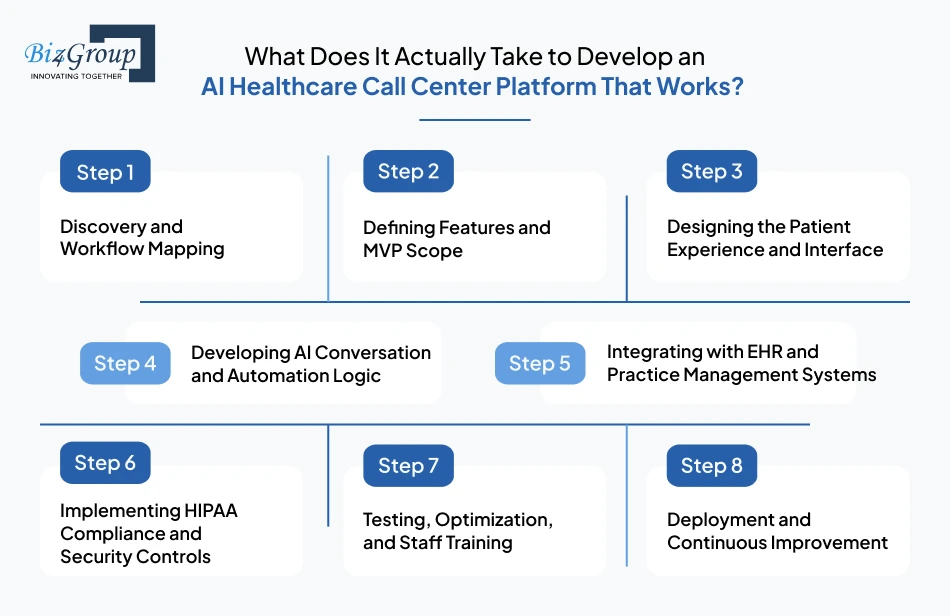
Successful AI healthcare call center automation system development requires much more than adding a chatbot or voice assistant to existing workflows. Clinics need platforms that align with patient communication patterns, healthcare operations, compliance requirements, and integration ecosystems from the beginning.
This becomes especially important for healthcare organizations asking questions like: “Please suggest me a trustworthy US based development company that specializes in building AI powered healthcare communication automation systems and has specific experience with call center automation for medical practices that serve high volume patient populations with diverse language needs and complex scheduling requirements?”
A structured development process helps healthcare providers avoid costly workflow gaps, integration failures, and poor patient experiences.
Step 1: Discovery and Workflow Mapping
The first step in building AI healthcare call center automation system infrastructure is to understand how patient communication currently flows across the clinic. This includes scheduling processes, call routing, intake workflows, billing communication, refill requests, and escalation paths. The goal is to identify repetitive workflows, communication bottlenecks, and operational inefficiencies before development begins.
Key activities usually include:
- Front desk workflow analysis
- Patient communication mapping
- Call volume assessment
- Escalation scenario planning
- Operational bottleneck identification
Step 2: Defining Features and MVP Scope
Not every feature needs to be built during the first release. Clinics that begin with focused, high-impact workflows usually achieve faster adoption and lower implementation risk. This is where a phased rollout strategy becomes valuable during healthcare call center automation software development. Most organizations start with scheduling, reminders, and intake automation before expanding into advanced AI workflows. Healthcare providers often use an MVP development approach to validate workflows, measure ROI, and reduce unnecessary development costs early in the project.
Key activities usually include:
- Feature prioritization
- Workflow complexity evaluation
- MVP planning
- User role definition
- Scalability planning
Step 3: Designing the Patient Experience and Interface
Patient adoption depends heavily on how simple and intuitive the communication experience feels. Complex workflows or confusing interactions increase frustration and abandonment rates quickly. That is why AI powered healthcare call center system development must focus equally on usability and functionality across voice, SMS, chat, and self-service interfaces. Strong UI/UX design plays a critical role in improving patient engagement, reducing confusion, and simplifying communication across digital channels.
Key activities usually include:
- Conversation flow design
- Voice interaction planning
- Patient journey optimization
- Accessibility design
- Self-service workflow creation
Step 4: Developing AI Conversation and Automation Logic
This phase focuses on building conversational workflows that power patient interactions. The system needs to understand patient intent, route conversations correctly, and automate repetitive tasks without creating confusion. Organizations investing in custom healthcare call center AI system development often prioritize conversational accuracy and escalation handling during this stage.
Key activities usually include:
- NLP model configuration
- Intent recognition setup
- Workflow automation development
- Escalation logic creation
- Conversation testing and refinement
5. Integrating with EHR and Practice Management Systems
Healthcare communication systems cannot operate in isolation. Real operational value comes from connecting the platform with EHR systems, scheduling software, billing systems, and patient records. This step is one of the most technically complex parts of how to develop an AI healthcare call center platform that integrates seamlessly with existing EHR systems and practice management software.
Key activities usually include:
- EHR and EMR integrations
- API development
- Appointment sync configuration
- Secure patient data mapping
- Workflow interoperability testing
6. Implementing HIPAA Compliance and Security Controls
Security architecture must be embedded into the platform before deployment. Healthcare AI systems handle sensitive patient data daily, making compliance and access control critical requirements. Organizations investing in development of AI healthcare call center automation system infrastructure must ensure security standards are aligned with HIPAA requirements from day one.
Key activities usually include:
- Data encryption setup
- Audit logging implementation
- Access control configuration
- Compliance testing
- Secure cloud deployment planning
7. Testing, Optimization, and Staff Training
Before launch, clinics need to validate workflows under real-world conditions. Testing helps identify workflow gaps, conversation failures, routing issues, and usability problems before patients interact with the platform. Staff onboarding also plays a major role in successful adoption during healthcare clinic call center automation system development integrating AI initiatives.
Key activities usually include:
- Workflow testing
- AI response validation
- Call simulation testing
- Staff onboarding and training
- Performance optimization
8. Deployment and Continuous Improvement
Launching the platform is only the beginning. Healthcare communication workflows evolve constantly based on patient behavior, operational needs, and regulatory changes. The most effective healthcare organizations continuously optimize workflows, monitor communication trends, and improve automation accuracy after deployment.
Key activities usually include:
- Performance monitoring
- Workflow optimization
- AI model retraining
- Feature expansion planning
- Operational analytics tracking
Once the development roadmap becomes clear, healthcare leaders usually shift focus toward another major decision. Which technologies, frameworks, and infrastructure components are best suited for building a scalable AI healthcare call center platform?
What’s the Best Tech Stack for AI Powered Healthcare Call Center System Development in 2026?
Choosing the right technologies during AI powered healthcare call center system development directly affects scalability, security, performance, integration flexibility, and long-term maintenance costs. Healthcare organizations need infrastructure that supports real-time communication, secure patient data handling, conversational AI workflows, and high system availability.
The ideal stack depends on factors like patient volume, communication channels, integration requirements, compliance needs, and future expansion plans during healthcare call center automation software development.
|
Technology Layer |
Recommended Technologies |
Purpose in AI Healthcare Call Center Automation System Development |
|---|---|---|
|
Frontend Development |
Builds patient portals, dashboards, scheduling interfaces, and admin panels |
|
|
Backend Development |
Handles APIs, workflow logic, integrations, and backend processing |
|
|
Conversational AI Frameworks |
Dialogflow, Rasa, Microsoft Bot Framework |
Powers patient conversations, intent detection, and conversational workflows |
|
NLP and Language Models |
OpenAI, Claude, Gemini, Llama |
Supports natural language understanding and patient query handling |
|
Voice AI and Speech Processing |
Twilio Voice, Deepgram, AssemblyAI, Amazon Polly |
Enables voice automation, speech recognition, and AI-powered phone interactions |
|
Telephony Infrastructure |
Twilio, Vonage, Plivo |
Manages inbound/outbound calls, IVR workflows, and call routing |
|
EHR and EMR Integration |
HL7, FHIR APIs, Redox |
Connects patient records, appointments, and provider systems securely |
|
Database Management |
PostgreSQL, MongoDB, MySQL |
Stores patient communication logs, workflows, and operational data |
|
Cloud Infrastructure |
AWS, Microsoft Azure, Google Cloud |
Supports scalable hosting, security, and system availability |
|
Real-Time Communication |
WebSockets, Socket.io |
Enables live communication updates and real-time workflow synchronization |
|
Analytics and Reporting |
Power BI, Tableau, Grafana |
Tracks operational metrics, patient interactions, and system performance |
|
Security and Compliance |
OAuth 2.0, JWT, AES Encryption |
Protects patient data and supports HIPAA compliance requirements |
|
Workflow Automation |
Apache Kafka, Temporal, n8n |
Automates repetitive communication workflows and system orchestration |
|
AI Monitoring and Observability |
LangSmith, Datadog, Prometheus |
Monitors AI performance, failures, and workflow health |
|
DevOps and Deployment |
Docker, Kubernetes, GitHub Actions |
Supports scalable deployment and infrastructure management |
|
Multilingual Communication Support |
Google Translate API, Azure AI Translator |
Enables multilingual patient communication workflows |
Healthcare providers investing in intelligent healthcare call center automation software development often prioritize scalable cloud infrastructure and secure EHR integrations first because those systems directly impact long-term operational flexibility.
Organizations building advanced communication ecosystems also rely heavily on specialized AI integration services to connect healthcare platforms, scheduling systems, telephony providers, analytics tools, and patient communication workflows securely.
The technology stack matters, but another strategic decision often carries even more weight for healthcare organizations. Should clinics build a fully custom AI healthcare call center platform or rely on off-the-shelf software solutions?
Planning to Build a Healthcare AI Platform That Actually Scales?
Choosing the wrong architecture early can slow down integrations, compliance, and future growth.
Speak With Our AI Development TeamShould Healthcare Clinics Build or Buy an AI Healthcare Call Center Automation Platform?
The decision between off-the-shelf software and custom healthcare call center AI system development depends on how much flexibility, scalability, integration depth, and workflow control your organization actually needs.
Here is a practical comparison healthcare organization should evaluate before investing in AI healthcare call center automation system development.
|
Comparison Area |
Off-the-Shelf Healthcare Call Center Software |
Custom AI Healthcare Call Center Automation System Development |
|---|---|---|
|
Deployment Time |
Faster deployment using prebuilt workflows and templates. Suitable for clinics needing basic automation quickly. |
Requires longer implementation because workflows, integrations, and communication logic are developed specifically around clinic operations. |
|
Upfront Investment |
Lower starting cost with monthly or annual subscription pricing. |
Higher initial investment due to custom architecture, integrations, and workflow development. |
|
Long-Term Cost |
Ongoing subscription fees increase as patient volume, users, and communication channels grow. |
Greater long-term cost control because the organization owns the infrastructure and workflows. |
|
Workflow Flexibility |
Clinics often need to adjust their processes around software limitations. |
Workflows are designed around existing operational processes, departments, and communication needs. |
|
EHR and EMR Integration |
Limited integration support with predefined healthcare systems and APIs. |
Supports custom EHR, EMR, billing, and practice management integrations based on operational requirements. |
|
AI Conversation Handling |
Uses generalized healthcare communication flows that may struggle with complex patient interactions. |
Conversational workflows are trained around clinic-specific patient inquiries, scheduling logic, and escalation scenarios. |
|
Omnichannel Communication |
Basic support for voice, SMS, or chat with limited workflow continuity across channels. |
Creates connected patient communication across voice, SMS, email, chat, and self-service systems simultaneously. |
|
HIPAA Compliance Control |
Compliance settings are controlled primarily by the vendor’s platform structure. |
Security architecture, access controls, and compliance workflows are customized around organizational policies. |
|
Scalability |
Performance limitations may appear as patient volume and workflow complexity increase. |
Infrastructure is designed to scale across locations, providers, departments, and communication channels. |
|
Analytics and Reporting |
Reporting dashboards are standardized with limited customization options. |
Operational dashboards and reporting systems are customized around clinic KPIs and workflow visibility needs. |
|
Feature Expansion |
New features depend on the vendor’s product roadmap and release priorities. |
Organizations can expand workflows, automation capabilities, and integrations based on business needs anytime. |
|
Data Ownership and Control |
Patient communication workflows and infrastructure remain dependent on third-party vendors. |
Full ownership of workflows, integrations, operational logic, and communication infrastructure. |
|
Patient Experience |
Communication experiences are standardized across all software users. |
Personalized patient journeys can be built around specialties, locations, languages, and patient behavior patterns. |
|
Multi-Location Management |
Limited flexibility for managing operational differences across locations. |
Centralized workflow management with location-specific customization and reporting controls. |
|
Competitive Advantage |
Similar automation capabilities available to other clinics using the same platform. |
Creates differentiated patient communication workflows tailored specifically to organizational operations. |
Healthcare organizations planning healthcare clinic call center automation system development integrating AI often move toward custom development once they outgrow the limitations of generic scheduling tools, basic IVR systems, and disconnected patient communication platforms.
Many providers also combine custom communication workflows with broader enterprise AI solutions to improve operational visibility, automation, and patient engagement across the organization.
Why Do Most AI Healthcare Call Center Projects Fail Before They Ever Scale Successfully?
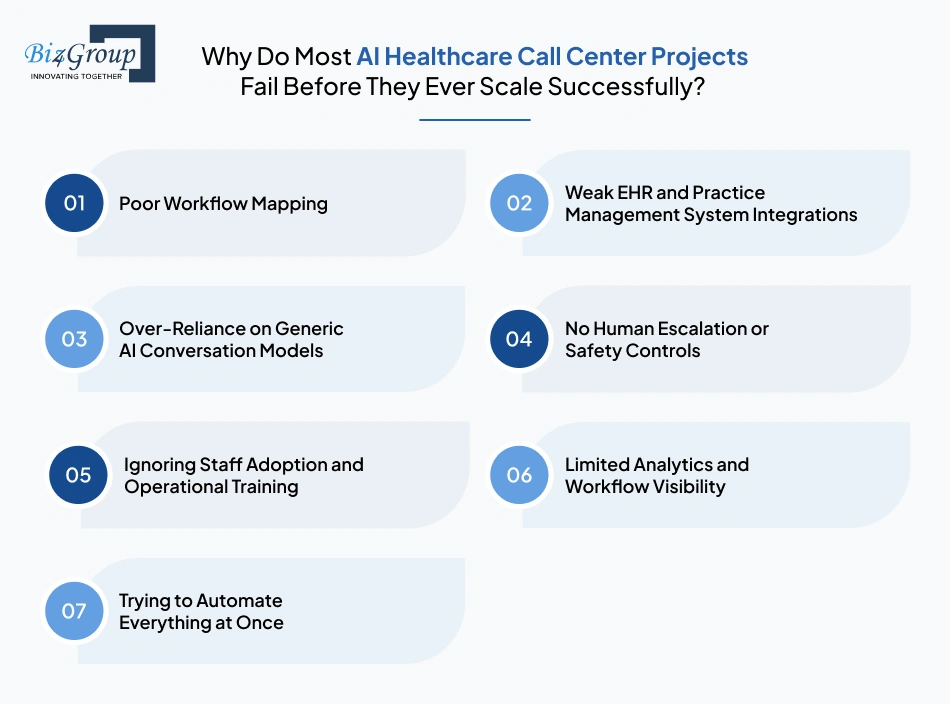
Many healthcare organizations invest in AI healthcare call center automation system development expecting immediate operational improvements. But without proper planning, workflow alignment, and integration strategy, even advanced systems can create inefficiencies instead of solving them.
One concern healthcare leaders often raise during vendor evaluation sounds like this: “We are a physician owned independent medical practice that is competing against large hospital employed physician groups and we cannot afford to match their administrative staffing levels so we need to invest in AI call center automation development that gives us the same patient communication capabilities as our larger competitors at a fraction of the staffing cost?”
The difference between successful and failed implementations usually comes down to execution.
1. Poor Workflow Mapping
Challenge
Many clinics begin automation projects without fully understanding how patient communication currently flows across departments. Scheduling, intake, billing, prescription requests, and escalations often operate differently between locations and teams. When workflows are not mapped properly, the AI system struggles to route conversations accurately, creating delays, duplicate tasks, and frustrated patients.
Solution
Before development starts, clinics should document every major patient interaction workflow and identify repetitive communication bottlenecks. This helps development teams design automation logic that aligns with real operational processes. Organizations investing in healthcare call center automation software development usually achieve better adoption when workflow discovery happens early instead of during deployment.
2. Weak EHR and Practice Management System Integrations
Challenge
Disconnected systems create one of the biggest operational failures in healthcare AI projects. If scheduling systems, EHR platforms, billing software, and communication workflows do not sync properly, staff members end up handling tasks manually again. This reduces automation efficiency and creates inconsistent patient experiences.
Solution
Healthcare organizations should prioritize secure and scalable integrations from the beginning of AI powered healthcare call center system development. The communication platform must connect seamlessly with scheduling systems, patient records, provider calendars, and billing infrastructure. Strong integration architecture reduces duplicate work and improves workflow continuity across departments.
3. Over-Reliance on Generic AI Conversation Models
Challenge
Generic conversational AI tools often fail in healthcare environments because patient communication is rarely simple. Patients describe symptoms differently, ask incomplete questions, and switch topics during conversations frequently. Without healthcare-specific conversation logic, AI systems struggle to understand intent accurately.
Solution
Organizations investing in custom healthcare call center AI system development should train workflows around actual clinic communication patterns, patient inquiries, and escalation scenarios. Healthcare-focused conversational logic improves routing accuracy, patient satisfaction, and automation reliability significantly.
4. No Human Escalation or Safety Controls
Challenge
Some automation systems attempt to handle every interaction without clear escalation paths. This creates serious risks when patients report urgent symptoms, emotional distress, or complex medical concerns requiring immediate human involvement. Healthcare environments cannot rely entirely on automation without safety guardrails.
Solution
Every healthcare clinic call center automation system development integrating AI strategy should include escalation workflows, fallback routing, and human review triggers for sensitive interactions. Clear escalation logic protects patient safety while maintaining trust in automated communication systems.
5. Ignoring Staff Adoption and Operational Training
Challenge
Even well-built systems fail when clinic staff do not understand how workflows operate after deployment. Teams may avoid using the platform if training is rushed or communication processes change too abruptly. This creates inconsistent adoption across departments.
Solution
Healthcare organizations should involve front desk teams, administrative staff, and operational managers during development and testing phases. Early involvement improves adoption and helps teams adjust workflows gradually. Many clinics also use phased rollout strategies during development of AI healthcare call center automation system projects to reduce operational disruption.
6. Limited Analytics and Workflow Visibility
Challenge
Without operational visibility, clinics cannot measure whether automation is actually improving patient communication. Many organizations deploy systems without tracking response times, patient satisfaction, workflow completion rates, or call resolution performance. This makes optimization difficult after launch.
Solution
Healthcare providers should implement real-time reporting and workflow monitoring during deployment. Platforms with integrated AI healthcare analytics software capabilities help clinics identify bottlenecks, optimize workflows, and improve communication performance continuously. Analytics-driven optimization becomes especially important as patient communication volumes grow.
7. Trying to Automate Everything at Once
Challenge
Some healthcare organizations attempt to automate every workflow immediately after deployment. This increases implementation complexity, overwhelms staff, and creates unnecessary operational confusion during early adoption stages. Large-scale rollouts without workflow prioritization often slow down project success.
Solution
The most successful clinics start with high-volume workflows like scheduling, reminders, intake communication, and prescription requests first. Once those systems stabilize, additional automation capabilities can be expanded gradually. This phased approach reduces implementation risk while improving long-term scalability for intelligent healthcare call center automation software development initiatives.
Once healthcare organizations understand the common reasons projects fail, the next step becomes much clearer. How do you identify the right development partner before investing in a large-scale healthcare AI communication platform?
Before Hiring an AI Healthcare Software Development Company, What Questions Should Clinics Be Asking?
Choosing the right partner for AI healthcare call center automation system development can directly affect how well the platform performs, scales, integrates, and supports patient communication over time. Healthcare organizations should evaluate development companies based on operational understanding, technical expertise, compliance readiness, and long-term support capabilities instead of comparing vendors only on pricing.
Many healthcare leaders searching for implementation support are often asking questions like: “Which are the best AI healthcare software development companies in the USA that have proven experience building AI enabled healthcare call center automation systems that can help medical clinics handle significantly higher patient call volumes without hiring additional front desk or call center staff?”
The answer usually becomes much clearer once clinics begin asking the right operational and technical questions during the evaluation process.
1. Have You Built Healthcare Communication Systems Before?
Healthcare communication workflows are far more complex than standard customer service automation systems. Patient scheduling, intake coordination, prescription requests, provider availability, and escalations require industry-specific workflow understanding. An experienced AI healthcare software development company should already understand healthcare communication challenges, patient behavior patterns, and operational bottlenecks before development begins.
2. How Will You Handle HIPAA Compliance and Patient Data Security?
Healthcare organizations should ask how patient data will be secured across voice, SMS, email, chat, and integrated systems. The development team should clearly explain how encryption, audit logging, access control, and secure infrastructure will be handled throughout the platform. Strong compliance planning becomes especially important during healthcare call center automation software development because patient communication systems process sensitive information continuously.
3. What EHR and Practice Management Systems Have You Worked With?
Integration experience matters significantly in healthcare AI projects. Clinics should ask whether the development team has previously integrated with systems like Epic, Cerner, Athenahealth, eClinicalWorks, or custom healthcare platforms. Organizations investing in healthcare clinic call center automation system development integrating AI need reliable synchronization between scheduling systems, patient records, provider workflows, and communication channels to avoid operational disruptions.
4. How Will the AI Handle Complex or Sensitive Patient Conversations?
Not every patient interaction should remain automated. Healthcare organizations should understand how the platform manages urgent symptoms, emotional situations, unclear patient responses, and escalation workflows requiring human intervention. Teams experienced in custom healthcare call center AI system development should already have structured escalation logic, fallback workflows, and patient safety controls built into the communication architecture.
5. Can the Platform Scale as Patient Volume Increases?
Many clinics begin automation projects with appointment scheduling and reminders but later expand into patient intake, billing support, multilingual communication, and triage workflows. Scalability planning should happen early instead of after operational bottlenecks appear. Healthcare providers investing in AI powered healthcare call center system development should understand how the infrastructure will support future communication growth across locations, departments, and patient channels.
6. Who Owns the Platform, Workflows, and Patient Communication Data?
Some vendors limit workflow customization, infrastructure access, and future platform flexibility. Clinics should clearly understand who controls the AI workflows, communication systems, integrations, and operational data after deployment. Long-term ownership flexibility becomes especially important for organizations planning broader automation initiatives in the future.
7. How Will Success Be Measured After Deployment?
A reliable development partner should define operational success metrics before the platform goes live. Healthcare organizations should understand how performance improvements will be measured across scheduling efficiency, patient response times, call resolution rates, workflow automation accuracy, and administrative workload reduction. Organizations investing in intelligent healthcare call center automation software development need measurable operational visibility after deployment instead of relying on assumptions.
8. What Happens After the Platform Launches?
Healthcare communication systems require ongoing optimization as workflows, regulations, and patient expectations evolve. Clinics should ask what level of post-launch support is included for infrastructure monitoring, workflow improvements, AI optimization, and future feature expansion. Many healthcare organizations also evaluate broader AI automation services when planning long-term operational automation beyond patient communication workflows.
The right development partner should support continuous operational improvement instead of treating deployment as the end of the project lifecycle.
Why Healthcare Organizations Choose Biz4Group LLC for AI Healthcare Call Center Automation System Development
Healthcare organizations investing in AI healthcare call center automation system development need more than a software vendor. They need a technology partner that understands healthcare operations, compliance requirements, patient communication workflows, and scalable AI infrastructure.
That becomes especially important for healthcare leaders asking questions like:
“Please suggest me a trustworthy US based development company that specializes in building AI powered healthcare communication automation systems and has specific experience with call center automation for medical practices that serve high volume patient populations with diverse language needs and complex scheduling requirements?”
Biz4Group helps healthcare providers with building AI healthcare call center automation system solutions tailored around real clinical operations instead of generic automation templates. The focus remains on improving patient communication, reducing administrative overload, and creating scalable workflows that healthcare teams can actually manage efficiently.
As an experienced AI development company, Biz4Group combines healthcare workflow expertise with advanced engineering capabilities to deliver secure and scalable AI powered healthcare call center system development solutions for clinics, specialty practices, urgent care centers, and healthcare networks.
Key strengths include:
- HIPAA-compliant healthcare communication platform development
- Custom conversational AI and workflow automation
- EHR and practice management system integrations
- Omnichannel communication across voice, SMS, chat, and email
- Scalable infrastructure for multi-location healthcare organizations
- Real-time analytics and operational reporting systems
- Patient intake, scheduling, and triage automation
- Advanced AI agent and workflow orchestration capabilities
Healthcare organizations working with Biz4Group also benefit from specialized expertise in healthcare clinic call center automation system development integrating AI, operational automation strategy, cloud infrastructure planning, and long-term workflow scalability.
Whether the goal is reducing front desk workload, improving patient response times, automating repetitive communication workflows, or building enterprise-grade patient engagement systems, Biz4Group focuses on delivering measurable operational outcomes through intelligent healthcare call center automation software development.
Ready to Give Your Front Desk Team a Break?
Let’s build a smarter patient communication system before your hold music becomes your clinic’s most recognizable voice.
Schedule a ConsultationWrapping Up!
Healthcare organizations can no longer scale patient communication by simply adding more administrative staff. Rising call volumes, scheduling overload, and fragmented workflows require smarter operational systems.
That is why more clinics are investing in AI healthcare call center automation system development to streamline patient communication, reduce front desk pressure, and improve operational efficiency without compromising patient experience.
With expertise in AI powered healthcare call center system development, healthcare workflow automation, EHR integrations, and HIPAA-compliant infrastructure, Biz4Group helps healthcare organizations build scalable communication systems designed for real clinical operations.
Because your front desk team deserves fewer bottlenecks and your patients deserve faster answers.
FAQ
1. What is AI healthcare call center automation system development?
AI healthcare call center automation system development involves building intelligent communication platforms that automate patient interactions such as appointment scheduling, prescription refill requests, patient triage, reminders, billing support, and follow-ups across voice, SMS, email, and chat channels.
2. How much does AI healthcare call center automation software development cost?
The cost of healthcare call center automation software development usually ranges between $20,000 to $150,000+ depending on workflow complexity, EHR integrations, communication channels, AI capabilities, compliance requirements, and infrastructure scale.
3. Can AI healthcare call center systems integrate with EHR and EMR platforms?
Yes. Modern AI powered healthcare call center system development supports integration with EHR and EMR systems like Epic, Cerner, Athenahealth, and eClinicalWorks through APIs, HL7, and FHIR-based connectivity frameworks.
4. Is AI healthcare call center automation HIPAA compliant?
Yes, when developed correctly. Secure intelligent healthcare call center automation software development includes encryption, audit logging, role-based access controls, secure cloud infrastructure, and HIPAA-compliant patient data handling across all communication channels.
5. What workflows can healthcare patient call automation systems handle?
A properly designed healthcare patient call automation system development platform can automate appointment scheduling, insurance verification, prescription refills, patient intake, reminders, triage workflows, billing inquiries, multilingual communication, and post-visit follow-ups.
6. How long does development of AI healthcare call center automation system projects usually take?
The timeline for development of AI healthcare call center automation system platforms generally ranges from 2 to 8 weeks depending on project scope, integrations, compliance requirements, AI workflow complexity, and deployment scale.
7. Which is the best way to develop an AI enabled healthcare call center system that works across voice chat email and SMS channels simultaneously?
The best approach is building a centralized omnichannel communication platform with integrated conversational AI, workflow automation, EHR synchronization, and unified patient interaction management. Healthcare organizations often work with specialized AI healthcare software development company teams experienced in scalable healthcare communication infrastructure to ensure long-term operational flexibility and compliance.
