Location :
Orlando, FL, USA
Location :
Orlando, FL, USA +1 (407) 714-1616
 info@biz4group.com

















Imagine a digital system that doesn’t wait for instructions but instead, understands your business goals, learns from real-time feedback, and takes independent actions to get the job done.
Read More
You’ve heard chatter about AI systems that can do more than just respond to prompts. These technologies are starting to run parts of businesses on their own, and leaders are asking sharper questions about agentic AI vs AI agents and what that actually means for real operations, like:
Well, it’s only right to be asking all these questions - because the market backs it up too:
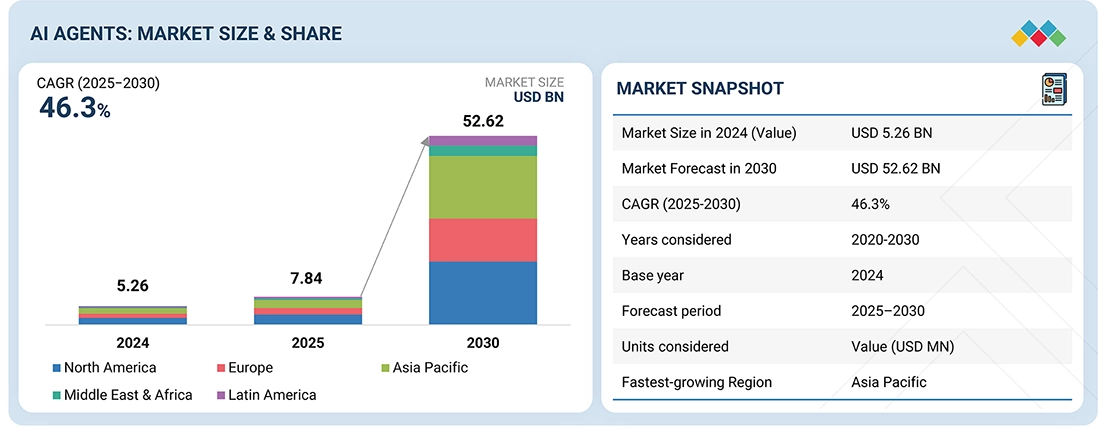
Before diving deeper, it helps to pause and get oriented. As more enterprises plan to engage with offerings from an AI agent development company or explore capabilities from an agentic AI development company, the need for a clear agentic AI vs AI agents comparison becomes unavoidable. These systems are often discussed interchangeably, yet they differ in ways that directly affect automation strategy, system ownership, and long-term scalability.
This is why understanding the difference between agentic AI and AI agents is less of a theoretical and more of a leadership skill. This blog will help you connect the dots, sharpen your perspective, and make smarter calls as AI starts playing a bigger role in how your enterprise actually runs.
Let’s get right into it!
AI agents are software systems designed to perform specific tasks autonomously within defined boundaries. In conversations around agentic AI vs AI agents, they represent task focused automation that observes inputs, follows rules or models, and takes actions without continuous human oversight.
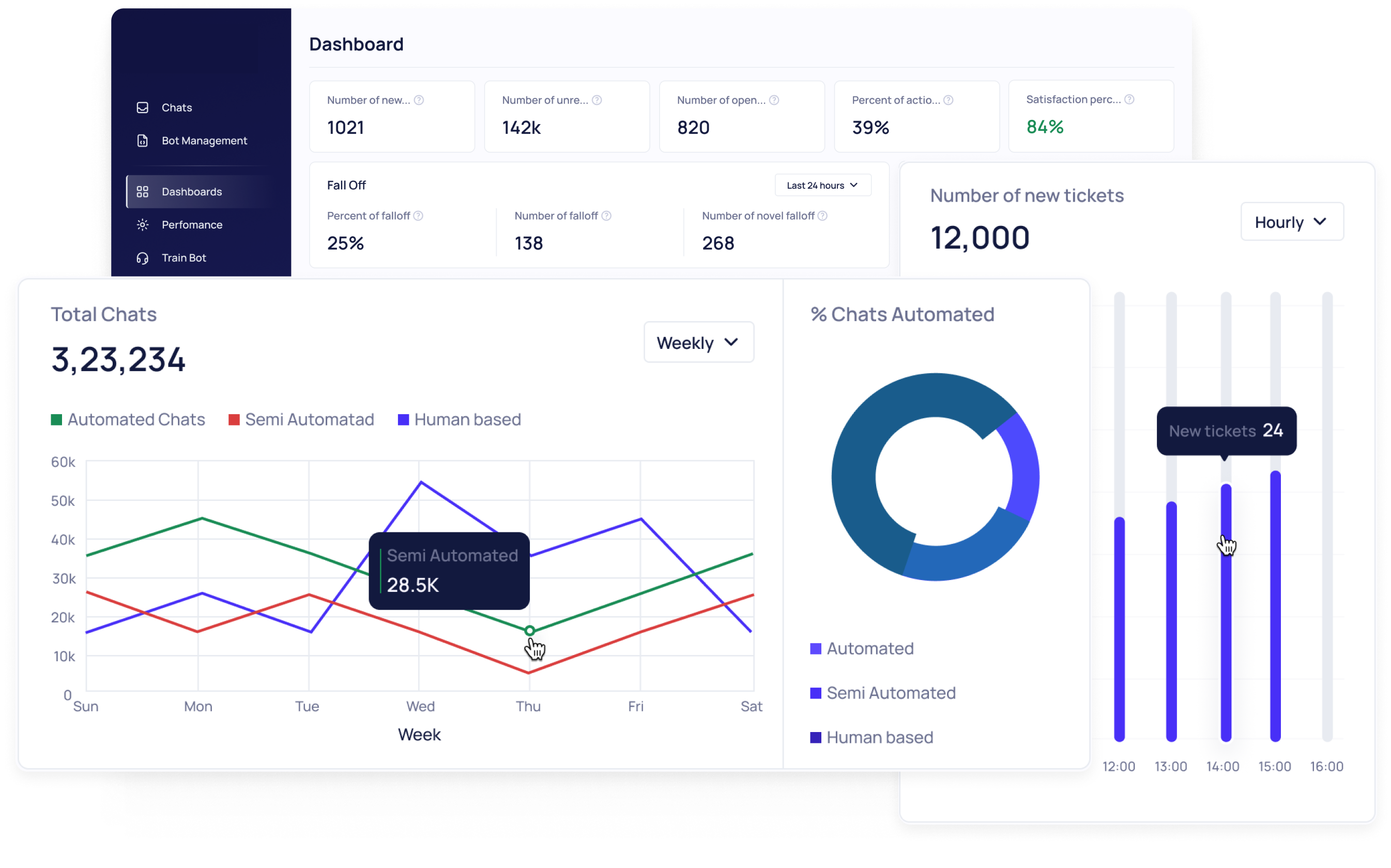
The human-like AI chatbot built by Biz4Group manages real customer conversations across channels, not just answer scripted questions. It balances responsiveness with contextual understanding, making it a practical example of how AI agents operate today while hinting at how agentic systems could eventually manage conversations with broader intent and continuity.
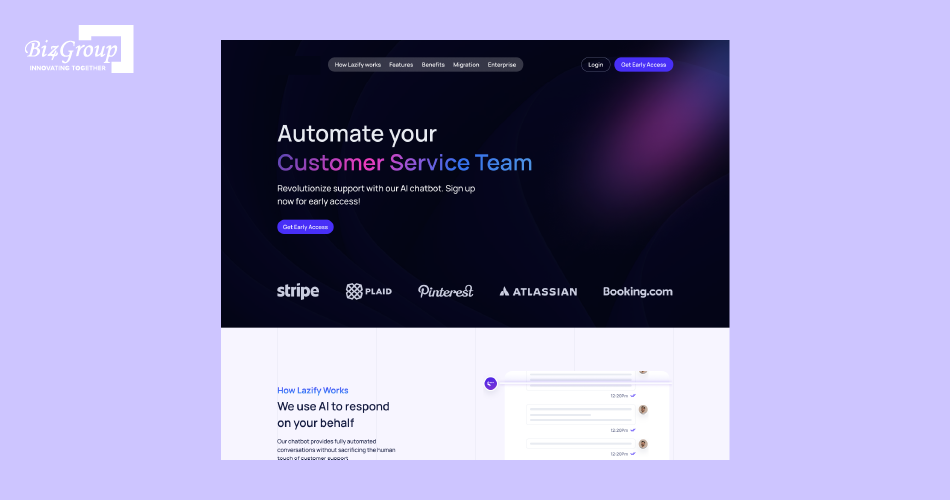
AI agents quietly handle repeatable work across departments, freeing teams to focus on higher value problems. In enterprise settings, they often operate behind the scenes as part of broader enterprise AI solutions.
Also read: How to Build a Multi Agent AI System – Process, Advanced Features, and Cost
Different business problems require different types of AI agents, each optimized for a specific operating model and level of autonomy. Understanding the difference between agentic AI and AI agents starts with knowing these core types.
As enterprises evaluate automation strategies, clarity around agentic AI vs AI agents comparison becomes critical, especially when deploying AI agents through AI automation services at scale. This foundation sets the stage for understanding how responsibility, autonomy, and enterprise impact evolve as systems become more agentic.
Also Read: A Practical Guide to the 6 Types of AI Agents for Business Leaders
Move beyond theory with a clearer understanding of agentic AI vs AI agents and how they actually work in enterprise environments.
Explore Practical AI ArchitecturesAgentic AI refers to systems that can decide what to do next, not just execute a task. In discussions around agentic AI vs AI agents and agentic AI vs generative AI agents, agentic AI focuses on goals and outcomes, not isolated actions.
Agentic AI appears in areas where decisions evolve over time and depend on changing context. These systems often take shape when enterprises work with AI consulting services to handle complex, ongoing decisions.
Agentic AI systems vary based on how much independence they have and how many decisions they manage. This also helps explain how agentic AI vs autonomous AI agents differ in enterprise settings.
As enterprises push beyond basic automation, agentic AI introduces a new level of ownership over decisions. When teams hire agentic AI developers, the shift aims to move from executing tasks to guiding outcomes.
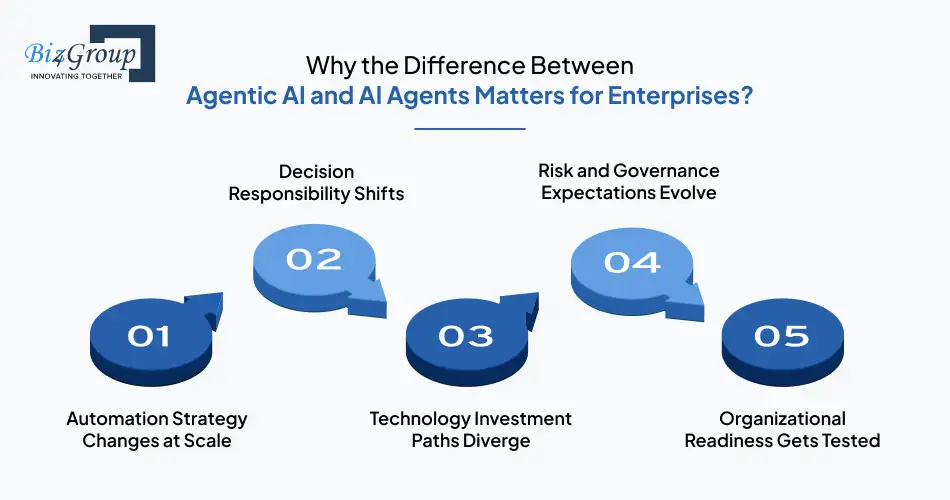
For enterprise leaders, the discussion around agentic AI vs AI agents is practical, not theoretical. It shapes how automation scales, how decisions are made, and how confidently organizations move forward with AI-driven systems.
Choosing between different approaches directly affects how agentic AI vs AI agents for enterprise automation unfolds across workflows, ownership boundaries, and long-term flexibility when teams integrate AI into an app.
In agentic AI vs AI agents in decision making systems, the core question becomes who owns the outcome when systems act independently, especially in environments shaped by generative AI.
Whether an enterprise works with an AI development company or builds internally, the chosen model influences cost structures, timelines, and architectural complexity.
As autonomy increases, organizations must rethink oversight, guardrails, and accountability, particularly when AI-driven decisions affect customers, revenue, or compliance.
Teams need new skills, clearer processes, and better alignment to support systems that operate with intent rather than strict instructions.
Understanding these differences helps enterprises avoid misaligned implementations and unrealistic expectations. It gives leaders a clearer foundation for choosing AI systems that fit how their business operates today and how it plans to evolve tomorrow.
Get clarity on the difference between agentic AI and AI agents before choosing tools, platforms, or automation strategies.
Compare AI Approaches That Fit Your BusinessWhile both technologies act without constant human input, they function very differently inside enterprise systems. Understanding agentic AI vs AI agents starts with examining how each perceives inputs, makes decisions, and executes actions.
|
Functional Aspect |
AI Agents |
Agentic AI |
|---|---|---|
|
Input handling |
Reacts to specific triggers or requests |
Continuously observes environment and state |
|
Goal awareness |
Executes tasks without goal ownership |
Maintains explicit goals and objectives |
|
Implementation style |
Common in AI agent implementation patterns |
Designed when teams build agentic AI systems |
|
Decision process |
Follows predefined rules or trained responses |
Plans sequences of actions to reach goals |
|
Action execution |
Performs one task at a time |
Executes multi step action plans |
|
Feedback loop |
Limited or none |
Uses feedback to adjust future decisions |
|
Memory usage |
Short term or session based |
Maintains contextual and persistent memory |
|
Coordination logic |
Works independently or in fixed flows |
Coordinates multiple actions or agents |
|
System integration |
Often embedded into a single workflow |
Connects across systems using AI integration services |
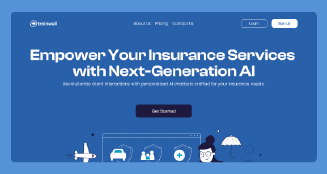
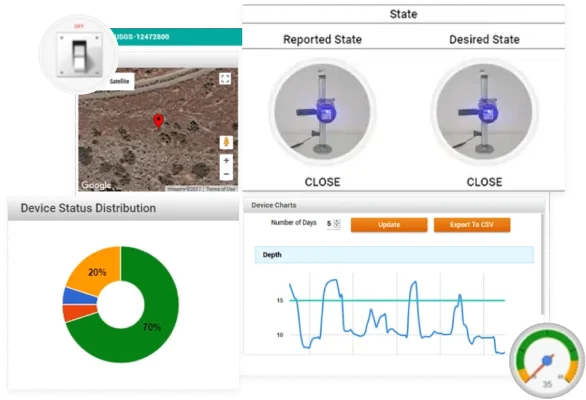
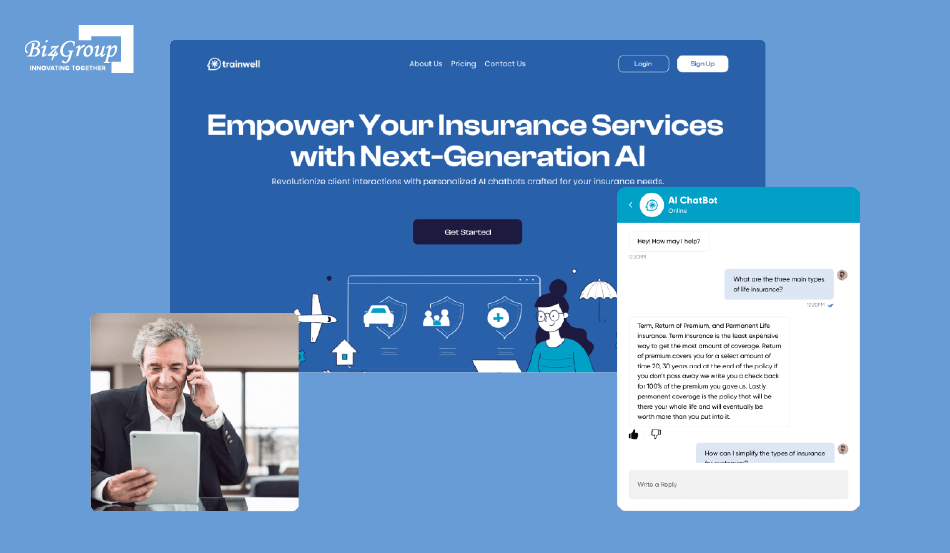
Insurance AI happens to be an AI agent designed by Biz4Group to support training, policy understanding, and agent assistance in a highly regulated environment. The system demonstrates how AI agents can reliably execute domain-specific tasks, while also showing where decision boundaries exist, making it a useful reference point when contrasting structured agents with more autonomous, goal-driven agentic AI.
This functional distinction becomes increasingly important as enterprises evaluate agentic AI vs AI agents for scaling autonomous operations. It becomes more important when architectural decisions are influenced by the latest trends rather than surface level capabilities.
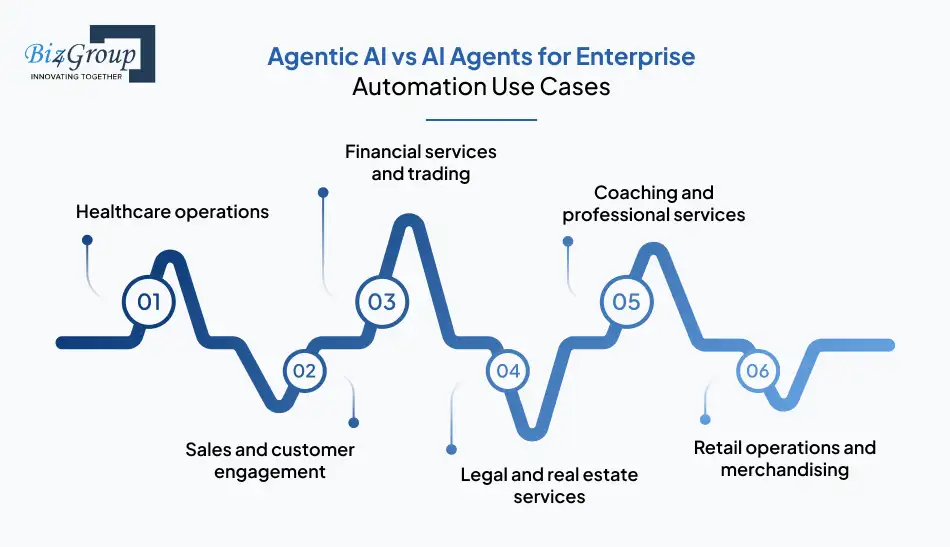
Enterprises often compare these approaches by how they perform across industries where reliability, adaptability, and accountability matter most. This section looks at agentic AI vs AI agents through real operational capabilities rather than abstract features.
Also Read: Agentic AI platform development for real estate
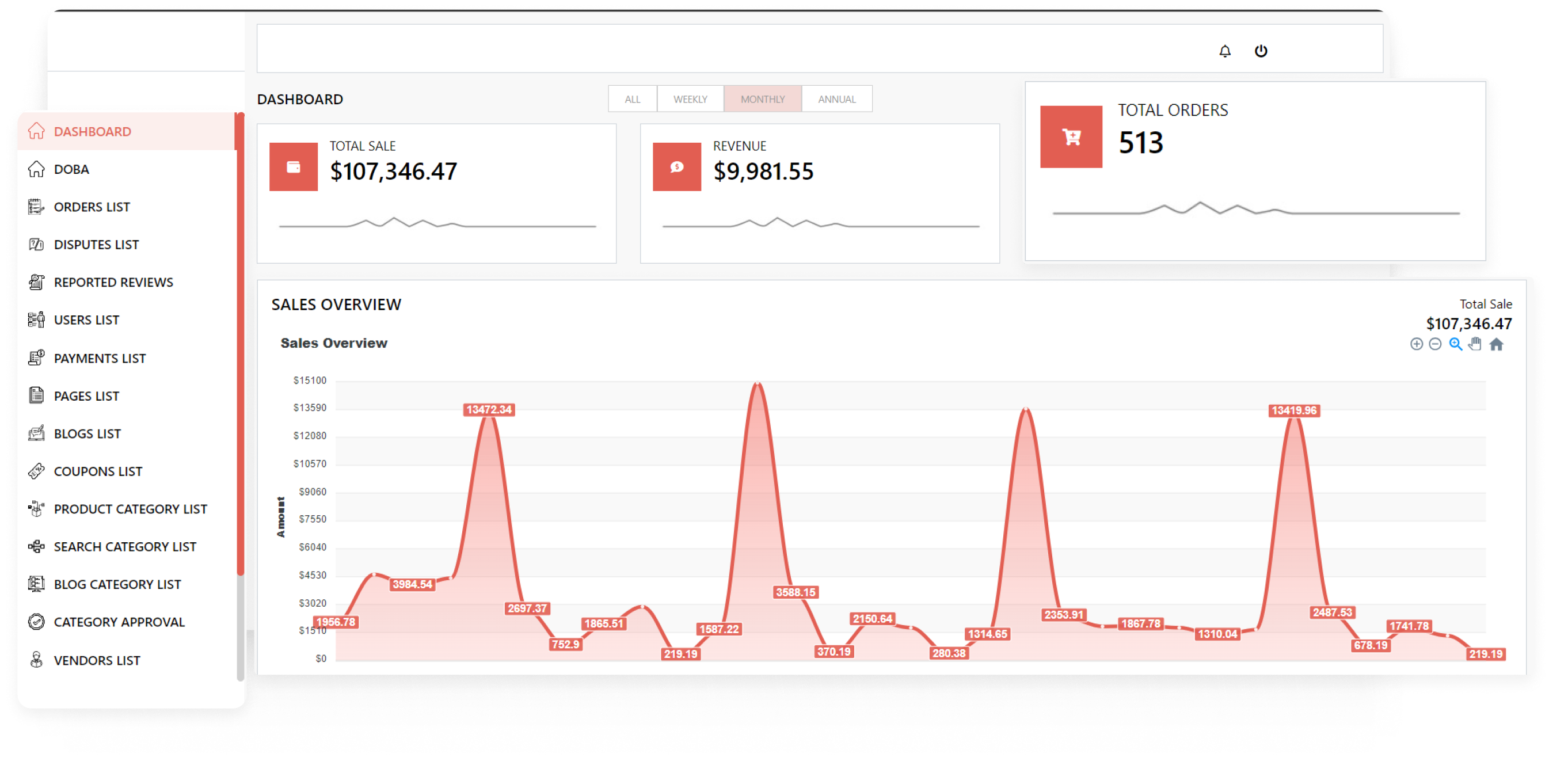
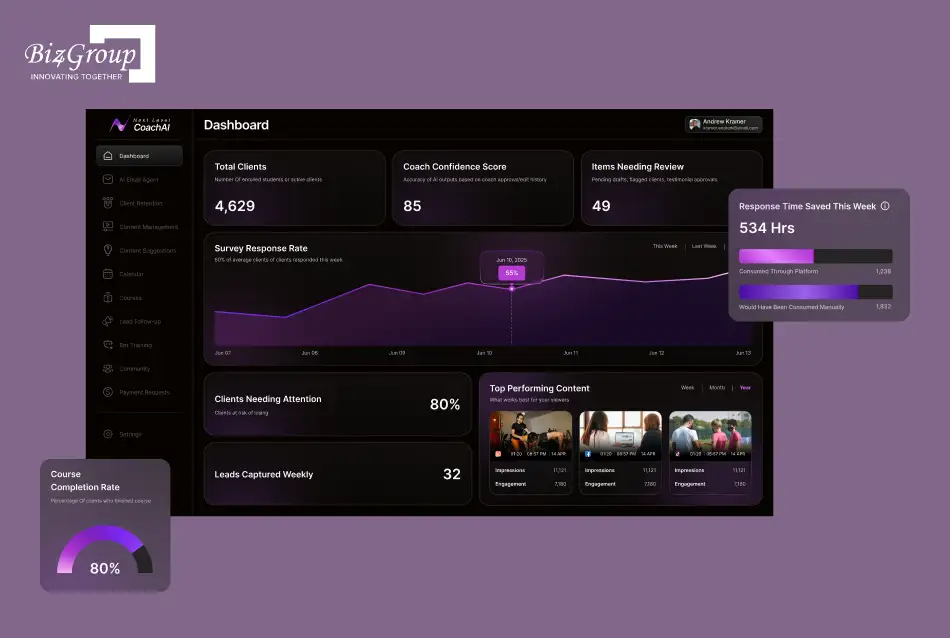
Coach AI focuses on adaptive guidance, client engagement, and personalized workflows for coaches and educators. Unlike rigid automation, this solution adjusts recommendations based on ongoing interactions, making it a strong illustration of systems moving closer to agentic behavior while still operating within defined goals and guardrails.
Across these industries, the contrast becomes most useful when leaders think about how enterprise leaders should choose between agentic AI and AI agents, especially as organizations move from isolated automation toward systems that manage outcomes across complex environments.
Also Read: Top Real-World Use Cases for Agentic AI
Understand agentic AI vs AI agents for enterprise automation and where autonomy truly adds value across workflows.
Plan Your Automation the Right WayEnterprise leaders often struggle to compare these systems because both appear autonomous on the surface. To understand agentic AI vs AI agents, it helps to look at how each behaves operationally when deployed inside real enterprise environments.
|
Capability |
AI Agents in Enterprises |
Agentic AI in Enterprises |
|---|---|---|
|
Work intent |
Executes a predefined task or instruction, often designed by an AI chatbot development company |
Operates with an outcome in mind and adjusts actions accordingly |
|
Degree of independence |
Acts only within clearly defined boundaries |
Maintains authority to decide next steps |
|
Response to change |
Requires updates or retraining to adapt |
Adjusts behavior continuously using live context |
|
Breadth of responsibility |
Limited to a single function or workflow |
Spans multiple workflows and systems |
|
Reliance on human input |
Needs frequent prompts or approvals |
Proceeds independently once objectives are set |
|
Reasoning complexity |
Follows logic produced during AI model development |
Reasons across goals, memory, and evolving signals |
|
Engagement pattern |
Responds to inputs, such as interactions in an AI conversation app |
Initiates actions without waiting for prompts |
|
Handling unexpected outcomes |
Stops or escalates when issues arise |
Replans and corrects course autonomously |
|
Use of tools and systems |
Operates with a fixed set of tools defined upfront |
Selects and combines tools dynamically |
|
Ability to work with other agents |
Operates alone or in simple chains |
Coordinates multiple agents, to get various levels of task done. |
|
Business impact |
Improves efficiency at the task level |
Drives cumulative value through ongoing decisions |
|
Exposure to risk |
Lower risk due to constrained behavior |
Higher responsibility that requires stronger governance |
For those wondering what is the difference between agentic AI and AI agents? This pretty much sums it all up. For enterprise leaders deciding when to hire AI developers or invest in business app development using AI, the real distinction lies in how much decision ownership they are ready to assign to intelligent systems.
Choosing between these approaches is rarely about chasing the newest idea. For enterprise teams weighing agentic AI vs AI agents, it usually comes down to how decisions are made today and how much independence they are willing to hand over to software.
AI agents work best when the job is clear and repeatable. They shine in environments where processes rarely change and teams want consistency more than creativity.
Agentic AI starts to matter when the system needs to decide what to do next, not just execute a step. These are situations where conditions shift and actions have downstream consequences.
Both approaches have clear strengths when matched to the right problem. Understanding where AI agents fit and where agentic AI takes over gives enterprises a sharper lens on automation, autonomy, and responsibility before moving into the question of how to choose between them.
Learn how agentic AI vs AI agents in decision making systems impacts control, accountability, and scale.
Evaluate AI for Enterprise Decisions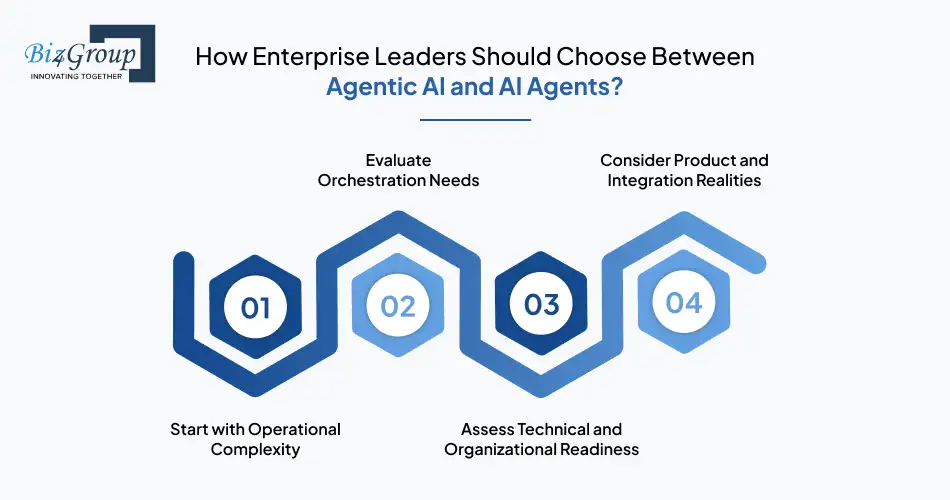
There is no shortcut here. Leaders thinking through agentic AI vs AI agents need to be honest about governance maturity, internal expertise, and tolerance for autonomous decisions. This is less about tools and more about how your organization actually operates day to day.
If your workflows are linear and predictable, AI agents often fit better. As processes become interconnected, agentic AI vs AI agents for business operations becomes a more relevant lens, especially when decisions span teams and systems.
Some enterprises only need task execution, while others need systems that coordinate actions across tools and data. This distinction becomes clear when comparing agentic AI platforms vs AI agent tools and how they support agentic AI vs AI agents for workflow orchestration in real environments.
Teams exploring AI agent development trends may be comfortable starting small, while those aiming to build agentic AI assistant capabilities must be ready for deeper design choices around accountability and oversight.
Whether you plan to build an AI app, focus on AI assistant app design, or rely on seamless AI chatbot integration, your choice should align with how much autonomy the system will realistically have once deployed.
This choice ultimately reflects how your enterprise thinks about ownership. Some organizations want AI to assist, others are ready for AI to lead within clearly defined boundaries.
Choosing between advanced AI approaches is rarely about labels. It is about understanding where autonomy adds value and where control still matters. Biz4Group helps enterprises navigate agentic AI vs AI agents by grounding decisions in systems that are already live and delivering results.
Our portfolios that include the human-like AI chatbot show how well-designed AI agents can handle high-volume conversations with consistency. Insurance AI demonstrates structured decision support in a regulated environment where boundaries matter. Coach AI illustrates how systems begin to move closer to agentic behavior by adapting guidance over time. Together, they form a practical agentic AI vs AI agents comparison based on real operating conditions.
Biz4Group’s approach is shaped by years of hands-on experience:
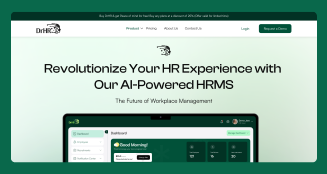
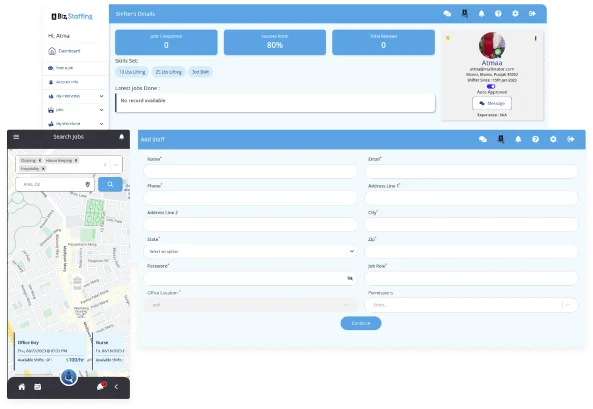
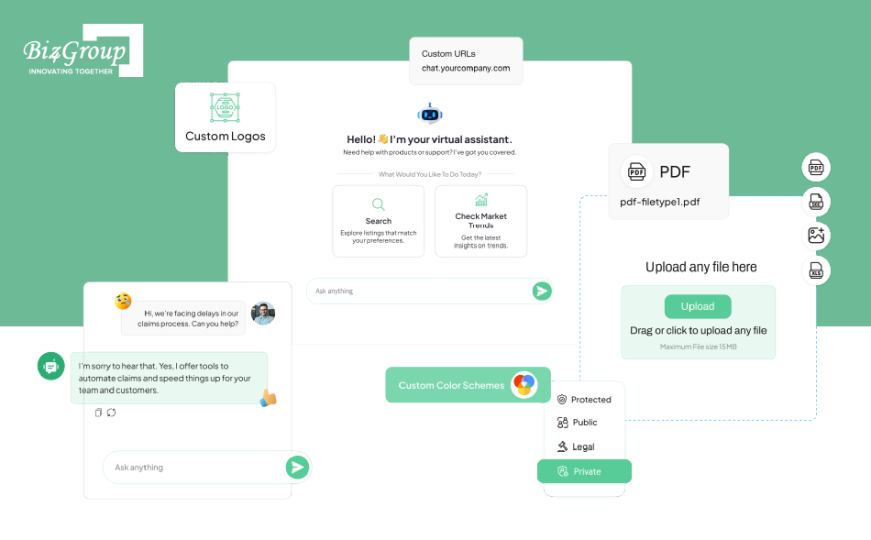
We developed a custom enterprise AI agent was developed to automate internal support across HR, legal, and customer-facing workflows. It retrieves contextual information, responds accurately within defined boundaries, and escalates when needed, making it a strong example of AI agents operating at scale while highlighting where agentic capabilities could later extend decision ownership.
Rather than pushing a single model, Biz4Group helps enterprises choose what fits their current reality while laying the groundwork for more agentic capabilities when the organization is ready.
Discover how agentic AI vs AI agents for scaling autonomous operations shapes long-term system performance.
Design AI That Grows With YouThe real concern in the debate about agentic AI vs AI agents is not intelligence, it’s intent. Do you want systems that wait for instructions, or systems that notice when the situation has changed and act accordingly? That’s the quiet thread running through every example, every architecture choice, and every tradeoff discussed in this agentic AI vs AI agents comparison.
Enterprises that get this right won’t just automate work, they’ll redefine how the work output gets decided. And as more vendors enter the conversation, including many of the top AI development companies in Florida, the differentiator won’t be who talks about autonomy the loudest, but who designs it with discipline.
Map where decision-making should stop, and where it shouldn’t - Get in Touch With Our Experts
Governance becomes more complex as systems gain autonomy. An agentic AI vs AI agents comparison highlights that AI agents are easier to audit since they follow predefined rules, while agentic AI requires stronger oversight because it plans and adapts actions over time.
Yes, but only with the right controls. The difference between agentic AI and AI agents matters here because agentic systems need guardrails, logging, and escalation paths, whereas AI agents fit more easily into tightly regulated, rule-based environments.
Not exactly. Agentic AI vs autonomous AI agents differs in intent. Autonomous agents may act independently, but agentic AI is built around sustained goals, decision loops, and long-term outcome ownership rather than isolated autonomy.
Generative models often act as components, not full systems. In agentic AI vs generative AI agents, generative AI typically supports content or reasoning, while agentic AI orchestrates decisions and actions across multiple tools and contexts.
The main risk is scaling behavior without scaling governance. Agentic AI vs AI agents for scaling autonomous operations highlights that agentic systems amplify impact faster, which means errors, bias, or misalignment can propagate if not carefully managed.
They do not replace them, but they do change the role. In agentic AI vs AI agents in decision making systems, AI agents assist with execution, while agentic AI proposes and sequences actions, leaving humans to set boundaries and review outcomes.

with Biz4Group today!
Our website require some cookies to function properly. Read our privacy policy to know more.