 Location :
Orlando, FL, USA
Location :
Orlando, FL, USA +1 (407) 714-1616
 info@biz4group.com

 AI Summary Powered by Biz4AI
- Healthcare AI chatbot development is becoming essential for improving patient communication, reducing workload, and enabling scalable healthcare operations.
- AI chatbot solutions for hospitals and clinics help streamline appointments, automate patient queries, and enhance overall service efficiency.
- The success of AI chatbot creation for healthcare depends on selecting the right features, tech stack, and seamless integration with systems like EHR and telemedicine platforms.
- Understanding the cost estimation of healthcare AI chatbot is critical, as pricing typically ranges between $20,000–$200,000+ depending on features, AI capabilities, and compliance requirements.
- Following a structured development process of AI chatbot for healthcare industry ensures better performance, security, and long-term scalability.
- Addressing challenges such as compliance, data security, and scalability is key to building reliable and patient-safe chatbot systems.
- Partnering with an experienced provider like Biz4Group LLC helps healthcare organizations build secure, scalable, and customized AI chatbot solutions tailored to their needs.
Are you struggling to manage patient inquiries, appointments, and follow-ups while your staff is already overwhelmed?
For healthcare providers, hospitals, and healthtech startups, managing high patient volumes often leads to long wait times, delayed responses, and inefficient communication. Many clinic owners exploring how to create chatbot for healthcare are now asking: "I am running a clinic and want to build an AI chatbot for patient engagement and appointment booking, where do I start?"
Healthcare AI chatbots are designed to solve exactly these challenges. They automate patient communication, streamline appointment scheduling, and provide instant responses, reducing the burden on medical staff.
Healthcare AI chatbot development refers to the process of building intelligent virtual assistants that use AI and natural language processing to interact with patients, handle queries, and support healthcare operations in real time through healthcare bot development.
With the development of AI chatbot for healthcare, hospitals and clinics can:
- Offer 24/7 patient support
- Reduce manual workload
- Improve response time
- Enhance patient engagement
For organizations looking to build AI healthcare chatbot for hospitals and clinics through professional AI chatbot development services for healthcare, these solutions are no longer optional. They are essential for delivering scalable, efficient, and personalized care in today's digital-first healthcare environment.
This guide covers everything you need to know about healthcare AI chatbot development, including architecture, features, healthcare chatbot development cost, and implementation strategies, helping you make informed decisions and stay competitive.
What is AI Chatbot for Healthcare Industry?
An AI chatbot for healthcare industry is an AI-powered software application that enables real-time interaction between patients and healthcare providers using natural language via text or voice. It automates patient communication, streamlines healthcare services, and improves access to medical support through healthcare chat automation.
Built using NLP and machine learning, these chatbots can understand patient queries, identify intent, and deliver accurate, context-aware responses across multiple healthcare touchpoints, a core focus of medical AI chatbot development.
Healthcare AI chatbots are commonly used for:
- Appointment scheduling and reminders
- Symptom checking and initial patient triage
- Patient support and query resolution
- Follow-ups and medication reminders
Modern healthcare AI chatbot development focuses on intelligent, context-aware systems that continuously learn from interactions and deliver more personalized patient experiences. This makes them essential for hospitals, clinics, and healthtech platforms aiming to improve efficiency, reduce workload, and provide scalable 24/7 patient support.
What Is the Technical Architecture of AI Chatbot Development for Healthcare Industry?
The technical architecture of AI chatbot development for healthcare is designed by experienced healthcare chatbot developers to ensure secure, accurate, and real-time communication between patients and healthcare systems. A well-structured architecture allows the chatbot to handle patient queries efficiently while integrating with existing medical systems and maintaining compliance with healthcare regulations.
At a high level, a healthcare AI chatbot consists of multiple layers that work together to process user input and generate appropriate responses.
Core Components of Healthcare AI Chatbot Architecture:
1. User Interface Layer:
This is the front-facing layer where patients interact with the chatbot. It can be a mobile app, web application, or messaging platform such as WhatsApp or hospital portals. The interface captures user input in text or voice format.
2. NLP and AI Processing Layer:
This layer interprets patient queries using natural language processing and machine learning models. It identifies intent, extracts relevant information, and determines the appropriate response. Advanced systems may use large language models to improve accuracy and context understanding.
3. Application Logic Layer:
The application layer manages workflows and decision-making. It handles tasks such as appointment booking, routing queries, and triggering specific actions based on patient input. This layer ensures that the chatbot follows defined healthcare processes.
4. Integration Layer:
Healthcare chatbots need to connect with external systems such as EHR or EMR platforms, appointment scheduling tools, and telemedicine services as part of a complete AI chatbot solution for healthcare industry. APIs and standards like FHIR enable seamless data exchange between the chatbot and healthcare systems.
5. Data Storage Layer:
This layer stores patient interactions, chat history, and system data. It may include secure databases that comply with healthcare data regulations. Proper data management ensures continuity and personalization in patient communication.
6. Security and Compliance Layer:
Security is critical in healthcare chatbot development. This layer ensures data encryption, access control, and compliance with regulations such as HIPAA or GDPR. It protects sensitive patient information at every stage of interaction.
How the System Works:
When a patient sends a query, the chatbot processes the input through the NLP layer to understand intent. The request is then handled by the application logic, which may retrieve or update data through integrated systems. Finally, a relevant response is generated and delivered back to the patient through the interface.
This structured architecture enables healthcare providers to build AI chatbots that are scalable, reliable, and capable of delivering consistent patient experiences across different platforms, laying the groundwork for enterprise healthcare bots development.
2X Your Patient Bookings with AI Chatbot Automation
Automate scheduling and follow-ups to increase confirmed appointments and drive consistent revenue growth.
Schedule a Strategy CallWhy Are Healthcare Providers Investing in AI Chatbot Development?
Healthcare providers are increasingly investing in AI chatbot development for healthcare to handle growing operational pressure, rising patient expectations, and the need for scalable communication systems through AI-driven healthcare chatbot development services. Traditional methods are no longer sufficient for managing high patient volumes and complex workflows.
If you are thinking, "I am running a clinic and want to know if investing in an AI healthcare chatbot is worth it for improving patient engagement and operational efficiency," the answer lies in how effectively your current systems can scale, respond quickly, and manage patient interactions without delays. In most cases, healthcare AI chatbot development directly addresses these challenges.
Key Reasons for Investing in AI Chatbot Development for Healthcare
1. Increasing Demand That Exceeds Operational Capacity
Healthcare providers are facing a continuous rise in patient inquiries, appointment requests, and follow-ups. Existing administrative systems often struggle to keep up with this demand, leading to delays and inefficiencies.
This is one of the primary reasons for investing in AI chatbot development for healthcare, as it introduces a system capable of handling large volumes of interactions simultaneously without increasing dependency on staff.
2. Complexity in Managing Patient Communication Across Channels
Modern healthcare communication is no longer limited to phone calls. It includes websites, mobile apps, messaging platforms, and patient portals. Managing these channels manually creates fragmented workflows and inconsistent responses.
By developing an AI chatbot for healthcare, providers can unify communication into a single system that ensures consistency, accuracy, and better coordination across all patient touchpoints.
3. Need for Continuous Patient Interaction Without Time Constraints
Patient queries and healthcare needs arise at all hours, but staff availability is limited. This creates gaps in communication and delays in service delivery.
Healthcare organizations are investing in AI chatbot development for healthcare to ensure uninterrupted interaction, allowing systems to handle patient communication independently of working hours.
4. Transition Toward Digitized Healthcare Infrastructure
Healthcare systems are rapidly adopting digital technologies such as telemedicine, EHR systems, and remote patient monitoring. Communication needs to evolve alongside these systems.
Healthcare AI chatbot development supports this transition by acting as a digital communication layer that integrates with existing healthcare infrastructure and enables seamless patient interaction.
5. Need for Structured Data and Process Standardization
Manual communication often results in unstructured data, making it difficult to track patient interactions or improve workflows. This limits the ability to optimize operations and make informed decisions.
By developing an AI chatbot for healthcare, providers can capture structured interaction data, standardize processes, and create more efficient communication systems that support long-term operational improvements.
6. Strong Market Growth Driving Early Adoption
The rise in investing in AI chatbot development for healthcare is strongly supported by market trends and future adoption forecasts that point toward the future of chatbots in healthcare. Healthcare organizations are aligning with this shift to remain competitive and future-ready.
According to a recent report, the global conversational AI market is projected to grow from $17.97 billion in 2026 to $82.46 billion by 2034, showing rapid adoption across industries including healthcare.
This AI adoption growth indicates that healthcare AI chatbot development is becoming a standard investment rather than an experimental initiative, as more providers move toward scalable and AI-driven communication systems.
7. Need for Scalable Systems to Support Future Growth
Healthcare providers are planning for long-term scalability as patient demand continues to increase, particularly organizations exploring AI chatbot for healthcare enterprises. Expanding teams alone is not sustainable due to cost and operational complexity.
This is why many organizations are investing in AI chatbot development for healthcare to build systems that can scale efficiently, handle increasing workloads, and support future expansion without compromising performance.
From the above reasons, it is clear that investing in AI chatbot development for healthcare is a strategic move to build scalable, efficient, and future-ready patient communication systems.
What Are the Key Use Cases of AI Chatbots in Healthcare Industry?
Healthcare organizations are increasingly adopting AI chatbots to handle critical operational and patient-facing tasks. If you are thinking, "we are a healthcare organization and want to understand the key use cases of AI chatbots in improving patient care, appointments, and support services," it is important to look at how these systems are applied in real-world scenarios.
Modern healthcare AI chatbot development focuses on solving challenges such as communication gaps, appointment delays, and lack of continuous support.
These use cases show how a well-planned chatbot for healthcare industry is integrated into hospitals, clinics, and digital health platforms to improve efficiency and patient experience.
1. Appointment Booking and Scheduling Management
AI chatbots automate appointment booking by allowing patients to schedule, reschedule, or cancel visits through simple conversations. They connect with hospital systems to check doctor availability and manage calendars in real time.
Example:
A clinic chatbot enables patients to book appointments online without calling the front desk, reducing wait times and manual effort.
Key functions:
- Real-time appointment booking
- Automated reminders and alerts
- Easy rescheduling and cancellations
- Calendar and system integration
2. AI Patient Support and Query Handling
AI chatbots handle a wide range of patient queries, providing instant responses to common questions related to services, doctors, and procedures. This reduces the burden on support teams and ensures consistent communication.
Example:
A hospital chatbot answers patient questions about departments, consultation fees, and timings within seconds.
Key functions:
- Instant query resolution
- FAQ automation
- Guidance to relevant services
- Reduced support workload
3. Symptom Checking and Initial Patient Triage
AI chatbots assist patients by collecting symptoms and providing basic guidance on possible conditions, a common starting point for teams researching how to build a medical chatbot. They help determine whether medical attention is required and guide patients to the right care path.
Example:
A healthcare app chatbot asks symptom-based questions and suggests whether to consult a doctor or seek urgent care.
Key functions:
- Symptom assessment
- Initial risk evaluation
- Care recommendations
- Early triage support
4. Telemedicine and Virtual Consultation Support
AI chatbots support telemedicine by managing patient intake and guiding users through virtual consultation processes. They help collect information and connect patients with appropriate healthcare providers.
Example:
A telehealth platform uses a chatbot to gather patient details and route them to the right specialist for online consultation.
Key functions:
- Patient onboarding
- Pre-consultation data collection
- Doctor routing
- Virtual consultation assistance
5. Patient Follow-ups and Medication Reminders
AI chatbots help maintain communication after treatment by sending follow-ups and medication reminders. They ensure patients stay on track with care plans and reduce the chances of missed treatments.
Example:
A clinic chatbot sends reminders for medication and follow-up visits after a patient's consultation.
Key functions:
- Automated follow-ups
- Medication reminders
- Care plan notifications
- Patient engagement tracking
6. EHR Integration and Patient Data Access
Healthcare chatbots integrate with EHR systems to access patient data securely and provide personalized responses. This allows patients to receive accurate information based on their medical history.
Example:
A hospital chatbot provides lab results and appointment history
by securely accessing patient records.
Key functions:
- Secure data access
- Personalized responses
- Record retrieval
- System integration
7. Billing, Insurance, and Administrative Support
AI chatbots assist patients with billing and insurance-related queries by providing clear and quick information. They simplify administrative processes and reduce dependency on manual support teams.
Example:
A healthcare chatbot explains billing details and insurance coverage to patients without requiring staff involvement.
Key functions:
- Billing assistance
- Insurance query handling
- Payment reminders
- Administrative support
From these use cases, it is clear that healthcare AI chatbot development plays a critical role in improving patient care, streamlining appointments, and enhancing support services across modern healthcare systems.
Also Read: How to Build an AI Medical Billing Software: Step-by-Step Guide
Turn Patient Inquiries into Revenue Opportunities
Capture every patient query and convert it into a booked consultation with a healthcare AI chatbot.
Talk to Our ExpertsWhat Features Are Required for AI Chatbot Development for Healthcare?
When it comes to AI chatbot creation for healthcare, the success of the solution depends on the features it offers and how well it integrates into clinical workflows. Healthcare providers evaluating a healthcare bot development service need more than just basic automation, they require intelligent systems that can handle real patient interactions securely and efficiently.
If you are wondering about the essential features needed in healthcare AI chatbot development for clinics and hospitals to improve engagement and automation, the following capabilities are critical.
|
Feature |
Description |
|---|---|
|
Natural Language Processing (NLP) |
Enables the chatbot to understand patient queries in natural language and respond accurately. It helps interpret intent, context, and variations in user input for better communication. This ensures conversations feel more human and less scripted. |
|
Appointment Scheduling System |
Allows patients to book, reschedule, or cancel appointments directly through the chatbot. It integrates with hospital calendars to provide real-time availability. This reduces manual scheduling workload significantly. |
|
EHR/EMR Integration |
Connects the chatbot with electronic health records to access patient history and provide personalized responses. It ensures accurate data retrieval during interactions. This also improves continuity of care. |
|
Symptom Checker Functionality |
Helps patients input symptoms and receive basic guidance on possible conditions. It supports early triage and directs patients to appropriate care. This feature improves initial patient assessment. |
|
Multilingual Support |
Enables communication in multiple languages to serve diverse patient populations. It improves accessibility and inclusivity across regions. This ensures better patient engagement. |
|
24/7 Availability |
Ensures the chatbot can handle patient queries at any time without downtime. It supports continuous interaction beyond working hours. This is essential for modern healthcare services. |
|
Secure Data Handling and Compliance |
Protects patient data through encryption and compliance with regulations like HIPAA or GDPR. It ensures privacy and secure communication. This builds trust with users. |
|
Voice and Text Interaction |
Supports both voice-based and text-based communication for flexibility. It allows patients to interact based on their preference. This enhances usability across devices. |
|
Automated Follow-ups and Reminders |
Sends reminders for appointments, medications, and follow-ups automatically. It keeps patients engaged and informed. This reduces missed appointments and improves adherence. |
|
Integration with Telemedicine Platforms |
Connects with virtual consultation systems to assist in online healthcare services. It helps in patient onboarding and routing to doctors. This supports digital healthcare delivery. |
|
Analytics and Reporting Dashboard |
Provides insights into patient interactions, chatbot performance, and engagement metrics. It helps healthcare providers make data-driven decisions. This improves system optimization over time. |
|
Customizable Conversation Flows |
Allows healthcare providers to design chatbot responses based on specific workflows. It ensures the chatbot aligns with clinical processes. This improves accuracy and relevance. |
|
AI Learning and Continuous Improvement |
Enables the chatbot to learn from interactions and improve responses over time. It enhances accuracy and personalization. This keeps the system updated with evolving needs. |
|
API Integration Capabilities |
Supports integration with third-party tools such as billing systems, CRM, and healthcare platforms. It ensures seamless data exchange. This expands the chatbot's functionality. |
|
Human Handoff Mechanism |
Allows the chatbot to transfer complex queries to human staff when needed. It ensures patients receive proper assistance for critical issues. This maintains service quality. |
From these features, it is clear that building an AI chatbot for healthcare requires a combination of intelligence, security, and seamless integration to truly improve patient engagement and automation.
How to Develop AI Chatbot for Healthcare Industry (Step-by-Step)
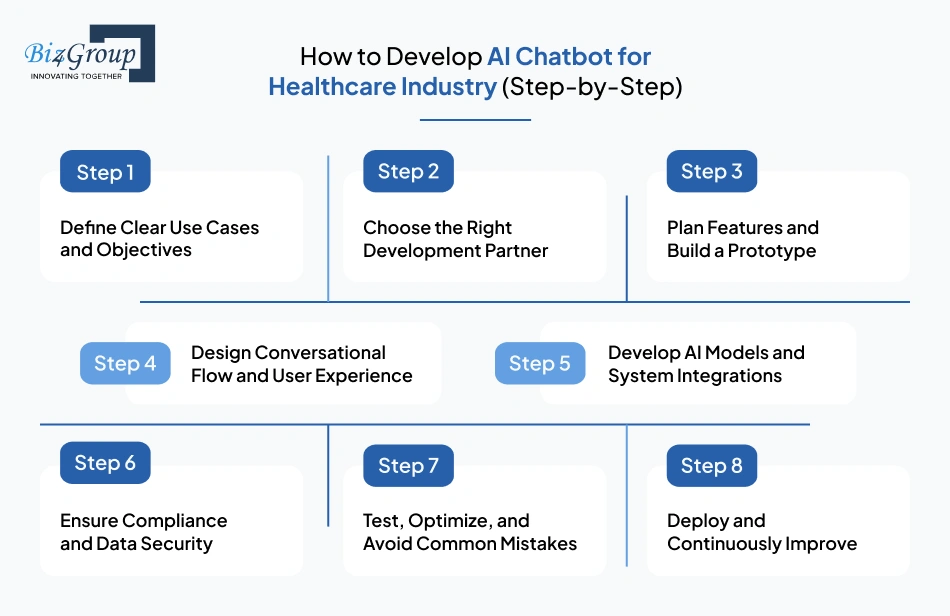
Developing a healthcare chatbot requires a structured approach that aligns technology, compliance, and real-world healthcare workflows. If you are thinking, "we want end-to-end development of healthcare chatbot with AI capabilities, which companies should we hire," the answer often starts with selecting an experienced healthcare chatbot development company to guide the process.
The development process of AI chatbot for healthcare industry involves multiple stages that ensure the chatbot is scalable, secure, and capable of handling real patient interactions effectively.
Step 1: Define Clear Use Cases and Objectives
Start by identifying the exact problems the chatbot will solve, such as patient engagement, appointment booking, or support services. Clear objectives help avoid scope confusion and ensure the solution aligns with healthcare needs.
This step lays the groundwork for effective AI chatbot solutions for hospitals and clinics by defining measurable outcomes and user expectations.
Focus areas:
- Patient communication gaps
- Appointment management
- Support automation
Also Read: How to Develop an AI Implementation Roadmap
Step 2: Choose the Right Development Partner
Selecting the right partner is critical for successful implementation. Many healthcare organizations collaborate with a specialized UI/UX design company to ensure intuitive user interactions along with technical development.
You should evaluate experience, healthcare expertise, and scalability capabilities when shortlisting top AI chatbot development companies for your project.
Focus areas:
- Industry experience
- Technical expertise
- Compliance knowledge
Step 3: Plan Features and Build a Prototype
Once goals are defined, the next step is to plan features and validate the concept through AI chatbot PoC development. This helps test feasibility and identify potential gaps early.
After validation, move forward with MVP development services to launch a functional version with core features and gather user feedback.
Focus areas:
- Feature prioritization
- Early validation
- Risk reduction
Also Read: Top MVP Development Companies to Launch Your Startup
Step 4: Design Conversational Flow and User Experience
Designing intuitive conversation flows is essential for user adoption. The chatbot should guide patients smoothly through different interactions without confusion.
This step is especially important when planning how to create AI healthcare chatbot for 24/7 patient support, where consistent and clear communication is required at all times.
Focus areas:
- Clear conversation paths
- User-friendly design
- Accessibility
Also Read: Top 15 UI/UX Design Companies in USA
Step 5: Develop AI Models and System Integrations
This stage focuses on building the intelligence of the chatbot using NLP, machine learning, and backend logic. It ensures accurate understanding of patient queries and appropriate responses.
Proper AI chatbot integration with EHR systems, scheduling tools, and telemedicine platforms is essential for seamless functionality.
Focus areas:
- NLP and intent recognition
- Backend workflows
- System integrations
Also Read: An Enterprise Guide to AI Model Development from Scratch
Step 6: Ensure Compliance and Data Security
Healthcare chatbots must follow strict data protection standards. Implement encryption, access controls, and regulatory compliance such as HIPAA or GDPR.
Failure to address compliance is one of the main reasons why many AI projects fails, especially in healthcare environments.
Focus areas:
- Data privacy
- Regulatory compliance
- Secure infrastructure
Also Read: HIPAA-Compliant AI Healthcare Software Development: Benefits, Technology, Steps and Challenges
Step 7: Test, Optimize, and Avoid Common Mistakes
Thorough testing ensures the chatbot performs reliably under different scenarios. This includes functional testing, user testing, and performance validation.
It is also important to identify Mistakes to Avoid While Developing AI Chatbot, such as poor training data, lack of fallback mechanisms, and incomplete workflows.
Focus areas:
- Performance testing
- Error handling
- Continuous improvement
Also Read: 15+ Software Testing Companies in USA
Step 8: Deploy and Continuously Improve
After successful testing, the chatbot is deployed across platforms such as websites, mobile apps, and messaging channels. Monitoring performance and updating features is essential for long-term success.
At this stage, many organizations rely on custom AI healthcare chatbot development services to scale and enhance the solution as requirements evolve.
Focus areas:
- Multi-platform deployment
- Performance monitoring
- Ongoing updates
Following this structured approach ensures that conversational AI chatbot development for healthcare delivers a scalable, secure, and efficient solution tailored to modern healthcare needs.
Also Read: A Complete Guide to AI Chatbot Development
How Much Does It Cost to Build Healthcare AI Chatbot for Hospitals and Clinics?
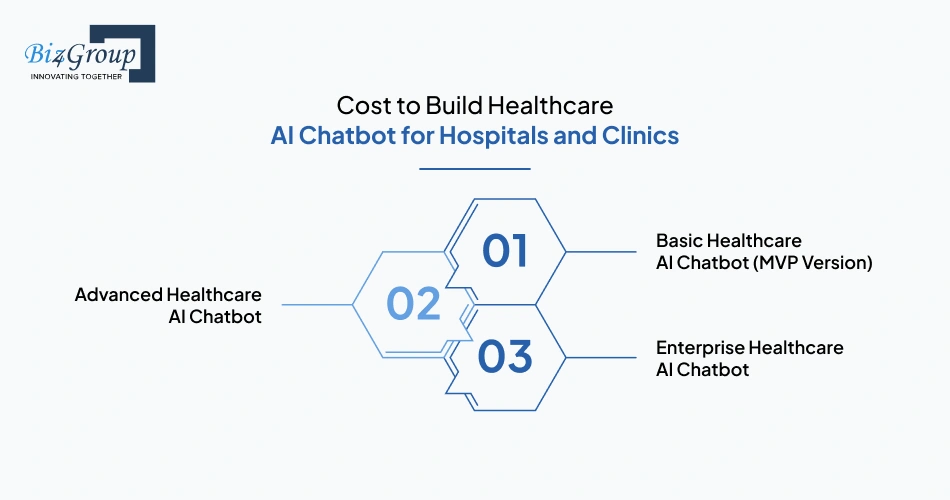
The cost estimation of Healthcare AI Chatbot depends on multiple factors such as features, integrations, and system complexity. If you are thinking, "I am planning to develop an AI chatbot for a hospital but unsure about what will be the total healthcare chatbot development cost and what features will impact the pricing," it is important to break down the cost structure clearly.
On average, the development budget of AI chatbot for healthcare ranges between $20,000 to $250,000+, depending on the level of functionality and scalability required. The pricing of healthcare AI chatbot increases as you move from basic automation to fully integrated, enterprise-grade systems.
|
Chatbot Type |
Estimated Cost |
Description |
|---|---|---|
|
Basic Healthcare AI Chatbot (MVP Version) |
$20,000 – $50,000 |
Suitable for small clinics or startups. Includes basic features such as appointment booking, FAQs, and simple automation for quick deployment. |
|
Advanced Healthcare AI Chatbot |
$50,000 – $120,000 |
Ideal for growing healthcare providers. Includes NLP capabilities, symptom checking, integrations, and enhanced patient engagement features. |
|
Enterprise Healthcare AI Chatbot |
$120,000 – $250,000+ |
Designed for hospitals and large healthcare networks. Includes full system integration, advanced AI models, compliance, analytics, and scalability. |
Key Factors That Affect Healthcare AI Chatbot Development Cost
1. Feature Complexity and Functional Scope
The overall cost increases based on the number and complexity of features included in the chatbot. Basic features require less development effort, while advanced functionalities demand more resources.
Estimated cost impact:
- Basic features: $20,000 – $40,000
- Advanced features with AI capabilities: $60,000 – $150,000+
2. Integration with Healthcare Systems
Integrating the chatbot with EHR, EMR, scheduling systems, or telemedicine platforms adds technical complexity and development time. Secure API integration is essential in healthcare environments.
Estimated cost impact:
- Limited integrations: $10,000 – $25,000
- Full system integrations: $30,000 – $80,000+
3. AI Model and NLP Capabilities
The intelligence level of the chatbot significantly impacts pricing. Advanced NLP and machine learning models require more training, testing, and optimization.
Estimated cost impact:
- Basic NLP or rule-based system: $15,000 – $30,000
- Advanced AI and contextual understanding: $40,000 – $100,000+
4. Compliance and Security Requirements
Healthcare chatbots must meet strict regulations such as HIPAA or GDPR. Implementing security layers and compliance protocols adds to development costs.
Estimated cost impact:
- Standard security setup: $10,000 – $25,000
- Full compliance and data protection: $30,000 – $70,000+
5. UI and User Experience Design
A well-designed interface ensures better usability and engagement. Custom UI and seamless interaction flows require additional design effort.
Estimated cost impact:
- Basic UI design: $5,000 – $15,000
- Advanced, user-focused design: $15,000 – $40,000+
6. Development Team and Location
The cost varies depending on whether you hire freelancers, in-house developers, or experienced agencies offering a dedicated healthcare bot development service. Skilled teams with healthcare expertise usually charge higher.
Estimated cost impact:
- Freelancers or small teams: $15,000 – $40,000
- Specialized development agencies: $50,000 – $150,000+
7. Maintenance and Continuous Improvement
Post-deployment maintenance, updates, and performance optimization are ongoing costs that should be considered in the total budget.
Estimated cost impact:
- Basic maintenance: $5,000 – $15,000 per year
- Continuous optimization and upgrades: $20,000 – $50,000+ per year
ROI to Consider for AI Chatbot Development for Healthcare
Investing in a healthcare AI chatbot delivers measurable returns over time through improved efficiency and reduced manual workload.
Key ROI factors include:
- Lower administrative and operational costs
- Faster response time for patient queries
- Increased appointment bookings and reduced no-shows
- Improved patient engagement and satisfaction
- Scalable communication without increasing staff
From the above breakdown, the pricing of healthcare AI chatbot depends on features, integrations, and scale, but with the right investment, it delivers strong long-term value for hospitals and clinics
Also Read: AI Medical Chatbot Development Cost: Factors and Example
Build a Scalable System That Grows Your Healthcare Business
Reduce operational costs while increasing patient volume with a custom AI chatbot solution.
Request a Cost EstimateWhat Are the Recommended Tools and Tech Stack for Healthcare AI Chatbot Development
The performance and scalability of any chatbot depend heavily on the technologies used during development. When developing an healthcare AI chatbot, it is important for healthcare chatbot developers to align the tools with system requirements, security standards, and integration needs.
For organizations focused on creating AI healthcare chatbot for hospitals and clinics, using the right combination of technologies helps ensure smooth functionality, faster deployment, and reliable patient interactions.
Core Tech Stack for Healthcare AI Chatbot Development
|
Layer |
Tools/Technologies |
Description |
|---|---|---|
|
Frontend (User Interface) |
React, Angular, Flutter |
Used to build responsive web and mobile interfaces where patients interact with the chatbot. Ensures smooth user experience across devices. |
|
Backend Development |
Node.js, Python (Django, Flask) |
Handles business logic, API management, and server-side processing. Ensures smooth communication between systems. |
|
AI/NLP Engines |
OpenAI, Google Dialogflow, Microsoft Azure AI |
Powers natural language understanding, intent detection, and response generation for chatbot intelligence. |
|
Database |
MongoDB, PostgreSQL, Firebase |
Stores patient interactions, chatbot logs, and system data securely for retrieval and analysis. |
|
Cloud Platforms |
AWS, Microsoft Azure, Google Cloud |
Provides scalable infrastructure, hosting, and deployment capabilities for healthcare applications. |
|
Integration APIs |
FHIR APIs, HL7 Standards |
Enables secure integration with EHR, EMR, and other healthcare systems. |
|
Security Tools |
OAuth 2.0, SSL/TLS Encryption |
Ensures secure data transmission and compliance with healthcare regulations. |
Recommended Tools Breakdown by Use Case
|
Use Case |
Recommended Tools |
Description |
|---|---|---|
|
Patient Interaction & UI |
React, Flutter |
Builds user-friendly interfaces for web and mobile chatbot access. |
|
AI Chatbot Intelligence |
OpenAI, Dialogflow |
Handles NLP, intent recognition, and response generation. |
|
Backend & API Handling |
Node.js, Python |
Manages logic, workflows, and system communication. |
|
Healthcare Integration |
FHIR APIs, HL7 |
Connects chatbot with hospital systems and patient records. |
|
Data Storage |
MongoDB, PostgreSQL |
Stores chatbot interactions and healthcare data securely. |
|
Cloud Deployment |
AWS, Azure |
Ensures scalability, performance, and secure hosting. |
|
Security & Compliance |
OAuth, SSL/TLS |
Protects sensitive patient data and ensures compliance. |
Using the best tech stack to develop healthcare AI chatbot enables healthcare providers to build secure, scalable, and high-performing solutions that support modern patient care and operational efficiency.
What Are the Challenges in Developing AI Chatbot for Healthcare and How to Overcome?
Healthcare organizations often face multiple technical and operational barriers when building AI solutions. If you are exploring the key challenges faced in healthcare AI chatbot development for clinics and hospitals and best practices to solve issues related to compliance, scalability, and patient safety, it is important to understand both the risks and the solutions.
Developing a healthcare chatbot requires careful planning to ensure security, accuracy, and seamless integration with existing systems while maintaining patient trust.
1. Data Privacy and Regulatory Compliance
Handling sensitive patient data is one of the biggest challenges in healthcare chatbot development. Regulations such as HIPAA and GDPR require strict control over how data is stored, accessed, and shared.
How to overcome:
- Implement end-to-end encryption and secure data storage
- Use role-based access control and authentication systems
- Conduct regular compliance audits and follow healthcare regulations from the start
Also Read: HIPAA-Compliant AI Healthcare Software Development
2. Ensuring Patient Safety and Response Accuracy
Inaccurate responses can lead to serious consequences in healthcare. Chatbots must provide reliable information and avoid misguiding patients.
How to overcome:
- Train models using verified medical datasets and guidelines
- Add validation layers for critical responses
- Provide human handoff for sensitive or complex medical queries
3. Integration with Complex Healthcare Systems
Healthcare systems often include EHR, EMR, billing platforms, and telemedicine tools. Integrating a chatbot with these systems can be technically challenging and time-consuming, especially for large-scale enterprise healthcare bots development.
How to overcome:
- Use standardized APIs such as FHIR and HL7
- Build modular architecture for easier integration
- Test integrations thoroughly to ensure seamless data flow
4. Scalability and Performance Under High Load
As patient interactions grow, the chatbot must handle increased traffic without delays or system failures. Poor scalability can impact user experience and system reliability.
How to overcome:
- Deploy chatbot infrastructure on scalable cloud platforms
- Optimize backend performance and load handling
- Continuously monitor system performance and usage patterns
5. Understanding Complex and Unstructured Patient Queries
Patients describe symptoms in different ways, which makes it difficult for chatbots to interpret intent accurately. This can lead to incomplete or incorrect responses.
How to overcome:
- Use advanced NLP models for better context understanding
- Continuously train the chatbot using real interaction data
- Implement fallback responses for unclear inputs
6. Building User Trust and Adoption
Patients may be hesitant to trust AI-driven systems for healthcare-related interactions. Lack of trust can limit adoption and usage.
How to overcome:
- Clearly communicate the chatbot's capabilities and limitations
- Ensure transparency in responses and data handling
- Provide easy access to human support when needed
7. Continuous Updates and System Maintenance
Healthcare guidelines, technologies, and user expectations change over time. A chatbot that is not updated regularly can become outdated and ineffective.
How to overcome:
- Implement continuous learning and system updates
- Monitor user feedback and chatbot performance
- Schedule regular maintenance and improvements
By addressing these key challenges with the right strategies, healthcare providers working with skilled healthcare chatbot developers can build AI chatbots that are secure, scalable, and capable of delivering safe and reliable patient interactions.
Real-world Examples of Healthcare AI Chatbots
Healthcare AI chatbots are already being used across hospitals, digital health platforms, and patient engagement systems. These real-world examples help healthcare organizations understand how AI chatbots function in practical environments and how they improve patient care, communication, and decision-making.
If you are evaluating how AI can be applied in your setup, these examples provide a clear picture of how different chatbot solutions are designed for specific healthcare use cases.
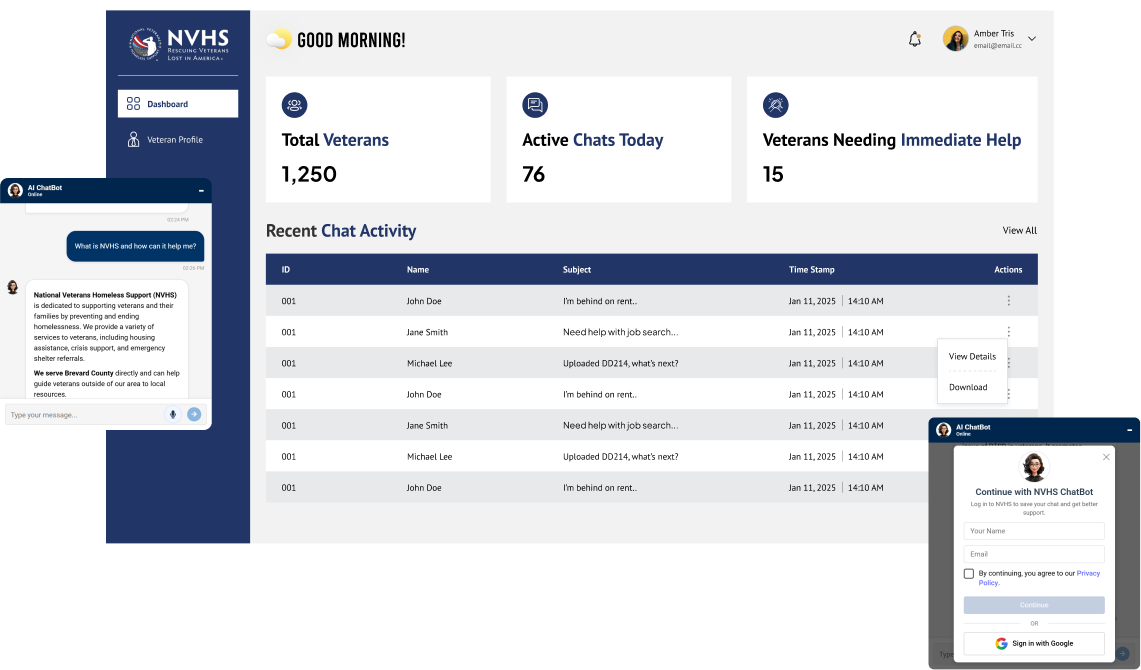
1. NVHS: AI Chatbot for Personalized Support to Homeless and At-Risk Veterans
Many healthcare organizations are implementing AI chatbots to provide personalized support to patients based on their needs, conditions, and history. A growing example of this approach includes AI-enabled chatbot assistance for homeless or at-risk veterans across U.S, where access to timely care and support services is often limited. These chatbots are designed to guide users, answer queries, and connect them with relevant healthcare and community resources.
Example use case:
A healthcare organization deploys a chatbot to assist vulnerable populations, including veterans, by helping them find nearby healthcare services, schedule appointments, and receive ongoing support through a single digital interface.
Key capabilities:
- Personalized patient interaction
- Resource guidance and support services
- Appointment and care coordination
- Continuous engagement for at-risk patients
2. Sensely
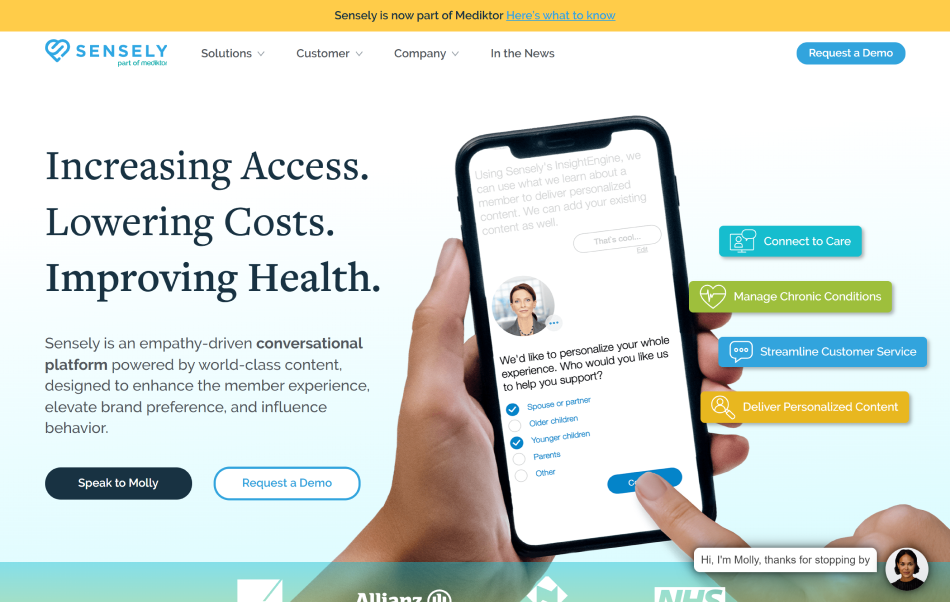
Sensely is a well-known healthcare AI chatbot platform that uses a virtual assistant to interact with patients through voice and text. It is widely used for symptom assessment, patient engagement, and chronic care management.
Example use case:
Hospitals use Sensely's virtual assistant to guide patients through symptom checking and provide care recommendations based on urgency levels.
Key capabilities:
- AI-powered symptom assessment
- Virtual assistant with voice and text interaction
- Chronic disease monitoring
- Integration with healthcare systems
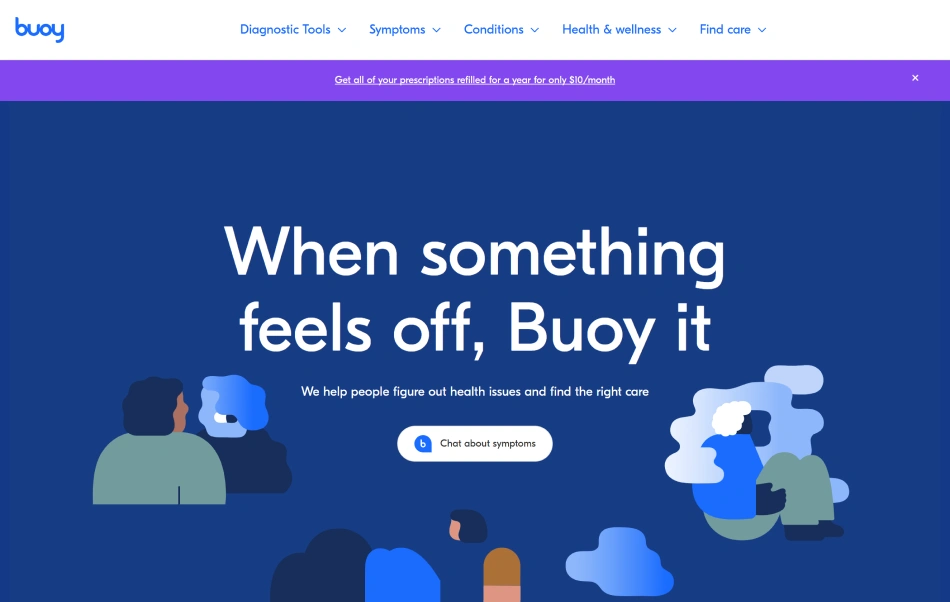
3. Buoy
Buoy Health focuses on helping patients understand their symptoms and decide the next course of action. It uses AI trained on clinical data to guide users toward appropriate care.
Example use case:
A patient interacts with Buoy by entering symptoms, and the chatbot asks follow-up questions before suggesting whether to seek medical attention or manage the condition at home.
Key capabilities:
- Symptom-based questioning
- AI-driven triage recommendations
- Guidance for next steps
- Follow-up engagement with patients
4. Healthily
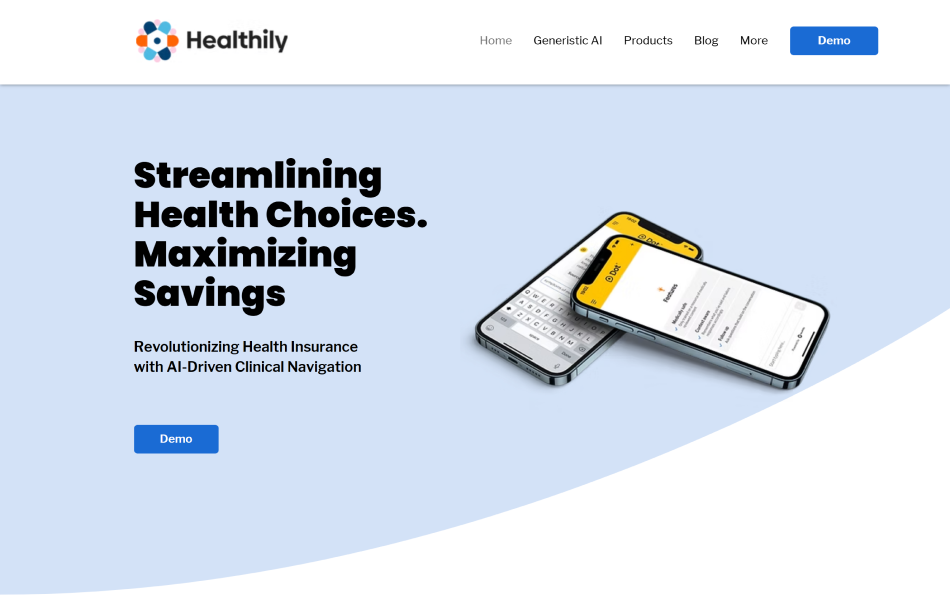
Healthily is an AI-powered chatbot that combines symptom checking with health education and self-care guidance. It helps users understand their health conditions and provides actionable recommendations.
Example use case:
Users input symptoms, and the chatbot refines the analysis through follow-up questions, then provides possible conditions and directs them to appropriate healthcare resources.
Key capabilities:
- Symptom checker with guided questions
- Personalized health information
- Self-care recommendations
- Navigation to healthcare services
5. Ada Health
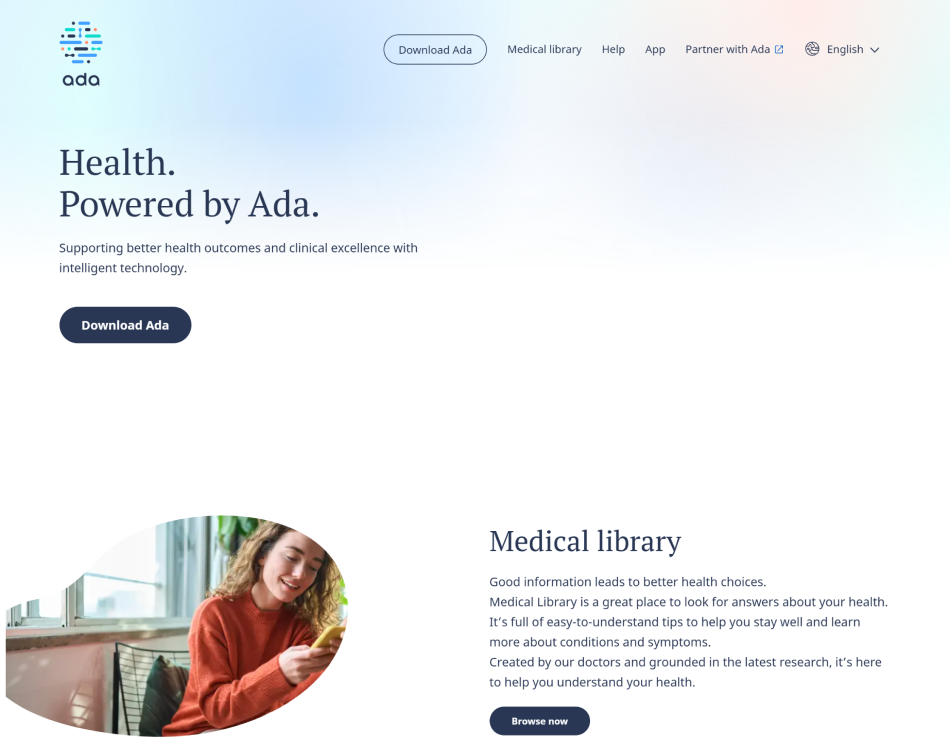
Ada Health is one of the most widely used AI healthcare chatbots for symptom assessment and health guidance. It uses a large medical database to evaluate user inputs and provide insights.
Example use case:
Patients use Ada to input symptoms and receive a detailed health assessment, which can also be shared with doctors for further consultation.
Key capabilities:
- Advanced symptom assessment
- AI-driven health insights
- Personalized reports
- Integration with healthcare providers
These real-world examples show how healthcare AI chatbots are being applied across different scenarios, helping organizations improve patient support, streamline processes, and deliver more accessible and efficient care.
Future of AI Chatbot Development in Healthcare Industry
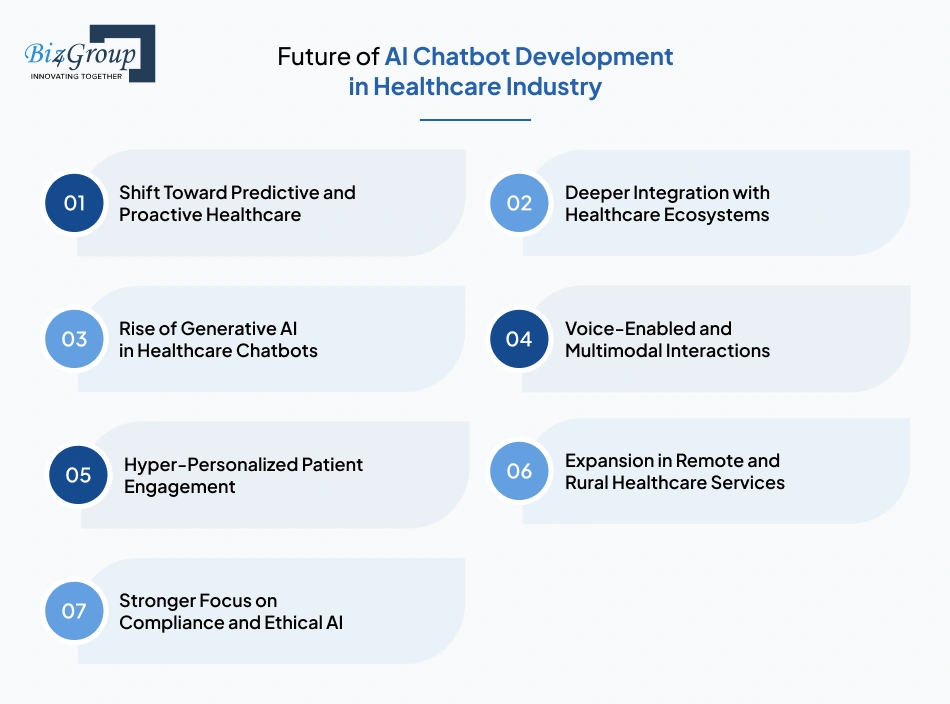
The future of AI chatbot development for healthcare industry is moving beyond basic automation toward intelligent, predictive, and highly personalized patient care systems. As healthcare continues to adopt digital technologies, AI chatbots are becoming a core component of modern care delivery, helping providers improve efficiency, accessibility, and patient outcomes.
If you are wondering, "how will AI chatbot development for healthcare industry evolve in the future and what advancements will impact patient care, automation, and healthcare systems," the answer lies in the rapid advancement of AI models, data integration, and real-time decision-making capabilities shaping the future of chatbots in healthcare.
1. Shift Toward Predictive and Proactive Healthcare
Future healthcare AI chatbot development will focus on predicting patient needs rather than just responding to queries. Chatbots will analyze patient history, behavior, and health data to provide proactive recommendations and early alerts.
This will help healthcare providers move from reactive care to preventive care models, improving patient outcomes and reducing hospital visits.
2. Deeper Integration with Healthcare Ecosystems
As hospitals adopt more digital systems, AI chatbot solutions for hospitals and clinics including AI chatbot for healthcare enterprises, will become deeply integrated with EHR, wearable devices, telemedicine platforms, and remote monitoring tools.
This will allow chatbots to access real-time patient data and deliver more accurate, personalized, and context-aware interactions.
3. Rise of Generative AI in Healthcare Chatbots
The next phase of conversational AI in healthcare development will be driven by generative AI models that can provide more human-like, contextual, and adaptive conversations.
These chatbots will be capable of handling complex patient queries, generating detailed responses, and supporting clinical workflows with higher accuracy.
4. Voice-Enabled and Multimodal Interactions
Future chatbots will move beyond text-based communication to include voice, video, and multimodal interactions. AI virtual assistants for healthcare industry will allow patients to interact naturally using speech, making healthcare more accessible, especially for elderly or less tech-savvy users.
5. Hyper-Personalized Patient Engagement
With advancements in AI and data analytics, AI patient support chatbot development will focus on delivering highly personalized experiences. Chatbots will tailor responses based on patient history, preferences, and ongoing treatments.
This level of personalization will significantly improve patient engagement and satisfaction.
6. Expansion in Remote and Rural Healthcare Services
AI chatbots will play a major role in improving access to healthcare in remote and underserved areas. By enabling virtual consultations and continuous support, healthcare automation chatbot development will help bridge the gap between patients and providers.
This is especially important for regions with limited healthcare infrastructure.
7. Stronger Focus on Compliance and Ethical AI
As AI adoption grows, there will be increased emphasis on ethical AI practices, transparency, and regulatory compliance. Future custom healthcare chatbot development services will prioritize data security, explainability, and responsible AI usage.
This will help build trust among patients and healthcare providers.
The future of AI chatbot development for healthcare industry is centered on intelligent automation, deeper integration, and personalized care, making it a key driver of innovation in modern healthcare systems.
3X Faster Patient Response Time, Higher Retention
Provide instant, 24/7 responses to retain more patients and improve overall revenue performance.
Book a DemoWhy Choose Biz4Group LLC for AI Healthcare Chatbot Development Services?
With 20 years in AI and healthcare sector, Biz4Group build HIPAA-compliant AI healthcare chatbots, helping healthcare providers adopt secure and scalable digital solutions. As an experienced AI chatbot development company, the focus is on delivering practical, high-performing systems tailored to real healthcare needs.
If you are evaluating options and asking, "we are evaluating vendors for AI healthcare chatbot development, who should we choose," the answer lies in choosing a partner with proven expertise in building reliable healthcare AI solutions.
What Makes Biz4Group a Strong Choice
Instead of offering generic solutions, Biz4Group focuses on building customized systems that align with your operational goals and patient workflows.
Here is what sets them apart:
- Tailored Development Approach Delivers custom AI healthcare chatbot development services designed specifically for hospitals, clinics, and healthtech platforms.
- Healthcare-Focused Solutions Builds AI chatbot solutions for hospitals and clinics that improve communication, patient interaction, and service efficiency.
- Automation-Driven Systems Specializes in healthcare automation chatbot development to streamline repetitive tasks and reduce manual workload.
- Strong Technical Foundation Ensures secure architecture, seamless integrations, and scalable performance for long-term use.
How Biz4Group Supports Healthcare Organizations
Biz4Group works closely with healthcare providers to design and implement chatbot solutions that solve real operational challenges.
Support includes:
- End-to-end chatbot development and deployment
- Integration with EHR, telemedicine, and third-party systems
- Secure and compliant data handling
- Continuous support and system enhancements
Featured Healthcare AI Chatbot Projects:
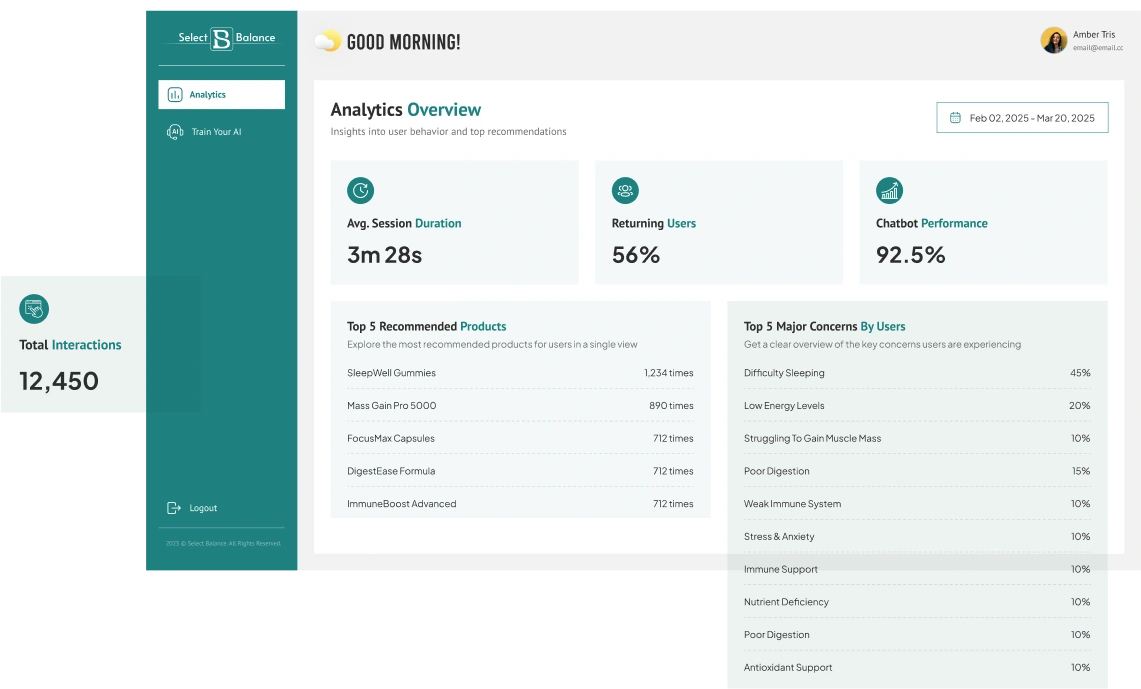
1. AI-Powered Chatbot for Personalized Supplement Recommendations
A solution designed to provide personalized supplement recommendations based on user inputs and health data, improving engagement and decision-making.
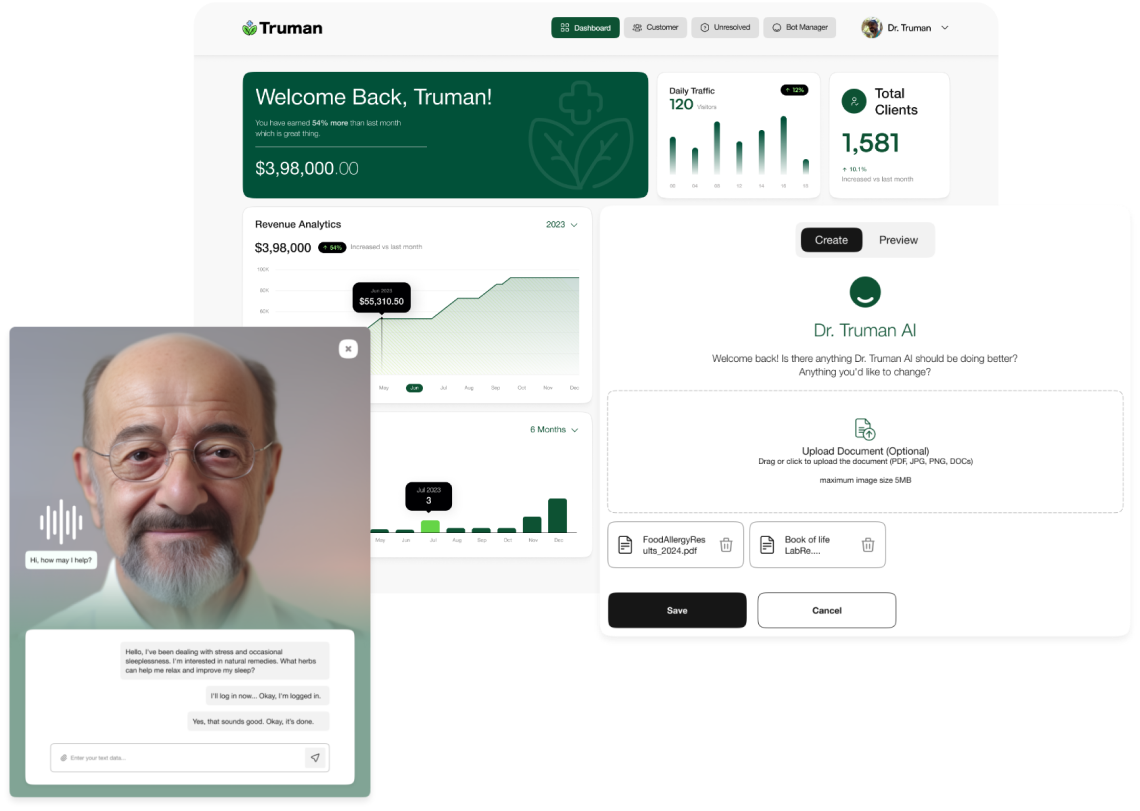
2. AI-enabled Health Companion Avatar Chatbot
An interactive chatbot with a virtual avatar that enhances user engagement through conversational AI and personalized health assistance.
With strong expertise in custom AI healthcare chatbot development services, Biz4Group delivers reliable, scalable, and compliant solutions for healthcare providers looking to implement advanced AI-driven systems.
Conclusion
What if your healthcare system could respond to every patient instantly, manage appointments effortlessly, and deliver consistent support without overloading your staff? That is exactly what AI chatbot development is enabling today.
Healthcare organizations are under constant pressure to improve patient communication, reduce manual workload, and deliver faster services. Healthcare AI chatbot development provides a practical way to address these challenges by combining automation with intelligent interaction, enabling smoother healthcare chat automation across every patient touchpoint. From handling patient queries to supporting operations, these solutions are becoming an essential part of modern healthcare systems.
If you are running your healthcare clinic and wondering, "I am planning to build an AI chatbot for healthcare services, how do I get started and what should I consider," the answer lies in choosing the right strategy, technology, and development partner. When implemented correctly, it can significantly improve efficiency, engagement, and overall patient experience.
Looking to build a reliable healthcare AI chatbot? Schedule a call today and take the next step.
FAQs
1. How to build an AI chatbot for patient engagement and appointment booking in healthcare?
Start by defining use cases such as appointment scheduling and patient support. Choose the right tech stack, design conversation flows, and begin with an MVP. Integration with healthcare systems and continuous optimization are essential for success.
2. What are the key use cases of AI chatbots in the healthcare industry?
AI chatbots are used for appointment scheduling, patient query handling, symptom checking, telemedicine support, follow-ups, and administrative automation. These use cases help improve communication and streamline healthcare operations.
3. What is the cost to develop an AI chatbot for hospitals and clinics?
The overall healthcare chatbot development cost typically ranges from $20,000 to $250,000+ depending on features, integrations, AI capabilities, and compliance requirements. Enterprise-level solutions with advanced functionality require higher investment.
4. Which companies provide end-to-end healthcare AI chatbot development services?
Top development companies with healthcare expertise, including Biz4Group LLC, offer end-to-end services such as design, development, integration, and ongoing maintenance. The ideal choice depends on proven experience in healthcare compliance, scalability, and advanced AI capabilities.
5. How can AI chatbots automate patient communication in healthcare?
AI chatbots automate patient communication by handling queries, managing appointments, sending reminders, and providing real-time responses. This reduces manual workload and improves response efficiency.
6. What are the essential features required in healthcare AI chatbot development?
While creating an AI chatbot for healthcare includes essential features like NLP capabilities, appointment scheduling, EHR integration, data security compliance, multilingual support, analytics, and human handoff options, all central to strong medical AI chatbot development. These ensure effective and secure chatbot performance.
