 Location :
Orlando, FL, USA
Location :
Orlando, FL, USA +1 (407) 714-1616
 info@biz4group.com

- Asthma Monitoring Software Development supports daily symptom tracking, device data capture, and clinician visibility across care settings.
- Real-world use cases include remote monitoring, smart inhaler tracking, follow-ups after acute events, and long-term asthma programs.
- AI capabilities focus on risk scoring, alert logic, conversational inputs, and data interpretation that fits clinical workflows.
- Technology and compliance require secure cloud setups, EHR integration, access controls, and audit-ready data handling.
- Cost of asthma monitoring software development usually falls between $30,000 and $250,000+, depending on features, integrations, and system depth.
- Biz4Group LLC brings hands-on experience delivering scalable and compliant asthma platforms built for real healthcare operations.
Have you ever wondered why asthma care still feels reactive, waiting for flare-ups instead of preventing them? What if your care teams could see patterns before symptoms spiral out of control?
Today’s healthcare is changing fast, but uncontrolled asthma still drives missed work, emergency visits, and avoidable costs. That’s why asthma monitoring software development has become essential, not optional, for modern care delivery.
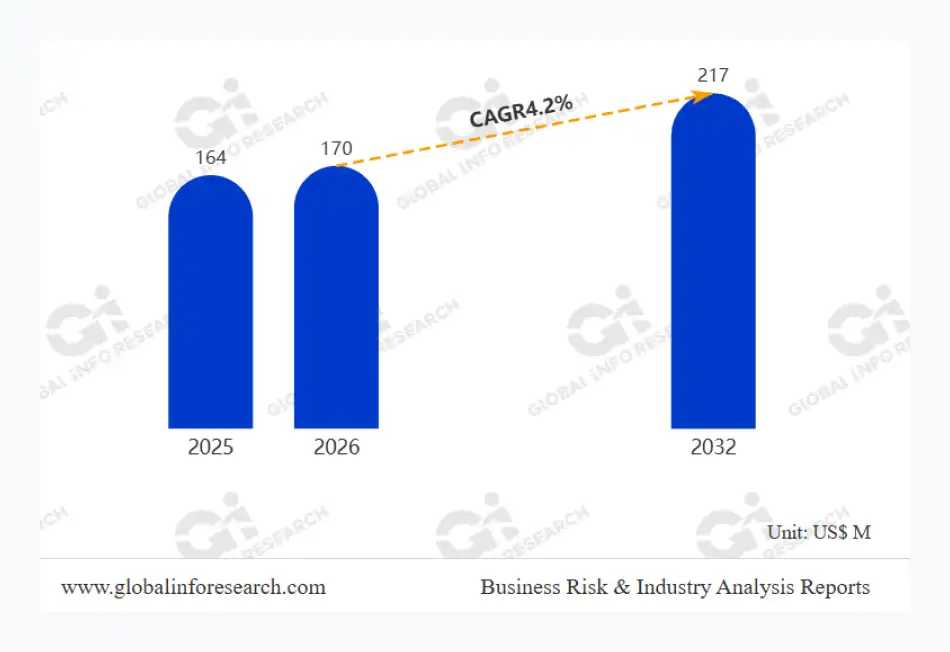
Here’s the big picture: the global asthma monitoring software market was worth $164 M in 2025 and is expected to grow to $217 M by 2032, expanding at a steady 4.2% CAGR.
This growth isn’t random. It reflects:
- rising asthma prevalence and the need for longitudinal tracking
- growing demand to build asthma monitoring software solutions that support proactive remote care
- increased reliance on digital tools that empower both patients and providers
As a decision-maker, whether you’re running a clinic or launching a health tech platform, you already know traditional charts and periodic visits aren’t enough. You need software that tells the story between appointments.
That’s where modern solutions shine. They combine user-friendly interfaces, patient engagement tools, and predictive insights that help clinicians act early. Many organizations now work with an AI healthcare software development company to develop asthma monitoring software integrating AI in ways that align with real clinical workflows, not theoretical ones.
In this guide, we’ll walk you through how asthma monitoring software delivers value, how it’s built, and where intelligent capabilities make the biggest difference. We’ll also show how thoughtful use of AI automation services can turn raw patient data into meaningful insights that improve outcomes, efficiency, and long-term engagement.
Why is Asthma Monitoring Software Development Required in Modern Healthcare?
Asthma care is under pressure from every direction:
- Patient volumes are rising
- Clinical teams are stretched
And the traditional care models struggle to keep up with a condition that changes daily, not quarterly. This is where asthma monitoring software development becomes a practical response to modern care demands. Purpose-built platforms, supported by reliable asthma monitoring software development services, help healthcare organizations move from episodic care to continuous, data-backed management without adding operational strain.
1. Shift From Reactive to Proactive Asthma Care
- Early risk detection: Software connected to smart inhalers and sensors as AI integration flags worsening patterns before flare-ups turn critical.
- Continuous patient visibility: Lung function trends, symptom logs, and inhaler usage are captured between visits, not guessed during them.
2. Growing Reliance on AI-Driven Insights
- Predictive risk modeling: Platforms use predictive analytics to analyze patient data alongside air quality and pollen exposure, helping identify high-risk periods early.
- Personalized treatment support: Care plans adjust based on individual triggers instead of broad population averages.
3. Medication Adherence Remains a Real Challenge
- Usage tracking: Smart inhaler data shows when doses are missed, delayed, or overused.
- Technique feedback: Software highlights poor inhalation techniques that often reduce medication effectiveness.
4. Expansion Of Telehealth and Remote Monitoring
- Remote care continuity: Clinicians can review patient data without waiting for in-person appointments.
- AI EMR/EHR integration: Home-generated data flows directly into clinical systems, reducing manual follow-ups.
5. Rising Prevalence and Financial Pressure
- Growing asthma burden: Climate changes and pollution increase trigger exposure, making real-time monitoring essential.
- Cost control: Preventing emergency visits lowers avoidable spending tied to late-stage interventions.
6. Maturing Technology and Regulatory Readiness
- Advanced wearables: New non-invasive lung monitoring devices and apps that integrate AI improve daily tracking accuracy.
- Regulatory support: Clearer digital health frameworks now encourage adoption of AI-assisted monitoring tools.
Modern asthma care depends on more than periodic checkups. When you create digital asthma monitoring platforms designed for continuous insight and clinical alignment, you close the gap between daily patient behavior and timely care decisions. Done right; asthma monitoring software supports better outcomes, smarter resource use, and scalable chronic care delivery.
Still reacting to flare-ups instead of staying ahead of them?
Let's talk about what continuous asthma monitoring could look like in your care environment.
Talk to Our Healthcare ExpertsWhy Should Healthcare Providers Invest in Asthma Care Software Development?
Healthcare providers are under growing pressure to manage asthma at scale while controlling costs. Investment decisions today are driven by long-term financial sustainability, measurable outcomes, and readiness for value-based care models.
Let’s step back for a moment and look at where the market is actually heading.
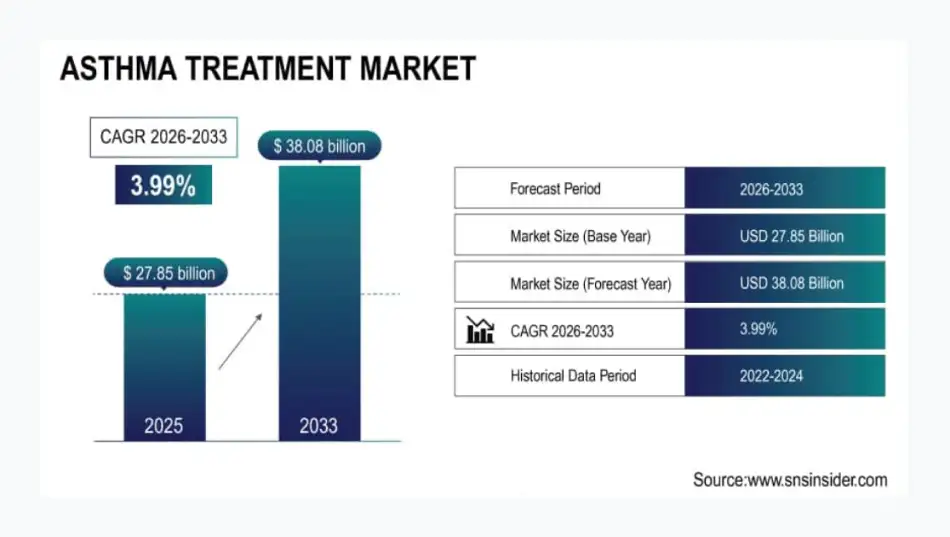
- The global asthma treatment market reached $27.85 B in 2025 and is expected to reach USD 38.08 billion by 2033, growing at a CAGR of 3.99% over 2026-2033 reflecting steady demand for long-term asthma care solutions.
- At the same time, the smart inhalers market is projected to reach from USD 314.11 million in 2026 to USD 5,345.62 million by 2034, exhibiting a CAGR of 42.52% during the forecast period.
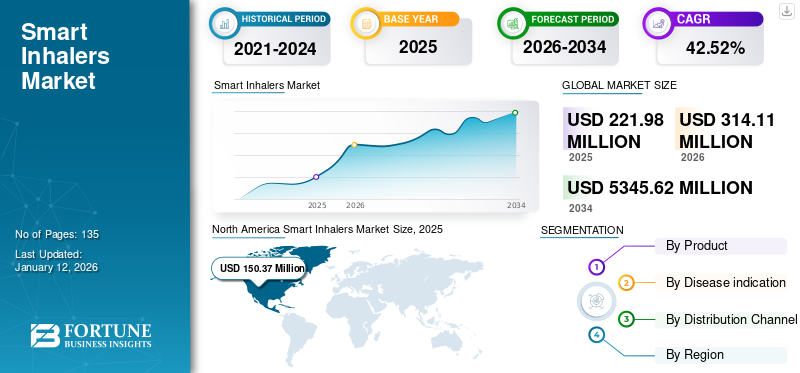
- In United States the market is driven by a very high prevalence of respiratory diseases, with more than 25 million Americans suffering from asthma. Growth is also fueled by a favorable regulatory environment, including FDA grants for over-the-counter sales of smart inhaler sensors.
- Metered Dose Inhaler (MDI)-based smart inhalers are anticipated to dominate the market. The segment's growth is attributed to the advantages of MDI systems in monitoring and controlling drug dosage and a strong focus from major companies on R&D and manufacturing of novel MDI-based devices.
Now let’s talk about why these matters for your investment strategy.
1. Aligning With Value-Based Reimbursement Models
Asthma care reimbursement is now tied more closely to outcomes than visits. Investing in asthma monitoring software development helps support this shift.
- Makes it easier to document reduced emergency visits
- Supports outcome reporting required by payers
- Strengthens contract negotiations in value-based programs
2. Reducing Long-Term Operational Costs
Emergency asthma care is costly and often avoidable. Software-driven programs help shift spending toward prevention.
- Fewer emergency visits lower overall treatment costs
- Remote workflows reduce staff workload
- Scalable systems improve cost control over time
3. Unlocking Remote Care Revenue Opportunities
Providers that build remote asthma monitoring systems can expand care without adding physical locations.
- Supports RPM and chronic care billing increasingly aligned with AI medical billing systems used across digital care programs
- Improves how clinical time is used
- Extends care reach beyond local areas
Also Read: AI Remote Patient Monitoring App Development Guide
4. Preparing For Future Clinical Demands
Legacy systems struggle to support continuous asthma care. Custom asthma monitoring software development creates adaptable infrastructure.
- Integrates with evolving device ecosystems
- Supports advanced AI model development without re-platforming
- Reduces long-term technology replacement costs
5. Strengthening Long-Term Market Position
Healthcare organizations investing early in healthcare asthma management software development signal readiness for digital-first care delivery.
- Attracts payer partnerships and innovation grants
- Improves retention in chronic care populations
- Aligns with broader enterprise AI solutions strategies
Asthma care investment is no longer about tools alone. Strategic software investment positions providers for sustainable reimbursement, predictable costs, and scalable chronic care delivery in an increasingly outcome-driven healthcare economy.
Wondering if the investment actually makes sense long term?
We can help you evaluate ROI, readiness, and timing before you commit resources.
Discuss Your Investment StrategyReal-World Use Cases for Asthma Monitoring Software Development
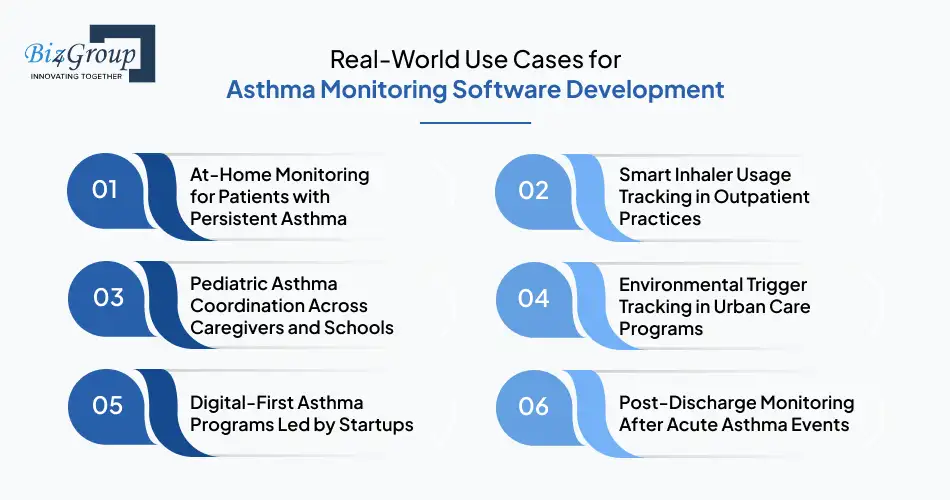
Asthma care rarely follows a straight line. Symptoms fluctuate, triggers vary, and patient behavior changes daily. That reality is driving asthma monitoring software development focused on real-world workflows where care decisions depend on continuous, contextual data rather than episodic visits.
Here’s how asthma care software is actually used in real clinical and operational settings today.
1. At-Home Monitoring for Patients with Persistent Asthma
Healthcare teams use software to follow patients managing asthma outside clinical environments.
- Patients log symptoms, peak flow readings, and medication use daily
- Data is reviewed before scheduled reviews, not reconstructed during visits
- Patterns guide follow-up conversations and care adjustments
This use case is common in asthma care software development for healthcare organizations managing large chronic populations across dispersed geographies.
2. Smart Inhaler Usage Tracking in Outpatient Practices
Outpatient clinics connect smart inhalers to monitoring platforms for structured usage data collection.
- Dose timing and frequency are captured automatically
- Clinicians review objective usage records during routine check-ins
- Inhaler data is contextualized alongside reported symptoms
Many platforms build AI software pipelines here to manage high-frequency device data reliably and at scale.
3. Pediatric Asthma Coordination Across Caregivers and Schools
Pediatric providers rely on monitoring software to coordinate care beyond parents alone.
- Parent-entered symptom updates sync with clinician dashboards
- School-time inhaler events become visible to providers
- Alerts support coordinated responses during sports or activity-related episodes
This use case reflects how asthma care extends into non-clinical environments for children.
4. Environmental Trigger Tracking in Urban Care Programs
Care teams use software to correlate asthma activity with environmental exposure.
- Air quality and pollen data align with symptom timelines
- Providers monitor patients during high-risk pollution periods
- Location-specific patterns inform outreach scheduling
Some platforms apply generative AI to summarize environmental correlations for faster clinical interpretation without manual data review.
5. Digital-First Asthma Programs Led by Startups
Startups deploy monitoring software as the backbone of virtual asthma care models.
- Patient-generated data feeds engagement and follow-up workflows
- Usage insights support pilot programs and payer discussions
- Platforms scale nationally without physical clinic expansion
This is a core focus area in asthma monitoring software development for startups building remote-first care offerings.
6. Post-Discharge Monitoring After Acute Asthma Events
Hospitals use monitoring software to track patients after emergency visits or inpatient care.
- Discharge plans include structured home monitoring periods
- Symptom escalation prompts early outreach
- Recovery data informs follow-up visit timing
Healthcare organizations often engage AI consulting services to design these post-discharge monitoring workflows around existing clinical processes.
Real-world asthma monitoring software succeeds when it fits daily patient behavior, clinical routines, and care transitions. These use cases show how software becomes part of routine asthma management without replacing established care delivery models.
Core Features of Asthma Monitoring Software Solutions
When you plan asthma monitoring software development, feature selection should reflect real clinical workflows and patient behavior. Teams that develop asthma tracking and management apps focus on accuracy, continuity, and usability rather than overloaded or theoretical functionality.
|
Feature |
What It Does in Real-World Use |
|---|---|
|
Symptom logging |
Allows patients to record breathing issues, coughing, chest tightness, and wheezing on a regular basis. |
|
Smart inhaler data capture |
Automatically tracks when and how often inhalers are used through connected devices. |
|
Lung function input |
Allows patients or devices to enter peak flow or spirometry readings. |
|
AI medication schedule tracking |
Keeps a clear record of controller and rescue medication usage over time. |
|
Trigger tracking |
Logs exposure to pollen, pollution, smoke, weather changes, and physical activity. |
|
Alert rules setup |
Flags symptom changes or unusual inhaler usage that may need attention. |
|
Asthma control questionnaires |
Collects structured patient responses used during asthma reviews. |
|
Care team dashboard |
Shows patient trends, alerts, and summaries in one clinical view. |
|
Secure patient messaging |
Enables direct, protected communication between patients and care teams. |
|
AI EHR/EMR data sync |
Shares asthma-related records with existing clinical systems securely. |
|
Reporting and data views |
Summarizes long-term asthma data for reviews and audits. |
|
Insight processing layer |
Handles large volumes of patient data to support clinical monitoring. |
Well-defined features form the backbone of reliable asthma platforms. When you create AI-powered asthma monitoring software with clinically grounded functionality, the system supports consistent data capture, informed care decisions, and scalable long-term asthma management.
Also Read: Medication Reminder App Development: Features and Steps
Are these the right features for your workflows or just nice-to-haves?
Let's align functionality with how your teams and patients actually operate.
Review Feature RequirementsAdvanced AI Capabilities in Asthma Monitoring Software Development
Advanced intelligence in asthma platforms is not about flashy automation. In asthma monitoring software development, AI is applied carefully to handle complex data patterns, continuous inputs, and clinical signals that change throughout a patient’s daily life.
1. Predictive Exacerbation Risk Modeling
This capability analyzes historical symptoms, inhaler usage, and environmental exposure together. The system continuously recalculates risk as new data appears. Instead of static thresholds, it reflects how a patient’s risk evolves hour by hour, supporting timely clinical review.
2. Intelligent Alert Logic and Escalation
AI determines when data patterns truly require attention. It evaluates frequency, intensity, and deviation from a patient’s baseline before triggering alerts. This logic is foundational when teams build asthma monitoring applications with real time alerts integrating AI into active care workflows.
3. Longitudinal Behavior Pattern Analysis
Trained AI models track patient behavior across weeks and seasons. Missed doses, symptom clusters, and recovery trends are analyzed as connected sequences. This approach helps platforms understand stability, decline, or improvement without relying on single data points.
4. Environmental Trigger Correlation Engines
AI links air quality, pollen, humidity, and weather shifts with symptom progression. Over time, it learns which environmental factors consistently affect each patient. These insights support clinics that create digital asthma management platforms for clinics operating in high-risk regions.
5. Conversational Symptom Capture Systems
An AI assistant app collects symptom updates through guided conversations. Patient responses are structured into clinical data without forcing rigid forms. This improves consistency while keeping interactions natural and usable for daily monitoring.
6. Medication Usage Anomaly Detection
AI evaluates inhaler usage patterns to identify irregular behavior. It flags sudden overuse, underuse, or timing changes that deviate from a patient’s norm. These signals surface quietly for clinical teams to review during routine monitoring.
7. Clinical Decision Support Context Layers
Rather than making decisions, AI organizes patient context. It surfaces recent trends, trigger history, and adherence signals together. Many organizations hire AI developers to tailor this logic, so it aligns with internal care protocols.
8. Scalable AI Model Governance and Deployment
AI models are monitored for performance, drift, and accuracy over time. Update cycles, retraining schedules, and audit trails are built into the system. This layer becomes essential when teams build an AI app intended for long-term clinical use.
Biz4Group LLC in action:
Let’s take a quick look at how these intelligent capabilities play out in a real project called
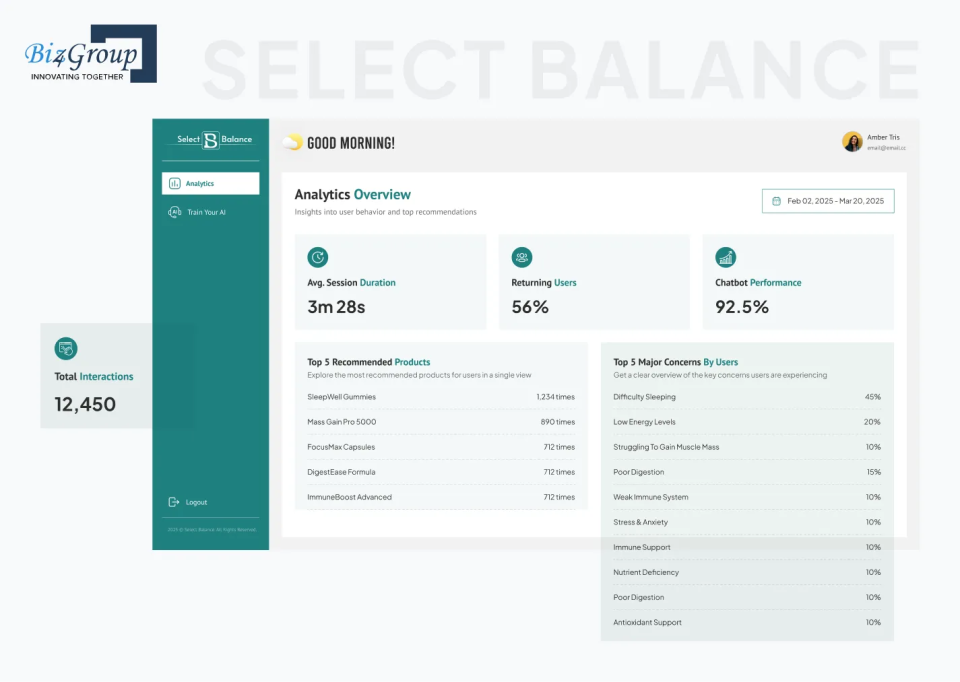
Select Balance: It is a digital health platform designed to guide users through structured health inputs and surface relevant, personalized outputs in real time. The system relies on conversational data capture, intelligent routing, and continuous logic refinement as user responses evolve. The same underlying approach applies to asthma platforms, where AI must interpret daily inputs, adapt to changing conditions, and support ongoing monitoring without disrupting clinical workflows.
Advanced AI capabilities shape how asthma platforms interpret, prioritize, and organize patient data. When applied with precision, these systems support continuous monitoring without overwhelming clinicians or disrupting established care workflows.
Step-by-Step Asthma Monitoring Software Development Process
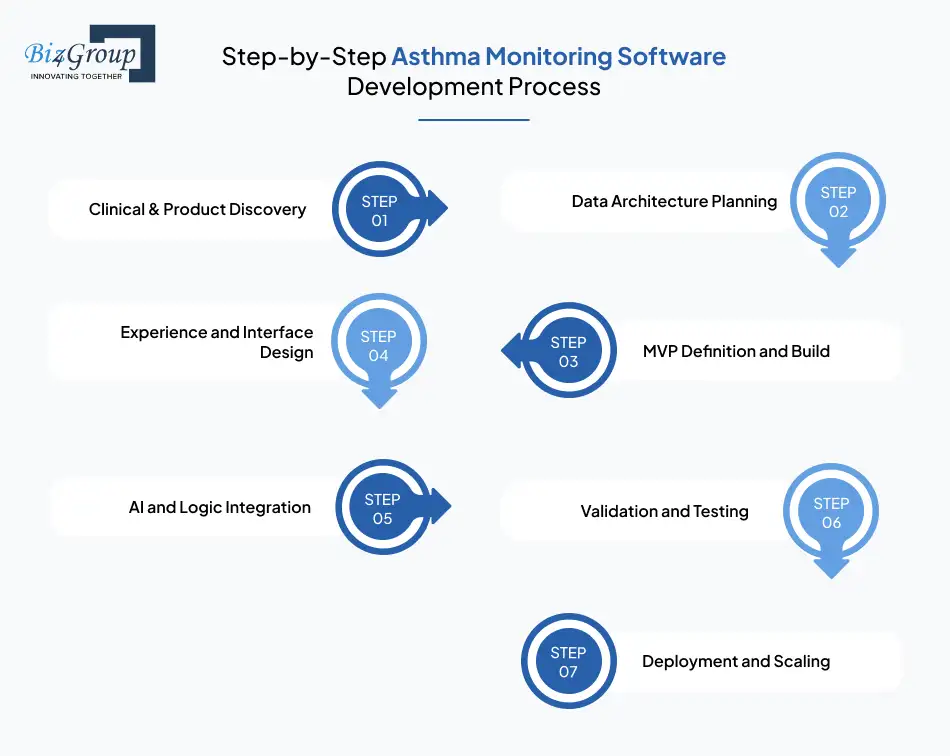
The development of asthma monitoring platforms is less about speed and more about sequencing the right decisions. Asthma monitoring software development follows a defined process, so teams can design systems that handle real patient data, clinical workflows, and long-term operational demands.
1. Clinical & Product Discovery
- Care mapping: Start by understanding how asthma care actually works today. This includes routine checkups, flare-up handling, medication reviews, and post-discharge follow-ups across clinics and home settings.
- Stakeholder input: Speak directly with clinicians, nurses, care coordinators, and operations teams. Their input helps uncover gaps that don’t appear in documentation but affect daily workflows.
- Data priorities: Identify which patient data must be captured daily versus occasionally. This prevents unnecessary data collection and keeps monitoring focused.
- Scope definition: Clearly define what the first version must support so the product stays aligned with real clinical needs.
2. Data Architecture Planning
- Source mapping: Begin by listing every data input the system will handle, including patient-reported symptoms, inhaler usage, lung function readings, and environmental data. Each source must be clearly defined before development begins.
- Data structure: Design storage AI models use cases that support continuous, long-term records rather than isolated entries. Asthma data gains meaning only when tracked over time.
- Access control: Define who can view, edit, and act on data across patients, clinicians, and care teams.
- Compliance foundation: Build consent tracking, audit logs, and retention rules directly into the architecture to avoid downstream redesigns.
3. MVP Definition and Build
- Scope selection: Define what the first usable version must support, focusing only on essential asthma monitoring workflows. This step avoids feature overload and keeps development aligned with real clinical usage patterns rather than assumptions.
- Workflow validation: Each selected function is reviewed against daily patient and clinician routines. This ensures the MVP reflects how asthma care is actually delivered, not idealized scenarios.
- Build approach: Teams apply MVP software development to release a functional product quickly while preserving flexibility for future changes.
- Delivery planning: Many organizations rely on MVP development services to manage timelines, compliance needs, and early-stage iteration without disrupting core logic.
Also Read: Top 12+ MVP Development Companies
4. Experience and Interface Design
- Patient flow: Design patient screens around daily symptom logging and flare-up reporting. Inputs must remain usable during shortness of breath, fatigue, or limited attention, so interactions stay minimal and predictable.
- Clinical dashboards: This allows prioritize timelines, alerts, and recent changes instead of dense tables. Layouts are structured so clinicians can assess status quickly without scrolling through excessive data.
- Design standards: Follow disciplined UI/UX design practices by partnering with an experienced company like Biz4Group LLC. It helps to emphasize consistency across screens, clear hierarchy, and familiar navigation patterns for both patients and care teams.
- Accessibility checks: Validate accessibility requirements during design reviews to ensure interfaces meet healthcare usability standards across patient age groups, device types, and clinical environments.
Also Read: Top UI/UX design companies in USA
5. AI and Logic Integration
- Use-case definition: Start by identifying specific points in the asthma monitoring workflow where automated logic is required, such as risk scoring, alert triggering, or data classification. This keeps AI scope controlled and aligned with actual system behavior.
- Data readiness: Prepare datasets so incoming asthma data follows consistent formats, timing rules, and validation checks required for production systems. This step ensures that models operate within defined data boundaries.
- AI Model integration: Carefully integrate AI models into the application flow, so automated logic runs alongside standard monitoring without interrupting data visibility or clinical review.
- Operational controls: Define how AI models are monitored, updated, paused, or adjusted within the system once deployed.
6. Validation and Testing
- Scenario coverage: Test the system against real asthma scenarios such as missed doses, symptom escalation, delayed entries, and abnormal device data. These cases reflect how the platform behaves under every day and high-risk conditions.
- Data accuracy: Validate how patient inputs, device signals, and calculated outputs move through the system. This step ensures data remains consistent from capture to clinician review.
- Clinical review: Conduct structured review sessions with clinicians to validate workflows, data presentation logic, and error handling paths before finalizing the build.
- Independent testing: Many teams engage software testing companies to execute predefined test cases, validating edge conditions, and confirming system behavior against documented specifications.
7. Deployment and Scaling
- Release planning: Plan a phased rollout that introduces the platform to limited user groups first. This approach helps teams observe system behavior under real usage conditions before wider adoption.
- Operational setup: Prepare support processes for data monitoring, issue handling, and version updates. Clear ownership is defined, so ongoing operations remain stable after launch.
- Scalability design: Configure deployment environments, data pipelines, and system limits during release preparation so the platform can support additional users and devices without architectural changes.
- Long-term support: Many teams work with a custom software development company to define post-deployment responsibilities, update schedules, and change management processes before the system goes live.
Biz4Group LLC in action:
Here’s how a real digital health project known as Dr. ARA, followed a structured and disciplined build process.

Dr. Ara is an AI-driven health platform built to analyze ongoing physiological data and convert it into clear guidance for users and clinicians. The platform processes repeated inputs, structured reports, and changing user profiles through well-defined development stages. The same approach applies to asthma platforms, where symptom data, device inputs, and clinical context must be captured accurately and handled consistently over time.
A structured approach keeps asthma platforms reliable as they grow. When teams develop asthma monitoring software for long term patient engagement, clear development steps help systems stay maintainable, compliant, and ready to support continuous care without frequent rework.
Thinking about building but unsure of where to start?
We'll help you map the process clearly, from discovery to deployment.
Plan Your Development RoadmapTechnology Stack Considerations to Build Asthma Monitoring Software Solutions
The right tech stack development required for asthma software is not about trends. In asthma monitoring software development, it’s about supporting continuous data flow, secure integrations, and long-term maintainability. This keeps the system flexible enough to evolve with care protocols and devices.
|
Architecture Layer |
Technology Used |
Purpose |
|---|---|---|
|
Frontend Application Layer |
React.js and Next.js |
Supports responsive patient and clinician interfaces through ReactJS development and NextJS development for consistent cross-device access. |
|
Backend Application Layer |
Node.js |
Handles core application logic, workflows, and event processing using NodeJS development. |
|
Data Processing Layer |
Python |
Manages analytics, rules engines, and data handling pipelines through Python development. |
|
API Layer |
REST / GraphQL |
Enables secure data exchange across systems using structured API development practices. |
|
Device Integration Layer |
Bluetooth / SDKs |
Connects smart inhalers and sensors for reliable data ingestion. |
|
Data Storage Layer |
SQL / NoSQL Databases |
Stores patient records, device data, and longitudinal asthma history. |
|
AI & Analytics Layer |
ML Frameworks |
Processes trends, risk signals, and structured insights without disrupting core logic. |
|
Security Layer |
OAuth, Encryption |
Controls authentication, authorization, and data protection. |
|
Cloud Infrastructure Layer |
AWS / Azure |
Supports scalability, uptime, and environment isolation. |
|
AI Integration Layer |
HL7 / FHIR |
Enables interoperability with clinical systems and EHR platforms. |
|
Monitoring & Logging Layer |
Observability Tools |
Tracks system performance, errors, and data flow health. |
A thoughtful stack keeps asthma platforms dependable as they scale. Partnering with a reliable web and mobile development company helps teams create asthma monitoring solutions for chronic care management without constant rework or architectural strain.
Asthma Monitoring Software Development Cost Breakdown
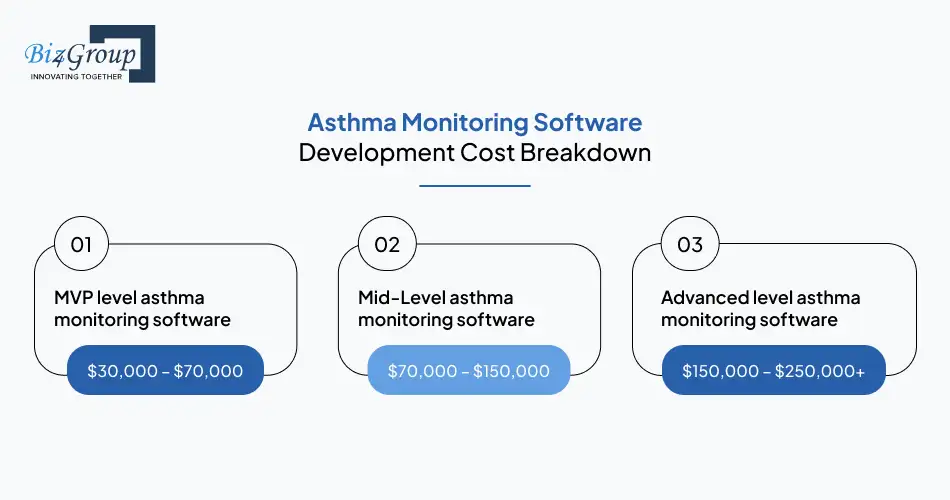
Budget planning matters early because scope decisions directly shape outcomes. Asthma monitoring software development typically costs between $30,000 and $250,000+, depending on platform depth, integrations, and long-term scalability requirements across clinical, technical, and compliance needs.
|
Development Level |
Estimated Cost Range |
What This Typically Covers |
|---|---|---|
|
MVP level asthma monitoring software |
$30,000 – $70,000 |
Core workflows, basic dashboards, manual data inputs, limited integrations, and pilot-ready infrastructure focused on early validation. |
|
Mid-Level asthma monitoring software |
$70,000 – $150,000 |
Device integrations, structured data flows, role-based access, reporting layers, and expanded backend logic for active clinical use. |
|
Advanced level asthma monitoring software |
$150,000 – $250,000+ |
Real-time processing, complex integrations, automation layers, scalable infrastructure, and enterprise-grade security with long-term maintenance planning. |
Key Factors That Influence the Cost to Build Asthma Care Software
Now let’s unpack what actually drives these cost differences in real projects.
- Feature Scope: Broader feature sets require more development cycles, deeper testing, and stronger coordination between clinical, product, and engineering teams.
- AI Integration Depth: Connecting devices, EHR systems, and external data sources increase build effort and validation time significantly.
- AI Complexity: Costs rise when teams develop asthma monitoring software integrating AI, especially when models require training, tuning, and long-term governance.
- Data Security: Compliance-driven encryption, access control, and audit trails add effort across design, development, and validation phases.
- Scalability Planning: Systems designed to build asthma monitoring software solutions at scale require stronger infrastructure and architectural foresight.
- AI Expansion: Ongoing refinement, monitoring, and AI integrations costs often extend beyond initial development budgets.
Asthma software costs rise with scope, integrations, and technical depth. Clear cost visibility helps you decide what to build now, what to phase later, and how to align investment with real delivery timelines and operational readiness.
Optimizing Development Costs Without Sacrificing Software Quality
Now that you know what drives costs, let’s look at practical ways to control them.
- Start With a Focused MVP: Begin with essential asthma workflows only. Validate real usage early, then expand features gradually without locking budget into assumptions that may not hold. This phased approach can reduce initial investment by 25-40% while maintaining forward scalability.
- Use Cloud Infrastructure Strategically: Cloud-based healthcare platforms reduce setup overhead. They allow systems to scale with patient growth while avoiding repeated hardware upgrades or long-term infrastructure commitments. You’ll save 30-50% on infrastructure management and upgrades annually.
- Automate Testing and System Monitoring: Automated testing helps catch issues early. Continuous monitoring reduces release delays and limits post-launch fixes that often increase costs unexpectedly.
- Plan Maintenance from the Start: Asthma platforms change with care protocols. Budgeting for updates and AI model adjustments early prevents rushed fixes and expensive rebuilds later.
Also Read: AI Software Development Cost
Trying to balance scope, cost, and long-term scalability?
Get clarity on what to build now and what can wait without overcommitting budget.
Get a Cost PerspectiveRevenue Models and Business Strategy in Asthma Monitoring Software Development
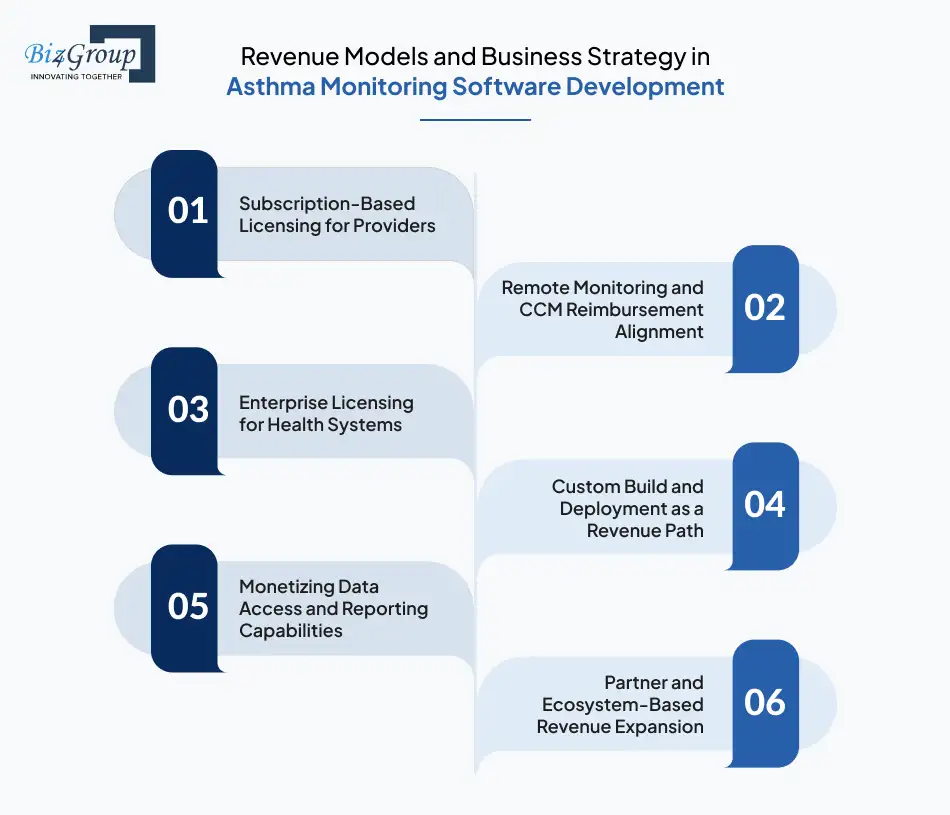
Revenue planning shapes how asthma platforms grow, scale, and sustain operations. In asthma monitoring software development, the right business model aligns clinical workflows, payer expectations, and long-term product viability without relying on short-term monetization tactics.
1. Subscription-Based Licensing for Providers
Many platforms adopt recurring subscription models tied to provider usage.
- Pricing aligns with number of clinicians, patients, or monitored cases.
- Monthly or annual plans simplify budgeting for healthcare organizations.
- Tiered access supports gradual expansion across departments.
This model fits organizations focused on predictable revenue and long-term partnerships rather than one-time software delivery.
2. Remote Monitoring and CCM Reimbursement Alignment
Some asthma monitoring platforms structure revenue directly around reimbursable care programs rather than software access alone.
- Revenue is tied to active patient enrollment under RPM and CCM billing codes.
- Platform usage must support accurate time tracking and documentation.
- Business forecasts depend on payer reimbursement rates and eligibility rules.
This model requires close alignment with billing workflows and payer policies. It fits organizations building recurring revenue streams linked to ongoing patient monitoring rather than upfront licensing alone.
3. Enterprise Licensing for Health Systems
Large health systems often prefer enterprise licensing agreements for predictable procurement.
- A single contract covers multiple facilities or regions.
- Pricing scales based on patient volume, integrations, and support scope.
- Multi-year contracts stabilize revenue planning and reduce renewal risk.
This model emphasizes long-term relationships over rapid expansion. It works best when platforms are positioned as core infrastructure rather than optional clinical tools.
4. Custom Build and Deployment as a Revenue Path
Businesses can generate revenue by offering asthma monitoring software as a paid, custom-built solution for healthcare organizations.
- Revenue can be structured through fixed-price or phased development contracts.
- Pricing should reflect scope, integrations, and regulatory complexity.
- Milestone-based payments help manage cash flow and delivery risk.
This approach works well when targeting hospitals or clinics with unique workflows. Revenue planning should focus on delivery capacity, repeat engagements, and controlled customization to protect margins over time.
5. Monetizing Data Access and Reporting Capabilities
Another way businesses can generate revenue is by selling access to structured asthma data insights.
- Providers can charge recurring fees for dashboards, reports, and exports.
- Pricing can vary based on report depth, refresh cycles, and data volume.
- Clear contracts must define data ownership and compliance responsibilities.
This model suits platforms with consistent data capture. Revenue stability depends on long-term reporting subscriptions rather than frequent feature releases.
6. Partner and Ecosystem-Based Revenue Expansion
Businesses can also generate revenue by enabling partners to build services on top of their asthma platform.
- API access can be licensed under usage-based or subscription agreements.
- Revenue grows as partners deploy solutions across their own customers.
- Commercial terms should define access limits and revenue-sharing models.
This strategy supports gradual scale. Revenue growth depends on partner adoption and sustained platform reliability rather than direct sales alone.
The revenue strategy defines how asthma platforms sustain growth. Clear alignment between monetization models, care delivery structures, and customer expectations helps teams build businesses that scale responsibly without compromising operational clarity.
Also Read: 65+ Software Ideas for Entrepreneurs and Small Businesses
Not sure about how this platform will actually make money?
We can walk through revenue paths that align with care delivery and payer realities.
Explore Revenue OptionsCompliance and Security Considerations in Asthma Monitoring Software Development
Security and compliance are non-negotiable when building asthma platforms. In asthma monitoring software development, you’re handling continuous patient data, clinical records, and integrations that must meet regulatory expectations while remaining reliable under daily real-world usage.
1. HIPAA and Regulatory Alignment
- Asthma monitoring platforms must comply with HIPAA and related healthcare regulations from day one. This governs how patient data is stored, accessed, and shared. Systems need defined safeguards for electronic health information across every module.
- Compliance gaps create legal exposure and operational risk; thus, regulatory alignment must be built into architecture decisions, not added later during audits.
Also read: HIPAA Compliant AI App Development for Healthcare Providers
2. Data Encryption and Secure Transmission
- All patient data must remain protected while stored and while moving between systems. Encryption should be applied consistently across databases, backups, and communication channels.
- Secure transmission protocols protect data exchanged with devices, portals, and clinical systems. Encryption strategies must be reviewed regularly as security standards evolve, and new threats emerge.
3. Role-Based Access Control
- Asthma platforms require strict access control based on user roles. Clinicians, administrators, and support staff should only access data necessary for their responsibilities.
- Role-based access reduces exposure risk and limits internal misuse. Every access decision should follow clearly defined permissions tied to operational responsibilities.
4. Audit Trails and Activity Logging
- Every action within the system must leave a trace as audit trails record data access, updates, and configuration changes. These logs support internal reviews and external compliance audits.
- Continuous monitoring helps teams detect unusual activity early and respond before issues escalate into compliance incidents.
5. Secure Cloud Infrastructure
- Cloud environments must meet healthcare compliance standards. Infrastructure choices should support isolation, redundancy, and controlled access.
- Backup strategies and incident response plans are essential. For teams that create digital asthma monitoring platforms, cloud security becomes a shared responsibility across providers, developers, and operations teams.
6. Data Anonymization and Masking
- Patient data used for analytics or testing must be de-identified. Identifiers should be removed or replaced before secondary use. This protects privacy while supporting internal analysis.
- Masking strategies must follow recognized healthcare guidelines and remain consistent across datasets and environments.
7. AI Model Governance and Oversight
- AI components require clear governance controls. AI Models must be trained on approved datasets and monitored for accuracy, and decisions produced by AI should be traceable and reviewable.
- In healthcare asthma management software development, oversight ensures automated logic remains accountable and aligned with clinical expectations.
Compliance and security define whether asthma platforms can operate at scale. Addressing regulatory controls, access rules, and data protections early helps teams avoid costly rework while maintaining trust across patients, providers, and regulatory bodies.
Common Challenges in Asthma Monitoring Software Development and How to Avoid Them
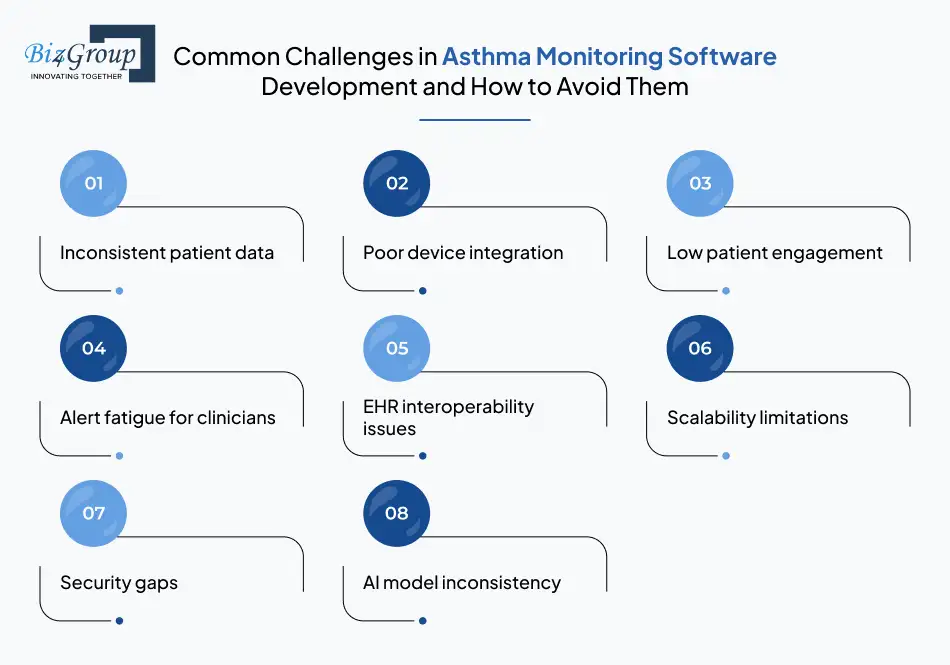
Asthma monitoring software development involves clinical data, connected devices, and long-term patient engagement. Teams that aim to build remote asthma monitoring systems often face predictable challenges that can be addressed early with the right technical and product decisions.
|
Challenge |
How to Avoid It |
|---|---|
|
Inconsistent patient data |
Standardize input formats and validate data at the point of capture. |
|
Poor device integration |
Select devices with stable SDKs and test integrations under real usage conditions. |
|
Low patient engagement |
Use guided interactions, such as an AI conversation app, to simplify daily inputs. |
|
Alert fatigue for clinicians |
Implement clear thresholds and prioritization rules during system design. |
|
EHR interoperability issues |
Follow FHIR standards and plan integration flows before development starts. |
|
Scalability limitations |
Design backend architecture to handle growing patient volumes from day one. |
|
Security gaps |
Apply encryption, access controls, and audit logging across all system layers. |
|
AI model inconsistency |
Monitor AI models continuously and retrain them using verified datasets only while treating them as a part of business app development using AI. |
Most challenges in asthma platforms are avoidable with upfront planning. When teams create AI powered asthma monitoring software with realistic assumptions, structured workflows, and scalable architecture, development risks stay manageable, and delivery remains predictable.
Why Businesses Across the USA Choose Biz4Group LLC for Asthma Monitoring Software Development?
Healthcare organizations across the U.S. look for partners who understand both technology and accountability. At Biz4Group LLC, we approach asthma monitoring software development with that balance in mind.
We help startups, providers, and enterprises turn complex care requirements into dependable software systems. As a top healthcare software development company, our focus stays practical:
- We design platforms that support real clinical workflows, long-term data continuity, and measurable outcomes.
- Our teams combine healthcare domain knowledge with strong engineering discipline.
This allows us to build healthcare software products that scale without creating operational friction. Clients work with us because we stay transparent, grounded, and execution-focused from discovery through deployment.
1. Proven Healthcare Domain Expertise
Our teams understand how asthma care operates across clinics, hospitals, and remote programs. This experience helps us design systems that fit existing workflows while supporting providers who want to develop asthma tracking and management apps without disrupting daily operations.
2. Compliance-First Engineering Approach
Healthcare software must meet strict regulatory expectations. We embed HIPAA compliance into architecture, access controls, and data handling practices from the start, reducing downstream risks and avoiding costly redesigns later.
3. End-to-End Product Delivery
Clients partner with us for full-cycle execution, not isolated development tasks. As a software development company in Florida, we handle planning, engineering, testing, and scaling with clear ownership at every stage.
4. Demonstrated Project Experience
Decision-makers value evidence over promises. Our portfolio reflects hands-on experience delivering healthcare platforms that manage patient data, support monitoring workflows, and scale reliably under real usage conditions.
5. Custom Solutions Built for Longevity
Every organization operates differently. We tailor platforms to help clients develop asthma monitoring software for long term patient engagement, ensuring systems remain adaptable as care models, devices, and compliance needs evolve.
Businesses across the U.S. choose Biz4Group LLC for credibility, execution, and healthcare focus. Our experience and delivery discipline place us among the top AI development companies in Florida, trusted to build scalable asthma platforms with long-term value.
Looking for a partner who understands healthcare beyond the code?
Let's talk about building something that works in real clinical environments.
Contact us nowFuture Trends in Asthma Monitoring Software Development
Asthma care software is moving toward more intelligent, conversational, and connected experiences. In asthma monitoring software development, future trends focus on how patients interact daily, how clinics manage data flow, and how monitoring fits naturally into real care routines.
1. Predictive Care Models
Risk forecasting: Future platforms will evolve toward continuously learning risk engines that adjust predictions over time, allowing teams to develop asthma tracking and management apps that respond dynamically to changing patient behavior and environmental exposure.
2. AI Automated Care Workflows
Workflow automation: Monitoring systems will automate routine follow-ups, data validation, and reporting tasks, allowing care teams to focus on interventions while software handles repetitive monitoring operations in the background.
3. Real-Time Data Exchange
Interoperability focus: Future platforms will rely on real-time standards to sync device data, patient inputs, and clinical systems, making it easier for providers to create digital asthma management platforms for clinics without heavy integration delays.
4.AI Conversational Monitoring
Guided inputs: Asthma monitoring platforms will increasingly rely on AI chatbot integration to collect symptoms and answering routine questions. This will guide patients through daily check-ins using simple, conversational interactions instead of complex forms.
5. Voice-First Interfaces
Natural interaction: Monitoring tools will adopt chat and voice capabilities powered by healthcare conversational AI, allowing patients to report symptoms or receive reminders through speech or messaging, reducing friction in daily engagement.
Also Read: How to Build AI Chatbot Voice Assistant?
6. Embedded Digital Touchpoints
Omnichannel access: Healthcare providers will deploy a chatbot on website enabling patients to access asthma monitoring tools directly through familiar digital channels without downloading separate applications. These interfaces will increasingly rely on AI chatbot software development to support structured symptom capture and ongoing patient communication without adding new applications or workflows.
Future asthma monitoring platforms will feel less like software and more like everyday tools. As conversational interfaces and intelligent automation mature, monitoring systems will blend naturally into how patients and clinics already communicate and manage care.
Conclusion
The development of modern asthma software is less about chasing features and more about solving real care gaps. When you partner with an AI product development company, the focus stays on clarity, reliability, and systems that work in real clinical environments, not just on paper.
The journey of asthma monitoring software development can feel complex at first. There are devices to connect, data to trust, and workflows to respect. But when done right, you can build asthma monitoring applications with real time alerts integrating AI that fit naturally into daily care routines without creating friction for providers or patients.
The real opportunity lies in how thoughtfully you create asthma monitoring solutions for chronic care management. AI software that grows with patients, adapts over time, and supports care teams consistently will shape how asthma care is delivered in the years ahead.
Let’s build your next big healthcare innovation together. The future of asthma care won’t wait, talk to Biz4Group today.
FAQ’s
1. What does Asthma Monitoring Software Development include for healthcare providers and clinics?
Asthma Monitoring Software Development typically includes patient symptom tracking, inhaler data capture, clinician dashboards, alerts, and secure integrations with existing clinical systems. The scope depends on care models, patient volume, and long-term monitoring needs.
2. How long does it take to develop asthma monitoring software integrating AI?
Timelines vary based on complexity. A basic platform may take a few months, while solutions that develop asthma monitoring software integrating AI often require additional time for model training, validation, and clinical testing.
3. How do healthcare organizations build remote asthma monitoring systems that scale?
To build remote asthma monitoring systems at scale, teams focus on cloud infrastructure, device integrations, secure data flow, and workflows that support continuous patient engagement without adding manual overhead for care teams.
4. When should startups choose custom asthma monitoring software development instead of off-the-shelf tools?
Custom asthma monitoring software development makes sense when startups need flexibility, proprietary workflows, or unique data handling. Off-the-shelf tools often limit customization and long-term product differentiation.
5. What features matter most when creating AI powered asthma monitoring software?
When teams create AI powered asthma monitoring software, priority features include reliable data ingestion, adaptive alert logic, longitudinal patient profiling, and explainable AI outputs that clinicians can trust and review easily.
6. How does asthma monitoring software development for startups differ from enterprise healthcare builds?
Asthma monitoring software development for startups often focuses on faster iteration, MVP launches, and pilot programs. Enterprise healthcare builds emphasize deeper integrations, compliance requirements, and large-scale operational readiness.
7. How do healthcare leaders choose the best company to develop Asthma Monitoring Software?
The best company to develop asthma monitoring software demonstrates healthcare domain experience, compliance expertise, and a proven track record delivering scalable platforms that support long-term patient engagement and evolving care models.
