 Location :
Orlando, FL, USA
Location :
Orlando, FL, USA +1 (407) 714-1616
 info@biz4group.com

- Top AI healthcare case studies show real impact, not just ideas. Hospitals are achieving cost savings, efficiency gains, and better patient outcomes using AI.
- Real AI healthcare case studies 2026 like CogniHelp, MBI Marketing, Dr. Ara, and Truman by Biz4Group highlight how AI in patient care and operations delivers measurable results.
- Most successful AI in healthcare success stories follow a clear pattern: focused use cases, strong data, and ROI-driven implementation.
- Healthcare organizations face challenges like integration, compliance, and cost, but proven AI healthcare cost savings examples show these can be solved with the right strategy.
- With the right partner like Biz4Group, you can leverage real world AI in healthcare examples, start small, scale smart, and achieve measurable business and clinical impact.
Are you investing in AI, or still trying to figure out if it will actually deliver measurable results for your healthcare organization?
Because right now, the real question is not whether AI sounds promising. It is whether it actually delivers.
According to McKinsey & Company, AI could generate up to $150 billion annually in healthcare savings by 2026. At the same time, another reports that AI can reduce administrative costs by nearly 30% in healthcare operations.
So if the impact is this significant, why are so many leaders still hesitant?
Because most content talks about possibilities, not proof. You will find plenty of healthcare AI use cases, but very few real world AI in healthcare examples that clearly show results.
You might be asking:
- “We are considering implementing AI in our hospital, can you share real healthcare case studies with measurable cost savings and outcomes?”
- “I want to see real-world examples of how AI is used in healthcare and what kind of results hospitals are actually achieving.”
We have worked with teams asking the same questions. They are not asking if AI works. They want to know what it delivers.
Will it reduce costs? Will it improve care without adding complexity? How quickly will you see ROI?
That is exactly why top AI healthcare case studies matter. They move the conversation from ideas to outcomes and help you understand what real AI healthcare cost savings examples look like in practice.
If you are exploring how others are approaching this, looking at successful AI startup case studies often gives a strong starting point before diving into healthcare-specific implementations.
Here, we will break down AI healthcare case studies in 2026, focusing on real implementations, measurable outcomes, and what you can apply to your own organization.
So, before you invest, the real question is simple: What results can you actually expect from AI in healthcare?
Why Are Top AI Healthcare Case Studies Becoming the New Benchmark for ROI in 2026?
If you’re evaluating AI for your healthcare organization, you’ve likely noticed a shift. The conversation is no longer about what AI can do. It’s about what it has already been delivered.
That’s exactly why top AI healthcare case studies are becoming the go-to benchmark. They give you something far more valuable than ideas; they show proof. Instead of guessing outcomes, you get a clear view of how AI healthcare case studies 2026 are driving efficiency, reducing costs, and improving care across real organizations.
So what makes these case studies so important right now?
Here’s what’s driving this shift:
- From experimentation to measurable ROI
Healthcare leaders are moving past pilot projects. They want AI healthcare cost savings examples that clearly show financial impact, not just technical capability. - Proof over promises
Generic healthcare AI use cases are no longer enough. Decision-makers are actively looking for real world AI in healthcare examples that demonstrate outcomes they can trust. - Pressure to reduce operational costs
Rising administrative overhead is pushing hospitals to adopt solutions backed by top AI healthcare case studies with measurable cost savings, especially in automation and workflow optimization. - Improved patient care expectations
It’s not just about saving money. Many AI in patient care case studies now highlight better clinical outcomes, faster diagnoses, and improved patient engagement. - More accessible AI technologies
With advancements in tools like AI healthcare analytics software, organizations can now implement AI faster and at scale, making real-world success stories more common and relevant. - Stronger internal justification for AI investments
Leadership teams need concrete data to move forward. AI in healthcare success stories provide the validation required to secure budgets and align stakeholders.
At this point, the question is no longer “Should we explore AI?”
It’s “Which implementations have already proven results, and how can we apply them?”
That’s exactly what we’ll break down next.
Still wondering if AI will actually deliver results for you?
You’ve seen the potential, but what does it actually look like for your hospital or platform? Let’s break it down into a clear, actionable plan tailored to your use case.
Talk to Our AI ExpertsTop AI Healthcare Case Studies in 2026 by Biz4Group: Real Examples with Measurable Cost Savings and Results
When you look at top AI healthcare case studies, what you really want is clarity. Not just what was built, but why it mattered, how it was implemented, and what changed because of it.
At Biz4Group, we focus on building solutions that solve real healthcare problems, not just add another layer of technology.
Let’s break it down.
1. AI in Patient Care Case Studies: Enhancing Dementia Care with CogniHelp
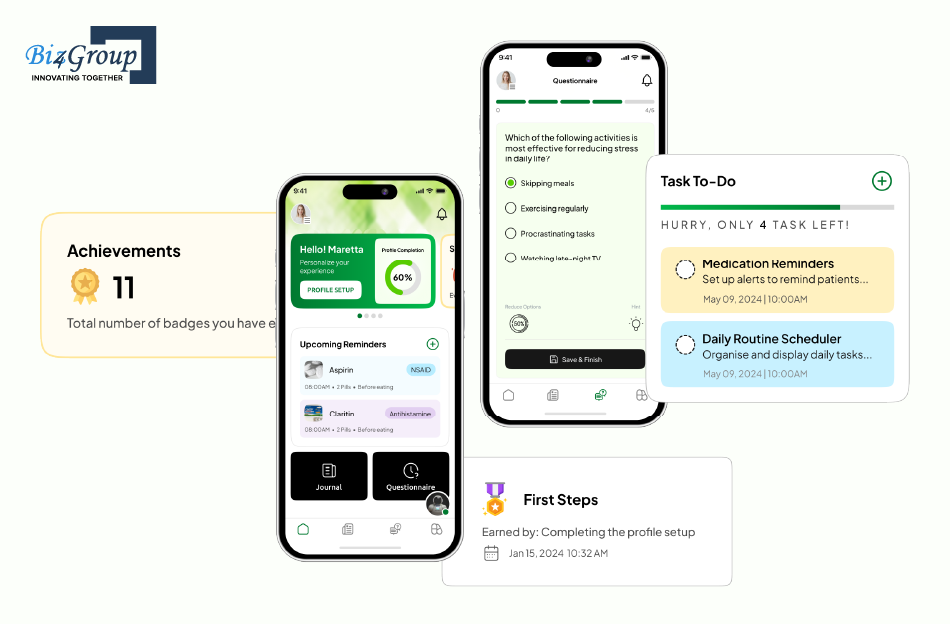
CogniHelp is an AI-powered mobile application developed by Biz4Group to support individuals in the early to mid stages of dementia. The goal was simple but impactful. Help patients stay oriented, maintain daily routines, and improve cognitive engagement through personalized digital support.
The platform acts as a daily companion for patients while also giving caregivers better visibility into their condition and behavior patterns.
Problem Addressed
Dementia care comes with a unique set of challenges.
Patients often struggle with:
- Memory loss and disorientation
- Difficulty maintaining daily routines
- Reduced independence over time
At the same time, caregivers face:
- Lack of continuous monitoring
- Limited visibility into cognitive decline
- Emotional and operational burden
Traditional care models were not enough. There was a clear need for a scalable, personalized solution that could support both patients and caregivers consistently.
AI Solution Implemented
To address this, we designed CogniHelp as a personalized, AI-driven cognitive support system.
Key capabilities included:
- Personalized journaling and memory reinforcement
Patients can record daily activities and thoughts, helping reinforce memory recall and routine building. - AI-powered quizzes and cognitive exercises
Interactive quizzes are tailored to user data, improving engagement and mental stimulation. - Voice-to-text interaction for accessibility
Patients can log entries using speech, reducing friction and improving usability. - Smart reminders for medication and daily tasks
The system ensures patients stay on track without constant caregiver intervention. - Cognitive performance monitoring using machine learning
The app tracks behavioral and cognitive patterns over time to identify changes early. - AI chatbot for emotional and cognitive engagement
Provides interaction, support, and stimulation throughout the day.
This combination of AI in patient care case studies and personalized engagement created a system that adapts to each user rather than forcing a one-size-fits-all approach.
How We Optimized Cost
One of the key goals was to make this solution scalable and cost-effective. Here’s how we approached it:
- Built a cross-platform architecture to reduce development and maintenance costs
- Used modular components to accelerate feature deployment
- Implemented efficient backend frameworks to minimize infrastructure overhead
- Focused on automation to reduce dependency on continuous human monitoring
This aligns with what many organizations look for in AI healthcare cost savings examples, solutions that reduce long-term operational burden without compromising care quality.
Results and Impact
The outcome was more than just a functional app. It delivered measurable improvements in both care delivery and patient experience.
- Improved patient independence through structured daily support
- Increased cognitive engagement via personalized interactions
- Reduced caregiver workload with automated reminders and monitoring
- Better visibility into cognitive health trends over time
CogniHelp demonstrates how real world AI in healthcare examples can go beyond efficiency and directly improve quality of life.
It is a strong example of how AI healthcare case studies for hospitals and clinics can extend into patient-centric solutions that are scalable, practical, and impactful.
If you are exploring similar solutions, whether for patient care or operational efficiency, understanding the right development approach is critical. This is where healthcare software product development plays a key role in turning ideas into scalable, compliant, and high-impact systems.
2. AI in Hospitals Case Studies: Streamlining Healthcare Access with MBI Marketing Platform

One of the common gaps in healthcare systems is fragmentation. Patients struggle to find services, providers lack unified platforms, and administrative workflows often remain disconnected.
To solve this, Biz4Group developed MBI Marketing, a centralized healthcare services and job access platform. The goal was to bring patients, providers, and healthcare opportunities into a single, secure ecosystem while simplifying access and operations.
Problem Addressed
Healthcare organizations often deal with disconnected systems.
Patients face:
- Difficulty finding relevant healthcare services
- Limited access to programs and appointment scheduling
- Poor digital experience across platforms
Providers and organizations struggle with:
- Managing appointments and patient interactions efficiently
- Handling sensitive data securely
- Lack of integrated platforms for services and hiring
This leads to inefficiencies, higher operational costs, and poor user experience.
AI Solution Implemented
To address these challenges, we built a secure and scalable platform designed to unify healthcare workflows.
Key capabilities included:
- Centralized patient portal
Users can access healthcare services, explore programs, and manage their interactions in one place - Appointment scheduling and event management system
Enables seamless booking and coordination between patients and providers - Program enrollment system
Patients can enroll in healthcare programs based on preferences and needs - Integrated healthcare job portal
Connects healthcare professionals with relevant job opportunities within the same ecosystem - Compliance-first architecture
Built with strong data protection standards to ensure secure handling of sensitive patient information
This project is a strong example of AI in hospitals case studies where the focus is not just clinical care but improving the entire healthcare access and operational layer.
How We Optimized Cost
Cost optimization in this project focused heavily on reducing system fragmentation and manual effort. Here’s how we approached it:
- Built a unified platform instead of multiple disconnected systems
- Automated scheduling and enrollment workflows to reduce administrative workload
- Designed a scalable architecture to avoid future redevelopment costs
- Prioritized compliance early to prevent expensive rework later
This aligns closely with real AI healthcare cost savings examples, where efficiency gains come from better system design rather than just automation alone.
Results and Impact
The platform significantly improved both accessibility and operational efficiency.
- Simplified access to healthcare services for patients
- Reduced administrative burden through streamlined workflows
- Improved coordination between patients, providers, and programs
- Created a dual-purpose ecosystem combining healthcare services and employment opportunities
This project highlights how real world examples of AI in healthcare industry 2026 are not limited to diagnostics or patient care. They also extend to solving structural and operational challenges.
It is also a strong example of how AI healthcare case studies for hospitals and clinics can improve both service delivery and internal efficiency at the same time.
As healthcare systems grow more complex, solutions like this show how AI in healthcare administration automation can reduce friction, improve access, and create more connected care ecosystems.
3. AI Medical Case Studies in Diagnostics: Turning Blood Data into Actionable Insights with Dr. Ara
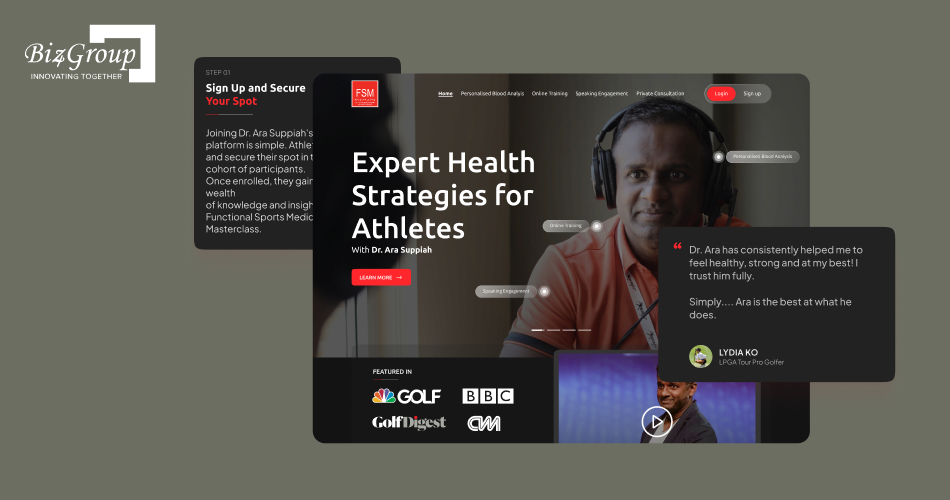
In many healthcare and wellness scenarios, data exists but actionable insights do not. Athletes and health-focused users often receive detailed blood reports but interpreting them correctly requires expertise and time.
To solve this, Biz4Group developed Dr. Ara, an AI-powered athletic health platform that analyzes health data and converts it into personalized recommendations for performance, recovery, and overall well-being.
The goal was to make advanced health insights accessible, understandable, and usable on a daily basis.
Problem Addressed
Even today, most health data remains underutilized.
Users face challenges like:
- Difficulty understanding complex blood reports
- Lack of personalized, actionable health recommendations
- No continuous tracking of performance and recovery
From an operational perspective, this creates a gap. Valuable health data exists, but it is not being used effectively to improve outcomes.
This is a common issue seen across many AI medical case studies, where data is available but insights are missing.
AI Solution Implemented
To bridge this gap, we built Dr. Ara as an intelligent health analysis and recommendation system.
The platform focuses on turning raw health data into meaningful guidance:
- AI-driven blood test analysis
Users can upload reports, and the system interprets key biomarkers like hydration, cholesterol, and oxygen levels - Personalized health recommendations
Based on data, users receive tailored suggestions for diet, sleep, hydration, and training - Performance and recovery insights
The system helps users understand how their body is performing and where improvements are needed - Consultation layer for deeper guidance
Users can access personalized consultations to refine their health and performance strategy
This approach reflects how real world AI in healthcare examples are shifting from passive data collection to active decision support.
How We Optimized Cost
Cost efficiency in this project came from automation and intelligent data processing. Instead of relying on repeated manual analysis:
- Automated interpretation of complex health data reduced dependency on specialists
- Built a scalable analytics engine that can handle large volumes of health data efficiently
- Designed a system that delivers insights instantly, reducing time and operational overhead
This is a strong example of AI healthcare cost savings examples, where automation replaces repetitive analysis while maintaining accuracy.
Results and Impact
Dr. Ara transformed how users interact with their health data.
- Converted complex reports into simple, actionable insights
- Improved user engagement through personalized recommendations
- Enabled continuous tracking of performance and recovery
- Created a scalable model for data-driven health optimization
It stands out among AI healthcare case studies for hospitals and clinics as well as wellness platforms, showing how AI can move beyond data storage to real-time decision support.
More importantly, it answers a key question many leaders ask: How AI is used in healthcare case studies and results?
By turning raw data into decisions that users can actually act on.
As platforms like Dr. Ara grow, they also highlight the importance of building intelligent, scalable systems. This is where solutions like AI patient software play a key role in enabling personalized, data-driven care experiences.
4. AI in Patient Care Case Studies: Personalized Wellness and Engagement with Truman
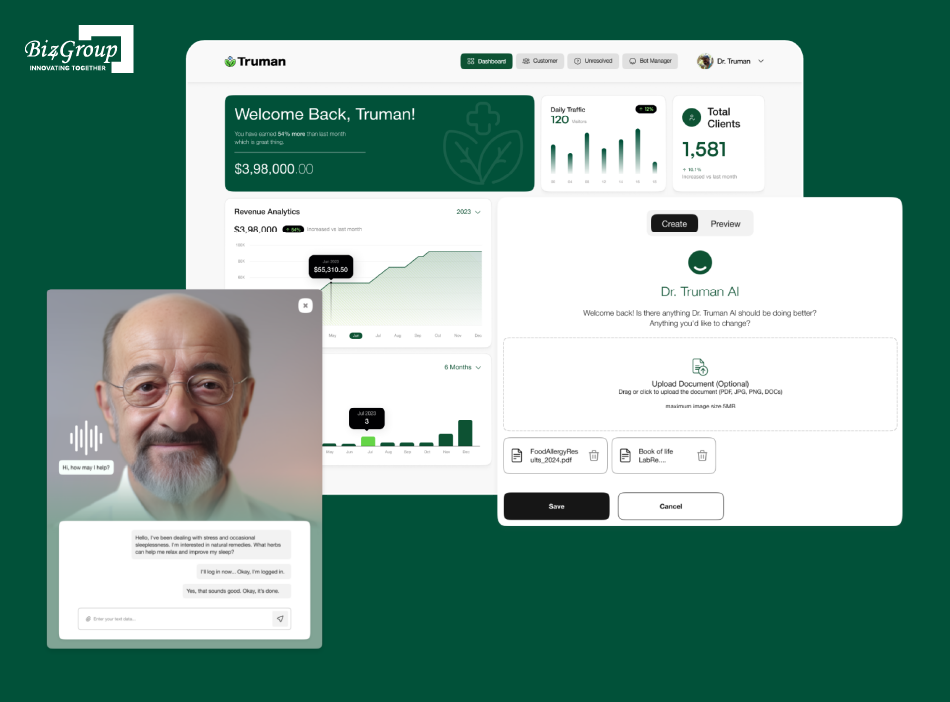
One of the biggest gaps in modern healthcare and wellness is personalization at scale. Users want guidance that feels human, but systems often deliver generic recommendations.
To address this, Biz4Group developed Truman, an AI-powered wellness platform featuring a lifelike AI avatar that provides personalized health guidance, supplement recommendations, and continuous user interaction. The platform combines consultation, tracking, and commerce into a single experience, making wellness more accessible and actionable for users.
Problem Addressed
Many wellness platforms struggle with engagement and personalization.
Users often face:
- Generic health recommendations that do not adapt to their needs
- Limited understanding of supplements and treatment plans
- Lack of continuous interaction or guidance
From a business perspective:
- Low engagement leads to poor retention
- Manual consultations increase operational costs
- Disconnected systems reduce conversion from advice to action
This is a common gap seen across AI in patient care case studies, where personalization is expected but not effectively delivered.
AI Solution Implemented
To solve this, we built Truman as a fully interactive, AI-driven health companion.
Key capabilities included:
- AI-powered avatar for human-like interaction
Users can interact with a digital version of Dr. Truman for personalized health advice - Smart chatbot for personalized recommendations
The system analyzes user inputs and suggests relevant supplements and wellness plans - Health data tracking and report uploads
Users can store and manage their medical history within the platform - Integrated eCommerce experience
Seamless transition from consultation to purchasing recommended products - AI recommendation engine
Personalized suggestions based on user health data and behavior patterns
This approach reflects how real world AI in healthcare examples are evolving toward continuous engagement rather than one-time interactions.
How We Optimized Cost
Cost optimization in this project focused on reducing manual intervention while improving scalability. Here’s how we approached it:
- Automated consultations using AI avatar and chatbot
- Reduced dependency on human experts for routine guidance
- Built a scalable cloud-based infrastructure to handle growing users efficiently
- Integrated recommendation and commerce into one system to reduce operational friction
This aligns with real AI healthcare cost savings examples, where automation replaces repetitive processes while improving user experience.
Results and Impact
The platform delivered measurable improvements across engagement, revenue, and efficiency.
- 30% increase in supplement sales
- 40% improvement in user engagement through AI-driven interaction
- 20% reduction in operational costs due to automation
- 85% positive user feedback, reflecting improved experience and trust
Truman stands out among top AI healthcare case studies with measurable cost savings because it combines personalization, automation, and monetization into a single scalable solution.
It also answers a critical question many healthcare leaders ask: Can AI improve both patient experience and business outcomes at the same time?
This case shows that it can.
As platforms like Truman evolve, they highlight the growing role of conversational interfaces in healthcare. Solutions like healthcare conversational AI are becoming essential for delivering personalized, scalable, and always-available patient engagement.
That wraps your case study section strong.
Want results like these in your own healthcare system?
These case studies show what’s possible, but execution is what drives real outcomes. Let’s identify where AI can deliver the fastest ROI in your organization.
Book a Free ConsultationWhat Challenges Do Healthcare Organizations Face When Implementing AI and How Are Leaders Solving Them?
By now, you’ve seen how top AI healthcare case studies deliver real results. But let’s be honest, implementation is where most organizations struggle. You might be wondering, “If these results are real, why isn’t everyone achieving them?”
Because AI adoption in healthcare comes with very real challenges. The good news is that these challenges are predictable and more importantly, solvable.
Here’s a clear breakdown of what organizations face and how successful teams are handling it:
|
Challenge |
What It Looks Like in Practice |
How Leading Organizations Solve It |
|---|---|---|
|
Data Integration with Existing Systems |
AI tools fail to connect smoothly with EHRs and legacy systems |
Build API-first architecture and ensure interoperability from day one |
|
Data Privacy & Compliance (HIPAA) |
Concerns around handling sensitive patient data |
Design systems that are HIPAA compliant from the start with secure data pipelines |
|
Lack of Clear ROI Visibility |
Leadership hesitates due to unclear financial impact |
Start with focused use cases tied to measurable AI healthcare cost savings examples |
|
Resistance from Staff & Adoption Issues |
Teams struggle to trust or use AI tools effectively |
Introduce AI as a support system, not a replacement, with proper training and onboarding |
|
Poor Data Quality |
Inaccurate or incomplete data leads to unreliable outputs |
Invest in data cleaning, structuring, and validation before deploying AI models |
|
Overcomplicated Solutions |
AI systems become too complex to manage or scale |
Start small with high-impact use cases and expand gradually |
|
High Initial Investment Concerns |
Budget constraints slow down adoption decisions |
Use phased development and understand the cost of implementing AI in healthcare to plan effectively |
|
Unclear Implementation Strategy |
Teams don’t know where to begin or how to scale |
Follow a structured roadmap and ask the right questions using frameworks like questions to ask before AI adoption in healthcare |
What you’ll notice here is something important. Most failures don’t happen because AI doesn’t work. They happen because of poor planning, unclear goals, or overcomplicated execution.
The organizations that succeed with AI healthcare case studies for hospitals and clinics focus on simplicity, clarity, and measurable outcomes from the start. So instead of asking, “What can AI do?”, the better question is:
“Where can AI deliver the fastest and most measurable impact in our organization?”
What Do Successful AI in Healthcare Case Studies Have in Common?
If you look closely at the top AI healthcare case studies, a clear pattern starts to emerge. The organizations that see real results are not necessarily the ones using the most advanced technology. They are the ones making smarter decisions about where and how to apply it.
Success in AI healthcare case studies 2026 is less about experimentation and more about execution. Teams that get it right focus on solving meaningful problems, measuring outcomes, and building systems that can scale over time.
So what exactly are they doing differently?
1. They Start with High-Impact, Focused Use Cases
Successful organizations avoid the mistake of trying to implement AI across multiple departments at once. Instead, they begin with a clearly defined problem such as reducing administrative workload, improving patient monitoring, or optimizing scheduling. This focused approach allows them to deliver quick, measurable wins. It also helps build internal confidence among stakeholders. Many AI healthcare case studies for hospitals and clinics follow this path, starting small but expanding rapidly once results are proven and trusted across teams.
2. They Build on Strong Data Foundations
AI systems rely heavily on data quality. Organizations that succeed invest time in preparing their data before deploying any models. This includes cleaning, structuring, and standardizing data across systems. Without this foundation, even well-designed AI systems can produce unreliable outputs. That’s why most real world AI in healthcare examples prioritize data readiness as a critical first step rather than an afterthought.
3. They Focus on Measurable Outcomes, Not Just Features
One of the biggest differences between successful and unsuccessful implementations is how success is defined. Leading organizations focus on measurable outcomes such as cost reduction, operational efficiency, and improved patient outcomes. They do not get distracted by adding features without purpose. This mindset is what turns projects into strong AI healthcare cost savings examples, where results can be clearly tracked, reported, and used to justify further investment.
4. They Design AI to Support, Not Replace Humans
Healthcare is a human-centered industry, and successful AI solutions reflect that. Instead of replacing professionals, AI is used to assist doctors, nurses, and administrative staff in making better decisions and working more efficiently. This approach improves adoption and trust across teams. It is a consistent pattern seen in AI in healthcare success stories, where AI enhances human capability rather than disrupting workflows.
5. They Follow a Phased Implementation Approach
Rather than launching large-scale deployments immediately, successful organizations take a phased approach. They start with pilot programs, test performance, gather feedback, and refine the solution before scaling. This reduces risk and allows teams to make adjustments early. It also ensures that investments are aligned with real outcomes. Many examples of AI implementation in healthcare organizations follow this structured rollout strategy to maintain control and flexibility.
6. They Prioritize Scalability from Day One
Even at the early stages, successful teams think long term. They design systems that can scale across departments, locations, and user groups without requiring major redevelopment. This includes choosing the right architecture, tools, and platforms that can grow with the organization. Solutions like AI hospital management software play a key role in enabling this kind of scalability while maintaining efficiency.
When you step back, the pattern becomes clear.
Success in AI is not about complexity or trend-following. It is about clarity, focus, and disciplined execution. Organizations that follow these principles are the ones turning AI into measurable business and clinical impact.
How Are Clinics & Hospitals Actually Building and Scaling AI Solutions in 2026?
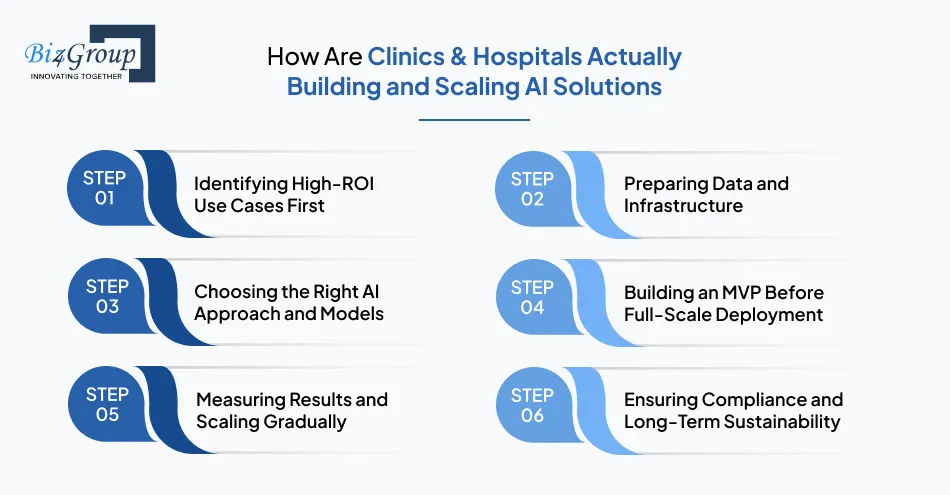
By now, you’ve seen what works and what doesn’t. The next logical question is: How do you actually build and scale AI in a real healthcare environment without wasting time or budget?
The truth is that successful organizations don’t jump straight into full-scale implementation. They follow a structured path that reduces risk, controls cost and delivers measurable results early.
Here’s how leading teams are approaching it in AI healthcare case studies 2026:
Step 1: Identifying High-ROI Use Cases First
The first step is not technology, it is clarity. Teams identify where AI can deliver the fastest and most measurable impact, whether that’s automation, diagnostics, or patient engagement. This prevents wasted effort and ensures alignment with business goals. Many top AI healthcare case studies with measurable cost savings begin with one focused use case before expanding.
- Look for repetitive, time-consuming workflows
- Prioritize areas with clear cost or efficiency impact
- Align use cases with organizational goals
Step 2: Preparing Data and Infrastructure
Once the use case is defined, the next step is getting your data ready. Without clean and structured data, even the best AI models fail to deliver reliable results. This is where most organizations slow down, but it is also where successful ones invest early to avoid issues later.
- Clean, organize, and standardize data sources
- Ensure integration with existing systems like EHRs
- Set up scalable cloud or hybrid infrastructure
Step 3: Choosing the Right AI Approach and Models
Not every problem requires the same type of AI. Some use cases need predictive analytics, others need conversational systems or automation tools. Choosing the right approach ensures better performance and faster deployment. This is a key differentiator in strong AI in healthcare success stories.
- Use machine learning for predictions and risk scoring
- Use NLP for documentation and patient interaction
- Explore solutions like agentic AI in healthcare for autonomous workflows
Step 4: Building an MVP Before Full-Scale Deployment
Instead of building a full system upfront, successful teams start with a smaller, testable version. This allows you to validate assumptions and gather real-world feedback. It also reduces risk and helps refine the solution before scaling across the organization.
- Develop a focused pilot solution
- Test with a limited user group
- Iterate based on real feedback
Step 5: Measuring Results and Scaling Gradually
Once the pilot proves successful, the next step is scaling. But scaling is not just about expansion, it is about maintaining performance while increasing impact. This is where many real world AI in healthcare examples stand out, they scale only after proving value.
- Track metrics like cost savings, time saved, and outcomes
- Expand to additional departments or use cases
- Continuously optimize based on performance data
Step 6: Ensuring Compliance and Long-Term Sustainability
Healthcare requires strict compliance and long-term reliability. Successful implementations build this into the system from the beginning rather than treating it as an afterthought. This ensures the solution remains secure, scalable, and legally compliant as it grows.
- Follow regulatory standards and data security practices
- Design systems for long-term scalability
- Continuously monitor and train AI models
If you look at this process closely, one thing stands out. Successful AI adoption is not about speed. It is about structure.
Organizations that follow this approach consistently turn AI healthcare case studies for hospitals and clinics into real, scalable success stories.
Ready to turn your AI idea into a working solution?
You now understand the steps, but getting it right requires the right strategy and execution. We help you move from planning to a scalable solution that actually delivers.
Start Your AI ProjectThinking About Implementing AI? What Should Healthcare Leaders Do Next?
At this stage, the question is no longer whether AI works. The real question is: What should you do next to make it work for your organization?
After reviewing multiple top AI healthcare case studies, one thing becomes clear. Successful leaders don’t rush into AI. They take a structured, outcome-driven approach that minimizes risk and maximizes ROI.
If you’re planning your next move, here’s how to think about it.
1. Start with a Clear ROI and Business Case
Before investing in any solution, you need clarity on what success looks like. This means defining specific goals such as reducing operational costs, improving patient outcomes, or increasing efficiency. Many AI healthcare cost savings examples succeed because they begin with measurable objectives. Without this clarity, it becomes difficult to justify investment or track impact over time.
2. Decide Between Building In-House or Partnering
One of the biggest decisions you’ll face is whether to build internally or work with an external partner. Each option comes with trade-offs in terms of cost, speed, and expertise. Most organizations highlighted in AI healthcare case studies for hospitals and clinics choose to partner with experienced teams to accelerate development and reduce risk, especially for complex implementations.
3. Assess Data Readiness and Technical Capabilities
AI success depends heavily on your existing infrastructure and data quality. Before moving forward, it is important to evaluate whether your systems can support AI integration. This step is often overlooked, but it plays a critical role in many real world AI in healthcare examples, where strong data foundations directly impact performance and outcomes.
4. Plan for Adoption, Not Just Deployment
Even the best AI solution will fail if your team does not adopt it. Leaders need to think beyond deployment and focus on training, usability, and change management. Many AI in healthcare success stories emphasize how important it is to align teams early and position AI as a support system rather than a disruption.
5. Understand the Investment and Timeline Clearly
AI implementation is not just a technical decision, it is also a financial one. Leaders need a clear understanding of the expected investment, timeline, and return. Having clarity around the cost of implementing AI in healthcare helps set realistic expectations and prevents surprises during execution.
6. Ask the Right Questions Before You Start
Finally, before moving forward, it is important to ask the right questions. This includes evaluating risks, understanding vendor capabilities, and aligning AI initiatives with long-term goals. Many organizations rely on structured frameworks like questions to ask before AI adoption in healthcare to ensure they are making informed decisions from the beginning.
If you step back, the path forward becomes much clearer.
It is not about adopting AI quickly. It is about adopting it correctly. And when done right, the results you saw in these AI healthcare case studies 2026 become achievable for your organization as well.
How Can Biz4Group Help You Turn AI Healthcare Case Studies into Real Business Impact?
By now, you’ve seen how top AI healthcare case studies translate into real outcomes. The next step is applying those results in your own organization.
This is where most teams hit a wall, they ask : We are trying to justify AI investment internally, can you share healthcare case studies with clear ROI and cost savings?
If that sounds familiar, you’re not alone.
At the same time, many leaders are also asking: We are planning to invest in AI healthcare solutions, what case studies demonstrate real business and clinical impact?
These are not just questions. They are real decision points. At Biz4Group, we work with healthcare organizations navigating exactly this stage.
From solutions like CogniHelp, MBI Marketing, Dr. Ara, and Truman, we’ve helped teams move from idea to execution with systems that improve efficiency, reduce costs, and enhance patient experience.
As an AI healthcare software development company, we focus on building solutions that are practical, scalable, and aligned with real healthcare workflows.
Whether you're looking to streamline operations through AI automation for healthcare center or improve engagement using AI virtual healthcare assistant, the goal stays the same, measurable impact.
Because in the end, success with AI is not about experimentation. It is about building solutions that actually work in the real world.
Looking for a partner who’s already built real healthcare AI solutions?
From patient care to operations, we’ve helped organizations turn AI into measurable impact. Let’s build something that works for your business from day one.
Get in Touch with Biz4GroupFinal Thoughts!
AI in healthcare is no longer about experimentation or future potential. The shift is already happening, and the difference between success and failure comes down to execution.
As you’ve seen through these top AI healthcare case studies, real impact is not theoretical. Organizations are already achieving measurable improvements in cost, efficiency, and patient outcomes. The key is knowing where to start, how to implement, and how to scale without adding unnecessary complexity.
If you’re exploring AI healthcare case studies 2026 to guide your next move, the takeaway is simple. Focus on practical use cases, build with clear goals, and prioritize solutions that deliver measurable value from day one.
At Biz4Group, we’ve worked closely with healthcare organizations to turn these ideas into real, working systems. From patient care platforms to operational solutions, our focus has always been on delivering results that align with both business objectives and clinical needs. This is also why keeping up with evolving healthcare AI trends becomes critical when planning long-term success.
Because in healthcare, technology only matters when it improves outcomes.
Build it right, scale it smart, and make every AI decision count with the right partner by your side.
FAQ
1. What are the top AI healthcare case studies showing real ROI in 2026?
The top AI healthcare case studies in 2026 focus on measurable outcomes like cost reduction, improved workflows, and better patient care. Many organizations are no longer experimenting, they are scaling solutions that deliver results. If you’re wondering how AI is used in healthcare case studies and results, the answer lies in areas like automation, diagnostics, and patient engagement, where organizations are seeing clear ROI within months. Recent data shows that 82% of healthcare organizations report moderate to high ROI from AI adoption , making real-world implementations more reliable than ever.
2. Can you share real world examples of AI in healthcare with measurable outcomes?
Yes, there are several real world AI in healthcare examples where organizations have achieved measurable improvements. From patient care platforms to operational automation systems, many AI in healthcare success stories show reduced administrative workload, faster decision-making, and improved patient engagement. If you're asking: can you share examples of AI-driven healthcare platforms that improved patient care and workflow efficiency, the answer is yes, especially in areas like virtual assistants, analytics platforms, and workflow automation.
3. How are hospitals reducing costs using AI technology?
Hospitals are using AI to automate repetitive tasks, optimize resource allocation, and improve operational efficiency. If you’re exploring how hospitals reduce costs using AI technology case studies, most savings come from areas like administrative automation, predictive analytics, and smarter scheduling systems. These AI healthcare cost savings examples often result in reduced labor costs, fewer errors, and faster processes without compromising care quality.
4. What are the best AI healthcare case studies for hospitals and clinics to learn from?
The most valuable AI healthcare case studies for hospitals and clinics are those that clearly outline the problem, implementation, and measurable outcomes. If you’re thinking to understand how other healthcare organizations have implemented AI successfully, look for case studies that include real deployment details, not just use cases. These provide insights into both the challenges faced and the actual results achieved.
5. How do we justify AI investment internally in healthcare organizations?
This is one of the most common challenges. If you're looking to justify AI investment internally, the key is to focus on measurable metrics. Use detailed case studies of AI in healthcare with outcomes that show cost reduction, efficiency gains, and improved patient outcomes. Decision-makers respond best to real numbers, not theoretical bnefits.
6. What should we look for before adopting AI in healthcare?
Before adopting AI, you need clarity on your goals, data readiness, and expected ROI. Many leaders ask, we are exploring AI tools for healthcare but need proof of concept, which case studies demonstrate real success. The answer is to start with small, high-impact use cases and validate results before scaling. Also, understanding industry adoption trends helps. For example, 85% of healthcare leaders are already experimenting with or deploying AI solutions , which shows how quickly the space is evolving.
7. How can we compare different AI implementations in healthcare?
Comparing implementations requires looking beyond features and focusing on outcomes. If you’re thinking to compare different AI implementations in healthcare, there examples across hospitals, clinics, and startups, the best approach is to evaluate use cases across multiple environments. Look at how different organizations solve similar problems and what results they achieve. This is where real world examples of AI in healthcare industry 2026 become valuable, as they provide a broader perspective across different healthcare settings.
