Location :
Orlando, FL, USA
Location :
Orlando, FL, USA +1 (407) 714-1616
 info@biz4group.com

















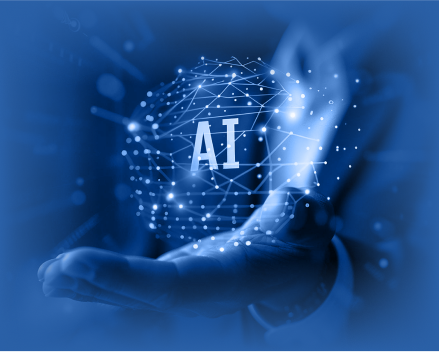
Imagine a digital system that doesn’t wait for instructions but instead, understands your business goals, learns from real-time feedback, and takes independent actions to get the job done.
Read More
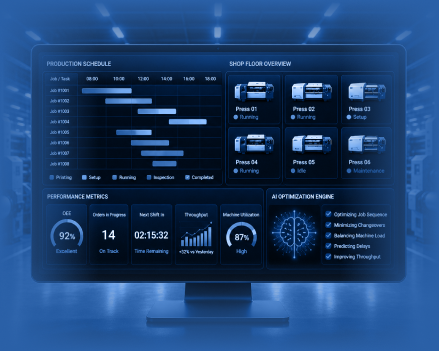
What happens when one delayed print job pushes your entire production floor into chaos?
According to Deloitte’s 2025 Smart Manufacturing Survey, manufacturers implementing smart production initiatives reported a 10%-20% improvement in production output and up to 20% improvement in productivity after optimizing operations with intelligent systems.
In high-volume print environments, those gains directly impact turnaround times, machine utilization, and profitability. That is exactly why businesses are investing in AI print production scheduling software development to eliminate delays and gain tighter operational control.
Most print facilities still rely on spreadsheets, manual planning, or disconnected systems to manage production schedules. It works until urgent orders arrive, machines sit idle, or teams scramble to reshuffle jobs at the last minute. That is where print production scheduling software development with AI becomes critical. AI can analyze machine availability, job priorities, production capacity, and deadlines simultaneously to create optimized schedules in real time.
The challenge becomes even bigger in packaging and commercial printing environments where multiple production lines run together. Delays in one area often affect the entire floor. Businesses adopting AI print production planning system development are using intelligent scheduling systems to reduce changeovers, improve machine utilization, and keep operations moving efficiently without constant manual intervention.
If this sounds familiar, you are not alone. Many businesses are actively searching queries like “we are running a printing business and want to reduce production delays by implementing AI print scheduling and floor optimization software.” The demand for AI print job scheduling and workflow automation software development is rising because printing companies need smarter systems that can adapt instantly to production changes while protecting margins and delivery commitments.
Let’s learn how to build those systems.
Running a modern print facility feels like solving a puzzle that keeps changing every hour. One delayed artwork approval, one machine issue, or one urgent client request can disrupt the entire production floor.
As a result, printing businesses are rapidly moving toward AI print production scheduling software development to improve operational control and reduce production uncertainty.
Unlike traditional scheduling systems, AI-powered platforms continuously analyze production conditions in real time. They evaluate machine availability, print queues, delivery timelines, material dependencies, and operator workloads before automatically adjusting schedules when disruptions occur.
So, what exactly is an AI print production scheduling software?
In simple words, the software helps print businesses make faster production decisions with fewer delays and much better coordination.
A 2025 report highlighted that AI adoption in print manufacturing is accelerating due to increasing demand for automation, production visibility, and workflow efficiency improvements.
Businesses exploring AI print production planning system development want intelligent systems that can adapt, optimize, and scale with growing production demands.
Traditional scheduling methods were built for slower and less complex production environments. Modern print operations are very different.
Today, commercial printers manage:
Manual scheduling struggles to keep up with that pace.
The table below shows how AI-powered systems differ from traditional print scheduling approaches.
|
Traditional Print Scheduling |
AI-Powered Print Scheduling |
|---|---|
|
Static production schedules |
Real-time adaptive scheduling |
|
Manual job assignment |
Intelligent machine allocation |
|
Reactive planning |
Predictive workflow optimization |
|
Limited production visibility |
Live operational monitoring |
|
Frequent scheduling conflicts |
Automated workflow balancing |
|
Higher dependency on operators |
AI-assisted decision-making |
|
Slow response to urgent jobs |
Instant schedule adjustments |
This is why you should prefer to integrate AI into your printing workflow to improve production flexibility and reduce operational bottlenecks.
Think of the platform as a central intelligence layer connected to your entire production floor.
The software continuously collects live production data from:
It then processes that information to create optimized production schedules automatically.
For example, imagine a high-priority packaging order suddenly enters the queue while another machine experiences downtime. Instead of forcing managers to manually rebuild the production plan, the AI system instantly recalculates schedules and reallocates jobs to minimize delays.
This is one reason many print businesses now ask, “We are looking to optimize our print shop workflow and need an AI-based production scheduling system for better efficiency. How does the software actually help?”
The answer is simple.
The system removes constant manual coordination from the production process. It automatically identifies the fastest and most efficient production path based on real-time shop floor conditions.
That means:
Businesses investing in AI printing MIS automation software are increasingly combining scheduling intelligence with workflow automation to create more connected production environments.
Every intelligent scheduling platform relies on several connected components working together behind the scenes. Each module handles a specific part of production optimization.
|
Core Component |
What It Does |
|---|---|
|
Intelligent Scheduling Engine |
Automatically prioritizes and sequences print jobs |
|
Workflow Monitoring Dashboard |
Tracks live production activity and job progress |
|
Machine Allocation System |
Assigns jobs based on machine capability and availability |
|
Predictive Analytics Module |
Detects possible delays and workflow bottlenecks |
|
Integration Layer |
Connects ERP, MIS, inventory, and shipping systems |
|
Production Reporting System |
Generates operational insights and performance analytics |
These components work together to create a production environment that responds dynamically to operational changes instead of relying on fixed schedules.
Companies investing in scalable enterprise AI solutions are increasingly prioritizing centralized production intelligence to improve visibility across multiple print operations.
Traditional print production workflows were built for a very different industry. Fewer orders. Longer turnaround times. Less customization. Slower production cycles.
That environment no longer exists.
Modern print businesses now handle short-run jobs, variable data printing, custom packaging, urgent delivery timelines, and multi-machine coordination every single day. Unfortunately, many facilities still rely on outdated scheduling methods that struggle to keep up with this level of complexity.
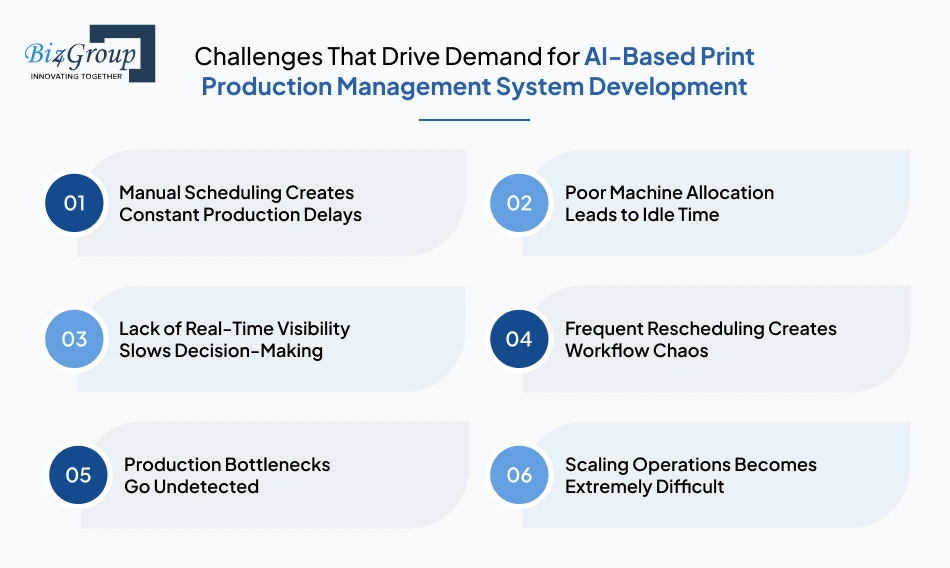
This gap between production demand and operational capability creates some serious challenges on the shop floor.
Many print facilities still depend heavily on spreadsheets, whiteboards, phone calls, or operator experience to schedule jobs.
The problem?
Manual scheduling cannot react fast enough when production conditions suddenly change.
One delayed artwork approval or machine breakdown can throw off the entire workflow. Teams then spend hours rebuilding schedules manually while production queues continue growing.
This is why many businesses now say, “We are facing delays in print production due to manual scheduling and want an AI solution to optimize workflows.” And honestly, that concern is valid.
The larger the production floor becomes, the harder manual coordination gets.
Not every print job belongs on the same machine. Yet traditional systems often assign work based on availability instead of optimization.
That creates:
In high-volume print environments, even a small allocation mistake can affect delivery timelines across multiple orders.
Businesses adopting advanced AI automation systems are increasingly focusing on intelligent machine utilization because idle equipment directly impacts profitability.
One of the biggest operational issues in traditional print environments is the lack of live production visibility.
Managers often struggle to answer simple questions like:
Without real-time production tracking, teams react to problems after delays have already happened.
Urgent print jobs are common in commercial printing. The challenge begins when teams try squeezing those orders into already packed production schedules.
Traditional scheduling systems often fail to:
As a result, one urgent request often creates delays across multiple departments. This becomes even more difficult in packaging and labeling environments where production dependencies are tightly connected.
Many businesses looking into AI product development for print operations now prioritize dynamic scheduling capabilities for this exact reason.
Bottlenecks rarely appear suddenly.
Most build gradually through:
The problem is that traditional systems lack predictive intelligence. They cannot identify bottlenecks before they impact output. That leaves production managers constantly reacting instead of proactively optimizing operations.
Also read: AI prepress automation software development guide
What works for a small print facility often fails at scale.
As businesses expand, they manage:
Without centralized scheduling intelligence, operational complexity grows faster than productivity. This is one reason many enterprises researching AI in printing industry solutions are focusing heavily on workflow scalability and automation. Because scaling production manually eventually hits a limit.
Traditional print scheduling methods are no longer designed for the speed and unpredictability of modern print manufacturing. The next step is understanding how AI changes that equation completely by turning static workflows into intelligent, adaptive production systems.
67.9% of print businesses still struggle with workflow coordination delays. Many are already fixing it with AI.
Build Smart with Biz4GroupTraditional print workflows often depend on reactive decision-making. Teams wait for disruptions to happen, then scramble to fix them. AI changes that approach completely.
Modern AI print production planning system development focuses on creating production environments that can analyze, predict, and optimize workflows continuously. Instead of depending entirely on human coordination, AI systems process operational data in real time and recommend the most efficient production path automatically.
That shift creates faster workflows, stronger production stability, and far better operational control.
The table below breaks down how AI transforms different areas of print production.
|
Operational Challenge |
How AI Improves the Process |
|---|---|
|
Production teams struggle to prioritize multiple incoming jobs |
AI automatically ranks jobs based on deadlines, production complexity, machine availability, and delivery commitments |
|
Print estimations take too long during high-volume order periods |
AI-powered estimation engines speed up calculations and improve quote accuracy |
|
Operators manually coordinate between departments |
AI synchronizes workflows across prepress, printing, finishing, and dispatch operations |
|
Production managers cannot identify workflow slowdowns early |
AI analyzes live production data and flags inefficiencies before they impact timelines |
|
Last-minute order changes disrupt existing schedules |
AI recalculates schedules instantly and adjusts production priorities dynamically |
|
Large print facilities struggle to maintain workflow consistency |
AI standardizes production planning across multiple machines and production lines |
|
Teams spend hours managing repetitive production tasks |
AI automates repetitive coordination and reduces operational dependency on manual oversight |
|
Businesses struggle to scale operations efficiently |
AI creates centralized workflow intelligence that supports production expansion |
This is exactly why many commercial printers now say, “I am managing a print production unit and want to implement AI scheduling software to reduce delays and improve workflow efficiency.”
The biggest advantage of AI scheduling systems is not speed alone. It is adaptability.
Modern print environments change constantly throughout the day. AI-powered systems adapt to those changes without forcing production teams to rebuild schedules manually every few hours.
Businesses implementing advanced AI integration strategies are increasingly connecting scheduling engines with inventory systems, production dashboards, shipping tools, and customer order platforms to create more responsive print ecosystems.
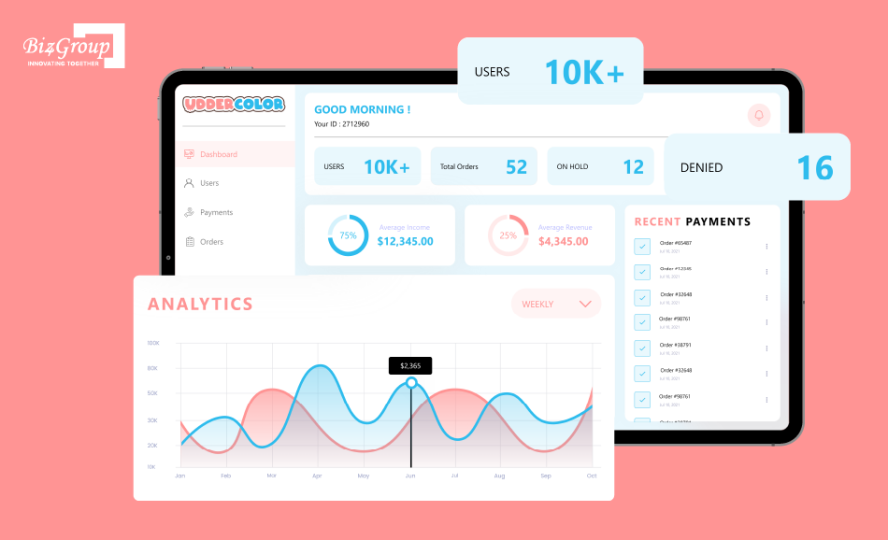
Biz4Group partnered with one of the leading printing houses in the United States to rebuild and modernize an advanced platform for custom artwork printing.
The client needed a smarter system capable of handling thousands of synchronized artwork orders while improving production coordination and customer experience.
The developed platform introduced:
One standout feature was the proprietary approval workflow. Reviewers could approve, reject, or request artwork re-uploads directly through the platform before jobs moved into production.
This significantly improved production accuracy while reducing workflow confusion between customers, reviewers, and production teams.
The result was a much faster, more organized, and production-ready operational system capable of supporting high-volume print requests efficiently.
And this is only one side of AI-powered print optimization. The next step is understanding how different printing businesses are using these technologies across real-world production environments.
Also read: Reduce quote time by 80% with AI print estimating software development
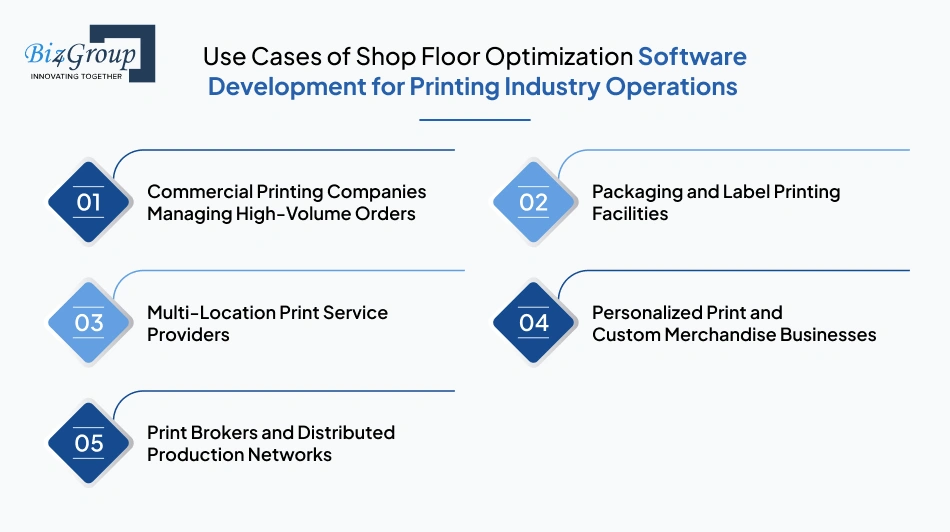
AI is no longer limited to large manufacturing plants with massive automation budgets. Commercial printing companies, packaging manufacturers, and custom print providers are actively adopting intelligent production systems to improve efficiency, reduce operational pressure, and handle growing production complexity.
The use cases below show how different businesses are applying AI print job scheduling and workflow automation software development across real production environments.
Commercial printers manage dozens of production variables throughout the day. Tight deadlines, urgent orders, multiple machines, and changing client requirements often create workflow confusion when handled manually.
AI scheduling systems help organize production queues, balance workloads, and coordinate operations more efficiently across departments. This improves turnaround consistency while reducing operational disruptions during peak production periods.
Many printing businesses now ask, “How can we handle high-volume print orders without creating production bottlenecks?” The answer often lies in intelligent scheduling automation combined with real-time production coordination.
Packaging production environments operate under strict delivery timelines. Even a small scheduling disruption can affect inventory movement, product launches, and downstream supply chains.
Traditional scheduling methods struggle to manage substrate dependencies, finishing requirements, and machine coordination efficiently in these environments.
AI-powered production systems help packaging manufacturers sequence jobs more intelligently while maintaining production continuity during high-demand periods. This allows businesses to improve throughput without overloading production teams or machines.
Managing production across multiple facilities creates another layer of operational complexity. Businesses must coordinate machine availability, regional order distribution, production capacity, and shipping timelines simultaneously.
AI scheduling platforms help distribute print jobs intelligently across locations based on real-time operational conditions. This improves resource utilization while reducing production pressure at overloaded facilities.
Customization has transformed the modern printing industry. Customers now expect personalized business cards, promotional products, event materials, branded merchandise, and marketing collateral with very short turnaround times.
Managing highly customized print requests manually often slows production because every order involves unique specifications, approvals, and design requirements.
Businesses implementing AI print production scheduling software development are increasingly using automation to simplify order coordination and improve production scalability for personalized printing operations.
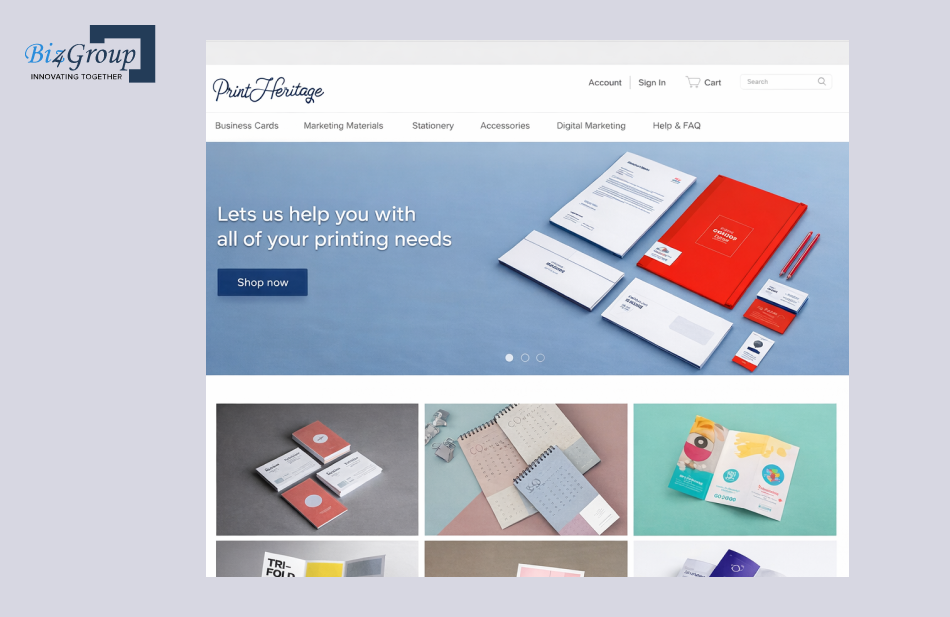
Biz4Group developed a highly customized eCommerce platform for business cards, office stationery, printed accessories, and marketing products.
The platform introduced several advanced capabilities, including:
The solution helped streamline customized order handling while creating a smoother production workflow for large-scale personalized printing operations.
Print brokers often coordinate production across multiple vendors and facilities at the same time. Without centralized visibility, production routing becomes inconsistent and difficult to manage.
AI systems help automate vendor allocation and optimize order routing based on production capacity, equipment compatibility, turnaround timelines, and operational availability.
As AI adoption continues growing, businesses are now looking beyond basic scheduling capabilities. Modern print operations increasingly require platforms equipped with predictive analytics, workflow automation, machine intelligence, and real-time production visibility.
That is exactly why advanced features have become one of the most important parts of AI print production scheduling software development.
Also read: Real-world AI use cases in the printing industry
AI-powered print workflows can reduce scheduling effort by up to 40% in high-volume production environments.
Contact Biz4Group TodayModern printing businesses no longer want software that only displays production schedules. They need systems that can analyze workflows, coordinate machines, automate decisions, and respond to production disruptions in real time.
That is driving demand for feature-rich AI print production scheduling software development solutions capable of managing both production planning and operational execution from one centralized platform.
Many businesses now ask, “We are looking to optimize our print shop workflow and need an AI-based production scheduling system for better efficiency. What features should the software actually include?”
The answer depends on production complexity, operational scale, and workflow requirements. However, the features below form the foundation of most modern AI-powered print production platforms.
|
Feature |
What It Is |
What It Does |
|---|---|---|
|
Intelligent Job Scheduling |
AI-powered scheduling engine for production planning |
Automatically prioritizes and sequences print jobs based on deadlines, machine availability, and workflow dependencies |
|
Real-Time Workflow Monitoring |
Live production tracking dashboard |
Provides instant visibility into machine activity, job progress, delays, and production queues |
|
Dynamic Rescheduling |
Automated schedule adjustment capability |
Rebuilds production schedules instantly when urgent jobs, machine failures, or workflow disruptions occur |
|
Machine Allocation System |
Intelligent production assignment module |
Assigns jobs to the most suitable machines based on print requirements and production capacity |
|
Predictive Analytics Engine |
AI-based forecasting and analysis system |
Identifies possible bottlenecks, delays, and operational inefficiencies before they affect production |
|
Workflow Automation |
Automated production coordination layer |
Reduces repetitive manual tasks between prepress, printing, finishing, and dispatch operations |
|
ERP & MIS Integration |
Enterprise system connectivity framework |
Connects production scheduling software with ERP, MIS, inventory, CRM, and shipping platforms |
|
Production Reporting Dashboard |
Analytics and reporting module |
Generates insights related to productivity, machine utilization, output performance, and operational efficiency |
|
Automated Notifications & Alerts |
Real-time communication system |
Sends alerts for production delays, approval bottlenecks, machine downtime, and workflow disruptions |
|
Multi-Location Production Control |
Centralized workflow management capability |
Coordinates production activities across multiple facilities from a single operational dashboard |
|
AI-Based Quote Estimation |
Intelligent print cost estimation system |
Speeds up pricing calculations and improves production estimation accuracy |
|
Prepress Workflow Coordination |
Connected prepress automation system |
Streamlines artwork approvals, file preparation, and print-ready workflow management |
As operational complexity continues increasing, feature-rich platforms are becoming the backbone of scalable print manufacturing environments. Now, the next step is understanding how these systems are actually designed, developed, integrated, and deployed for real-world production operations.
Also read: Top 12 AI printing software development companies in USA
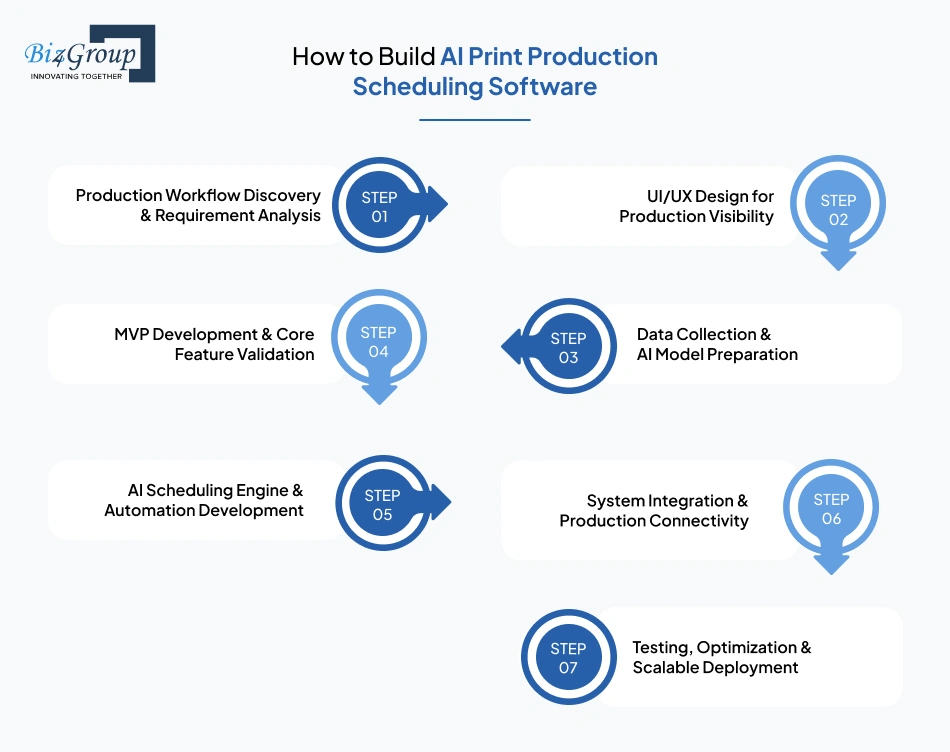
Building AI-powered print production software requires much more than adding automation to existing workflows. The platform must understand production behavior, coordinate multiple operational layers, process live shop floor data, and adapt to changing production conditions in real time.
That is why successful AI print production scheduling software development starts with careful planning, workflow analysis, and scalable system architecture.
Many businesses now ask, “I want to find a company that can develop AI software for print production scheduling and workflow optimization. What does the actual development process look like?”
The answer lies in following a structured development process that aligns technology with real production challenges.
Every print business operates differently. Some facilities focus on commercial printing. Others specialize in packaging, labels, personalized merchandise, or large-format production.
The first step involves understanding:
This stage helps define the platform architecture and operational goals before development begins.
Production software must be easy to navigate under operational pressure. Managers, operators, and production coordinators often make fast decisions during high-volume production hours. Poor interface design slows everything down.
This is where intelligent UI/UX design becomes critical.
The platform interface should simplify:
Businesses developing enterprise-grade production systems often prioritize user-centric dashboards to improve operational responsiveness and reduce training complexity.
Also read: Top 15 UI/UX design companies in USA
AI systems depend heavily on operational data.
The development team collects and structures production information such as:
This data becomes the foundation for training intelligent scheduling and optimization models. Without reliable production data, AI systems cannot generate meaningful operational insights.
Most businesses do not begin with a full-scale enterprise rollout. Instead, they first launch a focused MVP version containing the most critical features such as:
This approach helps businesses validate workflows, gather operational feedback, and test production performance before scaling the platform further.
Also read: Top 12+ MVP development companies in USA
Once the core platform is validated, developers build the intelligence layer.
This stage focuses on:
This stage plays a major role in successful print production scheduling software development with AI because the scheduling engine becomes the operational brain of the platform.
Modern print facilities rely on multiple operational systems working together.
The platform must connect smoothly with:
Strong integration capabilities help create centralized production visibility across the entire workflow ecosystem. This stage becomes especially important for enterprises investing in scalable AI print production planning system development initiatives.
Before deployment, the platform undergoes extensive testing under real production conditions.
Teams evaluate:
After optimization, the system is deployed gradually across production environments to minimize operational disruption. As production complexity grows, businesses often continue refining the platform using live operational feedback and AI learning models.
Developing an intelligent production platform requires the right combination of AI architecture, workflow intelligence, integrations, and scalable infrastructure. That is why choosing the right technology stack becomes one of the most important decisions during AI print production scheduling software development.
Also read: How to build AI print broker software?
Biz4Group can deliver a functional AI scheduling MVP in as little as 2-4 weeks using reusable AI components.
Call Us NowBuilding intelligent print production software requires much more than a standard web application stack. These platforms process large volumes of production data, coordinate workflows in real time, integrate with multiple enterprise systems, and support AI-based decision-making across the production floor.
That is why choosing the right technology stack becomes one of the most important parts of AI print production scheduling software development.
Many businesses now ask, “We are planning to automate print job scheduling and machine allocation using AI for our production floor. What technologies are required to build such a system?”
The answer depends on operational scale, workflow complexity, integration requirements, and AI capabilities. However, most modern AI-powered print management platforms rely on the following technologies.
|
System Layer |
Frameworks / Tools Commonly Used |
Purpose in the Platform |
|---|---|---|
|
Frontend Development |
React.js, Angular, Vue.js |
Builds dashboards, scheduling interfaces, workflow visibility panels, and production monitoring screens |
|
Backend Development |
Node.js, Python, .NET |
Handles scheduling logic, APIs, workflow orchestration, and system communication |
|
AI & Machine Learning |
TensorFlow, PyTorch, Scikit-learn |
Powers predictive scheduling, workflow optimization, production forecasting, and intelligent decision-making |
|
Real-Time Data Processing |
Apache Kafka, RabbitMQ |
Processes live production updates, machine data, and workflow events instantly |
|
Database Management |
PostgreSQL, MongoDB, MySQL |
Stores production records, scheduling data, machine activity, and workflow information |
|
Cloud Infrastructure |
AWS, Microsoft Azure, Google Cloud |
Supports scalability, remote access, high-volume processing, and centralized production management |
|
ERP & MIS Integrations |
REST APIs, GraphQL APIs |
Connects the scheduling platform with ERP, MIS, CRM, inventory, and shipping systems |
|
IoT & Machine Connectivity |
OPC UA, MQTT, IoT Gateways |
Enables communication between production machines and scheduling systems |
|
Analytics & Reporting |
Power BI, Tableau, Looker |
Generates production insights, operational reports, and workflow analytics |
|
Security & Access Control |
OAuth 2.0, JWT, Role-Based Authentication |
Protects production data and controls user-level system access |
Modern enterprises investing in development of AI print production scheduling and floor optimization software are increasingly prioritizing scalable cloud-native architectures because production environments continue becoming more connected and data-intensive.
The AI layer also plays a major role in system performance. Without properly trained models, even advanced scheduling platforms struggle to adapt to changing production conditions efficiently.
That is why businesses often prefer to hire AI developers experienced in workflow automation, predictive analytics, machine learning models, and enterprise-scale production systems.
And naturally, once businesses understand the technology requirements, the next question follows quickly... “How much does it actually cost to develop AI print production scheduling and floor optimization software for a commercial printing business?”
That is exactly what we’ll break down next.
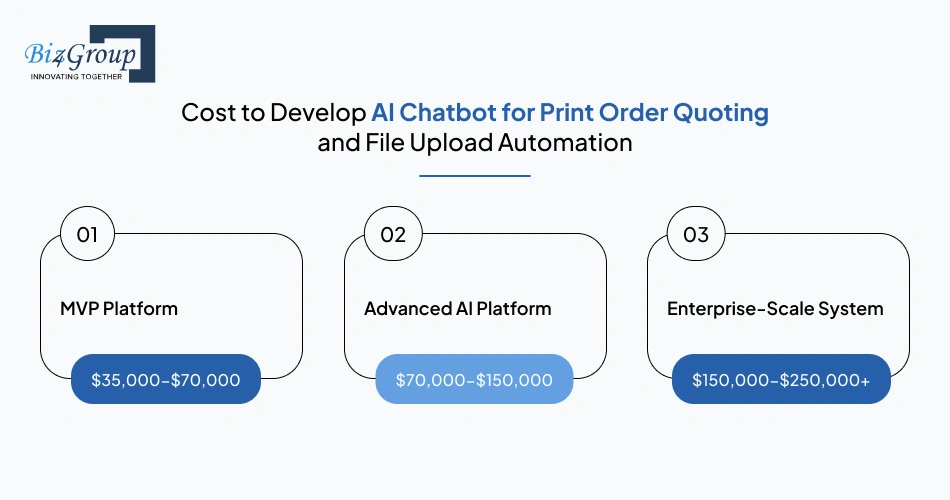
The cost of AI print production scheduling software development depends heavily on the platform’s complexity, AI capabilities, workflow depth, integrations, and production scale.
On average, businesses typically invest anywhere between $35,000-$250,000+ depending on features, infrastructure requirements, and operational goals.
The table below gives a general cost overview based on platform scale.
|
Development Level |
Estimated Cost Range |
Typical Capabilities |
|---|---|---|
|
MVP Platform |
$35,000-$70,000 |
Basic scheduling automation, dashboards, limited integrations, workflow tracking |
|
Advanced AI Platform |
$70,000-$150,000 |
Predictive scheduling, workflow automation, machine allocation, analytics, ERP/MIS integrations |
|
Enterprise-Scale System |
$150,000-$250,000+ |
Multi-location management, real-time AI optimization, IoT connectivity, advanced forecasting, large-scale production intelligence |
Many businesses researching AI print production planning system development often begin with an MVP to validate workflows before expanding into enterprise-scale deployment.
However, the final investment depends on several technical and operational factors.
Every feature added to the platform impacts development complexity, infrastructure requirements, and long-term scalability.
The table below breaks down the biggest cost drivers involved in development of AI print production scheduling and floor optimization software.
|
Cost Driver |
How It Impacts Development |
Estimated Cost Impact |
|---|---|---|
|
AI Scheduling Engine |
Requires machine learning model development and workflow optimization logic |
$15,000-$60,000 |
|
Real-Time Production Tracking |
Involves live data processing and operational monitoring infrastructure |
$8,000-$30,000 |
|
ERP & MIS Integrations |
Requires API development and enterprise system connectivity |
$5,000-$25,000 |
|
IoT & Machine Connectivity |
Enables communication between production machines and software |
$10,000-$40,000 |
|
Workflow Automation Features |
Automates approvals, production routing, and operational coordination |
$7,000-$35,000 |
|
Custom Dashboards & UI |
Includes production visibility interfaces and workflow management screens |
$5,000-$20,000 |
|
Cloud Infrastructure Setup |
Supports scalability, storage, and real-time processing |
$5,000-$25,000 |
|
Multi-Location Production Management |
Adds centralized operational intelligence across facilities |
$15,000-$50,000 |
|
Predictive Analytics & Forecasting |
Requires AI model training using historical production data |
$10,000-$45,000 |
Businesses building highly customized production ecosystems often invest more upfront to support long-term scalability and operational flexibility.
Many companies focus only on initial development expenses and underestimate long-term operational costs.
That creates budgeting problems later.
One major hidden cost involves production data preparation. AI systems require clean and structured operational data for accurate scheduling and forecasting. Depending on production complexity, this process can add another $5,000-$20,000 to the project.
System maintenance is another overlooked factor. AI-powered scheduling platforms continuously evolve based on production behavior and operational changes. Ongoing monitoring, model optimization, security updates, and infrastructure scaling can cost anywhere between $2,000-$10,000 monthly for enterprise-scale systems.
Integration complexity also increases costs faster than expected. Many print businesses operate older MIS or ERP systems that require custom middleware and API layers. These additional integration requirements can increase implementation expenses by $10,000-$40,000 depending on the production ecosystem.
Training and onboarding expenses should also be considered. Production managers, operators, reviewers, and scheduling teams need proper system training to maximize platform efficiency. Large organizations often invest another $3,000-$15,000 in onboarding and workflow transition programs.
This is why businesses comparing vendors often ask, “We are comparing companies that can build AI print production scheduling and floor optimization software. What hidden costs should we prepare for beyond development?”
The honest answer is simple. The more connected and intelligent the platform becomes, the more important long-term scalability planning becomes as well.
Reducing development costs does not mean compromising platform quality. The smarter approach is prioritizing operational impact first and expanding strategically over time.
Businesses often reduce unnecessary spending by:
Companies that approach AI print job scheduling and workflow automation software development strategically often achieve faster ROI while keeping implementation risks under control.
And as AI adoption continues growing across manufacturing, the technology powering print production optimization is evolving rapidly as well. That brings us to the next important question.
What does the future of AI-powered print production and shop floor optimization actually look like?
Also read: How much does it cost to integrate AI in printing business?
Reduced downtime and improved machine utilization can save print businesses thousands every month.
Let's Talk Numbers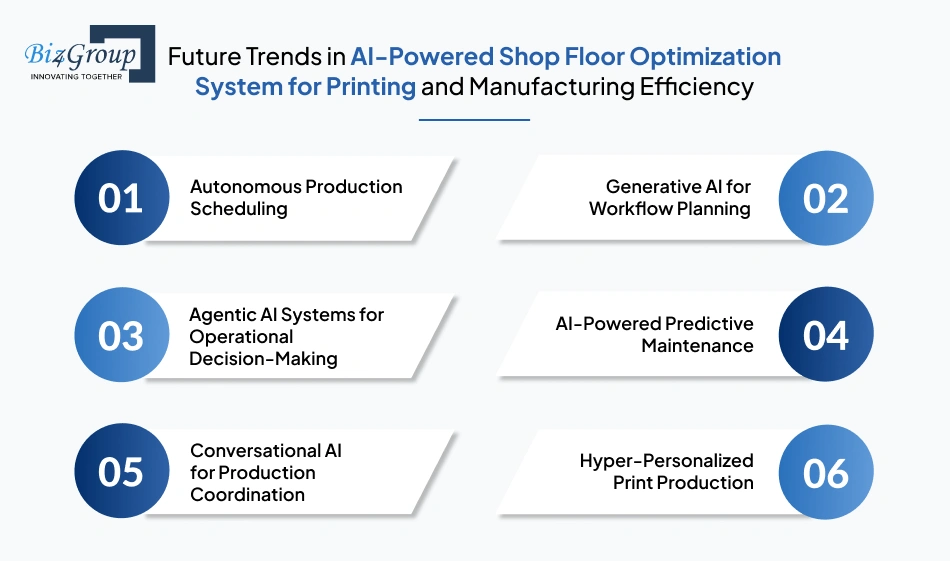
The printing industry is entering a completely different phase of operational intelligence.
AI is no longer being used only for scheduling and automation. Modern print businesses are now exploring systems capable of predicting production behavior, adapting workflows automatically, and making operational decisions with minimal human intervention.
This shift is reshaping how commercial printing and packaging facilities operate.
Many businesses now ask, “How will AI print production scheduling software development evolve over the next few years?” The answer lies in smarter, faster, and more autonomous production ecosystems.
Future scheduling systems will require far less manual oversight.
Instead of waiting for managers to approve workflow changes, AI systems will automatically:
This will make production environments far more responsive during high-volume periods.
Generative AI is starting to influence production planning in surprising ways.
Instead of manually creating production workflows, future systems will generate optimized scheduling recommendations automatically based on:
This can help production managers simulate multiple scheduling scenarios before finalizing workflows.
One of the fastest-growing trends in manufacturing is the rise of agentic AI systems. These systems can independently perform operational tasks without waiting for constant human input.
In print production environments, agentic AI may soon:
Machine downtime remains one of the biggest operational challenges in print manufacturing. Future AI systems will increasingly predict equipment issues before failures happen.
By analyzing:
AI platforms will identify maintenance risks early and help businesses reduce unplanned downtime significantly. This will become a major part of development of AI print production scheduling and floor optimization software in large-scale production environments.
Production communication is also evolving rapidly. Instead of manually checking dashboards or spreadsheets, teams will increasingly interact with scheduling systems through conversational interfaces.
Advanced systems powered by AI chatbot development technologies will provide instant operational insights directly through conversational interfaces.
This will improve production visibility while reducing dependency on manual reporting.
Customer demand for personalized print products continues growing across:
Future AI systems will help businesses manage highly customized production workflows more efficiently without slowing down operations.
The future of print production clearly belongs to businesses that can combine automation, operational intelligence, and adaptive workflows into one scalable ecosystem. But technology alone does not guarantee success.
The bigger question many businesses now ask is, “Which is the best development company to build AI print production management software for my business?”
AI software for print production cannot be built with assumptions. Every production floor operates differently. Every printing business has its own scheduling structure, approval process, machine dependencies, production targets, and workflow challenges. That complexity is exactly where Biz4Group LLC brings value.
Biz4Group is a USA-based AI development company specializing in enterprise software, workflow automation, and large-scale digital platforms. Over 20 years, we have worked with businesses looking to modernize operations, improve production visibility, automate workflows, and solve real operational challenges through intelligent software systems.
Our team understands that print production environments move fast. One delayed approval, one overloaded machine, or one disconnected workflow can affect delivery timelines across the entire floor. That is why our approach focuses heavily on operational logic, production coordination, system scalability, and usability instead of building generic scheduling dashboards with limited flexibility.
We build intelligent systems that help printing businesses organize production workflows more efficiently, automate repetitive coordination tasks, improve scheduling accuracy, and create connected operational ecosystems capable of supporting long-term growth. Our expertise in developing scalable AI printing software solutions allows businesses to modernize production operations without disrupting existing workflows completely.
Businesses choose Biz4Group because we focus on building software that solves operational problems instead of creating unnecessary technical complexity.
Our development approach focuses on:
The printing industry is becoming more competitive, more connected, and far more demanding than before. Businesses that continue relying heavily on manual coordination and disconnected systems will eventually struggle with production scalability, operational visibility, and workflow efficiency.
Choosing the right technology partner becomes extremely important at that stage. Businesses need a company that understands both enterprise software and real production operations at the same time.
Biz4Group excels at that.
Let’s build something amazing together. Let’s talk.
Print production environments have changed dramatically over the last few years. Faster turnaround expectations, increasing customization demands, complex workflows, and tighter delivery timelines have made manual coordination far more difficult than before. Businesses still relying heavily on traditional scheduling methods often struggle with production delays, machine inefficiencies, workflow bottlenecks, and rising operational pressure.
This is exactly why AI print production scheduling software development is becoming a priority for commercial printers, packaging manufacturers, and large-scale print service providers. Intelligent scheduling systems help businesses improve production visibility, optimize machine utilization, automate workflow coordination, and respond to operational disruptions much faster. As demand for connected manufacturing environments continues growing, investment in print production scheduling software development with AI will only accelerate further.
Many businesses now ask, “We are running a printing business and want to reduce production delays by implementing AI print scheduling and floor optimization software. Who can help us build the right solution?” That is where Biz4Group LLC brings both technical expertise and operational understanding together.
As a US-based software development company, we specialize in building scalable AI-powered systems designed around real business workflows, production environments, and enterprise-level operational requirements.
Ready to build an AI-powered print production optimization platform that eliminates delays and improves workflow efficiency? Partner with Biz4Group and transform your print operations into a smarter, more scalable, and future-ready production ecosystem.
Yes. Most modern AI scheduling platforms are designed to integrate with existing production environments. They can connect with printing machines, ERP systems, MIS platforms, inventory tools, and workflow software through APIs and IoT connectivity layers. Businesses usually do not need to replace their entire infrastructure to implement AI-powered scheduling systems.
Yes. One of the biggest advantages of AI print production planning system development is the ability to adapt quickly to production changes. AI systems can automatically reorganize schedules, reassign machines, and rebalance workloads when urgent orders enter the production queue without disrupting the entire workflow.
Enterprise-grade AI platforms are built with strong security protocols, including role-based access control, encrypted data storage, authentication systems, and secure cloud infrastructure. Security becomes especially important for businesses handling confidential customer artwork, packaging designs, and production files.
Yes. Intelligent scheduling systems improve production planning accuracy and optimize job sequencing. This helps reduce setup errors, substrate waste, color inconsistencies, and unnecessary machine adjustments. Over time, businesses often see noticeable improvements in operational efficiency and material utilization.
Development timelines depend on platform complexity, features, integrations, and operational requirements. Most platforms take several months to move from planning to deployment. Biz4Group, however, can deliver a functional MVP in as little as 2-4 weeks by using reusable development components that help reduce both development time and overall project costs.
Yes. Modern AI print job scheduling and workflow automation software development platforms can centralize production visibility across multiple facilities. Businesses can monitor machine utilization, production queues, workflow performance, and order coordination from one connected system.

with Biz4Group today!
Our website require some cookies to function properly. Read our privacy policy to know more.