Location :
Orlando, FL, USA
Location :
Orlando, FL, USA +1 (407) 714-1616
 info@biz4group.com


















Imagine a digital system that doesn’t wait for instructions but instead, understands your business goals, learns from real-time feedback, and takes independent actions to get the job done.
Read More

You are driving home late when your car suddenly breaks down on a quiet road. No nearby help, limited signal, and a growing sense of stress. In moments like these, speed and clarity matter more than anything. That is where roadside AI assistance app development comes into the picture – and so do a wide range of questions such as:
Here’s a quick look at what the market says about the vertical:
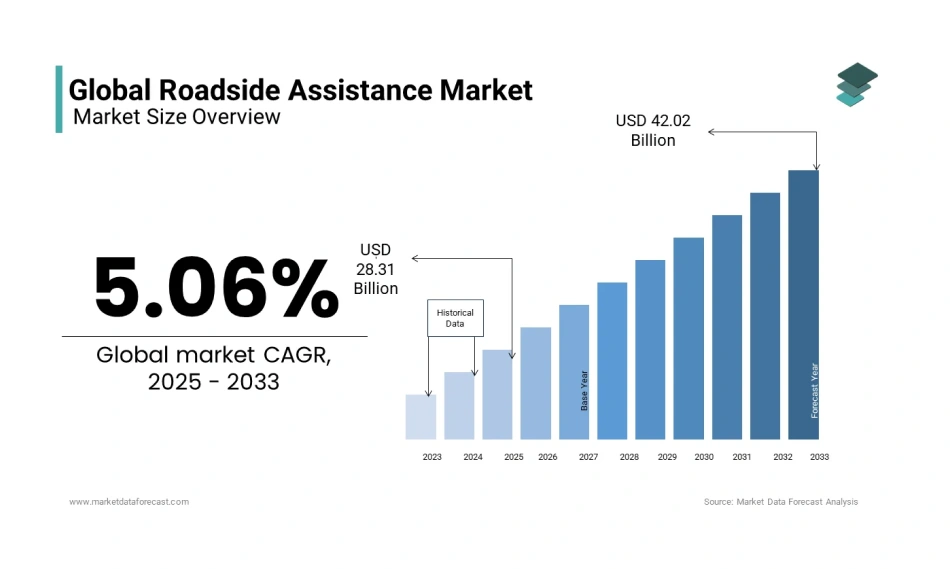
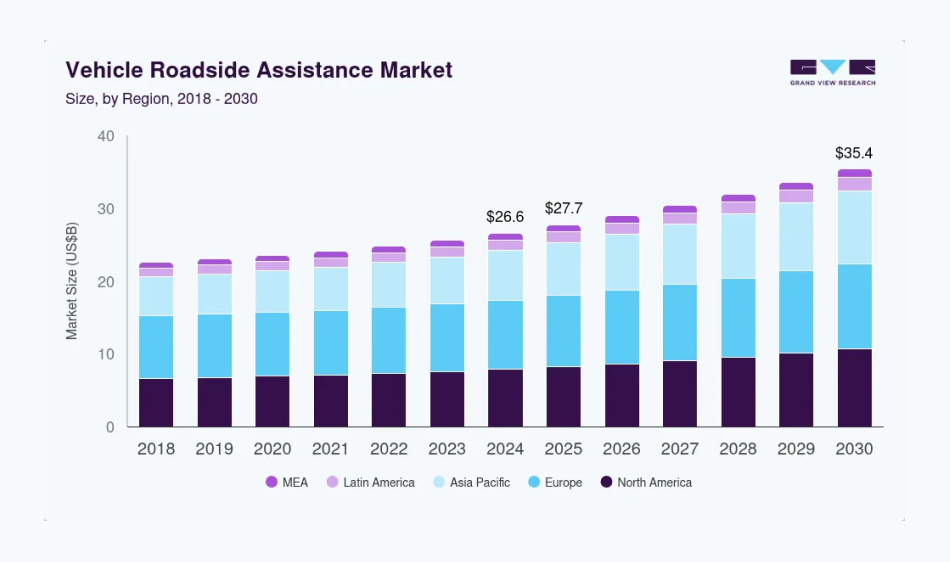
Behind these numbers is a very human expectation. When drivers reach for a roadside app, they want answers, not menus. Confusion or delays break trust instantly. That pressure is why many teams turn to roadside AI assistance app development services, supported by careful decision making and guidance from AI consulting services.
What makes the next generation of roadside apps different is how proactive they feel. Instead of waiting for help to arrive, intelligence steps in early. With AI automotive repair and diagnostics app development, product teams can develop roadside AI assistance application experiences that explain what is happening, suggest next steps, and help drivers feel supported from the first tap.
This guide breaks down how these systems are designed, built, and scaled in real world conditions. It walks you through the thinking, tradeoffs, and decisions behind roadside AI assistance apps that actually work when drivers need them most.
Roadside AI assistance apps use intelligence to make roadside support faster and easier to manage. For founders and tech leaders, this means less manual work and quicker help for drivers when issues happen on the road.
At its core, roadside AI assistance app development helps businesses simplify roadside operations while delivering timely, reliable support at scale.
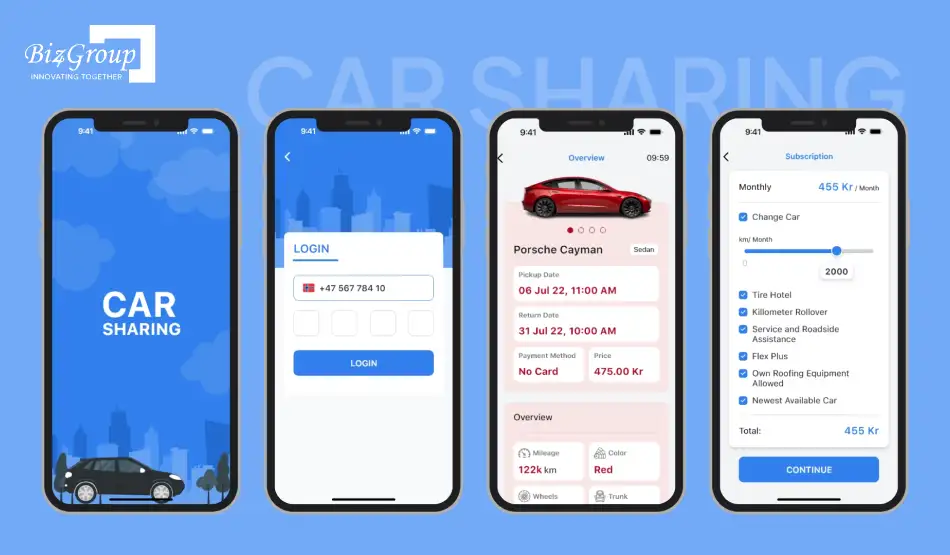
On-demand vehicle sharing and fleet booking platform, built by Biz4Group, manages vehicle availability, reservations, and usage at scale. This platform highlights our experience with fleet level intelligence. These same principles apply to roadside assistance platforms that support fleets and mobility providers needing real time visibility and rapid issue resolution.
Roadside AI assistance apps are designed to respond the moment a driver asks for help. For founders and tech leaders, the real value comes from how each step flows naturally once a request enters the system.
The app gathers the driver’s location, vehicle details, and problem type as soon as help is requested. This information helps teams create AI roadside support software that reacts quickly without manual input.
AI reviews the request, checks availability, and selects the right service provider automatically. Many teams integrate AI into an app to keep dispatch decisions fast and consistent as demand grows.
Drivers receive clear updates, ETAs, and guidance while help is on the way. With AI chatbot integration, communication stays simple and continuous for both users and operations teams.
Quick Workflow Summary
| Step | What Happens | Business Impact |
|---|---|---|
|
Request |
Driver submits issue and location |
Faster issue visibility |
|
Analysis |
AI reviews and prioritizes requests |
Better dispatch accuracy |
|
Action |
Service provider is assigned |
Quicker response times |
|
Support |
Updates shared in real time |
Improved driver trust |
This smooth workflow makes it easier to build AI powered roadside assistance app platforms that feel reliable from the first tap, naturally leading into why investing in these systems makes business sense.
Turn real time roadside challenges into intelligent workflows with roadside AI assistance app development built for scale and reliability.
Start My Roadside AI AppRoadside AI assistance app development helps businesses move faster when drivers need support. For decision makers, the real question is simple: can your roadside operations keep up with demand without driving up costs or complexity?
AI handles request sorting, provider matching, and basic communication automatically. This reduces manual work across operations teams. Many companies rely on enterprise AI solutions to scale roadside support without constantly expanding staff.
Drivers want quick answers and clear updates during stressful situations. AI keeps communication timely and predictable at every step. With AI integration services, businesses deliver consistent support without building complex workflows.
Automated systems generate reliable data on response times, service gaps, and demand patterns. This insight supports smarter planning and controlled growth. That is where on demand roadside assistance app development with AI creates lasting business value.
As more organizations look to build AI roadside service platform strategies, seeing how these apps are used across real roadside scenarios helps clarify where the investment pays off next.
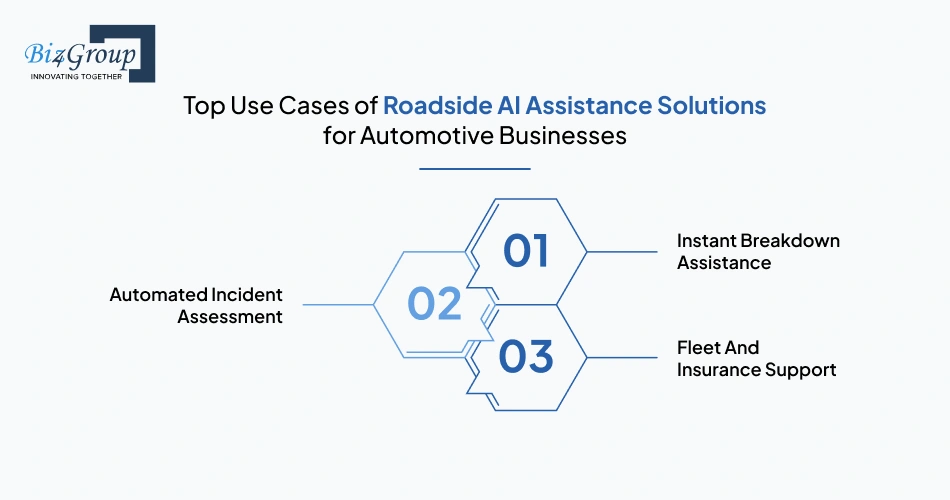
Roadside AI assistance app development supports real situations where drivers need fast and clear help. For automotive businesses, these use cases show how AI fits into daily roadside operations, setting the stage for how the solution works in practice.
AI reviews the driver’s request and location, then routes help without manual steps. This keeps response times short and service flow predictable. Many teams choose custom roadside AI assistance app development to match this process with their service network.
AI looks at driver inputs, basic diagnostics, or images to suggest the right next action. This helps teams develop intelligent roadside assistance system workflows that avoid unnecessary dispatches. Thoughtful AI assistant app design keeps the experience simple during stressful moments.
AI helps fleets and insurers manage multiple roadside requests at once with less effort. This improves visibility and planning across operations. Some platforms connect with AI vehicle damage detection software development to speed up follow up actions.
Quick Use Case Summary
| Use Case | Who Benefits | Business Outcome |
|---|---|---|
|
Breakdown Support |
Drivers and service teams |
Faster response times |
|
Incident Assessment |
Dispatch and operations |
Reduced service waste |
|
Fleet Support |
Fleets and insurers |
Better oversight |
These examples show how businesses can create AI driven roadside support solutions using scalable approaches from a reliable AI app development company, naturally leading into the features required to support these use cases effectively.
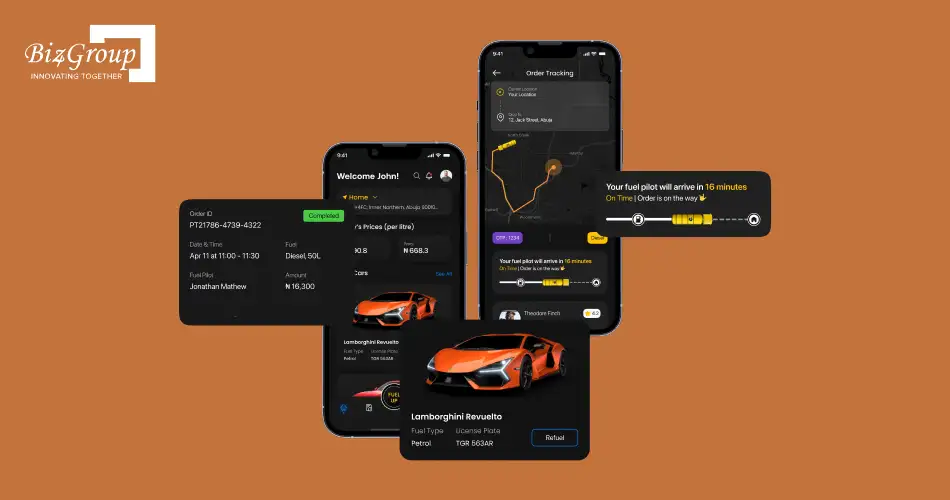
Biz4Group developed an on-demand fuel delivery and logistics app, which enables vehicles and generators to receive fuel on demand through intelligent routing, scheduling, and real time coordination. It closely mirrors roadside assistance workflows where speed, location accuracy, and service dispatch matter, making it a strong reference point for AI driven roadside response systems.
Roadside AI assistance app development depends on getting the basics right before anything intelligent is added. These core features support the full roadside request flow and make sure the platform works reliably from the first real user onward:
| Core Feature | Why It Is Foundational |
|---|---|
|
User Registration And Login |
Identifies drivers and links them to vehicles and service history |
|
Vehicle Profile Management |
Stores basic vehicle details needed during roadside requests |
|
Real Time Location Tracking |
Pinpoints stranded vehicles accurately for service routing |
|
Service Request Submission |
Allows drivers to report issues quickly and clearly |
|
Basic Service Provider Assignment |
Connects requests to available roadside providers |
|
Live Request Status Updates |
Keeps drivers informed throughout the service process |
|
In App Communication |
Enables direct messaging between drivers and support teams |
|
Payment And Billing Setup |
Supports transparent service charges and settlements |
|
Admin Operations Dashboard |
Gives teams visibility into requests, providers, and outcomes |
These features form the foundation of reliable AI roadside assistance software development, and most teams rely on guidance from a capable AI development company before moving toward more advanced capabilities.
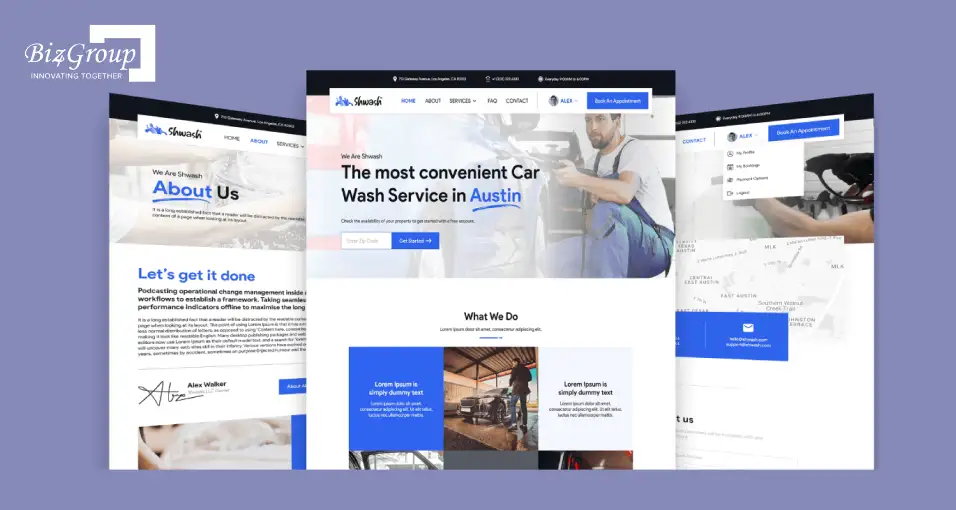
Biz4Group’s solution for car wash scheduling and service marketplace streamlines service booking, provider allocation, and status tracking through a centralized platform. While focused on car care, the underlying logic of on demand service fulfillment aligns well with roadside assistance apps that rely on timely coordination between drivers and service providers.
As platforms grow, roadside AI assistance app development moves past basic workflows into smarter automation. These advanced features help teams respond faster, reduce guesswork, and support larger service volumes, which is where real operational gains start to show.
AI studies past roadside data and current inputs to flag likely problems early. This supports proactive help instead of waiting for breakdowns. Accurate results depend on steady AI model development over time.
AI evaluates distance, availability, traffic, and urgency before assigning a job. This makes it easier to make AI roadside assistance app for real time help during peak hours. Dispatch stays reliable even under pressure.
AI handles routine questions, updates, and basic guidance through chat. Drivers stay informed without calling support. A focused AI conversation app keeps interactions clear and stress free.
AI reviews response times, service gaps, and provider performance continuously. Leaders gain visibility without manual reporting. This fits naturally into business app development using AI initiatives.
Advanced logic supports fleets, insurers, and service partners in one system. This helps teams create AI roadside service app for automotive companies without rebuilding core workflows. Expansion becomes easier to manage.
These advanced capabilities make it practical to build on demand roadside assistance app with AI at scale, setting the stage for understanding how to approach development step by step with confidence.
Design systems that help you build AI powered roadside assistance app platforms without manual dispatch chaos.
Explore AI Roadside App Planning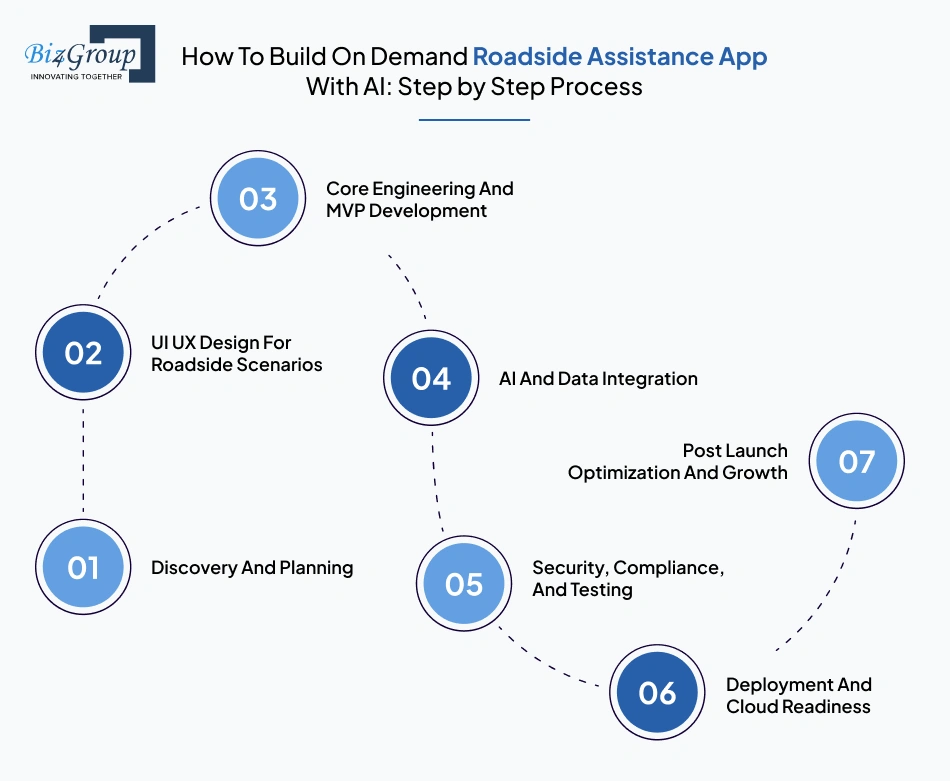
Roadside AI assistance app development succeeds when it follows a clear sequence grounded in real roadside operations. For founders and tech leaders, this approach keeps scope realistic, budgets controlled, and outcomes aligned with how roadside services actually work.
This phase focuses on identifying where roadside operations slow down or break under pressure. Teams define what problems matter most so early development effort is spent on solving real service gaps.
UI/UX design decisions must reflect how drivers behave during stressful roadside moments. The goal is to make requesting help feel obvious and calm, even when users are frustrated or distracted.
Also read: Top UI/UX design companies in USA
At this stage, teams focus on building only what is necessary to validate the product. This approach supports custom roadside AI assistance app development services by keeping early investment lean and feedback driven.
Also read: Top 12+ MVP Development Companies to Launch Your Startup in 2026
Once the platform is stable, intelligence is introduced gradually. This step focuses on using real roadside data to improve decisions without disrupting existing workflows, which is often a key evaluation point when choosing the best company to develop roadside AI assistance app.
Roadside platforms handle sensitive location and personal data, making trust critical. This step ensures the system is safe, compliant, and reliable under real world conditions.
Also Read: Software Testing Companies in USA
Roadside demand can spike without warning due to weather or travel patterns. Cloud readiness ensures the platform stays responsive and available during these moments.
After launch, teams focus on refinement and expansion. Usage data and feedback guide improvements while keeping spending predictable through regular review of roadside AI assistance app development cost estimate.
Following this structured approach helps teams move forward with confidence using dependable roadside AI assistance app development services, while ensuring the platform can scale without unnecessary risk.
An AI roadside assistance app depends on fast data exchange, real time decisions, and reliable integrations. The tech stack must support AI driven logic, third party services, and scale without slowing down roadside response workflows.
Here’s all you need to know:
| Label | Preferred Technologies | Why It Matters |
|---|---|---|
|
Frontend Framework |
ReactJS, Flutter |
Drivers and operators need fast, simple interfaces, and ReactJS development enables responsive UI while Flutter supports cross platform consistency |
|
Server Side Rendering And SEO |
NextJS, NuxtJS |
Business focused dashboards and portals benefit from faster rendering, where NextJS development improves performance and structured delivery |
|
Backend Framework |
NodeJS, Python |
Real time coordination runs on NodeJS development, while Python development supports AI driven logic and data handling |
|
API Development And Integration |
REST, GraphQL |
APIs connect apps, providers, maps, and payments, making this layer essential for scalable roadside coordination |
|
AI And Data Processing |
TensorFlow, PyTorch |
These frameworks power model inference and learning for smarter roadside decisions |
|
Real Time Communication |
WebSockets, Firebase |
Live tracking and status updates depend on persistent real time connections |
|
Location And Mapping |
Google Maps API, Mapbox |
Accurate location data ensures help reaches the correct vehicle quickly |
|
Cloud Infrastructure |
AWS, Azure |
Cloud platforms support traffic spikes during weather events or peak travel |
|
Data Storage And Analytics |
PostgreSQL, MongoDB |
Structured and unstructured data storage supports operations and AI learning |
|
Security And Access Control |
OAuth, SSL, IAM |
Strong access control protects sensitive driver and location data |
|
Monitoring And Logging |
Prometheus, ELK Stack |
Visibility into system health helps teams resolve issues before they impact drivers |
This expanded stack covers the full lifecycle of intelligent roadside workflows, giving teams the technical foundation needed for reliable roadside AI assistance app development as the platform scales and integrates with more services.
Choose models that fit your business as you grow through on demand roadside assistance app development with AI.
Design My Revenue Strategy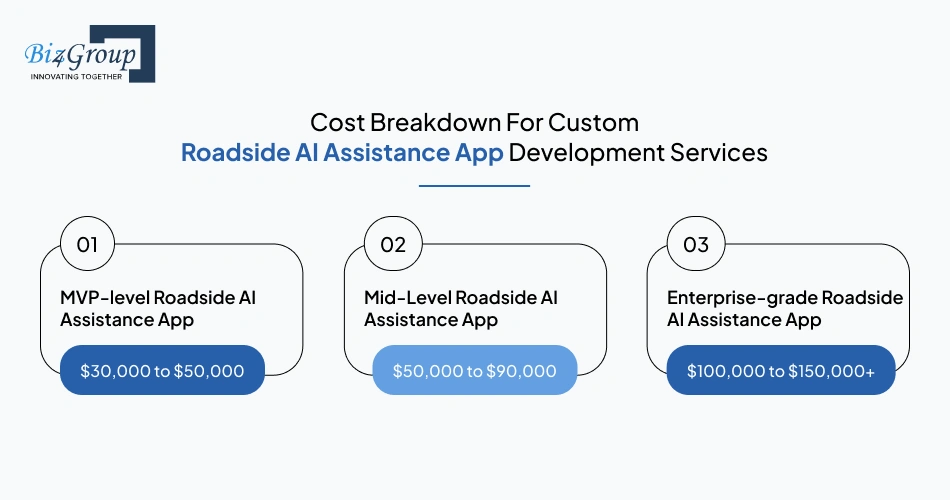
Roadside AI assistance app development typically falls between $30,000 to $150,000+, depending on scope and complexity. This is a ballpark figure, not a fixed quote, and it varies based on features, AI depth, and integration needs.
| App Scope | What’s Included | Estimated Cost Range |
|---|---|---|
|
MVP-level Roadside AI Assistance App |
Core request flow, basic dispatch, tracking, admin panel |
$30,000 to $50,000 |
|
Mid-Level Roadside AI Assistance App |
Smarter routing, real time updates, analytics, AI assisted workflows |
$50,000 to $90,000 |
|
Enterprise-grade Roadside AI Assistance App |
Advanced automation, multiple integrations, scalability, security layers |
$100,000 to $150,000+ |
Costs increase as you add more intelligence, integrations, and scale. Teams that plan early and hire AI developers wisely often avoid rework and unexpected expenses when they develop roadside AI assistance application features in phases.
Understanding cost at this level also makes it easier to explore how the platform can generate revenue and sustain itself over time, which naturally brings monetization into focus next.
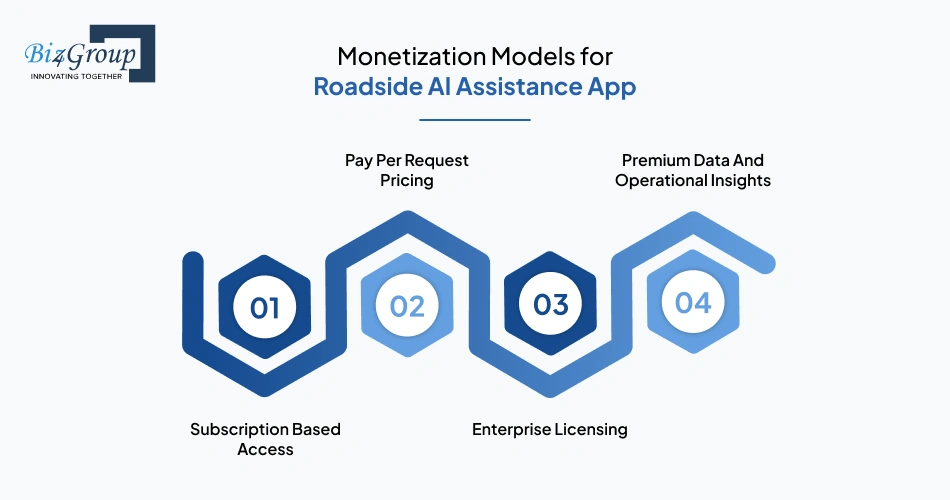
Roadside AI assistance app development allows businesses to earn revenue in flexible ways, depending on who they serve and how roadside support is delivered. These models show how teams can turn roadside operations into steady and predictable income.
Businesses pay a fixed monthly or yearly fee to use the platform. This creates stable revenue and keeps pricing easy to understand. It works well when teams build AI powered roadside assistance app platforms for fleets or service networks.
Charges apply only when a roadside request is completed. This model feels fair and low risk for many businesses with variable demand. It suits teams that create AI roadside support software for insurers or mobility providers.
Large organizations often license the platform for internal use across regions. This supports long term contracts and deeper customization. Many follow this approach when working with a custom software development company.
Roadside data can be packaged as paid insights to support planning and performance tracking. These insights grow in value over time. Some teams add this layer when they build an AI app focused on operational visibility or connect it with AI automotive CRM software.
These monetization options support long term growth with on demand roadside assistance app development with AI, naturally leading into best practices for building and scaling the platform the right way.
Move beyond ideas and learn how teams create AI roadside support software that performs under real world pressure.
See How AI Roadside Apps Are Built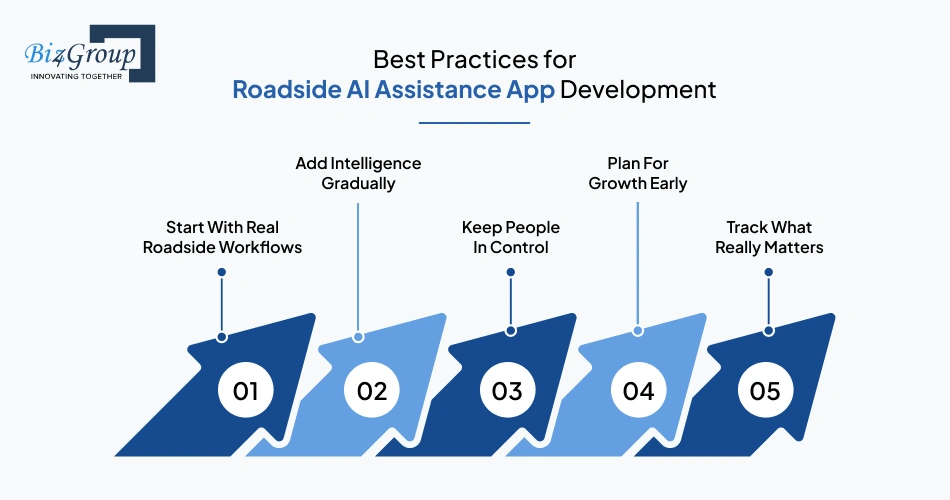
Roadside AI assistance app development works best when teams keep things simple and practical. Focusing on how roadside services actually run helps founders and tech leaders build systems that work well in real situations, not just on paper.
Roadside requests rarely follow a perfect process. Design the app around how drivers ask for help and how teams respond in real life. This approach makes custom roadside AI assistance app development more useful from day one.
AI works best when it is introduced step by step. First stabilize core features, then add smarter automation. This helps teams develop intelligent roadside assistance system capabilities without breaking existing workflows.
AI can support decisions, but humans still need visibility and control. Clear override options and dashboards build trust across operations. Some teams use generative AI only to assist, not replace, human judgment.
Roadside platforms often scale faster than expected. Planning for integrations and reporting early avoids rework later. Many teams rely on guidance from a software development company in Florida to keep systems flexible.
Focus on response times, resolution quality, and user satisfaction. These metrics show whether the app is actually helping. Over time, this data can also support AI automotive ERP software connections.
Following these practices makes it easier to build AI roadside service platform solutions that stay reliable as demand grows. Now let’s talk about the challenges that teams face during development.
Understand architecture, timelines, and investment needed to develop roadside AI assistance application platforms the right way.
Get A Roadside AI Cost View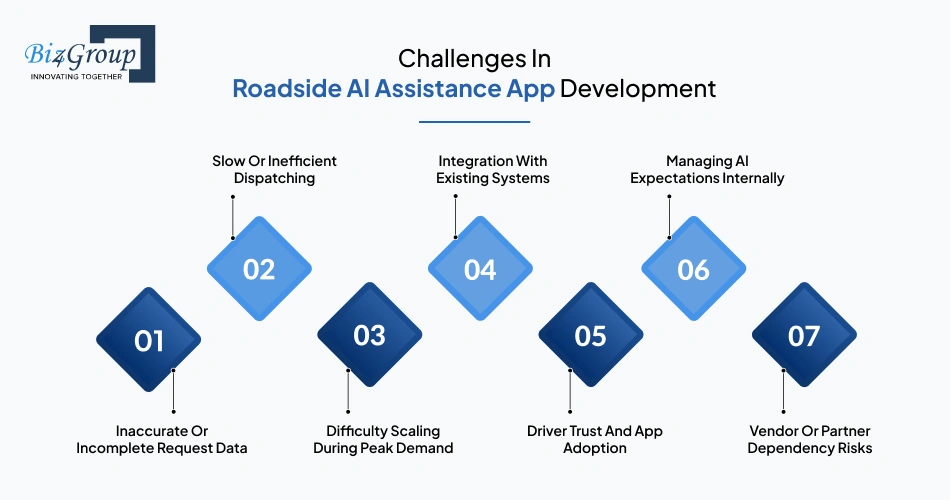
Roadside AI assistance app development comes with real world challenges that go beyond code and features. For decision makers, understanding these hurdles early makes it easier to plan smarter and avoid costly delays, which is where the key challenges below come into play:
| Top Challenges | How To Solve Them |
|---|---|
|
Inaccurate Or Incomplete Request Data |
Design simple input flows and validate data at the source to reduce errors during roadside requests |
|
Slow Or Inefficient Dispatching |
Introduce rule based automation first, then refine logic gradually using real operational data |
|
Difficulty Scaling During Peak Demand |
Use cloud ready infrastructure and stress testing to handle sudden traffic spikes |
|
Integration With Existing Systems |
Plan APIs early and test integrations in phases instead of all at once |
|
Driver Trust And App Adoption |
Keep communication clear and predictable to build confidence during stressful situations |
|
Managing AI Expectations Internally |
Start with realistic goals and avoid overpromising automation outcomes |
|
Vendor Or Partner Dependency Risks |
Work with experienced teams, including insights often shared by top AI development companies in Florida |
Addressing these hurdles early helps teams create AI driven roadside support solutions that stay reliable as usage grows. Having said that, now let’s check out how future trends are shaping the next phase of roadside assistance platforms.
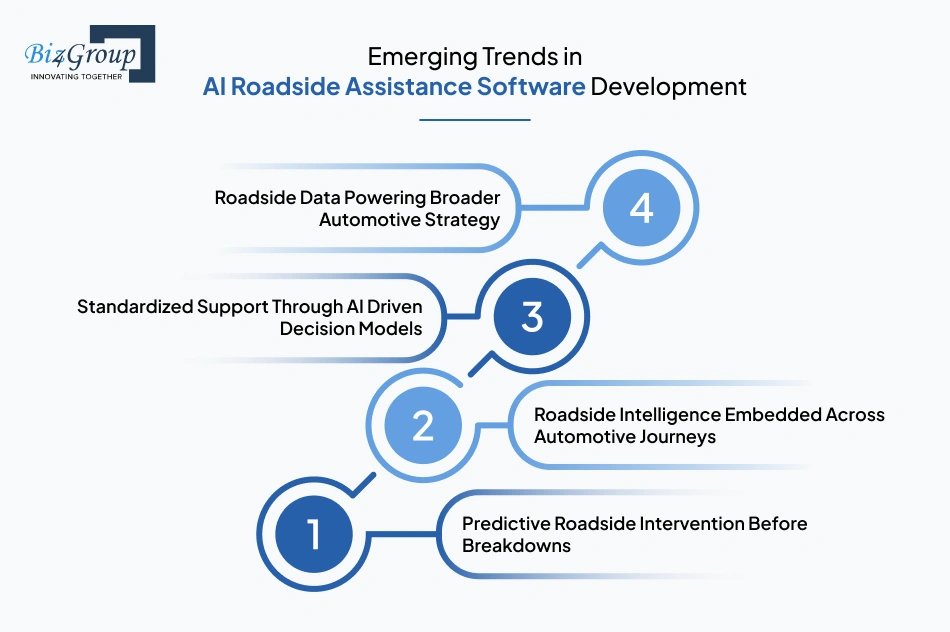
Roadside AI assistance app development is moving toward a future where roadside support becomes more predictive, embedded, and strategically valuable. For decision makers, these trends point to what roadside platforms will evolve into rather than what exists today.
Future systems will identify warning patterns long before a vehicle stops working. AI will use long term behavior data to reduce surprise breakdowns. This changes roadside support from emergency response to planned prevention.
Roadside support will fade into the background and exist across ownership touchpoints. Drivers may not even notice the handoff. This shift makes it easier to create AI roadside service app for automotive companies that feels native and always available.
AI will define what good roadside service looks like and apply it consistently. This removes regional variation and manual judgment gaps. Some of this evolution will be shaped with input from an AI chatbot development company during early design stages.
Roadside insights will influence retention, service planning, and customer engagement. Platforms will act as intelligence layers for larger systems. This direction aligns closely with efforts to develop AI automotive dealership management software.
As these shifts take shape, AI roadside assistance software development will become a long term capability that helps teams make RSA a part of broader automotive planning instead of a standalone tool.
Roadside AI platforms work best when they are built by teams that understand real on demand mobility systems. Biz4Group brings that experience through hands on work across automotive and logistics platforms that deal with live requests, location data, and service coordination.
Instead of starting from theory, Biz4Group applies learnings from platforms like fuel delivery logistics, vehicle sharing systems, and service marketplaces. These projects follow the same patterns used in roadside AI assistance app development, where speed, accuracy, and reliability are non-negotiable.
Why teams choose Biz4Group:
This grounded approach places Biz4Group among the top AI automotive software development companies in USA, making it a steady partner for businesses planning to launch or scale AI powered roadside assistance solutions.
Avoid rework and scaling issues by choosing the right approach to AI roadside assistance software development.
Talk To AI Roadside ExpertsRoadside assistance has always been about getting help to the right place, fast. AI simply removes the guesswork behind that process. With thoughtful roadside AI assistance app development, businesses can replace manual coordination with systems that stay calm, clear, and reliable when drivers need support most.
For automotive and mobility teams, this is a practical opportunity to build AI software that improves response times, keeps service costs in check, and grows without adding operational strain. Working with the right AI product development company helps turn roadside concepts into platforms that actually perform on the road.
Thinking About Roadside AI Assistance App Development? Let’s Break It Down Together
An AI based solution uses automation and intelligence to reduce manual dispatching and improve response accuracy. With AI roadside assistance software development, businesses can handle higher volumes while keeping operations predictable and easier to manage.
Automotive service providers, insurers, fleet operators, and mobility startups benefit the most. Many choose to build AI powered roadside assistance app platforms when scaling operations becomes difficult with manual workflows.
Timelines depend on scope, integrations, and AI depth. Teams that plan features carefully and phase development often move faster. Most projects that develop roadside AI assistance application workflows take several months from planning to launch.
Yes, AI based systems are well suited for multi vehicle operations. Platforms designed to create AI roadside service app for automotive companies can manage fleets, providers, and regions from a single centralized system.
The cost typically ranges between $30,000 to $150,000, depending on features and scale. This range is common when estimating a roadside AI assistance app development cost estimate for MVP to enterprise level platforms.
Scalability depends on architecture and planning. Teams that invest early in cloud readiness and automation find it easier to build on demand roadside assistance app with AI that handles traffic spikes without service disruption.

with Biz4Group today!
Our website require some cookies to function properly. Read our privacy policy to know more.