Location :
Orlando, FL, USA
Location :
Orlando, FL, USA +1 (407) 714-1616
 info@biz4group.com

- Geofencing in sports betting apps is a critical compliance safeguard that determines whether users can legally place wagers within approved jurisdictions.
- GPS vs network vs Wi-Fi triangulation for geofencing in betting apps reveals that no single technology delivers reliable results in every environment, making layered verification essential.
- GeoComply integration for sports betting apps helps operators strengthen location verification workflows, though sportsbook teams still remain responsible for platform architecture and operational oversight.
- Cost and implementation of geofencing in sportsbook platforms typically represent 5% to 18% of the overall sportsbook budget, depending on compliance complexity and geographic coverage.
- Biz4Group LLC combines sportsbook engineering, AI expertise, geolocation compliance knowledge, and real-world betting platform experience to help operators build scalable, compliance-ready sportsbook solutions.
What happens when a bettor standing a few feet from a state border places a wager, your platform accepts it, and a regulator later determines that bet should never have been allowed?
The risk is larger than most sportsbook teams realize. According to the American Gaming Association, Americans legally wagered $166.94 billion on sports in 2025, generating nearly $17 billion in revenue. As the market grows, regulators are increasing scrutiny of geofencing in sports betting apps because even small location errors can lead to unauthorized wagers, compliance violations, and licensing consequences.
Many operators say, "We are building a sports betting app and want to implement geofencing with high accuracy to comply with state regulations and avoid license violations."
Achieving sports betting geolocation compliance requires much more than GPS coordinates. Location confidence, state-border ambiguity, spoofing prevention, and how to develop geofencing in sports betting apps with high accuracy have become critical concerns for every regulated sportsbook.
This guide explores the technologies, testing methods, and compliance strategies that help operators reduce risk before a one-meter error becomes a licensing problem.
Geofencing in Sports Betting Apps Is a Regulatory Requirement, Not a Product Feature
Many sportsbook founders view geofencing as another item on the development checklist. A location SDK gets integrated, a state boundary gets configured, and the team moves on to the next milestone.
Regulators view it differently.
For them, geofencing is an enforcement mechanism. Every wager accepted by a sportsbook must originate from a legally permitted jurisdiction. If the system cannot prove that with sufficient confidence, the wager itself becomes a compliance risk.
That distinction changes everything.
A common question from operators sounds like, "I am developing a sportsbook app and want to build geofencing that meets regulatory standards and ensures license compliance."
The answer begins with understanding what regulators are actually evaluating.
What Regulators Care About Vs. What Product Teams Care About
The biggest misunderstanding in sportsbook development is assuming that location verification exists to improve user experience.
Its purpose is to satisfy regulatory obligations.
Product Perspective |
Regulatory Perspective |
|---|---|
Can we identify the user's location? |
Can we prove the user was legally allowed to place a wager? |
Does the app return coordinates quickly? |
Can the location result withstand an audit? |
Does the location appear accurate? |
Can the operator demonstrate compliance with jurisdictional rules? |
Does the feature work most of the time? |
Does the system prevent unauthorized wagers every time? |
This difference explains why many otherwise successful betting platforms encounter compliance challenges after launch. Teams focused on performance, engagement, and retention often underestimate how much scrutiny location verification receives during ongoing regulatory reviews.
Why Accuracy Alone Is Not Enough
A sportsbook can receive highly accurate coordinates and still create compliance exposure.
Why?
Because regulators evaluate confidence, consistency, and verifiability.
Consider two scenarios:
Scenario A
- User location confidence is high
- Multiple verification signals agree
- Jurisdiction validation succeeds
- Wager proceeds
Scenario B
- GPS places the user inside an approved area
- Secondary signals disagree
- Confidence level drops
- Wager should be blocked
Both users may appear to be in the same location. Only one transaction meets compliance expectations.
That is why modern sports betting geolocation compliance frameworks rely on layered verification rather than a single location source.
The Hidden Cost of Treating Geofencing Like a Feature
Many operators discover this problem late. A platform may successfully handle
- real-time odds
- live betting
- payment processing
- player engagement
yet still face regulatory concerns because location validation was treated as a standalone feature instead of a compliance system.
This challenge becomes even more visible as operators expand into multiple jurisdictions, launch a white-label sports betting platform, or begin migrating from white label to custom sports betting software development where location controls must remain consistent across environments.
Four Characteristics of Compliance-Grade Geofencing
Before we examine GPS, Wi-Fi, and network triangulation in the next section, it helps to understand what separates consumer-grade location tracking from compliance-grade verification.
A sportsbook geofencing system should be able to:
- Verify a user's location with measurable confidence.
- Detect inconsistencies between location signals.
- Prevent wagering when confidence falls below acceptable thresholds.
- Maintain evidence that supports future audits and investigations.
Those requirements have little to do with maps and everything to do with regulatory accountability.
Once that shift in thinking happens, the next question becomes much more important: Which location technologies can actually deliver the level of confidence regulators expect?
How Much Is One Location Error Worth to Your Business?
One location mistake today could become tomorrow's compliance problem.
Get a Compliance ReviewGPS vs Network vs Wi-Fi Triangulation for Geofencing in Betting Apps
Ask ten founders how a sportsbook determines a user's location and most will answer with a single word.
GPS.
The reality is far more complicated.
Modern sportsbooks rarely rely on one location source because every technology behaves differently depending on the environment. A coordinate that appears accurate in an open parking lot can become unreliable inside a stadium, apartment building, casino floor, or downtown business district.
This is why teams looking to build geofencing system for sports betting platforms typically combine multiple location signals.
Operators often say, "I want to develop a technical geolocation system for sportsbooks with accurate GPS, Wi-Fi, and network triangulation."
Before making architecture decisions, it is important to understand what each technology actually delivers.
Comparing the Three Core Geolocation Technologies
Technology |
Typical Accuracy Range |
Performs Best In |
Common Limitation |
|---|---|---|---|
GPS |
3 to 10 meters |
Outdoor environments with clear sky visibility |
Accuracy drops near buildings and indoors |
Wi-Fi Triangulation |
1 to 5 meters |
Dense urban areas with strong Wi-Fi coverage |
Dependent on available Wi-Fi access points |
Cellular / Network Triangulation |
50 to 500 meters |
Areas with limited GPS visibility |
Too broad for precise jurisdiction validation |
The numbers above vary by device, signal quality, environmental conditions, and network availability.
More importantly, no single method consistently performs best across every scenario.
GPS Remains the Foundation, Not the Entire Solution
GPS continues to serve as the primary location signal for most regulated sportsbooks. Its biggest advantage is direct positioning through satellite communication.
Benefits include:
- Wide availability across modern devices
- Strong outdoor accuracy
- Continuous location updates
- Independence from local network infrastructure
However, GPS struggles in places sportsbooks care about most.
Examples include:
- Indoor arenas
- Multi-level parking structures
- High-rise buildings
- Dense downtown corridors
These environments create signal reflections and interference that can reduce confidence in location readings. For operators evaluating whether to develop a sports betting app like Stake, understanding these limitations early prevents expensive architectural changes later.
Why Wi-Fi Triangulation Often Produces Better Precision
Many developers assume Wi-Fi exists only as a backup. In reality, Wi-Fi can outperform GPS in dense urban environments.
Instead of relying on satellites, Wi-Fi triangulation estimates location based on nearby wireless access points and signal strength patterns.
Advantages include:
- Strong indoor performance
- Better accuracy in urban areas
- Faster location acquisition
- Reduced impact from building interference
This explains why many operators integrate Wi-Fi verification into broader sportsbook app geofencing integration strategies.
When a device reports GPS coordinates near a jurisdiction boundary, Wi-Fi data can provide valuable additional confidence before a wagering decision is made.
Network Triangulation Serves a Different Purpose
Cellular triangulation receives less attention, but it still plays an important role. Rather than focusing on precision, it provides context.
A sportsbook can use network signals to answer questions such as:
- Does the user's reported location align with nearby cellular towers?
- Is the device behaving consistently?
- Are there unusual discrepancies between location sources?
While network triangulation lacks the precision required for compliance decisions, it often acts as an additional validation layer.
Think of it as corroborating evidence instead of primary evidence.
Why Modern Sportsbooks Use Layered Location Verification
The strongest geolocation systems are built on verification overlap.
Instead of asking: "Which technology is best?"
Successful operators ask: "Which technologies agree with each other?"
A simplified decision model often looks like this:
- GPS provides the primary location.
- Wi-Fi validates the surrounding environment.
- Cellular data confirms regional consistency.
- Confidence scoring determines whether wagering should proceed.
This layered approach has become increasingly important as sportsbooks expand into environments with varying network conditions, live betting activity, and real-time user movement.
It mirrors a broader trend seen across challenges in modern sports betting app development, where multiple verification layers outperform single-point dependencies.
How Biz4Group Built Infrastructure Capable of Handling Millions of Live Data Events
One of the biggest misconceptions in sportsbook development is that geolocation exists independently from platform performance.
It does not.
Every location decision depends on the same backend infrastructure responsible for processing odds updates, user activity, live events, and wagering transactions.
When Biz4Group developed a real-time sports betting platform supporting MLB, NFL, and college football markets, the engineering challenge extended far beyond displaying live scores.
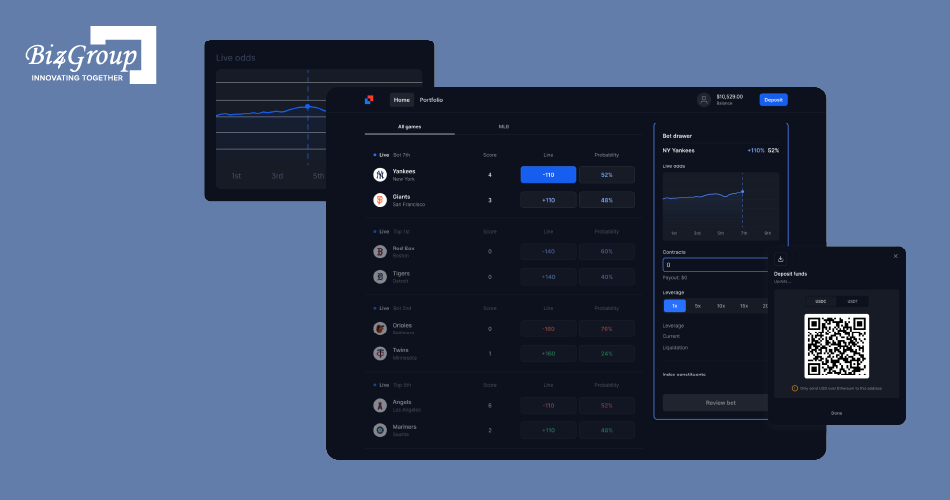
The platform had to process large volumes of real-time information while maintaining synchronization across thousands of active users.
To achieve this, our team built:
- Socket-based real-time data architecture
- Multi-service backend infrastructure
- Global state synchronization
- High-availability server clustering
- Low-latency event processing pipelines
The result was a platform capable of delivering continuous updates without compromising speed or reliability.
That same architectural thinking becomes essential when operators need geolocation accuracy in betting platforms at scale. A location verification event may only take milliseconds, but it still depends on resilient infrastructure capable of processing thousands of concurrent decisions without delays.
Building Sports Betting Geolocation Compliance Into App Architecture
Many sportsbook teams approach geolocation after the product architecture has already been defined.
That decision often creates expensive problems.
When location validation is added later, developers are forced to modify user flows, backend services, transaction pipelines, and session management systems that were never designed to support compliance requirements in the first place.
The better approach is to treat location compliance as a foundational architectural layer.
Operators often say, "I need a company that can develop a technical geofencing system for sports betting apps to pass regulator testing."
The answer starts with architecture, not technology.
What a Compliance-Aware Architecture Looks Like
A sportsbook platform typically processes thousands of actions every hour.
Users log in.
Odds refresh.
Bets are submitted.
Funds move.
Promotions trigger.
Location validation must fit into this ecosystem without slowing down the experience. A simplified architecture often follows this structure:
Layer |
Primary Responsibility |
|---|---|
User Session Layer |
Tracks active user interactions |
Location Verification Layer |
Receives and evaluates location data |
Compliance Decision Layer |
Determines wagering eligibility |
Betting Engine Layer |
Processes approved transactions |
Audit Storage Layer |
Preserves compliance evidence |
Each layer has a specific purpose. More importantly, each layer remains independent enough to evolve without affecting the entire platform.
Why Session Architecture Matters
Most operators think about location validation at login. Regulators think about it throughout the entire session.
A user who was eligible five minutes ago may no longer be eligible now.
That means the architecture must continuously evaluate whether the user's wagering permissions remain valid.
This creates three important design requirements:
- Stateless validation services
- Fast decision execution
- Minimal impact on betting performance
These requirements become even more important for operators building high-frequency products such as a micro-betting AI app, where user actions occur within seconds, not minutes.
Designing for Scale From Day One
A platform supporting 5,000 users behaves very differently from a platform supporting 500,000 users.
Location verification requests scale alongside:
- active sessions
- wagering activity
- market expansion
- concurrent events
Architectures that rely on tightly coupled services often struggle as volume grows. Architectures built around modular services scale far more effectively.
The difference becomes particularly noticeable during major sporting events where traffic spikes occur within minutes.
This principle also applies to operators evaluating to build vs. buy a sportsbook platform, since scalability limitations often remain hidden until user volume increases.
Key Architectural Decisions That Impact Compliance Outcomes
Not every architectural choice carries the same weight. The following decisions tend to have the greatest long-term impact.
Decision Area |
Long-Term Impact |
|---|---|
Service Modularity |
Easier compliance updates |
Event Processing Speed |
Faster validation decisions |
Data Routing Logic |
Better jurisdiction handling |
Session Management |
Stronger user state awareness |
System Scalability |
More predictable performance during peak traffic |
These choices rarely attract attention during early development.
Months later, they often determine whether a platform can adapt to changing compliance requirements without significant reengineering.
Why Modern Sportsbooks Separate Compliance Logic From Betting Logic
One of the smartest architectural patterns emerging across regulated betting platforms is separation of concerns. Instead of embedding compliance rules directly inside the betting engine, leading operators isolate compliance decision-making into dedicated services.
Benefits include:
- Faster regulatory updates.
- Easier testing and validation.
- Reduced deployment risk.
- Greater flexibility across multiple product lines.
This approach has become increasingly valuable for operators running specialized products such as AI parlay betting software or a multi-tenant AI sports betting platform, where different wagering experiences may share the same compliance infrastructure.
The takeaway is simple.
The strongest geolocation systems are rarely defined by the location technology itself. They are defined by the architecture surrounding it.
Once that foundation is in place, the next challenge becomes much more nuanced. How should a sportsbook respond when the user's location sits dangerously close to a state boundary where certainty becomes difficult to prove?
Building Compliance Later Costs 3X More Than Building It Now
Architect for compliance now. Avoid expensive rework later.
Talk to Our ArchitectsHandling Edge Cases Like DC-Maryland in Sports Betting Geofencing
Most geolocation systems perform well when a user is clearly inside a jurisdiction. The real challenge begins when they are not.
A bettor standing in the middle of Nevada presents little ambiguity. A bettor standing a few feet from a state border is a completely different story.
This is where many sports betting app state border compliance challenges emerge.
Operators often wonder, "We are a sportsbook team struggling with state-border accuracy issues like DC-Maryland and want to build a reliable geofencing system."
The concern is valid because border zones expose weaknesses that rarely appear elsewhere.
Why State Borders Create Unique Geolocation Problems
Most people think of state boundaries as clear lines. Technology does not.
Location systems work with probabilities, signal strengths, and confidence estimates. They do not see painted lines on the ground.
This creates situations where:
- A user physically stands in one jurisdiction.
- Nearby signals suggest another jurisdiction.
- Location confidence fluctuates.
- Multiple location sources disagree.
The closer a user moves to a border, the more likely these edge cases become.
The DC-Maryland Example
The Washington, D.C. and Maryland boundary has become one of the most frequently cited examples in regulated betting discussions.
Why?
Because users can move between jurisdictions within seconds while maintaining strong access to the same cellular towers, Wi-Fi networks, and urban infrastructure.
The result is a highly dynamic environment where location certainty becomes more difficult than many operators expect.
The challenge is not identifying where the border exists.
The challenge is determining whether the available location evidence is strong enough to support a wagering decision.
Common Border-Zone Scenarios
Scenario |
Potential Risk |
|---|---|
User walking near a border crossing |
Rapid jurisdiction changes |
User inside a high-rise near a border |
Signal interference |
User connected to cross-border Wi-Fi infrastructure |
Conflicting location indicators |
User traveling on a highway near state lines |
Frequent location transitions |
These situations often occur during normal user behavior. That is why state border accuracy challenges in sportsbook app geofencing require dedicated engineering attention rather than generic location logic.
How Successful Sportsbooks Reduce Border Ambiguity
The most effective operators avoid making aggressive assumptions near jurisdiction boundaries. Instead, they focus on certainty.
Several techniques are commonly used:
- Apply stricter confidence thresholds near borders.
- Require stronger signal agreement before allowing wagers.
- Monitor rapid location transitions more closely.
- Introduce additional verification checks in high-risk zones.
Notice that none of these strategies rely on a single location source. The goal is to reduce ambiguity before a wagering decision is made.
This principle extends beyond geolocation and mirrors broader reliability practices discussed in why most betting apps fail at real-time match accuracy, where confidence in data matters more than speed alone.
How Biz4Group Engineered High-Speed Data Synchronization for Betting Decisions
At Biz4Group, we have repeatedly encountered situations where small timing delays create major business consequences.
While developing Quick Start Bets, a real-time NHL analytics and betting platform, our team had to manage continuously changing odds, player statistics, betting activity, and live game information with minimal latency.
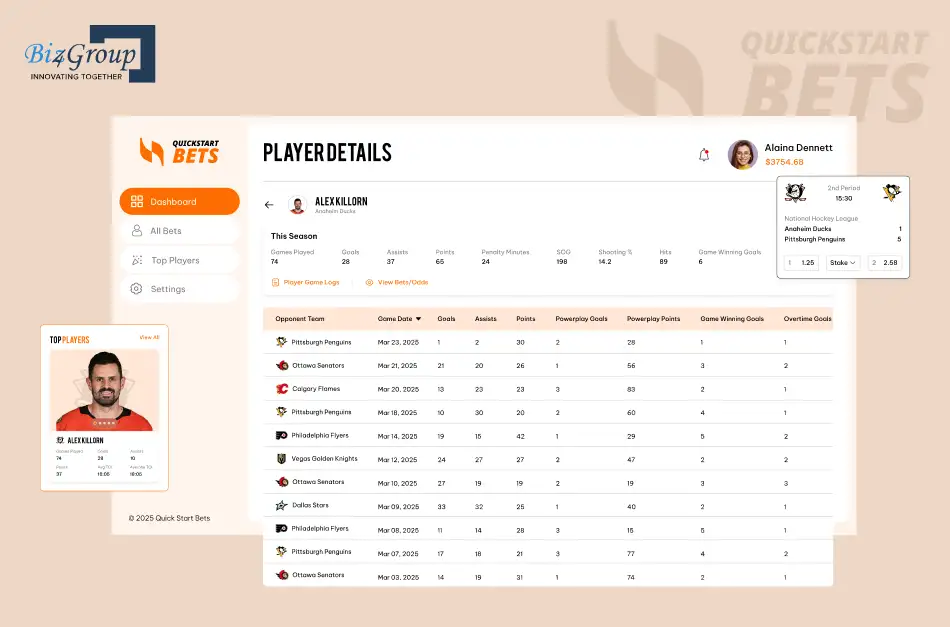
To support that experience, we engineered:
- Persistent WebSocket communication
- Real-time event synchronization
- Multi-source data normalization
- Low-latency update pipelines
- Scalable backend processing
The platform delivered fast and consistent access to constantly changing information, even during periods of heavy activity.
That same engineering discipline becomes essential when handling handling edge cases like DC-Maryland in sports betting geofencing. Border-zone decisions often depend on rapidly changing data points, where timing, consistency, and confidence all influence the final outcome.
As sportsbooks expand across jurisdictions, accuracy becomes less about locating a user and more about confidently validating where they are at a specific moment.
What CTOs Need to Know About GeoComply Integration for Sports Betting Apps
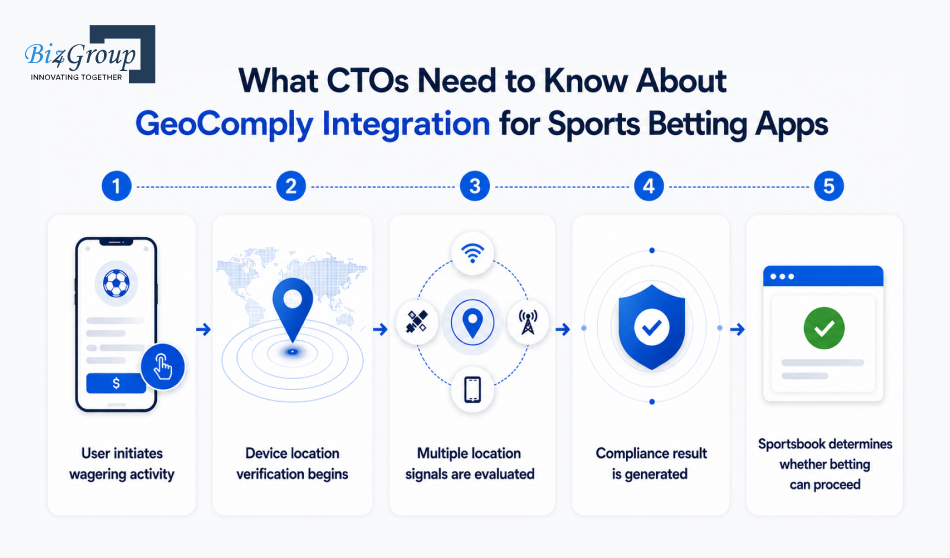
Once sportsbook operators understand the limitations of standalone location technologies, the next question becomes obvious... How do regulated sportsbooks actually validate user locations at scale?
For many operators, the answer involves GeoComply.
Sportsbook teams often request, "We are developing a sportsbook platform and need guidance on integrating GeoComply for geolocation compliance and accurate state-border detection."
The challenge is that integrating GeoComply involves much more than AI integration services, adding an SDK, and calling an API.
What GeoComply Brings to a Sportsbook Platform
GeoComply acts as a specialized geolocation compliance layer that evaluates whether a user's device meets location eligibility requirements before wagering activity proceeds. Rather than relying on a single location source, GeoComply analyzes multiple signals and returns a verification outcome that the sportsbook can act upon.
At a high level, the workflow looks like this:
Step |
GeoComply Activity |
|---|---|
1 |
User initiates wagering activity |
2 |
Device location verification begins |
3 |
Multiple location signals are evaluated |
4 |
Compliance result is generated |
5 |
Sportsbook determines whether betting can proceed |
This process helps operators standardize location verification across web and mobile environments.
Key Components CTOs Should Understand
Not every GeoComply implementation looks the same. However, most projects involve several core components.
SDK Integration
The SDK serves as the primary communication layer between the sportsbook application and GeoComply services.
Verification Requests
Location verification events are triggered whenever platform-defined actions require validation.
Response Handling
Applications must determine how to handle approval, denial, timeout, and retry scenarios.
Monitoring and Maintenance
Location services require ongoing monitoring to ensure system reliability and operational continuity.
What GeoComply Does Not Replace
One of the biggest misconceptions among operators is that GeoComply replaces internal compliance responsibilities.
It does not.
Even after a successful integration, sportsbook teams remain responsible for:
- application architecture
- user experience flows
- wagering controls
- operational monitoring
- platform scalability
This is why many operators pursuing GeoComply integration for sports betting apps evaluate partners experienced in both sportsbook engineering and compliance infrastructure.
For example, organizations building advanced betting ecosystems often combine geolocation capabilities with broader platform services such as turnkey sports betting solutions to reduce implementation complexity and accelerate launch timelines.
Questions CTOs Should Ask Before Integration
Before selecting an implementation approach, leadership teams should evaluate several practical considerations.
Question |
Why It Matters |
|---|---|
Which user actions require verification? |
Impacts system design |
How will failures be handled? |
Influences user experience |
Which platforms need support? |
Affects implementation scope |
How will results be consumed internally? |
Impacts architecture decisions |
How will future expansion be supported? |
Reduces rework later |
These questions often determine whether an integration remains manageable six months after launch.
Integration Planning Matters More Than Integration Speed
Many sportsbook teams focus on how quickly GeoComply can be deployed. A better question is whether the implementation aligns with the platform's long-term roadmap.
This becomes particularly important for operators expanding into new betting formats, launching companion products, or wanting to build AI sports betting app following USA compliance strategies where compliance services must coexist with evolving product requirements.
The strongest implementations are rarely the fastest. They are the ones designed to support growth without requiring major architectural changes later.
GeoComply Handles Verification. Who Handles Everything Else?
Integration is easy. Scaling compliant sportsbooks is harder.
Schedule a Technical ConsultationDeveloping AI-Enabled Geofencing System for Sports Betting Platforms
Traditional geolocation systems answer a simple question... Where is the user right now?
Modern sportsbooks increasingly need answers to more complex questions...
Does the user's behavior match their location?
Has their device exhibited unusual movement patterns?
Are there signals that indicate elevated compliance risk?
These questions are driving the adoption of AI geolocation compliance for sportsbooks, particularly among operators managing large user bases across multiple jurisdictions.
A growing number of sportsbook leaders now ask, "I am planning to create a sports betting app and need to implement AI geofencing to prevent errors that could void my license."
The objective is not to replace geolocation technology. The objective is to make location verification more intelligent.
Where AI Adds Value to Geofencing
AI performs best when analyzing patterns that would be difficult to detect manually. In geolocation workflows, this can include:
AI Capability |
Potential Benefit |
|---|---|
Behavioral Analysis |
Identifies unusual user movement patterns |
Pattern Recognition |
Detects recurring location anomalies |
Risk Classification |
Prioritizes high-risk sessions |
Signal Correlation |
Evaluates relationships between multiple data points |
Instead of evaluating a location event in isolation, AI helps platforms evaluate context.
That additional context often improves decision quality.
AI Can Detect What Rules Alone Might Miss
Traditional systems rely heavily on predefined rules.
For example:
- If condition A occurs, block the transaction.
- If condition B occurs, allow the transaction.
AI introduces another layer. It identifies patterns that may not fit predefined rules but still warrant attention.
Examples include:
- Unusual wagering behavior tied to location changes
- Repeated location inconsistencies across sessions
- Abnormal device movement patterns
- High-frequency location fluctuations
As sportsbooks continue to use AI for sports betting, location intelligence is becoming an increasingly important application area beyond predictions and analytics.
What an AI-Enhanced Geolocation Workflow Looks Like
A simplified model typically follows this sequence:
- Location verification occurs.
- Supporting signals are collected.
- AI evaluates contextual risk indicators.
- A confidence score is generated.
- The platform responds according to internal policies.
The result is a more informed decision-making process without disrupting the user experience.
This approach aligns with broader trends in enterprise AI solutions, where organizations use machine learning to improve operational accuracy instead of simply automate tasks.
How Biz4Group Builds AI Systems That Understand Context, Not Just Data
At Biz4Group, our AI expertise extends beyond prediction models and automation workflows.
One example is Handshake, a platform where intelligent systems were designed to evaluate user interactions, contextual information, and dynamic decision-making scenarios in real time.
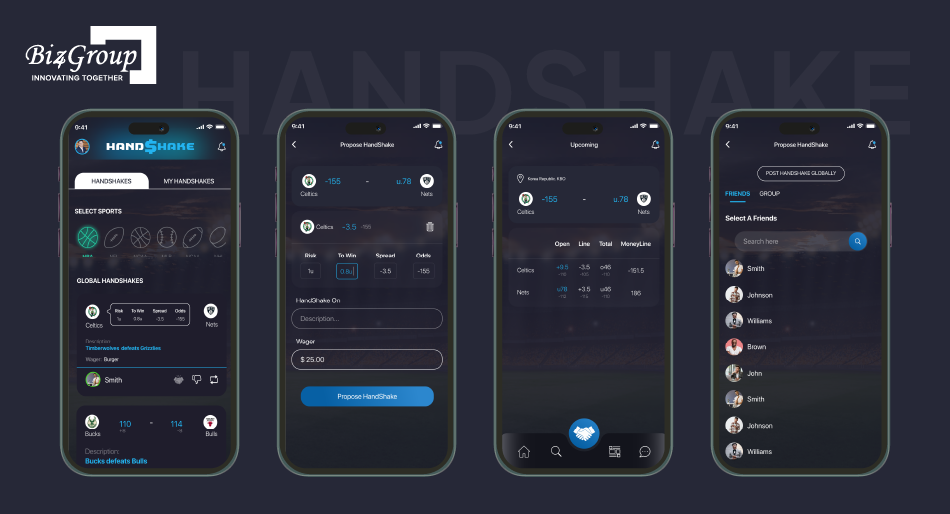
The project required:
- Large-scale behavioral analysis
- Pattern recognition workflows
- Intelligent recommendation logic
- Real-time data processing
- Context-aware decision support
Rather than treating every action independently, the platform analyzed relationships between multiple inputs before generating outcomes.
The same principle applies when developing AI-enabled geofencing system for sports betting platforms. Modern compliance environments increasingly benefit from systems that understand behavioral context, recognize anomalies, and surface risks that traditional rule-based logic may overlook.
Why AI Geolocation Is Becoming Imperative
The value of AI geolocation extends beyond compliance. It also helps sportsbooks:
- Reduce false approvals
- Improve decision confidence
- Strengthen operational efficiency
- Adapt more effectively to evolving risk patterns
That is why many operators exploring advanced sportsbook infrastructure hire AI developers with experience building compliance-focused intelligence systems.
As geolocation technology evolves, the sportsbooks that combine accurate location data with intelligent analysis will be better positioned to make informed decisions at scale.
Testing and Verifying Geofencing for Regulated Sports Betting Apps
Building a geolocation system is one milestone. Proving it works under real-world conditions is another.
Many sportsbook teams spend months designing location infrastructure, only to discover during validation that certain environments behave differently than expected.
Signals fluctuate.
Devices react differently.
User movement introduces variables that never appeared in development environments.
That is why testing and verifying geofencing for regulated sports betting apps deserves its own strategy.
Sportsbook operators are heard saying, "I am building a multi-state sportsbook platform and want to ensure geofencing passes regulatory testing and verification."
The answer starts with comprehensive field validation.
The Five Testing Environments Every Sportsbook Should Evaluate
A location system should be tested wherever real users are likely to wager. That includes more than office buildings and development devices.
Test Environment |
Purpose |
|---|---|
State Borders |
Validate jurisdiction transitions |
Urban Areas |
Assess performance around dense infrastructure |
Residential Zones |
Measure consistency in everyday conditions |
Stadiums & Arenas |
Evaluate performance in crowded environments |
Transit Corridors |
Observe behavior during movement |
Each environment reveals different characteristics that may affect location verification outcomes.
What Verification Teams Actually Look For
Testing is not about achieving perfect coordinates. The focus is understanding system behavior under varying conditions.
Verification teams typically examine:
- Consistency across devices
- Repeatability of results
- Location stability
- Response times
- Environmental sensitivity
The goal is to identify situations that require additional attention before launch.
Recommended Geofencing Validation Checklist
Before moving into production, sportsbooks should be able to answer the following questions.
- Have border locations been evaluated?
- Have multiple device types been tested?
- Have moving-user scenarios been reviewed?
- Have urban and indoor environments been assessed?
- Have edge-case behaviors been documented?
A structured checklist often uncovers issues that isolated testing efforts miss.
Why Multi-State Operators Need Broader Coverage
Operators serving a single jurisdiction can focus on a narrower testing scope. Multi-state sportsbooks face a different reality.
Different regions introduce:
- Unique network conditions
- Varying infrastructure density
- Distinct user movement patterns
- Different environmental variables
These differences are one reason many operators study evolving sports betting regulations across US states while planning expansion strategies. Location validation requirements may remain similar, but operating conditions often do not.
Verification Should Be an Ongoing Process
One of the biggest mistakes sportsbook teams make is treating validation as a pre-launch activity. Successful operators approach verification as a continuous discipline.
New devices enter the market.
Operating systems change.
User behavior evolves.
Infrastructure shifts.
Regular testing helps ensure the geolocation system continues performing as expected as those variables change over time. The strongest platforms view verification as part of long-term operational maturity.
Once a geolocation system has been tested and deployed, another important question emerges... What happens when a location-related issue still occurs despite those precautions?
Would Your Geofencing Pass a Surprise Compliance Audit Tomorrow?
Find hidden compliance gaps before regulators find them.
Call Our Compliance ExpertsLiability and Incident Logging When Sportsbook Geofencing Fails
No geolocation system is perfect. Even well-designed platforms can encounter unexpected failures caused by device behavior, network disruptions, software defects, or operational mistakes.
The difference between a manageable incident and a serious compliance problem often comes down to one thing... How quickly the operator can explain what happened.
This is why liability and incident logging when sportsbook geofencing fails has become an increasingly important topic for sportsbook operators.
Businesses often say, "We are facing geofencing failures in our sportsbook app and want to understand regulatory requirements and incident logging procedures."
The answer begins with visibility.
What Qualifies as a Geofencing Incident?
Not every location issue becomes a reportable event.
However, sportsbook teams should investigate situations such as:
- Unauthorized wager acceptance
- Unexpected location validation failures
- Repeated location inconsistencies
- Abnormal verification behavior
- System outages affecting geolocation workflows
The goal is not to assign blame immediately. The goal is to preserve evidence while facts are still available.
The Minimum Information Every Incident Record Should Capture
Strong incident records help compliance teams reconstruct events accurately. A useful incident log typically includes:
Data Point |
Purpose |
|---|---|
Event Timestamp |
Establishes sequence of events |
User Session ID |
Connects activity to a session |
Device Information |
Identifies affected devices |
Location Outcome |
Records system decision |
System Status |
Captures operational conditions |
Resolution Actions |
Documents corrective measures |
Without structured records, even minor issues can become difficult to investigate.
Understanding Liability Across the Ecosystem
One of the most misunderstood aspects of sportsbook compliance is liability ownership. Many operators assume responsibility transfers to vendors once third-party technology is integrated.
In practice, accountability is often shared across multiple stakeholders.
Party |
Typical Responsibility |
|---|---|
Sportsbook Operator |
Operational oversight |
Technology Provider |
Service performance |
Internal Engineering Team |
Platform implementation |
Compliance Team |
Investigation and response |
The exact allocation varies by platform architecture, vendor agreements, and regulatory expectations. What remains constant is the need for documented accountability.
Why Notification Workflows Matter
When incidents occur, delayed communication often creates more problems than the original failure.
Well-prepared operators establish predefined workflows that answer:
- Who receives alerts?
- Who investigates first?
- Who approves corrective actions?
- Who documents findings?
- Who closes the incident?
Clear ownership reduces confusion during high-pressure situations.
This principle applies across sportsbook operations and mirrors the reliability standards of real-time odds engine architecture, where visibility and response speed directly impact system integrity.
How Biz4Group Engineers Platforms That Maintain Operational Visibility at Scale
At Biz4Group, we understand that regulated platforms require more than performance. They require traceability.
While developing All Chalk, a sports pick'em platform supporting large user communities across multiple sports leagues, our team focused heavily on operational transparency and system accountability.
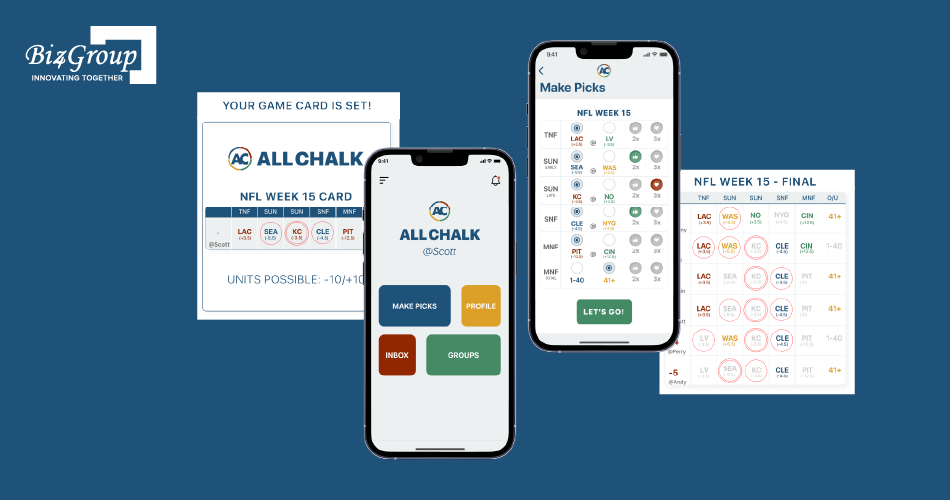
The platform incorporated:
- Secure user activity tracking
- Scalable backend infrastructure
- Real-time synchronization
- Protected transaction workflows
- Strong data security controls
These capabilities helped create a platform where critical activities could be monitored, managed, and reviewed efficiently.
The same engineering mindset becomes essential when handling geolocation incidents. When unexpected events occur, operators need access to accurate records, reliable system visibility, and structured operational controls that support investigation efforts.
Why Incident Readiness Matters More Than Incident Avoidance
Every sportsbook hopes incidents never occur. The reality is that growing platforms eventually encounter unexpected situations.
The organizations that respond most effectively are rarely those with zero issues. They are the ones prepared to identify, document, investigate, and resolve issues quickly.
That preparation often determines whether a geolocation event remains an operational inconvenience or evolves into a larger compliance concern.
As platforms mature, the next question becomes less about responding to incidents and more about understanding the investment required to build geolocation systems capable of supporting long-term compliance objectives.
Cost and Implementation of Geofencing in Sportsbook Platforms
One of the first questions sportsbook founders ask after understanding the technical and compliance requirements is: How much does geofencing actually cost?
The answer depends on platform scope, jurisdiction coverage, compliance objectives, and the level of automation required.
Most decision makers say, "We are evaluating partners for AI geolocation compliance in multi-state sportsbooks and need cost and implementation guidance."
The good news is that geofencing typically represents a relatively small percentage of the total sportsbook investment while protecting one of the platform's most critical compliance functions.
How Much of the Overall Budget Goes Toward Geofencing?
For context, most custom sportsbook platforms fall within the following ranges:
Platform Type |
Estimated Cost Range |
|---|---|
MVP Sportsbook Platform |
$20,000 - $50,000 |
Mid-Market Sportsbook |
$50,000 - $100,000 |
Enterprise Sportsbook Platform |
$100,000 - $150,000+ |
Within that budget, geolocation and compliance infrastructure typically accounts for:
Scope |
Percentage of Total Budget |
|---|---|
Basic Geofencing |
5% - 8% |
Multi-State Geofencing |
8% - 12% |
Advanced Compliance Geofencing |
12% - 18% |
For a $50,000 sportsbook project, geofencing investment often falls between $4,000 and $9,000.
For a $150,000+ enterprise sportsbook, geolocation infrastructure can range from $15,000 to $30,000+ depending on complexity.
Geofencing Cost Breakdown
Not all geofencing expenses come from development. Several cost components contribute to the final budget.
Component |
Typical Share of Geofencing Budget |
|---|---|
SDK Integration |
20% - 25% |
Compliance Architecture |
15% - 20% |
Location Services Configuration |
15% - 20% |
Quality Assurance |
15% - 20% |
Monitoring & Maintenance Setup |
10% - 15% |
AI Geolocation Enhancements |
10% - 25% |
The exact percentages vary based on platform requirements and geographic coverage.
MVP vs Enterprise Geofencing Investment
Many founders assume they need an enterprise-grade solution from day one. That is rarely necessary.
Stage |
Estimated Geofencing Cost |
|---|---|
MVP Launch |
$4,000 - $8,000 |
Regional Expansion |
$8,000 - $15,000 |
Multi-State Platform |
$15,000 - $30,000+ |
This phased approach allows operators to control costs while preparing for future growth. The strategy mirrors how many companies manage overall sports betting app development cost planning instead of overinvesting before validating market demand.
How Long Does Implementation Take?
Implementation timelines vary based on platform maturity and compliance requirements. For companies building from scratch, a dedicated geofencing implementation generally falls within the following ranges:
Project Scope |
Timeline |
|---|---|
Basic MVP Integration |
1 - 2 Weeks |
Compliance-Ready MVP |
2 - 4 Weeks |
Multi-State Rollout |
4 - 8 Weeks |
Enterprise Expansion |
8+ Weeks |
At Biz4Group, reusable sportsbook components, pre-built compliance modules, and proven implementation workflows allow teams to deliver a functional compliance-ready MVP in approximately 2 to 4 weeks in many cases.
That significantly reduces both development effort and time-to-market.
What Drives Geofencing Costs Upward?
Several factors tend to increase implementation budgets. The biggest cost drivers include:
- Multi-state operations
- Custom compliance workflows
- Advanced reporting requirements
- AI-based risk analysis
- Large-scale user volumes
- Multiple platform support
Conversely, operators focused on a single jurisdiction and a focused MVP can often launch with substantially lower investment requirements.
Build Internally or Work With a Specialized Partner?
For most operators, geofencing is not a core business capability. Building an internal compliance engineering team often costs significantly more than partnering with an experienced vendor.
Consider the comparison:
Approach |
Estimated Initial Cost |
|---|---|
Internal Team Build |
$25,000 - $75,000+ |
Specialized Implementation Partner |
$4,000 - $30,000+ |
This cost difference explains why many operators evaluating the right AI sports betting software development company prioritize experience with regulated betting environments, not comparing hourly development rates.
Also read: Top 12 AI sports betting app development companies in USA
The most expensive geofencing system is rarely the one with the highest implementation cost. It is the one that requires rebuilding after launch because compliance requirements were underestimated during planning.
Know the ROI Before You Spend a Dollar
Estimate costs, timelines, and returns before development begins.
Get a Free Cost EstimationHow Biz4Group LLC Helps USA Sportsbooks Build Compliance-Ready Geofencing Systems
Building a sportsbook is difficult. Building one that can confidently support geolocation compliance across regulated jurisdictions is significantly harder. It requires expertise that spans sportsbook architecture, location intelligence, real-time infrastructure, AI systems, compliance workflows, and large-scale platform engineering.
That is where Biz4Group LLC stands apart.
As a leading sports betting app development company, we help sportsbook operators move beyond generic development approaches and build platforms designed for real-world regulatory environments.
What Makes Biz4Group Different?
Many development teams can build sportsbook interfaces. Far fewer can engineer the systems operating behind them.
Our experience includes:
- Real-time betting platforms
- AI-powered sports applications
- Multi-user wagering ecosystems
- High-volume data processing systems
- Compliance-focused platform architecture
- Advanced sportsbook integrations
From Quick Start Bets to All Chalk and other betting-focused solutions, our teams have consistently delivered platforms that process live events, user activity, and operational data at scale.
End-to-End Geofencing Development Expertise
Sportsbook geofencing affects multiple parts of a platform simultaneously. That is why we approach it as a complete engineering challenge rather than a standalone feature.
Our services include:
Capability |
Business Value |
|---|---|
Geolocation Architecture Planning |
Stronger compliance foundation |
GeoComply & Third-Party Integrations |
Faster implementation |
Location Intelligence Workflows |
Better decision support |
Platform Scaling Strategy |
Improved long-term flexibility |
Compliance-Oriented Development |
Reduced operational risk |
This allows operators to develop geofencing for sportsbook apps while maintaining focus on growth, user acquisition, and market expansion.
AI, APIs, and Compliance Under One Roof
Modern sportsbooks depend on much more than location verification. They require seamless integration between odds providers, data services, user workflows, and compliance systems.
As an experienced AI development company, Biz4Group helps operators combine intelligent automation, geolocation workflows, and platform scalability into a unified ecosystem.
Our expertise also extends to specialized sports betting API integration services, ensuring critical sportsbook components work together efficiently without creating operational bottlenecks.
Built for Founders, Operators, and Enterprise Sportsbooks
Founders saying, "We are looking for companies that can develop sportsbook geofencing systems with regulatory compliance and GeoComply integration", here we are.
Our focus stays intact...
Build systems that scale.
Reduce compliance risk.
Accelerate time to market.
Create technology foundations capable of supporting long-term sportsbook growth.
A one-meter error can create a compliance issue. The right engineering partner can help prevent that risk before it reaches production.
If you're planning a new sportsbook launch, expanding into additional jurisdictions, or upgrading an existing platform, connect with Biz4Group to discuss a geolocation compliance strategy tailored to your business goals.
Wrapping Up
A successful sportsbook geofencing strategy is not defined by maps, coordinates, or state boundaries. It is defined by confidence. From location signal selection and GeoComply integration to border-zone management and incident preparedness, every decision plays a role in protecting your platform from avoidable compliance risks. That is why geofencing in sports betting apps has become one of the most important technical investments for regulated operators.
For teams asking, "We are looking for companies that can develop sportsbook geofencing systems with regulatory compliance and GeoComply integration," the focus should be on building systems that can adapt as jurisdictions, technologies, and user expectations evolve. The goal is not simply to launch. The goal is to launch with confidence.
As a trusted USA-based software development company, Biz4Group helps sportsbook operators design and implement scalable geolocation compliance requirements for multi-state sportsbook apps while balancing performance, accuracy, and long-term growth objectives.
So, are you planning a new sportsbook or expanding into additional markets? Let's build a geofencing strategy that keeps your platform compliant, scalable, and ready for whatever comes next.
Frequently Asked Questions
1. Can geofencing work if a sportsbook user disables location permissions?
In most cases, no. Sportsbooks operating in regulated jurisdictions typically require active location access to determine wagering eligibility. If location permissions are denied or restricted, the platform may limit access to betting functions until the required permissions are restored.
2. Do desktop sportsbook users require geolocation verification too?
Yes. Geolocation compliance applies regardless of device type. Desktop users are commonly verified through browser-based location services, Wi-Fi analysis, IP intelligence, and device-level verification tools to confirm their physical location before wagering.
3. How often should a sportsbook recheck a user's location during a session?
There is no universal frequency. Most operators configure location checks based on user activity, session duration, and risk level. High-engagement sessions typically require more frequent verification than passive browsing sessions.
4. What happens if a user crosses into another state while actively using a sportsbook?
The platform may restrict or suspend wagering activity until the user's location can be reassessed. Depending on the jurisdiction and platform rules, open betting actions may be blocked until eligibility is re-established.
5. Can geofencing affect sportsbook user experience?
Yes, especially when location verification is poorly implemented. Slow validation processes, repeated permission requests, and unnecessary location checks can frustrate users. A well-designed system balances compliance requirements with a smooth user experience.
6. Are geofencing requirements different for online casinos and sportsbooks?
While both industries rely on location verification, specific compliance expectations can vary based on jurisdiction, game type, and regulatory framework. Operators offering both products often need tailored geolocation workflows for each environment.
7. Can sportsbooks use historical location data to improve compliance operations?
Yes. Historical location trends can help operators identify recurring anomalies, optimize verification workflows, improve operational reporting, and strengthen internal compliance processes over time.
8. What should founders look for when selecting a sportsbook geofencing partner?
Beyond technical capabilities, founders should evaluate industry experience, regulatory familiarity, scalability expertise, integration capabilities, long-term support models, and the ability to adapt geolocation infrastructure as business requirements evolve.