 Location :
Orlando, FL, USA
Location :
Orlando, FL, USA +1 (407) 714-1616
 info@biz4group.com

- Build a micro-betting AI app for sports betting by combining real-time data pipelines, AI prediction engines, and dynamic odds systems for instant betting experiences.
- When you create AI powered micro betting app, AI enables real-time predictions, personalization, and automated risk management.
- The cost involved in the development of micro-betting AI app for sports betting typically ranges from $30,000-$200,000+ based on features and scalability.
- Businesses can make micro betting AI platform for sports betting profitable using monetization models like commissions, subscriptions, and affiliate revenue.
- Biz4Group LLC is a leading micro betting AI app development company offering AI micro betting app development services and AI solutions to build micro betting apps for startups and enterprises.
Micro-betting has already reshaped how users interact with live sports. Instead of waiting for final outcomes, they now engage with every moment of the game. But here’s the real question... Are you equipped to capture that level of engagement before your users move to platforms that can?
The global sports betting market is projected to reach USD 187.39 billion by 2030, according to reports. This growth is pushing businesses to build a micro-betting AI app for sports betting that keeps users actively involved throughout the match.
At the same time, user behavior has shifted toward instant gratification. Live betting now accounts for a major share of wagers in established markets, with real-time betting experiences driving higher engagement and retention. This is exactly why many businesses are choosing to develop micro betting AI app for betting platforms that can handle rapid decision-making and continuous betting cycles.
The challenge lies in delivering speed without compromising accuracy. Every second introduces new data, new probabilities, and new opportunities. Businesses that succeed in this space are the ones that create AI powered micro betting app ecosystems capable of processing live data streams, adjusting odds instantly, and personalizing experiences at scale.
So, what goes into building such a platform from the ground up? Companies are actively exploring how to make AI powered micro betting app platform for live sports betting that performs reliably while unlocking new revenue streams. This guide walks you through every critical layer.
Let's begin.
Understanding the Basics of Micro-Betting AI Application Development for Sports Betting
Micro-betting has become the engine behind how modern platforms keep users engaged during live games. If you plan to build a micro-betting AI app for sports betting, you are essentially creating a system that reacts to every second of gameplay and turns it into a betting opportunity.
Think about platforms like DraftKings, FanDuel, or BetMGM. They no longer rely only on pre-match bets. Instead, they continuously offer wagers on moments like the next play, next point, or next outcome. That is micro-betting in action.
What Exactly Is a Micro-Betting AI App?
A micro-betting AI app allows users to place bets on ultra-short events within a live match. These bets resolve in seconds.
Examples include:
- Will the next pitch be a strike?
- Will the next play result in a first down?
- Will a tennis player win the next point?
This model creates continuous engagement, higher betting frequency, and more monetization opportunities.
To make this possible, businesses need to develop intelligent micro betting AI app systems that can process live data and respond instantly.
How Micro-Betting AI Apps Work Behind the Scenes?
At a high level, the system runs on a loop of real-time data, AI predictions, and instant odds generation.
Here is a simplified flow:
|
Step |
What Happens |
Why It Matters |
|---|---|---|
|
Data Collection |
Live match data is pulled from APIs like Sportradar, Genius Sports, Sports.io |
Ensures real-time accuracy |
|
Data Processing |
Streaming systems process events instantly |
Enables sub-second updates |
|
AI Prediction |
Models predict probabilities for next events |
Powers intelligent betting |
|
Odds Generation |
Probabilities convert into dynamic odds |
Drives betting decisions |
|
User Interface |
Bets are displayed instantly to users |
Creates seamless experience |
The quality of your data layer is critical. Many businesses underestimate this and struggle with accuracy.
Also read: Why enterprise sports data APIs like Sportradar matter more than features?
Core Components of a Micro-Betting AI App
To create AI powered micro betting app platforms that scale, you need multiple layers working together.
- Real-Time Data Engine
This layer connects with sports data providers and streams live match events.
- APIs like Genius Sports and Sports.io
- WebSocket connections for live updates
- Event-driven architecture
- AI Prediction Engine
This is where intelligence comes in.
- Analyzes historical and live data
- Predicts next-event probabilities
- Updates continuously
Many modern platforms rely on advanced AI automation to keep predictions fast and adaptive.
- Odds Engine
Transforms probabilities into betting odds.
- Dynamic pricing
- Real-time updates
- Risk management
- User Experience Layer
Speed and clarity define success here.
- Real-time dashboards
- Instant bet placement
- Notifications
A well-designed interface supported by strong enterprise AI solutions ensures users stay engaged without friction.
Micro-Betting AI Apps Vs Traditional Betting Platforms
The difference becomes obvious when you compare how both systems operate.
|
Aspect |
Traditional Betting |
Micro-Betting AI Apps |
|---|---|---|
|
Betting Frequency |
Low |
Extremely high |
|
Data Usage |
Limited |
Real-time streaming |
|
Odds Updates |
Periodic |
Continuous |
|
Engagement |
Moderate |
Very high |
|
Technology |
Basic systems |
AI-driven architecture |
Traditional systems were never built for speed at this level. That is why many businesses are now exploring how to use AI for sports betting to stay relevant.
Why AI is the Backbone of Micro-Betting
Without AI, micro-betting at scale becomes nearly impossible. As a leading AI development company, we’ve seen how intelligent systems transform fast-paced betting environments by enabling:
- Real-time decision-making
- Predictive analytics
- Personalized betting suggestions
- Automated risk management
In fact, the rise of intelligent systems such as sports betting AI agent solutions is pushing platforms toward even more autonomous and adaptive betting ecosystems.
Closing Thought
A micro-betting AI app is not a simple betting platform with added features. It is a real-time decision engine powered by data, AI, and speed. Businesses that understand this early are the ones that successfully develop micro betting AI app for betting platforms that keep users engaged every second of the game.
Why Build a Micro-Betting AI App for Sports Betting Today?
Micro-betting is no longer experimental. It is actively shaping how modern sportsbooks operate and grow. If you are planning to build AI micro betting app for sports betting companies, the timing could not be more relevant.
Let’s look at what is driving this shift and why businesses are moving quickly.
The Market is Expanding at a Measurable Pace
The global sports betting industry continues to grow steadily, supported by digital adoption and live betting formats.
- The market is growing at a CAGR of 10.3 percent.
- Live and in-play betting contribute a significant share of total wagers in mature markets
What does this mean for businesses?
- More users are betting during games rather than before.
- Engagement windows are expanding from minutes to full match durations.
- Platforms that fail to support real-time betting risk losing user attention.
This is exactly why many organizations are choosing to develop micro betting AI app for betting platforms that can support continuous interaction.
Micro-Betting Increases User Activity and Revenue
User behavior has changed. Today’s bettors expect instant interaction.
Here is how micro-betting impacts business metrics:
|
Metric |
Traditional Betting |
Micro-Betting AI Apps |
|---|---|---|
|
Bets Per User |
Low |
Very High |
|
Session Duration |
Short |
Extended |
|
Engagement Rate |
Moderate |
High |
|
Revenue Per User |
Limited |
Significantly Higher |
More events mean more opportunities to bet. More bets mean higher revenue potential.
Platforms like DraftKings and FanDuel have already leaned into this model by expanding live betting features. Businesses entering this space now are focusing on how to create AI driven micro betting solution that keeps users active throughout the match.
AI Makes Real-Time Betting Scalable
Handling micro-betting manually is not realistic. The volume and speed require automation.
AI enables:
- Instant probability calculations
- Automated odds updates
- Personalized betting suggestions
- Real-time risk management
Many companies now treat their platform as a full-scale AI product rather than a basic application. Advanced systems also integrate capabilities like agentic AI development to automate decision-making and improve responsiveness.
Data Has Become the New Competitive Advantage
Micro-betting relies heavily on data accuracy and speed.
- Real-time feeds
- Historical datasets
- Event-level granularity
If your data pipeline is weak, the entire system suffers.
A closer look at why top US betting apps rely on multiple sports data providers explains how leading platforms use multiple sources to improve reliability and reduce latency issues.
Early Movers are Setting the Benchmark
The current market shows a clear pattern.
Businesses that
- adopt real-time systems early
- invest in AI-driven infrastructure
- prioritize user experience
are building stronger retention and higher lifetime value.
Some are even exploring advanced models like AI sports betting exchange software development to expand their offerings beyond traditional formats.
Micro-betting is not about adding more bets. It is about creating a system where every second becomes an opportunity. If your goal is to build AI micro betting system for iGaming platforms, the real advantage lies in acting early, building correctly, and scaling efficiently.
Are You Capturing the 70% Of Bets Happening Live?
Most wagers today happen during live games. If your platform cannot support micro-betting, you are missing the most active revenue stream in sports betting.
Build Smart with Biz4GroupTypes of Platforms in Micro Betting AI App Development for Sports Betting
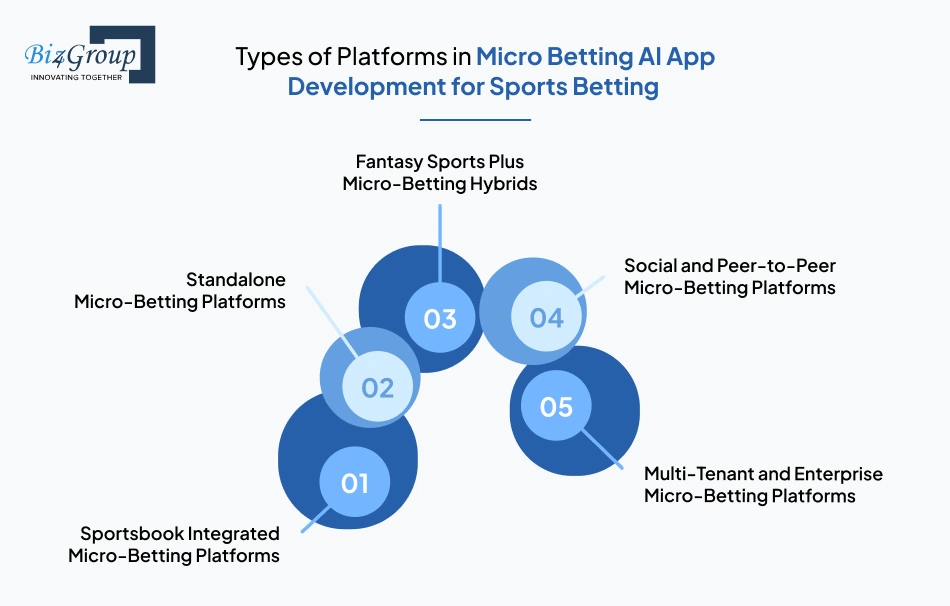
Not every micro-betting platform looks the same. The model you choose directly impacts your technology stack, monetization strategy, and user experience.
If you plan to create micro betting AI app for sports betting startups, understanding these types helps you position your product correctly from day one.
Let’s break down the most relevant platform types shaping this space.
1. Sportsbook Integrated Micro-Betting Platforms
This is the most common approach. These platforms extend traditional sportsbooks by adding real-time betting layers. Popular platforms like DraftKings and FanDuel follow this model by integrating micro-betting into existing systems.
Key characteristics
- Integrated with pre-match betting
- Dynamic odds during live games
- High-frequency betting options
Best for
- Established betting companies
2. Operators upgrading legacy platforms
Many businesses exploring this route often evaluate whether to start with a white-label sports betting platform or build a custom solution.
2. Standalone Micro-Betting Platforms
These platforms are built entirely around micro-betting. They do not rely on traditional betting structures.
Key characteristics
- Event-based betting only
- Ultra-fast UI and backend
- Focused user experience
Best for
- Startups
2. Niche sports betting products
To succeed here, you need strong infrastructure and data accuracy.
Also read: Why most betting apps fail at real-time match accuracy (and how top apps fix it)?
3. Fantasy Sports Plus Micro-Betting Hybrids
This model blends fantasy gaming with real-time betting. Users engage with both long-term performance and instant wagers.
Key characteristics
- Player performance tracking
- Real-time betting during matches
- Gamified experience
Best for
- Fantasy sports companies
2. Engagement-driven platforms
Also read: AI fantasy sports app development guide
4. Social and Peer-to-Peer Micro-Betting Platforms
This is where innovation is accelerating. Instead of betting against the house, users interact with each other.
Key characteristics
- Peer-to-peer wagers
- Social features like chat and leaderboards
- Flexible betting formats
Best for
- Community-driven platforms
2. Younger user demographics
This model often overlaps with platforms exploring concepts like building a sports betting platform like BetDEX, where decentralization and user interaction play a major role.
Our Work in Action: Ingenious Betting App for Sports Enthusiasts
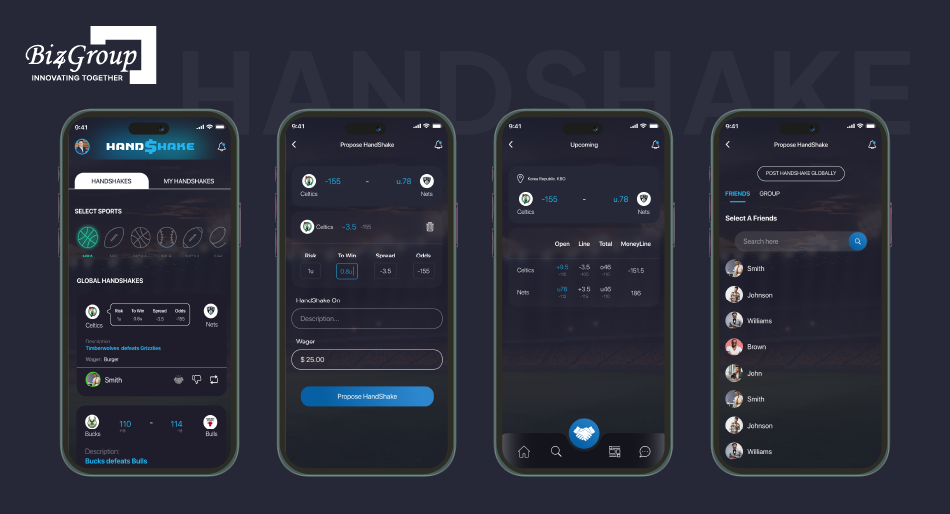
One of the most interesting implementations in this category is our social betting platform. This product was designed to make betting more interactive and less transactional.
What Made It Different
- Users could place bets with friends or groups
- Wagers were not limited to money
- Real-time chat and negotiation features were included
Core Capabilities
- Live game score integration
- AI recommended betting suggestions
- Instant notifications for bet updates
- Multi-sport support including NFL, NBA, and MLB
This approach showed how businesses can develop intelligent micro betting AI app platforms that focus on engagement as much as transactions.
5. Multi-Tenant and Enterprise Micro-Betting Platforms
These platforms are built for scale. They support multiple operators, brands, or regions within a single system.
Key characteristics
- Shared infrastructure
- Customizable modules
- High scalability
Best for
- Enterprise businesses
2. Global betting operators
Companies targeting this level often look into multi-tenant AI sports betting platform strategies to support multiple clients efficiently.
Quick Comparison of Platform Types
|
Type |
Best For |
Complexity |
Scalability |
|---|---|---|---|
|
Sportsbook Integrated |
Existing operators |
Medium |
High |
|
Standalone Apps |
Startups |
High |
Medium |
|
Fantasy Hybrid |
Gaming platforms |
Medium |
High |
|
Social Betting |
Engagement platforms |
Medium |
Medium |
|
Multi-Tenant |
Enterprises |
Very High |
Very High |
Choosing the right type is not a design decision. It is a business decision. Whether you want to make micro betting AI platform for sports betting or build a niche product, the model you choose will define your roadmap, investment, and long-term growth.
Also read: AI parlay betting software development guide
Must Have Features to Develop AI App for Real Time Sports Betting
Features define how well your platform performs under pressure. In micro-betting, every second matters. Users expect instant updates, accurate odds, and a seamless experience across devices.
If you plan to develop AI app for real time sports betting, your feature set must support speed, intelligence, and scalability from day one.
Below is a structured breakdown of the most critical features required for micro-betting AI application development for sports betting.
|
Feature |
What It Does |
Business Impact |
|---|---|---|
|
Real-Time Betting Engine |
Enables users to place bets on live events within seconds |
Increases engagement and betting frequency |
|
AI Prediction Engine |
Uses data models to predict next-event outcomes |
Improves accuracy and user trust |
|
Dynamic Odds Engine |
Updates odds instantly based on live data |
Ensures competitive and fair pricing |
|
Live Data Integration |
Connects with APIs like Sportradar, Genius Sports |
Powers real-time decision making |
|
User Dashboard |
Displays bets, stats, history, and performance |
Enhances user retention |
|
Push Notifications |
Alerts users about betting opportunities and results |
Drives re-engagement |
|
Multi-Sport Support |
Covers leagues like NFL, NBA, MLB, NHL |
Expands user base |
|
Secure Payment Integration |
Handles deposits, withdrawals, and transactions |
Builds platform credibility |
|
Admin Panel |
Manages users, bets, odds, and system operations |
Improves operational control |
|
Personalization Engine |
Suggests bets based on user behavior |
Boosts conversion rates |
|
Risk Management System |
Detects unusual betting patterns |
Prevents fraud and losses |
|
Chat And Social Features |
Enables user interaction and engagement |
Increases session duration |
Feature Layers That Drive Real Impact
To create AI powered micro betting app, features must go beyond surface-level functionality.
They should:
- Respond instantly to live match events
- Adapt based on user behavior
- Scale during peak traffic
- Maintain accuracy under pressure
Insight: Modern platforms are exploring conversational experiences using AI chatbot development to guide users through betting decisions. Also, leveraging generative AI to provide insights, summaries, and personalized betting recommendations.
Real World Example: Quick Start Bets
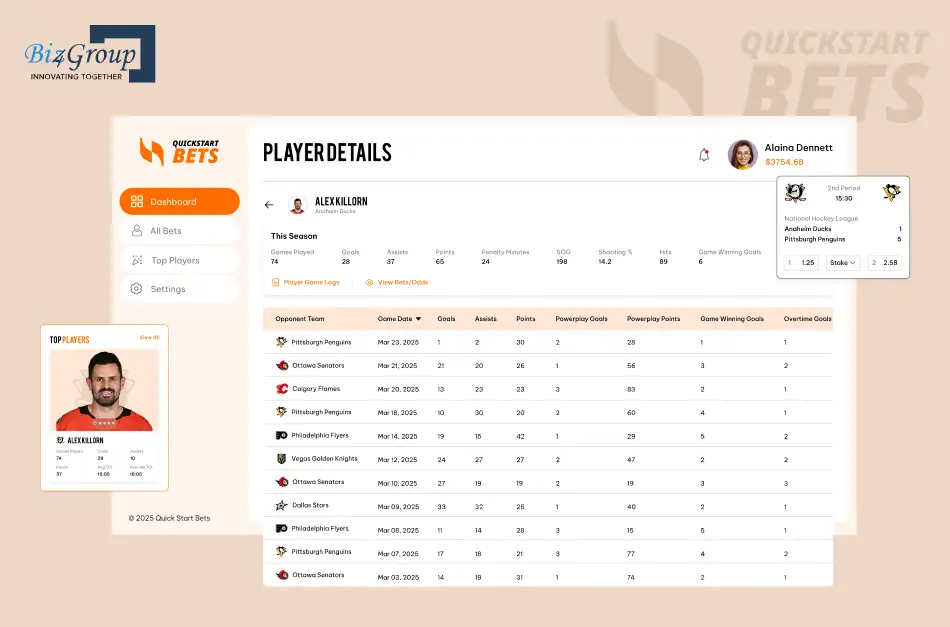
A strong feature set is best understood through implementation. Quick Start Bets was built as a real-time analytics platform focused on NHL games, where speed and clarity are essential.
What the platform delivers
- Real-time odds updates for live matches
- Detailed player and team statistics
- Historical data and performance insights
- Centralized dashboard for tracking bets and earnings
Why it works
- Low-latency data integration ensures instant updates
- Simplified UI makes complex data easy to understand
- Combined analytics and betting insights improve decision making
This project reflects how businesses can develop intelligent micro betting AI app platforms that balance performance with usability.
Features bring the product to life, but architecture determines whether those features can scale. When planning to build scalable micro betting AI app platform, the next step is understanding how the underlying system supports real-time performance, AI processing, and seamless user experience.
Also read: How to develop a sports betting platform like Outlier.Bet?
Features Decide If Users Stay or Leave
Platforms with real-time features see up to 3x higher engagement. Are your features built for speed or already slowing you down?
Let's Talk StrategyArchitecture and Recommended Tech Stack to Build AI Micro Betting System for iGaming Platforms
A micro-betting platform runs on speed, precision, and continuous data flow. The difference between a smooth experience and a broken one often comes down to architecture choices made early.
If your goal is to build scalable micro betting AI app platform, the system must handle thousands of concurrent users, real-time data streams, and instant decision-making without delays.
Below is a practical breakdown of how modern systems are structured.
Architecture Breakdown
Instead of thinking in layers alone, it helps to view the system as a series of interconnected pipelines working in parallel.
Data Ingestion Layer
- Connects to multiple sports data providers such as Sportradar, Genius Sports, and Sports.io
- Pulls event-level data including scores, player stats, and match events
- Uses redundant sources to avoid single points of failure
Also read: How enterprise-grade sports APIs power $10M+ betting app valuations?
Event Streaming Layer
- Processes incoming data streams in real time
- Uses distributed streaming systems to handle high throughput
- Ensures event ordering and consistency across users
AI Data and Model Pipeline
- Collects historical and live data for training models
- Deploys trained models for real-time inference
- Continuously updates predictions based on incoming events
- Supports adaptive learning for improving accuracy over time
Odds Computation Engine
- Converts probability outputs into betting odds
- Applies margin strategies and risk controls
- Updates odds dynamically as events unfold
Session and State Management
- Maintains user sessions and bet states
- Synchronizes data across devices
- Ensures consistency during high traffic spikes
API Gateway Layer
- Acts as the central communication hub
- Routes requests between frontend and backend services
- Enforces authentication and rate limiting
User Experience Delivery Layer
- Pushes real-time updates to web and mobile clients
- Supports instant rendering of odds and betting options
- Ensures minimal latency during interactions
Monitoring and Observability
- Tracks system performance and latency
- Detects anomalies in data or transactions
- Provides real-time alerts for system health
Tech Stack for Micro-Betting AI App Development
Choosing the right tools is critical when you develop micro betting AI app for betting platforms. The stack must support scalability, real-time processing, and AI workloads.
Frontend Technologies
|
Component |
Tools and Frameworks |
Purpose |
|---|---|---|
|
Web Frontend |
React, Next.js |
Real-time UI rendering |
|
Mobile Apps |
Flutter, React Native |
|
|
State Management |
Redux, Zustand |
Efficient data synchronization |
|
Real-Time Updates |
WebSockets, Socket.IO |
Instant UI updates |
Backend Technologies
|
Component |
Tools and Frameworks |
Purpose |
|---|---|---|
|
Core Backend |
Node.js, Go, .NET |
High-performance APIs |
|
Microservices |
Docker, Kubernetes |
Scalable service architecture |
|
API Management |
GraphQL, REST APIs |
Flexible data access |
|
Authentication |
OAuth 2.0, JWT |
Secure user access |
Data and Streaming Technologies
|
Component |
Tools and Frameworks |
Purpose |
|---|---|---|
|
Streaming Systems |
Apache Kafka, AWS Kinesis |
Real-time data pipelines |
|
Data Processing |
Apache Flink, Spark Streaming |
Event processing |
|
Caching |
Redis, Memcached |
Low-latency data access |
|
Database |
PostgreSQL, MongoDB |
Structured and unstructured data |
AI and Machine Learning Stack
|
Component |
Tools and Frameworks |
Purpose |
|---|---|---|
|
Model Development |
Python, TensorFlow, PyTorch |
Build prediction models |
|
Model Serving |
TensorFlow Serving, FastAPI |
Real-time inference |
|
Feature Engineering |
Pandas, NumPy |
Data preparation |
|
Experiment Tracking |
MLflow |
Model performance tracking |
Cloud and DevOps
|
Component |
Tools and Frameworks |
Purpose |
|---|---|---|
|
Cloud Platforms |
AWS, Google Cloud, Azure |
Scalable infrastructure |
|
Containerization |
Docker |
Application packaging |
|
Orchestration |
Kubernetes |
Auto-scaling and deployment |
|
CI/CD |
Jenkins, GitHub Actions |
Continuous deployment |
Security And Compliance Stack
|
Component |
Tools And Frameworks |
Purpose |
|---|---|---|
|
Encryption |
SSL/TLS, AES |
Data protection |
|
Monitoring |
Prometheus, Grafana |
System observability |
|
Fraud Detection |
Custom AI models |
Risk mitigation |
|
Logging |
ELK Stack |
Debugging and auditing |
Architecture is where performance is decided long before users ever interact with your platform. The next step in building AI micro betting system for iGaming platforms is understanding how to turn this architecture into a working product through a structured development process.
Also read: How to build an enterprise AI sports betting platform?
How to Develop AI Micro Betting App for Real Time Sports Betting in 7 Steps?
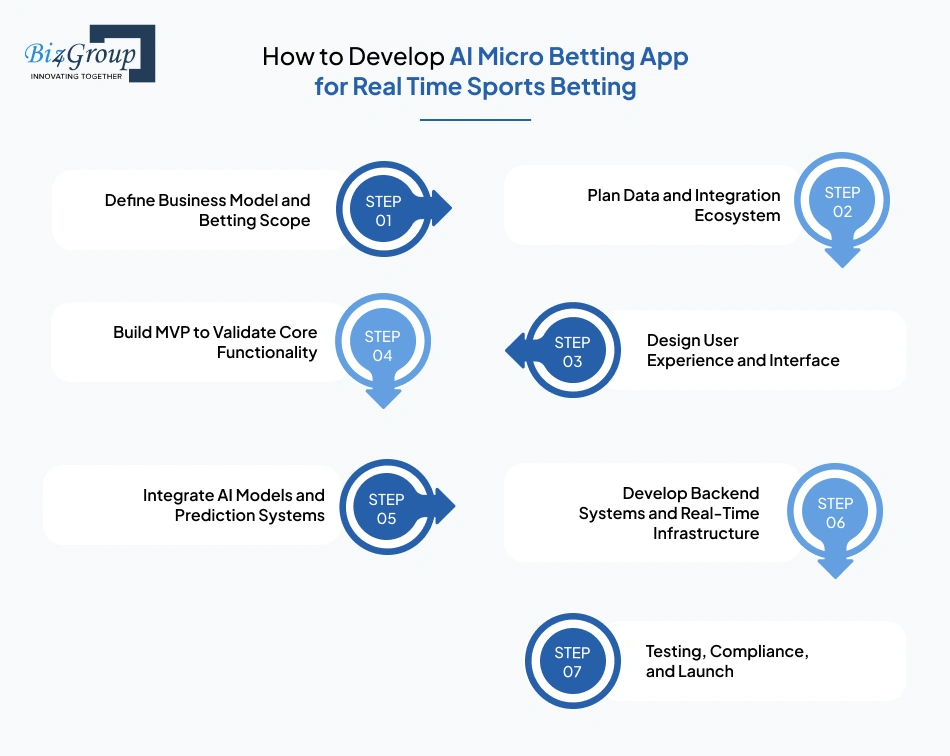
Building a micro-betting platform demands the right sequence of decisions. Each phase impacts performance, scalability, and user experience. When wondering how to develop AI micro betting app for real time sports betting, following a structured process reduces risk and speeds up time to market.
Here is a practical roadmap used by teams building production-ready platforms.
Step 1. Define Business Model and Betting Scope
Every successful platform starts with clarity. Ask early:
- Which sports and leagues will you support?
- What type of micro-bets will you offer?
- Who is your target audience?
This stage also helps you decide whether to build fully custom or explore hybrid approaches. Many businesses also evaluate scaling white-label to custom sports betting software development before committing.
Step 2. Plan Data and Integration Ecosystem
Micro-betting depends on real-time, reliable data. At this stage:
- Select sports data providers
- Define API integration strategy
- Plan redundancy for accuracy
Step 3. Design User Experience and Interface
Speed matters, but clarity matters more. A well-designed interface ensures users can place bets within seconds without confusion.
Focus areas:
- Real-time dashboards
- Intuitive navigation
- Fast bet placement flow
Working with an experienced UI/UX design company helps align performance with usability.
Also read: Top 15 UI/UX design companies in USA
Step 4. Build MVP to Validate Core Functionality
Jumping straight to a full-scale platform increases risk. Developing an MVP allows you to test:
- Real-time betting flows
- Data accuracy
- User engagement
This stage helps refine the product before scaling.
Also read: Top 12+ MVP development companies in USA
Step 5. Integrate AI Models and Prediction Systems
This is where your platform becomes intelligent. AI integration includes:
- Training prediction models
- Deploying real-time inference systems
- Enabling personalization
Working with experts in AI integration services ensures models are optimized for speed and accuracy.
Step 6. Develop Backend Systems and Real-Time Infrastructure
Once the foundation is ready, development moves to core systems. This includes:
- Building APIs and microservices
- Implementing streaming pipelines
- Setting up scalable infrastructure
The goal is to ensure the platform handles high traffic without delays.
Step 7. Testing, Compliance, and Launch
Before launch, everything must be validated. Focus on:
- Performance testing under load
- Real-time accuracy validation
- Compliance with regional regulations
After launch:
- Monitor user behavior
- Optimize performance
- Scale infrastructure
Portfolio Spotlight: Real-Time Sports Betting Platform for Major Global League Games
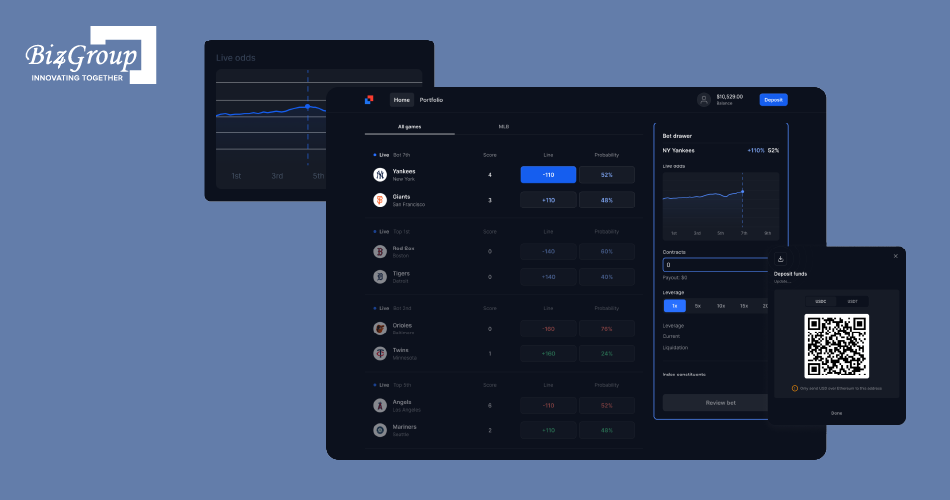
A strong development process becomes clearer when applied to a real product. Biz4Group developed as a real-time sports betting platform designed to handle high-volume live betting across major leagues.
What made the implementation effective
- Real-time game data integration using socket connections
- Scalable architecture supporting multiple users simultaneously
- Multi-language backend using Node.js, Go, C#, and Python
Core Highlights:
- Seamless data synchronization across users
- Dynamic pricing based on market conditions
- Admin panel for backend control and monitoring
This project demonstrates how businesses can develop micro betting AI app for betting platforms that operate reliably under real-world conditions.
A structured process reduces uncertainty and improves execution speed. Now that you understand how to build the system, the next critical step is ensuring it meets security standards and regulatory requirements across regions.
Also read: How to develop a sports betting app like Stake?
Your Idea Is Ready. Are You?
Our experts are ready to help you move from concept to launch faster, with a clear roadmap and proven execution strategy.
Call NowSecurity and Compliance Considerations to Develop Intelligent Micro Betting AI App
Security and compliance are not optional layers. They define whether your platform can operate legally and gain user trust.
If you plan to develop intelligent micro betting AI app, you must align your system with regulatory frameworks, data protection standards, and fair gaming practices from the beginning.
Below is a structured breakdown of what needs to be covered.
Licensing and Jurisdiction Requirements
- Obtain gambling licenses based on target regions
- Comply with state-specific laws in the US
- Ensure cross-border betting restrictions are addressed
- Maintain audit trails for regulatory inspections
KYC and AML Compliance
- Implement Know Your Customer processes for identity verification
- Enable Anti-Money Laundering checks to monitor suspicious transactions
- Integrate third-party verification tools
- Maintain transaction logs for compliance reporting
Data Protection and Privacy
- Encrypt sensitive data using industry standards
- Comply with GDPR, CCPA, and other privacy regulations
- Implement secure authentication methods like multi-factor authentication
- Ensure secure storage and transmission of data
Fair Play and Algorithm Transparency
- Validate AI models for accuracy and fairness
- Prevent manipulation of odds or predictions
- Ensure transparency in how odds are generated
- Conduct regular audits of algorithms
Fraud Detection and Risk Management
- Detect unusual betting patterns in real time
- Prevent account takeovers and bot activity
- Implement risk scoring models
- Block suspicious transactions automatically
Payment Security and Transaction Compliance
- Integrate PCI DSS compliant payment gateways
- Enable secure deposits and withdrawals
- Support multiple payment methods
- Monitor transaction anomalies
Responsible Gaming Measures
- Allow users to set betting limits
- Provide self-exclusion options
- Monitor excessive betting behavior
- Display responsible gaming guidelines
Compliance is not a one-time task. It is an ongoing process that evolves with regulations and market conditions. When you build AI micro betting system for iGaming platforms, investing in security and compliance early ensures smoother scaling, stronger trust, and fewer operational risks.
Also read: Sports betting regulations across US states
How Much Does It Cost to Build a Micro-Betting AI App for Sports Betting?
Understanding cost early helps you plan better and avoid surprises later. The investment required to how to make AI powered micro betting app platform for live sports betting depends on complexity, scale, and feature depth.
On average, the cost to build a micro-betting AI app for sports betting ranges between $30,000-$200,000+ depending on whether you are launching an MVP or a full-scale enterprise system.
Here is a quick breakdown to set expectations.
|
Development Stage |
Estimated Cost Range |
What You Get |
|
|---|---|---|---|
|
MVP Version |
$30,000-$60,000 |
Core betting features, limited AI, basic UI |
|
|
Advanced Platform |
$60,000-$120,000 |
Real-time data, AI models, scalable backend |
|
|
Enterprise Platform |
$120,000-$200,000+ |
Full AI automation, multi-sport support, high scalability |
|
Cost Driver |
Description |
Estimated Impact |
|---|---|---|
|
Real-Time Data Integration |
APIs like Sportradar, Genius Sports |
$10,000-$30,000 |
|
AI Model Development |
Prediction engines and personalization |
$15,000-$40,000 |
|
Backend Infrastructure |
Microservices, APIs, scalability |
$20,000-$50,000 |
|
Frontend Development |
Web and mobile interfaces |
$10,000-$25,000 |
|
Cloud and DevOps |
Hosting, scaling, monitoring |
$8,000-$20,000 |
|
Security and Compliance |
KYC, encryption, fraud detection |
$5,000-$15,000 |
|
Admin Panel and Controls |
Backend management tools |
$5,000-$10,000 |
Each of these plays a role when you develop micro betting AI app for betting platforms that need to perform under real-time conditions.
Hidden Costs You Should Plan For
Many businesses underestimate these costs during planning. They may not appear upfront but can significantly impact your total investment.
Third-Party Data Costs
Sports data providers charge recurring fees.
- Monthly subscriptions can range from $2,000-$10,000+
- Premium feeds with low latency cost even more
Cloud Scaling Costs
As user traffic grows, infrastructure costs increase.
- Scaling servers during peak events can add $1,000-$5,000 monthly
- Storage and data processing costs increase with usage
Compliance and Licensing
Legal requirements vary by region.
- Licensing fees can range from $10,000-$50,000+
- Ongoing compliance audits add recurring expenses
Maintenance and Updates
Post-launch costs are ongoing.
- Bug fixes and updates can cost $2,000-$8,000 monthly
- AI model retraining adds additional expense over time
Cost Optimization Strategies
Managing cost does not mean compromising quality. It means building smart from the beginning.
- Start with an MVP to validate your idea before scaling
- Prioritize core features and expand gradually
- Use modular architecture to reduce redevelopment costs
- Choose scalable cloud infrastructure to avoid overpaying early
- Integrate AI in phases instead of building full complexity upfront
- Work with experienced teams to avoid costly rework
These strategies help you create AI powered micro betting app solutions that balance performance with budget.
Also read: Sports betting app MVP development guide
Cost is not only about how much you spend. It is about how efficiently you invest. A well-planned budget allows you to make AI micro betting software for sports platforms that scales, performs, and delivers long-term value without unnecessary expenses.
Also read: How much does it cost to develop an AI sports betting app like Rithmm?
Turn Every Second into Revenue
Micro-betting platforms can increase revenue per user by 2x-5x through high-frequency bets. The real cost is waiting too long to enter the market.
Estimate Your Revenue PotentialMonetization Strategies to Make AI Micro Betting Software for Sports Platforms
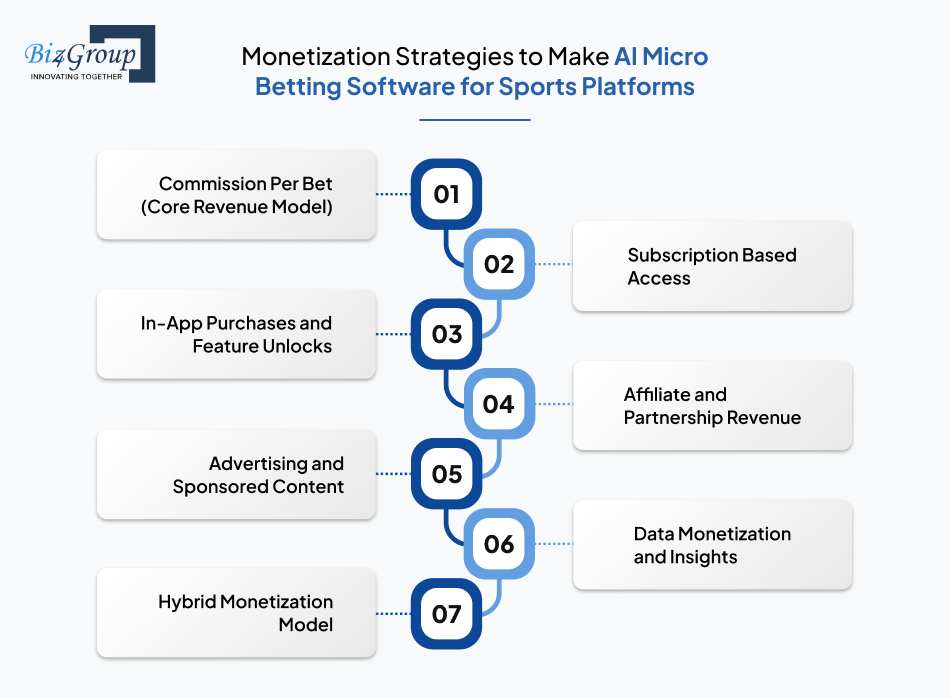
Building the platform is one part of the equation. Turning it into a consistent revenue engine is where the real business value lies. That’s what we’ll talk about now.
When you develop intelligent micro betting AI app, your monetization strategy must align with user behavior, betting frequency, and engagement patterns.
Below are the most effective revenue models used by modern platforms.
1. Commission Per Bet (Core Revenue Model)
This is the most widely used monetization method. Platforms earn a small percentage from every bet placed.
How it works
- Users place bets on live events
- Platform applies a margin on odds
- Revenue is generated per transaction
Typical revenue range: 2%-10% margin per bet depending on market conditions
Why it works
- Scales with user activity
- Aligns directly with betting volume
This is the foundation model used by platforms like DraftKings and FanDuel.
Also read: How do AI sports betting apps like FanDuel make money?
2. Subscription Based Access
Some platforms offer premium features through subscriptions.
What users pay for
- Advanced analytics
- AI-driven insights
- Exclusive betting tools
Typical pricing: $10-$50 per month depending on features
Benefits
- Predictable recurring revenue
- Attracts serious bettors
This model works well when you create AI driven micro betting solution with advanced analytics capabilities.
3. In-App Purchases and Feature Unlocks
Users can pay for additional features within the app.
Examples
- Premium predictions
- Faster odds updates
- Exclusive betting markets
Revenue potential: 5%-20% increase in average revenue per user
Why it works
- Flexible monetization
- Enhances user experience
4. Affiliate and Partnership Revenue
Many platforms generate revenue through partnerships.
How it works
- Promote sportsbooks or betting services
- Earn commissions for referrals
Typical earnings: $50-$300 per user acquisition and revenue share agreements up to 25%-40%
Also read: Sports betting affiliate website development guide
5. Advertising and Sponsored Content
High-traffic platforms can monetize through ads.
Examples
- Banner ads
- Sponsored betting markets
- Branded promotions
Revenue estimates: $2-$10 per 1,000 impressions depending on audience
Best suited for
- Platforms with large user bases
- Free-to-use betting apps
6. Data Monetization and Insights
Advanced platforms monetize their data.
How it works
- Provide insights to third parties
- Sell analytics to sports organizations
Revenue potential
- Varies widely based on data quality
- Enterprise deals can generate significant income
This model becomes viable when you develop intelligent micro betting AI app with strong data capabilities.
7. Hybrid Monetization Model
Most successful platforms do not rely on a single revenue stream. They combine multiple models such as:
- Commission + subscription
- Affiliate + ads
- In-app purchases + analytics
Why it works
- Diversifies revenue
- Reduces dependency on one source
- Increases lifetime value per user
Monetization Model Comparison
|
Model |
Revenue Potential |
Scalability |
Best For |
|---|---|---|---|
|
Commission Per Bet |
High |
Very High |
All platforms |
|
Subscription |
Medium |
High |
Analytics-driven apps |
|
In-App Purchases |
Medium |
High |
Feature-rich apps |
|
Affiliate Revenue |
Medium |
Medium |
Growth-focused platforms |
|
Advertising |
Low-Medium |
High |
Large user bases |
|
Data Monetization |
High |
Enterprise platforms |
Monetization is not about choosing one model. It is about building a system where revenue grows naturally with user engagement.
When you build AI micro betting app for sports betting companies, the right combination of monetization strategies can turn your platform into a scalable and profitable business.
Also read: How much does it cost to develop an AI sports betting software in 2026?
Challenges in Micro Betting AI App Development for Sports Betting and How to Solve Them
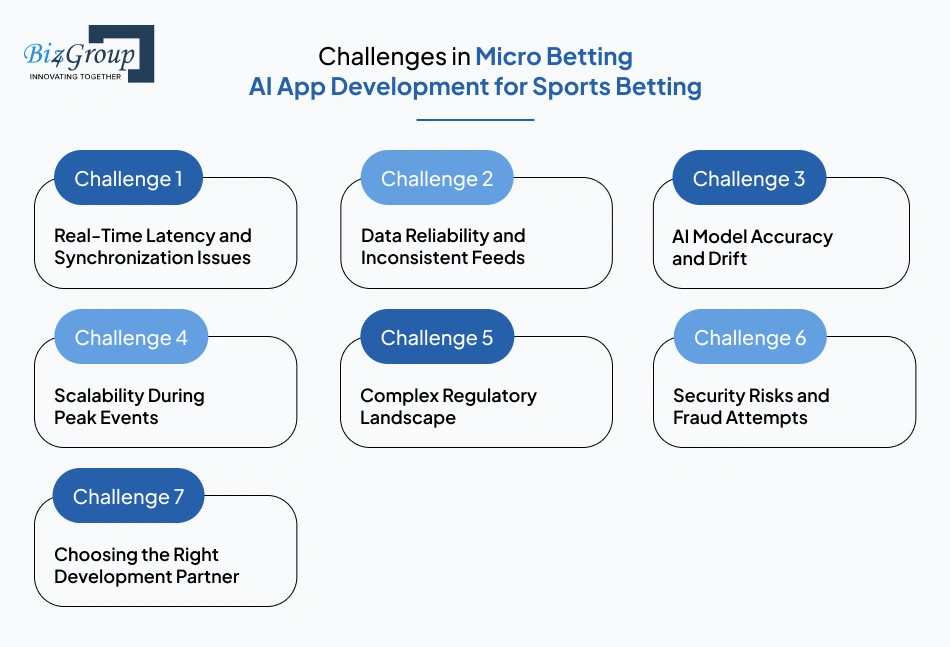
Building a micro-betting platform sounds exciting. Delivering it at scale is where things get complex. Businesses entering this space often face technical, operational, and strategic challenges that directly impact performance and growth.
Understanding these challenges before you begin to develop AI app for real time sports betting, helps you avoid costly mistakes.
Challenge 1: Real-Time Latency and Synchronization Issues
Micro-betting depends on milliseconds. Even slight delays can create mismatched odds, poor user experience, and financial risk. When thousands of users interact with live events simultaneously, maintaining synchronization across all devices becomes difficult.
How to solve it
- Use event-driven architectures with real-time streaming systems
- Implement edge caching to reduce latency
- Ensure time synchronization across all services
- Continuously monitor latency across regions
Challenge 2: Data Reliability and Inconsistent Feeds
Not all data providers deliver consistent or accurate data. Even minor inconsistencies can lead to incorrect predictions or delayed updates. This directly impacts user trust and platform credibility.
How to solve it
- Integrate multiple data providers for redundancy
- Validate incoming data before processing
- Implement fallback mechanisms for missing data
- Monitor data streams in real time
Challenge 3: AI Model Accuracy and Drift
AI models require constant updates. Over time, models can lose accuracy due to changes in player performance, team strategies, or game dynamics. This is known as model drift.
How to solve it
- Retrain models regularly with fresh data
- Monitor prediction accuracy continuously
- Implement feedback loops for model improvement
- Deploy multiple models for comparison and validation
Challenge 4: Scalability During Peak Events
Major sports events bring massive traffic spikes. Systems that perform well under normal conditions may fail during peak usage. Scaling infrastructure dynamically is a major challenge.
How to solve it
- Use auto-scaling cloud infrastructure
- Design microservices for independent scaling
- Perform load testing before major events
- Optimize database queries and caching layers
Challenge 5: Complex Regulatory Landscape
Operating across regions means dealing with multiple legal frameworks. Each state or country may have different rules for betting, data handling, and user verification. Non-compliance can lead to penalties or shutdowns.
How to solve it
- Design compliance-ready architecture from the start
- Integrate region-specific regulatory modules
- Consult legal experts during development
- Update systems regularly based on new regulations
Challenge 6: Security Risks and Fraud Attempts
High-frequency transactions increase the risk of fraud, bot activity, and account misuse. Security must evolve alongside platform growth.
How to solve it
- Partner with an experienced AI app development company to implement real-time fraud detection systems
- Use multi-factor authentication
- Monitor user behavior patterns
- Apply AI-based risk scoring models
Challenge 7: Choosing the Right Development Partner
Many businesses struggle at the execution stage due to lack of expertise. Working with the wrong team can lead to delays, poor architecture, and scalability issues.
How to solve it
- Evaluate teams based on real-world project experience
- Choose to hire AI developers with domain expertise
- Choose top AI sports betting software development company based on their AI capabilities, integration services, and post launch support
Also read: Top 14 sports betting software development companies in the USA
Challenges are part of building any advanced system. What matters is how early you identify them and how effectively you address them.
Solving these challenges with the right approach ensures your platform performs reliably and scales with confidence.
Also read: Challenges in modern sports betting app development
Avoid Costly Mistakes Before They Cost You Users
Most platforms fail due to latency and poor architecture. Fixing it later costs significantly more than building it right from day one.
Build It Right the First TimeFuture Trends to Create AI Driven Micro Betting Solution for Sports Betting
The micro-betting space is evolving rapidly. What works today may feel outdated in the next few years. Businesses that anticipate change early are the ones that stay relevant and profitable.
When beginning to create AI driven micro betting solution, keeping an eye on upcoming trends can help you build a future-ready platform.
1. Context Aware Betting Experiences
Platforms are moving toward context-aware systems that adjust betting options based on live match situations.
Instead of offering static markets, apps will dynamically surface bets based on game momentum, player behavior, and situational context. This approach helps businesses develop intelligent micro betting AI app experiences that feel more intuitive and engaging.
2. Hyper Localization of Betting Content
Regional preferences are becoming more important.
Future platforms will tailor betting markets, language, and recommendations based on user location and cultural preferences. This allows companies to build AI micro betting app for sports betting companies that scale globally while staying locally relevant.
3. Predictive Streaming Interfaces
User interfaces are evolving beyond dashboards.
Predictive streaming interfaces will show what is likely to happen next before users even think about placing a bet. This reduces decision time and increases engagement, making it easier to develop micro betting AI app for betting platforms that feel proactive rather than reactive.
4. Integration with Wearables and Second Screens
Micro-betting will expand beyond mobile and web.
Smart wearables and second-screen devices will allow users to interact with betting platforms while watching games. This opens new opportunities to make micro betting AI platform for sports betting more accessible and immersive.
5. Real-Time Behavioral Modeling
Future systems will analyze user behavior continuously.
Platforms will adjust recommendations, betting limits, and interfaces based on individual user patterns. This level of personalization will help businesses create AI powered micro betting app ecosystems that adapt to each user in real time.
6. Intelligent Automation in Operations
Operational efficiency is becoming a priority.
AI will automate tasks such as odds adjustments, fraud detection, and system monitoring. This reduces manual intervention and improves scalability for businesses looking to build scalable micro betting AI app platform solutions.
Micro-betting is moving toward smarter, faster, and more adaptive systems. Businesses that align with these trends today will be better positioned for long-term growth. As you plan your next move, one important question remains... Who can develop a micro betting AI app for sports betting that aligns with both current demands and future possibilities.
Also read: AI pari-mutuel betting software development guide
Why Biz4Group LLC Is the Right Partner in the USA to Build a Micro-Betting AI App for Sports Betting
Building a micro-betting platform demands a deep understanding of real-time systems, AI-driven decision engines, and the business dynamics of sports betting.
Biz4Group LLC stands at the intersection of all three.
As a USA-based sports betting app development company, we bring 20+ years of experience helping startups, enterprises, and funded ventures build scalable and high-performance betting platforms. From odds management systems to real-time wagering features and user engagement tools, our focus has always been on creating sports betting solutions that perform seamlessly in real-world, high-traffic environments.
Our deep industry expertise extends to robust sports betting API integration services, enabling seamless connectivity with leading providers like Sportradar, Genius Sports, and Sports.io. We ensure your platform is powered by accurate, real-time data while maintaining strong performance, compliance, and an engaging user experience.
Why Businesses Choose Biz4Group LLC
Businesses partner with Biz4Group because we bring clarity, speed, and reliability to complex projects.
- We design systems that handle real-time data without performance issues
- We build AI models that are practical, scalable, and continuously improving
- We focus on user experience that drives engagement and retention
- We follow a structured development approach that reduces risk and delays
- We provide end-to-end support from idea validation to post-launch scaling
We have successfully delivered platforms that operate under high traffic, process live sports data in real time, and support advanced betting workflows. These are not theoretical solutions. They are production-ready systems used by real users.
Choosing the right development partner can define the success of your platform. With Biz4Group, you gain a team that is invested in your long-term growth, not only the initial launch.
So, without any further ado, let’s turn your vision into a high-performing platform.
Wrapping Up
Micro-betting has changed the rhythm of sports betting. It has shifted focus from outcomes to moments, from occasional bets to continuous engagement. Businesses that understand this shift are moving toward platforms that operate in real time, adapt instantly, and keep users involved throughout the game. To build a micro-betting AI app for sports betting, you need the right mix of architecture, AI capabilities, user experience, and compliance strategy working together.
From choosing the right platform type to defining features, designing architecture, managing costs, and planning monetization, every step plays a role in long-term success. Companies that develop micro betting AI app for betting platforms with a clear roadmap are better positioned to scale, retain users, and unlock consistent revenue streams.
This is where Biz4Group, a USA-based software development company, comes in. With deep expertise in AI, real-time systems, and sports betting platforms, we help businesses turn complex concepts into high-performing digital products. Whether you are starting from scratch or scaling an existing platform, our team brings the technical depth and business understanding needed to deliver results.
If you are serious about building a platform that stands out in a fast-moving market, let’s make it happen. Connect with Biz4Group and start building smarter, faster, and stronger.
FAQs
1. How accurate are AI predictions in micro-betting apps?
AI predictions are probabilistic, not guaranteed outcomes. Accuracy depends on the quality of data, model training, and real-time updates. High-performing platforms continuously refine their models using live and historical data to improve prediction reliability over time.
2. Can micro-betting apps work across multiple sports simultaneously?
Yes, modern platforms are designed to support multiple sports such as NFL, NBA, MLB, NHL, and more. However, each sport has different event structures, which means the system must be flexible enough to handle varied data formats and betting scenarios.
3. How much time does it take to develop a micro-betting AI app?
Most platforms take around 3-6 months for an MVP and 6-12+ months for a full-scale product depending on complexity. Biz4Group, however, can deliver a functional MVP in as little as 2-4 weeks by leveraging reusable components and pre-built modules that significantly reduce development time and cost.
4. Do micro-betting platforms require continuous AI model updates?
Yes, ongoing updates are essential. Sports dynamics change frequently, and AI models must adapt to new patterns, player performance, and match conditions. Continuous monitoring and retraining help maintain performance and relevance.
5. Can micro-betting apps be integrated with existing betting platforms?
Yes, micro-betting features can be integrated into existing sportsbooks through APIs and modular architecture. This allows businesses to enhance their current platforms without rebuilding everything from scratch.
6. How do micro-betting platforms handle high traffic during major sports events?
They rely on scalable cloud infrastructure, distributed systems, and load balancing techniques. These systems ensure consistent performance even during peak traffic periods such as major league games or tournaments.
Meet Author

Get your free AI consultation
with Biz4Group today!
Providing Disruptive
Business Solutions for Your Enterprise
Schedule a Call
Our website require some cookies to function properly. Read our privacy policy to know more.