Location :
Orlando, FL, USA
Location :
Orlando, FL, USA +1 (407) 714-1616
 info@biz4group.com


















Imagine a digital system that doesn’t wait for instructions but instead, understands your business goals, learns from real-time feedback, and takes independent actions to get the job done.
Read More

What actually happens when a potential client reaches out to a law firm for the first time? In many firms, that moment still depends on scattered emails, phone calls, and intake notes written across different systems. The way those early conversations are captured often determines whether a promising case moves forward or quietly slips away.
This is one reason the legal technology landscape is expanding quickly. The legal technology market is expected to grow from $38.67 billion in 2026 to $71.95 billion by 2031, reflecting how law firms are investing in systems that organize legal operations and client interactions more effectively.

Client intake sitss at the center of that shift. Firms exploring AI legal intake management product development are often trying to solve very practical problems inside their intake process.
Many firms begin this journey by working with an experienced AI product development company that understands how legal workflows operate in practice. Understanding how these systems work and how firms implement them is the starting point for AI legal client intake automation software development. Let's dive in.
AI legal client intake automation software is a system that captures potential client inquiries, collects case details, and organizes that information before attorneys review it. Instead of relying on manual intake calls or emails, the software with structure AI automation guides clients through structured intake steps.
Client intake plays a direct role in how many inquiries convert into actual cases. Here's why law firms are automating client intake with AI:
Law firms lose potential clients when intake responses are delayed or incomplete. Automated legal intake systems help capture more qualified cases from incoming inquiries.
Legal practices often receive inquiries that do not qualify as viable cases. Automated intake screening helps identify stronger cases with AI automation tools earlier in the process.
High-performing law firms receive large volumes of inquiries every day. Intake automation allows firms to handle more potential clients without expanding administrative teams.
Understanding which inquiries generate valuable cases helps firms improve marketing decisions and client acquisition strategies.
Automated intake systems allow firms to capture more qualified cases and reduce missed opportunities. Organizations investing in AI legal client intake automation software development focus on improving lead conversion, case qualification efficiency, and overall revenue performance.
Also Read: 10 AI Automation Use Cases for Enterprises to Scale Faster
See how structured AI intake captures case details and organizes client inquiries before attorneys review them
Talk to an ExpertAI intake systems operate through several coordinated processes that capture client inquiries, structure case information, and screen potential cases before attorneys review them. Many firms create AI based legal intake workflow tool platforms that guide these intake steps in an organized sequence.
The process begins when a potential client submits an inquiry through a website form, chat interface, or messaging channel. A conversational intake interface collects the initial information and records the inquiry inside the intake system.
Once the inquiry begins, a conversational AI agent guides the client through structured intake questions. The system asks follow up questions based on earlier responses so it can collect complete case details during the conversation.
After responses are captured, the system processes the information to organize the intake record. Many platforms rely on generative AI to interpret client descriptions and convert them into structured case details that attorneys can review later.
The intake system then compares the submitted information with predefined legal intake criteria. This screening stage identifies whether the inquiry meets the firm's case requirements before the submission reaches attorneys or intake staff.
Once the intake record is created, the system stores client information and routes the inquiry to the appropriate internal workflow. Qualified submissions move to legal review while other inquiries remain stored for reference.
Understanding how these intake systems operate behind the scenes helps law firms evaluate the technology involved in AI legal client intake automation software development and how structured automation supports early case screening workflows.
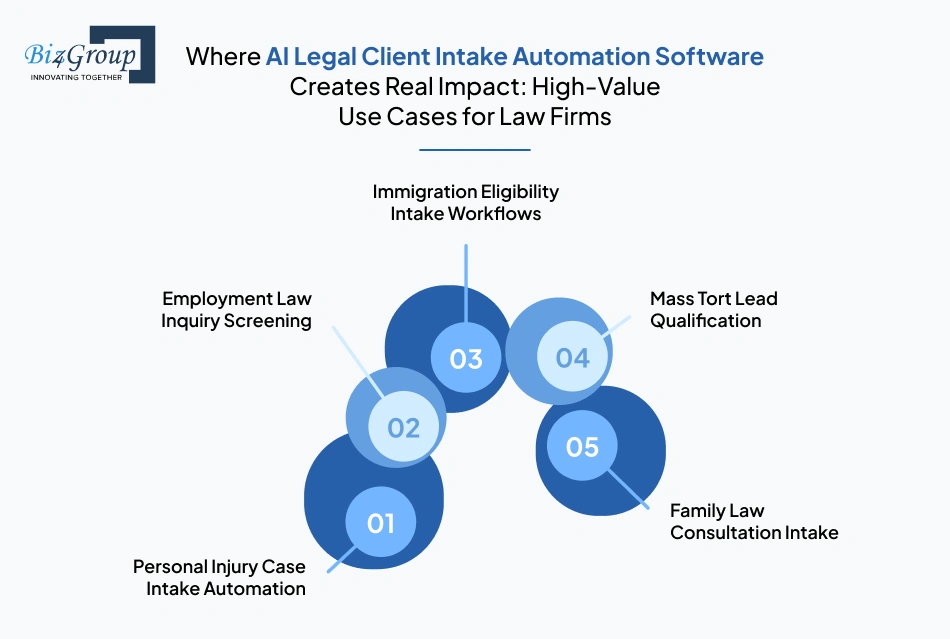
Law firms handling large volumes of inquiries often need structured systems that capture client details, screen potential cases, and route qualified leads for attorney review. To build AI powered legal intake management system, AI capabilities must focus on solving specific operational intake challenges rather than replacing legal decision making.
Personal injury firms receive large numbers of inquiries after accidents. AI legal intake automation software helps collect incident details and screen cases before attorneys review them.
Firms that create AI legal client screening and intake software often rely on trained AI models for use case scenarios such as accident claims and injury reports.
Employment law practices receive inquiries related to workplace disputes, termination issues, and wage claims.AI legal intake automation helps organize these submissions before legal review.
Structured workflows and proper AI integration help the system evaluate employment inquiries using consistent screening logic.
Immigration law firms often manage intake inquiries from clients seeking eligibility guidance. Automated intake systems help capture essential information needed for early case review.
These workflows become more effective when the intake system connects client submissions with internal case tracking tools through an AI CRM environment.
Mass tort practices require fast screening of large numbers of potential claimants connected to similar incidents or products. Intake automation helps manage these inquiries at a scale.
Law firms handling high volume claims build AI software that support structured intake and claimant screening for ongoing mass tort litigation.
Family law practices frequently receive consultation requests for divorce, custody, or support matters. Intake automation helps gather initial case details before scheduling attorney consultations.
Automated legal intake workflows allow firms to organize family law inquiries efficiently while preparing case information for the first consultation.
High value use cases demonstrate how intake automation supports real operational tasks inside law firms. Organizations investing in AI legal client intake automation software development focus on structured client screening, reliable lead capture, and organized case information before attorney evaluation.
Let’s map real intake scenarios where automation can capture stronger cases and reduce missed client inquiries
Schedule a DiscussionAI intake platforms must capture potential client information, guide structured conversations, and organize case details before attorneys review them. To build secure AI legal intake automation systems for law firms, it is important to integrate specific capabilities that support these intake workflows. Take a look:
|
Core Feature |
Role in AI Legal Intake Automation Software |
|---|---|
|
The chatbot initiates the intake conversation and asks predefined legal intake questions. With proper AI chatbot integration, the system captures responses, structures the information, and stores the intake record for attorney review. |
|
|
Smart Intake Forms and Dynamic Question Flows |
Dynamic forms change the next question based on the client's previous answer. This prevents incomplete submissions and ensures the system captures required case details such as incident description, timeline, and contact information. |
|
AI Case Qualification Engine |
The qualification engine analyzes submitted intake responses and compares them with the firm's case eligibility rules. Many firms build AI driven legal lead capture systems that automatically flag inquiries meeting defined legal criteria. |
|
Document Upload and Automated Case File Creation |
The intake interface allows clients to upload supporting documents during the conversation. Uploaded files are attached to the intake record, and the system generates a structured case file for internal review. |
|
Conversational Legal Intake Assistant |
A conversational legal AI assistant helps clients complete the intake process by clarifying questions, requesting missing details, and guiding them through the information required for case evaluation. |
|
CRM and Case Management Integration |
The intake system transfers captured client information directly into internal systems. Proper AI chatbot integration with CRM ensures new inquiries appear inside the firm's CRM without manual entry. |
|
Lead Prioritization and Case Scoring |
The platform assigns priority levels to intake submissions based on case type, severity indicators, and required information. This allows intake teams to review stronger inquiries first. |
|
Intake Analytics and Performance Tracking |
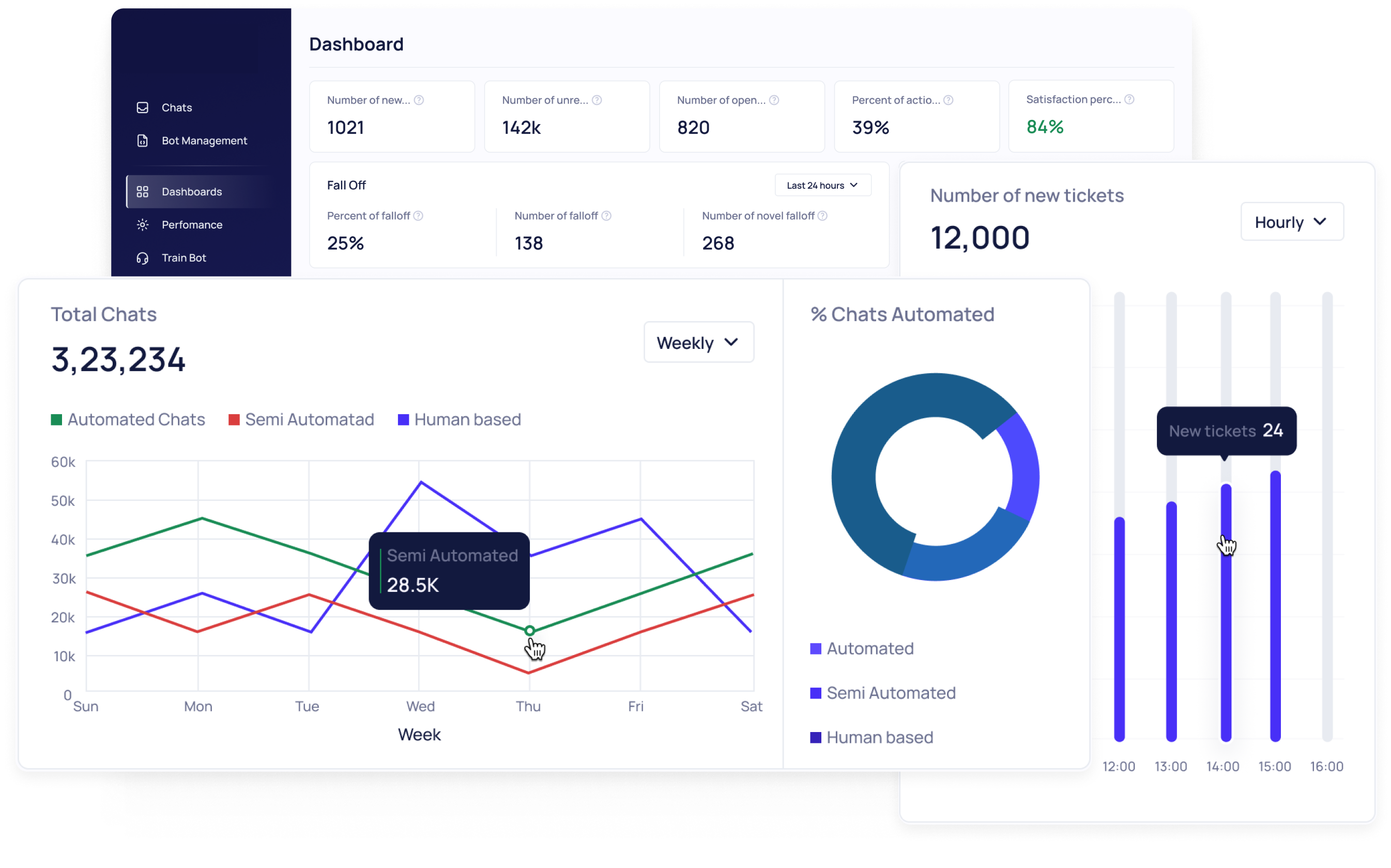
The software tracks intake metrics such as number of inquiries received, case qualification rate, and response time. These insights help firms measure intake performance. |
|
AI Model Adaptation for Legal Intake |
Intake platforms work best when models reflect legal workflows. Teams fine tune LLM's using real intake conversations, so the system understands how potential clients describe legal problems. |
Strong intake platforms combine conversational client interaction, structured case screening, and reliable system integration. Organizations investing in AI legal client intake automation software development should ensure these core features support secure lead capture, accurate intake workflows, and consistent case evaluation processes.
Law firms handling large intake volumes require more than basic automation. Modern platforms rely on intelligent systems that interpret client responses, automate complex intake decisions, and scale across multiple practice areas. Legal client intake automation software development using AI focuses on deeper reasoning, predictive analysis, and intelligent workflows.
Enterprise intake systems must understand how clients describe legal problems in everyday language. A conversational legal AI agent interprets responses and extracts meaningful case signals during the intake conversation.
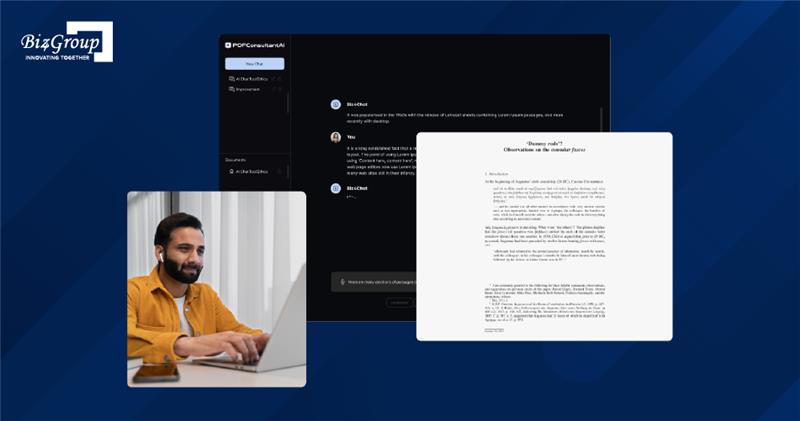
Now let's see how similar AI intelligence processes complex documents and extracts meaningful information.
Also Read: Cost to Develop Legal AI Agent
Advanced intake systems adjust questions dynamically as the conversation progresses. Rather than following a fixed questionnaire, the platform generates follow-up questions based on the client's earlier responses.
Enterprise platforms often include predictive models that evaluate case potential before attorney review. This capability helps legal teams focus on inquiries that are more likely to become viable cases and develop scalable AI legal client intake management platforms.
Modern platforms coordinate intake actions automatically with agentic AI platform development for legal services. Instead of waiting for manual instructions, the system manages intake steps as the conversation progresses.
Large intake systems collect data across thousands of inquiries. When supported by specialized AI automation, the platform detects patterns that would otherwise remain hidden in individual case submissions.
Enterprise platforms must coordinate intake insights across broader legal operations. Structured enterprise AI integration enables intake intelligence to work with existing systems that support firm wide decision making and advanced enterprise AI solutions.
Enterprise legal platforms often extend beyond intake workflows. Cout Calendar by Biz4Group LLC highlights our experience in building scalable technology solutions for legal operations.
Court Calendar is a legal operations platform that helps attorneys manage court schedules, case timelines, and important litigation deadlines from a centralized system. The platform organizes hearing dates, case updates, and legal team coordination in one structured environment.
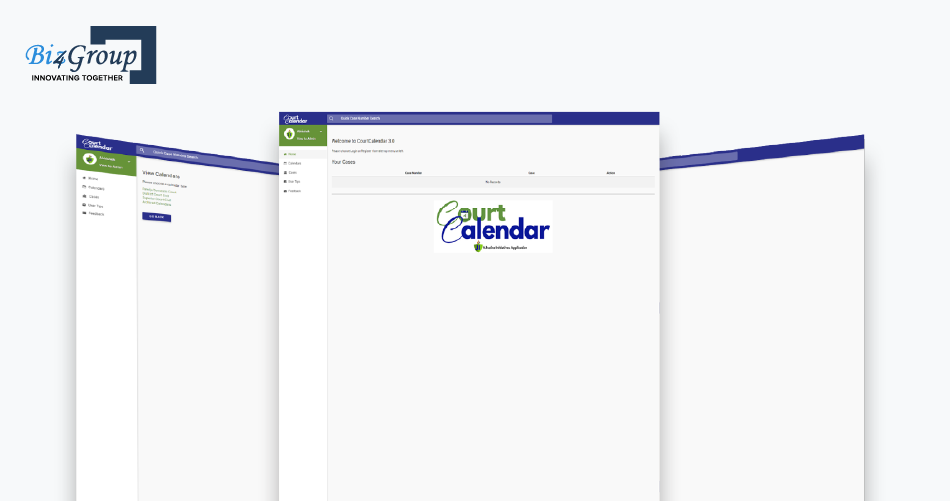
Working on platforms like this provides direct exposure to how law firms manage case workloads and court schedules. This familiarity becomes valuable when designing software that supports earlier stages of the legal process, such as automated client intake and case evaluation.
Advanced intelligence capabilities allow intake automation to function as a strategic system rather than a simple chatbot. Organizations investing in AI legal client intake automation software development can build platforms that handle large intake volumes while improving case evaluation accuracy.
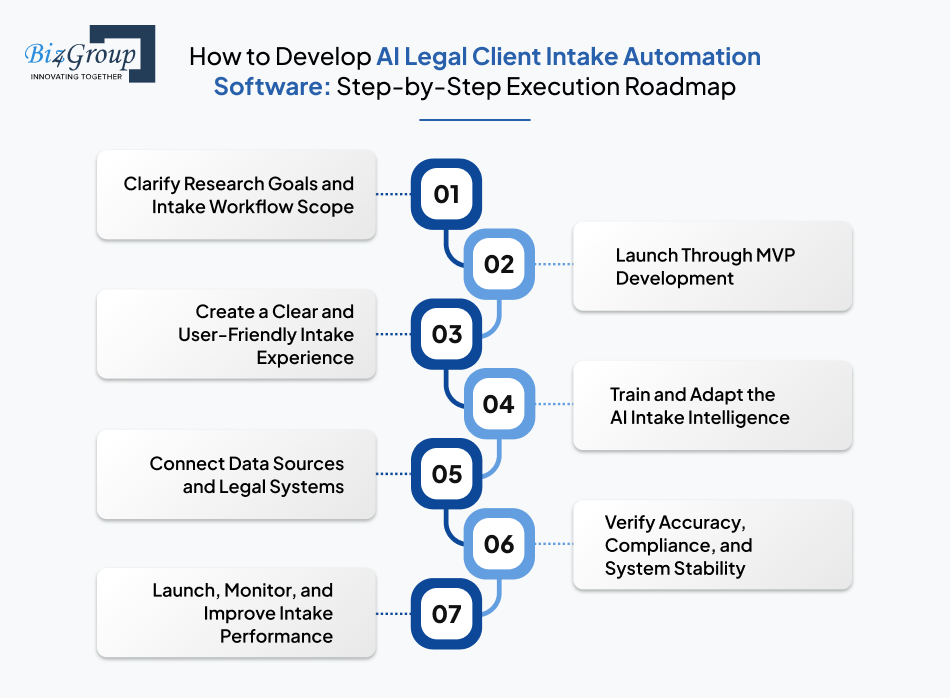
A reliable intake system depends on structured workflows, clear qualification rules, and accurate data capture. Law firms cannot rely on scattered forms or manual follow-ups when evaluating new client requests. A structured approach to AI legal client intake automation software development helps translate real intake conversations into an automated workflow that consistently captures relevant case details.
The roadmap below walks through the practical stages that turn an intake concept into a reliable legal operations tool.
Every development effort begins with clarity around what the system should actually handle. Legal intake automation must reflect real client conversations and firm-specific case qualification logic. Start by identifying the intake scenarios your system should support and the outcomes it must deliver.
Clear objectives help teams plan custom AI legal intake software development that mirrors how attorneys actually evaluate potential cases.
Once the scope is defined, the next step focuses on validating the workflow before committing to full system development. Early validation helps teams detect workflow gaps before the platform expands. Through MVP development services, legal teams release an initial version of the intake workflow to test how requests enter and move through the system.
A working prototype reveals how clients respond to automated intake conversations and highlights improvements before scaling the system.
Also Read: MVP vs Full Scale Legal Tech Platform Development Guide
Client intake tools must feel simple and approachable. Many legal clients reach out during stressful situations, so the interface must guide them smoothly through the process. The collaboration with UI/UX design company that understands conversational workflows ensures that the interface supports real research workflows.interface supports real research workflows.
A well-designed interface keeps potential clients engaged and improves completion rates during the first interaction.
Also Read: Top UI/UX design companies in USA
The AI engine must understand legal intake conversations and recognize relevant case details. This requires careful preparation of data and workflow rules. Development teams first train AI models using real intake transcripts, case summaries, and structured legal data. Once training is complete, the AI models are integrated so the system can analyze client responses and guide the conversation toward relevant case details.
Well-trained models allow the system to capture meaningful case information without overwhelming the client.
An intake platform becomes far more useful when it connects with the tools law firms already use. Integration ensures that captured information flows directly into case management workflows. Development teams typically rely on secure API connections to link intake systems with legal databases and internal tools.
These integrations turn intake automation into an operational workflow rather than a standalone chatbot tool.
Legal intake automation must meet strict reliability and compliance expectations. Errors during case qualification or data handling can create operational and legal risks. Many firms work with experienced software testing companies to review the system before deployment.
This validation stage also supports teams that plan to make AI legal intake automation software with compliance features suitable for regulated legal environments.
Once testing confirms reliability, the platform moves into production. Deployment is not the end of development. Intake systems continue evolving as firms learn from real client interactions.
Continuous monitoring helps law firms refine intake workflows while keeping the automation aligned with real client needs.
A structured roadmap keeps development focused on operational outcomes instead of technology experimentation. When executed carefully, AI-driven intake automation can capture qualified leads faster while giving legal teams clearer case insights before the first consultation.
Discuss your intake workflow and see what an AI-driven system could realistically look like for your firm
Start the ConversationA successful AI powered legal intake management system depends on a layered technology architecture. Each layer handles a specific responsibility, from user interaction to AI processing and secure data management.
Teams handling full stack development combine these components carefully to create AI powered legal intake automation from lead to case evaluation without disrupting existing legal workflows.
|
Architecture Layer |
Recommended Technology |
Role in AI Legal Intake Automation Software |
|---|---|---|
|
Client Interaction Interface |
Builds responsive intake portals on the web where potential clients begin conversations and submit case details through guided forms or chat interfaces. |
|
|
Mobile Client Interface |
Flutter, React Native |
Supports intake assistants used in mobile app development, allowing clients to submit case information or continue intake conversations directly from smartphones. |
|
Conversational AI Engine |
OpenAI GPT-4o, Azure OpenAI, Anthropic Claude |
Handles client conversations during intake, interprets responses, and identifies legal issues mentioned in natural language queries. |
|
Conversation Workflow Manager |
LangChain, Semantic Kernel |
Structures intake conversations, manages follow-up questions, and routes client responses toward the correct case screening path. |
|
Case Screening Logic Layer |
Applies intake rules that help firms develop AI legal case evaluation software capable of prioritizing strong cases before attorney review. |
|
|
Data Storage and Case Records |
PostgreSQL, MongoDB |
Stores structured client data, intake transcripts, and case qualification results in secure databases. |
|
Document and Evidence Storage |
AWS S3, Azure Blob Storage |
Collects supporting documents such as medical reports, accident photos, or employment records uploaded during intake. |
|
Integration Layer |
REST APIs, GraphQL |
Connects intake automation with CRM systems, AI legal case management platforms, and scheduling tools used by intake teams. |
|
Security and Compliance Controls |
OAuth 2.0, TLS encryption, role-based access |
Protects sensitive client data and ensures intake workflows follow legal privacy requirements. |
|
Infrastructure and Deployment |
AWS, Microsoft Azure, Docker, Kubernetes |
Runs the intake system reliably, manages scaling during high inquiry volume, and supports continuous updates. |
A well-structured stack ensures intake conversations, case screening, and legal system integrations operate smoothly under real client demand. Careful infrastructure planning ultimately determines how effective AI legal client intake automation software development becomes for law firms managing large volumes of potential cases.
Also Read: Why to Choose the Full Stack Development for Modern Business
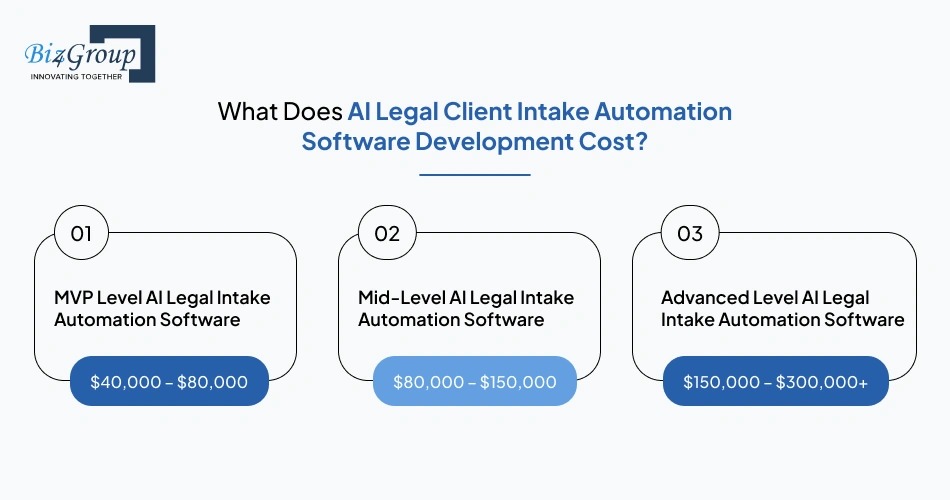
The development of an intelligent intake platform requires careful planning across AI models, workflow automation, and legal system integration. Most firms that plan to build custom AI legal client intake system for law firms invest between $40,000 and $300,000+, depending on system complexity, automation depth, and integration requirements.
|
Development Level |
Estimated Cost Range |
Scope |
|---|---|---|
|
MVP Level AI Legal Intake Automation Software |
$40,000 – $80,000 |
Basic intake chatbot, structured intake forms, simple case qualification logic, and lead capture from website inquiries. |
|
Mid-Level AI Legal Intake Automation Software |
$80,000 – $150,000 |
Advanced intake automation with conversational workflows, document upload support, CRM integration, and improved case qualification logic. |
|
Advanced Level AI Legal Intake Automation Software |
$150,000 – $300,000+ |
Fully automated intake platform with multi-channel lead capture, intelligent case evaluation, advanced integrations with legal systems, and analytics for intake performance. |
Also Read: How Much Does It Cost to Build a Legal AI Chatbot?
Also Read: AI PoC Development for Legal Software
A realistic budget depends on how advanced the intake automation needs to be and how many systems must integrate with it. Firms planning AI legal client intake automation software development should align the platform scope with their intake volume, practice areas, and long-term growth plans.
Also Read: Cost to Hire an AI Software Developer
Share your intake goals and get a practical estimate based on workflow complexity and system integrations
Request a Cost Estimate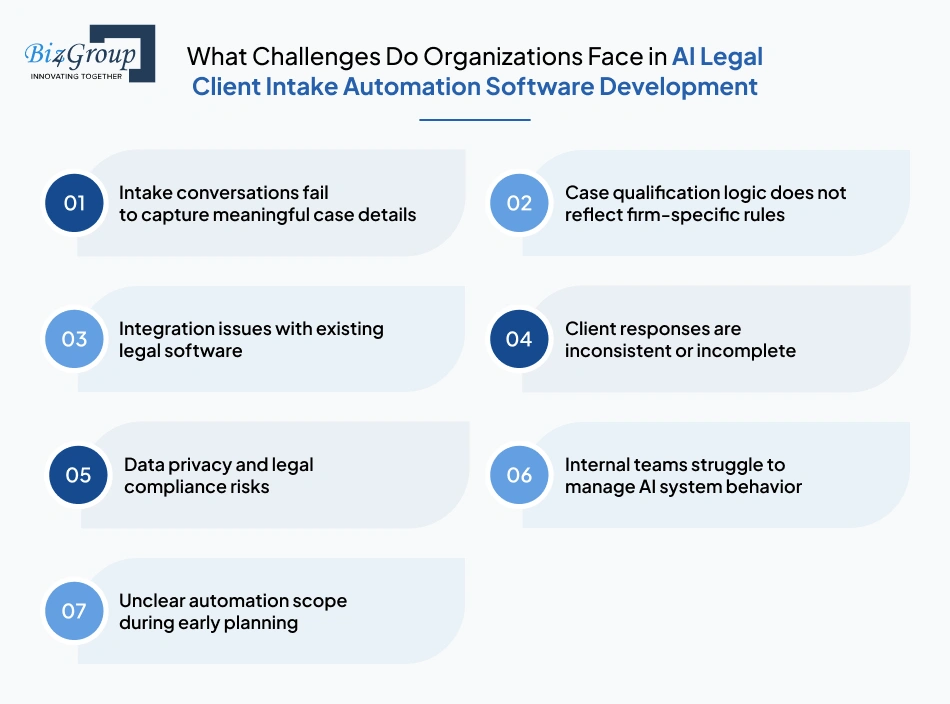
Many law firms see intake automation as a way to reduce response time and improve case qualification. However, AI legal client intake automation software development for enterprises often introduces operational challenges related to legal workflows, system integration, and intake accuracy.
|
Challenge |
Practical Solution |
|
Intake conversations fail to capture meaningful case details |
Design intake flows that mirror real client interviews conducted by legal staff. Structured questions and guided responses help the system collect accurate information before routing cases to attorneys. |
|
Case qualification logic does not reflect firm-specific rules |
Work closely with attorneys to translate real intake decision rules into automation workflows. Legal eligibility criteria must reflect how the firm actually evaluates potential cases. |
|
Integration issues with existing legal software |
Intake platforms should connect directly with case management and CRM tools used by the firm. Stable integration ensures qualified leads move smoothly into attorney review workflows. |
|
Client responses are inconsistent or incomplete |
Guided conversational prompts help clients provide the required details. Breaking intake questions into smaller steps improves completion rates and reduces confusion during early conversations. |
|
Data privacy and legal compliance risks |
Intake systems must protect sensitive client information through secure authentication and controlled data access. Proper safeguards help maintain trust while handling personal legal information. |
|
Internal teams struggle to manage AI system behavior |
Hire AI developers who understand both legal workflows and conversational systems. Experienced engineers help refine intake logic and improve response accuracy over time. |
|
Unclear automation scope during early planning |
Early-stage AI consulting helps define the intake workflow, case screening logic, and integration needs before development begins. This planning stage prevents unnecessary complexity later in the project. |
Organizations that approach automation carefully can avoid many of these challenges. With clear workflow design and realistic implementation planning, AI legal client intake automation software development can support faster client response and more consistent case qualification.
If you are planning AI legal client intake automation software development, the right development partner can make a major difference in how quickly and successfully your system goes live.
At Biz4Group LLC, we help law firms develop AI legal client intake automation software that are secure, scalable, and tailored for regulated legal sectors. Our team combines AI chatbot development expertise, legal tech knowledge, and enterprise-grade engineering to deliver reliable research intelligence systems.
Here's why you should choose Biz4Group LLC for your AI legal client intake automation software development for you law firm:
As a legal software development company, we have spent time working on systems where document handling, approvals, and compliance workflows are part of daily legal operations. That exposure helps us understand how legal processes move through digital systems. When we design intake platforms, we know how information should be structured so attorneys can review client requests without confusion.
Legal platforms must manage multiple activities at the same time as document review, client communication, and internal approvals often happen together. Which is why we design legal systems that focus on connecting these activities into one workflow, so information flows clearly from the first client inquiry to legal review.
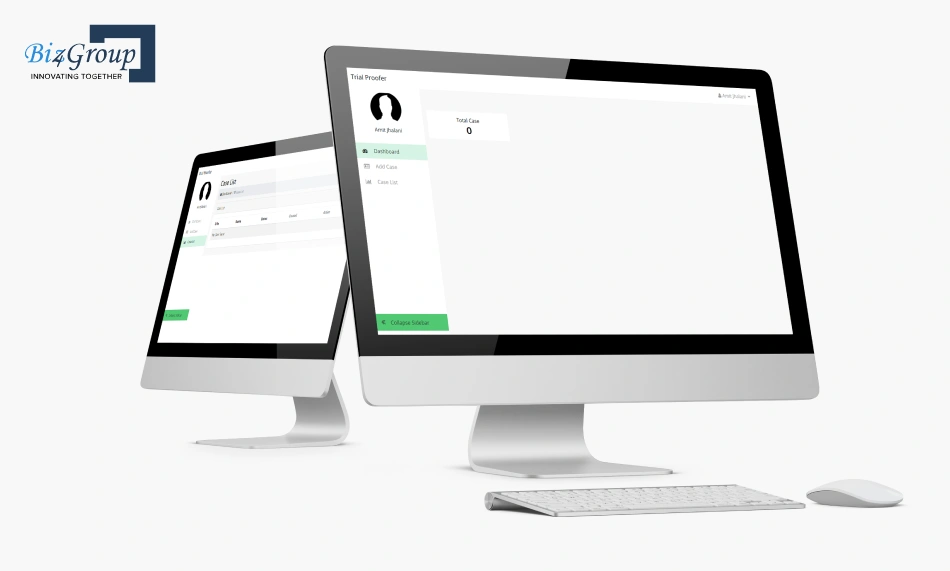
Every legal organization has its own internal workflow. Some matters move through procurement teams, others involve HR or partnership agreements. Our work across different systems has taught us how to design platforms that fit these approval paths instead of forcing teams to change how they work.
Many modern legal systems now include AI assistance to support how users interact with legal services. Through work on solutions like legal AI app, we have integrated AI features that guide users during digital interactions and help organize information submitted during legal service requests.
Many modern legal platforms rely on conversational interfaces for client interaction. We design chat-based workflow systems that capture structured information during early client conversations, which has helped us gain recognition among the top legal chatbot development companies in the USA.
Biz4Group LLC has spent time building digital systems for legal workflows, client communication, and structured data handling. That experience becomes valuable when firms plan to develop AI legal client intake automation software for revenue growth while keeping intake processes organized and scalable.
Let’s talk about how AI can capture inquiries structure case details and support your firm’s growth
Connect With Our TeamThe way law firms handle new client inquiries is gradually changing. Intake conversations, case screening, and information collection no longer need to depend entirely on manual calls or scattered forms. With the right system in place, firms can organize client requests earlier, review stronger cases faster, and keep intake records clear from the beginning. Working with an experienced custom software development company helps ensure these systems reflect how legal teams actually manage client communication and case evaluation.
For many firms, the goal is not simply automation but creating an intake process that captures meaningful case information before attorneys step in. This is where thoughtful AI legal client intake software development services offered by Biz4Group LLC can make a difference by structuring how inquiries are collected and prepared for review.
When that conversation begins, the goal is not simply adding technology. It is designing an intake system that supports how your firm reviews cases, responds to potential clients, and manages incoming opportunities. If you are planning AI legal client intake software, starting with a practical discussion around your intake workflow is often the most useful place to begin.
Developing AI legal client intake automation software starts by defining how your firm captures lead and evaluates potential cases. The system typically includes conversational intake, structured case data collection, automated screening rules, and integration with CRM or case management systems. Many firms build custom systems, so the intake workflow reflects how attorneys review and qualify cases.
To build AI powered legal intake management system platforms, law firms usually include conversational intake chat, dynamic intake forms, automated case qualification, document uploads, CRM integration, lead prioritization, and intake analytics. These features help firms capture structured case details and prepare inquiries for attorney review.
AI legal intake platforms capture inquiries through chat interfaces, forms, or messaging channels. The system collects client information, organizes case details, and applies screening rules to determine whether the inquiry meets the firm's criteria. This process helps firms create AI powered legal intake automation from lead to case evaluation before attorneys review the case.
The cost of AI legal client intake automation software development typically ranges from $40,000 to $300,000+ depending on complexity. Factors influencing cost include AI chatbot capabilities, system integrations, compliance requirements, and whether the firm needs custom AI legal intake software development or a basic intake automation system.
Many law firms build AI-driven legal lead capture systems to reduce missed inquiries and improve case conversion rates. Automated intake systems respond instantly, collect structured case details, and help attorneys focus on stronger potential cases instead of manually reviewing every inquiry.
Yes. Large firms and legal enterprises often build secure AI legal intake automation systems with encryption, access control, and compliance monitoring. These systems are designed to protect sensitive client information while supporting scalable AI legal client intake automation software development for enterprises.

with Biz4Group today!
Our website require some cookies to function properly. Read our privacy policy to know more.