 Location :
Orlando, FL, USA
Location :
Orlando, FL, USA +1 (407) 714-1616
 info@biz4group.com

- AI prior authorization software development for mid-size clinics helps reduce approval delays, documentation gaps, and repetitive administrative coordination.
- Manual authorization workflows increase denial risks, delay reimbursements, and create operational pressure across scheduling, billing, and patient care teams.
- Modern platforms automate eligibility checks, payer rule validation, document review, authorization tracking, and escalation management before submission cycles.
- Most AI Prior Authorization System Development projects cost between $40,000–$350,000+ depending on workflow complexity and payer integrations.
- Successful Prior Authorization Automation Software Development depends on workflow mapping, phased rollout planning, testing, and compliance-focused implementation.
- Biz4group LLC helps mid-size clinics build healthcare-focused authorization systems aligned with payer workflows, operational requirements, and long-term scalability.
“Why does our clinic still have 3 full-time employees handling prior authorization requests all day while physicians wait, patients call repeatedly for updates, and approvals still take 8 days to process?”
That question is becoming common across mid-size clinics dealing with growing payer complexity and rising administrative pressure. Prior authorization teams are spending hours chasing insurance portals, collecting missing documents, and correcting submission errors that delay reimbursements.
In many clinics, the process has quietly turned into a major operational bottleneck. Physicians now complete nearly 39 prior authorization requests every week, while staff spend close to 13 hours handling approvals and follow-ups tied to those requests.
The pressure extends beyond paperwork. Delayed authorizations interrupt treatment schedules, slow imaging approvals, and create growing frustration across clinical and administrative teams. In fact, 89% of physicians say prior authorization contributes to burnout because patient care keeps getting interrupted by repetitive approval tasks.
For many clinics, the issue becomes harder as request volumes increase:
- 60% of practices involve at least 3 employees for a single authorization request
- 35% spend more than 35 minutes processing each request
- 88% report higher healthcare resource utilization caused by authorization delays
This is where AI prior authorization software development for mid-size clinics becomes a practical operational investment. This blog will walk you through building a custom AI prior authorization system with real time eligibility verification and payer requirement matching capabilities. You will understand how clinics are using it to reduce authorization delays, improve approval accuracy, and handle growing administrative workloads more efficiently.
As we dive deep, let's start by understanding the prior authorization crisis in mid-size clinics.
Why Prior Authorization Workflows Break at Mid-Size Clinic Scale?
As patient volumes grow, prior authorization starts affecting multiple departments inside a clinic at the same time. What begins as an insurance approval task quickly turns into a coordination problem between physicians, billing teams, front-desk staff, and payer portals. Mid-size clinics feel this pressure more aggressively because they process higher authorization volumes without having large enterprise-level administrative infrastructure.
In many clinics, staff members spend a major part of their workday handling repetitive authorization tasks instead of patient-focused responsibilities. Recent reporting shows:
- billing and coding specialists spend nearly 11 hours every week on prior authorizations
- practice managers spend another 5 hours and,
- medical office administrators spend close to 4 hours managing follow-ups, documentation requests, and payer communication.
As authorization requests increase across specialties, these delays start spreading into scheduling, treatment approvals, and reimbursement cycles.
The issue becomes harder to control because every payer follows different requirements, approval rules, and documentation formats. Teams often move between multiple payer portals, fax systems, EHR screens, and spreadsheets just to complete a single request.
This creates several operational gaps inside mid-size clinics:
- Authorization requests remain pending because supporting documents are incomplete
- Staff manually recheck payer requirements before every submission
- Physicians get pulled into repetitive documentation clarification requests
- Teams lose visibility into approval status across multiple insurance portals
- Denials increase when payer-specific criteria change without notice
Prior authorization workflows break at mid-size clinic scale because the process depends heavily on manual coordination across disconnected systems. As request volumes continue rising, clinics need a workflow structure that can process authorizations faster without increasing administrative workload at the same pace.
The Hidden Financial Cost of Manual Authorization Processing
Prior authorization is becoming one of the most expensive administrative responsibilities inside mid-size clinics costing upto $35 billion of US health care administrative spending.
The financial strain does not come from a single denial or delayed approval. It builds slowly through staff hours, repeated claim corrections, reimbursement delays, and growing operational overhead tied to manual processing. Take a look:
1. Administrative Costs Continue Growing with Request Volume
Every authorization request requires document collection, payer verification, status follow-ups, and coordination between departments. As patient volumes increase, clinics end up dedicating more payroll hours to administrative work that keeps expanding every month.
Current estimates show prior authorization handling costs nearly $11,000 per clinician annually. Clinics also spend around $20–$30 for every authorization submission, while the average practice processes nearly 45 prior authorizations each week.
For mid-size clinics operating across multiple specialties, these costs scale quickly across billing and administrative teams.
2. Denied Claims Increase Financial Pressure
The financial impact becomes heavier when authorization issues lead to denied claims. Staff members often spend additional time correcting documentation, preparing appeals, resubmitting claims, and responding to payer clarification requests before reimbursements can move forward.
The average denied claim rework cost ranges between $25 and $181 per claim. At the same time, nearly 35–60% of denied or returned claims never get resubmitted, creating direct revenue leakage for clinics already operating under tight margins.
Manual authorization processing often creates hidden financial pressure through:
- Reimbursement delays affecting predictable cash flow
- Payroll expansion tied to repetitive administrative tasks
- Revenue loss from unresolved denied claims
- Physician schedule disruption caused by pending approvals
- Administrative dependency on high-volume manual coordination
As authorization workloads continue increasing, many mid-size clinics struggle to maintain financial stability while managing growing payer-related administrative expenses.
Why Traditional RCM And EHR Systems Fail to Solve Authorization Delays
Many mid-size clinics already use EHR software and revenue cycle management systems expecting them to simplify prior authorization workflows. In reality, authorization delays continue growing because these systems were not designed to manage payer-specific approval complexity at scale.
1. EHR Systems Primarily Store Clinical Data
Most EHR platforms help clinics manage patient records, physician documentation, scheduling, and billing workflows. They centralize information effectively, but prior authorization requires much more than storing clinical data.
Authorization teams still need to:
- verify payer-specific requirements,
- collect supporting clinical documents,
- track approval rules,
- submit requests through external portals,
- and follow up manually on pending cases.
As a result, staff members continue moving between multiple systems even after the clinic has invested heavily in EHR infrastructure.
2. Traditional RCM Platforms Focus More on Billing Than Authorization Logic
Revenue cycle management systems help clinics manage claims submission, payment tracking, and reimbursement workflows. However, most traditional RCM tools operate after services are delivered, while prior authorization problems begin much earlier during treatment approval stages.
This creates a major operational gap. Clinics often discover missing authorizations, incomplete documentation, or payer mismatches only after claims move toward denial.
For mid-size clinics handling multiple insurance providers, the situation becomes harder because every payer follows different approval criteria and submission processes.
Also Read: How to Develop a Healthcare Revenue Cycle Management Software (RCM)
3. Manual Coordination Still Controls Most Authorization Workflows
Even with digital systems in place, prior authorization workflows still depend heavily on human coordination. Staff members manually review payer websites, upload documents, respond to clarification requests, and track approval status across disconnected platforms.
Several limitations continue slowing clinics down:
- Payer rules are not updated automatically inside many systems
- Authorization tracking lacks centralized visibility
- Staff must manually review documentation requirements
- Communication between departments remains fragmented
- Denial risks are identified late in the workflow
Traditional RCM and EHR systems help clinics organize healthcare operations, but they do not actively manage the real-time decision complexity involved in prior authorization workflows.
Since we have now seen where operational and financial problems originate, the next step is understanding how AI prior authorization software changes the picture for mid-size clinics.
Still Chasing Authorizations Across Systems?
Disconnected workflows quietly drain approvals, staff hours, and reimbursement momentum every single day
Fix The Workflow BottleneckWhat Is AI Prior Authorization Software Development for Mid-Size Clinics?
AI prior authorization software is a custom operational system that helps mid-size clinics manage insurance approval workflows before treatments, procedures, imaging requests, or medications move into the claims process. It helps clinics organize and manage prior authorization activities that usually remain scattered across payer portals, EHR screens, emails, phone calls, and manual follow-ups.
Typically, the system helps clinics manage responsibilities such as:
- Reviewing payer-specific authorization requirements
- Organizing supporting clinical documentation
- Preparing authorization submission workflows
- Monitoring pending approval requests
- Flagging incomplete authorization cases
- Routing requests that need staff intervention
For mid-size clinics, this creates a centralized authorization workflow that helps administrative teams manage approvals with better process visibility and fewer disconnected steps.
An important distinction is that AI prior authorization software works as a preventive system instead of a reactive one. The purpose is to identify documentation gaps, missing payer requirements, and approval risks before claims move toward denial. Rather than investigating denied claims after revenue disruption happens, the system helps clinics reduce authorization-related issues earlier in the workflow itself.
Core Functions of an AI Prior Authorization Software
AI prior authorization platforms handle the operational tasks involved in preparing, reviewing, submitting, and monitoring insurance authorization requests across clinical and administrative workflows. The system manages multiple process-level responsibilities that clinics traditionally handle manually during prior authorization processing.
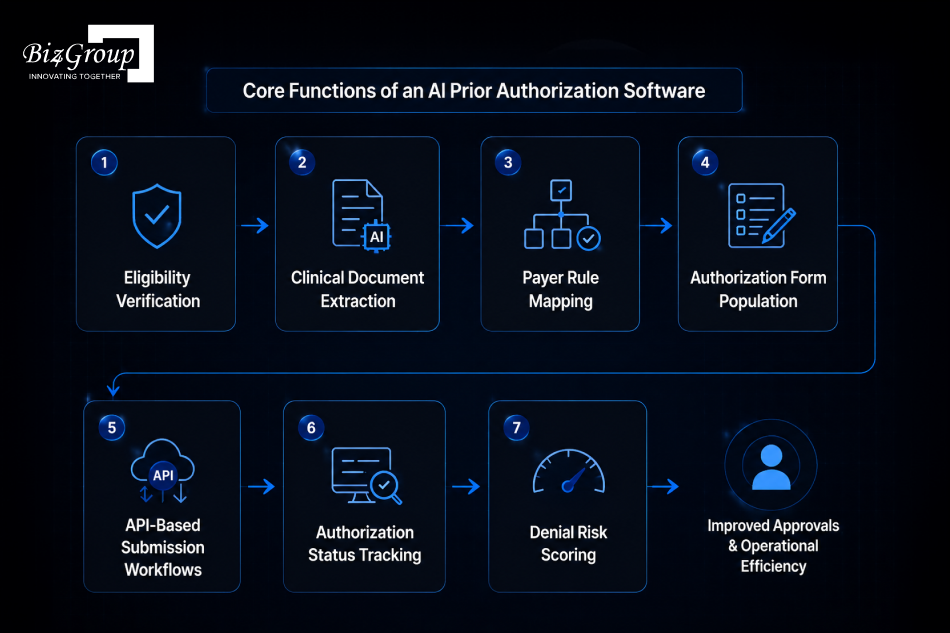
1. Eligibility Verification
- Patient insurance details are reviewed before authorization workflows begin
- Coverage validation is performed against active payer plans and policy conditions
- Authorization requirements are checked for procedures, imaging requests, treatments, and medications
- Payer-specific approval conditions are reviewed during the verification stage
- Inactive coverage, missing policy details, and authorization requirement conflicts are identified early in the workflow
2. Clinical Document Extraction
- Relevant clinical information is extracted from physician notes, AI EHR software, referral documents, and uploaded medical files
- Diagnosis codes, treatment history, medication records, symptoms, and procedure-related information are identified during document review
- Authorization-related clinical data is organized into structured review workflows
- Missing or incomplete clinical records required for authorization processing are flagged during documentation review
- Extracted information is prepared for downstream authorization submission workflows
3. Payer Rule Mapping
- Payer-specific authorization rules are reviewed against submitted clinical information
- Approval conditions are mapped according to insurance provider requirements
- Authorization workflows are aligned with payer documentation criteria and medical necessity conditions
- Rule variations across commercial insurance plans, Medicare Advantage programs, and specialty-specific payers are processed within the workflow
- Updates to changing payer authorization requirements are incorporated into rule-processing workflows
4. Authorization Form Population
- Authorization request forms are populated using patient, provider, clinical, and payer-related data
- Required submission fields are prepared before payer submission workflows begin
- Supporting documentation is attached to authorization requests during form preparation
- Clinical and authorization data fields are aligned before submission review
- Authorization records are structured according to payer submission requirements
5. API-Based Submission Workflows
- Authorization requests are submitted through payer-connected API development and electronic communication channels
- Submission workflows are routed according to payer-specific processing requirements
- Electronic authorization transactions are formatted based on payer submission protocols
- Submission confirmations, returned requests, and pending authorization cases are recorded during workflow processing
- External payer portal workflows are supported when direct API connectivity is unavailable
6. Authorization Status Tracking
- Submitted authorization requests are monitored throughout the payer review cycle
- Approval updates, pending reviews, returned cases, and additional documentation requests are tracked within the workflow
- Authorization activity is recorded across multiple payer environments
- Delayed, inactive, or unresolved authorization requests are identified during status monitoring
- Workflow history is maintained for authorization actions and status-related changes
7. Denial Risk Scoring
- Authorization requests are evaluated for documentation and approval-related risks before submission
- Clinical records, coding alignment, payer requirements, and authorization completeness are reviewed during risk analysis
- Requests containing missing information or unsupported documentation are flagged during workflow review
- Authorization cases requiring manual validation are identified before payer submission
- Risk analysis workflows review potential authorization gaps connected to payer-specific approval conditions
These core functions allow AI prior authorization platforms to manage critical authorization responsibilities across payer workflows, clinical documentation review, and authorization monitoring inside mid-size clinic operations.
Your Staff Shouldn’t Review Everything
Let intelligent authorization workflows handle repetitive review cycles before teams get overloaded
See Smart Authorization In ActionHow AI Changes Prior Authorization Operations Inside Clinics?
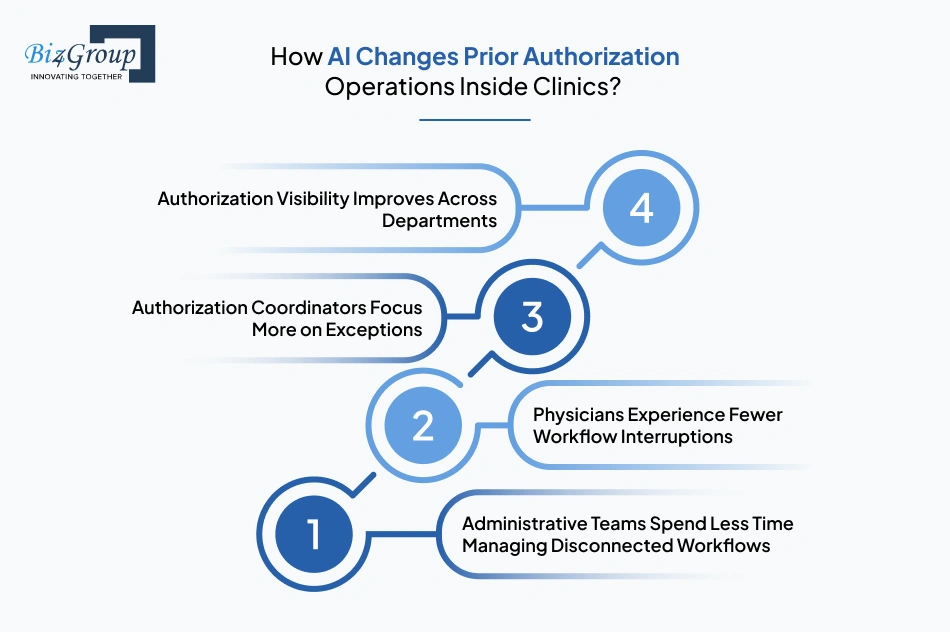
Prior authorization workflows inside mid-size clinics often involve constant coordination between physicians, front-desk teams, billing staff, referral coordinators, and insurance portals. After AI-driven authorization workflows are introduced, the operational structure inside clinics starts shifting from manual follow-up management toward guided workflow handling.
1. Administrative Teams Spend Less Time Managing Disconnected Workflows
AI-driven workflows centralize authorization activities into a more structured operational environment. Operationally, this changes how teams handle daily authorization workloads:
- Fewer manual status checks across payer portals
- Reduced dependency on repetitive follow-up calls and emails
- Easier coordination between scheduling, medical billing, and authorization teams
- Better visibility into pending and delayed authorization cases
- More structured handling of active authorization queues
Also Read: AI Medical Coding Software Development
2. Physicians Experience Fewer Workflow Interruptions
Prior authorization delays often pull physicians into repeated documentation clarification requests during active patient care schedules. Operational workflows become more organized when supporting records and authorization requirements are reviewed earlier during the approval cycle.
Inside clinic operations, this often leads to:
- Fewer documentation-related interruptions during patient care hours
- Reduced back-and-forth communication tied to missing records
- Better alignment between clinical documentation and authorization review
- More organized coordination between providers and administrative staff
- Less physician involvement in repetitive authorization follow-ups
3. Authorization Coordinators Focus More on Exceptions
Manual workflows usually require coordinators to manage every authorization request individually from submission through approval. Operational responsibilities begin shifting after automated review and monitoring processes are introduced into the workflow.
Instead of manually handling every request stage, coordinators spend more time managing:
- High-priority authorization cases
- Escalated payer responses
- Requests requiring manual clinical clarification
- Specialty-specific approvals with higher complexity
- Time-sensitive patient treatment authorizations
4. Authorization Visibility Improves Across Departments
Many clinics struggle with fragmented visibility during active authorization cycles because updates remain scattered across payer systems and departmental communication channels. More centralized workflow monitoring improves how teams coordinate around active requests.
Operationally, clinics gain:
- Faster identification of stalled authorization requests
- Clearer tracking of active approval timelines
- Better coordination between patient scheduling and authorization review
- Earlier awareness of missing documentation requests
- More consistent communication across administrative departments
As operational workflows become more structured, clinics gradually shift from manually chasing every authorization update toward managing exceptions, escalations, and high-priority cases more efficiently across departments.
What Key Business Problems Does AI Prior Authorization Software for Mid-Size Clinics Solves?
Prior authorization problems eventually turn into financial problems for mid-size clinics. For clinics processing large authorization volumes every week, even small workflow inefficiencies can create significant revenue leakage over time.
As clinics evaluate a prior authorization AI automation system development for clinic operations, the discussion usually shifts from administrative workload toward measurable business impact. Here’s how it creates a measurable business impact:
1. Faster Authorization Processing Improves Revenue Flow
Long authorization cycles often delay procedures, imaging approvals, specialty treatments, and claim submissions. When approvals move faster, clinics can stabilize scheduling workflows and reduce reimbursement delays tied to pending authorizations.
Many healthcare organizations using automated authorization workflows report nearly 60% reduction in prior authorization processing time. AI-powered systems also reduce approval turnaround from multiple days to only minutes in certain authorization workflows.
For mid-size clinics, this directly impacts:
- reimbursement timelines
- appointment scheduling efficiency
- treatment throughput
- and monthly cash flow predictability
2. Lower Denial Rates Reduce Revenue Leakage
When approval risks are identified earlier in the authorization cycle, clinics avoid a large portion of the financial waste tied to preventable denials. Fewer rejected requests mean fewer delayed reimbursements, lower claim recovery costs, and reduced revenue leakage caused by unresolved authorization issues.
For mid-size clinics processing high authorization volumes every month, stronger approval accuracy directly improves:
- monthly reimbursement predictability
- claim recovery rates
- administrative cost control
- and overall revenue retention across payer workflows
3. Administrative Cost Reduction Improves Operational Margins
Automation changes the financial equation by reducing the amount of manual coordination required during authorization handling. Healthcare providers adopting automated authorization systems see nearly 35% reduction in administrative costs tied to prior authorization management.
This creates measurable financial impact through:
- lower overtime dependency
- reduced claim rework costs
- fewer payer follow-up hours
- and better administrative resource allocation
4. Faster ROI Makes Automation Financially Practical
Healthcare organizations implementing AI automation tools for prior authorization workflows frequently report positive ROI within 3–6 months after deployment, particularly in high-volume specialty environments.
Clinics experience measurable financial improvements through:
- Faster reimbursement cycles tied to quicker authorization approvals
- Lower claim recovery costs caused by fewer authorization-related denials
- Reduced overtime and administrative payroll pressure
- Better revenue retention from fewer unresolved authorization cases
- Improved financial predictability across high-volume payer workflows
For mid-size clinics dealing with rising authorization burdens, AI prior authorization software development for mid-size clinics is increasingly becoming a revenue protection and operational sustainability investment rather than only an administrative upgrade.
Revenue Delays Are Operational Warnings
Authorization inefficiencies usually surface financially long before clinics notice operational damage
Reduce Revenue Leakage FasterHow Do AI Prior Authorization Software Integrates with EHRs And Healthcare Systems
Prior authorization platforms must exchange information continuously across EHR systems, payer environments, billing platforms, scheduling systems, and clinical record repositories. Integration architecture determines how accurately authorization data moves between these systems during approval processing and status management.
1. EHR Systems Provide Clinical and Patient Data
AI prior authorization platforms connect with EHR systems to access patient demographics, diagnosis records, physician notes, medication history, procedure details, and treatment documentation required during authorization submission workflows.
Most integrations support healthcare standards such as:
- FHIR
- HL7
- REST-based APIs
These connections allow authorization systems to synchronize patient-related information directly from clinical records without separate manual data transfer processes.
Also Read: How to Integrate AI with EHR/EMR Systems to Transform Healthcare Operations?
2. Payer Systems Handle Authorization Submission and Status Exchange
Prior authorization software also connects with payer communication environments to manage authorization submission activity, response updates, and approval tracking processes.
Depending on payer infrastructure, integrations usually support:
- API-based authorization submission
- Clearinghouse connectivity
- Electronic authorization gateways
- External payer portal workflows
These integrations maintain authorization data exchange between clinic systems and insurance providers throughout active review cycles.
3. Document Management Systems Support Record Synchronization
Authorization processing often involves referrals, prescriptions, physician notes, imaging reports, and scanned medical documentation stored across multiple systems. Integration workflows synchronize these records during authorization review and submission handling.
Many clinics also connect document repositories and OCR systems to process:
- faxed records
- uploaded PDFs
- scanned referral documents
- and external clinical files
This keeps authorization-related documentation aligned across connected systems.
4. Scheduling and Billing Platforms Receive Authorization Updates
Scheduling systems and billing platforms also connect with authorization workflows to maintain synchronized approval status information during treatment coordination and reimbursement preparation.
These integrations help systems exchange:
- authorization approval status
- pending review updates
- procedure clearance information
- and payer response activity
Connected workflows reduce disconnected data handling across administrative systems.
Also Read: AI Medical Scheduling Software Development Cost
Strong integration architecture allows prior authorization platforms to exchange information consistently across healthcare systems, payer environments, and clinical record workflows. AI prior authorization software fits more effectively into clinic operations when authorization data remains synchronized across connected platforms and approval channels.
Must Have Features for AI Prior Authorization Software Development for Mid-Size Clinics
Prior authorization workflows involve multiple operational layers across payer verification, documentation review, approval coordination, and authorization tracking. AI prior authorization software development for mid-size clinics require feature planning that supports both administrative efficiency and workflow reliability across daily clinic operations.
1. AI Automation Features
|
Feature |
Purpose |
|---|---|
|
Clinical document extraction |
Pulls relevant patient and treatment information from uploaded records and physician notes |
|
Payer rule matching |
Reviews authorization requests against payer-specific approval conditions before submission |
|
Denial risk identification |
Flags authorization requests that may contain missing documentation or workflow gaps |
|
Automated authorization routing |
Sends requests through the correct payer workflow based on insurance requirements |
|
Smart workflow prioritization |
Helps teams identify urgent or time-sensitive authorization cases faster |
2. Authorization Workflow Management Features
|
Feature |
Purpose |
|
Centralized authorization dashboard |
Gives teams one place to monitor active requests and pending approvals |
|
Authorization queue management |
Organizes requests based on status, urgency, payer type, or department workflows |
|
Escalation workflow handling |
Routes delayed or exception-based cases for manual review when needed |
|
Approval status monitoring |
Tracks authorization progress across payer review cycles |
|
Task assignment controls |
Helps managers distribute authorization workloads across staff members |
3. Clinical Documentation Features
|
Feature |
Purpose |
|---|---|
|
Supporting document validation |
Reviews whether required records are attached before submission |
|
Physician note synchronization |
Pulls clinical notes into authorization workflows automatically |
|
ICD and CPT code verification |
Checks whether diagnosis and procedure codes align correctly during submission preparation |
|
Missing information alerts |
Identifies incomplete authorization requests before payer review begins |
|
Multi-document management |
Organizes referrals, imaging records, prescriptions, and supporting files together |
4. Payer Connectivity Features
|
Feature |
Purpose |
|---|---|
|
Multi-payer workflow support |
Handles authorization requirements across different insurance providers |
|
API-based authorization submission |
Sends authorization requests electronically through connected payer systems |
|
Real-time eligibility verification |
Checks active patient coverage and authorization requirements instantly |
|
Payer response synchronization |
Updates authorization status automatically after payer review activity |
|
Portal workflow support |
Supports payer workflows that still require external portal processing |
5. Security and Compliance Features
|
Feature |
Purpose |
|---|---|
|
Role-based access management |
Restricts authorization data access based on staff responsibilities |
|
Audit trail logging |
Records workflow activity and authorization-related actions for compliance review |
|
Encrypted data handling |
Protects patient records during storage and workflow transmission |
|
Multi-factor authentication |
Adds additional login protection for sensitive healthcare workflows |
|
Session monitoring controls |
Tracks user activity during authorization handling workflows |
The right feature structure helps clinics manage authorization operations more consistently as payer complexity and approval volumes continue increasing. Teams planning to build AI prior authorization software for clinics usually achieve better long-term workflow stability when operational, payer, and compliance requirements are addressed together during feature planning.
How to Develop AI Prior Authorization Software for Mid-Size Medical Clinics that Eliminates Processing Delays and Reduces Claim Denials: Step-by-Step
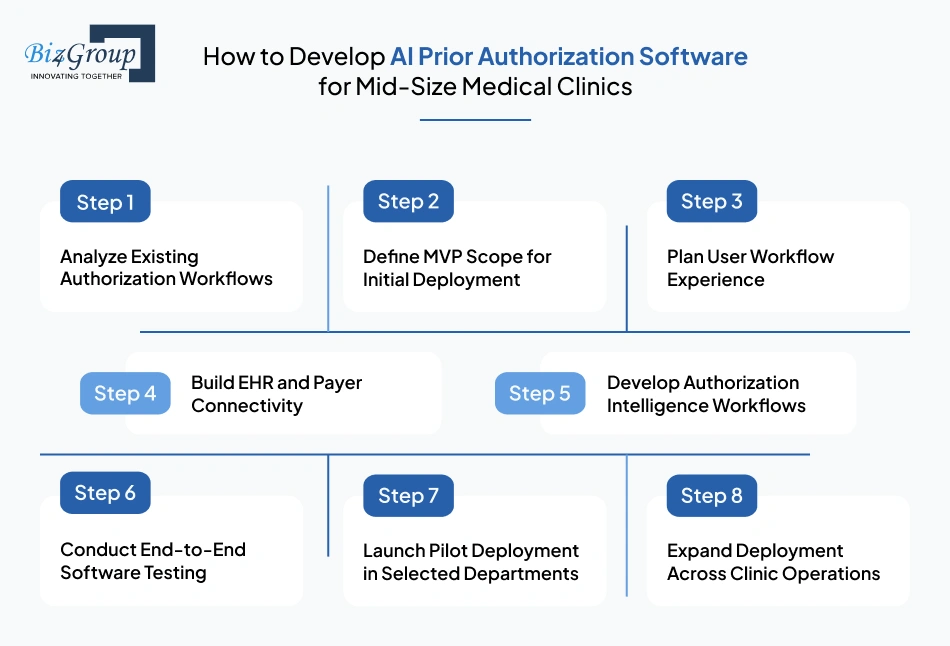
Prior authorization workflows vary significantly across specialties, payer environments, and clinic operations. That is why clinics planning to develop AI prior authorization software for medical clinics need a structured development roadmap that aligns technical execution with real approval dependencies, and reimbursement requirements.
Step 1: Analyze Existing Authorization Workflows
The development process starts with operational workflow discovery. Development teams work with billing managers, authorization coordinators, physicians, and administrators to understand how prior authorization currently moves through the clinic.
This stage usually includes:
- Identifying authorization bottlenecks
- Reviewing denial-prone workflows
- Mapping payer-specific approval paths
- Auditing existing administrative processes
- Defining workflow automation priorities
Clear workflow mapping helps prevent unnecessary system complexity during development.
Step 2: Define MVP Scope for Initial Deployment
Most mid-size clinics begin with a focused rollout instead of building a large-scale system immediately. Teams often work with providers offering MVP development services to define the minimum operational workflows required for launch.
The initial MVP generally focuses on:
- High-volume authorization workflows
- Frequently denied procedures
- Limited payer environments
- One specialty or department
- Core approval tracking workflows
This approach helps clinics validate operational performance before expanding system scope.
Also Read: Top MVP Development Companies in USA
Step 3: Plan User Workflow Experience
Prior authorization systems are used daily by coordinators, billing staff, schedulers, and physicians. Workflow usability directly affects adoption inside clinics. During this phase, teams often collaborate with a UI/UX design company to structure practical workflow experiences around real authorization operations.
The design process usually includes:
- Authorization dashboard planning
- Queue visibility structure
- Approval status workflows
- Staff action routing
- Physician review interfaces
Operational simplicity becomes critical during high-volume authorization handling.
Also Read: Top UI/UX Design Companies in USA
Step 4: Build EHR and Payer Connectivity
Once workflow planning is complete, development teams begin connecting the system with EHR platforms, payer communication channels, and authorization data workflows.
This stage generally includes:
- EHR data connectivity setup
- Patient record synchronization
- Authorization data mapping
- Payer communication workflow configuration
- API and portal connectivity preparation
Reliable data movement becomes essential before automation workflows are activated.
Step 5: Develop Authorization Intelligence Workflows
After connectivity is established, teams begin configuring operational logic that supports authorization handling across payer workflows. This is where AI automation tools are integrated into authorization processing activities.
The development phase commonly includes:
- Documentation review workflows
- Payer requirement logic setup
- Authorization routing configuration
- Risk review workflows
- Approval monitoring logic
Operational workflows are usually refined continuously during this phase.
Step 6: Conduct End-to-End Software Testing
Prior authorization workflows involve sensitive patient, payer, and reimbursement data. Before launch, clinics typically work alongside internal QA teams or external software testing companies to validate workflow accuracy across different authorization scenarios.
Testing workflows generally focus on:
- Authorization submission accuracy
- Workflow interruption handling
- Payer response validation
- Data synchronization stability
- User access control review
Testing helps reduce operational disruption after deployment.
Also Read: Top AI Software Development Companies in USA
Step 7: Launch Pilot Deployment in Selected Departments
Instead of releasing the platform clinic-wide immediately, most organizations begin with a controlled rollout inside one specialty or operational department.
Pilot deployment usually helps clinics:
- Validate workflow performance
- Monitor authorization turnaround behavior
- Identify operational adjustments
- Review staff adoption patterns
- Resolve workflow exceptions early
Pilot environments provide operational feedback before broader expansion.
Step 8: Expand Deployment Across Clinic Operations
After pilot validation, clinics gradually extend the platform into additional specialties, payer environments, and administrative teams. Operational workflows continue evolving as authorization volumes increase, and payer requirements change over time.
Expansion stages commonly include:
- Multi-specialty rollout planning
- Additional payer workflow support
- Workflow optimization updates
- Staff onboarding processes
- Long-term operational monitoring
A structured rollout strategy helps clinics maintain workflow stability while scaling authorization operations across departments.
Developing a successful authorization platform requires more than workflow automation alone. AI prior authorization software development for mid-size clinics depends heavily on operational alignment, realistic rollout planning, workflow usability, and long-term adaptability across changing payer environments.
Complex Workflows Need Structured Rollouts
Strong authorization systems succeed when operational planning happens before development begins
Plan Your Automation RoadmapRecommended Technology Stack for AI Prior Authorization Software Development
For custom prior authorization software development for mid clinics, the tech stack needs to support secure data flow, fast document handling, and reliable workflow logic. That is where the right mix of web development and mobile development tools starts shaping the system.
|
Architecture Layer |
Recommended Tool |
Purpose |
|---|---|---|
|
Presentation Layer |
React with Next.js |
Presents the authorization dashboard to clinic staff and gives them a clear interface for reviewing cases, managing queues, and handling daily workflows. |
|
Workflow Orchestration Layer |
Temporal or Camunda |
Controls how authorization tasks move from one step to another, so approvals, reviews, and escalations follow a consistent process. |
|
Backend API Layer |
Python with FastAPI |
Python development processes application requests, applies business logic, and connects the front end with the rest of the system. |
|
Rules Engine Layer |
Drools or a custom Python rules service |
Evaluates payer-specific approval logic and determines whether a request meets the required authorization conditions. |
|
Document Ingestion Layer |
Tesseract OCR with Python |
Reads scanned documents, faxed records, and PDFs so the system can extract usable information from unstructured files. |
|
AI Processing Layer |
PyTorch or TensorFlow |
Supports document classification, information extraction, and approval risk scoring using machine learning models. |
|
Integration Layer |
Mirth Connect with FHIR APIs |
Transfers data between the software, EHR systems, and payer-connected services in a structured healthcare format. |
|
Database Layer |
PostgreSQL |
Stores patient data, authorization history, payer rules, workflow records, and other structured information safely. |
|
Cache and Queue Layer |
Redis with RabbitMQ |
Manages background tasks, keeps status updates moving, and helps the system handle high request volumes efficiently. |
|
Security Layer |
Keycloak with encryption services |
Controls user access and protects patient information through authentication, encryption, and permission management. |
|
Audit Logging Layer |
Elasticsearch or PostgreSQL audit tables |
Records user actions and workflow events so the clinic can maintain traceability and compliance visibility. |
|
Analytics Layer |
Metabase or Grafana |
Displays operational metrics so teams can monitor performance, delays, approval trends, and workload patterns. |
|
Monitoring Layer |
Prometheus with Grafana |
Tracks system health, performance issues, and technical errors so problems can be identified early. |
|
Deployment Layer |
Docker with Kubernetes on AWS |
Manages application deployment, scaling, and release stability across clinic operations. |
This stack gives AI prior authorization platform development a clean base for speed, security, and scale. With full stack development handled well, clinics get a system that stays stable, readable, and ready for future workflow growth.
Also Read: Why to Choose the Full Stack Development for Modern Business
HIPAA Compliance and Security Requirements in Healthcare Prior Authorization AI Software Development
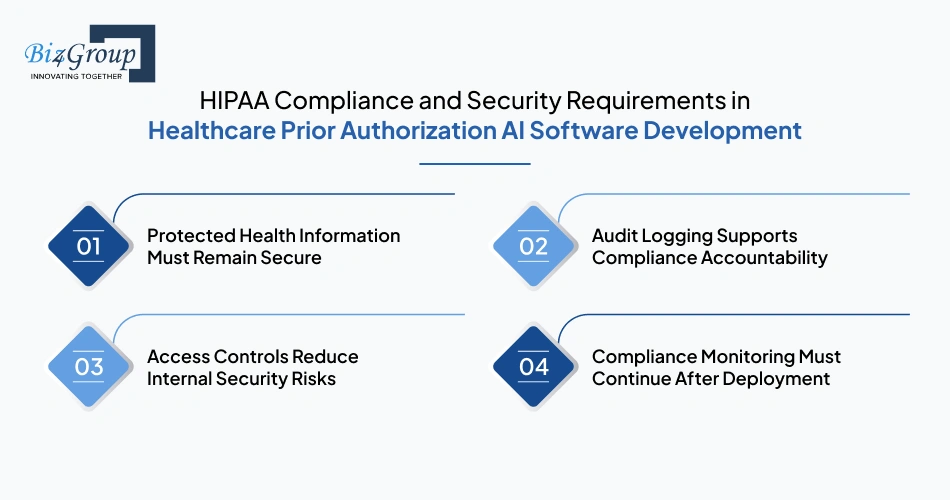
Patient authorization workflows involve large volumes of protected health information moving across clinical records, insurance documentation, administrative reviews, and payer communication channels. That is why clinics planning to develop a HIPAA compliant AI prior authorization automation system for medical practices processing high volumes of authorization requests must treat security planning as part of the core software architecture from the beginning.
1. Protected Health Information Must Remain Secure
Prior authorization systems continuously process patient names, diagnosis records, insurance details, treatment plans, physician notes, and supporting medical documentation. Every stage of the workflow must protect this information against unauthorized access and data exposure.
A secure authorization platform generally includes:
- Encrypted data storage
- Secure communication protocols
- Role-based user access
- Multi-factor authentication controls
- Session activity monitoring
Security controls must remain active across both internal workflows and external payer communication channels.
2. Audit Logging Supports Compliance Accountability
Authorization workflows involve multiple administrative actions during document review, submission handling, approval updates, and status management. Clinics need complete visibility into who accessed records, modified workflows, or reviewed patient information during authorization processing.
Audit logging usually helps organizations:
- Track authorization-related activity
- Monitor workflow changes
- Review user-level actions
- Maintain compliance documentation
- Support internal investigations when needed
Detailed activity tracking becomes especially important during payer disputes and compliance reviews.
3. Access Controls Reduce Internal Security Risks
Not every staff member inside a clinic should have unrestricted access to authorization-related patient information. Access permissions must align with operational responsibilities across departments.
Most HIPAA compliant AI software environments restrict access based on:
- Department responsibilities
- Authorization workflow roles
- Administrative hierarchy
- Clinical review requirements
- User authentication status
Structured access management helps clinics reduce unnecessary exposure to sensitive patient records.
Also Read: HIPAA Compliant AI App Development for Healthcare Providers
4. Compliance Monitoring Must Continue After Deployment
Healthcare compliance does not end after software launch. Authorization workflows continue evolving as payer requirements, operational policies, and healthcare regulations change over time. Clinics working with providers offering AI automation services typically maintain ongoing compliance reviews alongside operational updates.
Long-term compliance management often includes:
- Security vulnerability monitoring
- Access review audits
- Workflow policy updates
- Backup validation processes
- Incident response planning
Maintaining compliance readiness requires continuous operational oversight after deployment.
Strong compliance architecture protects more than patient information alone. AI prior authorization software development for mid-size clinics also depends on maintaining operational trust, audit readiness, and long-term security stability across daily authorization workflows.
What is the Cost to Develop AI Prior Authorization Software for Mid-Size Clinics?
The overall budget for clinics planning prior authorization AI automation software development for mid-size clinics usually depends on workflow complexity, payer connectivity requirements, compliance planning, and automation depth. Most projects fall between $40,000 and $350,000+ depending on deployment scope, specialty coverage, and operational scale.
|
Development Level |
Estimated Cost Range |
Scope |
|---|---|---|
|
MVP Level AI Prior Authorization Software |
$40,000–$80,000 |
Covers core authorization workflows, limited payer support, basic dashboards, and initial automation for one specialty or department |
|
Mid-Level System AI Prior Authorization Software |
$80,000–$150,000 |
Includes broader payer workflows, EHR connectivity, approval tracking, workflow automation, and multi-department support |
|
Advanced Level AI Prior Authorization Software |
$150,000–$350,000+ |
Supports multi-location operations, advanced AI processing, high-volume authorization management, analytics, and enterprise-grade compliance architecture |
Key Factors Affecting the Development Budget of AI Prior Authorization Software
1. EHR connectivity scope
The cost changes based on how many EHR systems the platform must connect with and how deep the data exchange needs to be. A simple one-way connection costs much less than a two-way workflow that pulls patient data, updates authorization status, and keeps records synced across departments.
Estimated cost impact: $10,000–$60,000
Also Read: How Much Does It Cost to Develop an AI EHR Software?
2. Payer workflow complexity
Every payer has its own approval rules, documentation patterns, and submission flow. The more payer types the system needs to support, the more development time goes into rule mapping, workflow handling, and exception management. Clinics with mixed commercial and government payers usually need a larger budget here.
Estimated cost impact: $15,000–$70,000
3. AI automation depth
A basic system can route requests and organize documents. A more advanced platform can extract clinical details, flag missing information, and score denial risk before submission. The deeper the automation, the more model training, testing, and workflow refinement the project needs.
Estimated cost impact: $20,000–$90,000
4. Compliance and security scope
Healthcare software must protect patient data and maintain audit readiness. Costs rise when the project needs stronger access controls, audit trails, encryption layers, and policy documentation. Clinics handling sensitive records across multiple teams usually need a more robust setup.
Estimated cost impact: $10,000–$50,000
5. Workflow customization
Some clinics want a standard prior authorization flow. Others need specialty-specific routing, approval exceptions, and department-level variations. The more closely the software must fit existing clinic operations, the more design and development work it takes increasing AI integrations cost.
Estimated cost impact: $15,000–$80,000
6. Scalability needs
A system built for one clinic site costs less than one built for multiple locations or heavy request volume. Costs increase when the platform must handle more users, more submissions, more document traffic, and more background processing without slowing down.
Estimated cost impact: $10,000–$40,000
7. Reporting and analytics depth
Basic reporting is usually cheaper. More detailed dashboards that track denial trends, approval delays, staff workload, and payer performance require additional development. Clinics that want stronger visibility into revenue cycle performance usually invest more here.
Estimated cost impact: $5,000–$25,000
Hidden Costs Clinics Often Miss During AI Prior Authorization Software Development
|
Hidden Costs |
Where Cost Goes |
Estimated Cost Impact |
|---|---|---|
|
Payer workflow updates |
Continuous authorization rule maintenance |
$5,000–$25,000 annually |
|
Staff onboarding |
Workflow training and operational transition |
$3,000–$15,000 |
|
Compliance reviews |
Security audits and policy validation |
$5,000–$20,000 |
|
Infrastructure scaling |
Cloud expansion and storage growth |
$2,000–$18,000 annually |
|
Workflow optimization |
Post-launch operational adjustments |
$5,000–$30,000 |
Strategies to Optimize Development Cost of Strategies to Optimize Development Cost
- Starting with focused MVP software development can reduce initial investment by 25–40%
- Prioritizing high-volume authorization workflows first helps reduce unnecessary feature expansion by 15–30%
- Using structured AI integration services early in planning helps avoid expensive workflow redesign later
- Reusing existing clinic infrastructure can lower deployment expenses by 10–20%
- Rolling out the platform department-by-department helps control operational scaling costs by 15–25%
Cost planning becomes more manageable when clinics align development scope with authorization volume and long-term workflow expansion goals. AI prior authorization system development for mid-size clinics works best when the investment strategy stays practical, phased, and operationally aligned from the beginning.
Also Read: How Much Does AI Software Development Cost?
Overspending Usually Starts with Unclear Scope
Authorization platforms cost less when rollout priorities and workflow boundaries stay clearly defined
Estimate Your Real Project CostWhat Challenges Arise in AI Prior Authorization Software Development for Mid-Size Clinics (and How to Solve Them)
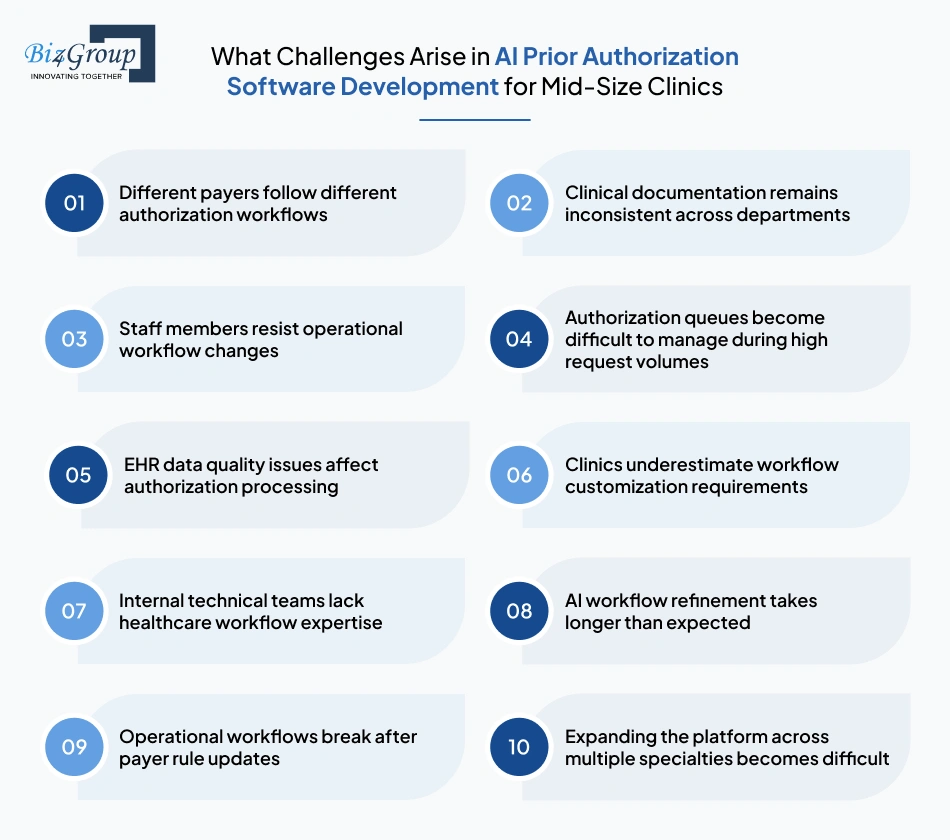
Operational realities inside mid-size clinics often make authorization automation more complicated than expected. During healthcare prior authorization AI software development, challenges usually appear around payer variability, workflow alignment, staff adoption, and long-term system maintenance.
Addressing these issues early helps clinics avoid operational disruption after deployment.
|
Challenges |
How to Solve Them |
|---|---|
|
Different payers follow different authorization workflows |
Configure payer-specific approval logic during workflow planning instead of forcing one universal process across every insurance provider. |
|
Clinical documentation remains inconsistent across departments |
Standardize documentation formats early and involve physicians during workflow review before building AI processing logic. |
|
Staff members resist operational workflow changes |
Introduce automation gradually through department-level rollout instead of replacing entire workflows at once. |
|
Authorization queues become difficult to manage during high request volumes |
Implement centralized queue visibility and workload prioritization during workflow architecture planning. |
|
EHR data quality issues affect authorization processing |
Validate patient records, coding accuracy, and clinical documentation quality before automation workflows are activated. |
|
Clinics underestimate workflow customization requirements |
Work with teams experienced in AI product development services so operational workflows reflect real clinic authorization processes. |
|
Internal technical teams lack healthcare workflow expertise |
Partnering with a custom software development company familiar with healthcare operations helps reduce workflow design errors early in development. |
|
AI workflow refinement takes longer than expected |
Clinics planning long-term automation projects should hire AI developers who understand healthcare documentation and payer approval logic. |
|
Operational workflows break after payer rule updates |
Maintain ongoing workflow monitoring and update payer rule logic regularly after deployment instead of treating automation as a one-time setup. |
|
Expanding the platform across multiple specialties becomes difficult |
Structure the rollout in phases while building AI software so workflows can be adjusted gradually across departments. |
Also Read: Cost to Hire an AI Software Developer in 2026
Successful automation projects usually depend less on software alone and more on how realistically the operational workflows are planned from the beginning. AI prior authorization software development for healthcare for clinics works best when technical execution stays closely aligned with daily authorization operations inside the clinic.
KPIs Mid-Size Clinics Should Track After Deployment of AI Prior Authorization Software
Once prior authorization workflows move into daily operations, clinics need clear performance visibility across approvals, payer response cycles, administrative workload, and workflow accuracy.
That is why AI prior authorization software development for mid-size clinics should include structured KPI monitoring from the beginning instead of relying only on operational assumptions.
- Track how many authorization requests get approved during the first submission cycle without additional documentation requests or resubmissions. This helps clinics monitor workflow accuracy across payer environments.
- Monitor how frequently authorization requests are denied because rising denial patterns often indicate documentation gaps, payer rule mismatches, or workflow inconsistencies.
- Measure the average time required to move authorization requests from intake to final payer decision. This helps clinics identify workflow slowdowns and delayed approval cycles.
- Review how much staff time is being spent on each authorization request after deployment. Clinics can use this KPI to monitor administrative workload changes across departments.
- Monitor the number of authorization requests remaining unresolved inside active queues. Large pending volumes usually indicate payer bottlenecks or workflow handling issues.
- Track how often denied authorization cases are successfully overturned through appeals. This helps clinics evaluate the quality of supporting documentation and payer response handling.
- Measure how frequently authorization requests enter workflows with incomplete records or missing information. This KPI helps identify documentation quality problems early.
- Monitor how many cases require manual escalation outside automated workflows. Higher escalation volume often signals workflow exceptions or payer-specific approval complications.
Consistent KPI monitoring gives clinics a clearer operational view of how authorization workflows perform after deployment. AI prior authorization management software development becomes easier to manage when teams continuously track approval patterns, workflow delays, and operational exceptions across departments.
Why You Should Choose Biz4Group LLC for AI Prior Authorization Software Development for Mid-Size Clinics
Many mid-size clinics reach a point where operational pressure turns into financial risk. Questions like, “we are losing approximately $400,000 annually in denied prior authorization claims because our manual submission process frequently misses payer specific documentation requirements. We need to find a development company that can build us an AI prior authorization system that checks documentation completeness before every submission?” are becoming increasingly common across healthcare organizations handling high authorization volumes.
That is where Biz4Group LLC becomes a strong execution partner. As a HIPAA compliant AI healthcare software development company, the team focuses on operational healthcare automation systems aligned with real clinical workflows, payer requirements, and administrative challenges faced by mid-size clinics. Here’s what we possess:
1. Deep Understanding of Healthcare Authorization Operations
Prior authorization workflows involve much more than software development alone. We work closely with healthcare organizations to understand payer complexity, approval bottlenecks, documentation dependencies, and administrative coordination challenges before development begins.
This operational understanding becomes especially important during medical clinic prior authorization AI development projects where workflow accuracy directly affects reimbursements and patient scheduling.
2. Experience Across Insurance and Automation Workflows
Healthcare authorization systems sit directly between clinical operations and insurance workflows. We have experience working on AI insurance automation software solutions that involve workflow automation, document handling, payer coordination, and operational process optimization across healthcare environments. Still not convinced here’s the proof:
Transforming Insurance Training with AI: Meet Insurance AI
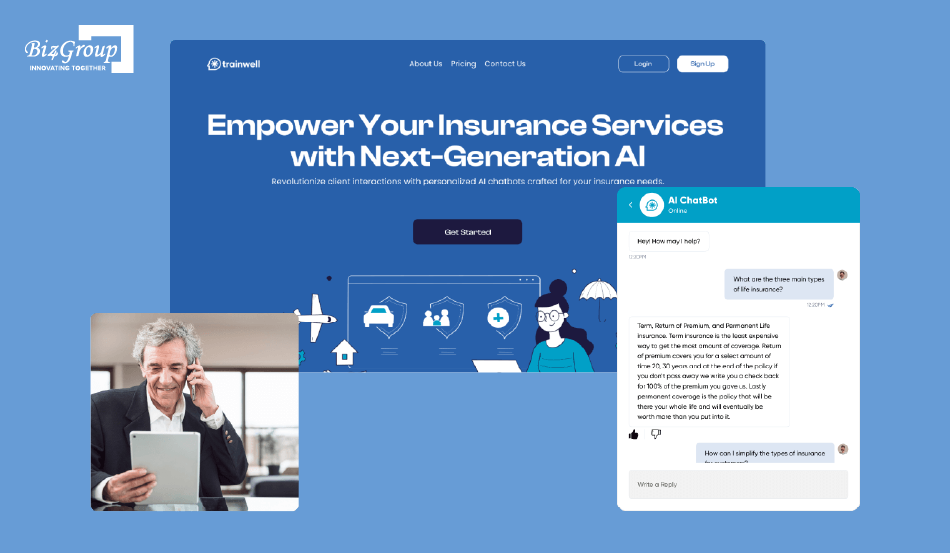
- An AI-powered insurance assistance platform was developed for senior insurance industry leaders to help teams access policy guidance, workflow support, and operational information through conversational AI.
- The system streamlined how insurance staff handled documentation, policy interpretation, and internal workflow coordination during daily operations.
- The project also reflects our strong understanding of insurance processes where approval handling, document accuracy, and workflow efficiency directly influence operational performance.
3. Focus on Custom Operational Workflows
Every clinic handles authorizations differently based on specialties, payer mix, staffing structure, and approval complexity. We focus on workflow-specific system design instead of forcing clinics into rigid templates.
Our teams structure authorization platforms around:
- clinic-specific approval workflows,
- specialty-based authorization handling,
- payer-specific documentation requirements,
- and operational escalation paths.
4. Strong AI Strategy and Planning Support
Many clinics understand the operational problems they face but struggle to define the right rollout strategy. Through structured AI consulting services, we help organizations plan automation scope, workflow priorities, operational rollout phases, and long-term scalability before engineering work begins. This reduces unnecessary development expansion during early project stages.
5. Proven AI Delivery Experience
Healthcare organizations often evaluate execution capability before committing to long-term automation investments. We maintain an extensive AI portfolio covering healthcare automation, operational workflow systems, AI-powered process management, and enterprise-grade custom platforms across multiple industries.
This gives clinics better visibility into practical AI implementation experience before starting development.
Successful authorization automation projects require more than software engineering alone. Biz4Group LLC works as a long-term execution partner for mid-size clinics by aligning healthcare workflows, payer requirements, and scalable AI implementation into one structured development approach for prior authorization automation.
Conclusion
Prior authorization problems rarely stay limited to administrative teams. Over time, they start affecting scheduling, reimbursements, physician coordination, and overall workflow stability inside the clinic. That is why many healthcare organizations now view AI prior authorization software development for mid-size clinics as a practical operational move instead of a long-term experimental initiative.
The real goal is not simply automation. It is creating a more reliable authorization process that reduces manual dependency and keeps approval workflows easier to manage as payer complexity grows. An experienced AI development company can help clinics approach that transition with clearer operational planning and realistic implementation strategies.
That is where Biz4group LLC supports mid-size clinics through structured workflow planning, healthcare-focused execution, and intelligent prior authorization software development aligned with real operational requirements.
To discuss your clinic’s authorization challenges and automation goals, schedule a consultation call with us today.
FAQ’s
1. How does AI prior authorization software handle payer rule changes across multiple insurance providers?
Modern authorization platforms use configurable payer-rule workflows that can be updated without rebuilding the entire system. This helps clinics adapt faster when insurance providers change documentation requirements, approval criteria, or submission conditions across specialties.
2. Can AI prior authorization software work for specialty clinics handling complex treatment approvals?
Yes. Many specialty clinics use AI prior authorization system development to manage high-complexity approvals tied to imaging, oncology, cardiology, orthopedic procedures, and specialty medications. The workflows can be customized around specialty-specific documentation and payer requirements.
3. What is the typical cost range for AI prior authorization software development for mid-size clinics?
The cost usually ranges between $40,000 and $350,000+ depending on workflow complexity, payer integrations, automation depth, compliance requirements, specialty coverage, and operational scale across clinic locations.
4. How long does it take to develop AI prior authorization software for medical clinics?
Most projects take around 4-16+ weeks depending on the development scope. Smaller MVP-level systems generally move faster, while enterprise-grade prior authorization automation software development projects require additional time for integrations, testing, compliance validation, and workflow customization.
5. Can clinics deploy AI prior authorization software without replacing their existing EHR system?
Yes. Most healthcare prior authorization AI software development projects are designed to work alongside existing EHR infrastructure instead of replacing it entirely. The software typically connects with current workflows through APIs, healthcare data standards, and operational middleware.
6. What should clinics prioritize before starting intelligent prior authorization software development?
Clinics should first identify their highest-volume authorization workflows, denial-prone payer environments, documentation bottlenecks, and operational escalation patterns. Clear workflow mapping usually prevents unnecessary customization delays during development.
