Location :
Orlando, FL, USA
Location :
Orlando, FL, USA +1 (407) 714-1616
 info@biz4group.com

- AI SOAP notes software development for healthcare works best when the product mirrors real provider documentation workflows, review habits, and hospital-scale adoption needs.
- The strongest roadmap covers use cases, core features, HIPAA-safe workflows, testing, and phased rollout before hospital-wide deployment begins.
- A realistic budget to build AI SOAP notes software usually falls between $30,000 and $250,000+ depending on MVP scope, AI depth, specialty logic, and enterprise integrations.
- The most future-ready platforms will evolve toward autonomous documentation, persistent patient context, and agentic workflow support beyond 2026.
- Biz4Group LLC stands out through real healthcare AI product delivery, workflow-first execution, and scalable platform experience across clinical use cases.
- Teams planning to develop AI SOAP notes software for healthcare should prioritize provider trust, phased validation, and long-term product scalability from day one.
Every patient conversation generates clinical value, but how much of that value gets trapped in documentation delays before it ever reaches the EHR? For many healthcare teams, the real friction begins after the consultation ends. Providers still spend valuable time organizing subjective notes, findings, assessments, and treatment plans into structured SOAP format. That delay impacts chart completion, coding readiness, and provider bandwidth across the day.
This is exactly where AI SOAP notes software development for healthcare is becoming a strategic priority for healthtech entrepreneurs, medical professionals, and healthcare administrators. As clinical workflows grow more digital, teams want documentation systems that can capture conversations, structure them into SOAP-ready notes, and route them into EHR workflows with the right compliance controls.
That demand is also reflected in market momentum, with the U.S. AI medical scribing segment moving from 397.05 million in 2024 toward 2,955.72 million by 2033, growing at 25.09% CAGR from 2025 to 2033 a clear signal that documentation automation is now tied to operational scalability.
For organizations thinking, “we are looking to develop AI SOAP notes software for our clinic, which companies can build this with EHR integration and compliance.”
Well, the answer typically lies in partnering with a custom software development company that understands healthcare workflows, secure EHR connectivity, and clinical compliance requirements from the product design stage itself.
That means the development approach should focus on:
- clinical note structuring that fits real SOAP workflows
- smooth EHR integration with secure data exchange
- provider review layers before final note submission
- compliance-first architecture built for hospital and clinic scale
In this guide, we’ll walk through how healthcare SOAP notes software development integrating AI should be planned, built, and scaled for 2026-ready care delivery.
What Is AI SOAP Notes Software for Healthcare?
AI SOAP notes software for healthcare is a clinical documentation system that captures patient-provider conversations and converts them into the standard SOAP note structure used across hospitals, clinics, and private practices. The format itself follows four essential parts: Subjective, Objective, Assessment, and Plan.
- Subjective captures what the patient says, including symptoms, concerns, and history.
- Objective records measurable findings such as vitals, observed signs, and test data.
- Assessment reflects the clinician’s diagnosis or interpretation of the condition.
- Plan outlines medications, tests, follow-ups, and the next care steps.
What makes the software valuable is how it turns this familiar documentation structure into a faster and more workflow-friendly process for healthcare providers and doctors. Instead of manually writing each section after the visit, the system helps structure clinical conversations into review-ready notes, which is why many clinics now look at building AI software with secure EHR workflows supported by reliable AI integration services.
To better understand what changes at the workflow level, here’s how traditional SOAP documentation differs from AI-powered SOAP notes software:
|
Workflow Area |
Traditional SOAP Notes |
AI SOAP Notes Software |
|---|---|---|
|
Note Creation |
Manually typed by provider after consultation |
Automatically generated from conversation and visit context |
|
Time Spent |
High documentation burden after every visit |
Faster draft generation with provider review |
|
Structure Accuracy |
Depends on provider consistency |
Standardized SOAP formatting every time |
|
EHR Readiness |
Requires manual copy or direct typing |
Prepared for structured EHR insertion |
|
Provider Effort |
High mental load and repetitive entry |
Lower effort with guided note review |
|
Scalability for Hospitals |
Documentation style varies across providers and departments |
Standardized note templates and automated structuring support consistent documentation across teams |
The practical takeaway is that AI SOAP notes software development for healthcare is not just about faster note writing. It is about converting the existing SOAP method into a scalable digital workflow that supports providers without disrupting how they already document care.
In the next section, we’ll break down how this workflow is architected with EHR systems and real clinical data movement.
Is Your Clinical Workflow Architecture Ready?
Map the right EHR sync and note logic before scaling provider adoption
Plan Your ArchitectureHow Does AI SOAP Notes Software Architecture Works with EHR and Clinical Workflows?
What really happens behind the screen when a doctor finishes speaking, and a structured SOAP note appears inside the patient's record? For hospitals and healthcare startups, that workflow depends on an architecture that keeps note creation fast, clinically aligned, and ready for EHR movement without interrupting provider routines.
1) Input Capture and Visit Intake Layer
The architecture starts by capturing the consultation through voice, typed notes, or connected visit transcripts. In most hospital workflows, this layer also maps the note to the right patient, encounter, and provider context, so the documentation starts with visit-specific accuracy.
This creates the foundation for reliable downstream note generation.
2) Speech and Text Normalization Layer
The captured conversation then moves through a healthcare speech recognition system that converts clinical speech into clean text. It removes filler phrases, separates speakers, and organizes fragmented discussion into medically usable note content.
This layer directly impacts how usable the final SOAP draft feels to doctors.
Also Read: AI Text to Speech App Development
3) Clinical Context and Patient Record Layer
Before structuring the note, the software pulls relevant patient details such as history, current medications, prior diagnoses, allergies, and recent lab data from AI EHR/EMR software workflows. This helps the system align the current visit discussion with the broader clinical picture.
This layer keeps documentation grounded in a real patient context.
Also Read: How Much Does It Cost to Develop an AI EHR Software?
4) SOAP Structuring and Clinical Logic Layer
This is the core intelligence layer where the system maps conversation data into subjective, objective, assessment, and plan sections. It also applies specialty-specific templates, note preferences, and care-path logic, which is critical when teams want to create AI SOAP notes software for doctors that fits real specialties.
This layer turns raw visit data into clinically meaningful documentation.
5) Provider Review and Edit Layer
The structured note then moves into a provider-facing review screen where doctors can refine wording, verify diagnoses, and finalize the treatment plan. This keeps the workflow aligned with real clinical ownership.
This is the trust layer of the entire system.
6) EHR/EMR Integration and Sync Layer
After approval, the final note flows through middleware that helps integrate healthcare platform with AI EHR’s, linking the SOAP output with encounter records, patient charts, orders, and follow-up workflows.
This is what makes the architecture operationally useful inside hospitals.
Also Read: Your Guide on AI EHR App Development for Hospitals and Clinics
7) Compliance, Audit, and Role Access Layer
Every note edit, access event, and sync action is logged with timestamps, user roles, and version history. This layer supports compliance readiness, secure access, and audit traceability across departments.
This protects documentation integrity at scale.
8) Analytics and Continuous Optimization Layer
The final layer tracks provider correction patterns, specialty usage, delayed note trends, and template performance. These insights help hospitals build AI SOAP notes system for hospitals that improve documentation quality over time.
The real strength of this architecture is that every layer supports both provider usability and hospital-grade governance. That is what allows AI SOAP workflows to scale from single clinics to multi-location health systems without breaking clinical routines.
How Does AI SOAP Notes Software Create Strong Business Value for Healthcare Organizations?
When healthcare organizations invest in documentation intelligence, the real business question is not how notes get written. It is how fast that investment improves revenue, reduces cost pressure, and creates measurable ROI across provider groups.
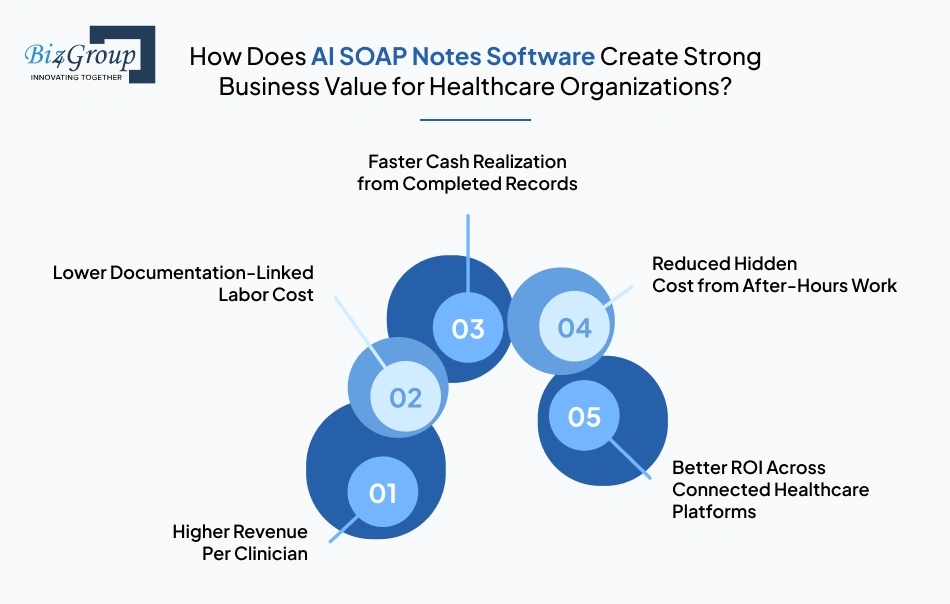
For hospitals and clinics, the strongest value of AI SOAP notes software development for healthcare comes from better financial output per clinician, lower documentation-linked labor spend, and faster revenue realization from completed records.
1) Higher Revenue Per Clinician
When documentation delays shrink, each provider’s billable output improves within the same compensation structure. In real deployments, even a 12% increase in clinician productivity can materially improve annual revenue per physician without increasing salary cost.
That financial lift is usually reflected through:
- higher revenue generated per provider
- stronger work RVU realization
- improved encounter monetization
- better margin per employed physician
2) Lower Documentation-Linked Labor Cost
The clearest financial gain comes from reducing paid and hidden labor spent on documentation. When organizations save 15,000 clinician hours in 1 year, the value directly converts into lower overtime exposure and better salary efficiency.
The cost savings typically appear through:
- fewer overtime payouts
- lower reliance on scribes or support staff
- reduced contract staffing expense
- better labor cost per patient visit
This is where documentation intelligence starts behaving like practical AI automation for healthcare investment.
3) Faster Cash Realization from Completed Records
Revenue delays often begin when notes remain incomplete. A 66% reduction in delayed note closures within 50 days improves how quickly completed documentation turns into financially usable records.
That monetary value grows through:
- lower delayed revenue risk
- faster claim-ready documentation
- stronger monthly cash realization
- better billing cycle predictability
This strengthens financial control for provider organizations.
4) Reduced Hidden Cost from After-Hours Work
After-hours documentation creates real financial leakage through overtime, retention strain, and physician replacement costs. A 41% sustained reduction in after-hours documentation work helps organizations reduce these hidden expenses over time.
The savings become visible through:
- lower physician burnout replacement cost
- stronger retention economics
- reduced recruiting spend
- better compensation efficiency
This becomes highly valuable in developing AI SOAP notes software for clinics with secure data handling, where cost discipline directly affects profitability.
5) Better ROI Across Connected Healthcare Platforms
The long-term financial upside increases when SOAP documentation connects with systems such as healthcare CRM, an AI driven patient journey automation system, and AI healthcare analytic software that support payer follow-ups and revenue intelligence.
That enterprise ROI expands through:
- better patient lifetime value visibility
- stronger reimbursement analytics
- improved revenue leakage detection
- clearer executive ROI reporting
Also Read: Artificial Intelligence in CRM
The business takeaway is clear: AI SOAP note platforms create value when they improve provider revenue output, lower documentation labor cost, reduce hidden burnout expenses, and shorten the path to realized cash flow. That is the kind of ROI healthcare organizations can justify at scale.
Which Clinical Use Cases of AI SOAP Notes Software Deliver the Highest Documentation Savings?
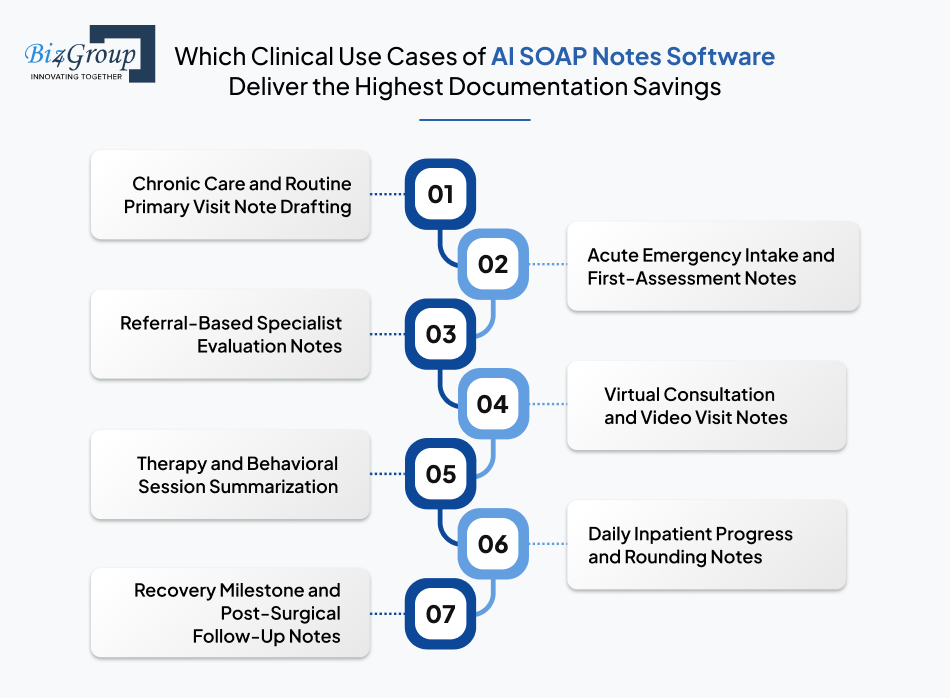
Patient documentation pressure does not look the same across every care setting, which is why the highest-value use cases come from workflows where providers repeat the same note structure across high patient volumes.
When the question becomes, I want to build AI SOAP notes software that supports real-time documentation and integrates with EHR systems. What should I consider?
The right starting point is defining the exact clinical note scenarios where the software will be used every day. Take a look:
1) Chronic Care and Routine Primary Visit Note Drafting
- generates SOAP drafts during recurring diabetes, hypertension, preventive care, and medication review visits
- auto-organizes repeated patient history updates, symptom progression, and treatment adjustments into fixed note structures
- supports doctors handling repeated follow-up consultations with similar documentation patterns
2) Acute Emergency Intake and First-Assessment Notes
- captures the first physician interaction during ER or urgent care visits and converts it into immediate SOAP documentation
- structures presenting complaint, first observations, rapid assessment, and immediate care direction into the initial note
- supports time-sensitive first-contact documentation in emergency settings
3) Referral-Based Specialist Evaluation Notes
- generates structured SOAP notes during first-time specialist referrals such as cardiology, neurology, or orthopedic evaluations
- organizes referral reason, prior history review, specialist findings, and diagnostic assessment into specialty note templates
- supports detailed one-time evaluation workflows that differ from routine follow-ups
4) Virtual Consultation and Video Visit Notes
- converts live telehealth audio and video discussions into SOAP drafts while the consultation is still active
- structures remote symptom narration, virtual observations, and digital treatment advice into note-ready sections
- aligns naturally with AI medical transcription workflows used in remote care delivery
5) Therapy and Behavioral Session Summarization
- transforms long-form therapy conversations into SOAP notes for mood observations, session progress, risk assessment, and care plans
- supports mental health professionals who need narrative-heavy session notes without manual rewriting
- often works alongside an AI medical scribe review layer for therapist approval
6) Daily Inpatient Progress and Rounding Notes
- generates new SOAP progress notes from every hospital round based on daily status changes, physician observations, and response to treatment
- supports repeated day-by-day documentation across ICU, ward, and recovery units
- works well with hospital documentation ecosystems supported by AI automation services
Also Read: How to Develop an AI Telehealth Automation System in 2026
7) Recovery Milestone and Post-Surgical Follow-Up Notes
- structures follow-up documentation around wound healing, pain score movement, medication tapering, and recovery milestones
- supports repeat recovery visits where the software tracks progress stage by stage instead of general consultation notes
- strongly reflects emerging healthcare AI trends in recovery documentation
The real strength of these use cases lies in how each one maps to a different clinical documentation moment across care delivery. That is why AI SOAP notes software development for healthcare should always begin with clear use-case definition before moving into feature planning.
Turn High-Friction Notes into Savings
Identify the use cases where documentation time drops fastest across specialties
Find Your Best Use CasesTop 5 AI SOAP Notes Software for Healthcare Providers
When evaluating SOAP notes software development for healthcare using AI, let us first look at how the leading platforms already solve real clinical documentation problems.
The tools below stand out because their workflows, EHR connectivity, and note-generation methods reflect what healthcare teams usually expect before they decide to develop AI SOAP notes software for healthcare with their own product vision.
1) Suki AI
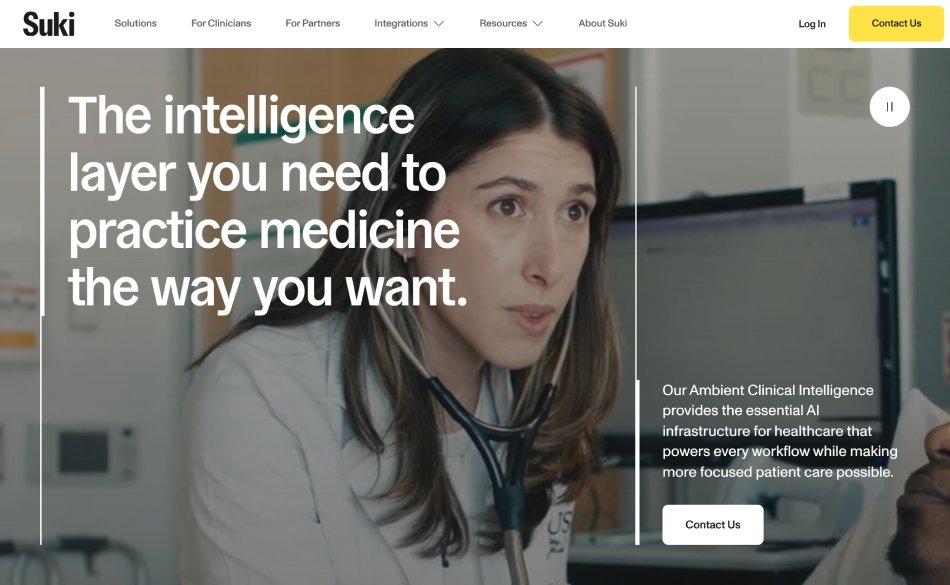
Suki is an ambient clinical intelligence platform built for healthcare documentation, coding, and reasoning workflows. It captures the full patient conversation, turns it into structured clinical notes, and syncs directly with major EHRs including Epic, Oracle Health, athenahealth, and MEDITECH. Its strength lies in deep enterprise-grade interoperability and broad specialty coverage.
How It Works: It listens during the patient visit, converts the conversation into high-quality notes, allows voice-enabled edits, and sends finalized documentation directly into the EHR in real time. It also supports patient instructions and order generation.
Best For: Large health systems, multi-specialty provider groups, and hospitals that need deeply integrated ambient documentation workflows.
2) Freed AI
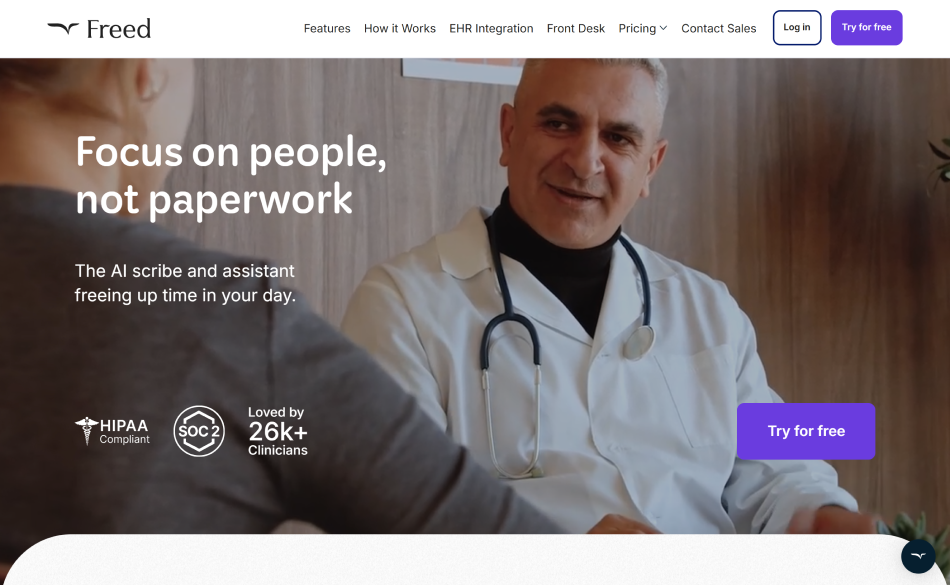
Freed is an AI scribe and clinician assistant focused on fast, accurate note creation with simple usability. It is widely used by individual clinicians and smaller practices that want documentation help without heavy enterprise setup. Its one-click EHR transfer makes it easy for providers to fit into existing workflows.
How It Works: The platform turns patient conversations into clear notes, prepares visit-ready documentation, and lets providers transfer finalized notes into their existing EHR with a single click.
Best For: Solo practitioners, outpatient clinics, therapists, and independent medical groups.
3) Heidi Health
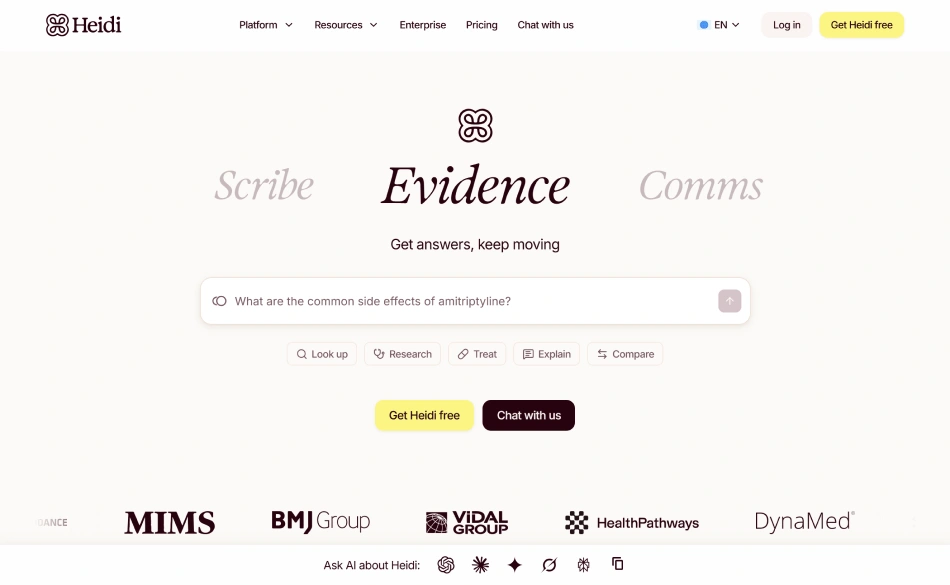
Heidi Health positions itself as an AI care partner for modern clinical practice, focusing on documentation support that feels lightweight and provider friendly. Its value comes from helping clinicians generate notes quickly while keeping the interaction natural and easy to review.
How It Works: It captures the clinical interaction, drafts structured notes, and supports doctor-led review before the final note is moved into the record workflow.
Best For: Growing clinics, telehealth providers, and modern digital-first care practices.
4) Abridge
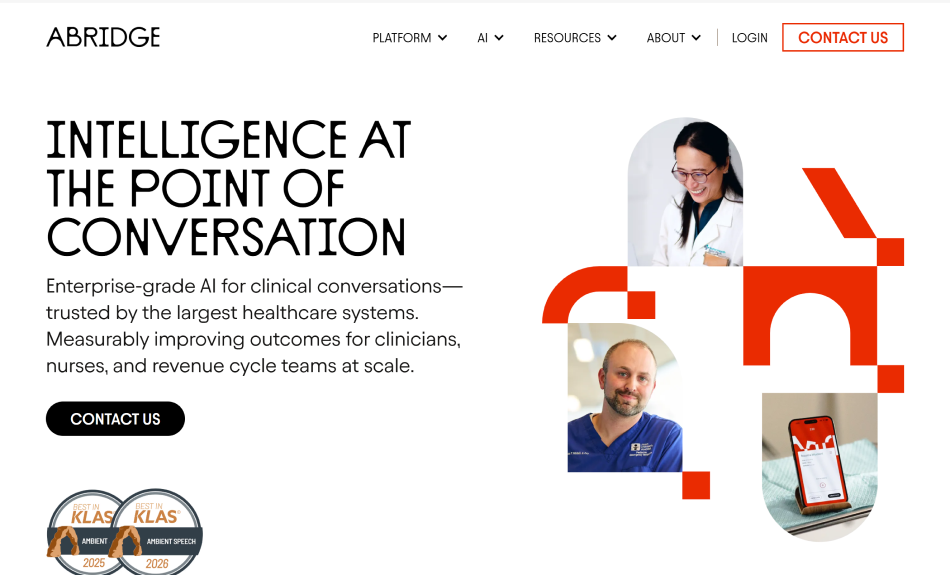
Abridge is a generative AI platform built specifically for clinical conversations. It transforms patient-clinician interactions into context-aware, clinically useful, and billable notes in real time. The platform is strongly positioned for enterprise healthcare systems that prioritize large-scale deployment.
How It Works: It listens to live clinical conversations, applies context-aware note generation, and prepares sign-off-ready documentation that can support downstream clinical and revenue workflows.
Best For: Enterprise hospitals, Epic-heavy environments, and health systems with large physician networks.
Also Read: Top Generative AI Development Companies in USA
5) DeepScribe
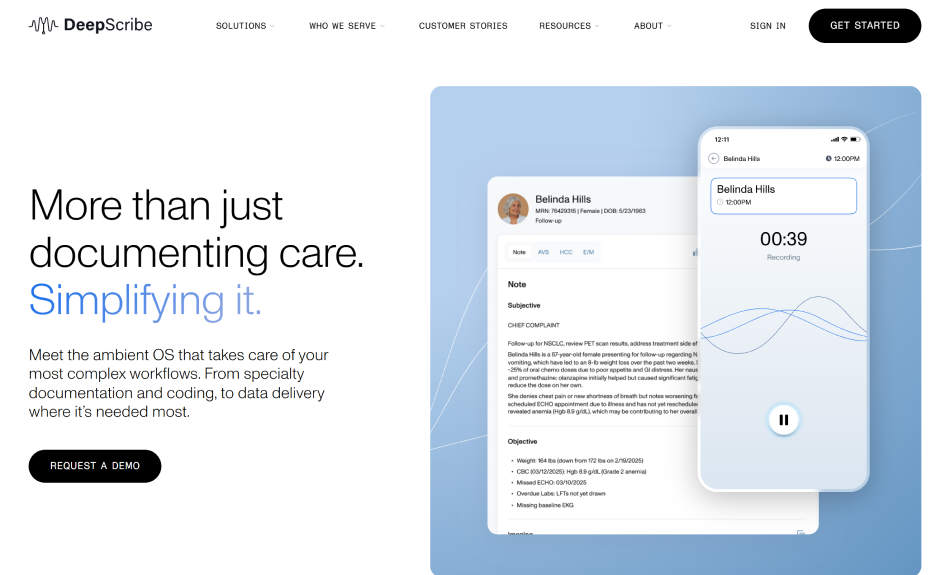
DeepScribe focuses on specialty-specific AI medical scribe workflows. Its platform is built to transform patient conversations into fully customizable chart notes while learning provider style and specialty preferences over time. That makes it especially strong for personalized SOAP documentation.
How It Works: The provider starts the visit in the app, selects the patient from a synced schedule, and the software converts the visit into customizable specialty notes that can be refined before chart completion.
Best For: Specialty clinics, surgical groups, and providers who need deeply customizable documentation behavior.
The biggest takeaway from these tools is not just feature variety, but how each one approaches note generation, provider review, and EHR movement differently. Those product patterns become highly useful reference points when planning AI SOAP notes software development for healthcare with a differentiated workflow strategy.
Which Core Features Are Essential to Build HIPAA-Compliant AI SOAP Notes Software?
A hospital-ready AI SOAP notes platform is defined by the features that directly support how doctors capture, review, finalize, and securely store clinical notes. When the focus shifts toward building an AI SOAP notes software for healthcare industry, the most practical approach is to prioritize features that improve note accuracy, preserve provider control, and protect PHI at every documentation stage.
|
Core Feature |
Purpose |
|---|---|
|
Real-Time Clinical Conversation Capture |
Captures doctor-patient conversations live during the visit and prepares the note foundation as the interaction happens, reducing the need for post-visit reconstruction. |
|
Multi-Speaker Separation Engine |
Distinguishes provider speech from patient responses so symptoms, clinical observations, and care decisions are assigned to the correct SOAP sections. |
|
Clinical Speech-to-Text and NLP Layer |
Uses AI speech recognition to convert medical conversations into structured draft text with context-aware section mapping, making it practical to create AI SOAP notes software with speech to text and NLP for real clinical use. |
|
Automatic SOAP Note Drafting |
Converts the captured visit context into subjective, objective, assessment, and plan sections in real time, so doctors review a full draft instead of starting with a blank note. |
|
Specialty-Specific Note Templates |
Applies specialty-aware documentation structures for cardiology, behavioral health, orthopedics, and other departments, so the SOAP draft matches the provider’s real note style. |
|
Provider Review, Voice Edit, and Approval |
Lets doctors refine diagnoses, update treatment plans, use voice commands for quick edits, and approve the final note before chart sync. |
|
Patient and Encounter Linking |
Connects every generated note to the correct patient, provider, visit date, and encounter type, so documentation remains traceable and EHR-ready. |
|
Provider Correction Learning Loop |
Learns from repeated provider edits and preferred wording patterns to improve future note drafts and support smarter documentation predictive analysis. |
|
Clinical Tone and Risk Signal Detection |
Uses sentiment analysis to detect distress cues, behavioral concerns, or escalation patterns inside conversations that may influence assessment and care planning. |
|
Audit Trail and HIPAA Access Governance |
Records every edit, approval, export, and access event with timestamps, role control, and version history, so note workflows stay legally traceable and HIPAA-safe. |
|
Encrypted EHR Sync and Secure PHI Storage |
Sends finalized SOAP notes into patient records through protected channels while securing transcripts, voice data, and note history during storage and transfer. |
The most effective feature sets are the ones that directly reflect how clinical notes are actually created inside hospitals and clinics. That is why AI SOAP notes software development for healthcare should begin with realistic note-generation features before moving into workflow design and compliance engineering.
Also Read: AI Predictive Diagnosis and Disease Forecasting Software Development
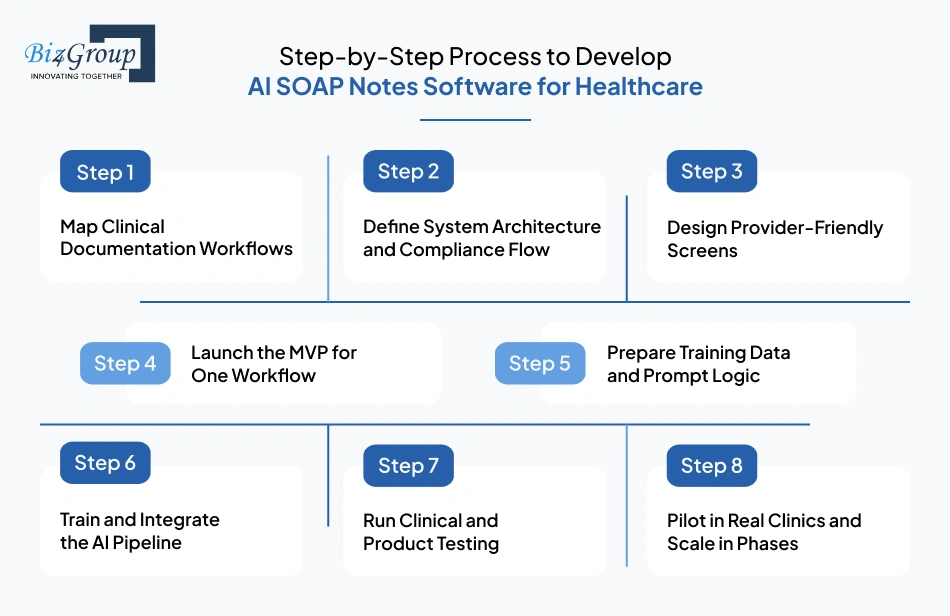
Step-by-Step Process to Develop AI SOAP Notes Software for Healthcare
A strong product does not begin with code. It begins with clarity around how doctors document, where note friction happens, and what the first usable version must solve.
When the question becomes, how to develop AI SOAP notes software for healthcare step by step, the most practical path is a staged process that moves from workflow planning to MVP validation, model integration, and clinical-grade testing.
1) Map Clinical Documentation Workflows
Start by identifying the exact care settings where the product will be used, such as outpatient visits, hospital rounds, telehealth, or specialty consultations. For teams creating AI SOAP notes solution for clinics, this step defines the first documentation journey the product should support.
Then document:
- the visit types where SOAP notes are created most frequently
- the provider roles involved in note review and approval
- the specialty-specific documentation differences that affect note structure
- the EHR touchpoints where finalized notes must be pushed
2) Define System Architecture and Compliance Flow
Once workflows are clear, design the full product architecture for live capture, SOAP drafting, review layers, HIPAA controls, storage, and secure API connections. This stage should also define how access control, audit history, and PHI movement will work from day one.
Then define:
- how voice or transcript input enters the system
- where PHI is encrypted during processing and storage
- how provider edits and approvals are version tracked
- how the final note syncs into the EHR workflow
Also Read: Adopt An API-First Architecture for Business Agility
3) Design Provider-Friendly Screens
The interface should feel natural for doctors who need to review notes quickly during busy schedules. Working with a reliable UI/UX design company helps shape a usable experience around transcript view, SOAP editing, voice correction, and encounter-based note approval.
Then design:
- a screen for live transcript and draft visibility
- a clear SOAP section edit interface
- a fast provider approval workflow
- a feedback option for note correction learning
Also Read: Top UI/UX Design Companies in USA
4) Launch the MVP for One Workflow
The first release should focus on one realistic documentation scenario instead of multiple specialties. With the help of focused MVP development services, the MVP can validate whether the capture-to-note flow actually works in clinical environments.
Then include:
- one care setting such as primary care or telehealth
- real-time draft note generation for one visit type
- provider review and approval before export
- secure note push into the selected EHR workflow
Also Read: Top MVP Development Companies in USA
5) Prepare Training Data and Prompt Logic
Once the MVP workflow is stable, prepare de-identified SOAP note samples, correction examples, and specialty prompts. This is the stage where teams select AI model for your use case and define how the system should interpret symptoms, findings, assessments, and plans.
Then prepare:
- structured SOAP note examples from real care settings
- doctor correction patterns for learning inputs
- prompts for specialty-specific note generation
- edge cases such as interrupted conversations or incomplete visits
6) Train and Integrate the AI Pipeline
Now the model layer moves into production readiness. Use this phase to train AI models on validated note structures, then integrate AI model workflows into the MVP, so real patient conversations convert into review-ready SOAP drafts.
Then connect:
- the speech-to-text engine with the note generation layer
- the prompt logic with specialty template workflows
- the provider feedback loop with correction learning
- the final output with EHR-ready formatting rules
7) Run Clinical and Product Testing
Before wider rollout, validate the software in controlled care environments. Partnering with experienced software testing companies helps confirm note accuracy, approval reliability, HIPAA-safe access, and stable EHR sync under real usage.
Then test:
- whether patient and provider speech is separated correctly
- whether each SOAP section is mapped accurately
- whether provider edits save and version properly
- whether EHR exports work without data mismatch
Also Read: Top AI Software Development Companies in USA
8) Pilot in Real Clinics and Scale in Phases
The final stage is a controlled pilot with real providers, followed by phased expansion across departments or partner hospitals. Use feedback from early users to improve templates, note quality, and specialty coverage before larger deployment.
Then scale through:
- one provider group before department-wide rollout
- one specialty before multi-specialty expansion
- one clinic before hospital network deployment
- continuous provider feedback after each rollout phase
The strongest products follow a phased process where workflow mapping, MVP validation, AI training, and clinical testing happen in the right sequence. That is what makes AI SOAP notes software development for healthcare realistic enough for long-term hospital deployment.
Build Smarter, Launch Without Rework
Validate the right MVP path before your development timeline expands
Start Your Product RoadmapWhat Technology Stack Is Best for Hospital-Grade AI SOAP Notes Software Development?
Once the product workflow and architecture are defined, the next decision is the technology stack that keeps note generation, EHR movement, and hospital-grade reliability stable as usage grows.
When the focus turns to creating an AI SOAP notes solution for healthcare with cloud integration, the right full stack development choices decide how smoothly documentation workflows scale across clinics, departments, and hospital systems.
The most practical way to evaluate the stack is by separating it into the same technology layers the product will rely on in real deployment.
AI and Clinical Intelligence Stack
|
Category |
Frameworks and Tools |
Why It Matters |
|---|---|---|
|
Speech-to-Text |
Whisper, Google Speech-to-Text, AWS Transcribe Medical |
Converts provider-patient conversations into accurate clinical transcripts |
|
NLP and SOAP Structuring |
spaCy, Hugging Face Transformers, ClinicalBERT |
Maps conversations into Subjective, Objective, Assessment, and Plan sections |
|
LLM Orchestration |
LangChain, LlamaIndex |
Manages prompt workflows, provider correction memory, and note-generation pipelines |
|
Clinical Reasoning Models |
OpenAI API, Azure OpenAI, Med-PaLM style clinical LLMs |
Supports context-aware SOAP draft generation and provider-ready summaries |
Frontend, Backend, and API Technologies
|
Category |
Frameworks and Tools |
Why It Matters |
|---|---|---|
|
Frontend |
Provider dashboards, transcript review screens, and note editing workflows through secure web development layers |
|
|
Backend |
Handles note generation logic, encounter workflows, provider review, and EHR orchestration |
|
|
APIs |
REST, GraphQL, FHIR APIs |
Moves finalized SOAP notes, encounter data, and patient context securely across hospital systems |
Data Management and Cloud Infrastructure
|
Category |
Frameworks and Tools |
Why It Matters |
|---|---|---|
|
Databases |
PostgreSQL, MongoDB |
Stores patient encounter metadata, note drafts, and provider correction history |
|
Cache Layer |
Redis |
Supports faster transcript retrieval and low latency note review screens |
|
Cloud |
AWS HealthLake, GCP Healthcare API |
Secure cloud infrastructure for PHI-safe storage, model execution, and hospital integrations |
Deployment and Scalability Tools
|
Category |
Frameworks and Tools |
Why It Matters |
|---|---|---|
|
Containerization |
Docker |
Keeps environments consistent across development, staging, and hospital deployment |
|
Orchestration |
Kubernetes |
Scales documentation workloads across departments and multi-site health systems |
|
Monitoring |
Prometheus, Grafana |
Tracks note-generation latency, sync failures, and provider workflow health |
Advanced AI Workflow Capabilities
|
Category |
Frameworks and Tools |
Why It Matters |
|---|---|---|
|
Voice Workflow Layer |
WebRTC, Twilio Voice, Agora |
Supports real-time visit audio capture for live SOAP drafting |
|
Model Feedback Loop |
MLflow, Weights & Biases |
Tracks provider corrections and improves future note quality |
|
Security and PHI Controls |
Vault, AWS KMS, Azure Key Vault |
Secures PHI encryption keys, token access, and compliance-ready credential management |
A strong stack keeps hospital documentation workflows reliable under real provider demand, while also making model updates and EHR integrations easier to manage. That is why AI SOAP notes software development for healthcare depends as much on stack alignment as it does on architecture and workflow design.
Also Read: Why to Choose the Full Stack Development for Modern Business
Compliance, Security, and Regulatory Requirements for AI SOAP Notes Software
Clinical documentation software succeeds only when providers trust that every note, transcript, and patient conversation is protected from capture to storage.
For healthcare providers asking, “we want to implement AI in our documentation workflows using SOAP notes software, what requirements should be taken into considerations for such solutions.”
The right focus shifts to compliance controls, security safeguards, and healthcare regulations that directly govern patient documentation.
1. HIPAA and PHI Protection
- every transcript, voice file, SOAP draft, and finalized note should be treated as protected health information from the moment capture begins
- the platform should be designed as HIPAA compliant AI software with encryption during storage, transfer, backup, and EHR sync
- access must stay restricted by provider role, department, and patient encounter permissions
- business associate agreements should cover cloud services, transcription vendors, and any external model providers involved in note processing
Also Read: HIPAA Compliant AI App Development for Healthcare Providers
2. Access Governance and Audit Traceability
- every provider edit, note approval, export, and record sync must be logged with user identity, timestamp, and version history
- the system should support role-based permissions for doctors, nurses, medical scribes, compliance teams, and admins
- audit trails should make it easy to trace who accessed a note, what changed, and when it moved into the EHR
- long-term record retention policies should align with hospital documentation governance rules
3. AI Model Safety and Clinical Validation
- AI model development for SOAP workflows should include validation against real clinical note structures before deployment
- hallucination checks should verify that symptoms, diagnoses, and treatment plans are grounded in the provider conversation
- specialty-specific prompt validation should reduce note distortion across cardiology, behavioral health, and surgery workflows
- provider review must remain mandatory before the note becomes part of the legal patient record
4. Interoperability and Regulatory Data Standards
- AI SOAP notes should move through FHIR and HL7 compliant workflows when syncing into hospital EHR systems
- patient identifiers, encounter IDs, timestamps, and author metadata must stay intact during data movement
- note version history should remain traceable even after EHR updates or provider corrections
- export logic should support payer, audit, and legal disclosure workflows when required
5. Data Residency, Consent, and Vendor Controls
- hospitals should define where transcripts and note data are physically stored to meet local residency laws
- patient consent requirements for voice capture must be built into the intake and visit workflow
- third-party speech, cloud, and model vendors should follow the same healthcare security obligations as the main platform
- data deletion, retention expiry, and provider-requested record removal should follow policy-driven controls
The strongest compliance strategy treats note capture, model validation, EHR sync, and long-term storage as one continuous governance flow. That is why AI SOAP notes software development for healthcare must align security engineering and regulatory controls from the earliest product stages.
How Much Does It Cost to Develop AI SOAP Notes Software for Healthcare in 2026
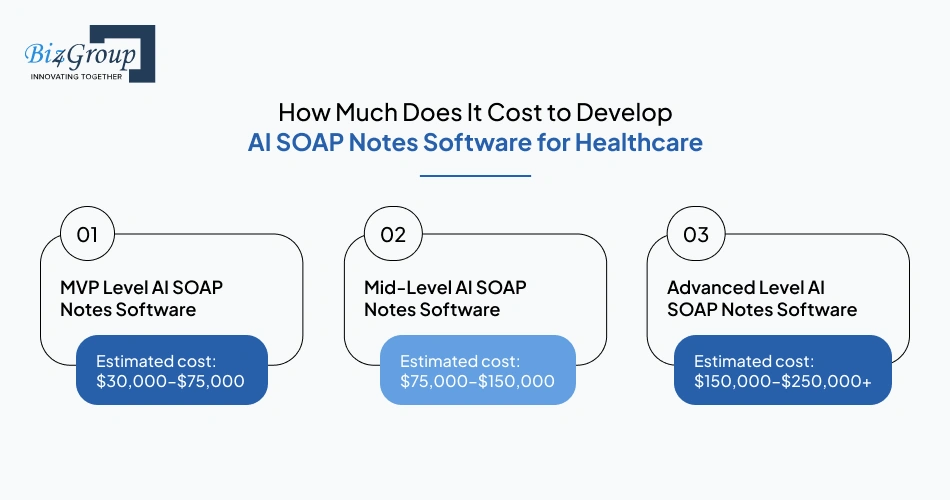
Cost planning becomes clearer when the software scope is tied to real documentation workflows, EHR connectivity, compliance controls, and AI note-generation depth. For teams focused on developing AI SOAP notes tools for healthcare, the most realistic budget range sits between $30,000–$250,000+, depending on whether the product starts as an MVP, expands into multi-specialty workflows, or scales into hospital-grade deployment.
Estimated Development Cost by Product Level
|
Development Level |
Estimated Cost Range |
Scope |
|---|---|---|
|
MVP Level AI SOAP Notes Software |
$30,000–$75,000 |
Core speech capture, SOAP drafting, provider review, basic EHR sync, HIPAA-ready access controls |
|
Mid-Level AI SOAP Notes Software |
$75,000–$150,000 |
Multi-specialty templates, role-based workflows, advanced note editing, stronger interoperability and analytics |
|
Advanced Level AI SOAP Notes Software |
$150,000–$250,000+ |
Multi-location deployment, real-time voice workflows, provider correction learning, advanced security, compliance automation, and enterprise interoperability |
Key Cost Drivers in AI SOAP Notes Software Development for Healthcare
1. AI note generation logic
A large part of the budget depends on how intelligently the platform converts doctor-patient conversations into SOAP-ready notes. Cost of AI integration increases as software needs specialty-specific prompts, provider correction learning, and stronger clinical reasoning for assessment and plan sections.
Cost Impact: $8,000–$40,000
2. Speech capture and transcription workflow
The cost changes based on how the product captures consultations. A transcript-upload workflow costs less, while live speech capture with speaker separation, medical terminology recognition, and secure audio handling increases the effort and infrastructure requirement.
Cost Impact: $5,000–$25,000
3. EHR integration and interoperability
This usually becomes one of the biggest cost drivers because the software must move finalized notes into the right patient chart, encounter, and provider workflow. The more hospital systems, FHIR endpoints, and validation rules involved, the higher the implementation effort.
Cost Impact: $10,000–$45,000
4. Compliance and PHI-safe infrastructure
Security requirements directly affect cost because the platform must support encryption, access control, audit trails, and HIPAA-ready cloud environments. For healthcare products, these safeguards are not optional and must be planned even during MVP software development
Cost Impact: $7,000–$30,000
- Provider review screens and note workflows
The interface layer also impacts budget. Costs increase when the product includes live transcript views, SOAP section editing, voice-based corrections, provider approvals, and specialty-specific review workflows.
Cost Impact: $5,000–$20,000
Hidden Costs That You Should Plan for in AI SOAP Notes Software Development
|
Hidden Costs |
Estimated Cost Impact |
|---|---|
|
Clinical note data labeling and cleanup |
$3,000–$15,000 |
|
Post-launch specialty template expansion |
$5,000–$20,000 |
|
EHR vendor certification and testing |
$8,000–$25,000 |
|
Cloud PHI storage growth |
$2,000–$10,000 annually |
|
Compliance audits and legal reviews |
$4,000–$18,000 |
Strategies to Optimize Development Cost of AI SOAP Notes Software
- start with one specialty workflow and reduce first-phase cost by 15%–20%
- use modular AI solutions for enterprises to reduce backend rebuild costs by 10%–18%
- reuse secure interoperability layers for healthcare enterprise AI integration and reduce sync effort by 12%–16%
- begin with transcript-based MVP validation before live voice workflows to reduce model cost by 18%–22%
- phase compliance automation after workflow validation to reduce early budget pressure by 8%–12%
The most realistic budgets come from aligning scope, AI depth, interoperability, and compliance from day one. That is why AI SOAP notes software development for healthcare should always be budgeted as a phased product journey instead of a single fixed estimate.
Also Read: Cost to Develop HIPAA-Compliant AI Healthcare Software
Know Your Real Build Budget Early
Avoid hidden costs by aligning scope, AI depth, and rollout phases upfront
Talk to Our AI ExpertsKey Challenges in Building AI SOAP Notes Software for Clinics and Hospitals
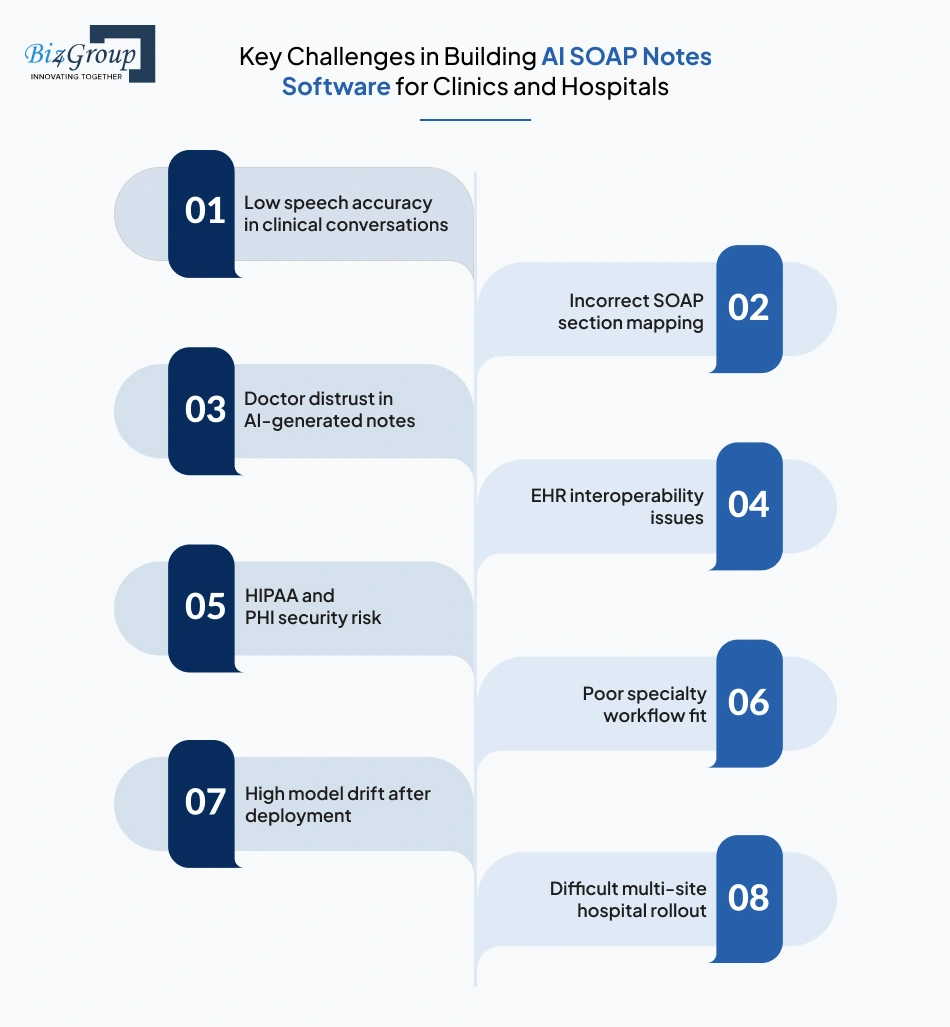
The biggest risks usually appear where clinical workflows, provider trust, and hospital interoperability meet real-world software complexity. During the development of AI SOAP notes software, product teams need to identify the challenges early so the right engineering, validation, and rollout decisions can be made before scale introduces expensive rework.
|
Key Challenges |
How to Solve It |
|---|---|
|
Low speech accuracy in clinical conversations |
Use medical speech models, specialty vocabulary libraries, and provider accent tuning during training so the transcription layer performs reliably in real care environments. |
|
Incorrect SOAP section mapping |
Validate note structuring against real provider-approved SOAP samples and add specialty-specific prompt rules before production rollout. |
|
Doctor distrust in AI-generated notes |
Keep provider review mandatory, support fast inline edits, and use feedback loops that learn from repeated correction behavior. |
|
EHR interoperability issues |
Use FHIR-ready middleware, patient encounter validation, and staged integration testing with hospital sandbox environments before live sync. |
|
HIPAA and PHI security risk |
Implement encrypted storage, role-based access, vendor BAAs, and audit traceability from the first product release with guidance from experienced AI consulting service teams. |
|
Poor specialty workflow fit |
Build configurable note templates and specialty logic with support from domain-aware healthcare AI developers who understand real documentation patterns. |
|
High model drift after deployment |
Continuously retrain prompts and note-generation logic using approved provider corrections and production note feedback. |
|
Difficult multi-site hospital rollout |
Use phased deployment by department, reusable workflow modules, and centralized governance supported by a reliable AI development company delivery model. |
The most successful teams treat these challenges as product-planning inputs instead of post-launch surprises. That is why AI SOAP notes software development for healthcare becomes far more scalable when risk mitigation is built into architecture, validation, and rollout from the beginning.
Why Biz4Group LLC Is the Right Partner for AI SOAP Notes Software Development?
When healthcare teams start asking, we are evaluating vendors to develop AI SOAP notes software, which company provides scalable and customizable solutions; the real concern usually goes beyond note generation. They want to know whether the partner understands provider workflows, HIPAA boundaries, EHR interoperability, specialty documentation logic, and how hospitals adopt new tools without slowing clinicians down.
That is exactly where Biz4Group LLC stands out. We bring practical execution depth in turning live clinical conversations into provider-trusted chart workflows while keeping the product scalable for clinics, hospitals, and multi-specialty health systems.
As an experienced AI healthcare software development company, we work closely with healthcare founders, product managers, and innovation teams to turn documentation workflows into production-ready software. Our approach stays grounded in real clinical usage, secure data movement, specialty-specific note logic, and phased rollout strategies that reduce adoption friction.
We help healthcare teams:
- validate the right documentation use cases before product investment
- shape provider review workflows that fit daily clinical routines
- architect HIPAA-ready systems that scale across departments
- integrate EHR-safe note sync and specialty templates
- apply AI workflows that improve note quality over time
These are not just vague claims, here’s the proof of how we combine healthcare workflow clarity with practical delivery experience across real medical platforms.
1. CogniHelp
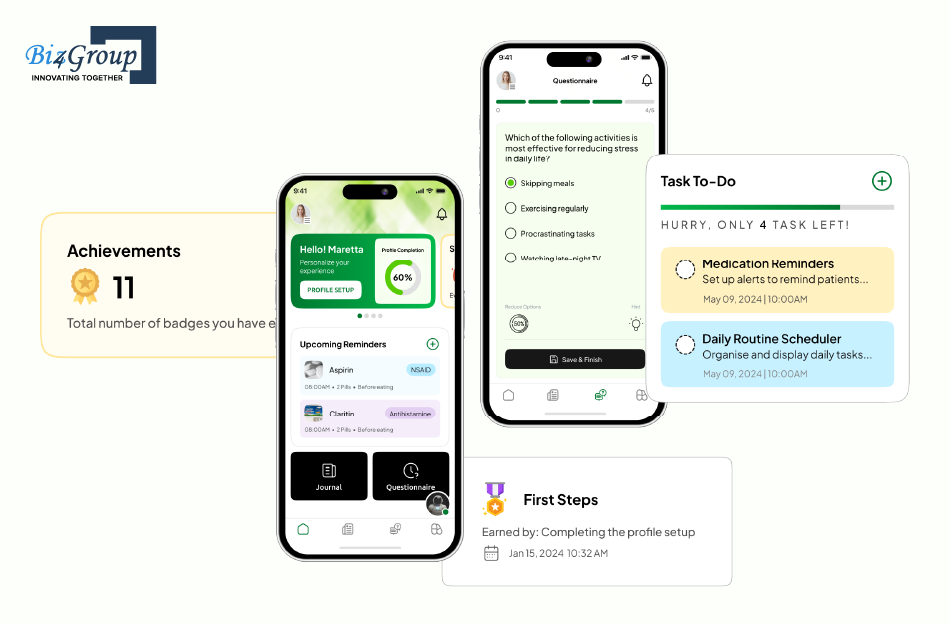
CogniHelp is an AI mobile application designed to support early- to mid-stage dementia patients with daily memory reinforcement and routine stability. The platform helps patients stay oriented by storing personal details such as family names, schedules, and important life references. It also supports journaling and guided cognitive exercises that encourage routine thought processes and help reduce confusion in everyday life.
Key Highlights:
- daily memory recall support using personal data prompts
- journaling workflow for routine cognitive stimulation
- schedule reminders for daily stability
- patient-friendly mobile interface for easy navigation
2. Truman
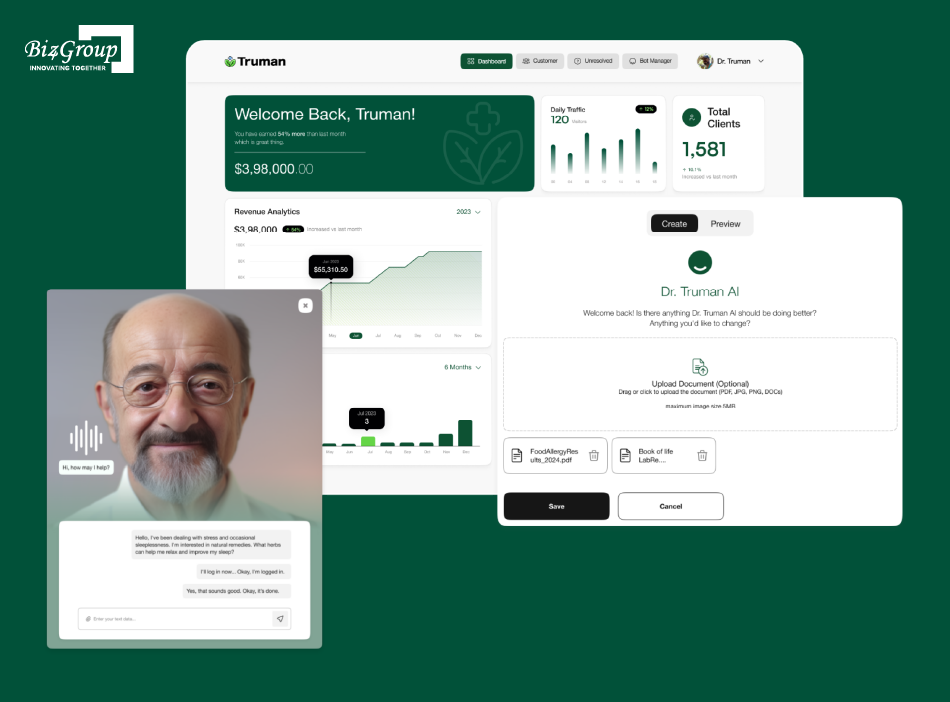
Truman is an AI-enabled avatar for personalized health advice. It delivers personalized health consultations, supplement recommendations, membership-based wellness benefits, and health history tracking in one connected experience. Users can interact with the avatar for health guidance, upload reports, and continue their wellness journey through a seamless in-app consultation-to-purchase flow.
Key Highlights:
- AI-powered avatar for lifelike health consultations
- smart chatbot for personalized supplement suggestions
- in-app product shopping experience
- health record upload and membership benefits
3. Select Balance
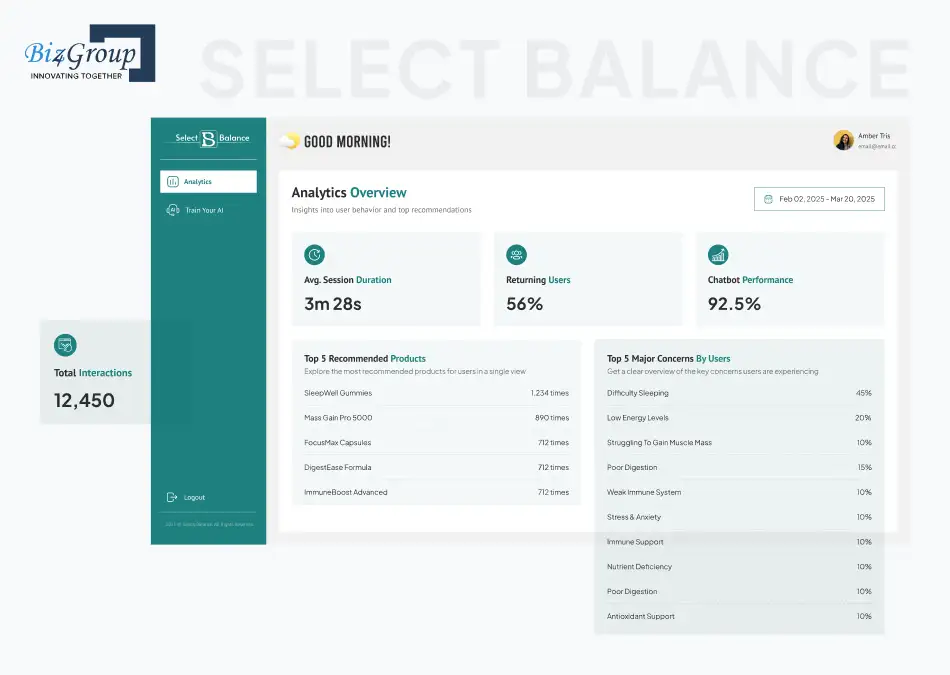
Select Balance is an AI-powered chatbot for personalized supplement recommendations that helps users discover the right health products through guided quizzes and conversational symptom analysis. The platform uses real-time product matching and presents product cards with direct buy links. It also includes an admin-side training panel that allows live updates for keywords, product logic, and recommendation flows.
Key Highlights:
- personalized health quiz and natural chat flow
- real-time product recommendation engine
- PostgreSQL-powered product matching
- admin panel for chatbot training and updates
4. Dr. Ara
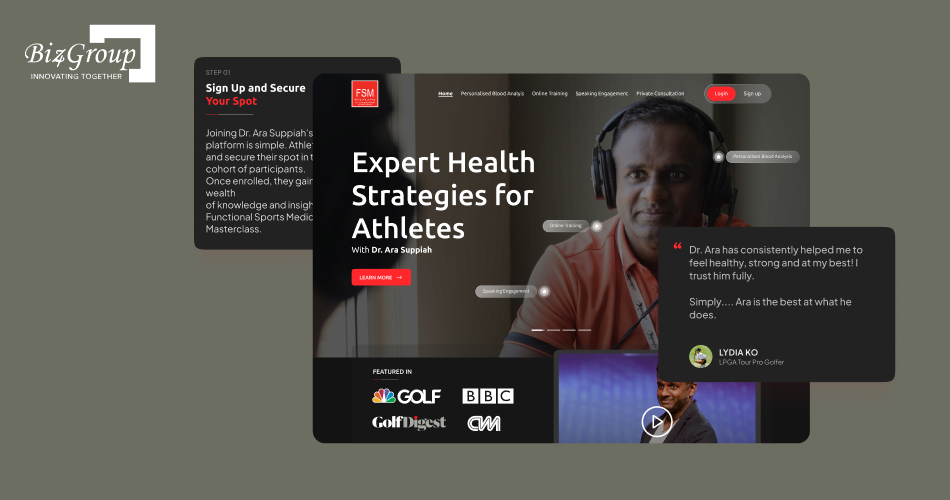
Dr. Ara is an AI-powered athletic health solution created for athletes and performance-focused users who want deeper health insights from blood reports and recovery data. The platform analyzes uploaded health reports and transforms them into personalized guidance around diet, hydration, sleep, recovery, and fitness improvement. It also supports direct consultation booking, making it a centralized performance health companion for athletic users.
Key Highlights:
- blood report analysis for athlete health insights
- personalized diet and hydration recommendations
- sleep and recovery optimization guidance
- consultation booking for performance improvement
These healthcare implementations reflect how Biz4Group LLC turns complex patient journeys, AI-driven recommendations, and sensitive medical data workflows into practical digital products that are easy to adopt and ready to scale.
That same execution clarity is exactly what we bring to AI SOAP notes software development, helping clinics and hospitals move from documentation pain points to secure, provider-trusted workflows with scalable AI product delivery.
Let’s discuss how we can help you shape a secure, provider-friendly, and hospital-ready AI SOAP notes platform.
Future Trends in AI SOAP Notes Software Development Beyond 2026
The next generation of documentation platforms will not just assist with note creation. They will increasingly shape how providers prepare for visits, carry forward patient context, and manage follow-up actions across the care journey. As AI SOAP notes software development for healthcare moves beyond 2026, the product roadmap will be defined by how intelligently these systems will support continuity, anticipation, and autonomous clinical workflows.
These future shifts will most likely reshape documentation platforms in the following ways:
- AI SOAP note platforms will begin carrying forward unresolved symptoms, medication changes, pending labs, and follow-up tasks from previous visits so future documentation will start with richer patient context
- documentation workflows will increasingly merge with AI virtual healthcare assistant capabilities that will prepare pre-visit histories, summarize prior encounters, and surface note prompts before the consultation begins
- the rise of agentic AI in healthcare will push SOAP systems toward autonomous actions, where the platform will trigger incomplete note alerts, missing coding prompts, and sign-off reminders without waiting for manual review
- specialty-aware documentation engines will become more adaptive and will reshape AI SOAP structures automatically based on care pathways such as cardiology, surgery, chronic disease management, and behavioral health
- provider correction patterns will train personalized note engines that will mirror each doctor’s preferred phrasing, structure style, and specialty-specific documentation habits
- hospital ecosystems will connect future AI SOAP workflows with discharge planning, payer documentation, care coordination, and longitudinal patient engagement systems
- compliance layers will evolve into proactive governance systems that will run hallucination checks, privacy validations, and medico-legal risk scans before provider approval
Together, these shifts will move documentation systems closer to intelligent clinical workflow partners rather than isolated note-generation tools. That is how the future of AI SOAP platforms will likely shape hospital documentation strategy, provider adoption, and long-term digital care continuity beyond 2026.
Will Your AI Product Stay Future Ready?
Shape a roadmap built for autonomous workflows and evolving provider expectations
Future-Proof Your AI PlatformConclusion
The real opportunity in healthcare documentation will come from how naturally the software fits into provider workflows while still staying scalable for hospitals, specialties, and evolving compliance needs. That is where thoughtful AI product development services make the biggest difference, helping turn documentation complexity into products that clinicians can trust, and teams can confidently scale.
When healthcare leaders reach the point of asking, I need a development partner to create AI healthcare documentation software with NLP and automation, which company should I shortlist, the decision usually comes down to who can combine workflow clarity with long-term product execution. That is where Biz4Group brings practical healthcare delivery experience, scalable AI engineering, and real product thinking that extends beyond feature development.
If you’re ready to turn your documentation vision into a provider-friendly AI platform, let’s connect and shape the right roadmap together for AI SOAP notes software development for healthcare.
FAQ’s
1) How accurate can AI SOAP notes software be for specialty-specific clinical documentation?
Accuracy usually depends on how well the system is trained for specialty workflows such as behavioral health, cardiology, surgery, or primary care. A strong product will use specialty templates, provider correction learning, and EHR-linked patient context so the note reflects real clinical reasoning instead of generic text generation.
2) How does AI SOAP notes software handle multi-provider collaboration in hospitals?
In hospital settings, the software should support role-based review workflows where physicians, nurses, specialists, and compliance teams can contribute to the same documentation journey. The most effective platforms maintain version history, provider attribution, and encounter-linked updates, so the final SOAP note stays clinically consistent across teams.
3) How much does AI SOAP notes software development for healthcare usually cost?
The most realistic overall range usually falls between $30,000 and $250,000+, depending on whether the goal is an MVP, a mid-level clinic platform, or a hospital-grade multi-specialty product. The final budget changes are based on EHR integration depth, speech-to-text accuracy requirements, compliance layers, and specialty-specific note workflows.
4) What is the realistic timeline to develop AI SOAP notes software for healthcare?
A focused MVP with one documentation workflow usually takes 4 to 6 weeks. A full-scale hospital-ready platform with specialty templates, cloud deployment, compliance controls, and EHR interoperability typically takes 12 to 14 weeks. The exact timeline depends on how much customization is required around provider workflows and hospital systems.
5) How can AI SOAP notes software support multilingual providers and patient conversations?
Future-ready platforms are increasingly being designed to support multilingual speech capture, translated SOAP drafting, and region-specific medical terminology. This becomes especially important for hospitals, telehealth providers, and clinics serving diverse patient populations across multiple geographies.
6) How to make AI SOAP notes software with EHR integration and cloud-ready scalability?
The most practical path starts with one clinical workflow, a secure cloud environment, and standards-based FHIR connectivity. From there, the product should expand through phased specialty templates, provider feedback learning, and scalable infrastructure, so the platform remains stable as hospital usage grows.